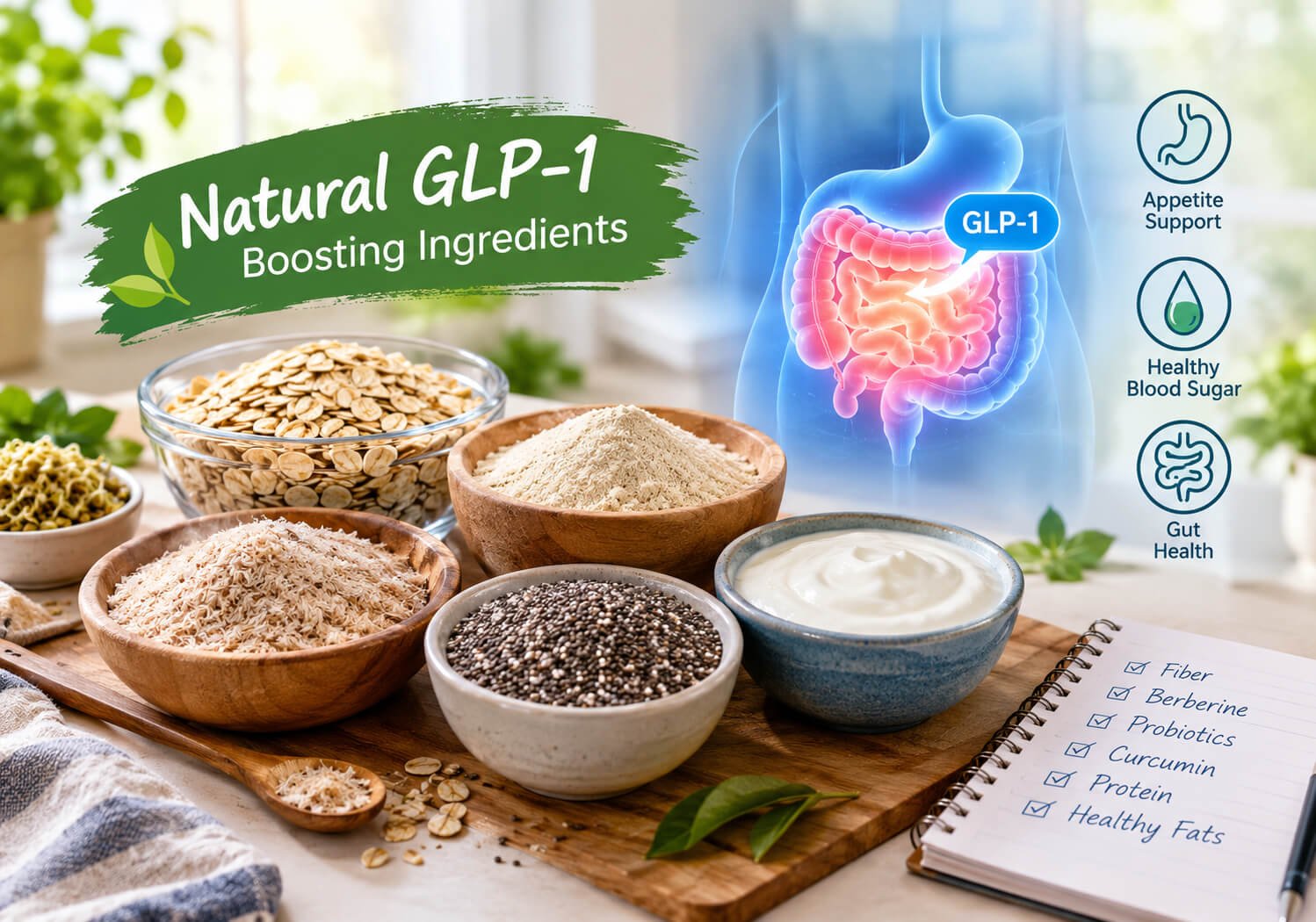
Search for “Ozempic alternatives” and you hit a wall of capsules promising to switch on your body’s own appetite hormone. Natural GLP-1 boosting ingredients in dietary supplements are a real research topic, but the marketing runs far ahead of the science. As a coach, I’d rather you know what each ingredient has been shown to do, and in whom, before you spend money.
This guide ranks fibers, berberine, probiotics, curcumin, protein, and fats by the strength of their evidence. You’ll also get a label-reading checklist and a four-week, food-first plan. Because this topic involves supplements and weight management, check with your doctor before starting anything new.
Quick Answer
The best-supported natural GLP-1 boosting ingredients in dietary supplements are fermentable and viscous fibers, such as glucomannan and dextrins. Berberine, certain probiotic strains, and curcumin show promise, but much of the evidence comes from animals or small, short trials. None replicates GLP-1 medication. Treat them as small helpers, not substitutes.
What Is GLP-1, and What Does “Boosting” Mean?
GLP-1 (glucagon-like peptide-1) is a gut hormone made mainly by L-cells in your intestines. It influences blood sugar, appetite, and food intake, according to a review of nutritional modulation of GLP-1. That review also notes GLP-1 appears to account for nearly half of the insulin released after a meal.
L-cells sense nutrients as food moves through your gut. They detect sugars, amino acids, peptides, certain fats, and short-chain fatty acids, the same review explains. Short-chain fatty acids (SCFAs) are made when gut bacteria ferment fiber.
So “boosting GLP-1” naturally means nudging your own L-cells to release more of a hormone you already make. It does not mean copying a drug. That difference is the key to everything below.
Why Supplements Are Not “Natural Ozempic”
Once-weekly GLP-1 medications can produce 10-20% weight loss, according to a 2026 scoping review in Frontiers in Endocrinology. Supplement ingredients only try to coax your gut cells into releasing more of their own GLP-1. In the research cited in this article, no ingredient comes close to that range.
There is also a regulation gap. The NIH Office of Dietary Supplements states that the FDA does not determine whether dietary supplements are effective before they are marketed. A “GLP-1 support” label is a marketing phrase, not a verified result.
Coach’s Tip: Ask one question of every product: What human trial, at what dose, for how long? If the brand can’t answer, treat the claim as unproven.
Natural GLP-1 Boosting Ingredients in Dietary Supplements: The Evidence at a Glance
The “confidence” column is my coaching judgment based on the sources cited in this article, not a formal grade.
| Ingredient | How it may work | What the evidence shows | Confidence |
| Dextrins (soluble/resistant) | Fermented into SCFAs | 4 of 8 human trials showed higher GLP-1 | Low-moderate |
| Glucomannan / guar (mannans) | Viscous gel slows stomach emptying | 3 of 4 acute studies showed higher GLP-1; fullness results mixed | Low-moderate |
| Oat/barley beta-glucan | Viscous gel | Fullness improved in 6 of 9 studies; GLP-1 in 3 of 9 | Low-moderate (fullness) |
| Inulin / FOS | Fermentation | 2 of 10 studies showed higher GLP-1 | Low |
| Psyllium | Viscous fiber | Only 1 of 4 arabinoxylan-rich studies raised GLP-1 (rye bread) | Low |
| Berberine | L-cell signaling, gut microbiota | Mouse and cell studies | Low |
| L. reuteri SD5865 | Gut microbiome shifts | One 4-week trial, 21 adults | Low-moderate (strain-specific) |
| Akkermansia P9 protein | Bacterial protein signal | Mice and cells | Very low |
| Curcumin | GPR40/120 receptors | Rats and cells | Very low |
| Protein and peptides | Nutrient sensing | Human and animal data (mostly from food) | Moderate |
Fibers and Prebiotics: The Best-Studied Category
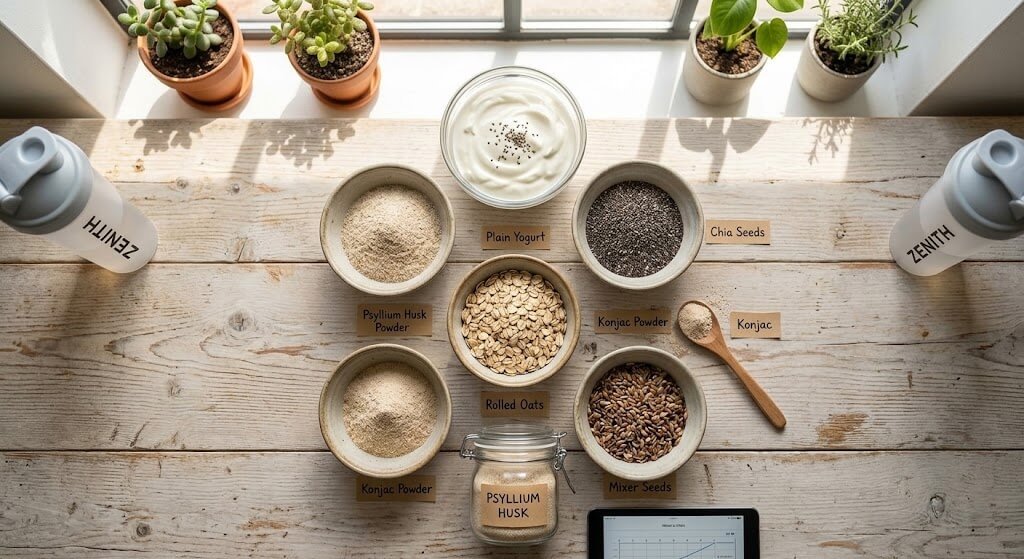
Fiber has the most human trials. The scoping review pooled 49 publications covering 52 randomized studies and 1,085 adults. The median study had only 19 participants, and 71% tested a single dose rather than weeks of use. That tells you how far these results can be stretched.
Dextrins stood out. Four of eight studies reported higher GLP-1, and five of eight reported more fullness or less hunger. Mannans, which include guar gum and konjac glucomannan, raised GLP-1 in three of four acute studies, though fullness effects were less consistent. If you’re curious about this ingredient specifically, our guide on glucomannan and hunger goes deeper.
Oat and barley beta-glucans were the opposite. They improved fullness in six of nine studies but raised GLP-1 in only three, so they may curb appetite through gastric slowing instead. Inulin and FOS raised GLP-1 in just two of ten studies. Positive results there came from around 16 g per day over two weeks.
Psyllium deserves honesty. In that review it sat in an arabinoxylan-rich group where only one of four acute studies, using whole-grain rye bread, showed a GLP-1 rise. That doesn’t make psyllium husk useless for fullness. It means GLP-1 may not be how it works. For the broader picture, see our piece on soluble fiber and appetite.
How might fiber help? Fermentable fibers produce SCFAs that activate FFAR2 and FFAR3 receptors on L-cells, with propionate the most potent trigger. Viscous fibers like glucomannan form gels that slow gastric emptying. Both are plausible mechanisms, but the authors conclude the evidence is limited by small, short, varied trials.
Common Mistake: Jumping straight to a full serving of fiber powder. Highly fermentable fibers such as dextrins and inulin can cause bloating and gas, but gradual dose escalation may reduce symptoms. Start low, go slow, and drink plenty of fluid as your label directs.
Berberine: Popular, but Mostly Preclinical for GLP-1
Berberine is the ingredient most often called “nature’s Ozempic.” For GLP-1 specifically, the data is mostly from animals and cells. A 2023 mouse study in Frontiers in Pharmacology found berberine improved glucose handling and was linked to higher GLP-1 signaling in gut L-cells and pancreatic alpha cells. I could not confirm a large human trial showing berberine raises GLP-1 in people [VERIFY].
The weight-loss picture is mixed. NCCIH notes a 2022 review of 18 weight studies and 23 BMI studies that found significant decreases. Yet NCCIH also states there aren’t enough rigorous trials to say whether berberine works for weight loss. Our breakdown of berberine and appetite covers the trial details.
Safety matters more here than with fiber. NCCIH lists abdominal pain, constipation, diarrhea, nausea, and vomiting as the most common adverse effects, and says berberine may interact with medicines. If you take diabetes, blood pressure, or cholesterol medication, talk to your pharmacist before you try it.
Probiotics and Akkermansia: Strain Matters
Probiotics are interesting because the best human result is strain-specific. In a randomized trial of 21 glucose-tolerant adults, four weeks of Lactobacillus reuteri SD5865 increased glucose-stimulated GLP-1 release by 76% versus placebo. Insulin secretion was 49% higher. However, insulin sensitivity, body mass, and body fat did not change.
Read that carefully. It’s a proof-of-concept hormone result in a small group, not proof of weight loss. And it applies to one strain, so a generic “probiotic blend” tells you little.
Akkermansia muciniphila gets hype too. A 2021 Nature Microbiology study found an 84 kDa protein secreted by the bacterium, called P9, induced GLP-1 secretion in L-cells and in mice. That is a lab finding about a protein, not evidence that swallowing a capsule does the same in people.
Coach’s Tip: If a probiotic is on your shortlist, look for the full strain designation (genus, species, and strain code) and a CFU count on the label. Skip anything that lists only “proprietary probiotic blend.”
Curcumin and Polyphenols: Early-Stage Science
Curcumin, the pigment in turmeric, increased GLP-1 secretion in L-cell cultures. In rats, a low pre-dose of curcumin improved glucose tolerance through GLP-1 and insulin release, possibly via GPR40/120 receptors. That’s useful for researchers. It is a long way from a proven human supplement benefit.
A broader review of food factors reports that plant compounds such as quercetin can directly stimulate GLP-1 secretion in cell models. Again, cell models. Green tea extract is another common add-in, so read that guide before paying extra for it in a blend.
Protein, Peptides, and Fats: The Food-First Winners
Here is where the science is strongest, and it’s not in a capsule. The same food-factors review reports that dietary proteins and peptides have a potent stimulating effect on GLP-1 secretion in human and animal studies. It also notes that long-chain fatty acids from dietary fat stimulate GLP-1 release through receptors such as FFAR1 and FFAR4.
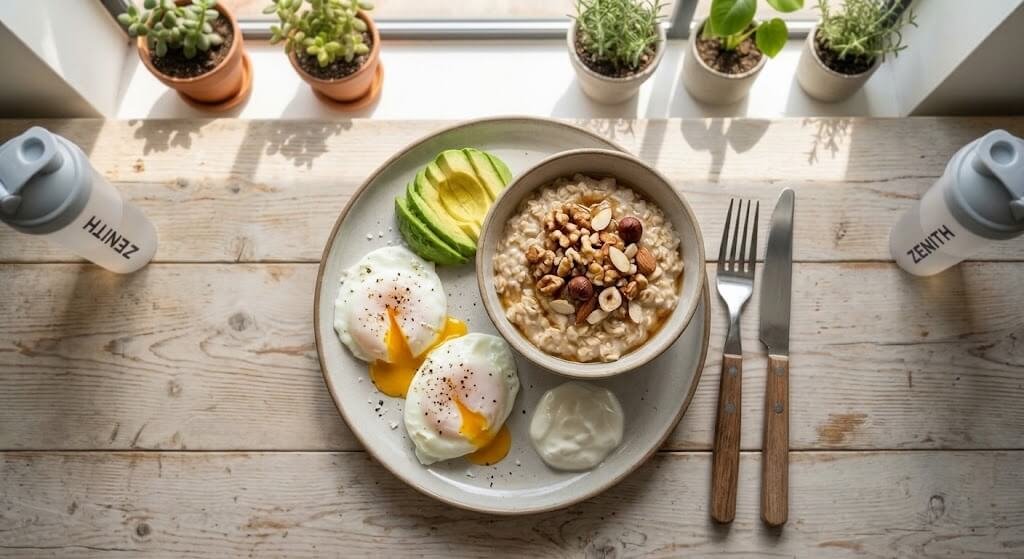
Whole foods are the practical takeaway. The nutritional review suggests high-fiber grain products, nuts, avocados, and eggs may influence GLP-1 secretion. To see how protein affects fullness signals, read our explainer on protein and fullness hormones.
If you use a shake to hit protein goals, our guide to protein powder shows what to look for. The review authors say more work is needed on doses and combinations before firm dietary recommendations can be made.
Common Mistake: Stacking six “GLP-1 ingredients” at once. You can’t tell what’s helping, and the NIH Office of Dietary Supplements says side effects are more likely at high doses or when taking many supplements. Change one thing at a time.
How to Read a “GLP-1 Support” Label
Marketing language is vague, so use this checklist before you buy:
- Look for exact amounts. If a blend hides the amount of each ingredient, you can’t compare it to any study.
- Match the form to the research. Glucomannan, resistant dextrin, and inulin are different fibers with different results.
- Check strain names on probiotics, not just “Lactobacillus.”
- Look for independent testing by a third party. [VERIFY which seals you want to name, such as NSF or USP.]
- Distrust “natural Ozempic” language. No supplement has been shown to match a prescription drug.
- Read our guide to evaluate supplement ingredients for a deeper ingredient-by-ingredient process.
- Prefer stimulant-free options if you’re sensitive to caffeine; see our list of supplements without stimulants.
How to Use Natural GLP-1 Boosting Ingredients in Dietary Supplements Safely
The approach below is food first, then a single, supervised supplement trial if you and your clinician agree. These steps are my coaching framework, not a medical protocol.
| Week | Focus | Practical action |
| 1 | Protein at breakfast | Add eggs, Greek yogurt, or a protein shake to your first meal |
| 2 | Add fiber slowly | Add one high-fiber food daily: oats, beans, chia, or berries |
| 3 | Add healthy fats and nuts | A small handful of nuts or half an avocado with a meal |
| 4 | Review | Note fullness, digestion, and energy; talk to your clinician before adding any supplement |
Easier version (regression): Do weeks 1 and 2 only, and hold there for a month. Pair meals with a short walk of about 10 minutes (0.5 mile / 0.8 km) if that fits your routine.
Harder version (progression): After your clinician approves, trial one ingredient for four weeks, such as a fiber supplement. Take it exactly as the label directs, including the amount of water (often at least 8 oz / 240 ml). Keep notes on digestion and appetite so you can judge whether it’s worth continuing.
Keep your regular strength sessions and walks going. Supplements are not a substitute for movement, sleep, or balanced meals.
Safety Notes: Who Should Be Careful
Check with your doctor or pharmacist first if any of these apply:
- You take diabetes, blood pressure, cholesterol, or blood-thinning medication. NCCIH warns berberine may interact with medicines.
- You’re pregnant, breastfeeding, or buying for a child. NCCIH advises against berberine in these situations [VERIFY exact wording on the NCCIH page].
- You use a GLP-1 prescription. The ODS advises getting your provider’s approval before taking supplements in combination with prescribed medicines.
- You have IBS or another bowel condition. The scoping review says fermentable fibers like dextrins and inulin cause more symptoms in people with functional bowel disorders.
- You have type 2 diabetes or unexplained appetite changes. These deserve a clinical workup, not a supplement experiment.
Stop any supplement and call your clinician if you develop severe stomach pain, persistent vomiting, or an allergic reaction.
FAQ
Do natural GLP-1 supplements work like Ozempic?
No. Weekly GLP-1 medications are linked to 10-20% weight loss, while supplement ingredients only nudge your own hormone release, mostly in short trials. Supplements also aren’t reviewed for effectiveness before sale. Think of them as small helpers alongside food, sleep, and activity.
What natural ingredient has the strongest evidence for raising GLP-1?
Fermentable and viscous fibers have the most human trials, with dextrins and mannans like glucomannan showing the most consistent GLP-1 results in a scoping review. Even so, most studies were small and short, so the evidence is modest, not definitive.
Can berberine boost GLP-1?
In mice and cell studies, yes: a 2023 mouse study linked berberine to higher GLP-1 signaling. Human proof is thinner, and NCCIH says there isn’t enough rigorous evidence to confirm weight-loss benefits. It can also interact with medicines.
Do probiotics raise GLP-1?
One strain did in one small trial. L. reuteri SD5865 increased glucose-stimulated GLP-1 release by 76% versus placebo in 21 adults but did not change body weight or fat. Results are strain-specific, so don’t assume any probiotic does the same.
Are GLP-1 supplements safe with Ozempic or metformin?
Don’t assume so. The NIH Office of Dietary Supplements says to get your provider’s approval before taking supplements with prescribed medicines. Berberine in particular may interact with diabetes drugs, so ask your pharmacist or doctor before combining anything.
What foods boost GLP-1 naturally?
Research suggests high-fiber grain products, nuts, avocados, and eggs may influence GLP-1, according to a nutritional review. Protein-rich foods also stimulate GLP-1 release in studies. Food is the best-supported route, and it supplies nutrients a capsule can’t.
Conclusion
Natural GLP-1 boosting ingredients in dietary supplements are an active research area, not a proven shortcut. Fibers have the most human data, berberine and curcumin are mostly preclinical for GLP-1, and probiotics depend on the exact strain. Food-first habits come with fewer unknowns and a better evidence base.
Start with protein, fiber, and healthy fats, add changes slowly, and test only one supplement at a time with your clinician’s blessing. A confident, informed buyer beats a hopeful one every time.