
Hitting a wall during a calorie deficit is a universal experience for gym-goers. You are eating less, training hard, and suddenly your workouts feel heavier. Your focus drifts, and that familiar brain fog sets in. Understanding how L-tyrosine supports energy during a calorie deficit can be the difference between abandoning your fat-loss goals and pushing through to success. As a strength and conditioning coach, I see clients struggle with this exact drop in mental and physical drive.
Dieting is a physiological stressor. When you restrict calories, your body conserves energy, which often means downregulating non-essential functions like high-level cognitive processing and explosive physical output. L-tyrosine, a conditionally essential amino acid, steps in as a critical building block for the neurotransmitters that keep you sharp, motivated, and energized. This guide breaks down the science, practical dosing, and safety protocols so you can use this tool effectively and safely.
Quick Answer
L-tyrosine supports energy during a calorie deficit by acting as a direct precursor to dopamine and norepinephrine. When caloric restriction depletes these neurotransmitters, causing fatigue and brain fog, supplementing with 500–2,000 mg of L-tyrosine 30–60 minutes before a workout or stressful task can help restore cognitive focus, motivation, and perceived energy levels without the jitters of high-dose caffeine.
The Science: How L-Tyrosine Supports Energy During a Calorie Deficit
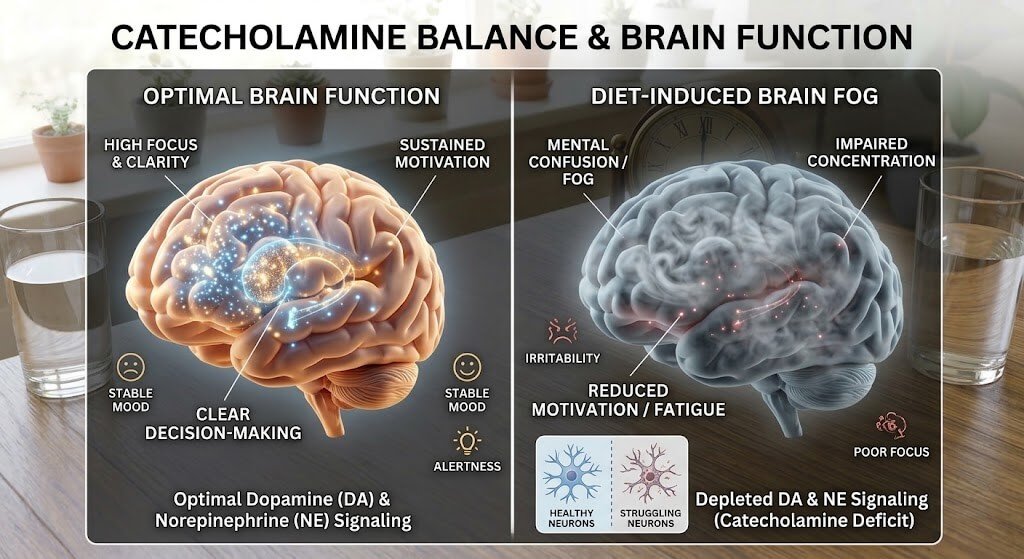
To understand why you feel drained when cutting calories, we have to look at your brain chemistry. Your body relies on a group of chemicals called catecholamines, which include dopamine and norepinephrine. Dopamine drives motivation, reward, and focus. Norepinephrine regulates alertness, arousal, and the physical “get up and go” feeling you need to lift weights or finish a cardio session.
Both of these crucial neurotransmitters are synthesized from a single amino acid: L-tyrosine. Under normal eating conditions, your body produces enough tyrosine from other amino acids, like phenylalanine, to meet its needs. However, a calorie deficit changes the game. Caloric restriction is a recognized physiological stressor. Research published by the National Institutes of Health (NIH) indicates that during periods of acute stress or caloric restriction, the brain’s demand for catecholamines spikes, rapidly depleting available tyrosine stores
pmc.ncbi.nlm.nih.gov
.
When tyrosine levels drop, your brain cannot produce enough dopamine and norepinephrine to keep up with demand. This depletion is a primary driver of what we call “central fatigue.” Unlike muscular fatigue, which is your muscles running out of glycogen, central fatigue originates in the brain. It manifests as a lack of motivation, poor workout focus, and a general sense of exhaustion.
Supplementing with L-tyrosine provides the raw material your brain needs to keep producing these neurotransmitters, even when dietary intake is low. A comprehensive review noted that L-tyrosine administration is particularly effective at preventing cognitive decline and maintaining working memory during physically or environmentally stressful conditions
pmc.ncbi.nlm.nih.gov
. By keeping your neurotransmitter factories stocked, L-tyrosine helps you maintain the mental clarity required to stick to your diet and the physical drive required to finish your workouts.
Cognitive Function and Mental Fatigue
The benefits of L-tyrosine extend far beyond just feeling “awake.” During a weight-loss phase, decision fatigue is a massive hurdle. Every meal requires planning, every craving requires resistance, and every workout requires deliberate effort. This constant mental taxation drains your prefrontal cortex, the area of the brain responsible for executive function and self-control.
When central fatigue sets in due to low dopamine, your willpower evaporates. This is why people are more likely to break their diet late in the day or skip a workout after a stressful day at work. By supporting dopamine synthesis, L-tyrosine helps preserve executive function. Studies show that tyrosine supplementation can improve cognitive flexibility and working memory in multitasking environments, which directly translates to better dietary adherence and workout consistency
pubmed.ncbi.nlm.nih.gov
.
Furthermore, central fatigue is closely tied to physical performance. A reduction in dopamine secretion during prolonged exercise is a known mechanism for inducing feelings of exhaustion
pmc.ncbi.nlm.nih.gov
. While L-tyrosine is not a magic bullet that will add 50 pounds to your squat, it can help you maintain your baseline performance. It allows you to push through that final rep or complete your scheduled cardio session with better form and higher intensity, which is critical for preserving lean muscle mass while losing fat.

L-Tyrosine vs. Other Energy Supports
It is helpful to compare L-tyrosine to other common energy supplements to understand its unique role.
| Supplement | Primary Mechanism | Best Used For | Calorie Deficit Benefit |
| L-Tyrosine | Precursor to dopamine/norepinephrine | Mental focus, stress resilience, preventing central fatigue | Replenishes depleted neurotransmitters without overstimulating the adrenal system. |
| Caffeine | Adenosine receptor antagonist | Immediate alertness, acute power output | Effective, but can increase cortisol and anxiety, which are already elevated during a cut. |
| B-Vitamins | Coenzymes in cellular energy (ATP) production | Overall metabolic health, reducing general lethargy | Supports baseline metabolism, but does not directly target stress-induced cognitive decline. |
| Rhodiola Rosea | Adaptogen, modulates cortisol | Long-term stress management, endurance | Good for overall stress, but L-tyrosine is more direct for acute, task-specific focus. |
Practical Application: Dosage, Timing, and Protocol
Knowing the science is only half the battle. As a coach, I need to give you actionable steps. Here is exactly how to implement L-tyrosine into your fat-loss protocol.
1. Optimal Dosage
Research indicates that the effective dose of L-tyrosine for cognitive and stress-support benefits ranges from 500 mg to 2,000 mg per serving. For a standard 150 lb (68 kg) individual, starting at the lower end of this spectrum is wise. You can scale up to 1,500 mg or 2,000 mg on particularly demanding training days or during periods of high life stress.
2. Timing is Everything
L-tyrosine competes with other large neutral amino acids (LNAAs) for transport across the blood-brain barrier. If you take it with a high-protein meal, it will get lost in the crowd and fail to reach your brain in significant amounts. Therefore, the best time to take L-tyrosine is on an empty stomach, approximately 30 to 60 minutes before your workout or before a cognitively demanding task.
3. Cycling and Consistency
Unlike caffeine, your body does not build a rapid tolerance to L-tyrosine. However, it is most effective when used acutely to combat specific stressors. You do not need to take it every single day. Save it for your hardest training sessions, days when you are in a steep calorie deficit, or periods of high psychological stress.
Coach’s Tip:
Pair your morning L-tyrosine dose with a small amount of fast-acting carbohydrates (like half a banana or a few rice cakes) if you are training fasted. While you want to avoid a heavy protein meal, a tiny insulin spike can help drive amino acids into the system without causing the competitive absorption issue that a full protein shake would cause.
Common Mistake:
Taking L-tyrosine right after a high-protein meal or alongside a whey protein shake. The other amino acids in the protein will outcompete the tyrosine for brain uptake, rendering the supplement largely ineffective for cognitive support. Always take it 30–60 minutes before food, or at least 2 hours after a protein-heavy meal.

Safety Notes and Who Should Be Careful
While L-tyrosine is generally recognized as safe for healthy adults, it is a biologically active compound that influences hormone and neurotransmitter pathways. You must approach supplementation with caution and awareness.
Long-term safety data on high-dose L-tyrosine in healthy populations is somewhat limited, though studies administering up to 2.5 grams three times daily have shown no significant adverse effects over extended periods
pmc.ncbi.nlm.nih.gov
. However, certain populations should avoid L-tyrosine or consult a physician before use:
- Thyroid Conditions: Tyrosine is a direct precursor to thyroid hormones (T3 and T4). If you have hyperthyroidism (an overactive thyroid) or Graves’ disease, supplementing with extra tyrosine could theoretically exacerbate your condition by providing more raw material for hormone production.
- MAOI Antidepressants: Monoamine oxidase inhibitors (MAOIs) prevent the breakdown of dopamine and norepinephrine. Combining MAOIs with L-tyrosine can lead to a dangerous spike in blood pressure, known as a hypertensive crisis.
- Levodopa (L-dopa) Medication: L-tyrosine and L-dopa compete for the same absorption pathways in the gut and the brain. Taking them together can reduce the effectiveness of Parkinson’s disease medications.
- Pregnancy and Breastfeeding: There is insufficient research to confirm the safety of isolated L-tyrosine supplementation during pregnancy or lactation. Stick to dietary sources of tyrosine (like poultry, fish, eggs, and dairy) during this time.
Disclaimer: This article is for general information and is not a substitute for advice from a doctor or physical therapist. Always consult with a healthcare provider before starting any new supplement, especially if you have a pre-existing medical condition or take prescription medications.
How to Build a Complete Energy Support Strategy
L-tyrosine is a powerful tool, but it is not a standalone solution. A supplement can only support a solid foundation; it cannot fix a broken lifestyle. To truly conquer calorie deficit fatigue, you must integrate L-tyrosine into a holistic energy support strategy.
Prioritize Protein Pacing
When you are in a calorie deficit, preserving lean muscle is your top priority. Muscle tissue is metabolically active and helps maintain your metabolic rate. Ensuring you hit your daily protein targets is non-negotiable. Understanding how protein helps control hunger is just as important as knowing it protects muscle. Aim for 0.8 to 1 gram of protein per pound of body weight (1.7 to 2.2 g per kg), spread evenly across 3 to 4 meals. This steady intake also provides a baseline of dietary tyrosine, working synergistically with your supplementation. For a deeper dive, review our guide on optimal protein intake during weight loss.
Master Your Sleep Hygiene
No supplement can out-work chronic sleep deprivation. Lack of sleep disrupts the very same neurotransmitters L-tyrosine is trying to support. It elevates cortisol, decreases insulin sensitivity, and increases ghrelin (the hunger hormone). If you want to know how sleep affects metabolism, the answer is profoundly. Aim for 7 to 9 hours of quality sleep per night. Keep your room cool, dark, and free of screens for at least an hour before bed.
Leverage Additional Metabolic Support
While L-tyrosine handles the neurological side of energy, other nutrients handle the cellular side. Ensuring you have adequate levels of nutrients that support normal energy metabolism, such as B-vitamins, magnesium, and iron, is critical. Furthermore, if you are looking to blunt hunger pangs that drain your mental energy, consider how dietary fiber for appetite management can keep you full and focused.
Evaluate Your Supplement Stack Carefully
The supplement industry is full of flashy claims. Before adding anything to your routine, you must know how to evaluate ingredients in weight management supplements. Stick to evidence-based options. For example, some clients benefit from the mild, jitter-free metabolic support of green tea extract for metabolism, but it should never replace the foundational work of diet, training, and sleep. Remember that many factors that affect metabolism and body weight are within your control through consistent daily habits.

FAQ
Does L-tyrosine help with fatigue when cutting?
Yes. L-tyrosine helps combat central fatigue by replenishing dopamine and norepinephrine, which are often depleted during the physiological stress of a calorie deficit. This helps maintain mental focus and workout motivation.
How much L-tyrosine should I take in a calorie deficit?
The research-backed dosage for cognitive and stress support is between 500 mg and 2,000 mg. Start with 500 mg to assess tolerance, and increase up to 2,000 mg on heavy training days or periods of high stress.
Can L-tyrosine prevent brain fog during weight loss?
Yes. Brain fog during dieting is often linked to low dopamine and high stress. By providing the raw material for neurotransmitter synthesis, L-tyrosine can help preserve working memory and cognitive clarity.
What is the best time to take L-tyrosine for energy?
Take L-tyrosine on an empty stomach, 30 to 60 minutes before your workout or a mentally demanding task. Avoid taking it with high-protein meals, as other amino acids will block its absorption into the brain.
Does L-tyrosine affect thyroid function during dieting?
L-tyrosine is a building block for thyroid hormones (T3 and T4). While it supports normal function in healthy individuals, those with hyperthyroidism or Graves’ disease should avoid supplementation and consult a doctor.
Is L-tyrosine safe for long-term weight management?
Short-to-medium-term use is generally well-tolerated in healthy adults. However, long-term safety data is limited. It is best used cyclically, targeting specific stressful periods rather than as a permanent daily supplement.
Conclusion
Understanding how L-tyrosine supports energy during a calorie deficit empowers you to take control of your fat-loss journey. When you eat less, your brain’s demand for dopamine and norepinephrine outpaces its supply, leading to the dreaded diet fatigue and brain fog. By strategically supplementing with 500 to 2,000 mg of L-tyrosine on an empty stomach before demanding tasks, you can replenish these vital neurotransmitters.
Remember, supplements are the cherry on top. They work best when paired with adequate protein intake, prioritized sleep, and a well-structured training program. Listen to your body, respect the physiological stress of a calorie deficit, and use evidence-based tools like L-tyrosine to stay sharp, focused, and consistent until you reach your goals.