Does vitamin B12 deficiency cause low energy and affect weight loss? This is one of the most common questions I hear from clients who feel constantly drained and frustrated by stalled fitness progress. You might be eating right and showing up to the gym, but your body feels like it is moving through mud. Vitamin B12, also known as cobalamin, plays a critical role in red blood cell formation and cellular energy production. When your levels drop, the ripple effects can touch everything from your workout performance to your daily metabolic rate. Understanding this connection is the first step toward reclaiming your strength and getting your fitness journey back on track.
Quick Answer
Yes, vitamin B12 deficiency can cause significant low energy and indirectly hinder weight loss. A lack of B12 impairs red blood cell formation, leading to fatigue, muscle weakness, and reduced workout capacity. While B12 itself does not directly burn fat, correcting a deficiency restores the cellular energy needed to maintain an active lifestyle and support a healthy metabolism.
The Science: Does Vitamin B12 Deficiency Cause Low Energy and Affect Weight Loss?
To understand how this vitamin impacts your body, we have to look at the cellular level. According to the National Institutes of Health (NIH), vitamin B12 is essential for red blood cell formation, neurological function, and DNA synthesis. Red blood cells are responsible for carrying oxygen from your lungs to the rest of your body, including your working muscles.
Without enough B12, the body produces abnormally large red blood cells that do not function properly. This condition is known as https://pmc.ncbi.nlm.nih.govmegaloblastic anemia. When your tissues do not get enough oxygen, you experience pronounced symptoms of exhaustion and fatigue, even if your B12 levels are only in the low-normal range.
This oxygen deprivation directly impacts your mitochondria, the powerhouses of your cells. Mitochondria rely on a steady supply of oxygen and nutrients to produce adenosine triphosphate (ATP), which is your body’s primary energy currency. When B12 is low, ATP production slows down. This means you will feel tired faster, recover slower, and struggle to maintain intensity during physical activity. The Mayo Clinic notes that very low vitamin B12 levels frequently present as severe fatigue, weakness, and neurological changes like tingling in the hands or feet.
The Link Between B12 and Weight Management
Many people assume that a vitamin deficiency directly causes fat gain, but the relationship is more indirect. Vitamin B12 does not magically melt body fat. However, a deficiency creates a cascade of effects that make weight management incredibly difficult.
First, the profound fatigue associated with low B12 reduces your non-exercise activity thermogenesis (NEAT). NEAT includes all the calories you burn through daily movements like walking, standing, and fidgeting. When you are exhausted, you naturally move less, which lowers your total daily energy expenditure.
Second, research suggests that low vitamin B12 levels are linked to altered lipid metabolism and increased fatigue, which can make consistent exercise feel impossible. If you cannot muster the energy to complete your workouts, you burn fewer calories and stimulate less muscle growth. Muscle tissue is metabolically active, meaning it burns more calories at rest than fat tissue. Therefore, losing muscle momentum due to B12-related fatigue can indirectly slow your metabolic rate.
Furthermore, some studies indicate that B12 deficiency may be associated with higher homocysteine levels, which can promote inflammation and negatively impact overall metabolic health. Correcting the deficiency removes this barrier, allowing you to engage fully in your fitness routine.

Vitamin B12 Content in Common Foods
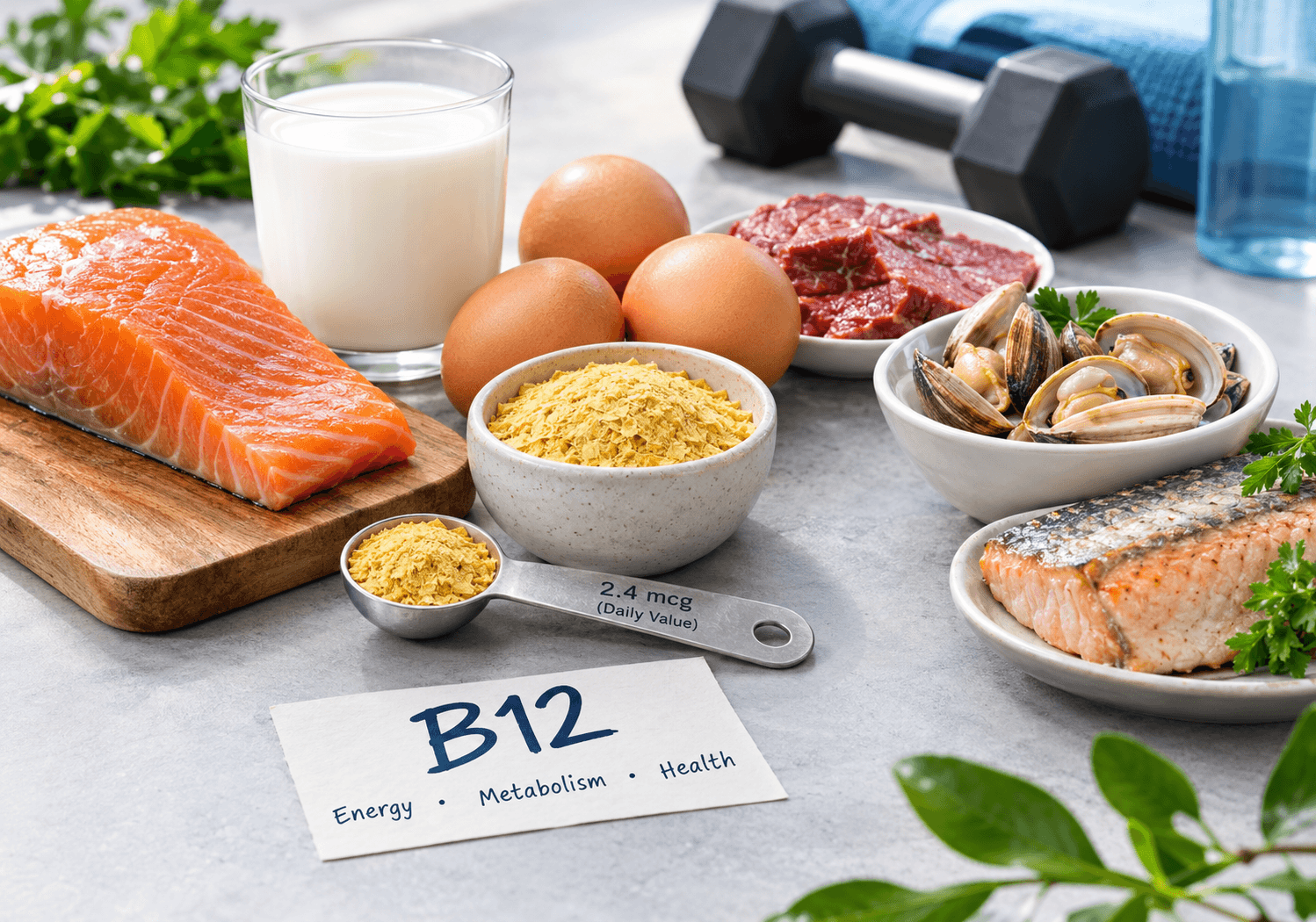
Before jumping to supplements, it is helpful to know where this nutrient naturally occurs. Vitamin B12 is found almost exclusively in animal products, though some fortified foods are available for those following a plant-based diet. The NIH states that the Recommended Dietary Allowance (RDA) for most adults is 2.4 micrograms (mcg) per day.
| Food Source | Serving Size | Vitamin B12 (mcg) | % Daily Value (DV) |
| Cooked Clams | 3 ounces | 84.1 mcg | 3,504% |
| Beef Liver | 3 ounces | 70.7 mcg | 2,946% |
| Fortified Nutritional Yeast | 1 tablespoon | 2.4 mcg | 100% |
| Cooked Trout | 3 ounces | 5.4 mcg | 225% |
| Cooked Salmon | 3 ounces | 2.6 mcg | 108% |
| Low-fat Milk | 1 cup | 1.2 mcg | 50% |
| Large Egg | 1 whole | 0.6 mcg | 25% |
Data sourced from the NIH Office of Dietary Supplements.
If you are vegan or vegetarian, hitting that 2.4 mcg target requires careful planning. Fortified nutritional yeast or a dedicated sublingual B12 supplement is often necessary to prevent deficiency.

Applying the Science: Does Vitamin B12 Deficiency Cause Low Energy and Affect Weight Loss in Your Workouts?
As a strength and conditioning coach, I see the practical impact of low energy every day. If you suspect your B12 levels are dragging you down, you should not try to push through high-intensity workouts as usual. Doing so increases your risk of poor form, injury, and burnout. Instead, we adapt your training to match your current energy capacity while you address the nutritional root cause.
Here is a practical, low-energy maintenance workout designed to preserve muscle mass and support metabolism without draining your central nervous system.
The Low-Energy Maintenance Workout
1. Goblet Squat
- Weight Guidance: Start with a 35 lb (16 kg) dumbbell or kettlebell.
- Sets & Reps: 3 sets of 8–10 reps.
- Tempo: 3-1-1-0 (3 seconds down, 1-second pause at the bottom, 1 second up, 0 seconds rest at the top).
- Rest: 90 seconds between sets.
- Regression: Box squat to an 18-inch (45-cm) bench to reduce balance demands and knee strain.
- Progression: Barbell back squat at 65% of your one-rep max (1RM) once energy returns.
2. Seated Cable Row
- Weight Guidance: 70 lb (32 kg) stack weight.
- Sets & Reps: 3 sets of 10–12 reps.
- Tempo: 2-1-2-0 (2 seconds pull, 1-second squeeze, 2 seconds release).
- Rest: 60 seconds between sets.
- Regression: Machine chest-supported row to eliminate lower back fatigue.
- Progression: Bent-over barbell row for greater core stabilization demand.
3. Incline Dumbbell Press
- Weight Guidance: 25 lb (11 kg) dumbbells per hand.
- Sets & Reps: 3 sets of 8–10 reps.
- Tempo: 3-1-1-0.
- Rest: 90 seconds between sets.
- Regression: Seated machine chest press for maximum stability.
- Progression: Flat barbell bench press.
4. Active Recovery Walk
- Distance: 1 to 2 miles (1.6 to 3.2 km).
- Pace: Moderate, conversational pace.
- Purpose: Promotes blood flow and aids recovery without spiking cortisol or draining energy reserves.
Coach’s Tip:
When your energy is low due to a potential B12 deficiency, focus on time under tension rather than heavy weight. Slowing down your tempo (like the 3-1-1-0 prescribed above) keeps the workout effective for muscle maintenance while using lighter, safer loads that do not tax your recovering nervous system.
Common Mistake:
Trying to maintain your previous high-intensity interval training (HIIT) or heavy lifting schedule while fatigued. Pushing through severe fatigue often leads to compromised form, particularly in compound lifts like squats and deadlifts, which dramatically increases the risk of lower back or joint injury.

Safety Notes and When to See a Doctor
It is critical to remember that self-diagnosing a vitamin deficiency can be dangerous. The symptoms of low B12 overlap with many other conditions, including thyroid disorders, iron deficiency anemia, and chronic fatigue syndrome.
If you experience persistent fatigue, unexplained weight changes, numbness or tingling in your extremities, or a sore, red tongue, you should consult a healthcare provider. A simple blood test can measure your serum B12 levels. In some cases, doctors may also test methylmalonic acid (MMA) or homocysteine levels, which are more sensitive markers of cellular B12 deficiency.
If you are diagnosed with a deficiency, your doctor may recommend high-dose oral supplements, sublingual drops, or intramuscular B12 injections, especially if you have pernicious anemia or an inability to absorb B12 through the gut due to a lack of intrinsic factor. Never attempt to treat severe neurological symptoms with over-the-counter supplements alone without medical supervision.
Related Tips: Supporting Your Metabolism Naturally
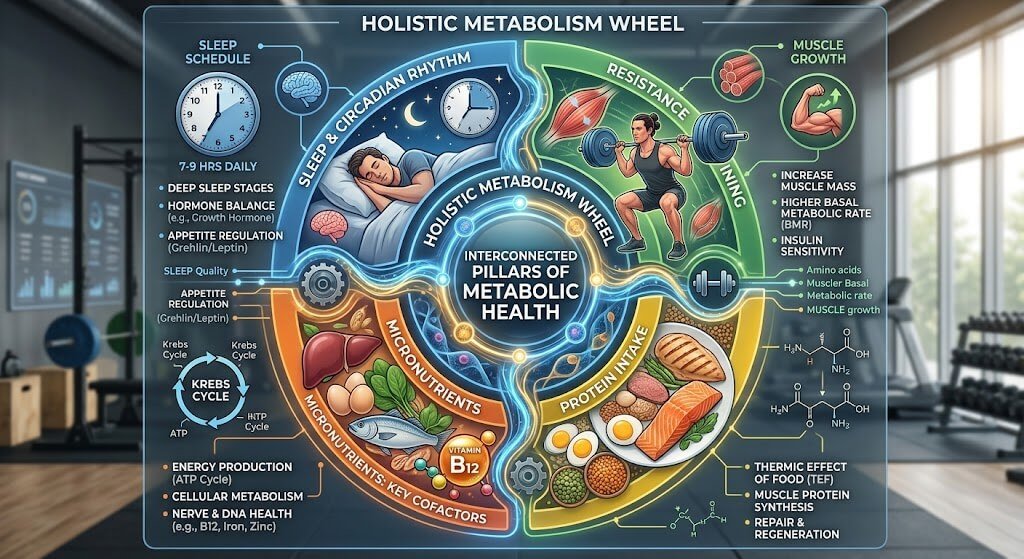
While addressing a specific nutrient like B12 is important, overall metabolic health requires a holistic approach. When you are dealing with low energy, looking at the big picture of what affects metabolism and body weight is crucial for long-term success.
First, ensure you are consuming the right nutrients that support normal energy metabolism beyond just B12, such as iron, magnesium, and B-complex vitamins. These micronutrients work synergistically to convert the food you eat into usable cellular energy.
Second, pay close attention to your macronutrients. Optimizing your protein intake and metabolism is one of the most effective ways to preserve lean muscle mass while in a calorie deficit, which in turn keeps your resting metabolic rate higher.
Do not overlook lifestyle factors. Understanding how sleep affects metabolism can be a game-changer, as poor sleep disrupts hunger hormones like ghrelin and leptin, making weight management even harder when you are already fatigued.
If you are navigating these changes later in life, learning how to increase metabolism naturally after 40 requires specific adjustments to resistance training frequency and protein distribution throughout the day. Finally, building sustainable habits to support metabolism naturally will always yield better results than relying on quick fixes or unproven supplements. If you are actively trying to increase metabolism naturally for weight loss, consistency in both nutrition and adapted, intelligent training is your most powerful tool.
Frequently Asked Questions
Can low B12 make you gain weight?
Low B12 does not directly cause fat gain. However, the severe fatigue it causes can reduce your daily movement and workout intensity. This drop in physical activity lowers your total calorie expenditure, which may indirectly lead to weight gain over time if your food intake remains the same.
Does B12 deficiency slow down metabolism?
A deficiency does not directly “break” your metabolism, but it impairs cellular energy production. This makes you feel too tired to move or exercise, which lowers your overall metabolic rate. Correcting the deficiency restores your ability to stay active and maintain a healthy metabolic pace.
How much B12 do I need daily for energy?
The Recommended Dietary Allowance (RDA) for most adults is 2.4 micrograms (mcg) per day. Pregnant and breastfeeding women require slightly more, at 2.6 mcg and 2.8 mcg, respectively. Always consult a doctor before taking high-dose supplements, as individual absorption rates vary widely.
What are the signs of vitamin B12 deficiency in women?
Common signs include persistent fatigue, weakness, pale or jaundiced skin, shortness of breath, and a smooth, red tongue. Women may also experience neurological symptoms like numbness or tingling in the hands and feet, brain fog, and mood changes.
Can B12 injections help with weight loss?
B12 injections are only effective for weight loss if you have a clinically diagnosed deficiency. In these cases, the injection restores energy levels, allowing you to exercise and move more. If your B12 levels are already normal, extra injections will not boost metabolism or burn fat.
How long does it take to fix a B12 deficiency?
The timeline depends on the severity of the deficiency and the treatment method. With high-dose oral supplements or injections, many people report improved energy levels within a few weeks. However, fully replenishing liver stores and resolving neurological symptoms can take three to six months of consistent treatment.
Conclusion
So, does vitamin B12 deficiency cause low energy and affect weight loss? The evidence is clear: a lack of this essential vitamin impairs red blood cell formation and cellular energy production, leading to profound fatigue. While B12 is not a magic weight-loss pill, correcting a deficiency removes a major physical barrier, allowing you to train effectively, move more throughout the day, and support a healthy metabolic rate. If you suspect your levels are low, prioritize getting a blood test and work with a healthcare provider on a targeted nutrition or supplementation plan. Pair that medical guidance with intelligent, adapted workouts, and you will be well on your way to reclaiming your energy and achieving your fitness goals.