Ketone supplements are everywhere now, and the claims around them are often bigger than the research. If you have heard that a drink can put your body into ketosis without cutting carbs, you are not wrong, but the full answer is more nuanced. This guide explains how exogenous ketones affect ketosis, what the research shows about blood levels, blood sugar, and performance, and where the safety questions are still open.
Quick Answer
Exogenous ketones are supplements that raise blood ketone levels without fasting or a strict low-carb diet. A 2022 meta-analysis of 43 trials found that they increased blood beta-hydroxybutyrate (BHB) by about 1.73 mM on average. Their effect on performance and long-term use is still mixed, and some people experience stomach upset.
What “Ketosis” Actually Means
Ketosis is a metabolic state in which your blood contains higher-than-usual levels of ketone bodies. The main ones are beta-hydroxybutyrate (BHB), acetoacetate, and acetone. Your liver makes these from fatty acids when glucose is in short supply, such as during fasting or prolonged carbohydrate restriction. The Storoschuk, Wood, and Stubbs review in Frontiers in Physiology describes ketosis as the accumulation of these ketones to detectable concentrations in the blood.
That definition matters for this question. Ketosis is measured by what is in your blood, not by how you got there. A ketogenic diet and a ketone drink can both raise BHB. The difference is in how fast they do it, how high they go, and what else changes in your body along the way.
I like to explain it to clients this way: ketosis is the destination, and there are two roads. One road is the long, slow route of diet changes. The other is a shortcut that delivers ketones directly. Both can end in the same place on a blood test, but the trip is not identical.
How Exogenous Ketones Work
Exogenous ketones are ketones that you take in from outside your body. Most supplements fall into three groups:
- Ketone salts: BHB bonded to a mineral such as sodium, potassium, calcium, or magnesium.
- Ketone esters (monoesters or diesters): BHB bonded to an alcohol-based compound that the body breaks down into BHB.
- Free or other forms: BHB in a non-salt form, or related compounds such as medium-chain triglyceride (MCT) oil, which the liver can convert to ketones.
Each form behaves a little differently. The research shows that the form, dose, and timing all shape how your blood levels respond. Two products labeled “ketone supplements” may produce very different results.
The main idea is simple: exogenous ketones add BHB to your bloodstream. Your body does not need to fast or cut carbs to see a rise in blood BHB after a dose.
Coach’s Tip: When you read a supplement label, look for the form of ketone (salt, ester, or other) and the amount of BHB per serving. Two drinks with the same label claim can have very different ketone content, so compare the numbers, not the marketing.
What the Research Shows About Blood Ketone Levels
The most consistent finding in the research is that exogenous ketones raise blood BHB. A systematic review and meta-analysis by Falkenhain, Daraei, and Forbes pooled 43 trials with 586 participants. The authors found that taking exogenous ketones increased blood BHB by an average of 1.73 mM, with a 95% confidence interval of 1.26 to 2.21 mM. This is a large, statistically clear effect.
The same review also looked at blood glucose. It found that exogenous ketones decreased blood glucose by about 0.54 mM on average. This is an important result, and I come back to it in the safety section.
Those numbers are averages across many different studies, products, and doses. Your own response will vary. Factors that affect your response include:
- The form of ketone you take
- The dose and how it is split across the day
- Whether you took it with food
- Your baseline metabolic health and body size
- Whether you are fasted or fed
There is also a technical point to keep in mind. The Storoschuk, Wood, and Stubbs review focused on intravenous (IV) BHB infusions and reported a strong linear relationship between infusion rate and blood BHB concentration. That study used IV delivery in a clinical setting, not oral supplements. Still, it shows why researchers care about controlling blood levels, and why oral products can be harder to predict from label to label.
Do Exogenous Ketones Put You in True Nutritional Ketosis?
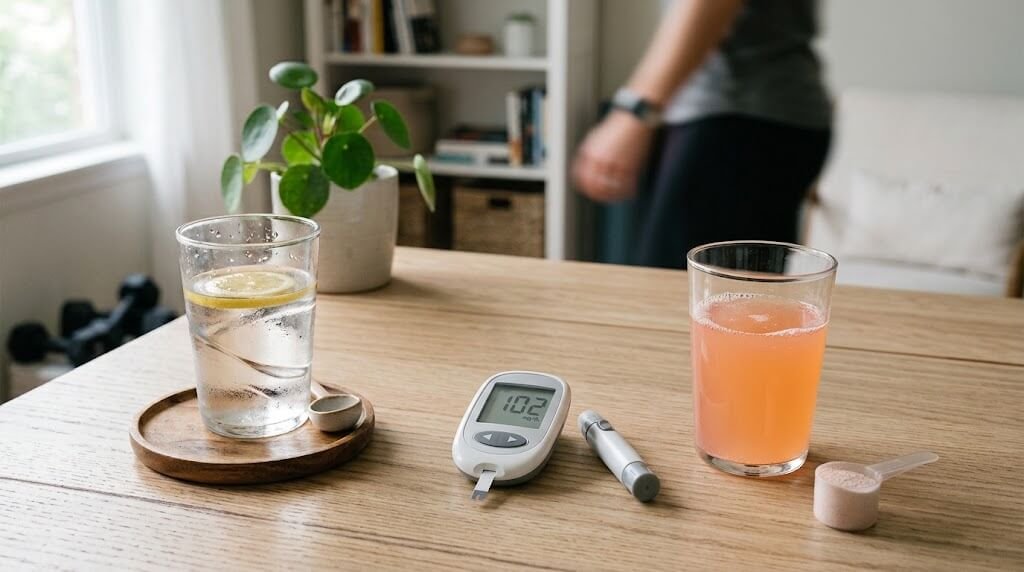
This is where the question gets more interesting. Exogenous ketones raise blood BHB, which is the marker used to define ketosis. But the research does not support the idea that a ketone drink fully replicates the whole metabolic picture of a ketogenic diet or fasting.
Here is what the research tells us. The effect on blood BHB is well documented. The effect on other metabolic changes, such as fat storage patterns, appetite hormones, and long-term adaptation, is less clear. Many studies measure the short-term blood response. Fewer studies follow people for months to see what happens to their health over time.
Researchers also distinguish between endogenous ketosis (your body makes ketones from its own fat stores) and exogenous ketosis (ketones come from a supplement). The Storoschuk, Wood, and Stubbs review notes that BHB has effects as both a fuel and a signaling molecule. That means ketones may do more than supply energy. Research into these signaling roles is still developing.
So the honest answer is this: exogenous ketones can raise the blood marker of ketosis, but they may not reproduce every effect of a true ketogenic diet.
Common Mistake: Assuming that a blood ketone reading is the same thing as the full benefits of a keto diet. A high BHB number tells you about one marker. It does not tell you about body composition, hunger, or long-term health.
Exogenous Ketones and Blood Sugar
Blood sugar is one of the most discussed topics in this area, so I want to be precise. The meta-analysis by Falkenhain, Daraei, and Forbes found that acute ingestion of exogenous ketones lowered blood glucose on average. The authors described this as the first systematic evaluation of the topic, and they noted that earlier studies were often small.
A more targeted study by Soto-Mota and colleagues in Endocrinology, Diabetes & Metabolism (2021) looked at people with type 2 diabetes. The study included 21 participants who took a ketone monoester for one month. The authors reported that the supplement was safe and well tolerated, and that glycemic control improved. This was a non-randomized study, so it cannot prove cause and effect, and its small size limits how far the results can be applied.
What does this mean for you? If you already take medication to manage blood sugar, a supplement that lowers glucose could change how your body responds to that medication. Do not start or stop any diabetes medication based on a supplement. Talk with your doctor first, and ask whether blood sugar monitoring should change if you add a ketone product.

Ketone Supplements and Exercise Performance
Athletes are a big part of the ketone supplement market, so performance is a common question. The research here is mixed, and it is important not to oversell it.
A review table in a PMC-indexed review of human studies on ketone supplements and exercise lists several acute trials. Some report better performance after a ketone ester dose, and others report no change in performance. The same table shows that many studies measured blood ketones and metabolic markers, such as glucose and lactate, but did not always show a performance gain.
Some newer work points the same direction. A 2026 systematic review in the journal Life describes exogenous ketone supplementation as a potential ergogenic strategy, meaning something that may improve performance, but it also highlights gaps in long-term data and safety. The review notes that many studies are small and that the safety of chronic use is not well understood.
A 2024 crossover trial in trained cyclists, titled Acute Ketone Monoester Supplementation Impairs 20-min Time-Trial Performance in Trained Cyclists: A Randomized, Crossover Trial and published in the International Journal of Sport Nutrition and Exercise Metabolism , reported that a ketone monoester slightly reduced time-trial performance compared with placebo. The effect was small, but it shows that results do not always favor the supplement.
Ongoing trials are still testing these questions. For example, an Ohio State University study registered on ClinicalTrials.gov is comparing a ketone ester with a placebo in people with a metabolic form of heart failure. An NIH-registered trial is examining ketone ester plus sodium bicarbonate during endurance exercise in low-oxygen conditions. These trials have not yet produced final results that I can verify, so treat them as signs of active research, not as proof.
The honest coaching view is this: for most lifters and runners, the evidence does not show a clear performance advantage. If you are an endurance athlete considering a ketone product, treat it as an experiment and track your results carefully.
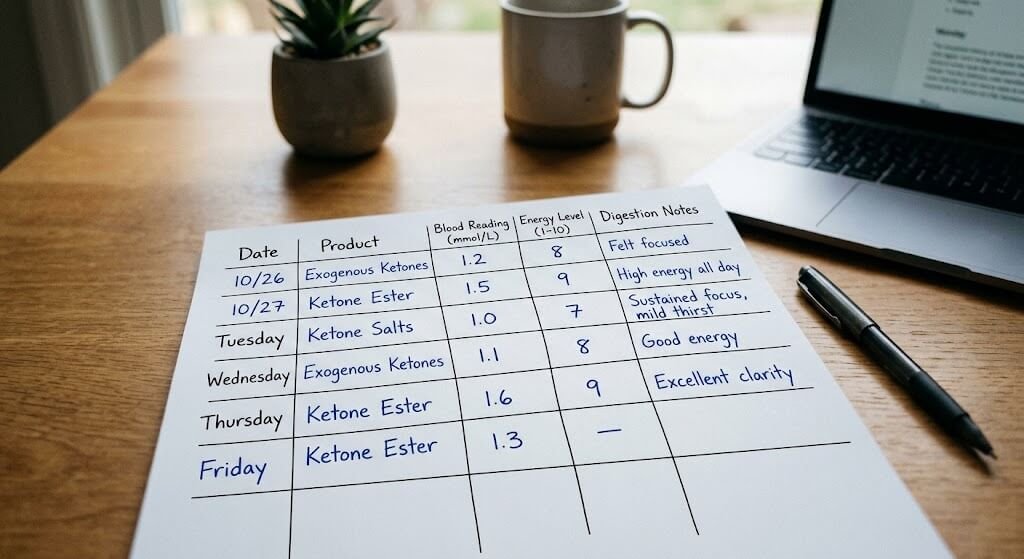
Coach’s Tip: If you test a ketone product for performance, run the same workout with and without it, on different days, with the same warm-up, sleep, and food. Write down your times and how you felt. One good session does not prove anything, and one bad session does not either.
Safety Notes for Exogenous Ketones
Safety is where the research is strongest for short-term use and weakest for long-term use. Here is what the studies show so far.
Short-term tolerability. In the type 2 diabetes study by Soto-Mota and colleagues, adverse reactions were described as mild and infrequent. They included mild nausea, headache, and gastric discomfort, and occurred after fewer than 0.5% of the drinks. Electrolyte levels, acid-base status, and kidney function stayed within normal ranges during the month.
Chronic use in healthy adults and adolescents. A randomized, double-blind, placebo-controlled study in healthy adolescents, published in PMC , examined 90 days of exogenous beta-hydroxybutyrate salt supplementation. The authors reported no significant differences in fasting blood safety markers, bone density, or blood pressure compared with placebo. Note that this was a single study, and adolescents should only take supplements under medical supervision.
Formulation matters for long-term safety. A recent rat study indexed in PMC looked at chronic exposure to different ketone supplements. The authors reported that liver responses depended on the formulation. Ketone salts showed the most favorable profile in that model, while two other forms produced adverse liver changes. Animal studies do not automatically apply to people, but this finding is a reason to read labels and avoid assuming all ketone products are alike.
Salt and electrolyte load. Many ketone salts contain sodium, potassium, calcium, or magnesium. If you already watch your sodium intake for blood pressure reasons, check the label and count it. Your doctor can tell you whether the amount fits your needs.
Blood sugar medications. As noted earlier, the research shows that exogenous ketones can lower blood glucose. If you take insulin or medications that lower blood sugar, speak with your doctor before using a ketone product.
Who should be careful. People who are pregnant or breastfeeding, people with kidney or liver disease, people with diabetes, and anyone taking prescription medication should talk with a doctor before using ketone supplements. This is not a complete list, and the long-term data are limited.
For topics involving medical conditions, medications, or supplements, check with a doctor or physical therapist first, especially if you have a health condition.
How to Apply This Research
If you are considering exogenous ketones, here is a practical process I would walk a client through:
- Start with a clear goal. Are you trying to test ketosis, support an exercise routine, or manage blood sugar? Each goal needs a different plan, and some goals may not be supported by the research.
- Talk with your doctor. Share your full medication list and health history. Ask whether a ketone product makes sense for you.
- Read the label. Identify the form of ketone (salt, ester, or other), the amount of BHB per serving, and the sodium and other mineral content.
- Pick one product and one purpose. Changing several variables at once makes it impossible to tell what is working.
- Track your results. Record blood ketone readings if you have a meter, blood glucose if relevant, how you feel, digestion, and workout performance.
- Stop and reassess if side effects appear. Nausea, headache, or stomach cramping are the most common reported side effects. Persistent or severe symptoms need medical attention.
Common Mistake: Taking a ketone drink on an empty stomach and then assuming the stomach upset is normal. Many people feel worse fasted. If you get nausea, try taking it with food, follow the label, and talk with your doctor if symptoms continue.
Ketone Salts vs. Ketone Esters: What’s the Difference?
Both salts and esters raise blood BHB, but they differ in how they are made and how they feel to take. The research points to several practical differences:
- Ketone salts are often easier to mix, but they carry a mineral load that can matter for people watching sodium or potassium.
- Ketone esters can raise blood BHB more strongly in some studies, but many people find the taste harder to tolerate and they can cause more stomach upset.
- Other forms, including free BHB products and MCT oil, have their own profiles and limited human data for long-term use.
The rat study cited above is a reminder that these forms may not be interchangeable for long-term safety. For short-term use, the practical differences are often taste, cost, and how your stomach handles the dose.
Can Exogenous Ketones Replace a Keto Diet?
The short answer is no, at least not as far as the current research shows. A ketogenic diet changes many things at once: carbohydrate intake, protein, fat, meal timing, and hunger patterns. A ketone drink changes only the blood level of BHB in most studies.
Some people use exogenous ketones alongside a reduced-carb approach, and that combination is an area of interest. But the evidence for using ketone supplements as a standalone replacement for diet changes is limited. If your goal is long-term metabolic change, the diet and lifestyle foundations still matter most.
I also want to be clear about one myth: exogenous ketones are not a shortcut to weight loss. The research I reviewed focused on blood markers, blood glucose, and performance. It did not show that ketone drinks produce meaningful fat loss over time.
Related Tips for Readers
- Keep a clean baseline. Know your typical energy, digestion, and blood sugar before you start. Without a baseline, it is hard to judge change.
- Watch your hydration. Ketone products can affect electrolyte balance in some people, so drink water and check labels for sodium and potassium.
- Plan around training. If you test a product for workouts, pick a session type you can repeat, such as a standard 20-minute time trial or a set of intervals, so comparisons are fair.
- Don’t mix with other stimulants without advice. Combining ketone products with caffeine or pre-workout formulas can make side effects harder to sort out.
- Be skeptical of big claims. Any product that promises rapid fat loss, dramatic energy gains, or a “cure” should prompt caution.

Frequently Asked Questions
Do exogenous ketones put you in ketosis?
Yes, in the sense that they raise blood BHB, which is the marker used to define ketosis. Research shows a large average increase after ingestion. However, the level and duration depend on the product and dose, and a blood rise does not guarantee the same metabolic effects as fasting or a keto diet.
Are exogenous ketones safe?
Short-term studies in adults with type 2 diabetes and in healthy adults have reported mild, infrequent side effects, such as nausea, headache, or stomach discomfort. Long-term safety data are limited, and some animal research suggests the formulation matters. Talk with your doctor before use, especially if you have a health condition.
Do ketone supplements lower blood sugar?
A meta-analysis of 43 trials found that acute ingestion of exogenous ketones lowered blood glucose on average. If you take medication for blood sugar, consult your doctor before using a ketone product, because your needs may change.
Can exogenous ketones replace a keto diet?
Current research does not show that ketone drinks fully replace a ketogenic diet. They mainly raise blood BHB. Diet and lifestyle changes affect many other markers that supplements may not reproduce.
Do exogenous ketones improve workouts?
Results are mixed. Some acute studies show improved performance or metabolic changes, while others show no benefit, and one trained-cyclist study reported a small decline in time-trial performance. The evidence does not yet support a clear, consistent advantage for most people.
What is the difference between ketone salts and ketone esters?
Salts are usually BHB bonded to minerals, and esters are BHB bonded to an alcohol-based compound. Salts can add a mineral load, while esters can cause more stomach upset for some people. Their effects on blood levels and long-term safety may differ.
Conclusion
Exogenous ketones do affect ketosis in a measurable way. They raise blood BHB, which is the marker that defines ketosis, and a 2022 meta-analysis found a large average increase across 43 trials. They also lowered blood glucose on average in that same review, which matters if you take blood sugar medication. The research on exercise performance is mixed, and long-term safety data are still limited, especially for chronic use.
If you are curious, start with a conversation with your doctor, read the label carefully, and track your results honestly. Ketone supplements are not a shortcut that replaces the fundamentals of nutrition, training, and sleep. Treat them as one tool to evaluate, not as a guaranteed result.