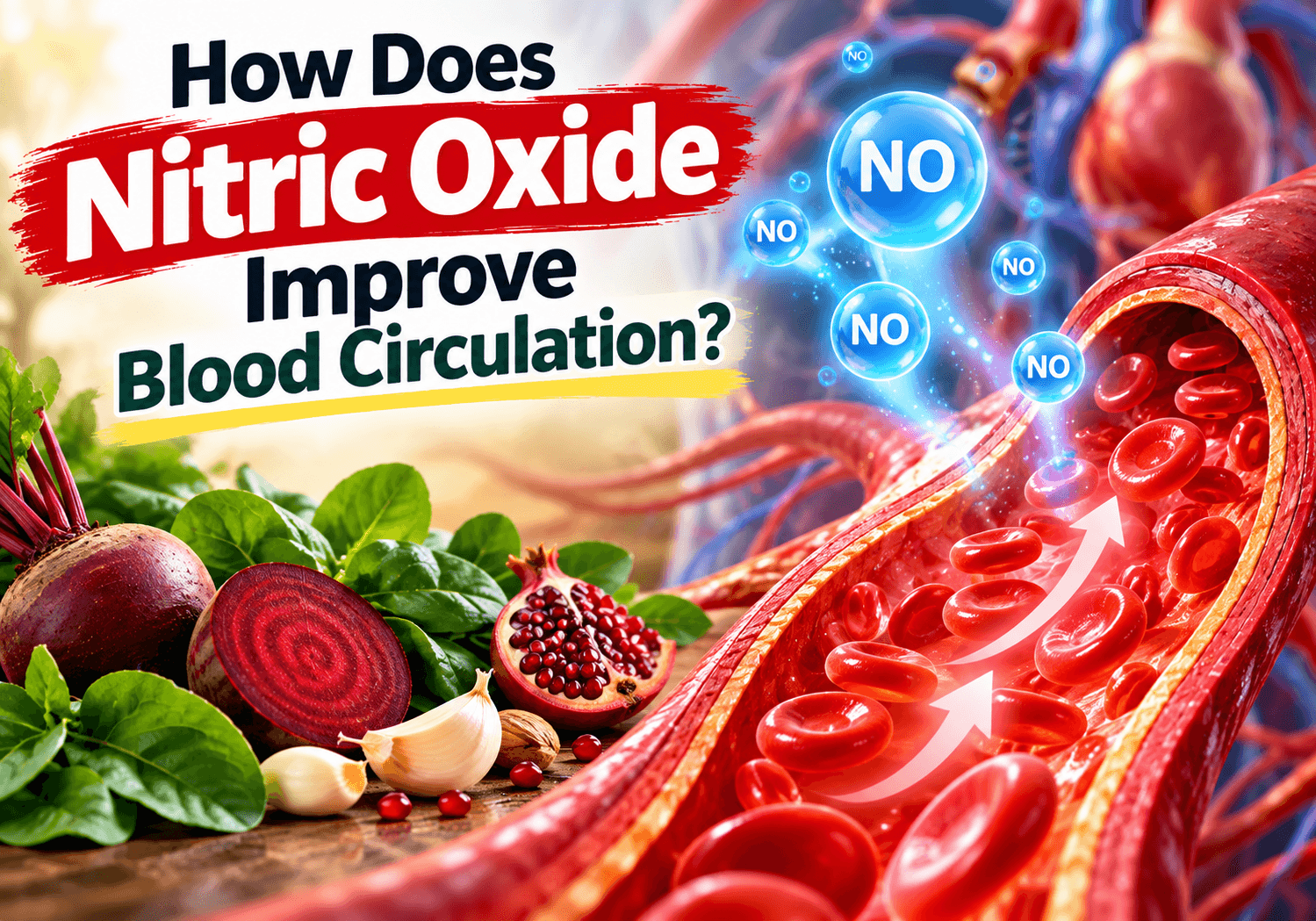
Every heartbeat pushes blood into about 60,000 miles of blood vessels. Blood pressure is only part of what keeps it moving. The vessels themselves constantly widen and narrow to send blood where it’s needed, and one of the main signals behind that is a small gas molecule called nitric oxide (NO).
Nitric oxide tells blood vessels to relax. Relaxed vessels let blood flow more easily, help regulate blood pressure, and deliver oxygen and nutrients to your muscles, brain, and organs. When nitric oxide signaling weakens, circulation and cardiovascular health tend to suffer.
This guide explains how nitric oxide improves blood circulation, what reduces it, how to support it naturally, and what nitric oxide supplements can and can’t do.
What Is Nitric Oxide and Why Does the Body Need It?
Nitric oxide is a signaling molecule: a chemical messenger that carries instructions from one cell to another. It lasts only a few seconds in the body, so it works locally and quickly, close to where it is made. The discovery of its role in the cardiovascular system was important enough to earn the 1998 Nobel Prize in Physiology or Medicine.
What nitric oxide does in the body
Nitric oxide is involved in many processes, including:
- Widening blood vessels (vasodilation), its best-known role
- Helping regulate blood pressure
- Reducing platelet stickiness, which helps keep blood flowing smoothly
- Limiting inflammation in the vessel wall
- Supporting immune defense and nerve signaling
Where nitric oxide is produced
The body makes nitric oxide in two main ways:
- The L-arginine pathway. Enzymes called nitric oxide synthases (NOS) convert the amino acid L-arginine into nitric oxide. The form most important for circulation is endothelial NOS (eNOS).
- The nitrate–nitrite pathway. Nitrates from foods like beetroot and leafy greens are converted by bacteria in your mouth into nitrite, which the body can then turn into nitric oxide, especially when oxygen levels are low.
The role of the endothelium
The endothelium is a single layer of cells lining the inside of every blood vessel. It is more than a passive lining. It senses blood flow, releases chemical signals, and controls how relaxed or tight your vessels are. Endothelial cells are the main source of nitric oxide for circulation, so a healthy endothelium is central to healthy blood flow.
How Does Nitric Oxide Improve Blood Circulation?
Nitric oxide relaxes smooth muscle in blood vessels
Arteries are wrapped in layers of smooth muscle. When that muscle contracts, the vessel narrows. When it relaxes, the vessel widens.
The process works in a short chain:
- Endothelial cells produce nitric oxide, often in response to blood flowing across them (a force called shear stress).
- Nitric oxide diffuses into the neighboring smooth muscle cells.
- It activates an enzyme called soluble guanylate cyclase, which raises levels of a messenger molecule called cGMP.
- cGMP lowers calcium activity inside the muscle cell, and the muscle relaxes.
The result is a wider blood vessel. This is the mechanism behind nitroglycerin, a heart medication that releases nitric oxide to relieve chest pain.
How vasodilation allows blood to flow more easily
The width of a vessel has a large effect on blood flow. Under the physics that governs flow through tubes, a small increase in a vessel’s radius produces a large drop in resistance. Even modest widening therefore lets much more blood pass through with less effort from the heart.
This is why your muscles get more blood during exercise. As blood flow rises, the endothelium releases more nitric oxide, the vessels open further, and working tissues receive more oxygen.
Nitric oxide’s role in vascular function and blood pressure regulation
Nitric oxide provides a constant background “relax” signal that keeps vessel tone in balance. This lowers peripheral resistance, which is one of the main factors determining blood pressure.
Nitric oxide also protects the vessel wall. It helps prevent platelets from clumping, discourages white blood cells from sticking to the lining, and slows the growth of smooth muscle cells that can thicken artery walls. These effects are part of why healthy nitric oxide signaling is linked to better long-term vascular health.
How nitric oxide affects oxygen and nutrient delivery
Better blood flow means better delivery. When nitric oxide widens small arteries and arterioles, more oxygen, glucose, and nutrients reach the tissues, and waste products like carbon dioxide are cleared more efficiently.
The nitrate–nitrite pathway is especially useful here because it produces more nitric oxide in low-oxygen conditions. In effect, it helps send blood toward the tissues that need it most, such as hard-working muscles.
What Happens When Nitric Oxide Production Is Impaired?
Endothelial dysfunction and reduced nitric oxide availability
Endothelial dysfunction is a condition in which the inner lining of blood vessels stops working properly. A main feature is reduced nitric oxide availability. The body either makes less nitric oxide or destroys it faster through oxidative stress.
Blood vessels then lose some of their ability to relax. Endothelial dysfunction is considered an early step in atherosclerosis (artery plaque buildup) and is associated with high blood pressure, heart disease, and erectile dysfunction, which is often a vascular problem at its root.
Lifestyle and health factors that may affect nitric oxide signaling
Factors linked to reduced nitric oxide signaling include:
- Smoking, one of the strongest causes of endothelial damage
- High blood pressure
- Diabetes and high blood sugar
- High LDL cholesterol and high triglycerides (see our article on whether high triglycerides can cause fatigue)
- Physical inactivity
- Obesity and chronic inflammation
- Aging, as nitric oxide production tends to decline over time
- Diets low in vegetables and high in ultra-processed food
Why circulation symptoms require proper medical assessment
Cold hands and feet, leg pain when walking, numbness, swelling, or erectile problems can all have circulatory causes. They can also point to conditions like peripheral artery disease, diabetes, heart disease, or nerve damage. These conditions need a real diagnosis, not just a supplement. If you notice new or persistent circulation symptoms, see a healthcare professional.
How to Increase Nitric Oxide Naturally
Eat nitrate-rich vegetables, such as beetroot and leafy greens
Dietary nitrate is one of the best-studied ways to raise nitric oxide. Good sources include:
- Beetroot and beetroot juice
- Arugula (rocket)
- Spinach
- Swiss chard, lettuce, and kale
- Celery and radishes
Beetroot and nitric oxide production: Studies on beetroot juice consistently show increases in blood nitrite and, in many trials, short-term reductions in blood pressure, mostly in systolic pressure.
Tip: The nitrate pathway depends on bacteria in your mouth. Research suggests that antibacterial mouthwash can blunt this conversion, so it’s worth discussing with your dentist if you use one daily.
Exercise regularly to support vascular health
Exercise is one of the most powerful natural nitric oxide boosters. Increased blood flow during activity creates shear stress on the endothelium, which stimulates eNOS. Over weeks and months, regular exercise improves endothelial function itself.
Brisk walking, cycling, swimming, and resistance training all help. Consistency matters more than intensity.
Follow a heart-healthy dietary pattern
Beyond nitrates, an overall pattern like the Mediterranean or DASH diet supports nitric oxide by lowering oxidative stress and inflammation. Helpful foods include:
- Fruits and vegetables rich in antioxidants and vitamin C
- Cocoa and dark chocolate (flavanols are linked to improved endothelial function)
- Nuts, seeds, and legumes, which supply L-arginine
- Watermelon, a natural source of L-citrulline
- Garlic, olive oil, and oily fish
A healthy gut and diet also support overall metabolic health. Our article on prebiotics and postbiotics covers this connection.
Avoid smoking and address cardiovascular risk factors
Quitting smoking is one of the most effective steps for endothelial health. Managing blood pressure, blood sugar, cholesterol, and weight with your doctor protects nitric oxide signaling over the long term. Good sleep and stress management also play a supporting role.
Do Nitric Oxide Supplements Improve Blood Circulation?
“Nitric oxide supplements” don’t contain nitric oxide, which is a gas that wouldn’t survive in a capsule. They provide raw materials the body may use to make it. The evidence varies a lot by ingredient.
L-arginine and nitric oxide production
L-arginine is the direct building block for nitric oxide. Oral L-arginine is heavily broken down in the gut and liver before reaching the bloodstream, which limits its effect. Most healthy people also already have enough arginine for eNOS to work. Results in clinical trials have been mixed.
L-citrulline and arginine availability
L-citrulline is converted into L-arginine, mainly in the kidneys, and avoids much of that first-pass breakdown. Studies show that citrulline raises blood arginine levels more effectively than arginine itself. Some trials suggest modest benefits for blood pressure and exercise performance, but results are not consistent.
Beetroot supplements and dietary nitrates
Beetroot juice and nitrate concentrates have the strongest evidence among nitric-oxide-related supplements, particularly for short-term blood pressure reduction and some exercise outcomes. Nitrate content varies widely between products, so results depend on the dose actually delivered.
Many branded formulas combine these ingredients with herbs and vitamins. For product-specific analysis, see our reviews of Nitric Boost Ultra, CircO2, and Red Boost. When reading any label, check whether the key ingredients appear in amounts comparable to those used in clinical studies.
What clinical evidence does and does not establish
What the evidence supports:
- Dietary nitrate (especially beetroot juice) can raise nitric oxide markers and modestly lower blood pressure in many people.
- L-citrulline raises arginine levels more reliably than L-arginine.
What it does not establish:
- That supplements treat or reverse cardiovascular disease, peripheral artery disease, or other circulation disorders
- That proprietary blends work as advertised, since most haven’t been tested as finished products
- That benefits seen in small, short-term studies last over the long term
Supplements may help as part of a healthy lifestyle. They do not replace exercise, diet, or medical treatment.
Supplement safety, interactions, and medication considerations
Talk to your doctor before taking nitric oxide supplements, especially if you:
- Take nitrate medications (such as nitroglycerin or isosorbide) or PDE5 inhibitors (such as sildenafil or tadalafil). Combining agents that act on the nitric oxide pathway can cause dangerous drops in blood pressure.
- Take blood pressure medication, since effects may add up.
- Have had a heart attack. A clinical trial found L-arginine was not helpful after a heart attack and raised safety concerns.
- Have low blood pressure, kidney disease, or a history of kidney stones. Beets are high in oxalate.
- Are pregnant or breastfeeding.
Common side effects include digestive upset, bloating, and headaches. Pink or red urine after beetroot (“beeturia”) is harmless.
How Long Does It Take to Increase Nitric Oxide?
There is no universal timeframe. It depends on what you’re doing and what you’re measuring.
- Nitrate-rich foods and beetroot juice: Blood nitrite usually rises within a few hours of intake. Short-term blood pressure effects in studies often appear within the same window and fade within about a day.
- Citrulline or arginine supplements: Blood amino acid levels rise within hours, but any measurable effect on blood pressure or vessel function, if it occurs, has generally been studied over weeks.
- Exercise: A single session briefly boosts nitric oxide release. Lasting improvements in endothelial function usually develop over several weeks of consistent training.
- Lifestyle changes such as quitting smoking or improving diet benefit vascular health gradually over months.
Individual factors such as age, existing health conditions, medications, oral bacteria, and dose all affect how quickly and how strongly a person responds.
Frequently Asked Questions
How does nitric oxide relax blood vessels?
Nitric oxide made by the endothelium diffuses into the smooth muscle around the vessel. There it raises cGMP levels, which lowers calcium activity and lets the muscle relax. The vessel widens, and blood flows more easily.
Does nitric oxide help improve circulation?
Yes. Nitric oxide is one of the body’s main signals for widening blood vessels. It increases blood flow, helps regulate blood pressure, and improves oxygen delivery to tissues.
What foods naturally increase nitric oxide?
Nitrate-rich vegetables are the most effective, including beetroot, arugula, spinach, Swiss chard, lettuce, and celery. Watermelon (citrulline), nuts and seeds (arginine), and cocoa flavanols may also support nitric oxide activity.
Does beetroot juice increase nitric oxide?
Yes. Beetroot juice is rich in dietary nitrate, which mouth bacteria and the body convert into nitrite and then nitric oxide. Studies show it can raise nitrite levels and modestly lower blood pressure in many people.
What is the difference between L-arginine and L-citrulline?
L-arginine is the direct raw material for nitric oxide, but much of it is broken down before it reaches the bloodstream. L-citrulline is converted into arginine in the body and raises blood arginine levels more efficiently.
Can nitric oxide supplements lower blood pressure?
Dietary nitrate supplements such as beetroot juice have shown modest, short-term blood pressure reductions in clinical studies. Evidence for other ingredients is mixed. Supplements should not replace prescribed blood pressure medication. For more, see our review of Blood Pressure 911.
How can you tell if your nitric oxide levels are low?
There is no reliable home test. Saliva test strips measure nitrite, not nitric oxide directly, and aren’t validated for diagnosis. Symptoms such as fatigue, cold extremities, or erectile difficulties are not specific and can have many causes, so a doctor’s evaluation of your vascular health is the best route.
Is it safe to take nitric oxide supplements every day?
Many healthy adults tolerate dietary nitrate and citrulline well, but daily use isn’t right for everyone. People taking nitrates, PDE5 inhibitors, or blood pressure medication, people with kidney problems, and those with a history of heart attack should speak with a doctor first.
Key Takeaways
- Nitric oxide is a signaling molecule made mainly by the endothelium, the inner lining of blood vessels.
- It improves circulation by relaxing vascular smooth muscle, widening vessels, lowering resistance, and improving oxygen and nutrient delivery.
- Reduced nitric oxide (endothelial dysfunction) is linked to smoking, high blood pressure, diabetes, high cholesterol, inactivity, and aging.
- The best-supported natural strategies are eating nitrate-rich vegetables, exercising regularly, following a heart-healthy diet, and not smoking.
- Supplements have limits. Beetroot and dietary nitrate have the strongest evidence, citrulline is more promising than arginine, and most branded blends are untested as finished products.
- Check with a doctor before using supplements if you take heart or erectile dysfunction medication, and get any persistent circulation symptoms properly assessed.
This article is for educational purposes only and is not medical advice. Consult a qualified healthcare professional before changing your diet, exercise routine, or supplements, especially if you have a medical condition or take medication.