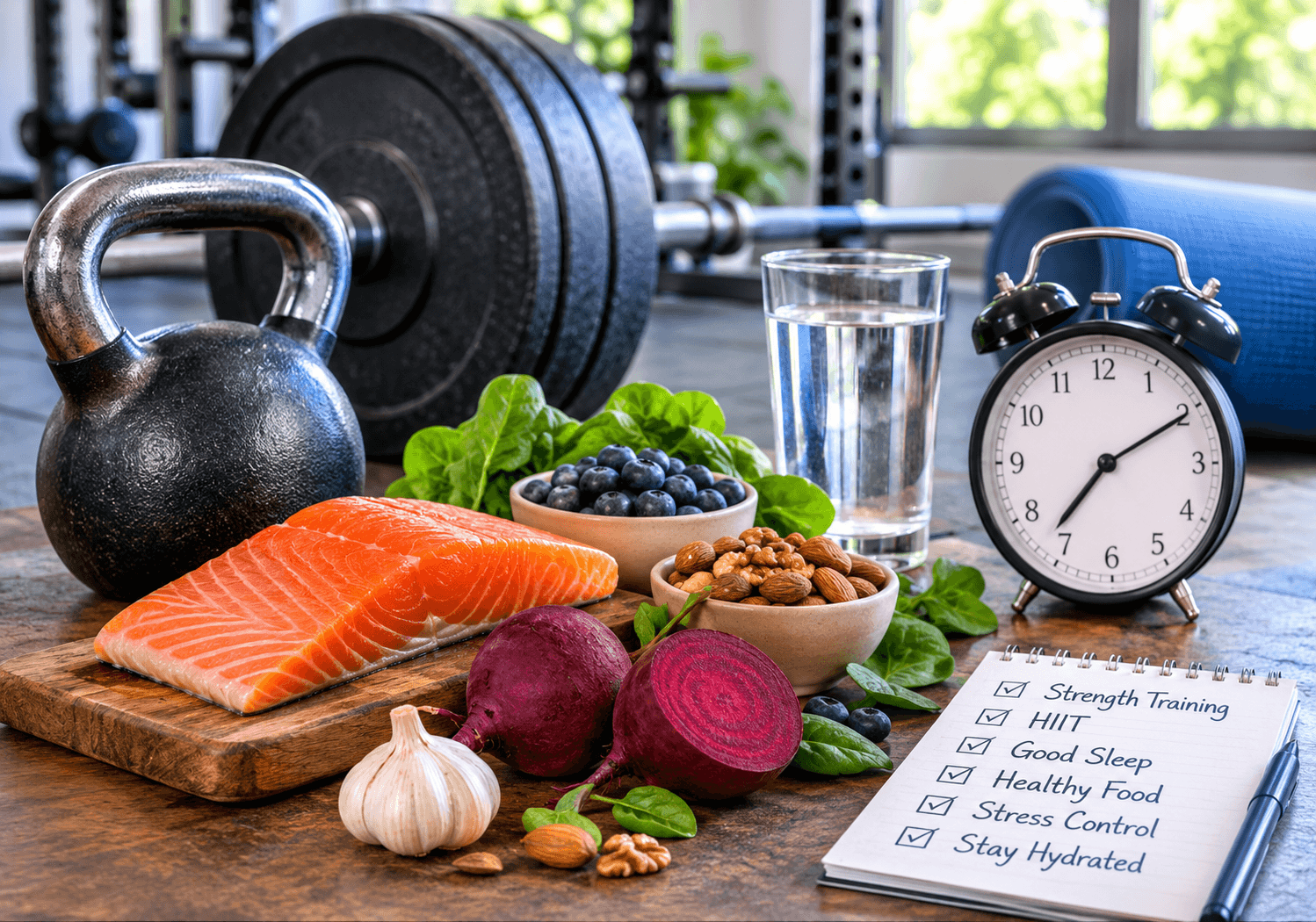
You don’t need a prescription or a stack of pills to feel stronger, more energized, and more resilient in the gym or in life. How to naturally boost testosterone and blood flow for stamina comes down to a handful of proven levers: compound resistance training, high-intensity intervals, quality sleep, targeted nutrition, and stress control. I’ve coached men in their 30s, 40s, and 50s through these exact protocols, and the results show up in the numbers on the bar, in resting heart rate, and in how you feel at 2 p.m. on a Tuesday.
This guide walks you through seven specific strategies, a sample weekly schedule, and the form cues you need to execute each one safely. No hype, no miracle claims—just the training and lifestyle changes the research actually supports.
QUICK ANSWER
The most effective natural ways to boost testosterone and blood flow for stamina are: (1) heavy compound lifts 2–3×/week, (2) 2 HIIT sessions/week, (3) 7–9 hours of quality sleep, (4) adequate protein, zinc, and vitamin D, and (5) daily stress-management practice. Consistency over 8–12 weeks produces measurable changes in free testosterone, resting heart rate, and perceived stamina.
Why Testosterone and Blood Flow Matter for Stamina
Testosterone is the primary anabolic hormone in men. It drives muscle protein synthesis, supports bone density, and influences mood, drive, and recovery capacity. Blood flow—specifically the ability of your endothelium (the inner lining of blood vessels) to produce nitric oxide and dilate—determines how efficiently oxygen and nutrients reach working muscle.
When both systems are optimized, you recover faster between sets, sustain higher intensity for longer, and feel less fatigued throughout the day. Research published in the Journal of Strength and Conditioning Research links regular resistance training with acute increases in total and free testosterone, while cardiovascular training improves endothelial function and nitric oxide bioavailability (1, 2).
The good news: you don’t need to choose one or the other. The strategies below work synergistically.

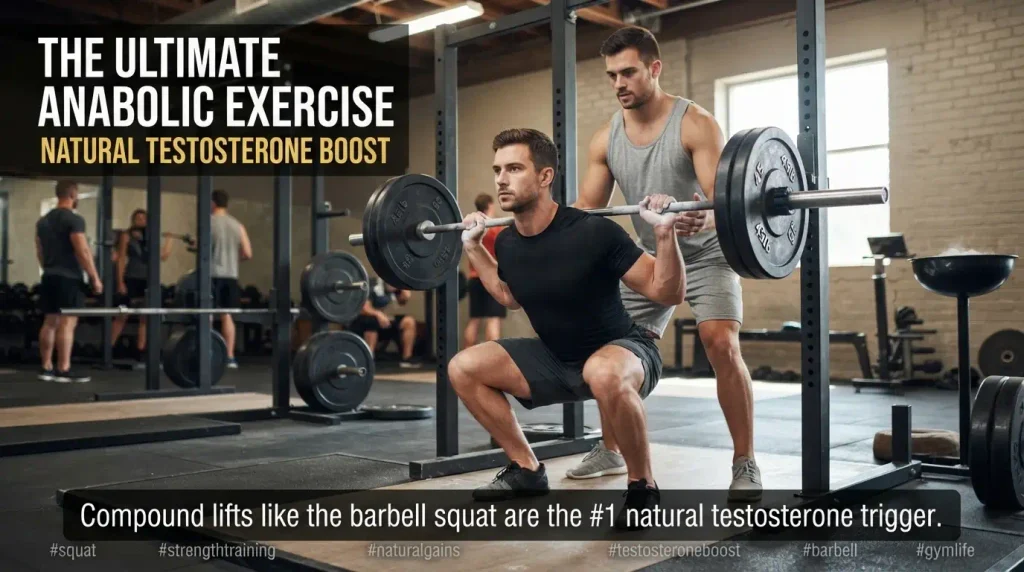
This is the single highest-impact training stimulus for natural testosterone production. Large, multi-joint movements that recruit the pectorals, lats, quadriceps, hamstrings, glutes, and erector spinae simultaneously trigger a greater hormonal response than isolation work.
The core lifts:
- Barbell back squat – 4 sets × 5 reps at 80–85% of your 1-rep max
- Conventional or trap-bar deadlift – 3 sets × 5 reps at 80–85%
- Barbell bench press – 4 sets × 6 reps at 75–80%
- Weighted pull-ups or barbell rows – 3 sets × 8 reps at 70–75%
Form cues I give every client:
- Squat: “Sit between your hips, keep your chest proud, and drive through the mid-foot. Your knees track over your toes, not inward.”
- Deadlift: “Hinge at the hips, keep the bar close to your shins, and lock out by extending the hips, not by shrugging the shoulders.”
- Bench: “Retract the scapulae, arch slightly, and lower the bar to the lower chest with a 2-second tempo.”
Rest 2–3 minutes between heavy sets. This is not a bodybuilding session; you want the mechanical tension and the hormonal spike.
COACH’S TIP
Track your top set each week. If you hit 5 reps at 315 lb (143 kg) on the squat this week, aim for 5 × 317.5 lb (144 kg) next week. Progressive overload over 8–12 weeks is what drives the hormonal and vascular adaptations, not any single session.
Regression (beginner or returning from injury): Use a goblet squat with a 40–60 lb (18–27 kg) dumbbell held at the chest, a dumbbell row on a bench, and a push-up or light dumbbell press. Focus on 3 × 10 reps with a 3-second eccentric.
Progression (intermediate/advanced): Add a 5-second pause at the bottom of the squat, use a belt for deadlifts above 90% of 1RM, or perform a 5-4-3-2-1 pyramid (5 reps at 80%, 4 at 85%, 3 at 90%, 2 at 95%, 1 at 97%).
Steady-state cardio is fine for general health, but HIIT is more time-efficient and has a stronger effect on nitric oxide production and cardiovascular conditioning. The repeated surges in heart rate force your endothelium to adapt, improving vascular dilation over time.
Sample HIIT session (20–25 minutes including warm-up):
| Segment | Duration / Reps | Rest |
| Rowing machine (moderate pace) | 5 min | — |
| All-out row | 30 sec | 60 sec × 6 rounds |
| Kettlebell swings (53 lb / 24 kg) | 15 reps | 45 sec × 4 sets |
| Burpees or jump rope | 40 sec | 40 sec × 5 rounds |
| Cool-down walk | 5 min | — |
Perform this 2× per week, ideally on non-consecutive days and not the day before a heavy lower-body lift.
Why it works for blood flow: The repeated peak-and-recover pattern increases shear stress on vessel walls, which upregulates endothelial nitric oxide synthase (eNOS). Over 6–8 weeks, this translates to better arterial compliance and lower resting blood pressure (3).
COMMON MISTAKE
Going “all out” on every interval so your form breaks down. If your kettlebell swing starts looking like a hip hinge with a shrug, you’ve lost the stimulus. Drop the weight to 35 lb (16 kg) and reset. Quality reps beat ego reps every time.
Regression: Replace burpees with step-ups, use a lighter kettlebell (26 lb / 12 kg), and extend rest to 90 seconds.
Progression: Shorten rest to 30 seconds, add a 4th set of swings, or swap rowing for a 400 m (0.25 mi) track sprint.
Strategy 3: Prioritize Sleep Quality
This is the one most guys skip, and it’s the one that undoes everything else. Testosterone production peaks during slow-wave sleep. A study referenced by Harvard Health found that men sleeping only 5 hours per night had 10–15% lower testosterone levels compared to those sleeping 7–8 hours (4).
Practical targets:
- 7–9 hours in bed, aiming for 7+ hours of actual sleep
- Consistent bedtime and wake time (±30 min), even on weekends
- Room at 65–68 °F (18–20 °C), dark, and quiet
- No screens 30–60 minutes before bed
- Avoid alcohol within 3 hours of sleep (it fragments REM and suppresses the overnight testosterone pulse)
If you’re a shift worker or a new parent, work with what you can. Even adding 30 minutes of consistent sleep per night shifts the hormonal balance in a favorable direction.

Strategy 4: Nutrition for Hormonal Support
You don’t need a complicated diet. You need enough calories, enough protein, and a few specific micronutrients that act as cofactors in steroidogenesis (the biochemical pathway that builds testosterone).
Macronutrient targets (general guidance for a 180 lb / 82 kg male training 4–5×/week):
- Protein: 0.7–1.0 g per lb of body weight (1.5–2.2 g/kg) daily
- Fats: 25–35% of total calories (cholesterol is a precursor to testosterone)
- Carbs: Fill the remaining calories; they support training intensity and recovery
Key micronutrients:
| Nutrient | Daily Target | Best Food Sources |
| Zinc | 11 mg (male RDA) | Oysters, red meat, pumpkin seeds, lentils |
| Magnesium | 400–420 mg | Dark leafy greens, nuts, dark chocolate, bananas |
| Vitamin D | 600–800 IU (more if deficient) | Sunlight (15–20 min midday), fatty fish, fortified dairy |
| Omega-3 (EPA/DHA) | 250–500 mg combined | Salmon, sardines, mackerel, walnuts |
Zinc is particularly important. Research from the NIH notes that zinc deficiency is linked to reduced testosterone and impaired spermatogenesis, while adequate intake supports normal hormonal function (5).
Foods that support blood flow: Beets and beet juice (natural nitrates → nitric oxide), watermelon (citrulline → arginine → nitric oxide), dark chocolate (flavanols), and garlic. You don’t need supplements if your plate covers these.
For a deeper look at how specific nutrients interact with male hormonal health, see our guide on zinc and testosterone levels.
Strategy 5: Manage Stress and Cortisol
Cortisol and testosterone have an inverse relationship. Chronic stress keeps cortisol elevated, which suppresses the hypothalamic-pituitary-gonadal axis and blunts the luteinizing hormone signal that tells your testes to produce testosterone.
What actually works (ranked by effort-to-impact):
- 10 minutes of box breathing daily – 4 sec in, 4 sec hold, 4 sec out, 4 sec hold. Do it before bed or after a hard session.
- Walk after lunch – 15–20 minutes, no phone, no podcast. Low-intensity movement lowers cortisol without adding training load.
- Limit alcohol – Keep it to 1–2 drinks on a weekend, max. Alcohol disrupts sleep architecture and increases estrogen metabolism.
- Schedule “off” time – One full day per week with zero structured training. Your HPA axis needs it.
If you notice persistent fatigue, low drive, or trouble sleeping despite good habits, that’s a signal to check in with your doctor. Chronic stress can also lower libido and energy in ways that overlap with low testosterone. Our article on how stress and poor sleep affect male libido breaks down the hormonal chain in more detail.
Strategy 6: Targeted Blood Flow and Circulation Exercises
Beyond HIIT, specific movements and habits improve peripheral circulation, particularly in the lower body where many men feel the biggest stamina difference.
Weekly “flow” routine (15 minutes, 2–3×/week):
- Leg swings – 15 forward/back per leg (activates hip flexors, warms the groin)
- Deep bodyweight squats (hold 30 sec × 3) – compresses the pelvic floor, increases local perfusion
- Hip circles and 90/90 stretches – 60 sec per side (opens the hip capsule, improves arterial flow to the glutes and hamstrings)
- Calf raises + ankle circles – 20 reps + 10 circles per ankle (the calf is your “second heart” for venous return)
- Inversion or wall leg raises – 3 × 30 sec (reduces venous pooling, encourages arterial inflow)
Lifestyle additions:
- Avoid sitting for more than 45–60 minutes without standing. Set a phone timer.
- Hydrate: 2.5–3.5 L (about 10–15 cups) of water daily. Dehydration thickens blood and reduces cardiac output.
- Limit ultra-processed foods high in sodium and trans fats, which impair endothelial function over time.
For more on how nitric oxide precursors like L-arginine support vascular health, check out our evidence-based guide on L-arginine and blood flow.
Strategy 7: Micronutrient and Supplement Support (If Needed)
Food first, always. But if your bloodwork shows a deficiency, targeted supplementation can close the gap.
- Vitamin D3: If your 25(OH)D level is below 30 ng/mL, a daily 2,000–4,000 IU supplement with a fat-containing meal is reasonable. Get levels checked annually.
- Zinc picolinate or bisglycinate: 15–30 mg with dinner if your diet is low in red meat or shellfish.
- Magnesium glycinate: 200–400 mg before bed for sleep quality and muscle relaxation.
- Creatine monohydrate: 5 g daily. While not a “testosterone booster,” it supports training volume and recovery, which indirectly supports hormonal output.
What I would NOT recommend chasing: “Testosterone booster” blends with proprietary mixes, yohimbine, or high-dose DHEA without medical supervision. The evidence for most of these is weak, and the side-effect profile isn’t worth the marginal (if any) benefit.
If you’re considering any supplement, our guide on supplements for libido and energy in men covers what the research actually supports versus what’s marketing.
Putting It All Together: A Sample Weekly Plan
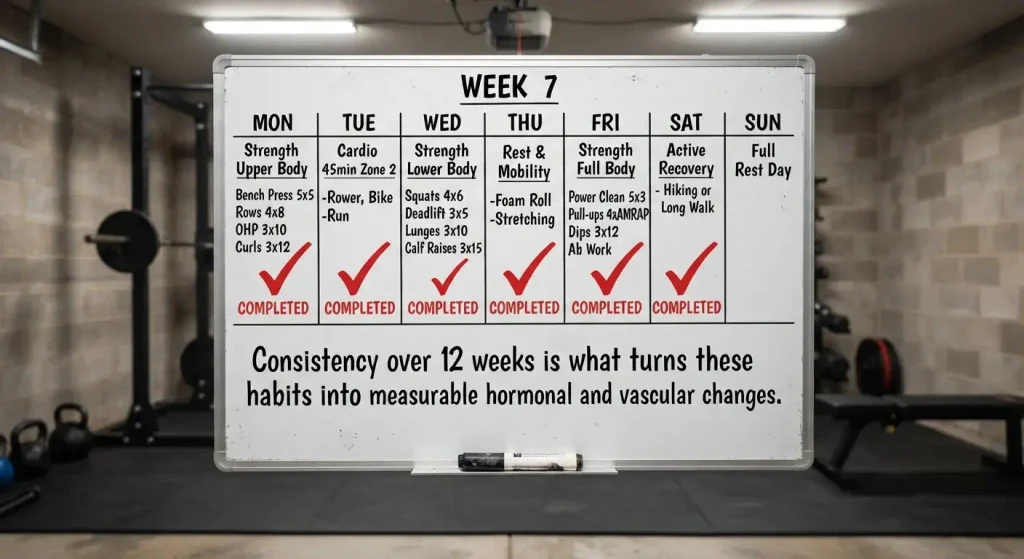
Here’s how I’d structure a week for a man in his 30s–40s training 4–5 days, aiming to naturally boost testosterone and blood flow for stamina:
| Day | Focus | Details |
| Mon | Lower-body strength | Squat 4×5 @ 82%, Romanian deadlift 3×8, walking lunges 3×10/leg, calf raises 3×15 |
| Tue | HIIT + Flow | 20-min HIIT (row/kettlebell) + 15-min circulation routine |
| Wed | Upper-body strength | Bench 4×6, weighted pull-ups 3×8, barbell row 3×8, overhead press 3×10 |
| Thu | Active recovery | 30-min walk, 10-min box breathing, 90/90 hip stretches |
| Fri | Full-body / Power | Trap-bar deadlift 3×5 @ 85%, push press 3×6, kettlebell swings 4×15, farmer’s carry 3×40 yd (37 m) |
| Sat | HIIT or sport | 25-min cycling intervals OR a recreational sport (swimming, basketball, rowing) |
| Sun | Full rest | No structured training. Walk, cook, be outside. |
Progression (weeks 1–12):
- Weeks 1–4: Learn the movements, hit the rep ranges at 70–75% of estimated 1RM.
- Weeks 5–8: Add 5–10 lb (2–5 kg) to the main lifts. Shorten HIIT rest by 10 sec.
- Weeks 9–12: Test a 1RM on squat and deadlift. Introduce the 5-4-3-2-1 pyramid. Add a 4th HIIT round.
Who Should Be Cautious
Men over 50 or with cardiovascular risk factors (hypertension, diabetes, family history of heart disease): Get clearance from your physician before starting heavy resistance training or HIIT. Start at 60–65% of estimated 1RM and build gradually.
- Anyone on blood-thinning medication or with a bleeding disorder: Check with your doctor before taking high-dose fish oil, garlic supplements, or L-arginine, as these can affect clotting.
- If you suspect clinically low testosterone (persistent fatigue, loss of muscle mass, erectile dysfunction lasting more than a few weeks): See a doctor for a morning total and free testosterone panel before attributing symptoms to training or lifestyle alone.
This article is for general information and is not a substitute for advice from a doctor or physical therapist.
How long does it take to see results from exercise on testosterone and blood flow?
Acute testosterone spikes happen within 15–30 minutes after a heavy compound set, but they return to baseline within an hour. Meaningful, sustained increases in free testosterone and improvements in resting heart rate and vascular function typically show up after 8–12 weeks of consistent training (1, 2).
Can I boost testosterone without going to the gym?
You can improve sleep, nutrition, and stress management at home, which all support hormonal health. However, the strongest evidence for raising testosterone through lifestyle points to heavy resistance training with progressive overload. Bodyweight compound movements (push-ups, pull-ups, pistol squats) can work if you add load over time.
What’s the best time of day to train for a testosterone response?
Research is mixed. Some studies show a slightly larger acute testosterone response in the morning; others show no meaningful difference. The best time is the one you’ll actually show up for, consistently. Prioritize getting 7+ hours of sleep afterward, regardless of when you train.
Do compound exercises raise testosterone more than isolation exercises?
Yes. A meta-analysis in the Journal of Strength and Conditioning Research found that multi-joint, high-load movements (squat, deadlift, bench) produce a greater acute testosterone and growth hormone response than single-joint isolation work at the same relative intensity (1).
Should I take a testosterone booster supplement?
Most over-the-counter “testosterone boosters” lack robust clinical evidence and often contain underdosed or proprietary blends. If your levels are in the normal range, training, sleep, nutrition, and stress management will do more for you than any pill. If levels are clinically low, a doctor can discuss appropriate treatment options.
How does alcohol affect testosterone and blood flow?
Moderate intake (1–2 drinks) has a small, transient effect. Regular heavy drinking (3+ drinks most days) is linked to lower testosterone, higher estrogen, impaired sleep, and endothelial dysfunction. Cutting back is one of the highest-impact single changes for both hormones and vascular health (4, 6).
Conclusion: Small Levers, Compounding Results
How to naturally boost testosterone and blood flow for stamina isn’t a single hack. It’s a system: lift heavy compound movements a few times a week, push your cardiovascular system with short, hard intervals, protect your sleep like it’s a training session, eat enough protein and fats with the right micronutrients, and give your nervous system permission to recover.
None of this requires a gym membership, a supplement cabinet, or a perfect diet. It requires showing up four or five times a week for 45–60 minutes, going to bed at a reasonable hour, and managing the stress that quietly erodes your hormonal baseline.
Start with one or two strategies this week. Add another the following week. In 12 weeks, you’ll feel the difference in your resting heart rate, your energy at 3 p.m., and the weight on the bar. And that’s not a promise of a transformation—it’s what the physiology predicts when you give your body the right signals consistently.
For more on building a sustainable training and lifestyle framework, our guide on how men improve stamina and sexual wellness naturally pairs well with this article. And if you’re over 40 and noticing your recovery slowing down, our practical guide to increasing metabolism naturally after 40 covers the training adjustments that matter most at that stage.