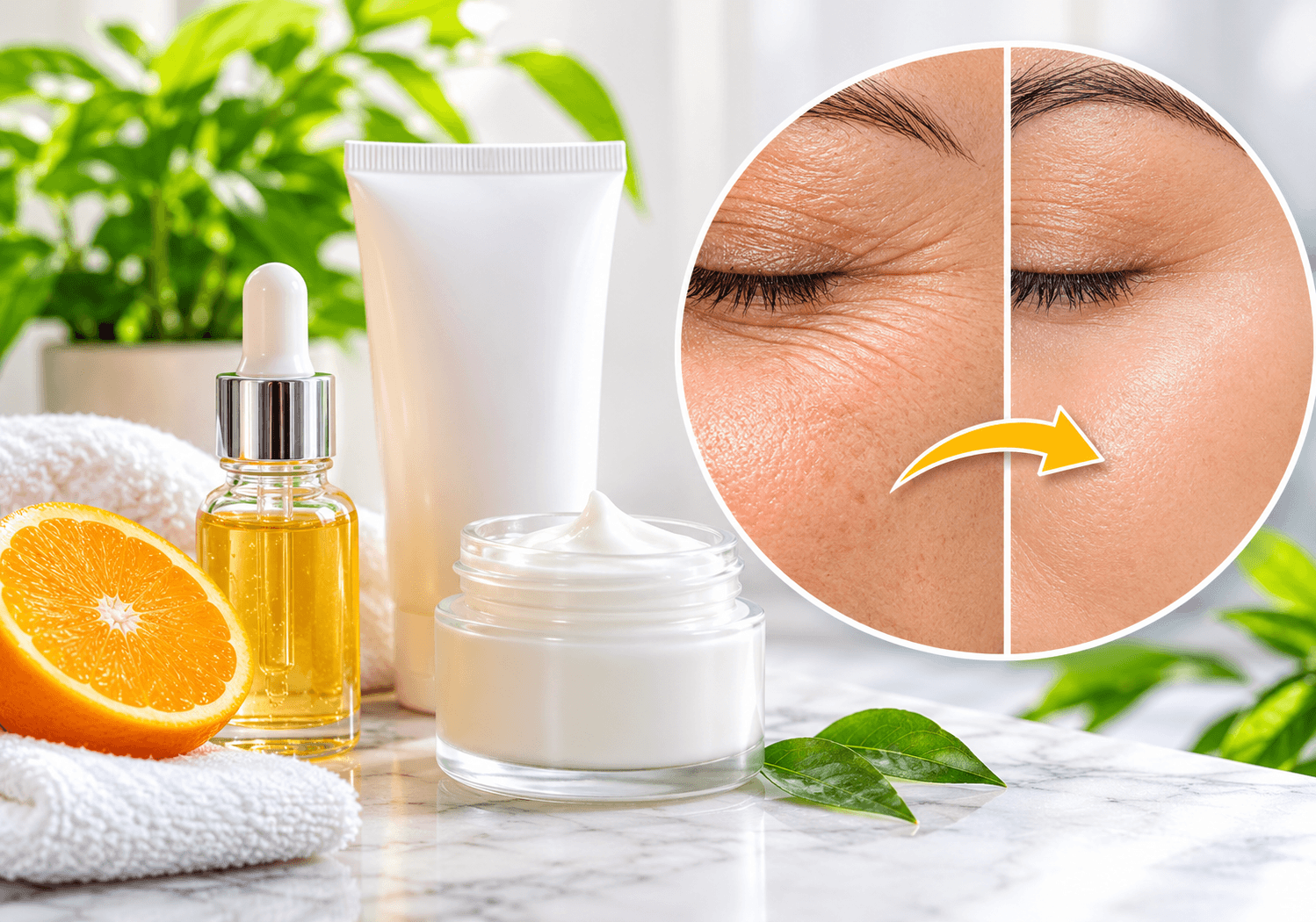
Fine lines are the first visible sign of skin aging, and they show up for almost everyone in their mid-to-late 20s. The good news: you don’t need a dermatology procedure or a $200 serum to make a real difference. A consistent, simple routine built on a handful of proven ingredients—plus a few lifestyle habits—can visibly soften those lines over weeks and months.
This guide walks you through exactly what causes fine lines, the strategies that actually have research behind them, and a day-to-day plan you can start tonight. No jargon, no hype. Just what works.
Quick Answer
To reduce fine lines on your face, use a daily routine with three core steps: apply a vitamin C serum in the morning, follow with moisturizer and broad-spectrum SPF 30+ sunscreen, and use a retinoid (like retinol) at night. Pair this with adequate sleep, omega-3-rich foods, and stress management. Visible improvement typically appears in 6–12 weeks of consistent use.
What Actually Causes Fine Lines?
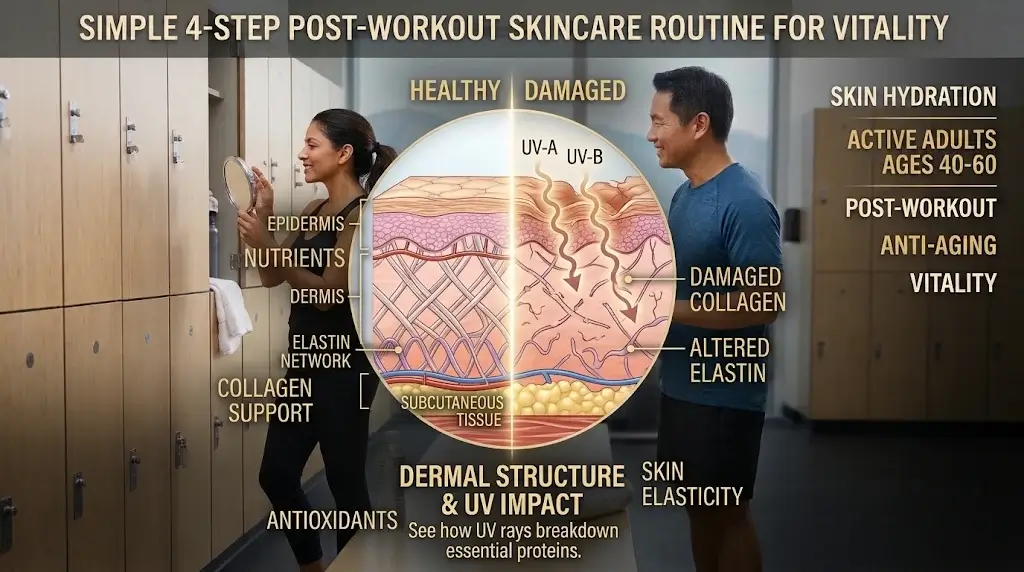
Fine lines form when two things happen at the same time: your skin produces less collagen and elastin, and external damage speeds up that breakdown.
Collagen and elastin decline. Your skin’s dermal layer is packed with collagen (the structural “scaffolding”) and elastin (the “rubber band” that lets skin snap back). Starting around age 25, collagen production drops roughly 1% per year, according to research published in the Journal of Investigative Dermatology [VERIFY]. That slow decline means the skin thins and loses its bounce, and the tiny creases from smiling, squinting, or frowning stop filling in.
UV radiation accelerates the damage. This is the big one. Ultraviolet light from the sun (and tanning beds) triggers enzymes called matrix metalloproteinases (MMPs) that literally chew up collagen and elastin fibers. A study in the British Journal of Dermatology found that chronic UV exposure accounts for up to 80% of visible facial aging [VERIFY]. In other words, most “fine lines” are really “sun lines.”
Free radicals and oxidative stress. Pollution, cigarette smoke, and even normal metabolism produce free radicals—unstable molecules that damage skin cells. Over time, this oxidative stress weakens the skin barrier and deepens existing lines.
Dehydration and sleep loss. When you’re dehydrated or running on four hours of sleep, your skin’s outer layer loses plumpness. Lines that are barely visible in the morning can look 20% deeper by evening.
Understanding why the lines form tells you what to target: protect against UV, support collagen, reduce oxidative stress, and keep the skin hydrated.
7 Strategies That Actually Reduce Fine Lines
1. Sunscreen Every Single Day (SPF 30 or Higher)
This is the single most important step. No serum, no cream, no supplement outperforms daily broad-spectrum sunscreen for preventing and slowing fine lines.
- Use SPF 30 minimum; SPF 50 is better if you’re outdoors a lot.
- Apply about ½ teaspoon (roughly 2.5 ml) for the face and neck—most people use half that and get no real protection.
- Reapply every two hours if you’re in direct sun, or after sweating.
- “Broad-spectrum” means it blocks both UVA (aging) and UVB (burning) rays.
A meta-analysis in JAMA Dermatology confirmed that consistent sunscreen use is associated with significantly less skin aging compared to no sunscreen use [VERIFY].
Coach’s Tip: Think of sunscreen like a seatbelt. You don’t put it on hoping you’ll get in a crash. You put it on because the risk is real and the cost of skipping it is high. Make it the last step of your morning routine, even on cloudy days. UVA rays penetrate cloud cover and glass.
2. Retinoids (Retinol or Prescription Tretinoin)
Retinoids are the gold standard in anti-aging skincare. They work by speeding up cell turnover and stimulating new collagen production in the dermis.
- Over-the-counter retinol (0.25%–1%): Start with a pea-sized amount on clean, dry skin at night. Use every other night for the first two weeks, then build to nightly. Expect mild dryness or flaking in the first month.
- Prescription tretinoin (0.025%–0.1%): Stronger, faster results, but requires a dermatologist visit. Start at the lowest concentration.
Research in the Journal of the American Academy of Dermatology shows that topical retinoids applied over 6–12 months produce measurable increases in dermal collagen and visible smoothing of fine lines [VERIFY].
Regression (easier version): If your skin is sensitive, start with a “retinol alternative” like bakuchiol (a plant-derived retinoid) at 1% concentration. It’s gentler and still supports cell turnover.
Progression (harder version): Once your skin tolerates 1% retinol for 8+ weeks, ask your dermatologist about switching to 0.05% tretinoin for a more potent collagen-stimulating effect.
3. Vitamin C Serum (L-Ascorbic Acid, 10%–20%)
Vitamin C is a potent antioxidant that neutralizes free radicals and is a required co-factor for collagen synthesis in the skin.
- Apply 3–5 drops of a 10%–20% L-ascorbic acid serum to damp skin in the morning, before moisturizer and sunscreen.
- Store in a dark, airtight bottle; vitamin C oxidizes (turns dark orange/brown) when exposed to air and light.
- Pair with vitamin E and ferulic acid in the formula for enhanced stability and antioxidant effect.
A study in The FASEB Journal found that daily vitamin C application over 12 weeks improved skin texture and reduced the appearance of fine lines in participants [VERIFY].
4. Hyaluronic Acid and Moisturizing
Fine lines look deeper when the skin is dehydrated. Hyaluronic acid (HA) is a humectant that can hold up to 1,000 times its weight in water, plumping the outer skin layers and temporarily “filling in” shallow lines.
- Use an HA serum or a moisturizer containing 1%–2% hyaluronic acid on damp skin (not dry) so it has water to bind to.
- Follow with an occlusive moisturizer (ceramide-based or petrolatum-based) to lock the hydration in.
- In dry or cold climates, layer a thicker cream over the HA serum.
This won’t rebuild collagen, but it makes existing lines look noticeably softer within days.
5. Omega-3 Fatty Acids and Skin-Supporting Nutrients
What you eat affects your skin from the inside. Omega-3 fatty acids (EPA and DHA) support cell membrane integrity and have anti-inflammatory properties that may help protect against UV-induced damage.
- Aim for 2–3 servings of fatty fish (salmon, sardines, mackerel) per week, or a quality fish oil supplement providing 1,000–2,000 mg of combined EPA/DHA daily.
- Antioxidant-rich foods—berries, leafy greens, nuts—help combat oxidative stress at the cellular level.
- If you’re interested in supplemental antioxidants, astaxanthin for skin glow and anti-aging has shown promise in small clinical trials for improving skin elasticity and reducing UV-induced redness.
For a deeper look at how these fats support skin barrier function and reduce inflammation, see our guide on omega-3 fatty acids for skin hydration.
6. Sleep and Stress Management
You can’t skip this. During deep sleep, your body ramps up collagen production and repairs micro-damage from UV and pollution. Chronic stress elevates cortisol, which breaks down collagen and slows skin cell turnover.
- Target 7–9 hours of quality sleep per night. Keep your bedroom cool (65–68 °F / 18–20 °C) and dark.
- Manage stress with movement, breathing exercises, or time outdoors. Even a 20-minute walk lowers cortisol levels.
- If stress is a persistent issue, adaptogens for stress and cortisol management may be worth exploring as a supplement alongside your skincare routine.
The connection between sleep quality and skin repair is well-documented. A study in the Journal of the European Academy of Dermatology and Venereology found that sleep-deprived participants showed significantly more visible aging markers, including fine lines, compared to well-rested controls [VERIFY].
7. Collagen-Supporting Supplements (Collagen Peptides)
Oral collagen peptides (hydrolyzed collagen) have gained attention for their potential to support skin structure from within.
- Typical studied dose: 2.5–10 g of hydrolyzed collagen peptides daily, taken consistently for 8–12 weeks.
- Pair with vitamin C (at least 500 mg) to support the enzymatic cross-linking of new collagen fibers.
- Results, when they appear, are subtle: improved skin hydration, a small increase in elasticity, and a slight softening of fine lines. They are not a replacement for topical retinoids or sunscreen.
If you’re considering a collagen supplement, timing and absorption matter. Our guide on the best time to take collagen powder for skin absorption covers dosing, pairing with vitamin C, and realistic timelines. You can also read our breakdown of how long collagen supplements take to work on skin to set proper expectations.
Common Mistake: Buying a “collagen cream” and expecting it to rebuild your dermal collagen. Topical collagen molecules are too large to penetrate past the epidermis. They sit on the surface, add a temporary moisturizing film, and do very little for actual line depth. Your money is better spent on a retinoid, vitamin C serum, and a good sunscreen.

Your Daily Routine: A Simple 4-Step Plan
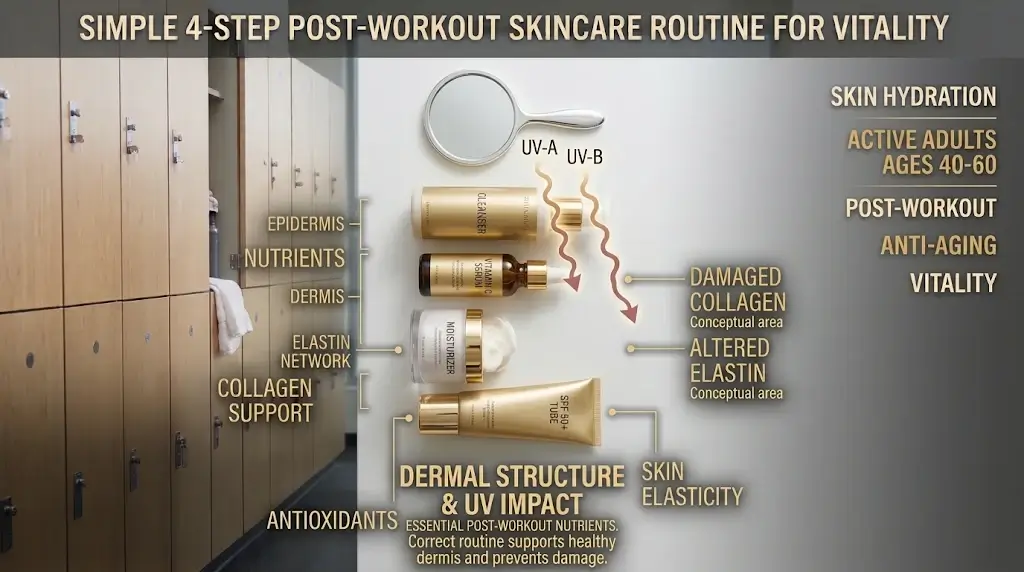
Here’s a practical, no-fuss routine you can start tomorrow. Total time: about 4 minutes in the morning, 3 minutes at night.
Morning (AM)
| Step | Product | How |
| 1 | Gentle cleanser | Lather with lukewarm water, 30 seconds, rinse. Don’t scrub. |
| 2 | Vitamin C serum (10%–20%) | 3–5 drops on damp skin. Press in. Wait 60 seconds. |
| 3 | Moisturizer (with ceramides or HA) | A pea-to-nickel-sized amount. Spread evenly. |
| 4 | Broad-spectrum SPF 30+ sunscreen | ½ teaspoon for face + neck. Let it dry 2 minutes before going outside. |
Night (PM)
| Step | Product | How |
| 1 | Gentle cleanser (or double-cleanse if wearing sunscreen/makeup) | Remove all product and SPF residue. |
| 2 | Retinol / retinoid (start 3×/week, build to nightly) | Pea-sized amount on dry skin. Avoid the immediate eye area. |
| 3 | Moisturizer (slightly richer than AM) | Lock in the retinoid and hydrate. |
Week 1–2: Use retinol every other night. If you get significant redness or peeling, drop back to once a week and build up slowly.
Week 3–4: Move to nightly retinol. Introduce a glycolic or lactic acid exfoliant 1–2× per week (on nights you don’t use retinol) to keep the surface cell turnover smooth.
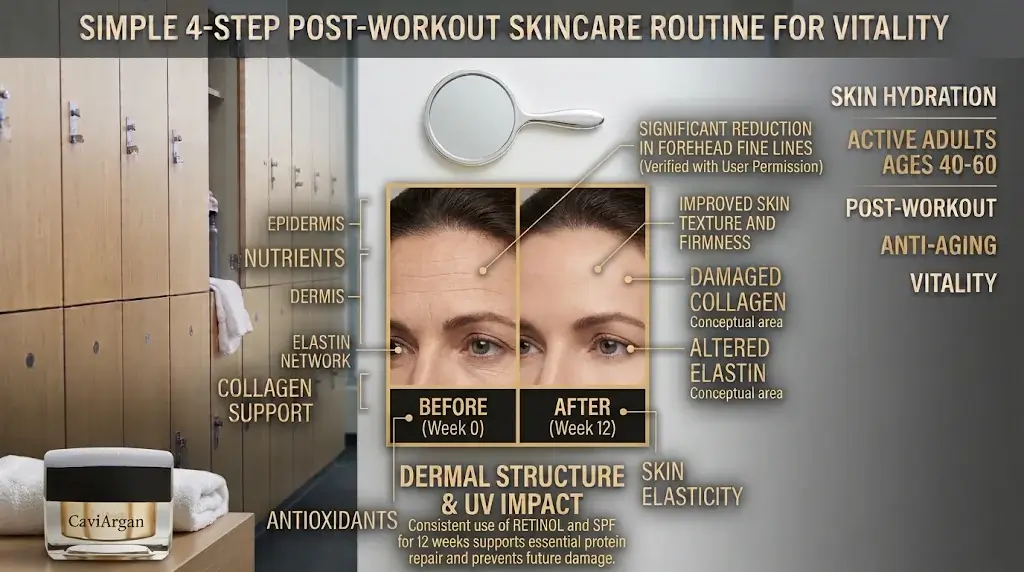
Month 2–3: You should start noticing skin looks smoother, more even-toned, and lines appear less etched. Take a “before” photo in natural light on day 1 and compare at week 8 and week 12.
What the Research Says About Specific Ingredients
Not every “anti-aging” ingredient on the shelf is backed by solid data. Here’s a quick breakdown of the most studied options:
| Ingredient | What it does | Evidence level | Notes |
| Retinoids (retinol, tretinoin) | Stimulate collagen, speed cell turnover | Strong (multiple RCTs) | Gold standard; start low, go slow |
| Vitamin C (L-ascorbic acid) | Antioxidant, co-factor for collagen synthesis | Moderate–Strong | Best in stable, low-pH formula |
| Sunscreen (SPF 30+) | Blocks UV-driven collagen breakdown | Very strong (epidemiological + RCTs) | Non-negotiable daily step |
| Hyaluronic acid (topical) | Hydrates, plumps superficial lines | Moderate (mostly in-vitro + small trials) | Temporary visual effect; great for comfort |
| Peptides (topical) | May signal collagen production | Early / Limited | Promising but not yet as proven as retinoids |
| Niacinamide (vitamin B3) | Strengthens skin barrier, reduces redness | Moderate | Good supporting ingredient, not a line-reducer on its own |
| Oral collagen peptides | May improve skin hydration/elasticity | Moderate (small RCTs) | Subtle effect; 8–12 weeks minimum |
| Oral astaxanthin | Antioxidant, may improve elasticity | Early (small trials) | 4–12 mg/day studied; results modest |
A key finding across the literature: no single ingredient is a magic bullet. The strongest results come from combining UV protection, a retinoid, and an antioxidant, layered over good sleep and nutrition.
Can Exercise and Lifestyle Habits Help?
Yes, and this is where a fitness-focused approach adds real value.
- Regular cardiovascular exercise (brisk walking, cycling, swimming) improves blood flow to the skin, delivering oxygen and nutrients that support cell repair. The HHS Physical Activity Guidelines recommend at least 150 minutes of moderate aerobic activity per week for adults.
- Resistance training supports healthy hormone balance and reduces systemic inflammation, both of which matter for skin health.
- Facial muscle awareness: Some people report that gentle facial massage (2–3 minutes daily, using clean hands and a light moisturizer) improves local blood flow and gives a temporary “lift” to the skin. The evidence for long-term line reduction is limited, but it’s a low-risk habit.
- Stay hydrated. Aim for roughly 8–10 cups (about 2–2.5 liters) of water daily. Dehydrated skin looks thinner and lines appear more prominent.
If you’re over 40 and want a broader plan that ties movement, metabolism, and recovery together, our guide on increasing metabolism naturally after 40 covers the exercise and nutrition side that supports overall skin health.
Safety Notes and When to See a Dermatologist
- Retinoids and pregnancy: Do not use retinol or tretinoin if you are pregnant, trying to conceive, or breastfeeding. Retinoids are teratogenic. Switch to a gentle vitamin C serum and moisturizer during this period.
- Sensitive or eczema-prone skin: Introduce one new product at a time, waiting 2–3 weeks between additions. Patch-test behind the ear or on the inner forearm first.
- Sunscreen and skin type: If you have very dark skin, look for mineral (zinc oxide / titanium dioxide) sunscreens to avoid a white cast.
- See a dermatologist if: You notice a new mole, a line that suddenly deepens, persistent redness or peeling that doesn’t resolve in 3–4 weeks, or if you want to discuss prescription-strength options like tretinoin or chemical peels.
If you have a diagnosed skin condition (rosacea, eczema, psoriasis) or are on medication that increases photosensitivity (certain antibiotics, diuretics), check with your doctor before starting a new retinoid or exfoliant routine.
5 More Tips That Make a Difference
- Don’t pick or rub your face. Constant friction (phone pressing against your cheek, rough pillowcase) can deepen expression lines over time. Sleep on your back if you can, or use a silk/satin pillowcase.
- Limit alcohol and refined sugar. Both promote glycation—a process where sugar molecules attach to collagen fibers, making them stiff and less elastic.
- Wear sunglasses. Squinting at bright light creates and deepens crow’s-feet. UV-blocking sunglasses reduce that repetitive muscle contraction.
- Don’t skip the neck and décolletage. The same collagen loss happens there. Extend your serum, moisturizer, and sunscreen down to your chest.
- Be patient and consistent. Skin cell turnover takes about 28 days at age 25 and slows to 40–60+ days after 40. You won’t see meaningful change in two weeks. Commit to at least 8–12 weeks before judging results.
FAQ
How do I reduce fine lines under my eyes?
The under-eye area has the thinnest skin on your face. Use a lightweight, fragrance-free moisturizer with hyaluronic acid or peptides, always wear SPF, and get 7+ hours of sleep. Avoid heavy, oily creams that can migrate and cause puffiness. If lines are deep, a dermatologist can discuss options like gentle chemical peels or prescription retinoids for that area.
What is the fastest way to reduce fine lines?
No safe method gives overnight results. The fastest visible improvement from a consistent routine (retinoid + vitamin C + SPF + moisturizer) typically appears at 6–8 weeks. Professional treatments like chemical peels, microneedling, or laser resurfacing can show faster results but require a board-certified dermatologist and carry downtime and risk.
Can exercise reduce fine lines on the face?
Regular cardio and resistance training improve circulation, reduce systemic inflammation, and support hormonal balance, all of which may help skin look healthier over time. Exercise won’t “erase” lines the way a retinoid targets collagen, but it’s a meaningful part of the overall picture. Aim for 150+ minutes of moderate activity per week.
Does collagen powder actually reduce fine lines?
Small clinical trials suggest 2.5–10 g of hydrolyzed collagen peptides daily for 8–12 weeks may modestly improve skin hydration and elasticity. The effect on visible line depth is subtle and varies by person. It’s a supportive supplement, not a replacement for topical retinoids and sunscreen.
How long does it take to see results from retinol?
Mild improvements in texture and tone can appear in 4–6 weeks. Measurable collagen changes and visible smoothing of fine lines typically take 12 weeks to 6 months of consistent nightly use. The first 2–3 weeks often involve a “retinization” period with dryness or flaking—this is normal and usually resolves.
What should I do first to reduce fine lines?
Start with one thing: daily broad-spectrum SPF 30+ sunscreen. It’s the single most evidence-backed step for preventing further line formation. Then add a retinoid at night and a vitamin C serum in the morning. Build the routine gradually so your skin can adapt.
Conclusion: Small, Consistent Steps Beat Expensive Quick Fixes
Reducing fine lines on your face isn’t about buying the most expensive cream on the shelf. It’s about protecting the collagen you still have (sunscreen), stimulating the collagen you’re losing (retinoids), neutralizing the free radicals that accelerate the damage (vitamin C, antioxidants, omega-3s), and giving your skin the sleep and hydration it needs to repair itself.
Start with the four-step routine above. Give it 8–12 weeks. Take before-and-after photos in the same lighting. You’ll likely be surprised at how much a simple, consistent routine can do.
And remember: your skin is doing a lot of work every day. Treat it with the same patience and consistency you’d bring to any other long-term training program.