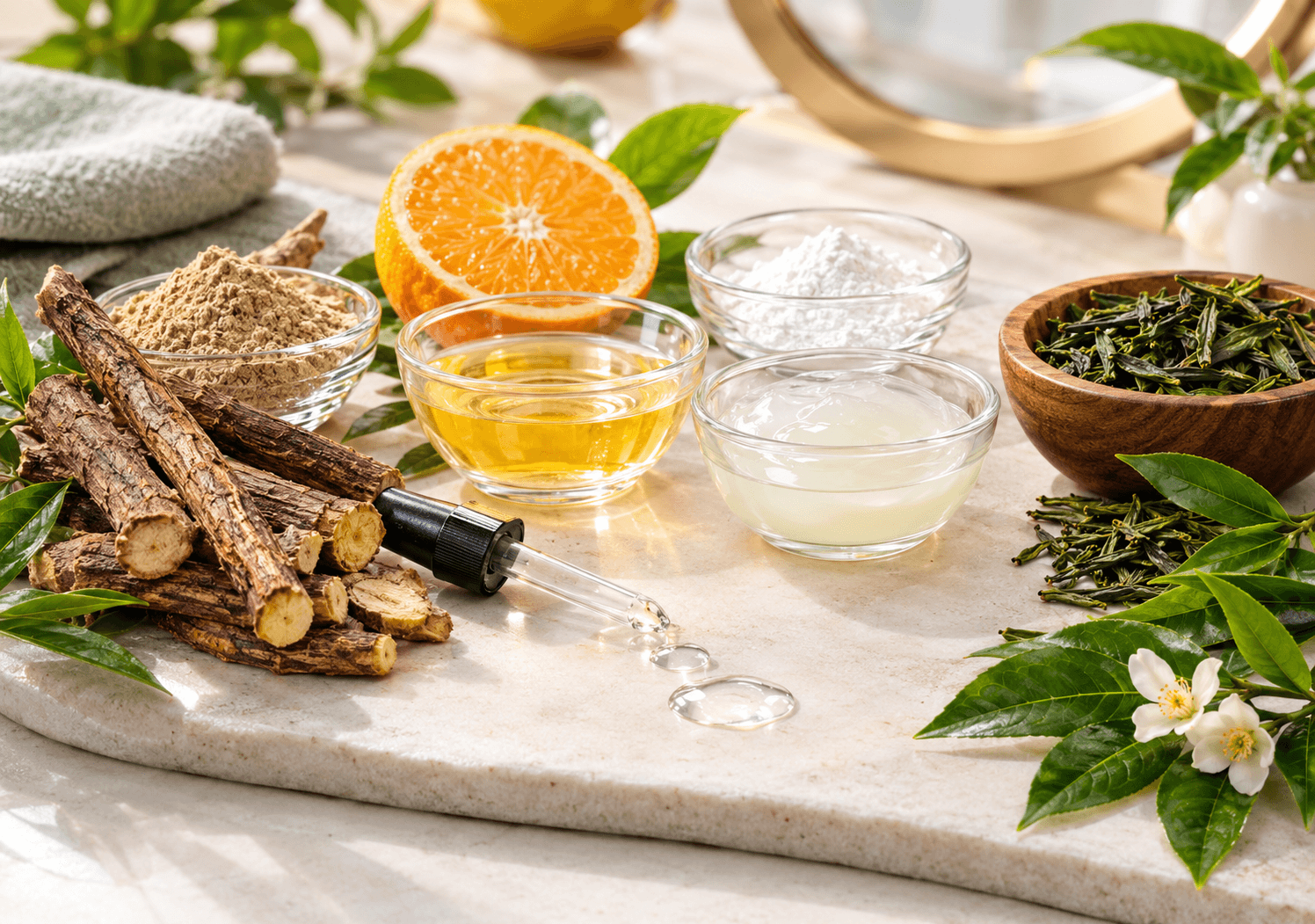
Dealing with uneven skin tone, sun spots, or lingering marks after a breakout can be frustrating. Many people want a clearer, more balanced complexion without resorting to harsh chemical treatments that leave skin inflamed or compromised. Fortunately, modern dermatological research shows that targeted plant extracts, botanical compounds, and bio-identical vitamins offer powerful support for a balanced complexion.
In this evidence-based guide, we examine the primary biological mechanisms behind skin discoloration and detail the most effective natural ingredients that even skin tone safely and sustainably.
Quick Answer
The most effective natural ingredients that even skin tone include licorice root extract, niacinamide (Vitamin B3), vitamin C (ascorbic acid), azelaic acid, kojic acid, and green tea extract. These bio-actives work synergistically by inhibiting the enzyme tyrosinase, blocking melanosome transfer, and neutralizing oxidative stress to fade hyperpigmentation and reveal an even complexion.
Understanding Skin Discoloration and Hyperpigmentation
To correct an uneven complexion, it helps to understand how dark spots form in the first place. Skin color is determined by a pigment called melanin, produced by specialized cells called melanocytes located in the basal layer of the epidermis.
When skin is exposed to triggers such as ultraviolet (UV) radiation, oxidative stress, localized inflammation (like an acne breakout), or hormonal shifts, melanocytes overproduce melanin. This excess pigment clusters in specific areas, leading to noticeable discoloration.
The Biological Pathways of Hyperpigmentation
Natural ingredients that even skin tone target one or more of three specific biological pathways:
- Inhibition of Tyrosinase: Tyrosinase is the primary enzyme responsible for converting the amino acid tyrosine into melanin. Blocking or slowing down this enzyme is the most common mechanism for fading discoloration.
- Interruption of Melanosome Transfer: Once melanin is synthesized inside melanocytes, it travels via microscopic sacs called melanosomes into surrounding epidermal skin cells (keratinocytes). Stopping this transfer keeps pigment from reaching the surface layer of the skin.
- Antioxidant Protection and Radical Scavenging: Reactive oxygen species (ROS) caused by sunlight, pollution, and systemic stress trigger cellular signaling that turns on melanin production. Antioxidants neutralize these free radicals before pigment cascades start.
6 Top Natural Ingredients That Even Skin Tone
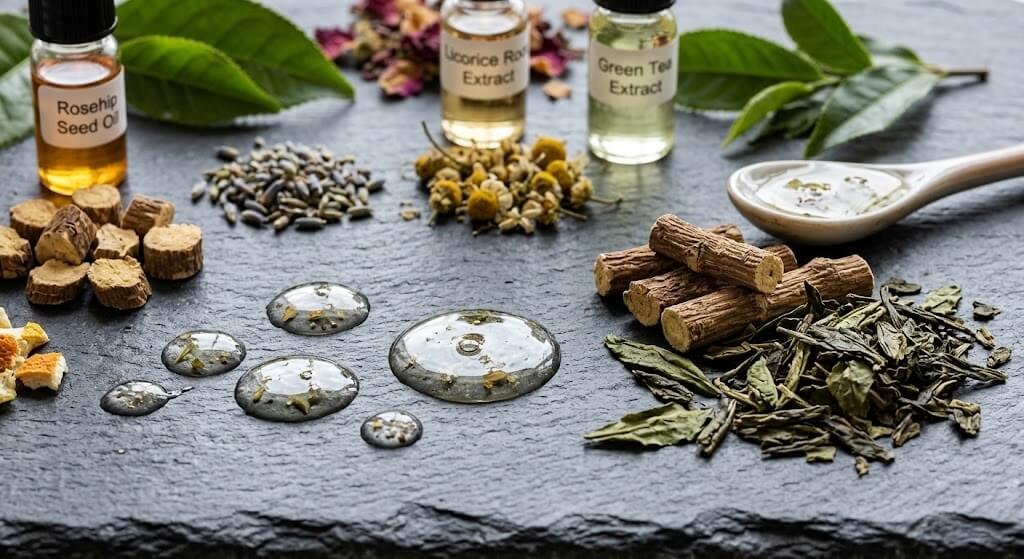
When choosing natural ingredients that even skin tone, focusing on clinically evaluated actives ensures optimal results without sacrificing skin barrier integrity.
1. Licorice Root Extract (Glabridin)
Licorice root extract is derived from the root of Glycyrrhiza glabra. Its primary active compound responsible for skin brightening is glabridin.
- Mechanism: Glabridin acts as a potent tyrosinase inhibitor, suppressing melanogenesis (melanin creation) without causing cytotoxic toxicity to healthy melanocytes.
- Benefits: In addition to fading dark spots, licorice root contains liquiritin, a compound that helps disperse existing epidermal melanin. It is also deeply soothing, making it ideal for reactive or sensitive skin.
- Best Used For: Post-inflammatory hyperpigmentation (PIH) and sun spots on delicate skin types.
2. Niacinamide (Vitamin B3)
Niacinamide is a water-soluble form of Vitamin B3 that plays a critical role in cellular energy metabolism and skin barrier repair.
- Mechanism: Unlike traditional tyrosinase inhibitors, research demonstrates that niacinamide works by interrupting the communication between cells, blocking up to 68% of melanosome transfer from melanocytes into surrounding keratinocytes.
- Benefits: Niacinamide strengthens the skin’s lipid barrier, reduces trans-epidermal water loss (TEWL), regulates sebum production, and calms redness.
- Best Used For: Uneven skin texture, persistent redness, and diffuse blotchiness.
3. Vitamin C (L-Ascorbic Acid and Derivatives)
Vitamin C is an essential physiological antioxidant required for skin health and collagen synthesis.
- Mechanism: L-Ascorbic acid works in two ways. First, it interacts with copper ions at the active site of the tyrosinase enzyme, inhibiting melanin synthesis. Second, as a potent scavenger of free radicals, it quenches oxidative stress induced by UV exposure before it triggers inflammation.
- Benefits: Boosts skin radiance, protects against environmental stressors, and supports firm, resilient skin.
- Best Used For: Sun damage, dullness, and environmental skin discoloration.
4. Azelaic Acid
Naturally produced by yeast (Malassezia furfur) that lives on normal skin, azelaic acid can also be derived from cereal grains like barley, wheat, and rye.
- Mechanism: Azelaic acid selectively targets hyperactive or abnormal melanocytes while leaving normal, healthy cells unaffected. It functions as a reversible inhibitor of tyrosinase.
- Benefits: Highly effective at clearing acne-causing bacteria and calming inflammation, making it a dual-action active for clearing blemishes and preventing dark marks.
- Best Used For: Post-acne marks and melasma.
5. Kojic Acid
Kojic acid is a natural metabolite produced by several species of fungi, including Aspergillus, and is also a byproduct during the fermentation of traditional foods like Japanese sake and soy sauce.
- Mechanism: Kojic acid chelates (binds to) the copper ions within the active site of the tyrosinase enzyme, preventing melanin synthesis.
- Benefits: Highly effective at lightening visible sun damage, age spots, and freckles.
- Best Used For: Stubborn sun spots and hyperpigmentation.
6. Green Tea Extract (EGCG)
Extracted from Camellia sinensis leaves, green tea extract is rich in polyphenols, specifically epigallocatechin gallate (EGCG).
- Mechanism: EGCG downregulates the signal pathways that trigger melanin synthesis and prevents UV-induced oxidative cell damage.
- Benefits: Potent anti-inflammatory properties that reduce skin redness, soothe irritations, and prevent inflammation-induced discoloration.
- Best Used For: Redness, blotchy tones, and skin prone to reactive breakouts.
Comparative Analysis of Natural Skin Tone Correctors
To help you compare these options, the table below outlines how these natural ingredients that even skin tone function, their ideal concentrations, and skin type suitability:
| Ingredient | Primary Mechanism | Concentration | Ideal For | Sensitivity Risk |
| Licorice Root Extract | Tyrosinase inhibition & melanin dispersion | 1% – 4% | Sensitive skin, post-acne marks, sun spots | Low |
| Niacinamide (B3) | Inhibits melanosome transfer | 2% – 5% | Redness, enlarged pores, diffuse discoloration | Very Low |
| Vitamin C (L-Ascorbic Acid) | Tyrosinase inhibition & free radical scavenging | 10% – 20% | Dullness, sun damage, environmental aging | Moderate |
| Azelaic Acid | Selective inhibition of hyperactive melanocytes | 5% – 10% (OTC) | Post-acne marks, melasma, reactive skin | Low-Moderate |
| Kojic Acid | Copper chelation in tyrosinase | 1% – 2% | Stubborn sun spots, localized age spots | Moderate |
| Green Tea Extract (EGCG) | Antioxidant scavenging & signal downregulation | 1% – 5% | Redness, sensitive skin, inflammatory marks | Very Low |
How Botanical Compounds Compare to Synthetic Alternatives
When addressing skin tone, synthetic active compounds like hydroquinone have traditionally been used in medical dermatology. Hydroquinone functions as a powerful depigmenting agent by disrupting melanin formation. However, high-strength synthetic hydroquinone carries potential side effects with prolonged use, including skin irritation, rebound hyperpigmentation, and exogenous ochronosis (a rare blue-black discoloration).
Plant-derived options offer several advantages for long-term care:
- Multi-Pathway Action: Natural botanicals often provide secondary benefits, combining anti-inflammatory and free-radical-scavenging properties with tyrosinase inhibition.
- Sustainable Use: Unlike standard hydroquinone courses—which typically require cycling off after three months to avoid complications—natural ingredients that even skin tone can be integrated into daily skincare routines safely over the long term.
- Barrier Enhancement: Actives such as niacinamide and green tea polyphenols active support epidermal hydration and fortify skin barrier function while addressing discoloration.
Supporting your body internally also complements topical skincare. Consuming a balanced diet rich in micronutrients supports overall metabolic health and skin repair. Dietary strategies, such as maintaining adequate protein intake and supporting healthy energy expenditure, play an important role in overall skin vitality. To explore how systemic nutrition influences cellular energy, read our comprehensive guide on which nutrients support normal energy metabolism.
How to Build an Effective Skin-Tone Evening Routine
Formulating a routine using natural ingredients that even skin tone requires a structured approach. Layering active ingredients correctly ensures maximum absorption while minimizing irritation.
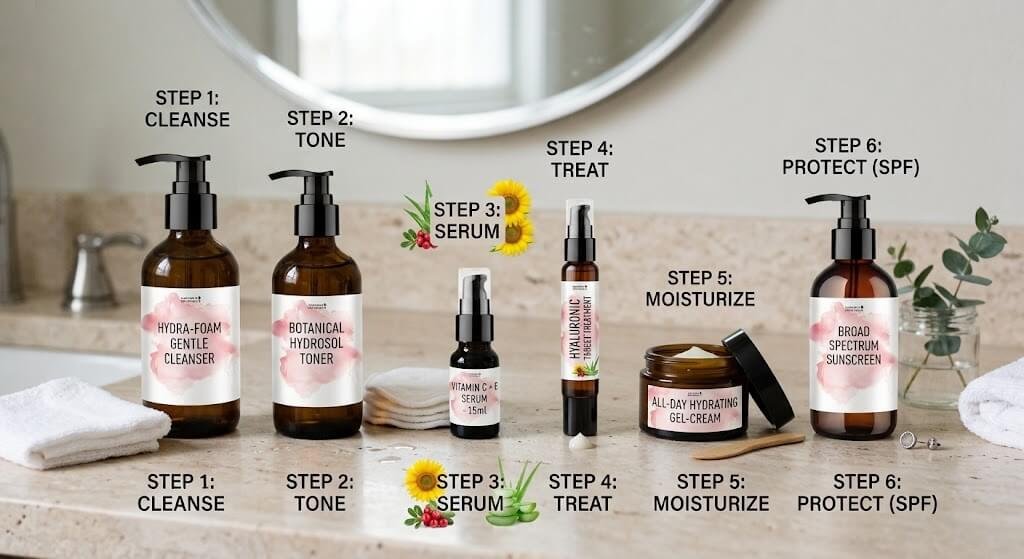
Sample Daily Skincare Schedule
Morning Routine (Focus: Protection & Inhibition)
- Gentle Cleanser: Use a hydrating, non-stripping cleanser.
- Antioxidant Serum: Apply a serum containing 10%–15% Vitamin C (L-ascorbic acid or sodium ascorbyl phosphate) to neutralize free radicals from ambient daylight.
- Targeted Treatment: Layer a light serum containing 2%–5% Niacinamide or Green Tea Extract.
- Moisturizer: Lock in hydration with a barrier-supporting moisturizer.
- Broad-Spectrum Sunscreen: Apply a mineral or broad-spectrum sunscreen (SPF 30 or higher). UV protection is essential; without it, solar radiation will continuously trigger melanin synthesis and undo your progress.
Evening Routine (Focus: Correction & Repair)
- Thorough Cleansing: Cleanse away makeup, sunscreen, and daily pollutants.
- Corrective Serum: Apply a formula combining Licorice Root Extract, Azelaic Acid (5–10%), or Kojic Acid.
- Barrier Repair Moisturizer: Follow with a rich cream containing ceramides, fatty acids, or hyaluronic acid to support nighttime cell turnover.
Coach’s Tip
Avoid introducing multiple new botanical actives at the same time. Introduce one new natural ingredient that evens skin tone into your routine at a time, spacing additions by 10 to 14 days. This makes it easy to monitor how your skin responds and identify any potential sensitivities.
Common Mistakes to Avoid When Evening Your Skin Tone
Even with high-quality natural ingredients that even skin tone, certain mistakes can stall progress or aggravate skin discoloration:
Common Mistake
Skipping Daily Sunscreen: The most frequent error when addressing hyperpigmentation is neglecting daily broad-spectrum sun protection. UV rays trigger melanocytes even on cloudy days or indoors near windows. Without sunscreen, topical skin brighteners cannot effectively reduce hyperpigmentation.
Other common pitfalls include:
- Over-Exfoliating: Excessive physical scrubs or high-concentration chemical exfoliants can disrupt the skin barrier. This causes low-grade inflammation, which triggers post-inflammatory hyperpigmentation.
- Expecting Instant Results: Melanin turnover follows the natural epidermal cell cycle, which takes roughly 28 to 40 days depending on age. Consistent daily application over 8 to 12 weeks is typically needed to see clear improvements.
- Combining Incompatible Actives: Layering highly acidic actives (like pure L-ascorbic acid) directly with high-strength niacinamide simultaneously can sometimes cause temporary flushing or irritation in sensitive individuals. Space them out between morning and evening routines.
Dietary and Lifestyle Factors That Influence Skin Health
Skin appearance reflects internal metabolic balance, oxidative stress levels, and systemic inflammation. Combining topical botanical actives with healthy lifestyle habits creates an optimal environment for cellular repair.
Systemic Factors Impacting Skin Pigmentation
- Sleep and Circadian Rhythms: Sleep deprivation raises circulating cortisol levels, triggering inflammatory responses that can worsen cutaneous reactivity and blotchiness. Quality sleep supports nocturnal tissue repair and skin recovery. Learn more about these hormonal connections in our detailed article on how sleep affects metabolism and weight management.
- Metabolic Support: Stable blood sugar levels help mitigate advanced glycation end-products (AGEs), which can degrade structural skin proteins like collagen and elastin, contributing to dullness and uneven tone.
- Nutritional Antioxidants: Consuming a diet rich in polyphenols, dietary fiber, and essential fatty acids helps manage systemic oxidative stress. To learn more about how dietary components support internal health, read about how dietary fiber helps with appetite and overall wellness.
Frequently Asked Questions
What are the most effective natural ingredients that even skin tone?
The most proven natural ingredients include licorice root extract (glabridin), niacinamide (Vitamin B3), Vitamin C, azelaic acid, kojic acid, and green tea extract. These compounds work by inhibiting tyrosinase enzymes, blocking melanosome transfer, and neutralizing free radicals.
How long does it take for natural skin brighteners to show results?
Because skin cell turnover takes approximately 28 to 40 days, most natural ingredients that even skin tone require consistent daily application for 8 to 12 weeks before noticeable improvements in hyperpigmentation and skin clarity appear.
Can natural botanical ingredients completely remove deep sun spots?
Natural botanicals can significantly fade superficial epidermal dark spots, post-inflammatory hyperpigmentation, and mild sun damage. However, deep dermal discoloration may require a combination of topical care and clinical dermatological treatments like laser therapy or chemical peels.
Are natural skin tone correctors safe for sensitive skin?
Yes, ingredients like licorice root extract, niacinamide (at 2–5%), and green tea extract are generally gentle and well-tolerated by sensitive skin. Always conduct a 48-hour patch test on your inner forearm before applying any new botanical product to your face.
Do I need to wear sunscreen if I am using natural ingredients to treat dark spots?
Yes, wearing broad-spectrum sunscreen with SPF 30 or higher daily is essential. UV radiation directly stimulates melanocyte activity; without sun protection, natural skin tone correctors cannot effectively reduce or prevent hyperpigmentation.
Conclusion
Achieving a balanced, luminous complexion does not require harsh chemical treatments. By using research-backed natural ingredients that even skin tone—such as licorice root extract, niacinamide, Vitamin C, azelaic acid, and green tea polyphenols—you can address skin discoloration safely while maintaining your skin’s vital moisture barrier.
For lasting results, combine targeted topical botanicals with consistent daily sun protection, adequate sleep, and sound nutrition. With patience and a routine tailored to your skin type, natural ingredients offer a reliable pathway to clear, radiant skin.