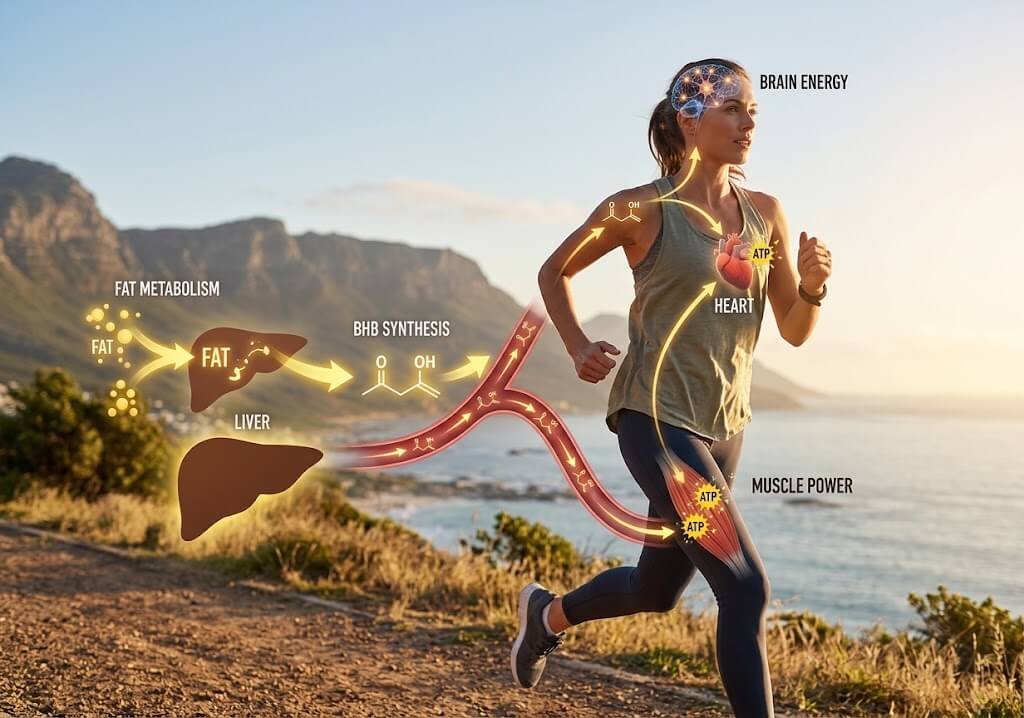
What is BHB and how does it work in ketosis? Beta-hydroxybutyrate, or BHB, is a ketone body. Your liver makes it from fat when carbohydrates are scarce, and your brain, heart, and muscles can burn it for energy.
BHB sits at the center of the keto diet, fasting, and the growing ketone supplement market. It is also easy to misunderstand. People mix up BHB, ketones, ketosis, and ketoacidosis, and that leads to poor buying and eating decisions.
Think of this guide as a coach’s walkthrough. You will learn where BHB comes from, what it does inside your cells, and how to measure it. You will also see what research says about supplements and who should be careful.
Quick Answer: BHB (beta-hydroxybutyrate) is a ketone body, an energy molecule your liver makes from fat when insulin and carbohydrate intake are low. In ketosis, BHB travels through your blood to the brain, heart, and muscles, where cells burn it for fuel. It also appears to act as a signaling molecule.
What Is BHB? (Beta-Hydroxybutyrate Explained)
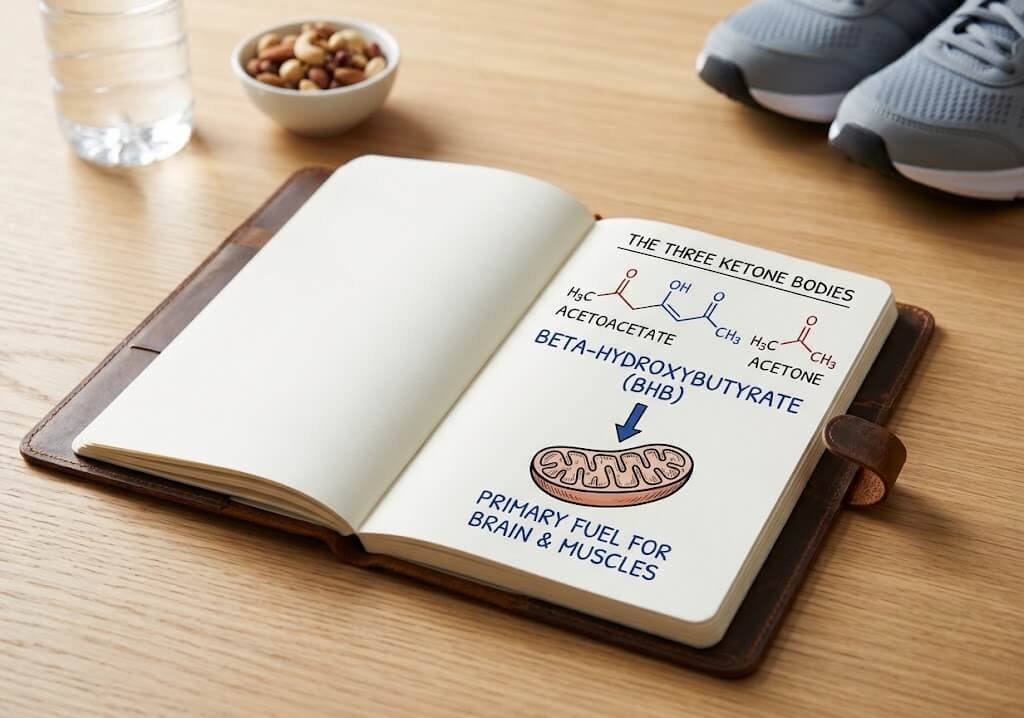
BHB is one of three ketone bodies your liver makes, along with acetoacetate and acetone. A review of ketone body physiology names BHB and acetoacetate as the two main ones, with acetone the least abundant.
Ketone bodies are not an odd byproduct. The same review notes they are always present in your blood in small amounts. Levels rise during fasting and prolonged exercise, and they also show up in newborns and pregnant women.
Under normal conditions, BHB and acetoacetate travel at roughly a 1-to-1 ratio. In diabetic ketoacidosis, that ratio can reach 10 to 1 in favor of BHB. This is one reason the review treats BHB as the best indicator of ketone levels in the blood.
Think of BHB as portable fuel. Many tissues can burn fatty acids directly, but the brain cannot. According to StatPearls, the brain relies on ketone bodies to carry energy from fat stores.
How Your Body Makes BHB: Ketogenesis
Your body makes BHB through a process called ketogenesis. It happens mostly in liver cells, inside the mitochondria, the energy engines of the cell.
Here is the short version:
- Carbohydrate intake drops, from very low-carb eating or fasting, and insulin falls.
- Fat cells release fatty acids into the bloodstream.
- The liver breaks those fatty acids down into acetyl-CoA.
- An enzyme called HMG-CoA synthase helps turn that acetyl-CoA into ketone bodies, including BHB.
StatPearls explains that fatty acids become ketone bodies when insulin is low and fatty acid levels are high. It also names HMG-CoA synthase as the rate-limiting step. A 2021 review on ketone bodies in health and disease describes the same pathway and calls the liver enzyme HMGCS2 the “fate-committing” step.
Insulin is the master switch in this process. If you want background on how your body responds to it, our guide on inositol and insulin sensitivity covers the basics.
Here is a twist most beginners miss: the liver makes BHB but cannot burn it. The 2021 review notes that liver cells lack the ability to use the ketone bodies they produce, so the liver ships them out to other organs.
A low-carb diet is not the only trigger. StatPearls notes that prolonged fasting or vigorous exercise can also push ketone production up.
How Does BHB Work in Ketosis?
Once BHB leaves the liver, it moves through your blood to tissues with high energy demand. Inside their cells, BHB enters the mitochondria and is converted back into acetyl-CoA, which feeds the cell’s energy cycle. The 2021 review says this “terminal oxidation” depends on an enzyme called SCOT.
BHB as a Fuel
The brain is the headline user. The 2021 review explains that ketone bodies are an alternative energy source for the nervous system when glucose is low, because circulating free fatty acids have limited ability to fuel neurons. Skeletal muscle, the heart, and the kidneys also use ketone bodies.
This is why people describe ketosis as a fuel switch. Your body does not stop running. It changes which fuel it sends to which organ.
BHB as a Signal
BHB does more than burn. The same review describes ketone bodies as oxidative fuels, redox modulators, building blocks for fat synthesis, and signaling molecules, mostly when carbohydrates are limited.
The authors also stress that effects differ by organ and cell type. That is worth remembering when you see bold marketing claims about BHB “unlocking” brain power or longevity. The signaling research is real, but it is still developing.
Coach’s Tip: When a product page claims BHB does something special, ask one question: was it tested in humans, with this form of BHB, at this dose? If you cannot find a study that matches, treat the claim as unproven.
What “Being in Ketosis” Means
Ketosis simply means your blood ketone level is elevated above your normal baseline. Many sources use a blood BHB of about 0.5 mmol/L as the starting line for nutritional ketosis . Ketone levels vary by person, meal timing, activity, and measuring method.
Ketosis vs. Ketoacidosis: A Critical Difference
Ketosis and ketoacidosis are not the same thing. Nutritional ketosis, from a low-carb diet or fasting, is a regulated state. Ketoacidosis is a dangerous overload.
StatPearls says the most common clinical problem tied to ketone bodies is ketoacidosis, where an abundance of ketone bodies causes an acid imbalance in the blood. The ketone physiology review adds that diabetes is the most common pathological cause of high ketones. In diabetic ketoacidosis, ketone production surges in response to low insulin and high stress hormones.
Common Mistake: Assuming “ketones are natural, so more is always better.” Higher BHB is not a score to chase. If you have diabetes and high ketones with symptoms of illness, get urgent medical help instead of waiting it out.
How to Measure BHB
You have three practical options. They do not measure the same thing, so match the tool to your goal.
| Method | What it measures | Notes |
| Blood ketone meter | BHB directly | Needs a finger prick. The best match for tracking BHB. |
| Urine strips | Acetoacetate only | The common nitroprusside test misses BHB, is semi-quantitative, and can give false positives, per the ketone physiology review. |
| Breath analyzers | Acetone (indirect) | A University of Oxford study found D-BHB is slowly converted to breath acetone, so readings lag behind blood. |
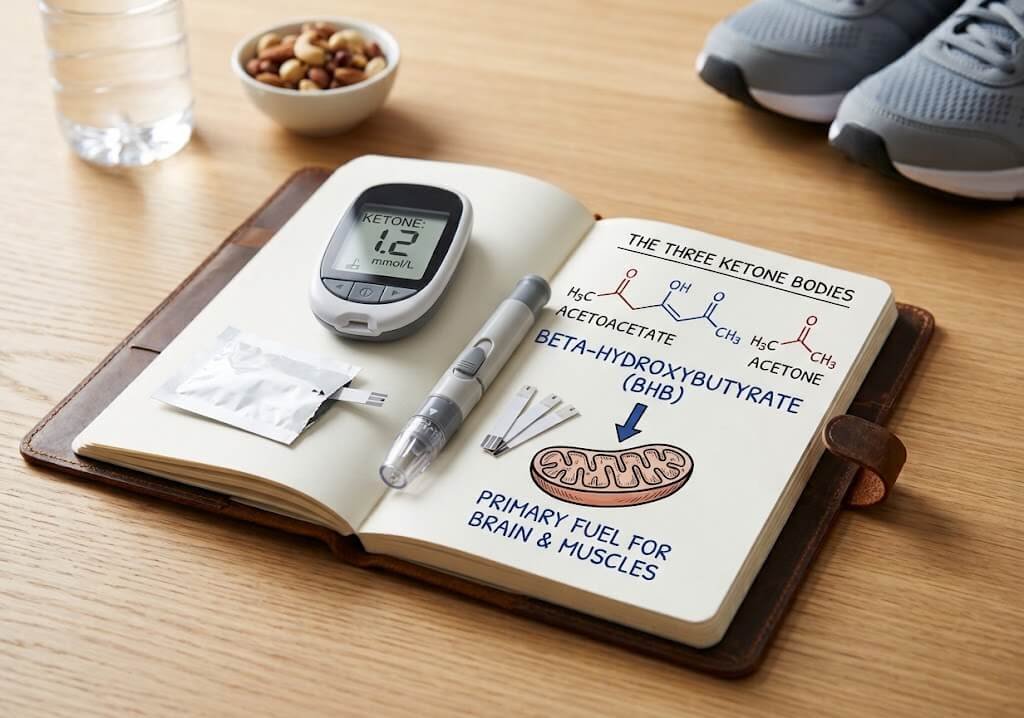
For most people who want real numbers, a blood meter is the clearest tool. Test under similar conditions each time, such as first thing in the morning before eating, so the numbers are comparable.
Exogenous BHB: Ketone Salts vs. Ketone Esters
“Exogenous” means from outside your body. Exogenous BHB products raise blood BHB without a diet change or a fast. The two main forms are ketone salts (BHB bound to minerals) and ketone esters.
The Oxford team behind a 2017 human metabolism study tested both in 15 healthy volunteers. Each drink delivered about 12 or 24 g of BHB. Here is what they reported:
| Feature | Ketone salts (sodium + potassium BHB) | Ketone ester |
| Peak blood D-BHB | About 1.0 mM | About 2.8 mM |
| Return to baseline | Within about 3–4 hours | Within about 3–4 hours |
| Isomer mix | About 50% L-BHB | D-BHB form |
| L-BHB in blood | Stayed elevated over 8 hours, gone by 24 hours | Not applicable |
That isomer row matters when you read labels. Your body mainly burns the D form, and the researchers found D-BHB, but not L-BHB, slowly converts to breath acetone. A “racemic” salt contains both forms, so some of what you pay for may not act like the D form.
A single drink also does not match diet-driven ketosis. In the Oxford study, blood BHB from a drink returned to baseline in 3 to 4 hours. When carbs stay low and insulin stays low, your liver keeps making ketones around the clock.
What Research Says About BHB Supplements
Blood Sugar
A systematic review and meta-analysis pooled 43 trials with 586 participants. After people took ketone supplements, blood BHB rose by about 1.73 mM on average and blood glucose fell by about 0.54 mM. Ketone monoesters had a bigger effect than salts.
The authors also noted that evidence on prolonged supplementation is limited. If you are interested in other supplements linked to blood sugar, see our article on chromium picolinate and glucose metabolism. Different supplements work differently, so do not treat them as interchangeable.
Appetite
A small Oxford crossover trial tested a ketone ester drink in 15 normal-weight adults after an overnight fast. Blood BHB rose from 0.2 to 3.3 mM within an hour. Compared with a calorie-matched dextrose drink, levels of ghrelin (a hunger hormone), insulin, GLP-1, and PYY were lower 2 to 4 hours later. Hunger and desire to eat dropped about 1.5 hours after the drink.
What the Research Does Not Show
Notice what is missing. These studies measured short-term blood chemistry and appetite, not long-term fat loss. The appetite trial used a single session in fasted, normal-weight adults and an ester, not a typical salt capsule.
So research suggests BHB supplements can raise blood BHB and may influence appetite and glucose for a few hours. It does not show they help you lose body fat.
Common Mistake: Treating a BHB supplement as a fat burner. A raised BHB level in the blood is not proof your body is burning more body fat.
How to Apply This in Real Life
You do not need to chase ketosis to use this knowledge. Here is a practical path.
- Clarify your goal. Are you curious, testing a low-carb diet, or considering a supplement? Each has different risks.
- Talk to your doctor first. This is especially important if you take medication or have a health condition (see safety notes below).
- Choose your intensity. A gentler path is to move toward lower-carb, whole-food meals before attempting full keto. A stricter path is a ketogenic diet with medical supervision and blood BHB tracking.
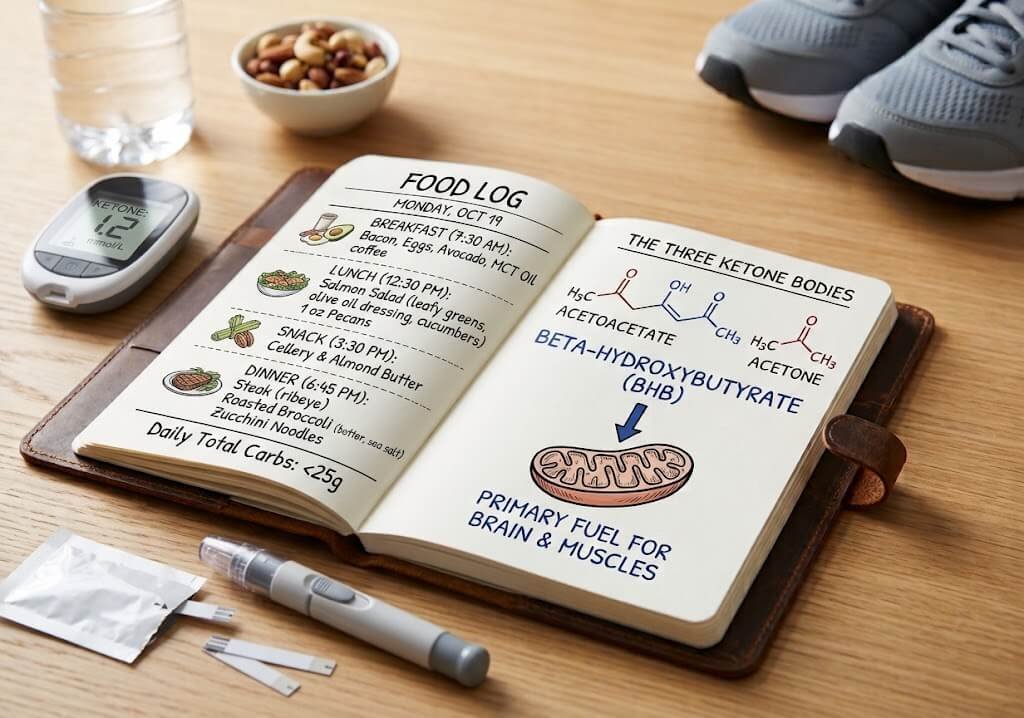
- Track with the right tool. Use a blood meter for BHB, and log your food, symptoms, and readings.
- If you try a supplement, read the label. Look for the BHB form (D-BHB versus a racemic mix) and the mineral content, such as sodium and potassium. Follow the label directions and do not exceed them.
Coach’s Tip: Change one variable at a time. If you start keto and a supplement the same week, you will not know which one caused a headache or a good reading.
Safety Notes: Who Should Be Careful
Check with your doctor or a registered dietitian before starting a ketogenic diet or a BHB supplement. This matters most if you have diabetes, kidney or liver disease, take prescription medication, are pregnant or breastfeeding, or have a history of eating disorders.
Keto flu. A 2025 scoping review on starting a ketogenic diet lists headache, lightheadedness, fatigue, brain fog, lower exercise capacity, mood changes, constipation, muscle cramps, diarrhea, and bad breath as possible early symptoms. These typically appear in the first few weeks.
Medical conditions. A 2026 review in Annals of Medicine says the ketogenic diet has rare absolute contraindications, including certain inborn errors of metabolism affecting fat oxidation and carnitine use, and porphyria. Relative cautions include acute pancreatitis, advanced liver or kidney disease, familial hypercholesterolemia, and use of the anesthetic propofol. Tell any surgical team if you are in ketosis. Reported side effects include stomach upset, frequent urination, and low blood sugar.
Supplements. Long-term safety data are limited, as the meta-analysis above notes. Ketone salts also add sodium and potassium, so people on mineral-restricted plans should ask their doctor.
Related Tips
- Don’t rely on urine strips alone. They detect acetoacetate, not BHB.
- Log symptoms along with numbers. A good reading with poor sleep or heavy fatigue is still information.
- Do not stack unknowns. Add one new product at a time.
- Compare labels. Check serving size, BHB form, and mineral content before judging price.
- Bring data to your appointment. A simple log helps your doctor give better advice.
FAQ
Is BHB the same as ketones?
No. BHB is one of three ketone bodies, along with acetoacetate and acetone. A review of ketone physiology calls BHB and acetoacetate the two main ones. BHB is the form blood meters measure and most supplements contain.
Do BHB supplements put you in ketosis?
They raise blood BHB for a few hours. In an Oxford study, levels returned to baseline within 3 to 4 hours. That differs from diet-driven ketosis, where your liver keeps producing ketones while carbohydrates stay low.
What blood BHB level counts as ketosis?
Many sources use about 0.5 mmol/L as the starting point for nutritional ketosis . Levels vary with meals, activity, and testing method. Ask your doctor what range makes sense for you.
Do ketone supplements help you lose weight?
Evidence is limited. A small trial found a ketone ester lowered ghrelin and hunger for a few hours. It did not test fat loss, and a meta-analysis found little evidence on prolonged use.
Are BHB supplements safe?
Short-term studies report raised BHB without major problems in healthy volunteers, but long-term data are limited. Salts add sodium and potassium. Check with your doctor first, especially if you have diabetes, kidney or liver disease, or take medication.
Is ketosis the same as ketoacidosis?
No. Nutritional ketosis is a regulated state. Ketoacidosis is a dangerous buildup of ketones that turns the blood acidic, most often in diabetes with very low insulin, according to StatPearls. It needs urgent medical care.
Conclusion
So, what is BHB and how does it work in ketosis? BHB is the main ketone body your liver builds from fat when insulin and carbohydrate intake are low. Your brain, heart, and muscles burn it for fuel, and it may also act as a signal inside cells.
Supplements can raise blood BHB for a few hours, and they may affect glucose and appetite. Research has not shown that they melt body fat. The smartest approach is to understand the biology, measure with the right tool, and change one thing at a time with your doctor’s input.