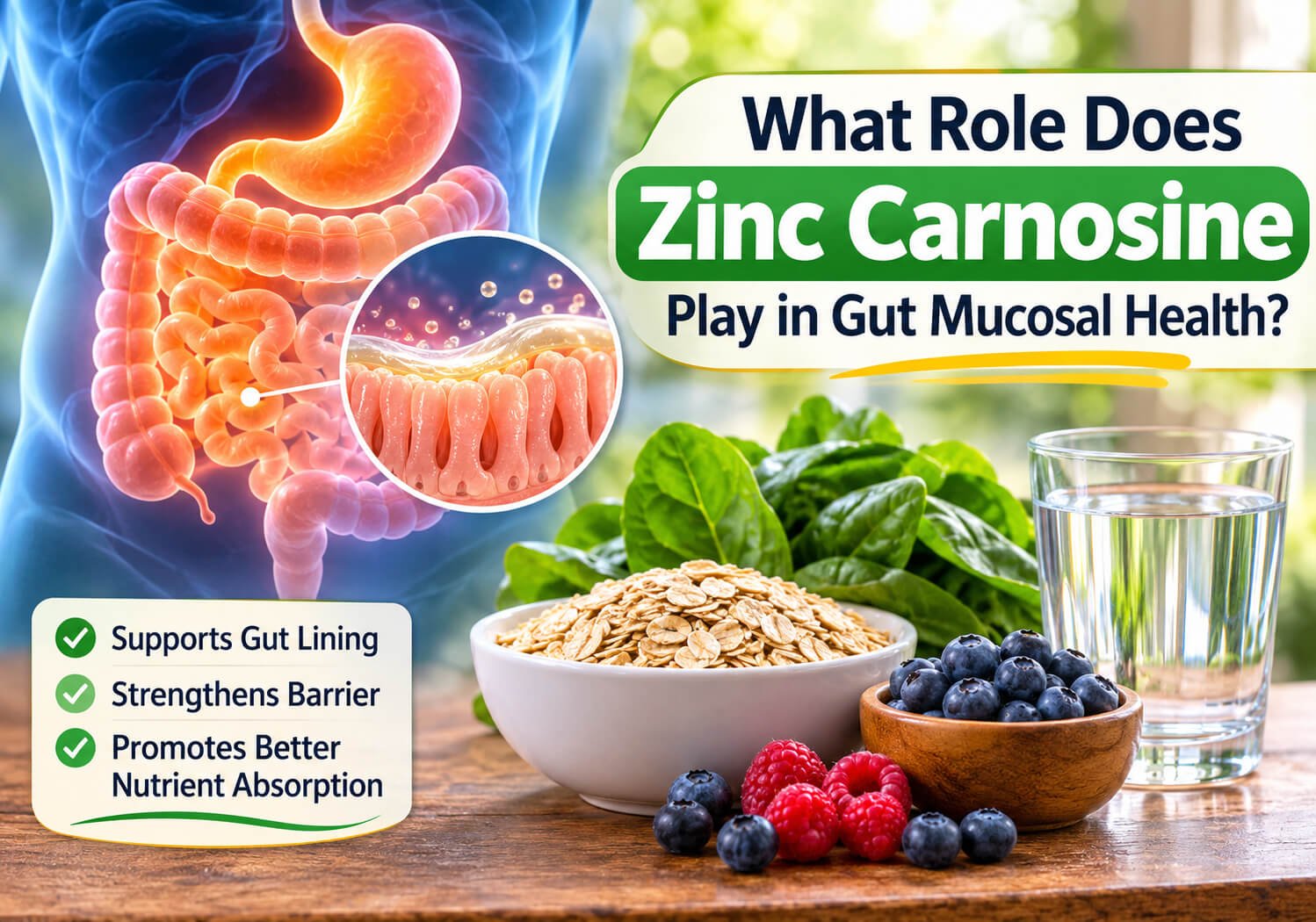
What Role Does Zinc Carnosine Play in Gut Mucosal Health? A Coach’s Evidence-Based Guide
When you push your body hard in the gym, on the track, or through daily life stress, your digestive system takes a hit alongside your muscles. Many active adults focus entirely on protein powders, creatine, and pre-workouts while ignoring the lining of their digestive tract—until bloating, cramping, or poor recovery slows them down.
Understanding what role does zinc carnosine play in gut mucosal health can help you protect the foundation of nutrient absorption and physical recovery. Unlike standard zinc supplements that dissolve quickly in stomach acid, zinc carnosine is a specialized chelated compound engineered to stick directly to irritated tissues in your stomach and intestines.
Before adding any new supplement to your routine—especially if you manage digestive symptoms or take daily medications—check with a doctor or qualified healthcare provider first.
Quick Answer: Zinc carnosine (also known as polaprezinc) supports gut mucosal health by adhering directly to the stomach and intestinal lining, where it slowly releases zinc and L-carnosine. Research suggests it stimulates protective mucus production, reduces localized oxidative stress, and reinforces tight junction proteins to help maintain barrier integrity against exercise, medication, and dietary stressors.
Understanding Gut Mucosal Health and Why It Matters for Active Adults
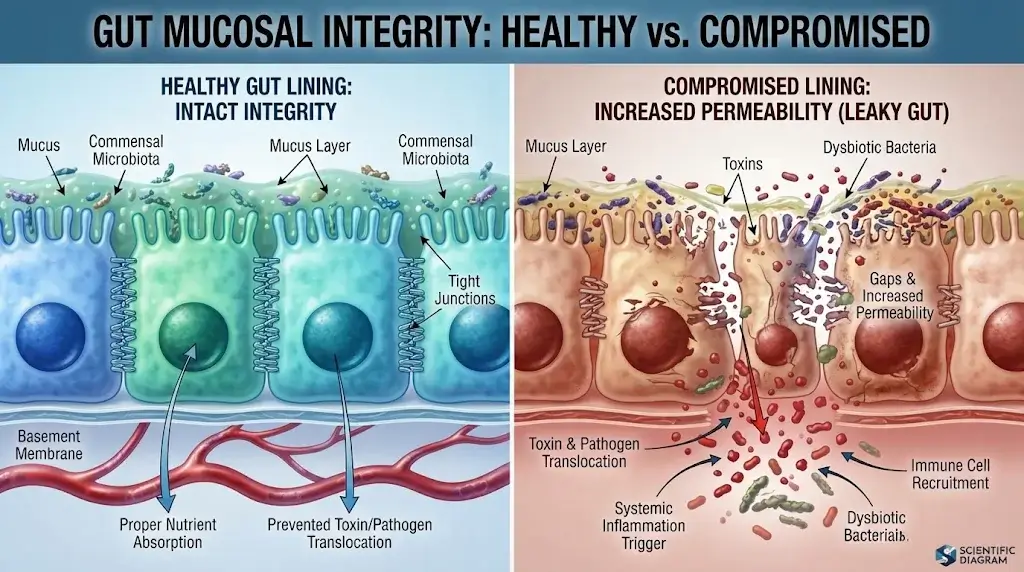
Your gastrointestinal (GI) tract is lined with a specialized tissue layer called the gut mucosa. Think of this mucosa as a high-security border wall that is only one cell thick, covered by a protective layer of mucus.
This delicate barrier has two tough jobs that directly affect how you look, feel, and perform:
- Nutrient Absorption: It lets broken-down amino acids, carbohydrates, fatty acids, vitamins, and minerals pass into your bloodstream to fuel workouts and repair muscle tissue.
- Pathogen Defense: It blocks undigested food particles, bacteria, and toxins from leaking out of your digestive tract into systemic circulation.
When this protective mucus layer thins out or the microscopic seals between gut cells loosen, a condition known as increased intestinal permeability occurs. In everyday fitness circles, people often call this “leaky gut.”
Heavy endurance training, high-intensity interval workouts, frequent use of over-the-counter pain relievers, high stress, and poor sleep can all temporarily weaken this barrier. When your gut lining is compromised, even the cleanest diet will not absorb efficiently, leaving you fatigued and inflamed.
What Role Does Zinc Carnosine Play in Gut Mucosal Health? (The Science)
To understand what role does zinc carnosine play in gut mucosal health, we need to look at how the molecule is built. Zinc carnosine is a 1:1 chelated compound combining elemental zinc with L-carnosine, a dipeptide made of the amino acids beta-alanine and L-histidine.
In Japan, this exact compound—known clinically as polaprezinc—has been prescribed since the 1990s to protect the gastric mucosa and support ulcer recovery. Because the zinc and L-carnosine are chemically bonded together, the compound behaves completely differently from taking standard zinc picolinate or zinc gluconate alongside a separate carnosine capsule.
1. Targeted Adherence to Damaged Tissue
Regular zinc salts dissolve rapidly in the acidic environment of your stomach and pass quickly into the small intestine. Zinc carnosine resists rapid breakdown in stomach acid.
According to pharmacological research indexed on PubMed Central, zinc carnosine selectively adheres to ulcerated or irritated areas of the stomach and intestinal lining. It acts like a localized biological bandage, staying anchored to the mucosal surface for hours while slowly releasing zinc and L-carnosine right where tissue repair is needed most.
2. Strengthening Tight Junction Proteins
The individual epithelial cells lining your intestines are held together by protein complexes called tight junctions—including occludin, claudin, and zonula occludens-1 (ZO-1). When these proteins break down due to heat stress, intense exercise, or inflammatory triggers, gaps open between the cells.
A well-known clinical trial published in the journal Gut (via PubMed) examined healthy volunteers performing heavy exercise and taking indomethacin, a strong nonsteroidal anti-inflammatory drug (NSAID) known to increase gut permeability. Researchers found that zinc carnosine supplementation prevented the rise in gut permeability caused by both heavy exercise and NSAID use, stabilizing the mucosal barrier.
3. Stimulating Mucus Production and Cell Migration
Your gut cells constantly shed and replace themselves every few days. Zinc is an essential cofactor for hundreds of enzymes involved in DNA synthesis, cell division, and wound healing.
Research published in Nutrients (via PMC) indicates that zinc carnosine stimulates the proliferation and migration of intestinal epithelial cells across damaged areas. At the same time, it encourages goblet cells in the gut lining to secrete fresh mucin, rebuilding the physical mucus shield that buffers stomach acid and digestive enzymes.
4. Scavenging Localized Free Radicals
Inflammation in the digestive tract generates high levels of reactive oxygen species (free radicals) that damage cell membranes and stall tissue recovery. L-carnosine is a potent antioxidant dipeptide naturally concentrated in muscle and brain tissue.
When bound to zinc, L-carnosine helps neutralize free radicals directly at the mucosal surface. Furthermore, studies cited by the National Library of Medicine show that zinc carnosine induces the expression of heat shock proteins (specifically HSP70 and HSP72), which protect gut cells from thermal and oxidative injury during strenuous physical exertion.
Coach’s Tip: Many lifters and runners take beta-alanine for muscle endurance because it boosts intramuscular carnosine levels. While beta-alanine helps buffer lactic acid in your quads and shoulders, it does not bind to zinc to form the slow-release mucosal shield that zinc carnosine provides in your digestive tract.
Zinc Carnosine vs. Standard Zinc and Other Gut Supplements
When clients ask how to evaluate ingredients in weight management and digestive supplements, I always tell them to look at bioavailability and mechanism of action. Not all forms of zinc or gut-support ingredients work the same way.
| Supplement / Ingredient | Primary Mechanism in the Gut | Mucosal Adherence | Best Use Case | Typical Daily Dose |
| Zinc Carnosine (Polaprezinc) | Slow-release zinc + L-carnosine; strengthens tight junctions, boosts mucus, scavenges free radicals | High (binds directly to irritated mucosa) | Targeted stomach and intestinal lining repair; exercise or NSAID gut stress | 75 mg to 150 mg (providing ~16–34 mg elemental zinc) |
| Standard Zinc (Picolinate / Citrate) | Systemic immune support, enzyme cofactor, general cellular repair | Low (dissolves quickly in stomach acid) | Correcting systemic zinc deficiency and supporting general hormone/immune health | 15 mg to 30 mg elemental zinc |
| L-Glutamine | Primary fuel source for enterocytes (small intestine cells) | Moderate (absorbed rapidly in upper small intestine) | Fueling high-turnover intestinal cells during heavy training blocks | 5 g to 15 g (0.18 oz to 0.53 oz) |
| Collagen Peptides | Supplies glycine, proline, and hydroxyproline for connective tissue | Low (digested into free amino acids/peptides) | General connective tissue, skin, and baseline amino acid support | 10 g to 20 g (0.35 oz to 0.70 oz) |
| Probiotics | Modulates gut microbiome balance and short-chain fatty acid production | Variable (transient colonization) | Supporting microbial diversity, regularity, and immune signaling | 10 billion to 50 billion CFU |
If you are already focusing on how to evaluate ingredients in weight management supplements, you will notice that zinc carnosine stands out because its clinical data focuses specifically on tissue integrity rather than simple symptom masking.
How Exercise, Diet, and Lifestyle Stress Impact Your Gut Lining
You do not need a diagnosed gastrointestinal disorder to experience mucosal wear and tear. In my coaching work with recreational lifters, runners, and busy adults over 40, several everyday habits quietly wear down the gut barrier.
Heavy Training and “Runner’s Gut”
When you lift heavy weights or run long distances—say, a 6-mile (9.7 km) tempo run—your body redirects blood flow away from your digestive organs and pumps it into your working muscles and skin for cooling. This temporary reduction in gut blood flow, known as splanchnic hypoperfusion, deprives intestinal cells of oxygen.
Combined with core body temperature rising above 102°F (38.9°C), this stress temporarily loosens tight junctions. If you regularly finish intense workouts with nausea, cramping, or urgent bathroom trips, exercise-induced gut permeability may be playing a role.
Frequent NSAID Use for Soreness
Reaching for 400 mg to 800 mg of ibuprofen or naproxen after a tough leg day or a pickup game is a common habit. However, NSAIDs inhibit cyclooxygenase (COX) enzymes that produce protective prostaglandins in your stomach lining.
Without those prostaglandins, mucus secretion drops and blood flow to the stomach wall decreases, leaving the tissue exposed to harsh hydrochloric acid. Research from the Mayo Clinic highlights chronic NSAID use as one of the leading causes of gastritis and mucosal erosion.
Low-Fiber, Ultra-Processed Diets
The beneficial bacteria in your colon ferment soluble fiber into short-chain fatty acids like butyrate, which nourishes your gut lining. Diets low in fiber and high in emulsifiers, refined sugars, and alcohol strip away the protective mucus layer faster than your cells can rebuild it.
Building daily habits around fiber-rich foods—or learning whether dietary fiber helps with appetite and weight management—gives your gut lining the raw materials it needs alongside targeted compounds like zinc carnosine.
How to Apply Zinc Carnosine: Dosing, Timing, and Practical Protocol
Getting results from zinc carnosine requires consistency and proper dosing. Because it works through cellular turnover and gradual tissue repair rather than an instant chemical numbing effect, you need to give your gut lining enough time to rebuild.
1. Evidence-Based Dosage Guidelines
Most human clinical trials studying gut mucosal repair use a total daily dose of 75 mg to 150 mg of zinc carnosine, split into two smaller doses.
- Standard Maintenance / Mild Gut Stress: 37.5 mg taken twice daily (75 mg total per day). This provides roughly 16 mg to 17 mg of elemental zinc.
- Intensive Mucosal Support (under medical guidance): 75 mg taken twice daily (150 mg total per day). This provides roughly 32 mg to 34 mg of elemental zinc.
Always check the Supplement Facts panel carefully. A quality product will list both the total Zinc L-Carnosine complex (e.g., 75 mg) and the Elemental Zinc yield (e.g., 16 mg).
2. Optimal Timing for Maximum Mucosal Contact
Unlike standard zinc supplements—which famously cause nausea when taken without food—zinc carnosine is very gentle on the stomach because it does not rapidly dump free zinc ions into gastric fluid.
- Morning Dose: Take your first capsule 30 minutes before breakfast with 8 fl oz (240 mL) of water. Taking it on an empty stomach allows the compound to coat the gastric and duodenal lining without competing with food particles.
- Evening Dose: Take your second capsule 30 to 60 minutes before dinner, or right before bed at least 2 hours after your last meal. Overnight, while your body rests and digestive motility slows down, zinc carnosine stays in contact with your gut lining for hours.
3. Duration and Cycling Protocol
Human mucosal cells turn over every 3 to 5 days, but rebuilding a compromised mucus layer and stabilizing tight junctions takes weeks.
- Weeks 1–2: Subtle improvements in post-meal comfort, less upper abdominal burning, and reduced bloating after heavy training sessions.
- Weeks 4–8: Full clinical protocol window used in most digestive studies. At the 8-week mark, reassess your symptoms with your healthcare provider.
- Maintenance Phase: Many active individuals drop down to a single 37.5 mg to 75 mg daily dose, or cycle off completely once their digestive resilience returns and dietary habits are dialed in.
Common Mistake: Stacking 150 mg of zinc carnosine on top of a daily multivitamin and a ZMA sleep supplement without checking total elemental zinc. Too much total daily zinc over several months can block copper absorption and lower immune function. Keep your combined elemental zinc from all supplements below the NIH Tolerable Upper Intake Level of 40 mg per day unless supervised by a physician.
Building a Gut-Friendly Training and Nutrition Routine
Supplements work best when they reinforce smart daily habits. If you take zinc carnosine while continuing to hammer your stomach with excessive NSAIDs, ultra-spicy pre-workouts on an empty stomach, and chronic sleep deprivation, you are swimming upstream.
Follow this practical 4-step daily framework to support mucosal recovery alongside supplementation:
- Hydrate Before Caffeination: Drink 12 to 16 fl oz (350 to 475 mL) of plain water upon waking before drinking coffee or pre-workout stimulants.
- Pair Protein with Soluble Fiber: Aim for 25 g to 35 g (0.9 oz to 1.2 oz) of lean protein and 8 g to 12 g (0.28 oz to 0.42 oz) of fiber at each main meal. If you struggle to hit your fiber goals through whole foods alone, exploring whether soluble fiber helps control appetite and support digestion can help you choose gentle options like oats, chia seeds, or psyllium.
- Time Your Pre-Workout Nutrition: Finish solid meals 90 to 120 minutes before intense lifting or running so blood flow isn’t trapped in your stomach when you start moving.
- Prioritize 7–9 Hours of Sleep: Deep sleep triggers growth hormone release and parasympathetic nervous system activity, both of which drive tissue repair throughout your digestive tract. Understanding how sleep affects metabolism and weight management reinforces why recovery hours matter just as much as training hours.

Safety Notes, Side Effects, and Who Should Be Careful
Zinc carnosine has a strong safety profile across decades of clinical use in Japan and dietary supplement use in North America and Europe. In clinical trials, side effects are rare and generally mild, occasionally including minor constipation, mild nausea, or a slight metallic taste.
However, certain groups should exercise caution and consult a doctor before starting:
- People Taking Copper or Iron Supplements: High-dose zinc competes with copper and iron for intestinal absorption. If you take 150 mg of zinc carnosine daily for more than 8 weeks, ask your doctor whether you should include 1 mg to 2 mg of copper or monitor your mineral levels.
- Individuals on Certain Prescription Medications: Zinc can bind to certain antibiotics (such as tetracyclines and fluoroquinolones) and penicillamine in the digestive tract, reducing their absorption. Space zinc carnosine at least 2 to 4 hours apart from prescription medications.
- Pregnant or Breastfeeding Women: Clinical safety data in pregnancy and lactation is limited, so avoid targeted high-dose supplementation unless specifically cleared by an OB-GYN.
- Anyone with Severe or Unexplained GI Symptoms: If you experience persistent abdominal pain, difficulty swallowing, unexplained weight loss, black stools, or chronic acid reflux, do not self-treat with supplements. Seek a proper medical evaluation to rule out ulcers, H. pylori infection, or inflammatory bowel conditions.
Related Tips for Long-Term Digestive Resilience
Once your gut lining feels stronger, keep it resilient with a few simple habits:
- Swap NSAIDs for Active Recovery: Instead of popping ibuprofen for routine muscle soreness, use 15 to 20 minutes of low-impact walking, gentle mobility work, and adequate protein intake to speed up muscle recovery naturally.
- Include Fermented Foods Gradually: Small daily servings of plain Greek yogurt, kefir, or sauerkraut introduce beneficial organic acids and microbes that complement mucosal barrier health. If you want to understand how gut bacteria interact with metabolism and digestion, read up on probiotics for appetite and weight management.
- Check for Micronutrient Gaps: Deficiencies in zinc, vitamin D, and vitamin A all slow down epithelial tissue repair. Reviewing which vitamins support metabolism when you’re deficient can help you spot common nutritional blind spots.
Frequently Asked Questions (FAQ)
How does zinc carnosine heal the gut lining?
Zinc carnosine adheres directly to irritated areas of the stomach and small intestine rather than dissolving immediately in stomach acid. As it slowly breaks down, it delivers concentrated zinc and L-carnosine to stimulate protective mucus secretion, neutralize local free radicals, and reinforce tight junction proteins between gut cells.
How long does it take for zinc carnosine to work?
Most clinical studies measure significant improvements in mucosal integrity and symptom relief after 4 to 8 weeks of consistent daily use. While some people notice calmer digestion and less upper stomach discomfort within the first 10 to 14 days, full epithelial cell turnover and barrier stabilization require at least a month.
Is zinc carnosine better than regular zinc for gut health?
Yes, for targeted gut lining support, zinc carnosine is superior to standard forms like zinc picolinate or gluconate. Regular zinc salts dissociate rapidly in gastric acid and absorb systemically without coating the mucosa, whereas the chelated zinc carnosine bond slows breakdown so it can bind locally to irritated digestive tissues.
Can you take zinc carnosine on an empty stomach?
Yes, most people tolerate zinc carnosine very well on an empty stomach, unlike standard zinc supplements that often trigger nausea. Taking it 30 minutes before meals with a full glass of water actually helps the compound make direct contact with the stomach and upper intestinal lining without food interference.
Can athletes take zinc carnosine for exercise-induced gut permeability?
Yes, clinical research shows that zinc carnosine helps blunt the temporary rise in intestinal permeability triggered by intense endurance or resistance training. Athletes who experience cramping, bloating, or digestive upset during heavy training blocks often use 75 mg daily to support gut barrier resilience.
What are the side effects of taking zinc carnosine daily?
Zinc carnosine is generally well-tolerated, with rare side effects limited to mild constipation, temporary stomach upset, or a faint metallic taste. The main long-term risk comes from exceeding 40 mg of total daily elemental zinc from all supplements combined, which can interfere with copper absorption over time.
Conclusion
Understanding what role does zinc carnosine play in gut mucosal health gives active adults and health-conscious lifters a practical, science-backed tool for digestive resilience. By binding directly to irritated stomach and intestinal tissues, stimulating protective mucus production, reducing oxidative stress, and reinforcing tight junction proteins, zinc carnosine supports the physical barrier responsible for nutrient absorption and recovery.
Pair a consistent 75 mg daily protocol with smart hydration, adequate soluble fiber, restorative sleep, and mindful NSAID use to keep your digestive system performing as reliably as the rest of your body. Always consult your physician before starting any new supplement regimen, especially if you take prescription medications or manage ongoing digestive symptoms.