
If you have ever felt flat in the middle of a workout or hit an afternoon slump, you have probably wondered whether a vitamin could fix it. The honest answer is that several vitamins do have real jobs in energy and metabolism, mainly the B vitamins and vitamin C. Those jobs are specific, though. Vitamins help your body use the food you already eat. They do not add fuel the way carbohydrates, fats, and protein do. In this guide, I’ll break down which vitamins matter, how they work, who is most likely to benefit, and where the research is strong or still unclear.
Quick Answer: The vitamins most tied to energy and metabolism are the B vitamins, especially B12, thiamin (B1), riboflavin (B2), niacin (B3), and pantothenic acid (B5), along with vitamin C. They work as helpers called cofactors in the reactions that turn food into usable energy. Low levels can cause tiredness, so supplements help most when a real shortage exists. Extra doses when your levels are already normal have little proven effect on energy.
How Vitamins Fit Into Energy and Metabolism
Your body gets energy from food. Carbohydrates, fats, and protein are broken down through a series of chemical reactions, and those reactions produce the energy your muscles and brain use. Many of those reactions need helper molecules to keep them running. Vitamins are often the raw material for those helpers, which is why scientists call them cofactors or coenzymes.
A 2020 narrative review in the journal Nutrients by Tardy and colleagues explains that vitamins and minerals take part in energy-yielding metabolism, DNA synthesis, oxygen transport, and neuronal functions, and that these roles translate into effects on mental and physical fatigue. That is a useful way to think about it. Vitamins are part of the machinery. They are not the fuel itself.
Here is the practical takeaway. If the machinery has all the parts it needs, adding more parts usually does not make it run faster. If a part is missing, the whole system slows down. That is why deficiency matters so much in this topic, and why the research on energy boosts in people with normal levels is much weaker than the marketing suggests.
Coach’s Tip: Think of your energy system like a team. A missing player hurts the whole play. An extra player on a team that already has enough players usually does not change the score. Before adding anything, ask whether you might be short on something specific.
What “Energy” and “Fatigue” Mean
Energy is a tricky word. Tardy and colleagues point out that energy and fatigue are subjective perceptions with an objective physiological basis, and that the terms are defined in different ways across studies. This matters because you may feel tired for many reasons: poor sleep, stress, low calorie intake, illness, medication side effects, or low iron. A vitamin is only one possible piece of the puzzle.
So if you feel tired, a vitamin may or may not be the answer. A good next step is to look at sleep, food intake, training load, and whether you have symptoms that point toward a medical cause. The sections below explain which vitamins are linked to real energy problems and what to do about them.
The Vitamins That Matter Most for Energy
The table below lists the key nutrients for energy and metabolism, what each one does, and what happens when levels run low. It is a starting point, not a diagnosis.
| Nutrient | Main role in energy metabolism | What low levels may cause | Evidence strength |
| Vitamin B12 | Supports red blood cell formation and nerve function; part of energy-related pathways | Fatigue, weakness, anemia | Strong for deficiency; weak for normal levels |
| Thiamin (B1) | Helper in carbohydrate breakdown | Fatigue, weakness, nerve problems in severe cases | Strong for deficiency |
| Riboflavin (B2) | Part of key enzymes in energy reactions | Fatigue, sore throat, skin changes in deficiency | Strong for deficiency |
| Niacin (B3) | Part of molecules that move electrons during energy production | Fatigue, digestive and skin problems in deficiency | Strong for deficiency |
| Pantothenic acid (B5) | Needed to make coenzyme A, used in fat and carbohydrate metabolism | Rare; fatigue possible | Limited in humans |
| Vitamin C | Involved in iron absorption and many body processes | Fatigue, weakness in deficiency | Moderate; mostly about deficiency |
| Iron (a mineral) | Carries oxygen in hemoglobin | Iron deficiency, anemia, fatigue | Strong for deficiency |
The table reflects a simple pattern. The strongest evidence links these nutrients to energy when someone is actually deficient. Once levels are adequate, the evidence for extra energy gets much thinner.
Vitamin B12: The Energy Vitamin People Ask About Most
Vitamin B12, also called cobalamin, is the vitamin most often linked to fatigue. The NIH Office of Dietary Supplements’ consumer fact sheet on vitamin B12 explains that it is a water-soluble vitamin and that many supplements contain it, often in a form called cyanocobalamin. The same fact sheet notes that manufacturers often promote B12 supplements for energy, athletic performance, and endurance, and that scientists are still studying how B12 affects health.
That last point is important. The promise of energy is part of the marketing. The science is still building.
Why B12 Matters for Tiredness
B12 helps the body make healthy red blood cells and supports nerve function. When B12 is low, the body can struggle to make enough healthy red blood cells, which can lead to anemia. Anemia reduces the oxygen your blood carries, and that can leave you feeling weak and worn down. Tardy and colleagues describe how inadequate status of these micronutrients can lead to fatigue and cognitive symptoms, which fits this picture.
If you suspect low B12, the most important step is a blood test ordered by a doctor. Fatigue has many causes, and only testing can tell you whether B12 is the issue.
Who Is Most at Risk
The NIH health professional fact sheet on vitamin B12 states that plant foods do not naturally contain vitamin B12. That makes B12 a common concern for people who avoid all animal products, unless they eat fortified foods or take a supplement. The same consumer fact sheet notes that people over 50 should get most of their B12 from fortified foods or supplements, because in most cases their bodies can absorb B12 from those sources more easily than from natural food sources.
Other groups that deserve a closer look include people with certain digestive conditions, people who have had stomach or intestinal surgery, and people taking certain medications. Your doctor can help you figure out whether any of these apply to you.
Common Mistake: Taking a high-dose B12 supplement because you feel tired, without a blood test. If your levels are already normal, extra B12 is unlikely to fix tiredness. It can also hide a different problem that needs attention. Test first, then decide.
What the Research Says About B12 and Energy
Here is the careful version of what the evidence supports. In people who are deficient, B12 supplements can help correct the deficiency, and fatigue often improves as levels recover. In people with normal levels, the evidence for an energy boost is weak. The Tardy review notes that results from supplementation trials are mixed and that the strongest case for these micronutrients is about correcting inadequate status.
The Other B Vitamins: Thiamin, Riboflavin, Niacin, and Pantothenic Acid
The B vitamins work as a team, and most of them show up in the same energy pathways. The Tardy review focuses on B1, B2, B3, B5, B6, B8, B9, and B12 because each has a recognized role in these outcomes. Each one acts as a helper in different steps of metabolism.
Thiamin (B1)
Thiamin helps the body process carbohydrates. Severe thiamin deficiency can cause serious nerve and heart problems, and that is why it is studied so closely. The NIH health professional fact sheet on thiamin covers its recommended intakes, food sources, and deficiency effects. For most people who eat a varied diet, thiamin deficiency is uncommon. People with heavy alcohol use or certain malabsorption conditions have a higher risk.
Riboflavin (B2)
Riboflavin is part of enzymes that help run energy reactions. Its role is well documented, and the NIH health professional fact sheet on riboflavin describes its functions and deficiency signs. A true riboflavin shortage is rare in people eating a varied diet. Milk, eggs, lean meats, and fortified cereals are common sources.
Niacin (B3)
Niacin helps form molecules that carry electrons during energy production. A deficiency is uncommon in developed countries, but it can cause fatigue along with digestive and skin problems in more severe cases. Niacin is also a common ingredient in supplements sold for cholesterol and flushing effects, and that is a different topic from energy. High doses can cause side effects, so do not treat niacin as harmless just because it is a vitamin. Talk to a doctor before taking high-dose niacin.
Pantothenic Acid (B5)
Pantothenic acid is needed to make coenzyme A, which takes part in breaking down fats and carbohydrates. Deficiency in people is rare, and the evidence that extra B5 boosts energy is limited. Most people get enough from a normal diet, since it is found in many foods.
Coach’s Tip: When you see a B-complex product, look at the amounts on the label and compare them with the Daily Values. B-complex pills often contain several B vitamins at once. If you are only low in one of them, a complex may give you more than you need. Let a blood test guide your choice.
Vitamin C and Energy
Vitamin C is not a classic energy vitamin, but it shows up in the energy conversation for two reasons. First, the Tardy review includes it in its set of micronutrients linked to fatigue and cognitive function. Second, vitamin C helps the body absorb iron from plant foods. Since iron deficiency is a major cause of tiredness, vitamin C can play an indirect role.
This is a good example of nutrients working as a team. A diet that gives you enough iron and enough vitamin C can help support healthy iron status. The effect is about the combination, not one nutrient alone.
Iron: Not a Vitamin, but Always in the Energy Conversation
Iron is a mineral, not a vitamin, but it belongs in any honest discussion of energy. Iron carries oxygen in hemoglobin, the protein inside red blood cells. When iron is low, the body has less capacity to carry oxygen to muscles and the brain, and that can cause real fatigue.
The NIH consumer fact sheet on iron explains that when iron stores get low, iron deficiency anemia can develop, and that symptoms of iron deficiency anemia can include tiredness and other changes. The Office on Women’s Health fact sheet on iron-deficiency anemia describes fatigue as a very common symptom and notes that iron-deficiency anemia affects more women than men.
Fatigue is the most common symptom, but fatigue alone does not confirm iron deficiency. Many things cause tiredness. A blood test and a doctor’s review are the right way to find out.
Why Iron Is Different From Other Vitamins
Iron supplements carry safety concerns that most vitamins do not. The NIH consumer fact sheet warns that iron supplements can interact with medicines, including levodopa, a drug used for Parkinson’s disease, and that taking calcium and iron at different times of the day may help. It also notes that people with certain iron-related disorders should avoid iron supplements.
Accidental iron overdose in young children is a serious risk. Keep iron supplements out of reach of children, and store them in child-resistant packaging.
Common Mistake: Taking iron “just in case” because you feel run down. Too much iron can be harmful, and it can hide the real cause of your fatigue. If your doctor finds low iron, the right dose and timing should come from them, not from a guess.
Who Is Most Likely to Benefit From Vitamin Support
The best predictor of benefit is a real deficiency. Based on the NIH and Tardy sources, the groups most worth checking include:
- People who avoid all animal products and do not take B12 or eat fortified foods
- Adults over 50, who may absorb B12 from natural food less efficientl,
- People who have heavy menstrual bleeding or other sources of blood loss
- People with digestive conditions that affect absorption
- People taking medications that interfere with nutrient absorption, after checking with their doctor
Coach’s Tip: If you are an athlete in heavy training, do not assume a deficiency. Ask for bloodwork before and during a training block. Good data beats guesses every time, and it helps you spend your money where it counts.
How Vitamins Relate to Metabolism
Metabolism is the full set of chemical processes that keep your body working. People often use the word to mean how fast they burn calories, but that is only one small part. Vitamins and minerals help with metabolism because they are cofactors in many of its reactions.
That does not mean vitamins can speed up metabolism in a meaningful way for most people. The research supports the idea that vitamins are needed for normal metabolism, and that deficiency can disrupt it. It does not show that extra vitamins turn a normal metabolism into a fast one.
Minerals are often mentioned in the same breath. If you want to read about one of them, our guide on whether chromium picolinate supports glucose metabolism covers that topic separately.
Simple daily habits do much more for metabolic health than any single vitamin. Regular strength training, enough protein at meals, good sleep, and a diet with plenty of vegetables and whole foods support metabolism in ways that are easier to measure.

Vitamins and Training: What Actually Helps You Feel Better
As a coach, I see the same pattern again and again. People expect a pill to fix a problem that is really about sleep, food, or training load. A vitamin cannot make up for four hours of sleep, and it cannot replace a balanced meal.
If you are feeling flat during training, start with the basics. Check how many hours you sleep. Look at whether you are eating enough total food, especially carbohydrates on heavy training days. Notice whether your training volume jumped suddenly. Each of these is a more likely cause of low energy than a vitamin shortage.
Only after those basics are in order does it make sense to look at nutrients. If you have persistent fatigue for several weeks, that is a reason to see a doctor, not a reason to start buying supplements.
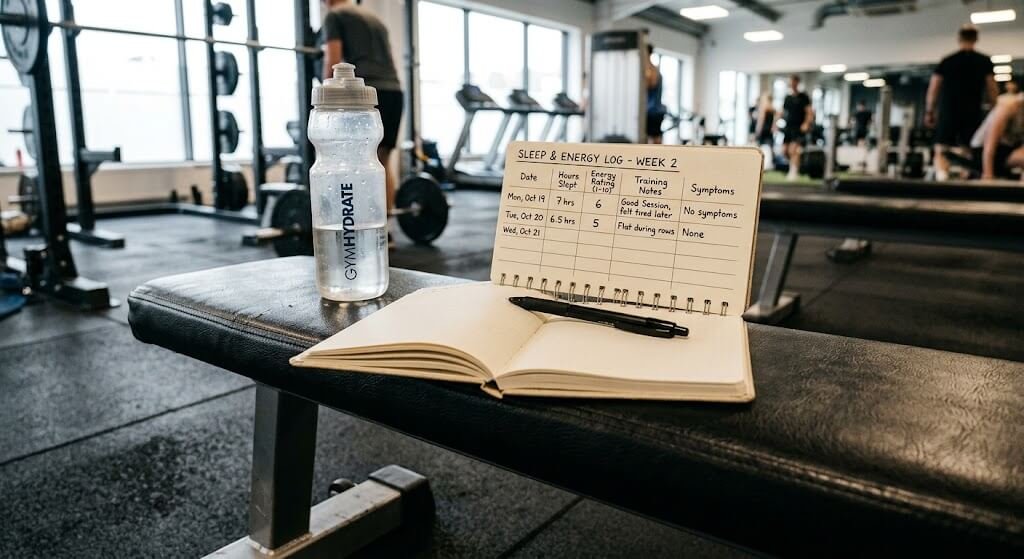
Coach’s Tip: Keep a simple log for two weeks. Write down your sleep, meals, training, and how tired you feel on a scale of one to ten. Patterns often show up quickly, and the log gives your doctor useful information if you need testing.
Practical Steps If You Think a Vitamin Is Your Problem
If you are wondering whether a vitamin could help, here is a clear order of steps. Follow them in sequence.
- Track your basics for one to two weeks. Write down sleep, food, training, and symptoms.
- See a doctor if fatigue lasts several weeks. Ask for a basic blood panel that can check for anemia and common deficiencies.
- Ask for specific tests. Depending on your situation, your doctor may check B12, iron status including ferritin, and other markers.
- Follow the result, not the marketing. If a deficiency is found, your doctor can recommend a dose and a plan.
- Check interactions. Tell your doctor and pharmacist about every supplement and medication you take, as the NIH fact sheets recommend.
- Reassess after a set period. Retest or review symptoms to see whether the plan is working.

Choosing a Vitamin Product Wisely
Once you and your doctor decide a supplement makes sense, the label matters. Look for the specific vitamin or mineral named, the amount per serving, and any warnings. Compare the amount to the Daily Value so you know how much you are getting.
Keep expectations realistic. A product that promises a dramatic energy surge in days is making a claim the research does not back up. Be skeptical of any product that says it can speed up metabolism, burn fat, or give you a “boost” without a deficiency.
Safety Notes
Vitamins are safe in the amounts found in food, but supplements can be different. Higher doses can cause side effects, and some vitamins and minerals can interact with medications. Iron supplements carry a specific poisoning risk for children. High doses of niacin can cause side effects, and the right amount for you depends on your health and goals.
If you have a medical condition, are pregnant or breastfeeding, take prescription medication, or have been told you are deficient, check with your doctor before starting or changing any supplement. Do not start a high-dose product on your own.
Frequently Asked Questions
Do vitamins give you energy?
Vitamins do not provide calories, so they do not give you energy the way food does. They help your body use the energy in food. If you are deficient in certain vitamins, correcting that deficiency can improve fatigue. If your levels are already normal, extra vitamins are unlikely to add noticeable energy, according to the current evidence reviewed by NIH and the Tardy review.
Which vitamin is best for energy?
No single vitamin is best for everyone. Vitamin B12 is the most commonly discussed, but it only helps if you are deficient. Iron is a mineral that is critical when iron-deficiency anemia is present. Your best choice depends on the results of your blood tests and your doctor’s advice.
Can B12 help with tiredness?
It can, if your tiredness comes from a B12 deficiency. Low B12 can cause anemia and fatigue. If your levels are normal, current evidence does not support B12 as an energy booster. Get a blood test before deciding, and ask your doctor which form and dose make sense for you.
Should I take a B-complex every day?
Not without a reason. B-complex products contain several B vitamins at once, and you may not need all of them. If you have a documented deficiency, your doctor may recommend a specific product. Taking a complex just because you feel tired is unlikely to help and may waste money.
How do I know if I am low on iron?
Fatigue is the most common symptom of iron deficiency, but it is not specific to iron. A blood test, often including ferritin and hemoglobin, is the reliable way to check. Do not start iron supplements without testing, because too much iron can be harmful, especially for children.
Can vitamins speed up my metabolism?
Vitamins help your metabolism work normally, and deficiencies can slow it down. Extra vitamins do not make a normal metabolism faster, based on current evidence. Strength training, enough protein, good sleep, and a varied diet have much stronger support for metabolic health.
Conclusion
So, what vitamins help with energy and metabolism? The B vitamins, especially B12, along with vitamin C and the mineral iron, play real roles in how your body turns food into usable energy. Their power shows up most clearly when a deficiency exists. For people who are already getting enough, extra doses are unlikely to create a noticeable boost.
The smart approach is to track your basics, talk to your doctor if fatigue lasts, and let blood tests guide any supplement decision. Training hard, sleeping well, and eating a varied diet will do more for your energy than any single vitamin. Treat vitamins as a tool for specific problems, not a shortcut around the fundamentals.