Walk down any supplement aisle and you will see bottles that promise to melt fat and wake you up at the same time. So which supplements support weight management and energy in a way you can trust? The honest answer from health agencies is “a few might help a little, most don’t, and some carry real risks.”
As a coach, I’d rather you spend your money and effort where it counts. This guide walks through what the research says, which nutrients can matter when you’re low, and how to build a simple plan around food, sleep, and training. Check with your doctor before starting any supplement.
Quick Answer: Caffeine and green tea may help a little with weight and alertness, but the effects are small. Iron, B12, magnesium, and vitamin D matter for energy only when you’re low. Most “fat burners” lack strong proof, and healthy eating, fewer calories, and regular exercise remain the proven approach.
Which Supplements Support Weight Management and Energy? What the Research Says
Two different goals are hiding inside one question. Weight management is about body fat and appetite over months. Energy is about how awake and capable you feel today. Supplements affect these goals in very different ways, so we’ll take them one at a time.
Weight management: small effects at best
The NIH Office of Dietary Supplements (ODS) reviewed the weight loss supplement research for consumers. Its summary is blunt. The proven ways to lose weight are eating healthful foods, cutting calories, and being physically active. Supplements are not on that list.
Where supplements do show up in studies, the results are modest. Caffeine, green tea, green coffee bean extract, carnitine, chromium, and a few others “might help” a small or very small amount, according to the same page. Many popular ingredients, such as glucomannan, Garcinia cambogia, and forskolin, show little to no effect.
The same review quotes a U.S. Government Accountability Office finding that little is known about whether these products work, and that some have been linked to physical harm. In plain terms, a supplement is a small add-on at best. It never replaces the plan.
Energy: fix the gap, not the feeling
Energy supplements work best when they correct a real shortfall. If your iron is low, iron may help you feel less tired. If your diet is fine, an extra dose of the same nutrient usually does nothing noticeable.
Stimulants are the exception, because they change how awake you feel right now. That comes with trade-offs for sleep, nerves, and heart rate. We’ll cover those below.
Quick Evidence Table: How Strong Is the Proof?
This table pulls from the ODS consumer and professional fact sheets. “Small” means a modest difference that may not matter in daily life.
| Ingredient | What the NIH review says | Main caution |
| Caffeine | Might help you lose a little weight or gain less over time | Sleep trouble, jitters; keep under 400-500 mg/day |
| Green tea (drink) | Might help a small amount | Generally safe as a drink |
| Green tea extract | Small effect, if any | Liver injury reported |
| Green coffee bean extract | Might help a small amount | Contains caffeine; trials were low quality |
| Carnitine | Might help a small amount | Limited long-term data |
| Chromium | Very small effect | Reviewers called it of “debatable clinical relevance” |
| Conjugated linoleic acid (CLA) | Very small effect | Small gains in trials |
| Probiotics | Unclear | Gas and stomach upset |
| Capsaicin | Not studied enough | Stomach upset |
| Glucomannan | Little to no effect | Needs plenty of fluid |
| Garcinia cambogia | Little to no effect | Liver cases reported |
| Vitamin D | Does not help you lose weight | Excess can be toxic |
| Yohimbe | Does not help you lose weight | Severe side effects possible |
| Hoodia | Probably won’t help | May raise heart rate and blood pressure |
Caffeine: The Most Reliable Stimulant, With Limits
Caffeine is the best-studied ingredient in most “fat burner” and “energy” formulas. The ODS review notes that a 100 mg dose raised energy use by an average of about 9.2 calories per hour for three hours or more in the studies it described. That is a tiny bump, roughly the energy in a few bites of an apple.
Caffeine is also linked to sleep problems, nervousness, and jitteriness. The review says the FDA and the European Food Safety Authority state that up to 400 mg a day does not raise safety concerns for healthy adults. The American Medical Association suggests a 500 mg limit, and the consumer sheet says caffeine is safe for most adults up to 400 to 500 mg a day.
Coach’s Tip: Count your caffeine from every source, not just pills. Coffee, energy drinks, pre-workout powders, and tea all add up. Stop caffeine at least eight hours before bed, because poor sleep drains the exact energy you are trying to build.
Hidden caffeine in “natural” blends
Ingredients like guarana, kola nut, and yerba mate contain caffeine. The NIH review warns that some caffeine-containing herbal products do not list caffeine on the label. Stacking a pre-workout, a fat burner, and a daily coffee can push you well past a safe amount without you knowing.
The review also puts the toxic range at roughly 15 mg per kg of body weight, which is about 1,000 mg for a 150 lb (68 kg) adult. You never want to come close. NCCIH adds that many ephedra-free products rely on high caffeine or herbs like guarana, and these can increase heart rate and cause abnormal heart rhythms.
Green Tea: A Cup Is Fine, an Extract Is a Different Story
Green tea gets a lot of attention because it contains catechins and a little caffeine. The National Center for Complementary and Integrative Health says catechins and caffeine in green tea may have a modest effect on body weight, and that results depend on the product and the person’s activity level. That is a hedged, small claim.
The ODS review found a Cochrane review of 14 trials with 1,562 participants, which reported about 0.95 kg (2.1 lb) more weight loss than placebo. Six non-Japanese studies in that review showed no significant difference. In other words, the benefit is small and not consistent.
Safety is where the drink and the extract split. NCCIH reports that liver injury from green tea is uncommon, but has been reported, mainly with extract tablets or capsules. People with a certain immune-related gene variant, found in about 5 to 15 percent of Americans, appear more susceptible. The page reports no safety concerns for adults drinking green tea as a beverage.
Common Mistake: Switching from drinking green tea to taking high-dose green tea extract pills because “more is better.” Extracts concentrate the compounds linked to liver problems. If you like green tea, drink it. Leave the concentrated capsules alone unless a doctor says otherwise.
Nutrient Gaps That Can Drain Your Energy
Vitamins and minerals do not give you energy the way caffeine does. They help your body run the machinery that turns food into fuel. When you’re short on one, you may feel tired, weak, or foggy.
Here are the four nutrients most often tied to low energy. Each is cited to the NIH fact sheets.
Iron
Iron carries oxygen in your blood. The NIH iron fact sheet for consumers says symptoms of iron deficiency anemia include tiredness and lack of energy, along with weakness and trouble with concentration and memory. Adult men need 8 mg a day, and women ages 19 to 50 need 18 mg.
Groups more likely to fall short include teen girls and women with heavy periods, pregnant women, frequent blood donors, and people with certain gut or heart conditions. This is the supplement to be most careful with. The upper limit for adults is 45 mg a day from all sources, and high doses can cause stomach pain, constipation, and nausea. Extremely high doses can be deadly, and people with hereditary hemochromatosis should avoid iron supplements.
Please do not guess. Ask your doctor for a blood test before you take iron for tiredness.
Vitamin B12
The NIH describes vitamin B12 as a cofactor for enzymes, meaning it helps them do their jobs. It is also needed for healthy red blood cells and for DNA synthesis. Low B12 can contribute to fatigue, and it is more likely if you eat no animal foods or have trouble absorbing nutrients.
If your levels are normal, extra B12 will not turbocharge your day. Food sources include fish, meat, eggs, dairy, and fortified cereals.
Magnesium
Magnesium helps more than 300 enzyme systems and is required for energy production, according to the NIH magnesium sheet. Early signs of low magnesium include loss of appetite, nausea, fatigue, and weakness. The same page reports that 48% of Americans take in less magnesium from food and drinks than their estimated average requirement.
That does not mean everyone needs a pill. Pumpkin seeds, almonds, spinach, black beans, and whole grains are easy places to start.
Vitamin D
Your muscles need vitamin D to move, and your nerves need it to carry messages, says the NIH vitamin D consumer sheet. In adults, deficiency causes bone pain and muscle weakness. The page also says almost one in four people in the United States have blood levels that are too low or inadequate.
One more important point for this article. The same page says vitamin D supplements and vitamin D-rich foods do not help you lose weight. It can matter for muscle function, but it is not a fat loss tool.

Ingredients With Weak Evidence or Real Risks
Some products are popular mostly because of marketing. Here is where the NIH sources raise a flag.
- Ephedra: The FDA banned ephedra in dietary supplements in 2004 after concluding it isn’t safe. The consumer sheet says it can cause high blood pressure, abnormal heartbeat, stroke, seizures, heart attack, and death. Some products still hide stimulant ingredients, so read labels closely.
- Bitter orange: The consumer sheet says it might slightly increase the number of calories you burn, but it might not be safe. It can cause chest pain, anxiety, and higher blood pressure.
- Yohimbe: It doesn’t help you lose weight, and side effects can be severe. Use it only with guidance from your health care provider.
- Hoodia: It probably won’t help you eat less, and it can raise heart rate and blood pressure. The professional review notes that some hoodia products contained little or no hoodia.
- Garcinia cambogia: Little to no effect on weight. The professional review links Garcinia products to 10 cases of liver toxicity, including one death and two transplants, though most of those products contained other botanicals too.
Probiotics, capsaicin, and fiber: interesting, but unproven
These three get less hype than stimulants, yet they come up often. The ODS professional review describes a 15-trial meta-analysis of probiotics that found about 0.6 kg (1.3 lb) more weight loss, but it also says results were inconsistent across studies. The consumer sheet says it is unclear whether probiotics affect weight or body fat.
For capsaicin, the compound in chili peppers, the professional review describes a 12-week trial of 77 adults in which 4 mg a day was linked to about 252 fewer calories eaten daily, with no significant change in weight. Guar gum, a fiber, probably doesn’t help you lose weight either. If you want more fiber, beans, oats, and vegetables give it to you along with other nutrients.
Labels may not match what’s inside
NCCIH warns that labels may not match contents. Analyses have found differences between what is listed and what is in the bottle, and the FDA has found weight loss products tainted with prescription drug ingredients. The ODS consumer sheet gives the same caution, noting that products are sometimes adulterated with drugs or controlled substances that are not on the label.
“Natural” does not necessarily mean “safe.” That is straight from NCCIH, and it is worth remembering every time a package says “all natural.”
How to Choose Which Supplements Support Weight Management and Energy for You
Now let’s turn research into action. Use this order, and stop as soon as your goal is met. Most people never need to reach step five.
- Start with the basics. Sleep seven or more hours, eat protein at every meal, and drink water through the day. Fix these before you spend a dollar on supplements.
- Get tested if you’re tired for weeks. Ask your doctor about iron, B12, vitamin D, thyroid, and blood sugar. Persistent fatigue can have medical causes that no supplement will fix.
- Fill confirmed gaps only. If a test shows a low nutrient, your doctor can suggest a dose and a retest date. This is the one place a supplement has strong logic.
- Treat caffeine as a tool, not a crutch. One or two cups of coffee or green tea earlier in the day is a reasonable approach for most healthy adults. Keep your total under the 400 mg mark discussed above.
- Skip stacked “fat burners.” The ODS consumer sheet notes that many products combine ingredients whose combined effects are unknown.
How to track whether something is working
Give any change about four weeks before you judge it. Write down your bedtime, your caffeine, your mid-afternoon energy on a 1-to-10 scale, and your waist measurement once a week. Change only one thing at a time, so you can tell what made the difference. If you feel worse, or nothing improves, stop and bring your notes to your doctor.
A simple label checklist
Before you buy anything, run through these questions:
- Does the label list every ingredient and the amount of each?
- Does it carry a third-party testing seal? (This reduces but does not remove the risk of tainted products.)
- Does it promise fast results or “no diet or exercise needed”? If so, put it back.
- Have you told your doctor and pharmacist about it, especially if you take medicines?
Coach’s Tip: Take a photo of the supplement facts panel and show it at your next appointment. It takes ten seconds, and it lets your doctor or pharmacist check for interactions with your medicines.
The Part That Really Moves the Needle: Training and Daily Movement
Here is where I’d put your effort. The CDC adult physical activity guidelines call for at least 150 minutes of moderate-intensity activity a week, or 75 minutes of vigorous activity, or an equal mix. They also call for muscle-strengthening work on at least two days a week that trains all major muscle groups. Going beyond those minimums gives even greater health benefits.
Strength training matters for weight management because muscle is the tissue that keeps working for you long after the workout ends. It also makes everyday tasks feel easier, which is its own kind of energy boost. Below is a beginner-friendly routine you can do at home or in a gym.
Sample weekly plan
| Day | Activity | Time |
| Monday | Full-body strength (workout below) | 35-40 min |
| Tuesday | Brisk walk | 30 min |
| Wednesday | Rest or easy stretching | 10-15 min |
| Thursday | Full-body strength (workout below) | 35-40 min |
| Friday | Brisk walk or easy bike ride | 30 min |
| Saturday | Longer walk, hike, or sport you enjoy | 45-60 min |
| Sunday | Rest | – |
That plan lands you at roughly 150 minutes of moderate activity plus two strength days. Adjust it to fit your schedule and current fitness level.
Full-body strength workout
Rest 60 to 90 seconds between sets. Use a weight that leaves you with about two reps in reserve, meaning you could do two more with good form.
| Exercise | Sets | Reps | Starting weight guide |
| Goblet squat | 3 | 10-12 | 10-25 lb (4.5-11 kg) dumbbell |
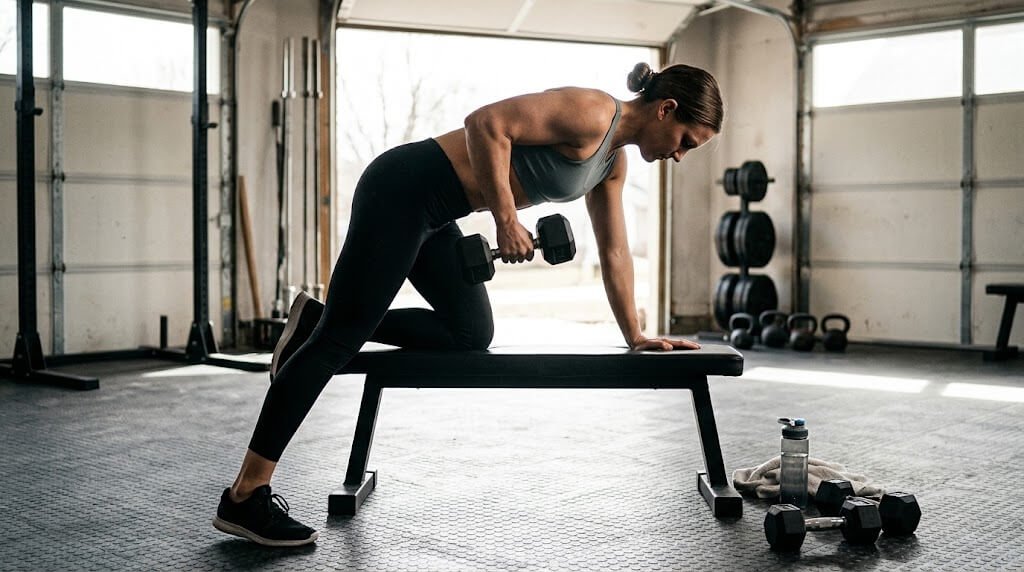
| Dumbbell row (each arm) | 3 | 10 | 10-20 lb (4.5-9 kg) |
| Incline push-up | 3 | 8-12 | Bodyweight |
| Romanian deadlift | 3 | 10 | 15-30 lb (7-14 kg) per hand |
| Plank | 3 | 20-40 sec | Bodyweight |
Form cues for the goblet squat: Hold one dumbbell against your chest with both hands. Stand with your feet slightly wider than your shoulders. Sit down between your hips, keep your chest tall, and push through your whole foot to stand. It should feel like work in your thighs and glutes, not your lower back.
Common Mistake: Letting your knees cave inward on the way up. Think about pushing your knees gently out toward your pinky toes. If it keeps happening, lower the weight and slow the tempo to about three seconds down.
Easier version (regression): Squat to a box or bench, skip the weight, and do 2 sets of 8. Make push-ups easier by placing your hands on a counter. Hold the plank on your knees.
Harder version (progression): Add 5 lb (2.3 kg) when you can finish every set with good form, use a 3-second lowering phase, or switch to a regular push-up and a full plank. Add one set to each exercise after four weeks.
Safety Notes: Who Should Talk to a Doctor First
Check with your doctor before taking any weight loss or energy supplement. This matters most if you:
- Are pregnant, planning to become pregnant, or breastfeeding. NCCIH notes that pregnant people should keep caffeine to moderate levels, and that high caffeine intake while breastfeeding can make infants fussy and disrupt their sleep.
- Take prescription medicines, especially for blood pressure, heart rhythm, mood, or blood thinning.
- Have heart, liver, kidney, or thyroid conditions, or high blood pressure.
- Have a history of an eating disorder. NCCIH notes that some people with eating disorders misuse weight loss supplements, and a conversation with a professional comes first.
- Are older and managing several health conditions.
Stop a supplement and call your doctor if you notice chest pain, a racing or irregular heartbeat, severe stomach pain, dark urine, yellowing of the skin or eyes, or unusual weakness. Tell every provider you see about everything you take.
Related Tips for Steadier Energy and Healthier Habits
A few smaller habits make a real difference, and none of them come in a bottle.
Protect your sleep. Keep a regular bedtime, keep the bedroom cool and dark, and cut caffeine early in the day. Your body does a lot of its repair work overnight, and it shows up in your energy the next morning.
Eat enough protein and fiber. A palm-sized portion of protein with each meal and a serving of vegetables or beans helps you feel full longer. This is a food-based approach to appetite that comes with no label warnings.
Support blood sugar with steady meals. Long gaps between meals followed by a huge meal can leave you wiped out. If you’re curious about nutrients that relate to insulin and glucose, our overview of inositol and insulin sensitivity studies explains what the research shows. Likewise, see whether chromium picolinate and glucose metabolism matters for you. Keep in mind the weight loss review above called chromium’s effect very small.
Know the pre-workout trap. Lifters often use blood flow boosters before training. If that is what you are curious about, read how L-citrulline helps produce nitric oxide. It is a separate topic from fat loss and not a shortcut to either goal.
Try mindful eating. NCCIH says yoga and meditation, especially mindful eating, show emerging evidence as complements to other weight loss approaches. Slow down, put the fork down between bites, and notice when you feel satisfied.
FAQ
Do weight loss supplements actually work?
Some might help a little. The NIH consumer review says caffeine, green tea, carnitine, and a few others might help you lose a small amount of weight, while many others show little or no effect. None replace healthy eating, fewer calories, and regular exercise, which remain the proven approach.
What is the safest supplement for energy?
There is no single safe pick for everyone. The safest approach is to fix a confirmed shortfall, such as low iron or vitamin D, with your doctor’s guidance. For a short boost, a cup of coffee or tea is a simpler choice than a stimulant blend with unknown amounts.
Can vitamins give you more energy?
Only if you are low. B vitamins, iron, and magnesium help your body turn food into usable energy, and deficiencies can cause fatigue and weakness. If your levels are already normal, extra doses are unlikely to make you feel more energetic. A blood test can show where you stand.
Is caffeine good for weight loss?
Caffeine may help a little. The NIH says supplements containing caffeine might help you lose a little weight or gain less over time, but tolerance builds and the effect is small. Most healthy adults can safely take up to 400 to 500 mg a day, so watch your total.
Does green tea extract burn fat?
Evidence is modest at best. NCCIH says catechins and caffeine may have a modest effect on weight, depending on the product and your activity level. Liver injury has been reported mainly with extract capsules, so drinking the tea is generally the safer option.
When should I talk to a doctor about supplements?
Talk to your doctor before you start any weight loss or energy supplement, and sooner if you take medicines, are pregnant, or have a health condition. Also call if you feel tired for weeks. Ongoing fatigue can have causes that a supplement can’t fix.
Conclusion
So, which supplements support weight management and energy? The answer is a short list with big asterisks. Caffeine and green tea may help a small amount, and iron, B12, magnesium, and vitamin D matter when a test shows you’re low. Everything else has weak evidence, unclear safety, or both.
Your best return comes from sleep, protein, steady meals, daily walking, and two strength sessions a week. Start there for four weeks, track how you feel, and bring any supplement ideas to your doctor. Small habits done consistently will beat any bottle on the shelf.
This article is for general information and is not a substitute for advice from a doctor or physical therapist.