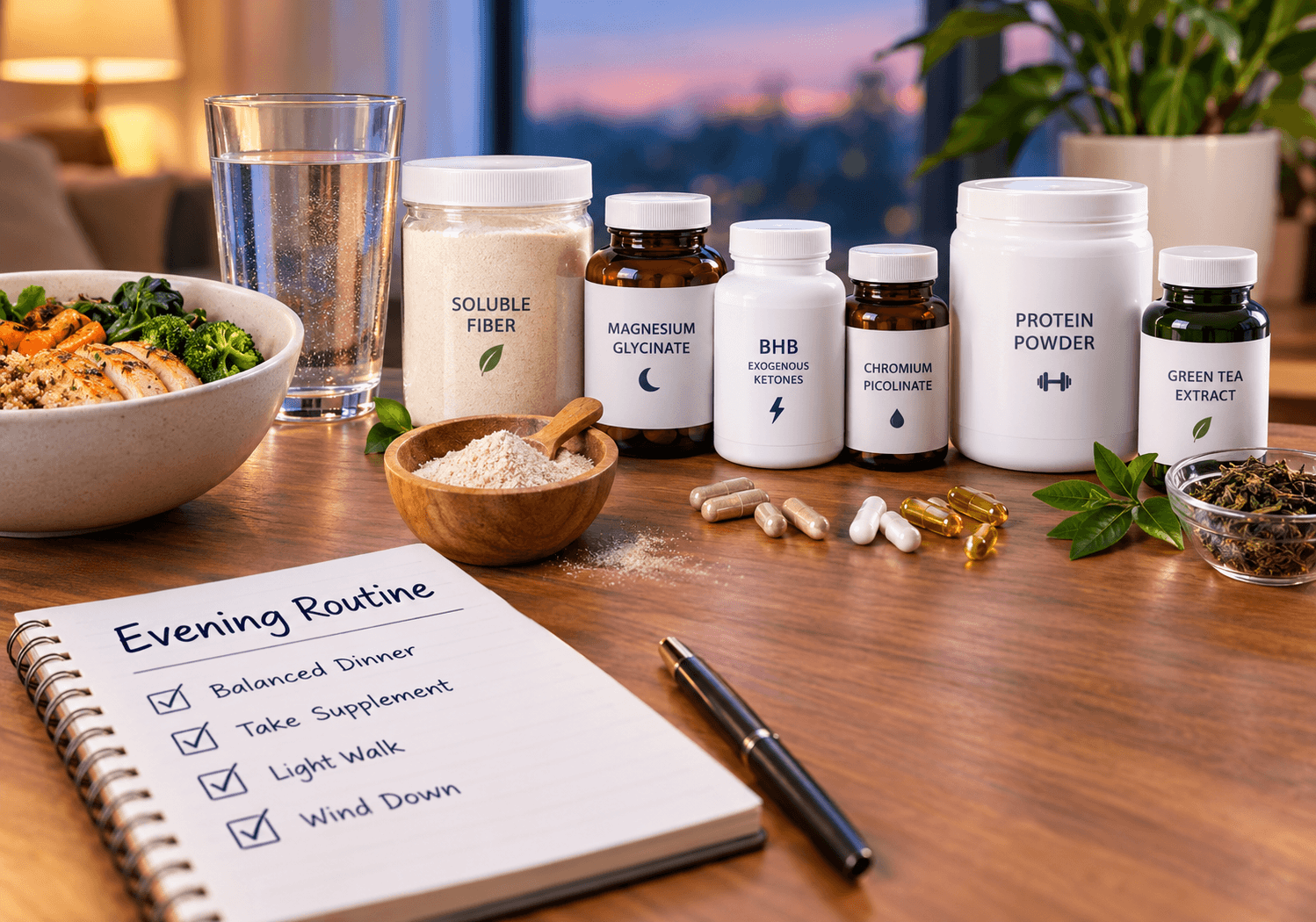
Evening food cravings can derail even the most disciplined fitness routines. As a strength and conditioning coach, I see clients struggle with late-night snacking more than any other hurdle. Finding the best natural supplement for evening food cravings isn’t about magic pills. It is about supporting your body’s natural satiety signals, balancing blood sugar, and promoting restful sleep. This guide breaks down the science, the top evidence-based options, and exactly how to use them to reclaim your evenings and your fitness goals.
Quick Answer
The best natural supplement for evening food cravings depends on your specific trigger, but soluble fiber (like glucomannan or psyllium husk) and magnesium glycinate are the most consistently supported by research for promoting satiety and relaxation. For those following a low-carb lifestyle, exogenous ketones (BHB) may also help suppress late-night appetite. Always pair supplements with adequate hydration and a protein-rich dinner for optimal results.
Why Evening Cravings Happen (The Science)
To effectively manage nighttime hunger, you must first understand its biological drivers. Evening cravings are rarely about a true lack of calories. Instead, they are typically driven by three interconnected factors: hormonal fluctuations, blood sugar dynamics, and circadian rhythm disruptions.
First, the hunger hormone ghrelin naturally rises in the evening, while the satiety hormone leptin can become blunted if you are sleep-deprived or chronically stressed. Second, if your dinner was high in refined carbohydrates and low in protein or fiber, your blood sugar will spike and then crash a few hours later. This hypoglycemic dip triggers an urgent, primal signal from your brain to seek out quick energy, usually in the form of sugar or fat.
Finally, poor sleep quality directly impacts these hormones. Research from the Centers for Disease Control and Prevention (CDC) indicates that chronic sleep deprivation is strongly linked to weight gain and altered metabolism, as it elevates evening cortisol levels. High cortisol not only disrupts sleep but also drives cravings for highly palatable, calorie-dense foods. Addressing these root causes with targeted, evidence-based nutritional support is the most sustainable path forward.
Top Natural Supplements for Evening Cravings: Comparison Table
Before diving into the details, here is a quick comparison of the most effective, research-backed natural options to help you stop nighttime eating.
| Supplement Type | Key Active Ingredient | Best For | Price Range (per month) |
| Soluble Fiber | Glucomannan or Psyllium Husk | Volume eaters, general satiety | $10 – $25 |
| Magnesium | Magnesium Glycinate | Stress-related cravings, poor sleep | $15 – $30 |
| Exogenous Ketones | Beta-Hydroxybutyrate (BHB) Salts | Low-carb/keto dieters, mental clarity | $30 – $60 |
| Trace Minerals | Chromium Picolinate | Specific sugar and carb cravings | $10 – $20 |
| Protein Powder | Micellar Casein or Plant Blend | Muscle recovery, overnight fullness | $25 – $50 |
| Herbal Extract | Decaffeinated Green Tea (EGCG) | Mild metabolic support without jitters | $15 – $35 |
Note: Price ranges are estimates based on standard retail pricing for third-party tested brands. Always check current pricing.
1. Soluble Fiber: A Top Contender for the Best Natural Supplement for Evening Food Cravings
What It Is:
Soluble fiber dissolves in water to form a thick, viscous gel in your digestive tract. The two most popular and researched forms for appetite control are glucomannan (derived from the konjac root) and psyllium husk.
How It Works:
When consumed with water, soluble fiber expands significantly in the stomach. This physical expansion stretches the stomach walls, sending mechanical signals via the vagus nerve to the brain that you are full. Furthermore, it slows gastric emptying and the absorption of carbohydrates, preventing the blood sugar spikes and crashes that typically trigger late-night snacking. Clinical reviews suggest that increased dietary fiber intake is consistently associated with improved satiety and weight management. You can read more about how dietary fiber helps with appetite and weight management.
Who It’s For:
Individuals who struggle with “volume hunger” (feeling like their stomach is physically empty) or those who eat dinner too early and get hungry by 9 PM.
Key Features to Look For:
- Pure glucomannan or psyllium husk powder/capsules.
- No added sugars, artificial sweeteners, or fillers.
- Third-party testing for heavy metals.
Pros:
- Highly effective at promoting mechanical fullness.
- Supports healthy digestion and regular bowel movements.
- Very affordable and widely available.
Cons:
- Must be taken with a large amount of water to avoid choking or digestive blockages.
- Can cause initial bloating or gas as the gut microbiome adjusts.
Coach’s Tip:
Take soluble fiber supplements with at least 16 oz (473 ml) of water roughly 30 minutes before your typical craving window. Without adequate hydration, the fiber cannot expand properly and may cause digestive discomfort instead of promoting fullness.
2. Magnesium Glycinate for Stress-Related Nighttime Hunger
What It Is:
Magnesium is an essential mineral involved in over 300 enzymatic reactions in the body. Magnesium glycinate is a specific form where magnesium is bound to the amino acid glycine, making it highly bioavailable and exceptionally gentle on the stomach.
How It Works:
Evening cravings are often disguised stress or fatigue. When you are tired, your body seeks quick energy. Magnesium plays a critical role in regulating the central nervous system and supporting the production of GABA, a neurotransmitter that promotes relaxation and sleep. By lowering evening cortisol levels and improving sleep architecture, magnesium glycinate removes the physiological stress trigger that drives you toward the pantry. The National Institutes of Health (NIH) outlines magnesium’s extensive role in nerve function and muscle relaxation.
Who It’s For:
People who crave sweets or carbs specifically when they feel stressed, anxious, or unable to wind down at night. It is also highly recommended for women over 40 experiencing hormonal shifts.
Key Features to Look For:
- “Magnesium Glycinate” or “Magnesium Bisglycinate” clearly listed on the label.
- Dosage providing 200–400 mg of elemental magnesium.
- Avoid magnesium oxide, which has poor absorption and a strong laxative effect.
Pros:
- Promotes deep, restorative sleep.
- Reduces muscle cramps and physical tension.
- Non-habit forming and very safe for long-term use.
Cons:
- Does not provide immediate “fullness” like fiber; it works indirectly by fixing the stress/sleep trigger.
- Effects may take a few days to a week of consistent use to become noticeable.
Common Mistake:
Taking magnesium citrate or oxide at night thinking it will help with sleep. These forms are primarily osmotic laxatives. They will likely wake you up with digestive urgency, disrupting your sleep and worsening next-day fatigue and cravings. Stick to glycinate.
3. Exogenous Ketones (BHB) for Low-Carb Appetite Control
What It Is:
Exogenous ketones, typically sold as Beta-Hydroxybutyrate (BHB) salts or esters, are supplements that raise the level of ketones in your blood, mimicking the metabolic state of nutritional ketosis without requiring strict carbohydrate restriction.
How It Works:
Elevated blood BHB levels act as a potent signaling molecule to the brain. Research indicates that ketosis naturally suppresses ghrelin (the hunger hormone) and increases feelings of satiety. By providing the brain with an efficient, alternative fuel source, exogenous ketones can eliminate the “brain fog” and urgent hunger pangs that often hit in the evening, especially for those transitioning to a lower-carb diet. Learn more about how exogenous ketones suppress appetite in this coach’s guide.
Who It’s For:
Individuals following a ketogenic, low-carb, or intermittent fasting lifestyle who experience evening energy crashes or hunger pangs.
Key Features to Look For:
- A clear ratio of BHB salts (sodium, potassium, magnesium, and calcium).
- Minimal added carbohydrates or sugary flavorings.
- Transparent labeling of the exact amount of BHB per serving.
Pros:
- Provides rapid mental clarity and physical energy.
- Effectively blunts appetite for several hours.
- Helps replenish electrolytes lost during low-carb dieting.
Cons:
- Can be expensive compared to other supplements.
- May cause mild digestive upset or a “keto flu” feeling if you are not accustomed to ketones.
- The taste of BHB salts can be salty or chalky if not well-formulated.
4. Chromium Picolinate for Blood Sugar and Sugar Cravings
What It Is:
Chromium is an essential trace mineral. Chromium picolinate is the most common and well-absorbed supplemental form, where chromium is bound to picolinic acid to enhance intestinal absorption.
How It Works:
Chromium is believed to enhance the action of insulin, the hormone responsible for shuttling glucose from the bloodstream into your cells. By improving insulin sensitivity, chromium helps prevent the dramatic blood sugar spikes and subsequent crashes that occur after a carbohydrate-heavy dinner. When your blood sugar remains stable, the urgent, shaky demand for sugar at 9 PM dissipates. The NIH Office of Dietary Supplements notes that chromium plays a role in macronutrient metabolism, though research on its direct weight-loss effects remains mixed, its role in managing specific sugar cravings is well-documented in clinical practice. See our detailed breakdown of whether chromium picolinate helps reduce sugar cravings.
Who It’s For:
Individuals who specifically crave sweets, chocolate, or bread in the evening, or those with known mild insulin resistance or prediabetes (under a doctor’s supervision).
Key Features to Look For:
- Dosage between 200 mcg and 1,000 mcg per day (do not exceed upper limits without medical advice).
- “Chromium Picolinate” explicitly stated on the label.
- Third-party testing to ensure the absence of contaminants.
Pros:
- Targets the specific physiological mechanism of sugar cravings.
- Inexpensive and easy to find in capsule form.
- Generally well-tolerated at recommended doses.
Cons:
- Effects are subtle and may take weeks to manifest.
- Not a magic bullet; it will not override a consistently poor diet.
- Can interact with certain diabetes medications, requiring medical consultation.

5. High-Quality Protein Powder for Overnight Satiety
What It Is:
While technically a macronutrient, protein powder (specifically slow-digesting forms like micellar casein or high-quality plant-based blends) functions as a highly effective functional supplement for evening hunger.
How It Works:
Protein is the most satiating macronutrient. It triggers the release of satiety hormones like peptide YY (PYY) and glucagon-like peptide-1 (GLP-1) while simultaneously reducing ghrelin. Furthermore, protein has a high Thermic Effect of Food (TEF), meaning your body burns more calories digesting it compared to fats or carbs. A slow-digesting protein taken in the evening provides a steady stream of amino acids throughout the night, supporting muscle repair and keeping hunger at bay. Research consistently shows that higher protein intake helps control hunger during weight loss.
Who It’s For:
Athletes, gym-goers, and anyone whose dinner was light on protein, or those who wake up hungry in the middle of the night.
Key Features to Look For:
- Micellar casein (for dairy-tolerant individuals) or a blended plant protein (pea, rice, hemp) for vegans.
- At least 20–25 grams of protein per serving.
- Low added sugar (under 3 grams per serving).
Pros:
- Directly supports muscle protein synthesis overnight.
- Provides genuine, long-lasting physical fullness.
- Highly versatile (can be mixed with water, almond milk, or blended into a pudding).
Cons:
- Contains calories (typically 100–150 per serving), so it must be accounted for in your daily energy budget.
- Dairy-based casein can cause bloating in lactose-sensitive individuals.

6. Decaffeinated Green Tea Extract for Mild Metabolic Support
What It Is:
Green tea extract is derived from the leaves of the Camellia sinensis plant. For evening use, it is crucial to select a decaffeinated version to avoid disrupting sleep.
How It Works:
The primary active compounds in green tea are catechins, specifically epigallocatechin gallate (EGCG). EGCG has been shown to mildly support metabolism and may influence hormones related to appetite regulation. While it is not a powerful appetite suppressant on its own, it can help mitigate the metabolic slowdown that occurs in the evening and provide a calming, ritualistic alternative to reaching for a snack. Evidence suggests that green tea extract can support metabolism without the jitters when caffeine is removed.
Who It’s For:
Individuals who crave the oral fixation of eating or drinking something flavorful in the evening, and those looking for a gentle, non-stimulating metabolic boost.
Key Features to Look For:
- Explicitly labeled “Decaffeinated” or “99% Caffeine-Free.”
- Standardized to contain at least 50% EGCG.
- Capsule form or loose-leaf tea (avoid bottled, sugary green tea drinks).
Pros:
- Provides a soothing evening ritual.
- Rich in antioxidants that combat oxidative stress.
- Zero to negligible calories if consumed as a tea.
Cons:
- Very mild effect on actual hunger; works best as a behavioral replacement tool.
- Some “decaf” versions still contain trace amounts of caffeine, which may affect highly sensitive individuals.
How to Choose the Best Natural Supplement for Evening Food Cravings
Selecting the right product requires more than just reading the front label. Use this buyer’s checklist to ensure you are making a safe, effective, and practical choice.
- Identify Your Craving Trigger:
Are you physically hungry (stomach growling), or is it emotional/stress-related? If it is physical volume hunger, choose soluble fiber or protein. If it is stress or poor sleep, choose magnesium glycinate. If it is a specific sugar urge, consider chromium picolinate. - Check the Ingredient Label:
Look for transparency. The supplement should list the exact amount of the active ingredient. Avoid proprietary blends that hide dosages. Look for third-party testing seals like NSF Certified for Sport, Informed Choice, or USP, which verify purity and the absence of heavy metals. - Consider Timing and Dosage:
A supplement is only effective if timed correctly. Soluble fiber and protein should be taken 30–60 minutes before your typical craving window. Magnesium is best taken 1 hour before bed. Always follow the manufacturer’s recommended dosage. - Evaluate Budget and Value:
Calculate the cost per serving, not just the cost per bottle. A $15 bottle that lasts 15 days is more expensive than a $30 bottle that lasts 60 days. - Review Allergens and Dietary Restrictions:
Check for certifications that match your lifestyle, such as vegan, gluten-free, non-GMO, or dairy-free, to prevent unintended inflammatory responses that could worsen cravings.
How We Picked These Recommendations
As fitness professionals, we base our recommendations on a strict hierarchy of evidence. Our criteria for this guide included:
- Scientific Backing: Each recommended ingredient has peer-reviewed research or established physiological mechanisms supporting its role in satiety, blood sugar regulation, or stress reduction.
- Safety Profile: We prioritized supplements with a long history of safe use and minimal side effects when taken at recommended dosages.
- Practicality: The supplements must be accessible, easy to integrate into a real-world evening routine, and cost-effective for the average consumer.
- No Proprietary Blends: We favor products that disclose exact dosages, allowing you to know precisely what you are putting into your body.
Setup and Maintenance: Building an Evening Routine
A supplement is a tool, not a cure-all. To maximize the effectiveness of the best natural supplement for evening food cravings, you must embed it within a structured evening routine. Here is a practical, coach-approved schedule:
- 6:00 PM: Balanced Dinner. Ensure your meal contains a palm-sized portion of lean protein (chicken, fish, tofu), a large portion of fibrous vegetables, and a moderate serving of complex carbohydrates. This sets your baseline blood sugar.
- 7:30 PM: Supplement Intake. Take your chosen supplement. For example, mix 1 teaspoon of glucomannan or psyllium husk into 16 oz (473 ml) of water. Drink it slowly.
- 8:00 PM: Light Activity. Engage in 15 minutes of light movement, such as a casual walk covering 1 mile (1.6 km). This aids digestion and naturally blunts post-meal blood sugar spikes.
- 9:00 PM: Wind Down. Dim the lights, avoid screens, and take 200–400 mg of magnesium glycinate if stress or sleep is a factor. Sip decaffeinated herbal tea if you need oral stimulation.
Regression (Easier Version):
If this feels overwhelming, start with just two steps: drink 16 oz (473 ml) of water at 8:00 PM and go for a 10-minute walk. Master this habit for two weeks before adding a supplement.
Progression (Harder Version):
For advanced clients, add 2–3 days of full-body resistance training per week. Building muscle improves baseline insulin sensitivity, making your body far more efficient at processing evening carbohydrates and drastically reducing the physiological drive to snack. Learn more about how to increase metabolism naturally for weight loss through consistent training.

Frequently Asked Questions (FAQ)
1. What is the best natural supplement for evening food cravings?
The best choice depends on your trigger. Soluble fiber (glucomannan) is best for physical fullness, magnesium glycinate is best for stress-related cravings, and chromium picolinate is best for specific sugar urges.
2. Can soluble fiber help control evening appetite?
Yes. Soluble fiber absorbs water to form a gel in the stomach, delaying gastric emptying and mechanically signaling fullness to the brain, which effectively reduces the desire to snack late at night.
3. Do exogenous ketones suppress appetite at night?
Yes, for many individuals. Elevated blood BHB levels from exogenous ketones signal to the brain that ample energy is available, which naturally downregulates ghrelin production and reduces late-night hunger pangs.
4. Does magnesium reduce sugar cravings at night?
Indirectly, yes. Magnesium glycinate supports nervous system relaxation and healthy cortisol levels. By reducing evening stress and improving sleep quality, it removes a primary trigger for stress-induced sugar cravings.
5. How does sleep affect metabolism and weight management?
Poor sleep disrupts the balance of ghrelin and leptin, increasing hunger and decreasing satiety. It also elevates cortisol, which promotes fat storage and drives cravings for high-calorie foods. Prioritizing sleep is foundational to weight management.
6. Can I take these supplements if I am on medication?
Always consult your physician or a registered dietitian before starting any new supplement, especially if you take medications for diabetes, blood pressure, or blood thinning, as interactions can occur.
Conclusion: Finding Your Best Natural Supplement for Evening Food Cravings
Overcoming late-night snacking requires a strategic, multi-faceted approach. While willpower plays a role, biology often holds the steering wheel. By identifying your specific craving triggers and leveraging the right tools, you can work with your body rather than against it. Whether you choose soluble fiber for mechanical fullness, magnesium glycinate for stress relief, or BHB ketones for metabolic signaling, you are taking a proactive step toward better health.
Remember that the best natural supplement for evening food cravings is most effective when paired with a protein-rich dinner, adequate hydration, and a consistent wind-down routine. Start with one change, monitor how your body responds, and adjust as needed.