The weight loss industry is flooded with pills, powders, and capsules claiming to melt away body fat while you sleep. They promise to ignite your internal furnace, speed up your calorie burn, and make weight loss effortless. But as a certified strength coach who has worked with hundreds of clients trying to transform their body composition, I hear the same question constantly: do metabolism booster supplements really work?
The short answer is nuanced. While certain dietary ingredients can cause a minor, temporary rise in calorie expenditure, no pill will overhaul your metabolic engine on its own. In this evidence-based guide, we will break down the science behind thermogenic ingredients, separate commercial hype from clinical reality, examine safety concerns, and explore the proven strategies that actually increase your metabolic rate long term.
Quick Answer Box
Do metabolism booster supplements really work?
Metabolism supplements can cause a very slight, temporary increase in daily calorie burn (typically 50–100 calories per day), primarily through stimulant-induced thermogenesis. However, they do not permanently alter your metabolic rate, burn targeted belly fat, or replace the calorie deficit needed for weight loss. Exercise, adequate protein, and proper sleep remain far more effective.
What Is Metabolism and Can a Pill Change It?
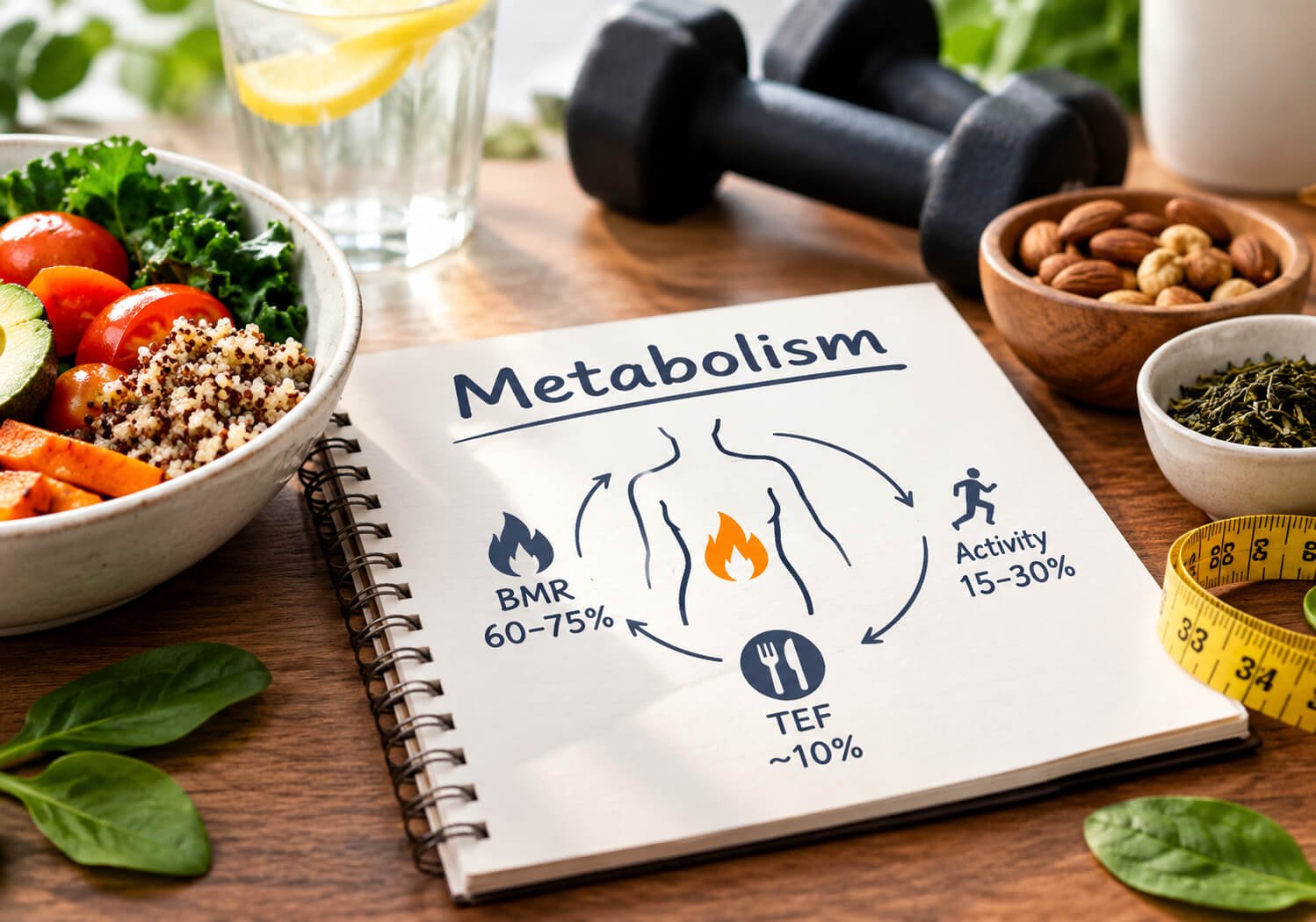
To understand whether these products work, we first need to look at how your body burns energy. Your metabolism is the total of all biochemical processes your body uses to convert food into energy. Your total daily energy expenditure (TDEE) is divided into three main components:
- Basal Metabolic Rate (BMR): The energy spent keeping your organs functioning while resting. This accounts for roughly 60% to 75% of your total daily burn.
- Thermic Effect of Food (TEF): The calories required to digest, absorb, and process nutrients, accounting for about 10% of daily energy expenditure.
- Physical Activity Expenditure: The energy burned through formal exercise and everyday movement (Non-Exercise Activity Thermogenesis, or NEAT). This makes up 15% to 30% of your daily burn.
When manufacturers market metabolism supplements, they are usually trying to influence thermogenesis—the production of heat in the body. Increasing thermogenesis raises calorie expenditure slightly.
However, no legal dietary supplement can permanently change your basal metabolic rate. Once the compound leaves your bloodstream, your metabolic rate returns to its baseline. Understanding what affects metabolism and body weight helps clarify why relying on a daily pill is not a complete strategy for sustainable weight management.
Common Ingredients in Metabolism Boosters: What Science Says
Not all ingredients in over-the-counter thermogenics are created equal. Some show modest clinical backing, while others lack human trials entirely. Here is a breakdown of the most common compounds found in these formulations.
1. Caffeine (Anhydrous)
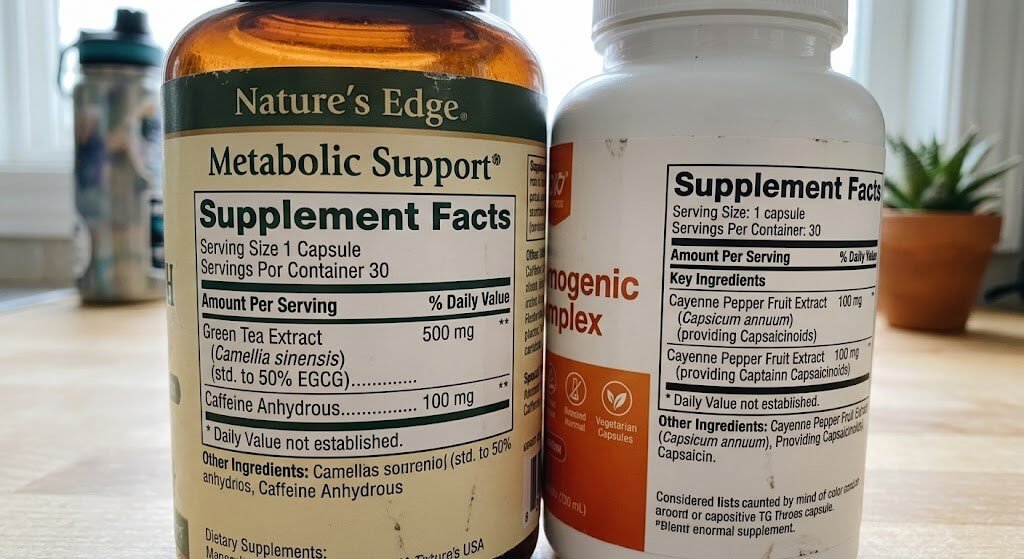
Caffeine is the backbone of almost every over-the-counter fat burner. It works by stimulating the central nervous system, releasing catecholamines like epinephrine, which triggers the breakdown of stored fat (lipolysis).
Research published in the American Journal of Clinical Nutrition demonstrated that a single dose of 100 mg of caffeine increased the resting metabolic rate of lean and post-obese human subjects by 3% to 4% over a three-hour period. Higher or repeated doses (up to 400 mg daily) can increase total daily energy expenditure by approximately 70 to 100 calories.
While this effect is real, your body builds a tolerance to caffeine over time. Within a few weeks of daily use, the metabolic boost diminishes significantly.
2. Green Tea Extract (EGCG)
Green tea extract contains high concentrations of epigallocatechin gallate (EGCG), a powerful antioxidant polyphenol. EGCG inhibits an enzyme (catechol-O-methyltransferase) that breaks down norepinephrine. By keeping norepinephrine levels elevated, EGCG prolongs the signal for fat oxidation.
A clinical trial in the American Journal of Clinical Nutrition found that a green tea extract containing EGCG and caffeine increased 24-hour energy expenditure by 4% compared to a placebo. To evaluate these botanical compounds thoroughly, check out our guide on how to evaluate ingredients in weight management supplements.
3. Capsaicinoids (Cayenne Pepper Extract)
Capsaicin is the bioactive chemical that gives chili peppers their heat. When ingested, capsaicinoids stimulate TRPV1 receptors, triggering sympathetic nervous system activity and increasing body heat.
A meta-analysis published in the journal Appetite showed that consuming capsaicinoids daily can increase energy expenditure by roughly 50 calories per day and may subtly suppress appetite. While beneficial, 50 calories per day equates to less than a single slice of apple in real-world terms.
4. L-Carnitine
L-Carnitine is an amino acid derivative responsible for transporting long-chain fatty acids into the mitochondria of cells, where they are burned for fuel.
While it plays a critical role in cellular energy metabolism, supplementing with L-Carnitine rarely increases fat burning in healthy adults with normal tissue stores. Human trials show minimal impact on resting metabolic rate or fat loss unless a baseline deficiency exists.
5. Chromium Picolinate
Chromium is an essential trace mineral involved in carbohydrate and lipid metabolism via its interaction with insulin. It is often added to weight loss formulations to control sugar cravings and stabilize blood sugar.
According to a review by the NIH Office of Dietary Supplements, clinical trials show that chromium supplementation yields negligible reductions in body weight (around 0.5 kg to 1 kg over 12 weeks), making its metabolic impact minimal.
Ingredient Efficacy Overview
To help you compare these common ingredients quickly, here is how the clinical evidence stacks up:
| Ingredient | Claimed Mechanism | Clinical Evidence | Average Extra Daily Calorie Burn | Typical Side Effects |
| Caffeine | CNS stimulation, lipolysis | Strong | 50 – 100 kcal | Jitters, elevated heart rate, insomnia |
| Green Tea Extract (EGCG) | Inhibits norepinephrine breakdown | Moderate | 40 – 80 kcal | Stomach upset, potential liver stress at high doses |
| Capsaicinoids | Activates TRPV1, increases thermogenesis | Moderate | 50 kcal | Gastrointestinal distress, heartburn |
| L-Carnitine | Transports fatty acids to mitochondria | Weak (in non-deficient) | Minimal to none | Mild nausea, stomach discomfort |
| Chromium Picolinate | Enhances insulin sensitivity | Weak for metabolic rate | Minimal to none | Headaches, dizziness |
Why Metabolism Supplements Are Not Magic Pills
When evaluating weight loss claims, understanding basic energy balance is essential. Weight loss requires a consistent calorie deficit—burning more energy than you consume.
Coach’s Tip: The 100-Calorie Reality Check
A typical high-potency metabolism booster pill might burn an extra 70 to 100 calories per day through thermogenesis. However, a single tablespoon of peanut butter contains roughly 95 calories, and a standard coffee drink can easily exceed 250 calories. It is far easier to trim 100 calories from your daily diet than to rely on a stimulant capsule to burn it off.
Furthermore, weight loss pills can trigger behavioral compensation. Individuals taking a thermogenic pill often unknowingly eat slightly larger portions or move less throughout the day (a drop in NEAT) because they feel fatigue after the stimulant wears off. This counteracts the small thermogenic boost created by the supplement.
The Safety Risks and Side Effects of Metabolism Boosters
Unlike pharmaceutical medications, dietary supplements do not require pre-market approval by the U.S. Food and Drug Administration (FDA) for effectiveness before reaching store shelves. Manufacturers are responsible for safety, but enforcement often occurs only after adverse events are reported.
Potential Risks of Stimulant-Based Pills
- Cardiovascular Strain: High doses of caffeine, synephrine (bitter orange), or green tea concentrates can cause elevated heart rate, elevated blood pressure, and heart palpitations.
- Sleep Disruption: Taking stimulants in the afternoon or evening degrades sleep quality and shortens deep sleep cycles. Sleep deprivation directly disrupts appetite hormones like leptin and ghrelin. Learning how sleep affects metabolism and weight management shows why sacrificing rest for a stimulant pill works against your goals.
- Organ Stress: Excessively high doses of green tea extract (specifically purified EGCG in excess of 800 mg/day) have been linked to rare cases of liver toxicity in clinical studies.
- Tolerance and Dependence: Regular consumption of high-dose CNS stimulants leads to receptor downregulation, meaning you require larger doses to feel the same energy boost, which increases your risk of side effects.
High Stimulant Intake ──► Poor Sleep ──► Hormonal Imbalance (Ghrelin Up / Leptin Down) ──► Increased Cravings ──► Weight Gain Risk
Evidence-Based Ways to Actually Boost Your Metabolism
If pills only offer a minor thermogenic bump, how can you build a genuinely faster metabolism? The answer lies in body composition and structured movement. Here are three evidence-based strategies that produce lasting metabolic adaptations.
![Personal trainer spotting a client doing barbell back squats in a gym setting]](https://pillsfeed.com/wp-content/uploads/2026/10/Personal-trainer-spotting-a-client-doing-barbell-back-squats-in-a-gym-setting.jpg)
1. Build Lean Muscle Mass via Resistance Training
Muscular tissue is metabolically active. While fat tissue burns roughly 2 calories per pound (0.45 kg) per day at rest, muscle tissue burns roughly 6 to 7 calories per pound daily.
While that difference may seem modest, adding 5 lb to 10 lb (2.2 kg to 4.5 kg) of lean muscle mass through resistance training raises your basal metabolic rate around the clock. Additionally, lifting weights creates an elevated post-exercise oxygen consumption (EPOC) effect, keeping calorie burn elevated for hours after your workout ends.
Common Mistake
Relying entirely on steady-state cardio to burn calories while neglecting strength training. Long periods of severe caloric restriction combined only with cardio can cause muscle loss, which lowers your resting metabolic rate over time. Always anchor your program with progressive resistance training.
2. Increase Protein Intake (High Thermic Effect)
Protein has a significantly higher thermic effect of food (TEF) than carbohydrates or fats:
- Protein TEF: 20% to 30% of consumed calories are burned during digestion.
- Carbohydrate TEF: 5% to 10% of consumed calories are burned during digestion.
- Fat TEF: 0% to 3% of consumed calories are burned during digestion.
If you consume 500 calories of lean chicken breast or egg whites, your body uses 100 to 150 of those calories simply breaking down the amino acids. High-protein diets also protect lean muscle tissue during weight loss. Discover how to increase metabolism naturally for weight loss by adjusting daily macro targets.
3. Maximize Daily NEAT (Non-Exercise Activity Thermogenesis)
Formal gym workouts account for only about 1 hour of your day. The remaining 15 active hours determine your total movement output. Small daily choices—taking the stairs, using a standing desk, pacing while on phone calls, walking 8,000 to 10,000 steps daily—can increase your energy output by 300 to 500 calories per day, far outperforming any dietary supplement on the market.
Sample Metabolic Resistance Training Routine
To increase your resting energy expenditure safely and effectively, use this full-body workout routine 3 days per week. Focus on progressive overload by slowly increasing weight or repetitions over time.
| Exercise | Primary Muscle Group | Target Sets | Target Reps | Rest Period | Tempo (Eccentric / Pause / Concentric) |
| Goblet Squat | Quadriceps, Glutes | 3 – 4 | 8 – 12 | 60 – 90 sec | 3 – 1 – 1 |
| Dumbbell Romanian Deadlift | Hamstrings, Glutes | 3 – 4 | 10 – 12 | 60 – 90 sec | 3 – 1 – 1 |
| Dumbbell Bench Press | Chest, Triceps | 3 | 8 – 10 | 60 sec | 2 – 1 – 1 |
| Lat Pulldown or Inverted Row | Latissimus Dorsi, Biceps | 3 | 10 – 12 | 60 sec | 2 – 1 – 1 |
| Walking Lunges | Quadriceps, Glutes | 3 | 12 per leg | 60 sec | Smooth |
| Plank Hold | Core / Abdominals | 3 | 45 – 60 sec | 45 sec | Iso Hold |
Regression & Progression Options
- Easier Version (Regression): Perform squats to a chair or bench, use resistance bands instead of dumbbells for upper body pushes, and reduce total sets to 2 per exercise.
- Harder Version (Progression): Advance to a barbell back squat, increase loading to 85% of 1-rep max for 5 to 6 reps, or shorten rest periods to 45 seconds to maintain higher intensity.
Frequently Asked Questions
Do metabolism boosters burn belly fat directly?
No supplement can target fat loss from specific body areas. Fat loss occurs systemically across the entire body when you maintain a consistent calorie deficit. Thermogenic ingredients slightly increase general calorie expenditure, but they cannot spot-reduce abdominal fat tissue.
How fast do metabolism booster supplements work?
Stimulant-based ingredients like caffeine work within 30 to 60 minutes of ingestion, causing a brief spike in heart rate and thermogenesis. However, this effect is temporary and subsides after a few hours. Long-term metabolic changes require building lean muscle tissue over several months.
Can supplements permanently speed up your metabolism?
No legal dietary supplement permanently alters your resting metabolic rate. Once you stop taking the supplement, any minor thermogenic benefit disappears. The only way to permanently increase baseline metabolic rate is to gain lean muscle mass or increase overall body mass.
Are thermogenic fat burners safe for women over 40?
Most thermogenic supplements contain high caffeine doses that can trigger anxiety, sleep disturbances, and hot flashes in women over 40 due to hormonal fluctuations. Women in perimenopause or menopause should prioritize resistance training, adequate protein intake, and stress management over stimulant supplements.
Do I need to exercise while taking metabolism pills?
Yes. Taking metabolism supplements without exercise yields negligible weight loss results. Exercise preserves lean muscle tissue, improves cardiovascular health, and accounts for a far greater share of daily caloric burn than any over-the-counter dietary supplement can provide.
Conclusion
So, do metabolism booster supplements really work? Scientifically speaking, certain ingredients like caffeine, green tea extract (EGCG), and capsaicin cause a mild, temporary rise in thermogenesis and energy expenditure. However, their real-world impact is small—burning roughly 50 to 100 extra calories per day—and your body rapidly adapts to stimulants with regular use.
Supplements cannot compensate for an unstructured diet, poor sleep habits, or a sedentary lifestyle. If you want to elevate your metabolic rate reliably, focus on building lean muscle through progressive strength training, consuming a higher-protein diet, and keeping your daily step count high. Those habits yield sustainable body composition changes without the jitters, crash, or elevated heart rate.