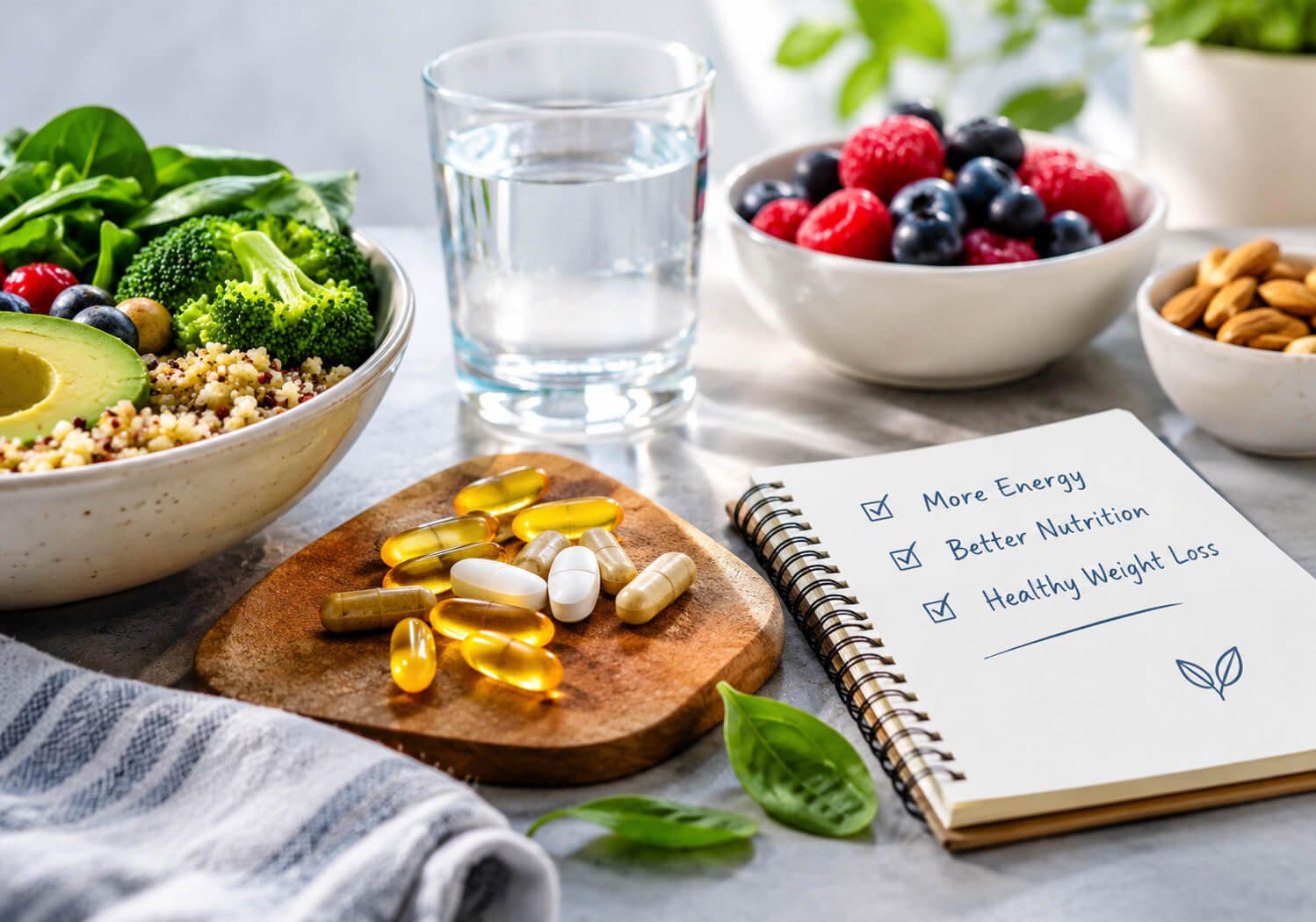
Feeling sluggish, sleepy, or weak after cutting calories is one of the most common complaints among people trying to lose weight. When you eat less, it can become harder to meet your nutritional needs, especially if your plan eliminates entire food groups or relies on strict rules. The result is often a diet that feels like a constant struggle.
This is where the best vitamins for energy while dieting come into the conversation. Vitamins help the body carry out normal energy metabolism, build red blood cells, and keep the nervous system working. But it is important to be clear from the start: vitamins do not supply calories, and taking extra does not guarantee more energy or faster fat loss. Supplements are most helpful when they correct a genuine shortfall.
The short answer: B vitamins, especially B12, along with folate, vitamin C, and vitamin D, play supporting roles in energy and overall health. Iron, a mineral, is also often discussed alongside them because deficiency commonly causes fatigue.
In this guide, you will learn why dieting can leave you tired, how each key nutrient works, which foods supply them, how to choose and use supplements safely, and when fatigue deserves a doctor’s attention.
Why Do You Feel Tired While Dieting?
Before reaching for a bottle of vitamins, it helps to understand why energy drops during weight loss. Fatigue has many possible causes, and a supplement is not always the answer.
Eating too few calories
Calories are the body’s fuel. A modest deficit can lead to gradual weight loss, but an overly aggressive one may leave too little energy for daily tasks and workouts. You may notice poor concentration, irritability, and reduced stamina. If you feel exhausted most days, your calorie target may be too low rather than your vitamin intake being the issue.
Not getting enough essential nutrients
When you eat less food, you have fewer opportunities to take in the vitamins and minerals you need. Skipping meals, relying on a narrow set of foods, or cutting out entire categories such as grains, dairy, or meat can make nutrient gaps more likely. Variety matters because different foods supply different nutrients.
Low iron or vitamin B12 levels
Iron deficiency and vitamin B12 deficiency can both lead to anemia, in which the body has too few healthy red blood cells to carry oxygen. Symptoms often include fatigue, weakness, pale skin, shortness of breath, and difficulty concentrating. Because these symptoms overlap with ordinary dieting fatigue, testing is the only reliable way to know.
Poor sleep, dehydration, and exercise recovery
Sleep loss, inadequate fluids, and heavy training can each cause tiredness regardless of what vitamins you take. Many dieters add intense workouts while reducing food intake, which increases recovery demands at the very moment energy is limited. Even mild dehydration can affect mood and focus.
Underlying medical conditions or medication effects
Thyroid disorders, sleep apnea, depression, diabetes, and certain medications can cause persistent fatigue. If tiredness continues despite adequate food, sleep, and rest, do not assume dieting is to blame. A healthcare professional can help sort out the cause.
What Are the Best Vitamins for Energy While Dieting?
The nutrients below support normal energy metabolism or related functions. None is a magic energy booster, and their benefits are clearest when intake is otherwise inadequate.
1. Vitamin B12 for Energy and Red Blood Cell Formation
Vitamin B12 helps form red blood cells and supports nerve function. A deficiency can cause tiredness, weakness, and other symptoms. Good sources include fish, meat, eggs, dairy, and fortified foods. People who follow vegan diets, and those with absorption problems, may need particular attention to B12 intake and should discuss it with a clinician.
2. Vitamin B1 (Thiamin) for Energy Metabolism
Thiamin helps the body process nutrients and turn them into usable energy. Whole grains, legumes, pork, and fortified foods are common sources. Thiamin supports normal energy metabolism, but taking extra is not established as an energy booster for people who already get enough.
3. Vitamin B2 (Riboflavin) for Normal Cellular Function
Riboflavin plays a role in energy metabolism and cell function. It is found in dairy products, eggs, lean meats, almonds, and some vegetables. Meeting your needs through a varied diet is usually straightforward, and deficiency is uncommon in people who eat these foods.
4. Vitamin B3 (Niacin) for Energy Production
Niacin supports cellular energy metabolism and is found in poultry, fish, peanuts, and whole grains. High-dose niacin supplements are not a routine solution for low energy and can cause side effects such as flushing, so they should not be used for self-treatment.
5. Vitamin B6 for Nutrient Metabolism
Vitamin B6 takes part in enzyme reactions, protein metabolism, and normal nervous system function. Poultry, fish, potatoes, chickpeas, and bananas are good sources. Chronic excessive supplemental B6 can damage nerves, so high-dose products should never be treated as harmless energy boosters.
6. Folate (Vitamin B9) for Red Blood Cell Production
Folate supports DNA synthesis and red blood cell formation. Leafy greens, beans, lentils, and fortified grains provide it. Deficiency can contribute to megaloblastic anemia. High-dose folic acid can also obscure signs of B12 deficiency, which is why medical guidance matters when a deficiency is suspected.
7. Vitamin C for Iron Absorption and Normal Body Functions
Vitamin C helps the body absorb iron from plant foods and contributes to normal tissue and immune function. Severe deficiency can cause fatigue, but it is uncommon in many populations. Citrus fruit, berries, peppers, and broccoli are excellent sources, so supplements are rarely needed.
8. Vitamin D for Overall Health During Weight Loss
Vitamin D supports bone health, calcium absorption, and muscle function. Fortified foods, fatty fish, and egg yolks provide some, and a clinician may recommend supplementation in certain circumstances. There is no good evidence that vitamin D supplements increase energy or speed weight loss in people without a deficiency.
Are B-Complex Vitamins Better Than Individual Supplements?
Many shoppers wonder whether a B-complex formula beats a single vitamin. The answer depends on your needs.
What is a B-complex vitamin supplement?
A B-complex product typically combines B1, B2, B3, B5, B6, B7, B9, and B12 in one capsule or tablet. Formulations and amounts vary widely between brands, so reading the label is essential.
B-complex vs. vitamin B12: What is the difference?
A B-complex provides broad coverage across several B vitamins, while B12 on its own targets one nutrient. If a clinician has identified a B12 shortfall, a targeted supplement may be more appropriate. If your diet is generally limited, a B-complex or multivitamin may fill several small gaps.
Who may benefit from considering a B-complex?
People whose eating patterns may not meet nutritional needs, such as those on very restrictive diets, may consider one. The appropriate product depends on your diet, health, and medications, so ask a pharmacist or clinician.
Can B-complex vitamins boost energy if you are not deficient?
Correcting an inadequate intake may help with deficiency-related symptoms. But taking more than you need does not guarantee better energy or increased fat burning, and extra water-soluble vitamins are largely excreted.
Is Iron More Important Than Vitamins for Energy While Dieting?
Iron is a mineral, not a vitamin, but it deserves attention here because iron deficiency is a common cause of fatigue.
How iron deficiency can cause fatigue
Iron is needed to make hemoglobin, the protein in red blood cells that carries oxygen. Iron-deficiency anemia can cause tiredness, weakness, and reduced exercise tolerance.
Who may be at higher risk of iron deficiency?
People with heavy menstrual bleeding, those on low-iron diets, some pregnant people, and individuals with absorption difficulties may be at higher risk.
Foods that supply iron during weight loss
Lean meat, seafood, beans, lentils, spinach, and iron-fortified cereal supply iron. Vitamin C can improve absorption of non-heme iron from plant foods.
Should you take iron supplements for low energy?
Fatigue alone cannot confirm iron deficiency. Testing or clinical assessment is appropriate before supplementing, because unnecessary iron can be harmful.
Best Vitamins for Energy While Dieting: Comparison Table
This table is a quick reference, not a ranking of the most powerful energy boosters.
| Nutrient | Main role relevant to energy | Food sources | Key consideration |
|---|---|---|---|
| Vitamin B12 | Red blood cell and nerve function | Fish, meat, eggs, dairy, fortified foods | Deficiency may cause fatigue |
| Vitamin B1 | Normal energy metabolism | Whole grains, legumes, pork | Supports processing of nutrients |
| Vitamin B2 | Cellular energy metabolism | Dairy, eggs, almonds | Adequate intake matters |
| Vitamin B3 | Cellular energy metabolism | Poultry, fish, peanuts | Avoid high-dose self-treatment |
| Vitamin B6 | Enzyme reactions and protein metabolism | Fish, poultry, potatoes, chickpeas | Excess supplementation can damage nerves |
| Folate (B9) | DNA synthesis and red blood cell formation | Leafy greens, legumes, fortified grains | Consider B12 status when deficiency is suspected |
| Vitamin C | Iron absorption and normal tissue function | Citrus, berries, peppers, broccoli | Helps absorption of plant-based iron |
| Vitamin D | Bone health and normal muscle function | Fortified foods, fatty fish, egg yolks | Not a proven weight-loss supplement |
Best Food Sources of Energy-Supporting Vitamins
A food-first approach is the most reliable way to meet your needs without depending on multiple supplements.
Vitamin-rich foods to include in your meals
- B12: Fish, poultry, meat, eggs, dairy, and appropriately fortified foods.
- Other B vitamins: Whole grains, legumes, poultry, fish, dairy, potatoes, and nuts.
- Folate: Spinach, asparagus, beans, lentils, and fortified grain products.
- Vitamin C: Citrus fruit, kiwi, berries, tomatoes, peppers, and broccoli.
- Vitamin D: Fatty fish, egg yolks, and fortified milk or plant-based alternatives.
How to combine iron-rich foods with vitamin C
Pairing foods is an easy way to improve absorption. Try lentils with bell peppers, beans with tomatoes, or fortified cereal topped with strawberries. These combinations help your body take up more non-heme iron from plant sources.
How restrictive diets can affect nutrient intake
Vegetarian and vegan patterns, food allergies, low-calorie diets, and elimination diets can all make it harder to meet certain needs. Fortified foods and targeted supplementation can help, but the right approach depends on your situation. A registered dietitian can help you plan around restrictions.
How to Choose the Best Vitamin Supplement for Energy While Dieting
If you and your clinician decide a supplement makes sense, choose carefully.
Single vitamins vs. multivitamins
Targeted supplements address a specific need, while multivitamin and mineral formulas can fill several small gaps. Neither replaces a varied diet, and a multivitamin does not guarantee better energy.
What to check on a supplement label
- The full ingredient list and the amount of each nutrient.
- Percentage of Daily Value and serving size.
- Whether the product contains high doses of vitamin B6, niacin, or other nutrients that can be harmful in excess.
- Potential allergens and interactions with medications.
- Independent quality testing where available. Certification shows quality, not that a product is effective for fatigue.
Should you choose an energy vitamin, a fat burner, or a multivitamin?
Nutritional supplements aim to fill dietary gaps, while products marketed for weight loss often contain stimulants and other ingredients. An “energy” or “fat-burning” label does not demonstrate clinical effectiveness, so do not assume it does.
Are gummies, capsules, powders, or liquid vitamins better?
Each format has trade-offs in convenience, ingredient amounts, sugar content, and cost. No format is universally superior, so choose the one you will take consistently and that fits your needs.
Are Vitamins Safe to Take Every Day While Dieting?
Most people tolerate appropriate doses well, but safety deserves attention.
Can you take too many B vitamins?
Water-soluble does not mean risk-free. Excessive supplemental B6 can cause nerve damage, and high-dose niacin can cause side effects such as flushing and stomach upset.
Can vitamins interact with medications?
Yes. Check with a pharmacist or healthcare professional, especially when using prescription medicines or several products at once.
Why iron and high-dose vitamin D require care
Iron supplements can be harmful when unnecessary, and excessive vitamin D can cause toxicity. Avoid unsupervised high-dose supplementation.
Who should seek professional advice before supplementing?
Pregnant or breastfeeding people, those with chronic conditions, people taking regular medications, and anyone with persistent fatigue or suspected deficiencies should seek advice first.
How to Maintain Energy While Losing Weight Without Relying on Supplements
Lifestyle habits often make the biggest difference.
Avoid an excessively restrictive calorie deficit
Eating too little compromises nutrition and makes a plan hard to sustain. A moderate deficit is usually more practical.
Eat balanced meals with enough protein and carbohydrates
Include protein, whole grains, fruits, vegetables, and healthy fats across the day. Carbohydrates provide readily available fuel for activity.
Improve sleep and exercise recovery
Keep consistent sleep routines, increase activity gradually, and allow recovery between demanding workouts.
Stay hydrated and limit excessive caffeine
Hydration supports normal physical function. Relying on stimulant-heavy drinks can worsen sleep, which then worsens fatigue.
Track symptoms rather than guessing which vitamin you need
Record tiredness, diet changes, sleep, exercise, and medication or supplement use. This record helps a clinician decide whether further assessment is appropriate.
When Should You See a Doctor About Low Energy While Dieting?
Fatigue can have nutritional, lifestyle, medication-related, and medical causes, so professional guidance matters.
Warning signs you should not ignore
Seek care for persistent or worsening fatigue, unusual shortness of breath, palpitations, dizziness, fainting, or unexplained weight changes. Severe or sudden symptoms may require urgent medical attention.
What tests might a healthcare professional recommend?
Depending on symptoms and history, evaluation may include a blood count, iron studies, B12 testing, thyroid testing, or other targeted investigations. Not every person needs every test.
When should you consider working with a registered dietitian?
A dietitian can review calorie intake, food variety, restrictive patterns, and nutrient adequacy, and help you build a plan that supports both energy and weight loss.
Frequently Asked Questions (FAQs)
What are the best vitamins for energy while dieting? B vitamins, particularly B12 and folate, along with vitamin C and vitamin D, support normal metabolism and health. Iron, a mineral, also matters. Benefits are clearest when you have a deficiency.
Which vitamin deficiency causes tiredness and fatigue? Vitamin B12 and folate deficiencies, along with iron deficiency, can contribute to anemia-related fatigue. Testing confirms the cause.
Does vitamin B12 help with energy and weight loss? It helps if you are deficient. It has not been shown to boost energy or speed weight loss in people with adequate levels.
Is a B-complex vitamin good for dieting? It may help fill dietary gaps, but it will not burn fat. Check the dose label and talk to a clinician if unsure.
Can taking vitamins help you lose weight faster? No. Vitamins support health but are not proven fat burners.
What vitamins should I take during a calorie deficit? Needs vary. A varied diet usually covers them, and a clinician or dietitian can advise whether any supplement is appropriate.
Is vitamin D good for energy while dieting? It supports bone and muscle health, but evidence does not show it raises energy or promotes weight loss without a deficiency.
Should I take iron supplements if I feel tired? Not without testing. Fatigue has many causes, and unnecessary iron can be harmful.
Can a multivitamin help with low energy? It may help if your diet lacks certain nutrients, but it will not fix fatigue from other causes.
What is the difference between B12 and B-complex vitamins? B12 is one specific vitamin, while B-complex combines several B vitamins in one product.
What foods provide natural energy during weight loss? Whole grains, legumes, fruit, lean protein, eggs, dairy, nuts, and vegetables supply steady energy and nutrients.
Can low-calorie diets cause vitamin deficiencies? Yes, particularly if variety is limited or food groups are eliminated.
How do I know if I need a vitamin supplement? Review your diet, track symptoms, and ask a clinician about testing.
Are energy vitamins safe to take every day? Many are at appropriate doses, but high doses of some nutrients carry risks. Follow label directions and professional advice.
Can too much vitamin B6 cause side effects? Yes. Chronic excessive intake from supplements can cause nerve damage.
How long does it take to correct a vitamin deficiency? It varies by the nutrient, severity, and treatment. Your clinician can give a realistic timeline.
Can you get enough vitamins from food while dieting? Often yes, with a balanced and varied eating pattern, though restrictive diets may need extra planning.
When should you get tested for vitamin deficiencies? Consider testing if fatigue persists or you have symptoms, a restrictive diet, or risk factors.
Conclusion: Choosing the Best Vitamins for Energy While Dieting
The best vitamins for energy while dieting are those that fill genuine gaps in your nutrition. B vitamins support normal energy metabolism, while B12, folate, and iron are especially relevant when deficiency may contribute to fatigue. Vitamin C helps with absorption of non-heme iron, and vitamin D belongs in the conversation about overall health rather than as a fat-loss aid.
Prioritize nutrient-dense foods, avoid overly restrictive diets, and consider supplements based on your individual needs. Vitamins for fatigue and B-complex vitamins for energy can help in specific situations, but they are not a substitute for adequate food, sleep, and rest. If tiredness persists, seek an appropriate assessment instead of treating it automatically with a multivitamin or energy supplement. Healthy weight loss nutrition starts with eating enough, eating well, and getting personalized advice when you need it.