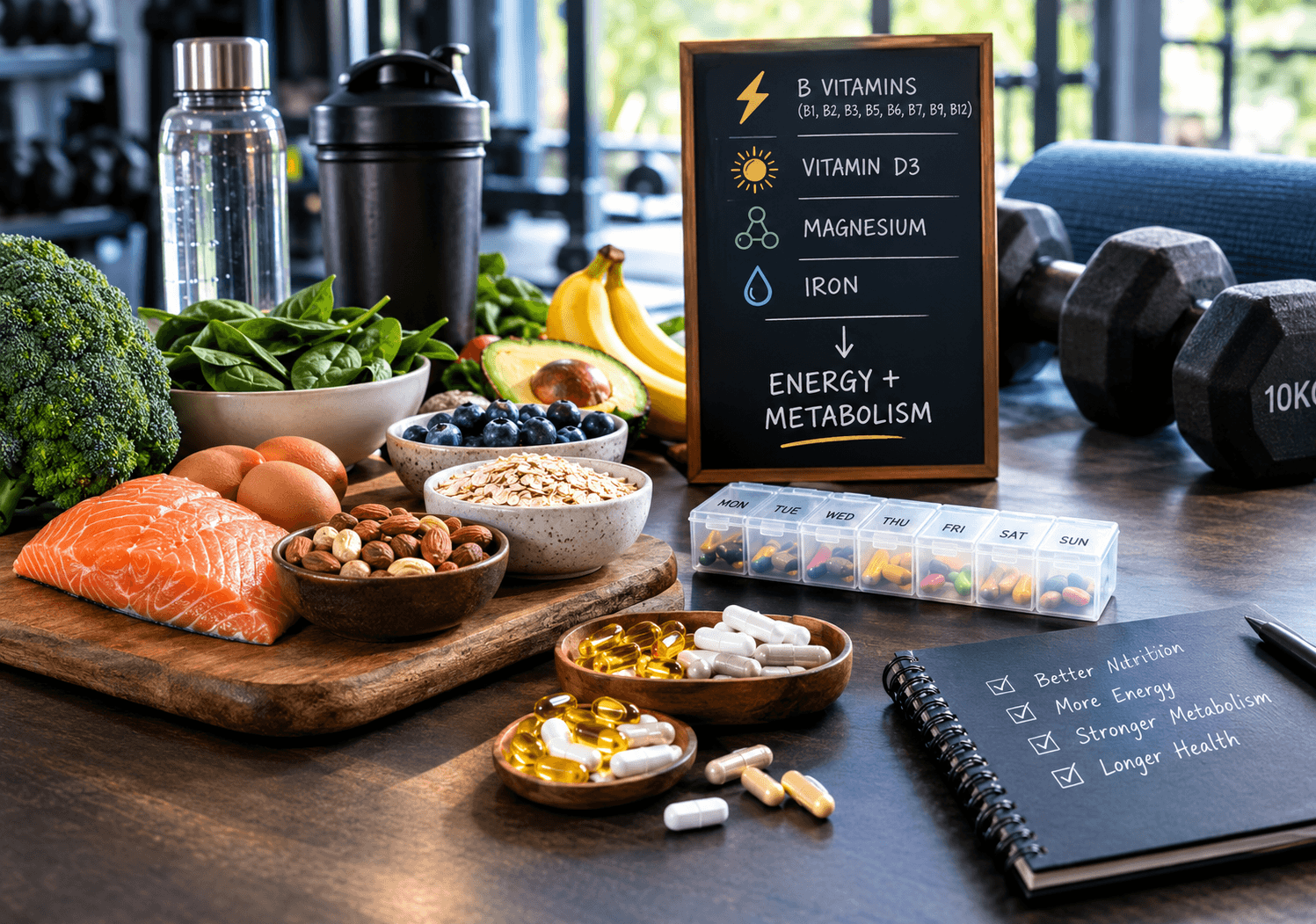
When clients walk into my gym complaining of persistent fatigue, sluggish workouts, or plateaus in their fitness progress, they often suspect their metabolism is broken. They ask if a magic pill can rekindle their baseline caloric burn. As a certified strength and conditioning coach, my answer always begins with a dose of metabolic reality: dietary supplements cannot replace structured resistance training, adequate sleep, and a nutrient-dense diet. However, specific micronutrients act as fundamental keys that unlock your body’s cellular machinery. Understanding the best vitamins for metabolism and energy support allows you to correct underlying nutritional gaps and optimize how efficiently your cells convert carbohydrates, fats, and proteins into usable biological fuel.
Metabolism is not a single organ or a simple metabolic dial; it is the sum of every biochemical reaction keeping you alive and moving. At the center of this complex bioenergetic system are micronutrients—specifically B-complex vitamins, vitamin D3, and essential cofactor minerals like magnesium and iron. Without adequate levels of these biological catalysts, your mitochondria struggle to synthesize adenosine triphosphate (ATP), the primary energy currency of human cells.
In this evidence-based guide, we will examine the precise mechanisms by which specific vitamins support cellular energy production, evaluate who genuinely benefits from supplementation, outline practical dosing strategies, and address safety considerations.
Quick Answer Box
The best vitamins for metabolism and energy support are the B-complex vitamins (especially B1, B2, B3, B5, B6, B7, B9, and B12), which serve as essential coenzymes that convert macronutrients into ATP energy. Key supporting micronutrients include Vitamin D3, which influences metabolic health and muscle performance, along with essential cofactor minerals magnesium and iron. Supplements do not directly “burn fat,” but they restore baseline energy pathways if a nutritional deficiency is slowing your metabolic processes down.
How Vitamins Actually Support Energy and Metabolism
A common misconception in fitness culture is that vitamins act like caffeine or central nervous system stimulants. Vitamins do not provide calorie-based energy directly, nor do they trigger an artificial spike in heart rate or alertness. Instead, micronutrients function as indispensable coenzymes and cofactors in metabolic pathways.

To understand how this works, consider your cell’s powerplants: the mitochondria. Every bit of protein, carbohydrate, and fat you consume must be broken down through processes like glycolysis, the citric acid cycle (Krebs cycle), and the electron transport chain. These enzymatic steps convert food substrates into adenosine triphosphate (ATP).
If your body lacks specific B vitamins or cofactor minerals, these metabolic assembly lines slow down. For example, nicotinamide adenine dinucleotide (NAD+) and flavin adenine dinucleotide (FAD)—which drive cellular respiration—are synthesized directly from niacin (vitamin B3) and riboflavin (vitamin B2). When your intake of these vitamins falls below optimal threshold levels, cellular ATP yield drops, manifesting physically as systemic fatigue, reduced exercise stamina, and impaired recovery. Learning which nutrients support normal energy metabolism is essential for keeping these enzymatic pathways operating smoothly.
Top Vitamins and Minerals for Metabolism & Cellular Energy
Not all vitamins impact your metabolism in the same way. Below is an analytical breakdown of the key vitamins and supporting minerals required for bioenergetic efficiency.
1. The B-Complex Family: The Engine Drivers
The eight water-soluble B vitamins function synergistically to transform raw food into functional cellular fuel. While each plays a distinct role, they operate as an integrated network.
| B Vitamin | Scientific Name | Primary Metabolic & Energy Function |
| Vitamin B1 | Thiamine | Critical for pyruvate dehydrogenase; converts carbohydrates into entry molecules for the Krebs cycle. |
| Vitamin B2 | Riboflavin | Precursor to FAD/FADH2; essential for fatty acid oxidation and mitochondrial electron transport. |
| Vitamin B3 | Niacin | Precursor to NAD/NADP; drives glycolysis, fatty acid synthesis, and cellular respiration. |
| Vitamin B5 | Pantothenic Acid | Component of Coenzyme A (CoA); required to break down fats, carbohydrates, and amino acids. |
| Vitamin B6 | Pyridoxine | Key cofactor in amino acid metabolism, glycogenolysis (breaking down stored glycogen), and neurotransmitter synthesis. |
| Vitamin B7 | Biotin | Essential for carboxylation reactions in fatty acid synthesis and gluconeogenesis. |
| Vitamin B9 | Folate | Works with B12 in red blood cell formation and DNA synthesis; supports cellular division. |
| Vitamin B12 | Cobalamin | Crucial for red blood cell maturation, nerve sheath integrity, and fatty acid/amino acid processing. |
Among these, vitamin B12 energy metabolism reactions are particularly critical. Cobalamin is required for the conversion of methylmalonyl-CoA to succinyl-CoA, an entry point into the citric acid cycle. Furthermore, severe B12 deficiency leads to megaloblastic anemia, where red blood cells cannot deliver oxygen efficiently to working muscle tissue, resulting in severe physical weakness.
2. Vitamin D3: The Metabolic Regulator
Vitamin D acts more like a secosteroid hormone than a traditional vitamin. Nuclear vitamin D receptors (VDR) are present in human skeletal muscle, adipose tissue, and pancreatic beta-cells. Research indicates that maintaining optimal serum 25-hydroxyvitamin D levels supports insulin sensitivity and muscle tissue integrity.
When vitamin D status is deficient, intracellular calcium handling in muscle tissue can become compromised, negatively affecting contractility and energy management. For individuals seeking to optimize body composition, understanding what affects metabolism and body weight goes far beyond caloric balance alone; hormonal and micronutrient status play pivotal roles.
3. Essential Cofactor Minerals: Magnesium & Iron
While vitamins are organic compounds, they cannot execute energy transfer without key inorganic minerals acting alongside them.
- Magnesium for Adenosine Triphosphate (ATP): Biologically active ATP exists primarily as a complex bound to a magnesium ion (Mg2+-ATP). Without sufficient intracellular magnesium, ATP cannot transfer its terminal phosphate group to power muscle contractions, enzyme activity, or protein synthesis.
- Iron: Iron is the core atom in heme proteins, specifically hemoglobin (which carries oxygen in the blood) and myoglobin (which stores oxygen in muscle tissue). It is also an essential component of cytochromes inside the mitochondrial electron transport chain. Without adequate iron, oxygen transport collapses, halting aerobic metabolism.
How to Evaluate Metabolic Supplements: A Coach’s Framework
Selecting effective dietary supplements for metabolic support requires critical evaluation. The market is saturated with proprietary blends that promise unrealistic weight loss outcomes or instant energy spikes.

Coach’s Tip: Beware of Stimulants Masked as “Metabolic Boosters”
Many products marketed as “metabolic support” rely heavily on high doses of anhydrous caffeine, synephrine, or synthetic stimulants. These compounds provide a temporary central nervous system surge, but they do not improve cellular metabolic capacity or resolve micronutrient deficiencies. Always flip the bottle over and read the “Supplement Facts” panel. Look for clear dosage amounts of bioavailable B-complex vitamins, vitamin D3, and minerals rather than undisclosed “energy matrix” proprietary blends.
When reviewing a formula, consider the chemical forms of the ingredients. Bioavailability determines how much of the nutrient your body actually absorbs and utilizes:
- Vitamin B12: Look for methylcobalamin or adenosylcobalamin over cyanocobalamin, as methylated forms are active coenzyme states.
- Folate (B9): Opt for L-5-methyltetrahydrofolate (5-MTHF) rather than synthetic folic acid, particularly if you harbor genetic variations in the MTHFR enzyme.
- Magnesium: Choose chelated forms like magnesium glycinate or magnesium citrate instead of magnesium oxide, which exhibits low intestinal absorption.
Learning how to evaluate ingredients in weight management supplements helps ensure you invest in products supported by transparent labeling and valid research. Furthermore, if you want to know what to look for in a metabolism support supplement, prioritize brands that utilize third-party testing facilities (such as NSF Certified for Sport or USP) to verify ingredient identity and purity.

Synergistic Factors: Diet, Exercise, and Sleep
No combination of micronutrients for metabolism can overcome inadequate lifestyle habits. Supplements function to fill legitimate dietary gaps, but training and lifestyle factors build the actual metabolic machinery.
Resistance Training and Muscle Mass
Skeletal muscle tissue is metabolic currency. Muscle cells house dense concentrations of mitochondria. Engaging in progressive resistance training increases total mitochondrial volume—a process known as mitochondrial biogenesis. When you build lean tissue, you expand your body’s overall engine size. Taking B-complex vitamins ensures that this expanded engine runs cleanly, converting fuel to ATP efficiently.
Thermal Effect of Food (TEF) and Protein
Different macronutrients require varying amounts of energy to digest, absorb, and process. Protein has a high thermic effect, burning roughly 20-30% of its ingested calories during processing, compared to 5-10% for carbohydrates and 0-3% for fats. According to research on protein intake, metabolism, and weight loss, consuming adequate daily protein elevates basal metabolic output while preserving lean muscle mass during caloric deficits. Micronutrients like vitamin B6 are direct cofactors required to metabolize these dietary amino acids.
The Sleep-Metabolism Connection
Sleep deprivation directly disrupts metabolic health. Insufficient sleep impairs glucose tolerance, reduces insulin sensitivity, and elevates systemic cortisol levels. This biochemical stress shifts your body toward storing fuel rather than burning it. Exploring how sleep affects metabolism and weight management reveals that chronic sleep restriction alters appetite-regulating hormones like ghrelin and leptin, leading to fatigue and increased cravings for hyper-palatable foods.
For aging individuals, adopting targeted strategies becomes paramount. Reading a guide on how to increase metabolism naturally after 40 can help you pair nutrient timing with resistance exercise to offset age-related declines in baseline metabolic rate.
Dosing, Safety, and Best Practices
While water-soluble vitamins (like B-complex and vitamin C) pass through the urinary system when consumed in excess, fat-soluble vitamins (A, D, E, K) and trace minerals accumulate in body tissues. Responsible supplementation requires adhering to safe intake thresholds.
| Nutrient | Recommended Dietary Allowance (RDA) / Target Range (Adults)* | Tolerable Upper Intake Level (UL) | Best Time to Take | Potential Side Effects of Overuse |
| Vitamin B12 | 2.4 mcg (Higher doses often used for deficiency) | Not Established | Morning (with meal) | Generally well-tolerated; rare skin flushing |
| Vitamin B6 | 1.3–1.7 mg | 100 mg/day | Morning or Mid-day | Peripheral neuropathy, nerve tingling (at long-term high doses) |
| Vitamin D3 | 600–800 IU (2,000–4,000 IU under supervision) | 4,000 IU/day | Morning (with fat-containing meal) | Hypercalcemia, kidney stones (at extreme toxic doses) |
| Magnesium | 310–420 mg | 350 mg/day (from supplemental sources) | Evening / Post-workout | Loose stools, diarrhea (especially with oxide forms) |
| Iron | 8 mg (Men), 18 mg (Women) | 45 mg/day | Morning (on empty stomach or with Vitamin C) | Nausea, constipation, organ toxicity if overloaded |
*Always consult a physician or certified dietitian to determine personalized dosages based on blood lab analysis.
Common Mistake: High-Dosing Iron Without Blood Work
Feeling fatigued does not automatically mean you need an iron supplement. Iron overload (hemochromatosis) causes organ damage and severe systemic inflammation. Men and non-menstruating women should never supplement with elemental iron unless a ferritin blood test explicitly confirms iron deficiency anemia.
If you are exploring non-stimulant approaches to support your baseline metabolic energy, consulting an overview of which supplements support metabolism without stimulants can help you select safe, non-jittery options tailored to your wellness profile.
Sample Daily Supplement and Lifestyle Routine
To demonstrate how to synthesize micronutrient timing with daily activity, here is a practical daily schedule used by strength coaches and athletes to support metabolism and recovery.

Morning Routine: Cellular Activation
- 7:00 AM: Wake up and drink 16–20 oz (470–590 mL) of water to rehydrate.
- 7:30 AM (Breakfast): Consume a solid protein-rich meal (e.g., eggs, Greek yogurt, or protein shake). Take your B-Complex supplement and Vitamin D3 (fat-soluble, best absorbed with dietary fats).
- 8:30 AM: Morning light exposure and a 15-minute brisk walk to activate circadian rhythms and boost daily energy expenditure.
Afternoon Routine: Training & Sustained Fuel
- 12:30 PM (Lunch): Balanced meal featuring lean protein, complex carbohydrates, and leafy greens (providing natural food sources of thiamine, folate, and iron).
- 4:30 PM (Workout): Resistance training session focusing on compound movements (squats, deadlifts, presses) to stimulate muscle tissue and mitochondrial adaptation.
Evening Routine: Recovery & Cellular Repair
- 7:00 PM (Dinner): Whole-food dinner rich in micronutrients (e.g., wild salmon, sweet potatoes, broccoli).
- 9:00 PM (Pre-Bed): Take Magnesium Glycinate (200–400 mg). Magnesium supports muscle relaxation, nervous system down-regulation, and nighttime ATP restoration.
- 10:00 PM: Sleep in a cool, dark room to maximize recovery and metabolic hormone balance.
Frequently Asked Questions
What are the best vitamins for metabolism and energy support?
The most critical vitamins are the B-complex family—specifically B1, B2, B3, B5, B6, B7, B9, and B12. They act as direct coenzymes that convert carbohydrates, fats, and proteins into cellular ATP energy. Vitamin D3 and cofactor minerals like magnesium and iron are also vital for overall bioenergetic function.
Which B vitamin increases energy and metabolism the most?
No single B vitamin works in isolation. However, vitamin B12 (cobalamin) and vitamin B3 (niacin) are particularly prominent. B3 is the direct precursor to NAD+, which drives mitochondrial energy production, while B12 is essential for red blood cell formation and preventing fatigue-inducing anemias.
Do vitamin supplements boost a slow metabolism for weight loss?
Vitamins do not directly burn body fat or raise your metabolic rate above normal physiological baseline limits. However, if your body is deficient in key micronutrients like vitamin B12, vitamin D, or iron, your metabolic processes will be impaired. Correcting a true deficiency restores optimal cellular function and energy output.
Should I take magnesium or B-complex for daytime fatigue?
Both serve distinct functions. Take a B-complex vitamin in the morning or early afternoon, as B vitamins assist in turning your food into immediate cellular energy. Take magnesium in the evening, as it aids in muscle relaxation, nervous system recovery, and overall sleep quality.
Can taking energy vitamins cause side effects?
Water-soluble B vitamins are generally safe because excess amounts are excreted in urine. However, extremely high doses of vitamin B6 can cause temporary nerve tingling, and excess fat-soluble vitamins (like Vitamin D) or minerals (like iron) can accumulate in tissues and cause toxicity. Always follow recommended daily allowances.
How long does it take for metabolic vitamins to start working?
If you have an underlying micronutrient deficiency, you may notice improvements in daily energy levels within 1 to 2 weeks of consistent supplementation. However, restoring depleted tissue stores—such as low ferritin (iron) or serum vitamin D levels—typically takes 8 to 12 weeks of targeted use alongside appropriate dietary changes.
Conclusion
Finding the best vitamins for metabolism and energy support is not about searching for a synthetic shortcut to rapid weight loss. True metabolic health is built upon the biological foundation of your cellular pathways. By prioritizing a nutrient-dense whole-food diet, maintaining structured resistance training, and strategically supplementing with bioavailable B-complex vitamins, vitamin D3, and essential cofactor minerals like magnesium, you provide your body with the precise tools required to synthesize energy efficiently.
If you suspect micronutrient deficiencies are hindering your daily vitality or training performance, consult with a qualified healthcare provider to review blood panels. Correcting underlying gaps, optimizing your sleep, and moving your body consistently will establish a strong, sustainable metabolic foundation for years to come.