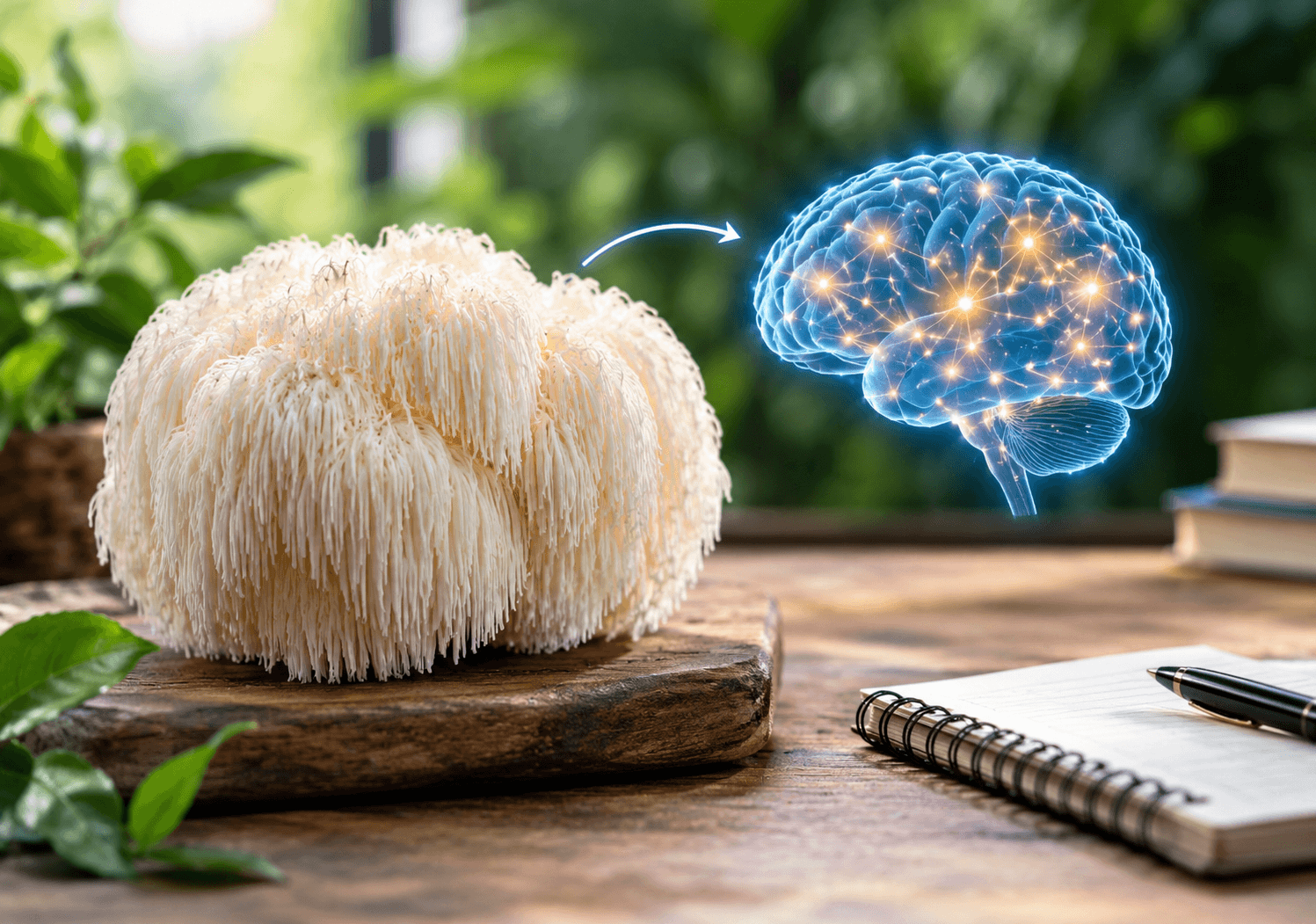
If you have spent any time in the supplement aisle or browsing fitness forums lately, you have probably seen a fuzzy, white mushroom called Lion’s Mane. As a strength coach, I often get asked by my clients, “Does lion’s mane help with memory?” They aren’t just looking to remember where they left their car keys; they want to know if it can help them stay focused during a heavy squat session or remember a complex new training program.
Memory and focus are just as important as muscle mass. If your brain is foggy, your workout quality drops. Lion’s mane, scientifically known as Hericium erinaceus, has been used for centuries in traditional medicine. Today, modern science is finally catching up to see if this “smart mushroom” really lives up to the hype. In this guide, we will break down the research, the benefits, and how you can use it to sharpen your mind and your training.
Quick Answer: Yes, research suggests that lion’s mane may help with memory by stimulating Nerve Growth Factor (NGF). This protein helps repair and grow brain cells. Studies show it may improve mild cognitive impairment and reduce brain fog, though it typically takes 2–4 weeks of daily use to see noticeable results.

The Science of Memory: How Lion’s Mane Works
To understand if does lion’s mane help with memory, we have to look at how your brain actually builds and keeps information. Your brain relies on a network of neurons. These neurons communicate through electrical signals. When these connections are strong, your memory is sharp. When they weaken, you experience “brain fog.”
Lion’s mane contains two very specific groups of compounds: hericenones and erinacines. These compounds are unique because they can cross the blood-brain barrier. Once they get inside, they go to work stimulating two vital proteins: Nerve Growth Factor (NGF) and Brain-Derived Neurotrophic Factor (BDNF).
Nerve Growth Factor (NGF)
Think of NGF as high-quality fertilizer for your brain. It is essential for the growth, maintenance, and survival of neurons. Research published in the journal Biological & Pharmaceutical Bulletin shows that lion’s mane promotes the production of NGF in the brain. By increasing NGF, the mushroom helps your brain repair damaged nerves and build new ones.
Brain-Derived Neurotrophic Factor (BDNF)
BDNF is another protein that acts like a “brain builder.” It is heavily involved in neuroplasticity—your brain’s ability to change and adapt. Higher levels of BDNF are linked to better learning and long-term memory. Interestingly, intense exercise also boosts BDNF. Combining a solid training plan with lion’s mane might create a powerful environment for brain health.

What the Research Says About Memory and Focus
Is the evidence just anecdotal, or is there hard data? Several human trials have looked at how lion’s mane affects cognitive performance.
- Mild Cognitive Impairment: In a famous double-blind study in Japan, older adults with mild memory issues took lion’s mane daily for 16 weeks. The group taking the mushroom showed significantly higher scores on cognitive function tests than those taking a placebo. However, once they stopped taking the supplement, their scores dropped back down. This suggests that consistency is key.
- Reducing Brain Fog: Many gym-goers struggle with mental fatigue after a long day at work. A study published in Biomedical Research found that lion’s mane can help reduce anxiety and irritability. When you are less stressed, you can focus better on the task at hand, whether that is a work project or a 315 lb (143 kg) deadlift.
- Visual and Recognition Memory: Animal studies have shown that Hericium erinaceus can improve recognition memory. This is the ability to recognize things you have seen before. While we need more human trials, the early results are very promising for anyone looking to stay sharp as they age.

Lion’s Mane vs. Other Memory Boosters
How does this mushroom compare to other things people take for focus? Let’s look at a quick comparison.
| Supplement | Primary Benefit | How it Works | Stimulant-Free? |
| Lion’s Mane | Long-term memory and nerve health | Boosts NGF and BDNF | Yes |
| Caffeine | Short-term alertness | Blocks adenosine receptors | No |
| Creatine | Energy for brain cells | Recycles ATP | Yes |
| L-Tyrosine | Focus under stress | Precursor to dopamine | Yes |
While caffeine gives you a quick “jolt,” it can lead to crashes. If you want to avoid that, you might wonder why caffeine pills cause energy crashes. Lion’s mane, on the other hand, works more like a slow-burning fuel for your brain health. It doesn’t give you a “rush,” but rather a steady sense of clarity.

How to Use Lion’s Mane for Best Results
As a coach, I don’t just tell my clients to “take a supplement.” You need a protocol. If you want to answer the question, “does lion’s mane help with memory” for yourself, you have to use it correctly.
The Right Dosage
Most clinical studies use a dosage between 750 mg and 3,000 mg per day. If you are new to nootropics, I recommend starting with 500 mg to 1,000 mg to see how your body reacts.
Powder vs. Capsules
- Powder: Great for adding to your morning coffee or protein shake. It often has a mild, earthy, or slightly cocoa-like flavor.
- Capsules: The most convenient way to ensure you get a consistent dose every day.
Look for “Dual Extraction”
This is the most important tip. The beneficial compounds in mushrooms are locked behind tough cell walls made of chitin. Your body can’t digest chitin well. Look for a supplement that says “Dual Extract.” This means both hot water and alcohol were used to pull out all the good stuff (the polysaccharides and the erinacines).
Timing Your Intake
Unlike a pre-workout, you don’t need to take lion’s mane right before you train. Because it works by building up proteins in the brain, the time of day matters less than the consistency. However, many of my clients like taking it in the morning to fight off “morning brain fog.”
Coach’s Tip: Combine your lion’s mane with a healthy fat, like a small piece of avocado or a splash of MCT oil in your coffee. Some of the active compounds are fat-soluble, meaning your body might absorb them better when fat is present.

Practical Application: A Memory-Boosting Lifestyle
Taking a pill won’t fix a bad lifestyle. If you want a sharp memory, you need to support your brain in other ways. Supplementing with lion’s mane is the “cherry on top” of a healthy foundation.
1. Prioritize Sleep
Your brain clears out toxins and “saves” memories while you sleep. If you are underslept, your memory will suffer regardless of how much mushroom powder you take. We know that sleep affects metabolism and weight management significantly, but it is just as vital for cognitive function. Aim for 7-9 hours of quality rest.
2. Manage Stress
High cortisol (the stress hormone) can actually shrink the hippocampus, the part of the brain responsible for memory. If you find yourself reaching for snacks when stressed, you might look into adaptogens for stress eating. Lion’s mane acts as a mild adaptogen, helping your nervous system stay balanced.
3. Physical Exercise
Lifting weights and doing cardio are not just for your muscles. Exercise increases blood flow to the brain and triggers the release of BDNF. I tell my clients that a 3-mile (4.8 km) walk is just as much a “brain workout” as a crossword puzzle.
Safety and Side Effects
Is lion’s mane safe? For most people, yes. It has been consumed as food and tea for a very long time. However, there are a few things to keep in mind:
- Mushroom Allergies: If you are allergic to mushrooms, stay away.
- Digestive Upset: Some people report a bit of bloating or gas when they first start.
- Skin Itching: In rare cases, the increase in NGF can lead to a slight itchy feeling on the skin. This usually goes away as your body adjusts.
- Surgery: Because it may slow blood clotting, stop taking it at least two weeks before any scheduled surgery.
Common Mistake: Expecting immediate results. Many people take one dose of lion’s mane, don’t feel “limitless,” and quit. Unlike caffeine, this is a cumulative supplement. You need to take it daily for at least three weeks to judge if it is working for you.
A Sample “Cognitive Focus” Morning Routine
If you want to maximize your mental performance for the day, try this routine that I use myself:
- Wake up and Hydrate: Drink 16 oz (0.5 liters) of water.
- Mushroom Coffee: Mix 1,000 mg of dual-extracted lion’s mane into your coffee.
- Light Movement: A 10-minute walk or some dynamic stretching to get blood flowing.
- Deep Work: Spend the first 60 minutes of your day on your hardest mental task.
- Healthy Fuel: A breakfast rich in protein. I often suggest checking how protein powder helps control hunger to keep your energy stable through the morning.
FAQ: Your Questions Answered
How long does it take for lion’s mane to work for memory?
Most clinical studies show that significant cognitive benefits appear after 4 to 12 weeks of daily use. Some people report better focus and reduced brain fog within the first few days, but the structural brain benefits (like nerve repair) take longer to develop.
Can I take lion’s mane with my pre-workout?
Yes, you can. Lion’s mane is non-stimulant and does not typically interact with common pre-workout ingredients like beta-alanine or citrulline malate. In fact, many modern pre-workouts are now including it to help with the “mind-muscle connection.”
Does lion’s mane help with anxiety as well?
Some research suggests it may. By supporting the hippocampus and reducing inflammation, lion’s mane may help regulate mood. However, it should not replace professional medical treatment for anxiety disorders.
Is it better to take lion’s mane on an empty stomach?
It can be taken with or without food. Some people find it absorbs better on an empty stomach, while others prefer taking it with a meal to avoid any potential digestive upset. If you have a sensitive stomach, take it with food.
Can lion’s mane help with “gym brain” or workout forgetfulness?
Yes. By reducing mental fatigue and supporting neuroplasticity, it can help you stay present during your sets. This makes it easier to track your progressive overload and stick to your training tempo (e.g., 3 seconds down, 1 second up).
What is the best form of lion’s mane to buy?
Look for a product made from the fruiting body (the actual mushroom) rather than just the mycelium grown on grain. The fruiting body usually contains a higher concentration of the beneficial beta-glucans and hericenones needed for memory support.
Conclusion
So, does lion’s mane help with memory? The current body of evidence says it is a very strong “yes,” especially for long-term brain health and focus. By boosting Nerve Growth Factor and supporting the health of your neurons, this mushroom offers a natural way to keep your mind sharp as you age and train.
As a coach, I see the brain as the “control center” for all your fitness goals. If your brain is working well, your workouts will be better, your recovery will be faster, and you will stay more consistent. Lion’s mane is a safe, evidence-based tool that can help you get there. Just remember to be patient, choose a high-quality dual-extract, and keep your foundation of sleep and nutrition solid.