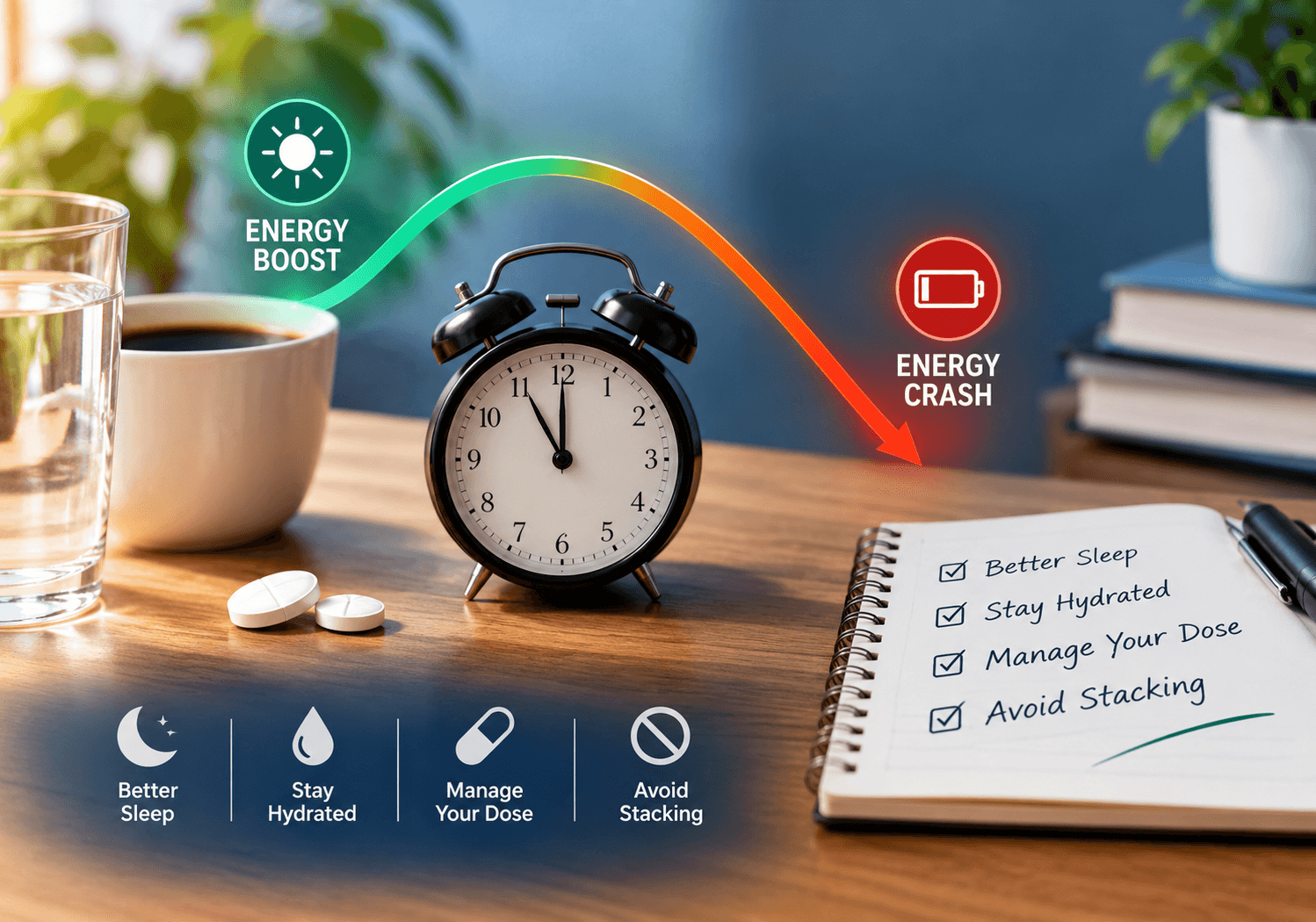
Caffeine pills can make you feel more awake before a workout, during a long workday, or when you have not slept well. However, that boost does not always last. Some people experience an energy crash, with tiredness, poor concentration, irritability, or a sudden drop in motivation after the initial effects wear off.
Understanding why caffeine pills cause energy crashes and how to prevent it starts with recognizing that caffeine changes how you experience tiredness; it does not replace sleep, food, recovery, or the body’s need for rest. The size of your dose, your usual caffeine intake, when you take the pill, and your individual sensitivity can all influence how you feel.
The good news is that you can often reduce these unwanted effects by reviewing your total caffeine intake, improving your sleep routine, avoiding repeated doses, and using a gradual reduction plan when necessary. Caffeine is optional for effective training, and taking more is not automatically better.
Quick Answer
**Caffeine pills can cause energy crashes when their alertness-boosting effects fade, when large doses trigger unpleasant side effects, or when caffeine disrupts sleep and contributes to fatigue later. Regular users may also experience withdrawal symptoms between doses. To help prevent crashes, use less caffeine, check the timing, protect your sleep, avoid stacking stimulants, and reduce regular use gradually.
What Do Caffeine Pills Actually Do?
Caffeine is a central nervous system stimulant. It can improve alertness and make you feel temporarily more awake by blocking adenosine receptors, which are involved in the brain’s signaling of sleep pressure.
As described by the National Library of Medicine’s MedlinePlus caffeine guide, caffeine can increase alertness, but excessive intake can also cause restlessness, headaches, anxiety, insomnia, and a fast heartbeat.
Caffeine pills provide a measured amount of caffeine in a tablet or capsule. Unlike coffee or tea, they do not require preparation, and some products deliver a relatively large dose in a single serving. That convenience makes it especially important to check how much caffeine each pill contains.
A temporary boost is not the same as more energy
It helps to separate three ideas:
- Alertness: You feel more awake and may find it easier to concentrate.
- Physical energy: Your body has the resources it needs for everyday activity and exercise.
- Recovery: Your body has had enough rest and time to recover from demanding activity.
Caffeine may temporarily improve alertness without resolving the underlying reason you feel tired. For example, it does not erase the effects of a poor night’s sleep or replace the recovery you need after a hard training session.
This distinction explains why someone can feel energized shortly after taking a caffeine pill and exhausted a few hours later. The stimulant effect may have diminished while the underlying tiredness remains.
How quickly do caffeine pills work?
Caffeine is absorbed relatively quickly. Its effects often become noticeable within approximately 30–60 minutes, although the timing varies with the person, dose, and product.
The effect can also last longer than expected. According to MedlinePlus’s explanation of caffeine’s effects, people may continue to feel caffeine’s effects for four to six hours. This is not a precise countdown: some people experience effects for longer, and caffeine may remain in the body after the obvious boost has faded.
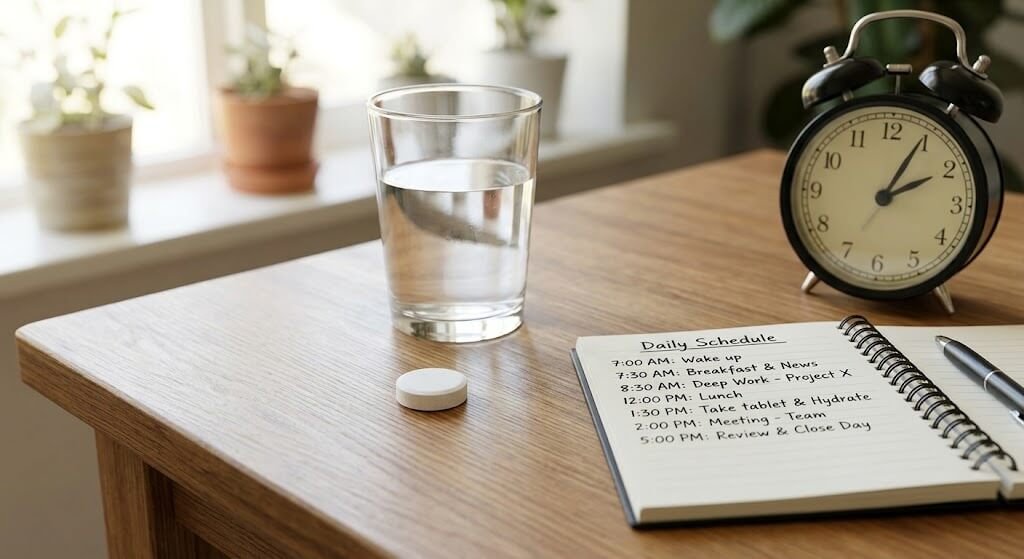
What Does a Caffeine Crash Feel Like?
A caffeine crash is a common description of feeling tired or mentally flat after the initial stimulant effect fades. It is not a single, clearly defined medical condition with one cause.
You may notice one or several of these experiences:
- Sudden sleepiness or heavy eyelids.
- Difficulty concentrating on a task.
- Reduced motivation to exercise.
- Irritability or low mood.
- Headache or trouble focusing.
- Feeling restless or shaky before becoming tired.
- A strong desire to take another caffeine pill.
The timing can offer clues. Feeling exhausted after a large dose may reflect a combination of normal sleep pressure, stimulant side effects, and insufficient rest. Feeling tired and getting a headache after skipping your usual pill may point toward caffeine withdrawal.
Not every crash is caused by caffeine alone. Skipping a meal, dehydration, demanding exercise, illness, inadequate sleep, or another health issue can produce similar symptoms.
It is also important not to assume that every episode is a blood sugar crash. The phrase describes how someone feels; by itself, it does not establish that their blood glucose has fallen.
Why Caffeine Pills Cause Energy Crashes and How to Prevent It: Five Main Causes
1. Caffeine temporarily masks sleepiness
One of the main reasons caffeine pills can leave you feeling tired later is that their stimulating effect does not remove the need for sleep.
Adenosine signaling contributes to sleep pressure during waking hours. Caffeine blocks certain adenosine receptors, making sleepiness less noticeable for a time. As caffeine’s effects decline, that sleep pressure can become more apparent.
Think about taking a caffeine pill after sleeping only five hours. You may feel more focused for part of the morning, but you still have the effects of that shortened night to deal with. The pill has changed your experience of tiredness rather than paid back the sleep you missed.
How to prevent it: Treat caffeine as an optional aid rather than a solution to persistent sleepiness. Give sleep and recovery priority, especially before demanding workouts, long drives, or tasks requiring sustained attention.
If you repeatedly need caffeine to feel functional, review your sleep schedule and consider whether another problem is causing the fatigue.
2. Your dose may be too high for your needs
More caffeine does not always produce a better experience. A large dose can cause nervousness, shaking, anxiety, digestive discomfort, or a pounding heartbeat. These effects can make you feel uncomfortable and mentally scattered instead of productively alert.
The International Society of Sports Nutrition’s position stand on caffeine and exercise performance reports that caffeine may benefit several types of exercise, but responses vary. Higher doses are not automatically more effective, and side effects become more likely as the dose increases.
For example, a person who already drinks coffee and uses a pre-workout powder may add a caffeine pill without accounting for the caffeine in those other products. Their total intake can become much higher than intended.
How to prevent it: Start by reviewing the amount you already consume. Read the supplement label, check the caffeine content per serving, and count coffee, tea, energy drinks, pre-workout products, and caffeine-containing medicines.
For most healthy adults, MedlinePlus describes up to 400 milligrams per day as an amount that is generally not harmful. However, this is a broad reference point, not a target or a guarantee of safety. Some people experience side effects at much lower intakes, and people with certain medical conditions or medication interactions may need different limits.
3. Caffeine may interfere with your sleep
A caffeine pill taken late in the day can affect sleep even if you no longer feel stimulated when bedtime arrives.
Caffeine clearance varies considerably. A systematic analysis of caffeine pharmacokinetics describes substantial differences between people in how caffeine is processed, including differences associated with genetics, lifestyle, health, and medication use.
A randomized crossover trial, published in the journal Sleep, examined caffeine doses of 100 mg and 400 mg at different intervals before bedtime. In the 23 male participants, a single 400 mg dose affected sleep measures even when taken several hours before bed, with some effects observed up to 12 hours beforehand. The study does not mean that every person responds identically, but it demonstrates why high-dose caffeine can be a problem long after the initial boost.
Poorer sleep can then contribute to tiredness the following day. If you respond by taking another pill, the cycle may continue.
How to prevent it: Establish a caffeine cutoff based on your bedtime and sensitivity. Leaving eight to twelve hours between caffeine and sleep can be a cautious starting point, especially for larger doses or people who already struggle with sleep. Some people will need a longer gap; others may tolerate smaller morning doses more easily.
Keep a simple record of your caffeine intake and sleep quality for one to two weeks. This can help you identify whether the timing of a pill corresponds with trouble falling asleep, frequent waking, or morning fatigue.
4. Your body may have developed tolerance
Regular caffeine use can change how strongly you respond to a given dose. Over time, the same pill may feel less effective, encouraging you to take more.
Tolerance is not all-or-nothing. A review of caffeine and stress physiology describes evidence that tolerance varies across different effects of caffeine and is often incomplete.
This can create a frustrating pattern. You take caffeine to feel normal, get less of the alertness benefit you once noticed, and consider increasing the dose. The higher intake can add sleep disruption and unpleasant side effects without solving the reason you are tired.
How to prevent it: Avoid using a caffeine pill automatically every day. Consider whether you can complete ordinary work or exercise sessions without it, and do not increase the dose simply because the original amount feels less noticeable.
If you want to reduce your intake, use a gradual plan rather than abruptly stopping after prolonged daily use. There is no need to push through uncomfortable side effects just to maintain a stimulant routine.
5. You may be experiencing caffeine withdrawal
Withdrawal can be mistaken for an energy crash, especially if you take caffeine pills at the same time every morning.
After regular caffeine use, suddenly skipping or substantially reducing your usual amount may cause headache, tiredness, drowsiness, irritability, and difficulty concentrating. You may feel that you need another pill to get through the day.
A critical review of caffeine withdrawal found that symptoms typically begin 12–24 hours after abstinence, peak around 20–51 hours, and may last two to nine days. The severity varies, and some people experience symptoms after relatively modest regular intake.
This means the fatigue you feel after missing your normal dose may not be evidence that you need more caffeine forever. It may be a temporary withdrawal response.
How to prevent it: If you use caffeine regularly and want to stop, reduce the amount gradually. Smaller portions, fewer caffeinated products, and a slower schedule can make the transition easier. The right pace depends on how much caffeine you currently use and how strongly you experience withdrawal.
How to Prevent a Caffeine Crash: Seven Practical Steps
There is no guaranteed way to eliminate every caffeine-related crash. However, these practical steps can reduce common triggers and help you decide whether caffeine pills are useful for you at all.
Step 1: Calculate your total daily caffeine intake
Start by reading the label on your caffeine pills. Confirm the amount of caffeine per tablet, the suggested serving, and whether the product contains other stimulants.
Then list everything else you consume that contains caffeine. This includes coffee, tea, energy drinks, pre-workout supplements, caffeinated gels, and some medicines.
| Caffeine source | What to check |
| Caffeine pill | Milligrams per tablet and per serving |
| Coffee or tea | Serving size and approximate caffeine content |
| Energy drink | Caffeine per container, not just per serving |
| Pre-workout powder | Total caffeine and other stimulant ingredients |
| Medication | Whether caffeine is listed as an active ingredient |
Do not assume that two products are safe together just because each one has separate directions. Your body responds to the total amount you consume.
Step 2: Use the lowest amount that meets your needs—or skip it
The best way to minimize dose-related side effects is to avoid unnecessarily high doses.
The sports performance evidence reviewed by the International Society of Sports Nutrition suggests that caffeine can improve some exercise outcomes, but the optimal amount varies and larger doses increase the likelihood of side effects.
For recreational exercisers, caffeine is not a requirement. You can perform a well-planned strength session, walk, cycle, or complete mobility work without taking a stimulant.
If you choose to use caffeine pills, follow the product directions and discuss appropriate use with a qualified health professional if you have medical conditions or take medication. Do not experiment with larger amounts to chase a stronger feeling.
Step 3: Choose the timing carefully
Timing matters because caffeine may affect sleep long after the initial alertness benefit.
For a morning workout, a person who tolerates caffeine may find that an early dose interferes less with bedtime than an afternoon dose. However, individual responses differ, and a high dose in the morning can still affect sleep in some people.
Use your planned bedtime as the starting point. If you notice trouble falling asleep or waking refreshed, move your caffeine cutoff earlier or remove the pill and compare your sleep.
Do not rely on a fixed social-media rule that says everyone must wait a certain number of minutes after waking before consuming caffeine. The scientific evidence does not establish one universal timing rule that prevents afternoon energy crashes.
Step 4: Eat regular, balanced meals
A caffeine pill is not a meal. It will not supply the protein, carbohydrate, fat, vitamins, and minerals provided by food.
If you take a pill while skipping breakfast, you may become tired, hungry, or distracted later for reasons unrelated to caffeine itself. A balanced meal or snack can help you meet your nutrition needs, although food is not a guaranteed treatment for a caffeine-related crash.
Practical options include oatmeal with yogurt, eggs with whole-grain toast, or fruit with a protein source. Before a demanding workout, choose food that you tolerate well and allow enough time for digestion.
Avoid assuming that sugar is the answer. A sugary snack may provide carbohydrate, but it does not cancel excessive caffeine or correct inadequate sleep.
Step 5: Hydrate consistently
Drink water regularly throughout the day, with additional fluid as appropriate for exercise duration, heat, and sweat loss.
Caffeine can increase urination in some circumstances, but it is misleading to assume that every caffeine pill inevitably causes dehydration. The sports performance position stand on caffeine reports that moderate caffeine use does not generally produce a substantial hydration problem in habitual consumers under the studied exercise conditions.
The practical goal is to avoid both extremes: do not ignore fluid needs, and do not assume that drinking large amounts of water will reverse the effects of an excessive caffeine dose.
If fatigue occurs with vomiting, severe dizziness, unusual weakness, or other concerning symptoms, hydration alone is not an adequate response.

Step 6: Protect sleep and recovery
Sleep is one of the most important variables to review when you repeatedly experience daytime tiredness.
Keep a regular sleep schedule when practical, make your sleeping environment comfortable, reduce stimulating activities near bedtime, and avoid using caffeine to compensate for ongoing sleep restriction.
You can also review the connection between rest and daily routines in this guide to how sleep affects metabolism and weight management.
Remember that feeling awake is not proof that you are fully recovered. If you are regularly exhausted despite adequate sleep, discuss the symptoms with a health professional instead of continually increasing your caffeine intake.
Step 7: Reduce caffeine gradually if it is becoming a problem
If you notice a repeated pattern of needing caffeine to feel normal, a gradual reduction may help you understand your baseline energy without the same level of stimulant exposure.
There is no single taper schedule that suits everyone. Someone taking one small dose each morning may require a different approach from someone using several caffeinated products throughout the day.
Start by recording your usual amount, then reduce one source at a time or use smaller amounts at planned intervals. If withdrawal headaches or fatigue become difficult to manage, slow down and seek medical advice when needed.
For broader information about non-stimulant approaches to daily energy, see which nutrients support normal energy metabolism. Nutrients help support normal body functions, but supplements are not a substitute for diagnosing persistent fatigue or correcting an actual deficiency.
Coach’s Tip: Keep a simple daily log for seven to fourteen days. Record caffeine amounts, the time you take each dose, sleep duration, meals, exercise, and when the crash happens. Look for repeated patterns before changing several habits at once.
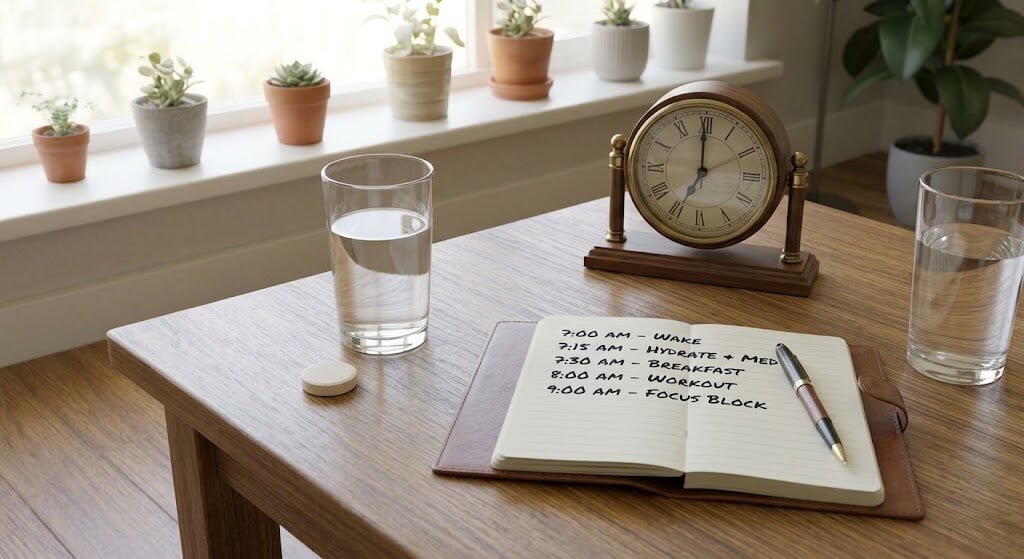
How Should You Approach Caffeine Before a Workout?
Caffeine pills are sometimes used before exercise because caffeine may improve alertness and certain measures of athletic performance. However, a pre-workout pill is not necessary for muscle growth, fat loss, or a productive training session.
The International Society of Sports Nutrition position stand on caffeine and exercise performance reports potential benefits for endurance, muscular endurance, strength, and some high-intensity activities. Responses vary considerably, and anxiety, jitters, or disturbed sleep can make caffeine a poor choice for some exercisers.
A practical training-day checklist
Before taking a caffeine pill, ask yourself:
- Did I sleep reasonably well, or am I trying to cover up substantial sleep loss?
- Have I added up the caffeine in my other drinks and supplements?
- Is there enough time between this dose and bedtime?
- Am I feeling normal, or do I already have a racing heartbeat, anxiety, or shaking?
- Could I complete the session comfortably without caffeine?
If you have already consumed a substantial amount of caffeine, adding another dose is not a reliable solution for poor concentration or low energy.
Example: A strength workout without relying on caffeine
This beginner-friendly session offers a practical alternative when you want to train but would rather avoid another stimulant dose. The purpose is to complete a manageable workout, not to force your body through severe fatigue.
| Exercise | Sets | Reps or time | Rest |
| Easy treadmill walk | 1 | 5–8 minutes | As needed |
| Bodyweight squat or box squat | 2 | 8–10 reps | 60–90 seconds |
| Incline push-up | 2 | 6–10 reps | 60–90 seconds |
| Dumbbell row | 2 | 8–12 reps per side | 60–90 seconds |
| Glute bridge | 2 | 10–12 reps | 60 seconds |
| Dead bug | 2 | 6–8 reps per side | 60 seconds |
For resistance exercises, begin with body weight or light dumbbells, such as 5–15 lb (2.3–6.8 kg), if that is appropriate for your strength and experience. Use a controlled tempo: lower for about two seconds, pause briefly, and lift smoothly without holding your breath.
The movement should feel controlled and challenging but manageable. Stop if you experience chest pain, faintness, unusual shortness of breath, or concerning palpitations rather than trying to complete the planned reps.
Easier version: Replace squats with sit-to-stands from a stable chair, use wall push-ups, and perform rows with a lighter weight. Reduce to one set per exercise if needed.
Harder version: When your technique is consistent and recovery is good, progress to three sets, use a slightly heavier dumbbell, or add a few reps. Change one variable at a time instead of increasing every demand in a single session.
This is a sample routine, not a treatment for caffeine side effects. If you feel unwell or unusually exhausted, rest instead of using exercise to push through the symptoms.

Can Caffeine Pills Cause a Blood Sugar Crash?
Caffeine pills can leave you feeling tired, shaky, or unfocused, but these symptoms do not prove that your blood sugar has dropped. A subjective energy crash and medically confirmed low blood glucose are different things.
Caffeine may contribute to unpleasant symptoms such as shakiness, nervousness, or a racing heartbeat. These sensations can resemble symptoms associated with low blood sugar, which is one reason it is unwise to diagnose the cause based on how you feel alone.
Your eating pattern may also matter. If you skipped a meal, exercised for a long time without adequate fuel, or have a medical condition that affects blood glucose, you may need to consider those factors separately from your caffeine use.
What should you do?
- Avoid taking additional caffeine to treat unexplained shakiness or weakness.
- Eat regular, balanced meals that meet your individual energy needs.
- If you have diabetes or use medication that can lower blood glucose, follow your established monitoring and treatment plan.
- Seek medical advice when fatigue, sweating, dizziness, confusion, or weakness is recurring or unexplained.
If you suspect actual low blood glucose, use an appropriate measurement when available and follow your clinician’s advice. Severe confusion, fainting, seizures, or an inability to swallow safely requires emergency medical assistance.
Common Mistakes That Make Caffeine Crashes More Likely
Some habits can turn an occasional caffeine boost into a repeated cycle of temporary alertness and tiredness.
Common Mistake: Taking another pill whenever you feel tired.
This may increase your total caffeine exposure without addressing the original problem. Check your last dose, sleep, food intake, and symptoms before considering more caffeine. If you are already experiencing side effects, do not take another dose to push through them.
Other mistakes to avoid include:
Stacking stimulant products. Taking caffeine pills with pre-workout powders, energy drinks, or other stimulants can make it harder to track your total intake. Review the labels before combining products, and ask a pharmacist about possible interactions.
Using caffeine to replace recovery. If you are exhausted after several demanding training sessions, adding a stimulant does not replace rest. Consider adjusting workout intensity, allowing recovery time, and reviewing your sleep routine.
Taking caffeine too close to bedtime. Feeling able to fall asleep does not guarantee that the quality of your sleep is unaffected. Pay attention to both how quickly you fall asleep and how refreshed you feel the next morning.
Stopping abruptly after heavy daily use. A sudden reduction may trigger withdrawal symptoms. Use a gradual taper when appropriate instead of treating withdrawal fatigue as a reason to return immediately to your previous intake.
Assuming every supplement marketed for energy is necessary. Energy products vary in their ingredients, doses, and evidence. A guide to supplements that support metabolism without stimulants can help you explore the topic without assuming that any supplement will automatically improve your energy.
Who Should Be Careful With Caffeine Pills?
Some people need to be more cautious with caffeine or seek individualized guidance before using it.
According to MedlinePlus’s caffeine safety guidance, people who are pregnant or breastfeeding, have anxiety or sleep disorders, experience chronic headaches, have certain heart rhythm problems or high blood pressure, or take medicines that may interact with caffeine should discuss their intake with a healthcare professional.
Children and teenagers should not approach caffeine use as though the limits for adults automatically apply to them. Caffeine-containing supplements are particularly inappropriate as a casual solution for persistent tiredness in young people.
You should also seek advice before using caffeine pills if you have a medical condition, take prescription or over-the-counter medicines, or are considering combining multiple stimulant-containing supplements.
When is a caffeine reaction an emergency?
Stop exercising and seek urgent medical care if you experience severe or concerning symptoms after taking a caffeine pill, especially chest pain, fainting, a dangerously fast or irregular heartbeat, seizures, or severe confusion.
Caffeine overdose can cause serious harm. If you may have taken an excessive amount, seek immediate medical or poison-control advice rather than waiting for the symptoms to pass.
For persistent daytime fatigue, arrange a medical evaluation instead of continually changing your caffeine dose. The cause may involve poor sleep, a medication effect, a nutritional issue, or another health condition that needs attention.
Better Ways to Support Energy Without Relying on Caffeine Pills
Caffeine can be useful for some adults, but it is only one part of a broader approach to daily energy. Start with habits that support normal functioning before adding another supplement.
Build a consistent sleep routine
Aim for a regular bedtime and wake-up time that allow enough opportunity for sleep. Reduce late-day caffeine if you are having trouble falling asleep, and pay attention to repeated waking or feeling unrefreshed in the morning.
A persistent problem may need professional assessment, particularly if you snore heavily, frequently wake gasping, or remain excessively sleepy despite spending enough time in bed.
Eat enough to support your activity
Your food intake should match your needs, especially if you train frequently. Include a variety of foods that provide carbohydrate, protein, fats, vitamins, and minerals rather than trying to get through the day on stimulant products alone.
If fatigue is accompanied by unexplained weight changes, weakness, or other persistent symptoms, ask a clinician whether further assessment is appropriate. Do not assume that increasing supplement intake will solve a possible nutritional deficiency.
Train consistently, but adjust your workload
A manageable training plan is usually more useful than repeatedly pushing through exhaustion. Keep demanding sessions balanced with lighter activity and recovery, and progress exercises gradually.
For example, if you planned a heavy lower-body session but feel unusually fatigued, consider reducing the load, doing a shorter easy session, or resting altogether. A caffeine pill should not determine whether you ignore symptoms or force a workout.
Be cautious about metabolism claims
Products marketed to boost metabolism may not address the reasons you feel tired. Energy, metabolic health, body weight, and athletic performance are related but distinct topics.
For additional context, read about factors that affect metabolism and body weight and practical approaches to supporting metabolism naturally. These resources can help put supplement claims in perspective without suggesting that a metabolism product is a guaranteed way to improve energy or manage weight.

Frequently Asked Questions
1. Why do caffeine pills make me tired later?
Caffeine may temporarily mask sleepiness without removing the need for sleep. As its stimulating effects fade, underlying tiredness can become noticeable. Large doses, poor sleep, regular-use withdrawal, and other causes of fatigue can contribute too. Track your intake and symptoms rather than assuming every crash has one explanation.
2. How long does a caffeine pill last?
Caffeine’s effects often last around four to six hours, but the duration varies between people and with the dose. Some caffeine can remain in your body after you no longer feel alert. A large or late dose may affect your sleep, so do not base timing on the initial boost alone.
3. How can I stop an afternoon caffeine crash?
Review your morning caffeine dose, sleep quality, meals, and any additional caffeine consumed during the day. Avoid automatically taking another pill, particularly if you feel shaky or anxious. If you use caffeine regularly, a gradual reduction may help. Persistent or severe fatigue deserves medical assessment.
4. Does caffeine tolerance cause energy crashes?
Tolerance can reduce how strongly you notice some effects of caffeine, potentially encouraging higher intake. However, tolerance does not automatically explain every crash. Sleep disruption, an excessive dose, withdrawal, and other causes of fatigue may contribute. Do not respond to reduced effects by continually increasing your dose.
5. Should I take caffeine pills before a workout?
Caffeine may improve certain aspects of exercise performance in some adults, but it is not necessary for a productive workout. Consider your sensitivity, total daily intake, bedtime, and medical history. If you are unusually tired, unwell, anxious, or experiencing palpitations, skip the stimulant and reassess your condition.
6. How do I stop caffeine pills without headaches?
If you use caffeine regularly, reduce your intake gradually instead of stopping abruptly. A slower reduction may make withdrawal symptoms easier to manage, although the best pace depends on your existing intake and sensitivity. Seek professional advice if symptoms are severe, prolonged, or difficult to distinguish from another health problem.
Conclusion: Prevent Caffeine Crashes by Addressing the Cause
Understanding why caffeine pills cause energy crashes and how to prevent it can help you make better decisions about energy supplements and training. The key is to recognize that caffeine temporarily influences alertness but does not replace sleep, adequate nutrition, or recovery.
Begin with practical changes: check your total intake, avoid unnecessary high doses, set an appropriate cutoff before bedtime, and do not automatically take another pill when tiredness returns. If you use caffeine regularly and want to stop, consider a gradual reduction to limit withdrawal symptoms.
Caffeine may help some people with alertness and exercise performance, but it is optional. A consistent approach to sleep, food, hydration, and training is a better foundation than repeatedly trying to overcome fatigue with stimulants.
If you regularly experience severe energy crashes or unexplained fatigue, speak with a healthcare professional instead of assuming caffeine is the only cause.