
Optimizing your hormonal health does not require expensive supplements or extreme measures. If you want to know how to support healthy testosterone naturally, the answer lies in a combination of targeted resistance training, strategic nutrition, and foundational lifestyle habits. Testosterone is a vital anabolic hormone responsible for maintaining lean muscle mass, bone density, energy levels, and overall vitality in all genders, though it is often discussed in the context of men’s health.
Rather than relying on unproven market trends, you can leverage evidence-based practices to create an internal environment where your endocrine system thrives. This guide breaks down the exact exercises, dietary strategies, and daily habits you need to implement.
Quick Answer:
To support healthy testosterone naturally, focus on heavy compound resistance training (like squats and deadlifts), prioritize 7–9 hours of quality sleep per night, manage chronic stress to keep cortisol low, and consume adequate dietary fats, zinc, magnesium, and vitamin D. Consistency in these lifestyle and training habits is the most evidence-based method for optimizing hormonal health.
The Science Behind Natural Testosterone Production
Testosterone production is regulated by the hypothalamic-pituitary-gonadal (HPG) axis. The hypothalamus releases gonadotropin-releasing hormone (GnRH), which signals the pituitary gland to release luteinizing hormone (LH). LH then travels to the testes (in men) or ovaries (in women) to stimulate testosterone synthesis.
Research consistently shows that mechanical tension from heavy resistance training stimulates a favorable acute hormonal response. According to the National Strength and Conditioning Association (NSCA), large muscle mass recruitment during compound lifts creates a significant metabolic demand that supports anabolic hormone secretion. Furthermore, chronic lifestyle factors dictate your baseline levels. Poor sleep, elevated cortisol from chronic stress, and micronutrient deficiencies directly suppress the HPG axis. By addressing these levers, you create a sustainable foundation for hormonal balance.
Top 5 Exercises to Support Healthy Testosterone Naturally
To maximize the hormonal response to training, you must prioritize exercises that recruit the largest amount of muscle mass simultaneously. Isolation exercises like bicep curls have their place, but they do not provide the systemic stimulus required for optimal endocrine function.
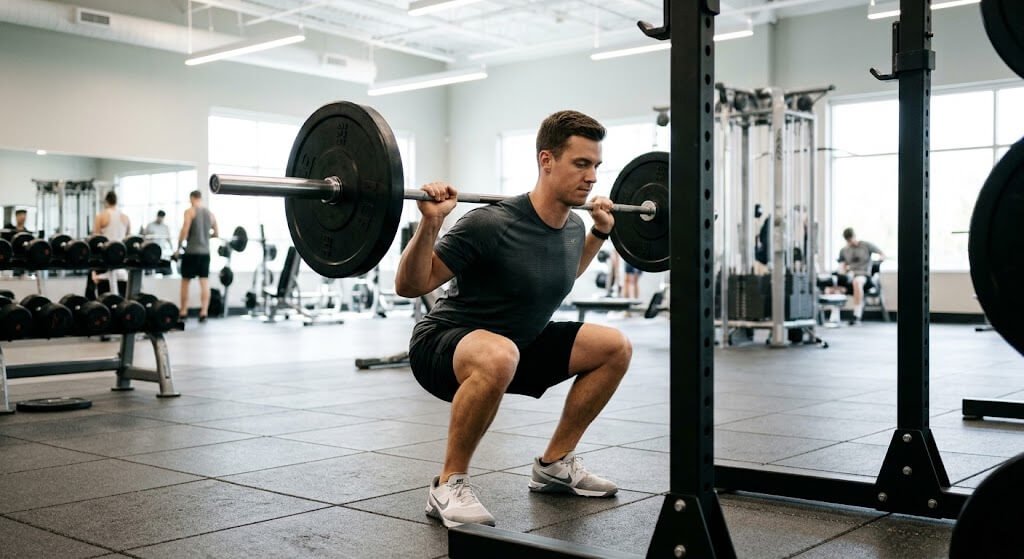
1. Barbell Back Squat
The squat is the cornerstone of lower-body development and systemic hormonal stimulation. It heavily recruits the quadriceps, glutes, and hamstrings while demanding significant core and lower-back stabilization.
- Step-by-step form:
- Place the barbell across your upper traps, not your neck.
- Stand with feet shoulder-width apart (about 18 inches or 45 cm).
- Inhale deeply, brace your core, and push your hips back while bending your knees.
- Descend until your hip crease is below your knee (parallel or slightly below).
- Drive through your mid-foot to return to the starting position, exhaling at the top.
- Sets/Reps/Rest: 4 sets of 5–8 reps, resting 2–3 minutes between sets.
- Regression: Goblet squat holding a 25 lb (11 kg) dumbbell at chest height.
- Progression: Paused squats (2-second hold at the bottom) or front squats.
Coach’s Tip: Imagine you are bracing your core as if someone is about to punch you in the stomach. This intra-abdominal pressure protects your spine and allows you to lift heavier loads safely.
Common Mistake: Knee valgus (knees caving inward). Actively push your knees outward in line with your toes throughout the entire movement to protect your joints and maintain force production.
2. Conventional Deadlift
The deadlift is the ultimate posterior chain developer. It engages the glutes, hamstrings, spinal erectors, lats, and traps, making it one of the most metabolically demanding exercises available.
- Step-by-step form:
- Stand with feet hip-width apart, barbell over the mid-foot.
- Hinge at the hips and grip the bar just outside your legs.
- Flatten your back, drop your hips, and pull the slack out of the bar.
- Drive through the floor, extending your hips and knees simultaneously.
- Stand tall, squeeze your glutes, and reverse the motion with control.
- Sets/Reps/Rest: 3 sets of 4–6 reps, resting 3 minutes between sets.
- Regression: Romanian deadlift (RDL) using two 35 lb (16 kg) dumbbells.
- Progression: Deficit deadlifts (standing on a 1-2 inch or 2.5-5 cm plate).

3. Weighted Pull-Ups
Vertical pulling movements build a wide, strong back and stimulate the upper body musculature effectively. Adding external load increases the mechanical tension, which is a primary driver of muscle growth and hormonal adaptation.
- Step-by-step form:
- Grip a pull-up bar with palms facing away, hands slightly wider than shoulder-width.
- Hang with straight arms and actively depress your shoulder blades.
- Pull your chest toward the bar by driving your elbows down and back.
- Lower yourself with control until your arms are fully extended.
- Sets/Reps/Rest: 3 sets of 6–10 reps, resting 2 minutes between sets.
- Regression: Band-assisted pull-ups or lat pulldowns on a cable machine.
- Progression: L-sit pull-ups or adding a 25 lb (11 kg) weight plate via a dip belt.
Coach’s Tip: Initiate the pull by depressing your shoulder blades first, then bend your elbows. This ensures your back muscles do the work, not just your biceps.
Common Mistake: Kipping or using momentum. Strict form with a dead hang at the bottom and a controlled descent maximizes muscle tension and minimizes shoulder injury risk.
4. Overhead Press
The standing overhead press builds robust shoulders, triceps, and upper chest while requiring intense core stabilization to prevent lumbar hyperextension.
- Step-by-step form:
- Stand with feet shoulder-width apart, holding a barbell at upper-chest level.
- Squeeze your glutes and brace your core tightly.
- Press the bar vertically, moving your head slightly forward as the bar clears your face.
- Lock out your elbows at the top, then lower the bar with control to the starting position.
- Sets/Reps/Rest: 3 sets of 6–8 reps, resting 2 minutes between sets.
- Regression: Seated dumbbell shoulder press using 20 lb (9 kg) dumbbells.
- Progression: Push press (using a slight leg drive to initiate the movement).
5. Kettlebell Swings
Kettlebell swings provide a unique blend of heavy resistance and cardiovascular demand. This high-intensity stimulus has been shown to support favorable hormonal profiles while improving metabolic conditioning.
- Step-by-step form:
- Stand with feet slightly wider than shoulder-width, a kettlebell on the floor between your feet.
- Hinge at the hips, grab the kettlebell, and hike it back between your legs.
- Forcefully thrust your hips forward, using the momentum to swing the weight to chest height.
- Let the kettlebell fall back naturally, hinging at the hips to catch it for the next rep.
- Sets/Reps/Rest: 4 sets of 15–20 reps, resting 90 seconds between sets.
- Regression: Practice the hip hinge without weight, or use a 15 lb (7 kg) kettlebell.
- Progression: Heavy single-arm swings or double kettlebell swings.
Common Mistake: Turning the swing into a front raise. The power must come entirely from the hip thrust, not from lifting with the shoulders or arms.

Lifestyle Habits That Optimize Hormonal Balance
Training provides the stimulus, but lifestyle dictates the recovery and adaptation. Neglecting these pillars will blunt your body’s ability to produce hormones efficiently.
Prioritize Deep Sleep
The majority of daily testosterone production occurs during REM and deep sleep stages. Research indicates that restricting sleep to five hours per night can reduce testosterone levels by up to 15% in healthy young men. Aim for 7–9 hours of uninterrupted sleep in a cool, dark room. Understanding how sleep affects metabolism is also critical, as poor sleep disrupts multiple hormonal pathways simultaneously.
Manage Cortisol and Chronic Stress
Cortisol and testosterone share an inverse relationship. When you are under chronic psychological or physical stress, your body prioritizes cortisol production, which directly inhibits the HPG axis. Incorporate daily stress-reduction practices such as 20 minutes of walking, deep breathing exercises, or meditation. Learning to boost metabolic flexibility through balanced training and nutrition also reduces the physiological stress of daily life.
Get Regular Sunlight Exposure
Vitamin D functions more like a hormone than a traditional vitamin. Adequate sunlight exposure is directly linked to healthy testosterone levels. Aim for 15–20 minutes of direct sunlight on exposed skin daily, preferably in the morning. If you live in a northern climate or have limited sun exposure, supplementation may be necessary, which we will cover in the nutrition section.
Nutrition Strategies for Hormonal Health
Your endocrine system requires specific raw materials to synthesize hormones. A calorie-crash diet or severe macronutrient restriction will signal to your body that it is in a state of famine, downregulating reproductive hormone production.
Eat Sufficient Dietary Fats
Cholesterol is the foundational building block of all steroid hormones, including testosterone. Diets excessively low in fat can suppress hormone production. Ensure that 25–35% of your daily calories come from healthy fats, such as avocados, extra virgin olive oil, nuts, seeds, and fatty fish like salmon.
Prioritize Micronutrients
Specific vitamins and minerals act as essential cofactors in testosterone synthesis:
- Zinc: Critical for luteinizing hormone production. Found in oysters, red meat, and pumpkin seeds.
- Magnesium: Supports free testosterone levels by reducing sex hormone-binding globulin (SHBG). Found in spinach, almonds, and dark chocolate.
- Vitamin D: As mentioned, vital for hormonal regulation. Knowing which vitamins support metabolism and hormonal function can help you target your dietary intake or supplementation effectively. Additionally, ensuring you have the best vitamins for energy can prevent the fatigue that often accompanies hormonal optimization efforts.
Maintain a Healthy Body Composition
Excess body fat, particularly visceral fat, increases the activity of the aromatase enzyme, which converts testosterone into estrogen. Achieving and maintaining a healthy body fat percentage is one of the most powerful natural interventions available. Focus on adequate protein intake and metabolism to preserve lean muscle mass while managing your caloric intake. If you struggle with diet adherence, learning to manage food cravings without supplements through whole foods and fiber can make a sustainable caloric deficit much easier to maintain.

Common Mistakes That Lower Testosterone
Even with good intentions, certain habits can actively work against your hormonal goals. Avoid these common pitfalls:
- Overtraining: Working out 7 days a week without adequate rest keeps cortisol chronically elevated and prevents the nervous system from recovering. Schedule at least 2 full rest days per week.
- Excessive Alcohol Consumption: Alcohol is a known endocrine disruptor. Heavy drinking acutely suppresses testosterone production and impairs sleep quality, negating the benefits of your training.
- Ignoring Caloric Needs: Prolonged, severe caloric deficits signal starvation to the body, shutting down non-essential functions like reproductive hormone production.
- Relying on Proprietary Blends: Many over-the-counter “testosterone boosters” contain underdosed, unproven ingredients. Your money is better spent on high-quality whole foods and a gym membership.
Sample Weekly Workout Plan for Hormonal Health
This 4-day upper/lower split maximizes compound movement frequency while allowing ample recovery time. Rest at least one day between lower-body sessions.
| Day | Focus | Exercises | Sets x Reps | Rest |
| Monday | Lower Body A | Barbell Back Squat, Romanian Deadlift, Leg Press, Calf Raises | 4 x 5-8 | 2-3 min |
| Tuesday | Upper Body A | Overhead Press, Weighted Pull-Ups, Incline Dumbbell Press, Rows | 3-4 x 6-10 | 2 min |
| Wednesday | Active Recovery | 30-minute brisk walk (2 miles / 3.2 km), light mobility work | N/A | N/A |
| Thursday | Lower Body B | Conventional Deadlift, Kettlebell Swings, Bulgarian Split Squats | 3-4 x 5-15 | 2-3 min |
| Friday | Upper Body B | Bench Press, Barbell Rows, Lateral Raises, Bicep/Tricep Superset | 3-4 x 6-10 | 90 sec |
| Weekend | Rest / Leisure | Hiking, recreational sports, or complete rest | N/A | N/A |
Frequently Asked Questions (FAQ)
Does lifting weights increase testosterone?
Yes, lifting weights, particularly heavy compound movements like squats and deadlifts, stimulates a temporary increase in testosterone. Over time, building lean muscle mass improves your body’s overall hormonal environment. Consistency with progressive overload is key to maintaining these natural, evidence-based hormonal benefits.
What foods naturally boost testosterone?
Foods rich in zinc (like oysters and beef), vitamin D (fatty fish and fortified dairy), and healthy monounsaturated fats (like avocados and olive oil) provide the essential building blocks your endocrine system needs to produce hormones efficiently and support natural testosterone levels.
How does sleep affect testosterone levels?
The majority of daily testosterone production occurs during REM and deep sleep stages. Research shows that sleeping only five hours a night can reduce testosterone levels by up to 15%. Prioritizing seven to nine hours of quality sleep is a foundational natural testosterone booster.
Can chronic stress lower testosterone?
Yes. Chronic stress elevates cortisol, a catabolic hormone that directly competes with and inhibits testosterone production. Managing stress through mindfulness, walking, and adequate recovery is just as critical as your workout routine for maintaining a healthy hormonal balance and endocrine function.
How long does it take to see results from natural testosterone support?
With consistent resistance training, proper nutrition, and optimized sleep, most individuals notice improvements in energy, strength, and body composition within four to twelve weeks. Blood work can confirm hormonal changes, but subjective feelings of vitality often improve within the first month of healthy habits.
Are natural testosterone booster supplements effective?
Most over-the-counter supplements lack robust clinical evidence. While correcting a specific deficiency (like vitamin D or zinc) can help, whole foods, heavy compound lifting, and quality sleep remain the most reliable, evidence-based methods to support healthy testosterone naturally without relying on unproven pills.
Conclusion: Your Action Plan to Support Healthy Testosterone Naturally
Optimizing your hormones is not about finding a magic pill; it is about mastering the fundamentals. To support healthy testosterone naturally, commit to lifting heavy compound weights 3–4 times per week, prioritize 7–9 hours of sleep, manage your stress, and fuel your body with nutrient-dense whole foods. These evidence-based strategies not only improve your hormonal profile but also enhance your overall health, longevity, and quality of life. Start with one or two changes this week, and build from there.