
Peripheral neuropathy can feel like burning, pins-and-needles, numbness, sharp pain, weakness, or poor balance—often starting in the feet. Supplements for peripheral neuropathy may help in specific situations, especially when a nutrient deficiency contributes to nerve symptoms. But they are not a stand-alone cure, and the right choice depends on the cause of your neuropathy.
If you have new, worsening, one-sided, or rapidly progressing numbness or weakness, contact a clinician promptly. Also speak with your doctor or pharmacist before starting a supplement, particularly if you have diabetes, kidney disease, take blood thinners, or use prescription pain medication.
Quick Answer: Supplements for peripheral neuropathy are most useful when testing shows a deficiency, such as low vitamin B12. Alpha-lipoic acid and benfotiamine have some research in diabetic peripheral neuropathy, but benefits vary. Avoid high-dose vitamin B6, which can itself cause nerve damage. Medical care, blood-sugar management, foot checks, and safe exercise remain essential.
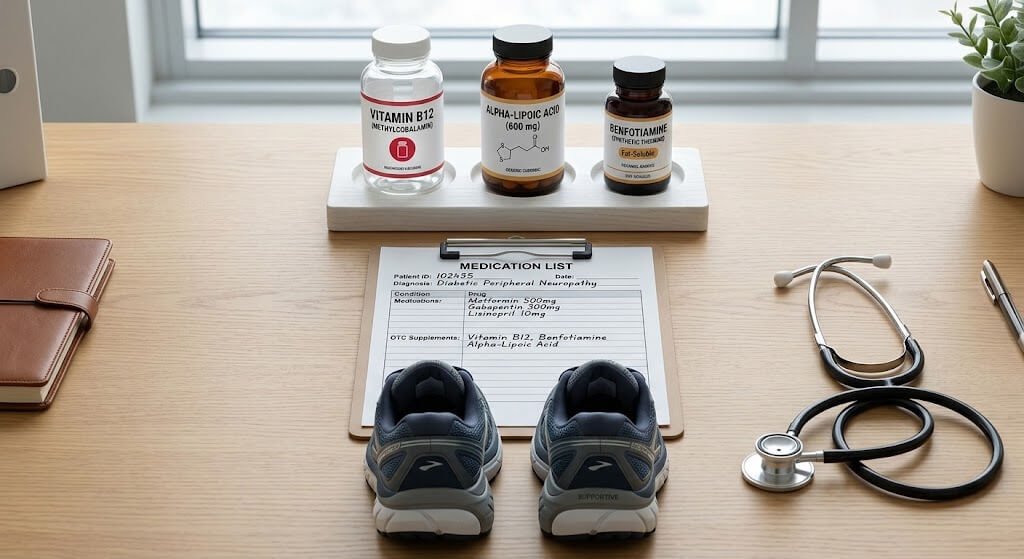
What Peripheral Neuropathy Is—and Why the Cause Matters
Peripheral neuropathy means damage or dysfunction in nerves outside the brain and spinal cord. These nerves carry feeling, movement, and automatic body signals between the central nervous system and the rest of the body.
Diabetes is a common cause, but it is far from the only one. Other causes include vitamin deficiencies, alcohol use, certain medications, chemotherapy, thyroid disease, kidney disease, autoimmune conditions, infections, inherited disorders, and nerve compression. Sometimes, the cause is unclear even after testing.
That is why “best nerve supplement” claims are often misleading. A supplement that helps someone with low B12 may do nothing for somebody whose symptoms come from chemotherapy, uncontrolled diabetes, or a pinched nerve.
The National Institute of Neurological Disorders and Stroke overview of peripheral neuropathy explains that identifying and managing the underlying cause is a key part of treatment. Supplements should fit into that larger plan rather than replace it.
Symptoms worth discussing with a clinician
Book a medical review if you notice:
- Numbness, tingling, burning, or electric-shock sensations in the hands or feet
- Reduced feeling under the feet or frequent unnoticed cuts and blisters
- Muscle weakness, foot drop, or trouble rising from a chair
- New balance problems or falls
- Symptoms that worsen at night or spread quickly
- Pain plus changes in skin color, swelling, or wounds that do not heal
If you have diabetes, regular foot inspection matters. Loss of sensation can make a small injury easy to miss, while poor circulation can slow healing.
Supplements for Peripheral Neuropathy: What Has the Best Support?
The evidence for supplements for peripheral neuropathy is mixed. Some options have reasonable support for specific causes or symptoms. Others are popular but lack strong, reliable data.
The practical approach is simple: identify deficiencies first, use supplements only for a clear reason, choose one change at a time, and review it with a qualified health professional.
Vitamin B12: essential when deficiency is present
Vitamin B12 is needed for healthy nerve function and red blood cell formation. A deficiency can cause numbness, tingling, balance changes, weakness, memory symptoms, and anemia. Older adults, people eating little or no animal food, and people with digestive conditions may be at greater risk.
People who take metformin or long-term acid-reducing medicines may also need monitoring. The NIH Vitamin B12 fact sheet notes that deficiency can cause neurologic changes, sometimes even without anemia.
If your clinician confirms a deficiency, correcting it can be important. The dose and delivery method—oral tablets versus injections—depend on the severity and cause of low B12. Do not self-treat long-term numbness with a supplement alone, because delayed evaluation can allow nerve problems to progress.
For a closer look at how low levels can show up, see our guide to vitamin B12 deficiency and nerve pain symptoms.
Thiamine and benfotiamine: possible support in diabetes
Thiamine, or vitamin B1, helps the body process carbohydrates and supports nerve function. Benfotiamine is a fat-soluble thiamine derivative that has been studied mainly in people with diabetic peripheral neuropathy.
A review in Diabetes Care discussed altered thiamine metabolism in diabetes and the possible role of thiamine replacement strategies. However, evidence does not prove that benfotiamine reliably improves neuropathy for everyone. Studies differ in length, dose, symptom measurement, and participant health status.
Benfotiamine may be a conversation starter with a diabetes clinician—not a substitute for blood-glucose management, medication adherence, nutrition, or foot care. Before adding it, review other ingredients in any “nerve support” blend so you do not double up on vitamins.
Alpha-lipoic acid: some evidence for diabetic nerve symptoms
Alpha-lipoic acid is an antioxidant involved in energy metabolism. It has been studied for diabetic neuropathy symptoms, including pain, burning, and numbness.
A Cochrane review of alpha-lipoic acid for diabetic peripheral neuropathy found that it probably has little or no effect on symptoms after six months compared with placebo, based on the evidence available. Earlier trials and short-term findings have been more encouraging, which helps explain why it remains popular.
That does not mean alpha-lipoic acid never helps. It means expectations should be realistic, and it should not be viewed as a guaranteed treatment. It may also affect blood glucose, so people using insulin or glucose-lowering drugs should discuss it with their prescribing clinician.
Acetyl-L-carnitine: limited and condition-specific evidence
Acetyl-L-carnitine has been researched in several neuropathy settings, including diabetic and chemotherapy-related nerve symptoms. It is involved in energy production and may influence nerve metabolism, but the research is inconsistent.
For chemotherapy-induced peripheral neuropathy, caution is especially important. A randomized trial published in the Journal of Clinical Oncology found acetyl-L-carnitine did not prevent chemotherapy-induced neuropathy and may have worsened symptoms in some participants.
Do not start acetyl-L-carnitine during or after cancer treatment without approval from your oncology team. “Natural” does not automatically mean appropriate for every diagnosis or treatment plan.
Vitamin D: test and correct deficiency, not guess
Low vitamin D is common and may coexist with chronic pain, diabetes, low activity levels, and other health concerns. But a low blood level does not prove it caused neuropathy.
If a clinician identifies deficiency, treating it supports bone and muscle health and may be appropriate for broader health reasons. The NIH Vitamin D fact sheet explains recommended intake, upper limits, and risks of excess intake.
Avoid megadoses without lab monitoring. Too much vitamin D can raise calcium levels and cause serious problems, including kidney-related complications.
Vitamin B6: the supplement to handle carefully
Vitamin B6 is often included in multivitamins and “nerve health” products. It is necessary in small amounts, but high supplemental intake can cause sensory neuropathy.
The NIH Vitamin B6 fact sheet warns that excessive supplemental B6 can lead to nerve damage. The risk is especially easy to miss when someone takes a multivitamin, pre-workout, energy drink, and separate nerve formula at the same time.
Common Mistake: Taking several products that each contain vitamin B6 without adding up the daily total. Bring every supplement bottle—including powders and drinks—to a pharmacist or medical appointment for a full review.
If you have tingling or numbness, do not assume B6 will help. Ask whether your supplement routine could be contributing to the problem.
Supplements for Peripheral Neuropathy That Need More Caution
Many products make broad promises about “repairing nerves” or eliminating neuropathy. Those claims are usually stronger than the evidence.
Be cautious with:
- Proprietary blends that do not list each ingredient amount
- Products that promise to reverse nerve damage quickly
- High-dose B-complex products, especially those high in vitamin B6
- “Detox” formulas, which may contain stimulants, laxatives, or poorly studied herbs
- Supplements that claim to replace diabetes medication or pain treatment
- Products bought from sellers without clear manufacturing information or third-party testing
The FDA’s dietary supplement guidance explains that supplements are regulated differently from prescription drugs. Manufacturers are responsible for safety and labeling before marketing, but products are not approved in the same way as medications before they reach stores.
Choose products with transparent labels and consider independent quality testing, such as USP or NSF certification where available. Testing does not prove a product will treat neuropathy, but it can add confidence that the label better matches the contents.

A Practical Decision Guide Before You Buy
Before spending money on supplements for peripheral neuropathy, work through these questions.
| Question | Why it matters | Practical next step |
| What is causing my symptoms? | Treatment differs for diabetes, B12 deficiency, chemotherapy, alcohol use, and compression injuries | Ask about a focused medical evaluation and needed labs |
| Have I had B12, glucose, thyroid, and kidney testing when appropriate? | Common contributors can be missed without testing | Review results with your clinician |
| Do I take metformin, acid reducers, or chemotherapy drugs? | These can change nutrient status or supplement safety | Ask a pharmacist about interactions |
| Am I already taking vitamin B6? | High supplemental intake can worsen nerve symptoms | Add totals across all products |
| What is my goal? | Pain relief, deficiency correction, better balance, and glucose management are different goals | Choose a focused plan, not a giant stack |
| How will I monitor progress? | Symptoms naturally fluctuate | Track pain, sleep, balance, and foot sensation weekly |
If you use supplements, introduce one at a time. Give your clinician the exact label and dose. That makes it far easier to spot side effects or identify what is actually helping.
Exercise and Daily Habits That Belong in Your Plan
Supplements may play a small role, but daily movement and risk management often make a bigger difference in function. Exercise does not “cure” damaged nerves, yet it can help preserve leg strength, improve confidence with walking, and support glucose management.
The CDC physical activity guidelines recommend at least 150 minutes of moderate-intensity activity each week and muscle-strengthening activity on at least 2 days per week for adults who can safely do so. If neuropathy affects balance or foot sensation, start below that level and build gradually.

A safe beginner routine for neuropathy
Do this routine 2 to 3 days per week on nonconsecutive days. Use a sturdy chair or countertop for support. Move smoothly and stop if you feel sharp pain, new weakness, dizziness, or worsening numbness.
| Exercise | Sets and reps | Rest | Coaching cue |
| Sit-to-stand from a chair | 2 sets of 6–10 | 60–90 seconds | Keep feet hip-width apart; press through the whole foot |
| Supported calf raise | 2 sets of 8–12 | 45–60 seconds | Rise for 2 seconds, pause, lower for 3 seconds |
| Seated band row | 2 sets of 10–15 | 60 seconds | Pull elbows toward your ribs without shrugging |
| Supported march in place | 2 rounds of 20–30 seconds | 45 seconds | Stand tall and keep one hand on support |
| Heel-to-toe balance hold | 2 rounds of 10–20 seconds per side | As needed | Place fingertips on a counter; do not force hands-free balance |
Start with a pace where you can still speak in short sentences. A gentle walk, stationary bike, or water exercise can also work. For some people with sensitive feet, cycling reduces impact compared with walking.
Coach’s Tip: Train balance near a stable surface, not in the middle of a room. If numbness affects your feet, safety and consistency beat making an exercise look advanced.
How to progress safely
Progress one variable at a time:
- Add 1 or 2 repetitions per set until you reach the top of the range.
- Add a third set after the current volume feels controlled.
- Increase resistance slightly, such as moving from a light band to a medium band.
- For walks, add about 5 minutes per session or roughly 0.25 miles [0.4 km] at a time.
- Make balance work harder only after you can maintain control with light fingertip support.
Regression: Use a higher chair for sit-to-stands, reduce the range of motion, or perform seated marching instead of standing marching.
Progression: Hold a light dumbbell of 5–10 lb [2–5 kg] at chest height during sit-to-stands, provided you can maintain steady knees, a neutral torso, and safe footing.
For broader mobility ideas, our balance and mobility guide for seniors offers practical ways to scale movements safely.
Foot Care, Shoes, and Training Safety
If you have reduced feeling in your feet, check them daily. Look at the tops, soles, heels, and between the toes for cuts, blisters, cracks, redness, swelling, or nail problems. Use a mirror or ask for help if you cannot see the bottom of your feet clearly.
Wear clean, well-fitting socks and supportive shoes for exercise. Avoid barefoot walking outdoors or on hot pavement. Before a walk, make sure there is no pebble, folded sock, or worn spot inside the shoe.

If you have an open sore, major foot deformity, severe circulation problems, or a recent fall, get individualized advice from your doctor or physical therapist before starting a walking or strength plan.
Nutrition basics without chasing miracle products
A regular eating pattern, enough protein, and adequate overall calories support training and recovery. If diabetes is part of your neuropathy, follow the eating plan and medication schedule created with your care team.
Avoid relying on supplements to compensate for poor sleep, inconsistent meals, heavy alcohol use, or inactivity. If hunger management is a barrier to following your nutrition plan, strategies such as adequate protein and fiber may be more useful than vague “metabolism boosters.” Read more about protein and appetite control and dietary fiber for appetite management.
When to Seek Medical Help Quickly
Seek urgent medical care for sudden weakness, facial drooping, speech trouble, loss of bladder or bowel control, severe back pain with leg weakness, or numbness that develops quickly. These are not routine “supplement questions.”
Make a timely appointment for persistent numbness, worsening balance, repeated falls, burning pain that disrupts sleep, or foot wounds. A clinician can assess sensation, strength, circulation, medications, and possible causes that no over-the-counter product can diagnose.
Frequently Asked Questions
What are the best supplements for peripheral neuropathy?
The best option depends on the cause. Vitamin B12 is important if lab testing confirms deficiency. Alpha-lipoic acid and benfotiamine have been studied mostly for diabetic peripheral neuropathy, with mixed results. Avoid broad “nerve repair” blends and ask a clinician or pharmacist to review labels and possible interactions.
Can vitamin B12 help peripheral neuropathy?
Vitamin B12 may help when a B12 deficiency is contributing to nerve symptoms. It is not proven to treat every type of peripheral neuropathy. A clinician can check your level, assess possible causes, and recommend the right dose or whether injections are needed.
Does alpha-lipoic acid help nerve pain?
Alpha-lipoic acid may help some people with diabetic nerve symptoms, but results are inconsistent and it is not a guaranteed pain treatment. It can also affect blood sugar. If you use diabetes medication, discuss it with your prescribing clinician before starting alpha-lipoic acid.
Is benfotiamine good for diabetic neuropathy?
Benfotiamine is a form of vitamin B1 researched in diabetic peripheral neuropathy. Some studies suggest possible symptom benefits, but evidence is not strong enough to treat it as a cure. It should support—not replace—glucose management, foot care, prescribed medication, and regular medical follow-up.
Can too much vitamin B6 cause neuropathy?
Yes. High supplemental vitamin B6 intake can cause sensory nerve damage, including numbness and tingling. This can happen when multiple products contain B6. Check labels on multivitamins, B-complex products, energy drinks, pre-workouts, and nerve formulas, then review your total with a clinician or pharmacist.
Can exercise help peripheral neuropathy?
Exercise may help maintain leg strength, walking ability, balance, and blood-glucose management. Choose low-impact activities and controlled strength work, especially if you have numb feet or poor balance. Start with support nearby, wear protective shoes, and ask a physical therapist for guidance if you have falls or weakness.
Final Takeaway on Supplements for Peripheral Neuropathy
Supplements for peripheral neuropathy can be useful when they address a real problem, such as a confirmed vitamin B12 deficiency. Alpha-lipoic acid and benfotiamine may be worth discussing for diabetic peripheral neuropathy, but neither replaces medical assessment, blood-glucose care, medication, safe exercise, or daily foot checks.
Use a targeted plan rather than a large supplement stack. Get the cause evaluated, avoid excess vitamin B6, introduce only one supplement at a time, and track symptoms with your healthcare team. Pair that plan with manageable strength and balance work so you can keep doing the daily activities that matter to you.