
Magnesium is often marketed as a simple answer for blood sugar control, but the real answer is more useful than a sales pitch. Does magnesium supplementation improve insulin sensitivity? It may help, especially in people with low magnesium intake, prediabetes, insulin resistance, or type 2 diabetes. But it is not a replacement for medical care, movement, sleep, food quality, or prescribed medication.
From a coaching standpoint, magnesium works best as one possible support tool inside a larger plan. A consistent walking routine, resistance training, adequate protein and fiber, and enough sleep usually have a larger effect on glucose metabolism than any single supplement.
Quick Answer: Does magnesium supplementation improve insulin sensitivity? Research suggests it may modestly improve insulin sensitivity and fasting blood glucose, particularly for people with low magnesium status or impaired glucose control. Results are mixed, and it should complement—not replace—exercise, a nutrient-dense diet, medication, and medical guidance.
Does Magnesium Supplementation Improve Insulin Sensitivity? What Research Suggests
Insulin is a hormone that helps move glucose from your bloodstream into cells, including skeletal muscle, where it can be used or stored for energy. Insulin sensitivity describes how effectively your cells respond to insulin. Lower sensitivity means the body often needs more insulin to manage the same amount of glucose.
Magnesium plays a role in hundreds of enzyme reactions and supports processes involved in insulin signaling and glucose transport. It is also needed for normal muscle and nerve function, energy metabolism, and protein synthesis, according to the NIH Office of Dietary Supplements magnesium fact sheet.
Several systematic reviews and meta-analyses have found that magnesium supplementation can improve markers such as fasting blood glucose, fasting insulin, and HOMA-IR in some groups. HOMA-IR is a calculation based on fasting glucose and insulin that researchers use as an estimate of insulin resistance. The benefit tends to be more noticeable in people who already have insulin resistance, prediabetes, type 2 diabetes, or low magnesium status.
For example, a systematic review and meta-analysis in Diabetes & Metabolism found that magnesium supplementation improved insulin sensitivity measures in people at high risk for diabetes. That does not mean every person will see a meaningful change. Studies vary in magnesium form, dose, length, participant health status, diet, and medication use.
The practical takeaway is simple: magnesium is worth discussing with a clinician if you have low intake or a known risk factor, but it is not a stand-alone “blood sugar fix.” If your goal is broader metabolic health, start with the habits that repeatedly move the needle—see this guide on supporting metabolism naturally for the bigger picture.
Why low magnesium status matters
Low dietary magnesium intake is common because many people do not regularly eat enough legumes, leafy greens, nuts, seeds, and whole grains. Processed foods can add calories without providing much magnesium.
Magnesium losses may also increase with certain medications, gastrointestinal conditions that affect absorption, heavy alcohol use, poorly controlled diabetes, and long-term use of some acid-reducing medicines or diuretics. A serum magnesium blood test can identify severe deficiency, but it may not always reflect total body magnesium stores perfectly.
Low magnesium status and insulin resistance often travel together, but correlation does not prove that one always causes the other. High blood glucose can increase urinary magnesium losses, while low magnesium may impair pathways involved in insulin action. This two-way relationship is one reason individualized medical assessment matters.
What magnesium can and cannot do
Magnesium supplementation may:
- Help correct a low intake or deficiency.
- Modestly support fasting glucose or insulin-sensitivity markers in certain people.
- Support normal muscle and nerve function, which matters when you train consistently.
- Fit into a broader nutrition, activity, and recovery plan.
Magnesium supplementation cannot:
- Replace diabetes medication or clinician-directed treatment.
- Offset a sedentary routine, frequent overeating, inadequate sleep, or an overall low-quality diet.
- Guarantee lower A1c, weight loss, or prevention of diabetes.
- Be assumed safe for everyone, especially people with impaired kidney function.
Does Magnesium Supplementation Improve Insulin Sensitivity Better Than Exercise?
For most people, no supplement should be viewed as a substitute for training. Exercise directly increases glucose uptake in working muscles and can improve insulin sensitivity after a single session, with longer-term benefits from consistent activity.
The American Diabetes Association position statement on physical activity and diabetes notes that aerobic activity, resistance exercise, and reduced sedentary time are all valuable for glucose management. Your muscles act like a large storage site for glucose, so building and using muscle is a practical strategy.
Resistance training deserves special attention. Squats, presses, rows, hinges, carries, and step-ups challenge major muscle groups and support progressive overload. You do not need a fancy gym: a pair of dumbbells, resistance bands, a stable bench, or bodyweight movements can work well.
A useful starting target is the HHS Physical Activity Guidelines: at least 150 minutes of moderate aerobic activity each week, plus muscle-strengthening work on at least 2 days weekly. If that feels far away, begin with 10-minute walks after meals and two full-body sessions per week.

A coach’s practical hierarchy
If you are trying to improve insulin sensitivity, prioritize the basics in this order:
- Follow your clinician’s treatment plan and monitor glucose as instructed.
- Build a repeatable exercise routine.
- Improve meal quality, including fiber-rich plants and adequate protein.
- Protect sleep and manage stress.
- Check whether your magnesium intake is low.
- Consider a supplement only if it makes sense for your situation.
This order helps avoid a common trap: buying a supplement before building habits that determine most of the outcome. For more context on where supplements fit, read can supplements improve insulin sensitivity?.
Coach’s Tip: Start with a 10- to 15-minute easy walk after one meal daily. Keep the effort at a pace where you can speak in full sentences. Once that feels automatic, add walks after two meals or extend one walk to 20 minutes. Consistency beats occasional all-out cardio.
Magnesium, Food, and Blood Sugar: Build the Foundation First
Before asking which capsule to buy, look at your plate. Dietary magnesium comes packaged with other useful nutrients: fiber, potassium, plant protein, and phytochemicals. That package matters for appetite, digestion, cardiovascular health, and overall diet quality.
Good food sources include:
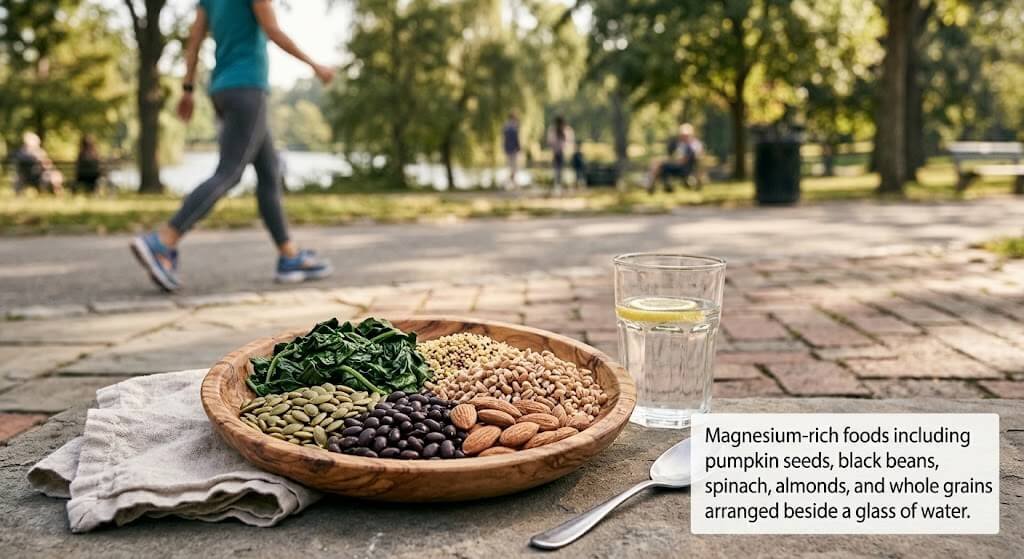
- Pumpkin seeds, chia seeds, and sesame seeds.
- Almonds, cashews, peanuts, and peanut butter.
- Black beans, kidney beans, chickpeas, edamame, and lentils.
- Spinach, Swiss chard, and other leafy greens.
- Oats, brown rice, quinoa, and other whole grains.
- Yogurt, soy foods, and some fortified foods.
The adult Recommended Dietary Allowance for magnesium varies by age and sex. The NIH lists 400 to 420 mg daily for adult men and 310 to 320 mg daily for adult women, with higher needs during pregnancy. Food intake and supplemental intake are not handled exactly the same way by the body, so do not assume you need a supplement simply because you do not track milligrams each day.
A simple meal-building approach
Use this template for most meals:
- Protein: poultry, fish, eggs, Greek yogurt, tofu, tempeh, beans, or lean meat.
- High-fiber carbohydrate: beans, oats, fruit, potatoes, whole grains, or lentils.
- Color and volume: non-starchy vegetables, especially leafy greens.
- Healthy fat: nuts, seeds, avocado, olive oil, or fatty fish.
For example, a lunch bowl with salmon, quinoa, black beans, spinach, roasted vegetables, and pumpkin seeds contains magnesium-rich foods while also providing protein and fiber. It is more useful than treating magnesium as a shortcut.
Adequate fiber can also support fullness and make nutrition changes easier to sustain. See the evidence on whether dietary fiber can help with appetite and weight management if hunger is one reason your eating plan keeps falling apart.
Which Magnesium Form Is Best for Insulin Sensitivity?
There is no proven “best” magnesium form for every person or a specific form guaranteed to improve insulin sensitivity. Research trials have used several forms, including magnesium citrate, oxide, chloride, lactate, and others.
The label should list elemental magnesium, which is the amount that counts toward your actual magnesium intake. A bottle may advertise a large number for a magnesium compound but provide a much smaller amount of elemental magnesium.
Common forms and practical considerations
| Form | Practical note | Best use case |
| Magnesium citrate | Often well absorbed but can loosen stools | People who tolerate it and may also deal with constipation |
| Magnesium glycinate | Often chosen for gentler stomach tolerance, though individual response varies | People sensitive to digestive side effects |
| Magnesium oxide | Contains a higher percentage of elemental magnesium but is generally less absorbable and may cause diarrhea | Use only with clinician guidance if it fits your needs |
| Magnesium chloride | Available in oral products and may be reasonably absorbed | An alternative if other forms do not suit you |
| Magnesium L-threonate | Heavily marketed for brain health, but not clearly superior for glucose control | Not a first-choice option specifically for insulin sensitivity |
Do not choose based on marketing claims such as “pharmaceutical grade,” “detox,” or “blood sugar miracle.” Look for a clearly labeled product, a sensible elemental-magnesium dose, third-party quality testing when available, and professional guidance if you have medical conditions or take prescriptions.
How much magnesium should you take for insulin resistance?
There is no universal dose for insulin resistance. Studies use different amounts, often in the range of a few hundred milligrams of elemental magnesium per day, but that does not make a study dose personally appropriate.
The NIH identifies a tolerable upper intake level of 350 mg per day from supplements and medications for adults. This upper limit does not include magnesium naturally found in food. Higher supplemental amounts may be used under medical supervision for specific reasons, but self-prescribing more is not better.
A cautious approach is to:
- Estimate your usual food intake before adding a pill.
- Review medications and kidney function with a clinician or pharmacist.
- Start with the lowest sensible dose if your clinician approves.
- Take it with food if it upsets your stomach.
- Watch for diarrhea, cramping, nausea, or unusual weakness.
Common Mistake: Taking several products that each contain magnesium—such as a multivitamin, sleep powder, electrolyte drink, and antacid—without adding the totals. Check every label. “Stacking” products is a common reason people get diarrhea or unintentionally take more than planned.
How Long Does Magnesium Take to Improve Insulin Sensitivity?
Do not expect a noticeable change overnight. Research interventions often last several weeks to a few months, and clinical markers such as A1c reflect longer-term glucose exposure. The National Institute of Diabetes and Digestive and Kidney Diseases explains that A1c generally reflects average blood glucose over roughly the prior 3 months.
If magnesium corrects a true deficiency, some symptoms linked to low intake may improve sooner, but blood sugar outcomes remain individual. Changes in food intake, exercise volume, body weight, sleep, medications, illness, and stress can all affect glucose readings at the same time.
If you and your clinician decide to try magnesium, use a clear review period. Keep training, meals, and medication routine as steady as possible, then discuss whether to reassess labs after an appropriate interval. Avoid changing five supplements at once because you will not know what caused a benefit or side effect.
A Practical Training Plan to Support Insulin Sensitivity
Magnesium may be supportive, but muscle contractions are powerful. This beginner-friendly plan combines resistance training and moderate aerobic work without requiring marathon sessions.
Talk with your doctor or physical therapist first if you have diabetes, neuropathy, heart disease, kidney disease, uncontrolled blood pressure, significant joint pain, or have been inactive for a long time. If you use insulin or medications that can cause low blood sugar, ask when to check glucose around exercise and whether food or medication changes are needed.
Weekly outline
| Day | Session | Time | Goal |
| Monday | Full-body strength workout | 35 to 45 minutes | Train major muscle groups |
| Tuesday | Brisk walk or stationary bike | 20 to 30 minutes | Easy-to-moderate aerobic base |
| Wednesday | Recovery walk and mobility | 10 to 20 minutes | Reduce prolonged sitting |
| Thursday | Full-body strength workout | 35 to 45 minutes | Build strength and muscle |
| Friday | Brisk walk, cycling, or rowing | 20 to 30 minutes | Add weekly activity |
| Saturday | Optional long walk, hike, or sport | 30 to 60 minutes | Move in an enjoyable way |
| Sunday | Rest or easy movement | As desired | Recover and prepare |

Full-body strength session
Warm up with 5 minutes of easy walking or cycling, then do 1 light practice set for each exercise. Choose a load that leaves about 2 to 3 good reps in reserve. In plain language: the final reps should feel challenging, but your technique should still look controlled.
| Exercise | Sets | Reps | Rest | Form focus |
| Goblet squat | 2 to 3 | 8 to 12 | 60 to 90 sec | Keep full foot pressure and knees tracking over toes |
| Dumbbell Romanian deadlift | 2 to 3 | 8 to 12 | 60 to 90 sec | Push hips back; keep dumbbells close to thighs |
| Incline push-up or dumbbell press | 2 to 3 | 8 to 12 | 60 to 90 sec | Keep ribs down and move with control |
| Seated cable row or band row | 2 to 3 | 10 to 15 | 60 sec | Pull elbows toward your back pockets |
| Step-up or split squat | 2 | 8 each side | 60 sec | Use a stable box or bench; drive through the whole foot |
| Farmer carry | 2 to 3 | 20 to 40 sec | 60 sec | Stand tall, brace gently, and walk slowly |
Use a controlled tempo: lower for about 2 seconds, pause briefly if needed, then stand or press smoothly. You should feel targeted muscles working—not sharp joint pain, dizziness, chest discomfort, or numbness.

Regression and progression options
Easier versions:
- Use a chair squat instead of a goblet squat.
- Perform incline push-ups with hands on a counter or sturdy bench.
- Use a resistance band row instead of a cable row.
- Hold one light dumbbell in a suitcase carry or skip carries initially.
- Walk on flat ground for 10 minutes rather than using intervals.
Harder versions:
- Add a third set before adding a lot of weight.
- Increase dumbbell load by the smallest available jump, such as 5 lb [2.3 kg] total.
- Progress from a chair squat to goblet squat, then to a front-loaded split squat.
- Use lower incline push-ups, then floor push-ups.
- Extend carries to 45 to 60 seconds with excellent posture.
- Add short intervals on a bike or treadmill only after you can handle steady work comfortably.
How to progress without burning out
Repeat the plan for 4 weeks. When you can complete the top end of a rep range on every set with clean form, increase the load slightly or add one or two reps next workout.
Do not chase failure on every set. Finishing with technical control makes it easier to train again consistently, and consistency is what builds muscle and improves aerobic capacity. Sleep supports recovery too; this overview of sleep and metabolism explains why short, disrupted sleep can make body-weight and appetite habits harder to manage.
Safety: Who Should Be Careful With Magnesium Supplements?
Magnesium from food is generally safe for most healthy people. Supplemental magnesium requires more care because concentrated doses can cause side effects and interact with medications.
Speak with a doctor or pharmacist before using magnesium if you:
- Have kidney disease or reduced kidney function.
- Take medications for diabetes, blood pressure, heart rhythm, thyroid disease, or osteoporosis.
- Use antibiotics such as tetracyclines or quinolones, because magnesium can reduce absorption when taken too close together.
- Take bisphosphonates, as timing may matter for absorption.
- Have ongoing diarrhea, inflammatory bowel disease, celiac disease, or other conditions that affect absorption.
- Are pregnant, breastfeeding, older with multiple medications, or managing a chronic medical condition.
Potential side effects include diarrhea, nausea, abdominal cramping, and, at excessive levels, more serious problems such as low blood pressure, weakness, or irregular heartbeat. The risk rises when kidneys cannot clear excess magnesium effectively.
Can you take magnesium with metformin?
Do not assume that a supplement is automatically compatible simply because it is sold over the counter. Metformin and magnesium may be used in the same person, but the right answer depends on kidney function, glucose management, other medications, your total magnesium intake, and why you want to take it.
A pharmacist is often an excellent resource for checking interactions and timing. Bring the actual bottle or a photo of the Supplement Facts panel. This is more reliable than relying on broad online advice.
Related Habits That Make Magnesium More Useful
Supplement decisions work better when they sit inside a realistic routine. Here are practical ways to make the foundation stronger.
Break up sitting time
Long sitting periods can crowd out movement even if you exercise a few times per week. Set a timer to stand, walk, climb stairs, or do a few bodyweight squats every 30 to 60 minutes when practical. The goal is not perfection; it is accumulating more muscle contractions across the day.
Prioritize protein and fiber
Protein helps preserve or build lean tissue when paired with resistance training. Fiber-rich foods can improve meal volume and support fullness, making it easier to follow your plan. This guide on protein intake and metabolism during weight loss offers more context if body composition is part of your goal.
Use post-meal movement
A 10- to 15-minute walk after meals is one of the lowest-barrier habits you can use. If outdoor walking is not practical in Buffalo weather, use a treadmill, walk laps indoors, climb stairs, or ride a stationary bike at a relaxed pace.
Avoid “metabolism booster” thinking
No capsule can replace training, food quality, and recovery. Be especially cautious with multi-ingredient products that promise fat loss, glucose control, appetite suppression, or extreme energy. Learn what to look for in a metabolism support supplement before adding products with long, unclear ingredient lists.

FAQ
Does magnesium supplementation improve insulin sensitivity in everyone?
No. Research suggests that people with low magnesium intake, insulin resistance, prediabetes, or type 2 diabetes may be more likely to benefit. People with adequate magnesium status and normal glucose control may see little or no change. A clinician can help determine whether supplementation is appropriate.
Does magnesium lower blood sugar?
Magnesium may modestly improve fasting blood glucose or insulin-resistance markers in some people, but it is not a reliable substitute for diabetes treatment. Food quality, physical activity, sleep, medication adherence, and regular monitoring remain more important for managing blood sugar.
How much magnesium should I take for insulin resistance?
There is no one correct dose. The adult upper limit for magnesium from supplements and medications is 350 mg daily unless a clinician advises otherwise. Dose decisions should consider diet, kidney function, medical history, medication interactions, and the elemental magnesium amount on the label.
Is magnesium glycinate good for prediabetes?
Magnesium glycinate may be a reasonable option for people who tolerate it well, especially if other forms cause digestive upset. However, no strong evidence proves that glycinate is uniquely better for prediabetes or insulin sensitivity than other well-absorbed forms of magnesium.
How long does magnesium take to improve insulin sensitivity?
If magnesium helps, changes in measured glucose or insulin-resistance markers are usually evaluated over weeks to months, not days. A1c reflects average glucose over about 3 months, so clinicians often use a longer review period while considering diet, training, medications, and adherence.
Does exercise improve insulin sensitivity more than supplements?
For most people, regular aerobic and resistance exercise is the higher-priority intervention. Working muscles take up glucose, and training builds capacity over time. Magnesium may support the plan if intake is low, but it does not replace walking, cycling, strength training, or prescribed medical care.
Conclusion: Does Magnesium Supplementation Improve Insulin Sensitivity?
Does magnesium supplementation improve insulin sensitivity? It may provide a modest benefit, especially for people with low magnesium status, prediabetes, insulin resistance, or type 2 diabetes. The research is promising but not universal, so think of magnesium as a possible supporting player—not the whole program.
Build your plan around resistance training, regular walks or cycling, fiber-rich meals, sufficient protein, and sleep. Then review your magnesium intake with a clinician or pharmacist, particularly if you take medication or have kidney concerns. That approach is safer, more sustainable, and more likely to improve metabolic health than chasing a single supplement.
This article is for general information and is not a substitute for advice from a doctor or physical therapist.