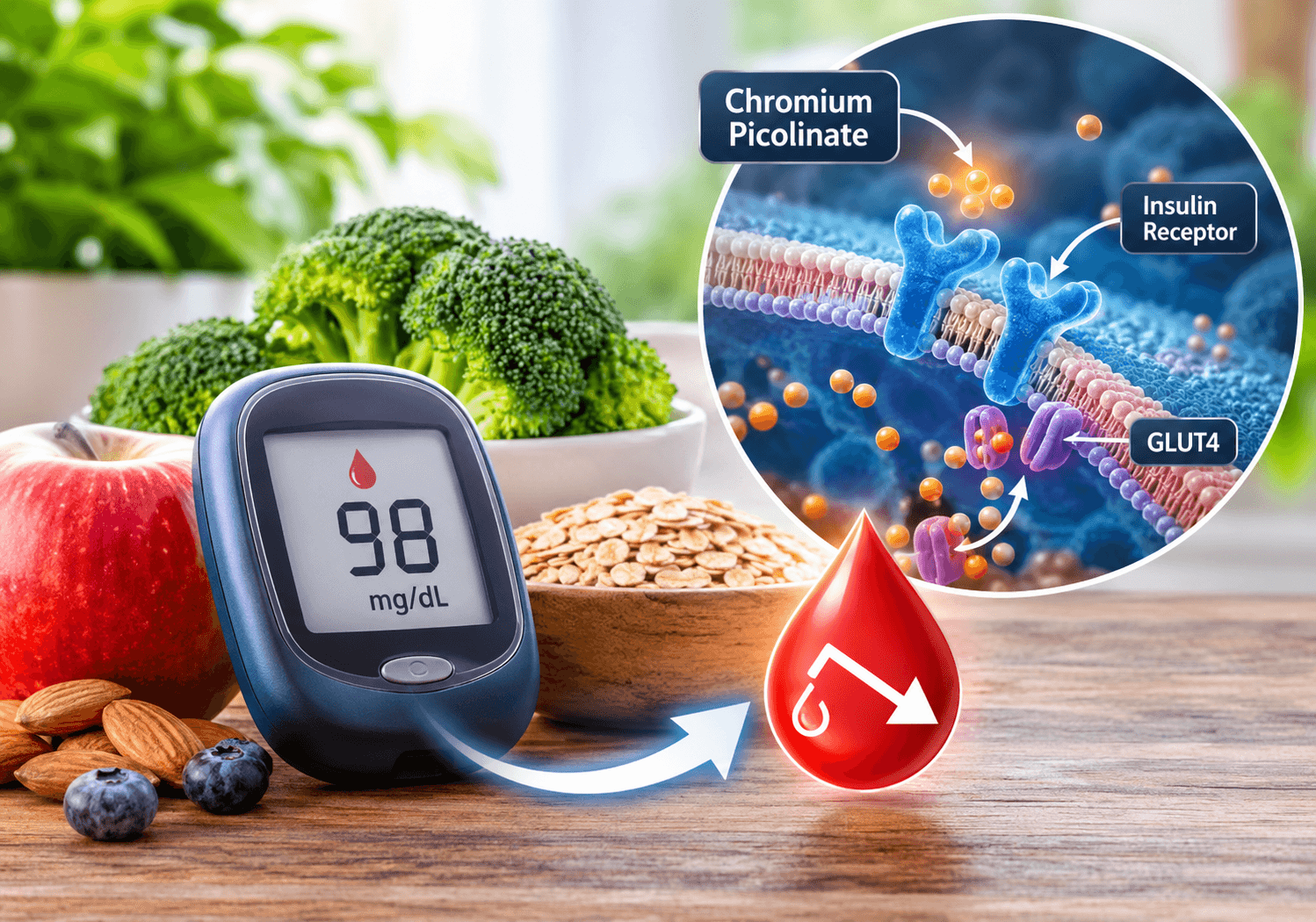
When clients step into my gym asking how to keep their energy steady and curb mid-afternoon energy slumps, blood sugar is usually at the center of the conversation. Many people turn to dietary supplements to keep their glucose levels stable. One supplement comes up more than almost any other: chromium picolinate. But when you ask, Chromium picolinate for blood sugar control: Does it work?, the answer requires a close look at human physiology, clinical trials, and real-world fitness habits.
As a strength and conditioning coach, I look at supplements through a simple lens: does the science back up the marketing claims, and how does it fit into a total training and nutrition routine? Chromium is an essential trace mineral that your body needs in tiny amounts. Supplement companies often market it as a simple fix for insulin resistance and carbohydrate cravings. In this guide, we will break down what chromium picolinate does inside your cells, examine what scientific studies reveal about its effect on glucose and HbA1c, and see how it compares to practical lifestyle habits like lifting weights and post-meal movement.
If you have underlying health conditions, talk with your doctor or physical therapist before starting any new supplement or heavy exercise program.
Quick Answer Box
Does chromium picolinate work for blood sugar control? Research shows that chromium picolinate can modestly lower fasting blood glucose and HbA1c in people with chromium deficiency or type 2 diabetes. However, for healthy individuals with normal chromium levels, its effects are minimal. Physical exercise and a high-protein, high-fiber diet remain far more effective for long-term glucose management.
What Is Chromium Picolinate and How Does It Work in Your Body?
Chromium is an essential trace element naturally present in foods like broccoli, whole grains, nuts, and lean meats. Your body only needs tiny amounts—typically between 25 and 35 micrograms per day for adults, according to the National Institutes of Health Office of Dietary Supplements.
Raw chromium is poorly absorbed by the human digestive system. To fix this, supplement manufacturers combine chromium with picolinic acid. This process creates chromium picolinate, a organic complex that passes through the intestinal wall much more easily than elemental chromium or inorganic chromium salts like chromium chloride.
Inside your bloodstream, chromium plays an interesting helper role in carbohydrate metabolism:
- Chromodulin Binding: Chromium binds to a small oligopeptide inside cells called chromodulin.
- Insulin Receptor Activation: When insulin attaches to insulin receptors on cell membranes, chromodulin binds to the inner side of the receptor. This boosts the receptor’s enzyme activity (tyrosine kinase).
- GLUT4 Translocation: This enzyme cascade signals glucose transporter 4 (GLUT4) proteins to move from inside the cell to the cell surface.
- Glucose Clearance: GLUT4 acts as a doorway, pulling glucose out of the bloodstream and into skeletal muscle cells to be used for energy or stored as muscle glycogen.
Without enough functional chromium, your insulin receptors work less efficiently. This means your pancreas has to produce more insulin to move the same amount of glucose out of your blood. Over time, this state of elevated insulin and sluggish cell response leads to insulin resistance.

Chromium Picolinate for Blood Sugar Control: Does It Work? What Science Says
To evaluate whether chromium picolinate for blood sugar control: does it work in clinical settings, we must look at peer-reviewed human trials. Supplement labels often promise dramatic changes in blood sugar, but scientific findings depend heavily on an individual’s baseline health status.
1. Fasting Blood Glucose (FBG)
In individuals diagnosed with type 2 diabetes or severe insulin resistance, chromium picolinate supplementation often yields measurable improvements. A systematic review published in PubMed / Diabetes Care analyzed multiple clinical trials and found that chromium supplementation (ranging from 200 to 1,000 mcg per day) led to significant reductions in fasting glucose levels among diabetic subjects.
However, in healthy adults without diabetes or metabolic syndrome, the effect on fasting glucose is very small. If your baseline fasting blood sugar is already optimal (under 100 mg/dL), taking extra chromium picolinate will not pull it down further. Your body simply excretes the excess mineral in your urine.
2. HbA1c (Glycated Hemoglobin)
HbA1c measures your average blood glucose levels over the past two to three months. Clinical trials show that high-dose chromium picolinate (typically 500 to 1,000 mcg daily) can lower HbA1c by approximately 0.5% to 0.9% in individuals with elevated glycemic markers, as demonstrated in meta-analyses cited by the NIH. While a 0.5% drop is clinically relevant for managing type 2 diabetes, it is rarely enough on its own to replace medical therapy or comprehensive diet changes.
3. Insulin Sensitivity and HOMA-IR
Insulin sensitivity refers to how responsive your cells are to insulin. The Homeostatic Model Assessment for Insulin Resistance (HOMA-IR) is a common metric used by doctors to calculate this response. Research suggests chromium picolinate helps reduce HOMA-IR scores primarily in people who do not get enough chromium in their standard diet or who have impaired glucose tolerance.
Many adults who suspect they need a supplement for blood sugar actually suffer from poor sleep, high daily stress, or an inactive lifestyle. If you want to dive deeper into how lifestyle choices influence your glycemic health, read our guide on how to boost metabolic flexibility through smart habits.
| Health Status | Effect on Fasting Glucose | Effect on HbA1c | Impact on Insulin Sensitivity |
| Type 2 Diabetes | Moderate Reduction (10-25 mg/dL) | Modest Reduction (0.5% – 0.9%) | Meaningful Improvement |
| Impaired Glucose Tolerance (Pre-diabetes) | Slight Reduction (5-10 mg/dL) | Minor Reduction (0.2% – 0.4%) | Moderate Improvement |
| Healthy / Active Adults | No Significant Change | No Significant Change | Minimal / Unchanged |

Exercise vs. Chromium Picolinate for Blood Sugar Control
As a strength coach, I always remind my clients that no pill can replace muscle contractions when it comes to clearing glucose. While chromium picolinate acts as a biochemical helper for the insulin receptor, muscle contraction works through an entirely separate, non-insulin-dependent pathway.
When you lift weights or do moderate cardio, your muscles contract and activate an enzyme called AMP-activated protein kinase (AMPK). AMPK forces GLUT4 storage vesicles to travel straight to the cell membrane without needing insulin at all, a process thoroughly detailed in a study on exercise-induced GLUT4 translocation in PubMed.
This means physical exercise clears sugar out of your bloodstream even if your cells are currently resistant to insulin.
The Ultimate Glucose-Clearing Workout Routine
Here is a practical, 4-day resistance training program designed to build lean muscle mass, maximize glycogen storage capacity, and increase insulin sensitivity. Muscle tissue acts as a giant sink for blood sugar. The more lean muscle you carry, the more room you have to store carbohydrates safely as glycogen.
Weekly Schedule Overview
- Monday: Lower Body Strength & Glycogen Depletion
- Tuesday: Upper Body Push/Pull & Core
- Wednesday: Active Recovery (Post-Meal Walking)
- Thursday: Full Body Metabolic Conditioning
- Friday: Upper Body Hypertrophy
- Saturday/Sunday: Rest & Outdoor Mobility
Detailed Exercise Routine Table
| Exercise | Sets | Reps | Rest | Focus & Form Cues |
| Goblet Squat | 4 | 8-10 | 90 sec | Keep chest up, push knees outward, lower to parallel. |
| Dumbbell Romanian Deadlift | 4 | 10-12 | 90 sec | Hinge at hips, maintain flat back, feel hamstring stretch. |
| Dumbbell Incline Bench Press | 3 | 10-12 | 60 sec | Press weight overhead smoothly, lower with 3-second tempo. |
| Lat Pulldown or Cable Row | 3 | 12-15 | 60 sec | Pull handles to upper chest, squeeze shoulder blades back. |
| Post-Workout Zone 2 Treadmill Walk | 1 | 20 min | N/A | Maintain brisk pace where you can comfortably talk. |

Exercise Cues and Form Mechanics
- Goblet Squat:
- Setup: Hold a single dumbbell or kettlebell vertically against your chest, cupping the top head of the weight with both hands. Stand with feet slightly wider than shoulder-width, toes turned out 15 degrees.
- Execution: Sit your hips down and back between your ankles while pushing your knees outward over your second toe. Descend until your thighs are parallel to the floor (or as low as good back posture allows). Drive firmly through your mid-foot and heel to return to standing.
- Regression: Box Squat (sit down onto a 16-inch [40 cm] bench or sturdy chair and stand back up).
- Progression: Barbell Back Squat using 70% of your 1-rep maximum.
- Dumbbell Romanian Deadlift (RDL):
- Setup: Hold two dumbbells at arm’s length in front of your thighs with a neutral grip. Stand with feet hip-width apart and knees slightly unlocked (soft knees).
- Execution: Push your hips back toward the wall behind you while keeping the dumbbells close to your shins. Maintain a long, flat spine. Lower the weights until you feel a stretch in your hamstrings (usually mid-shin level). Contract your glutes to pull your torso upright.
- Regression: Bodyweight Good Mornings with hands behind head.
- Progression: Barbell Romanian Deadlift using a 50 lb [22.5 kg] to 135 lb [61 kg] load based on strength level.
Coach’s Tip
“To maximize blood glucose clearance after eating, do not sit on the couch immediately after dinner. A simple 10-to-15-minute post-meal walk at 2.5 miles per hour [4.0 km/h] acts as a natural glucose sponge. Your leg muscles clear blood sugar directly through contraction, preventing high post-meal glucose spikes without placing extra strain on your pancreas.”
Common Mistake
Relying on supplements while ignoring strength training. Many clients purchase chromium picolinate expecting it to fix high blood sugar while maintaining a inactive lifestyle. Supplements offer minor refinements at best; resistance training builds the physical muscle tissue needed to store and utilize circulating glucose.

Chromium Supplement Comparison: Forms, Bioavailability, and Efficacy
Not all chromium supplements perform equally. When browsing store shelves, you will notice several chemical formulations. Selecting the best form of chromium for glucose control comes down to molecular absorption rates and biological bioavailability.
1. Chromium Picolinate
- Absorption Rate: Estimated at 2% to 5%, which is significantly higher than inorganic forms.
- Best For: Individuals looking for the most extensively researched form for insulin sensitivity and appetite management.
- Pros: Backed by hundreds of published clinical trials; highly stable compound.
- Cons: Picolinic acid in excessive doses can accumulate in cell membranes, requiring strict adherence to dosage guidelines.
2. Chromium Polynicotinate (Niacin-Bound)
- Absorption Rate: Comparable to picolinate.
- Best For: Combining chromium benefit with lipid profile support.
- Pros: Bound to vitamin B3 (niacin), which naturally supports vascular health.
- Cons: Fewer human clinical trials focusing specifically on glycemic markers compared to picolinate.
3. Chromium Chloride
- Absorption Rate: Extremely poor (often under 0.5%).
- Best For: Cheap multivitamin formulas.
- Pros: Very low cost to produce.
- Cons: Mostly passes right through the digestive tract unabsorbed; minimal physiological impact.
4. Glucose Tolerance Factor (GTF) Chromium
- Absorption Rate: Moderate to high.
- Best For: Natural food-derived supplementation (often bound with brewer’s yeast).
- Pros: Mimics the natural structure found in whole food matrices.
- Cons: Potential allergen issues for individuals sensitive to yeast.
| Form of Chromium | Chemical Binding Partner | Bioavailability | Primary Clinical Use | Relative Cost |
| Chromium Picolinate | Picolinic Acid | High | Glucose clearance, insulin sensitivity | Moderate |
| Chromium Polynicotinate | Niacin (Vitamin B3) | High | Cholesterol & lipid management | Moderate |
| Chromium Chloride | Inorganic Salt | Very Low | Cheap general multivitamins | Low |
| GTF Chromium | Amino Acids / Yeast | Moderate-High | General metabolic health | High |
How to Use Chromium Picolinate Safely: Dosage, Timing, and Stacking
If you choose to use chromium picolinate after speaking with your healthcare provider, doing so correctly ensures safety while maximizing potential benefits.
Recommended Dosage Guidelines
- Standard Daily Maintenance: 200 micrograms (mcg) per day. This amount safely fills dietary gaps for most adults.
- Clinical Target for Glycemic Support: 400 to 1,000 mcg per day, typically divided into two equal doses (e.g., 200 mcg twice daily or 500 mcg twice daily). The Harvard Health Publishing library notes that doses up to 1,000 mcg have been evaluated in diabetic clinical trials without acute toxicity.
Optimal Timing
Take chromium picolinate approximately 15 to 30 minutes before your highest-carbohydrate meals of the day (typically breakfast or dinner). This timing allows the supplement to reach peak systemic availability right as glucose enters your bloodstream.
Strategic Supplement Stacking
Chromium picolinate works well alongside other evidence-based dietary options that support metabolic health:
- Berberine: Helps activate the AMPK pathway in liver and muscle cells. If you want to learn more about this compound, read our detailed analysis on how berberine affects appetite and weight management.
- Soluble Fiber: Taking psyllium husk or glucomannan alongside a balanced meal slows stomach emptying, preventing rapid glucose spikes.
- Cinnamon Extract: Works directly on cell membrane receptors to support healthy fasting glucose levels.
For individuals working to optimize their daily food choices and reduce sugar intake, exploring how to stop sugar cravings naturally provides actionable dietary frameworks that build healthy long-term habits.

Potential Side Effects, Drug Interactions, and Safety Precautions
While chromium is a naturally occurring mineral, high doses of chromium picolinate are not suitable for everyone. Understanding potential risks protects your kidney and liver function while avoiding unexpected side effects.
Common Side Effects
When taken within standard doses (200 mcg to 500 mcg daily), side effects are rare. However, higher dosages (over 1,000 mcg per day) may trigger:
- Mild headaches or dizziness
- Mood fluctuations or irritability
- Gastrointestinal distress (nausea, mild stomach cramping)
- Skin rashes or localized hives
Severe Risks and Organ Health
Extremely high doses over extended periods have been linked in isolated case reports to renal (kidney) damage and hepatic (liver) toxicity. Your kidneys clear excess chromium through urine. Overloading your body with megadoses places unnecessary stress on renal filtration systems.
Drug Interactions
Always consult a physician before using chromium picolinate if you take any of the following medications:
- Insulin and Oral Diabetes Medications: Combining chromium picolinate with drugs like metformin, glipizide, or injected insulin can cause blood glucose levels to drop too low, a dangerous condition called hypoglycemia.
- Thyroid Medications (Levothyroxine): Chromium can inhibit the absorption of synthetic thyroid hormones in the digestive tract. Space these medications apart by at least 4 hours.
- Nonsteroidal Anti-inflammatory Drugs (NSAIDs): Medications like ibuprofen, naproxen, or aspirin can raise chromium concentrations in your blood, increasing the risk of adverse side effects.
- Antacids and Proton Pump Inhibitors: Altering stomach acid levels can reduce how much chromium your body absorbs.
Lifestyle Tactics to Maximize Glucose Control Without Relying on Pills
Supplements should only support a strong baseline of healthy daily habits. If your nutrition, sleep, and activity habits are disorganized, chromium picolinate for blood sugar control will not deliver the results you want. Focus on these foundational lifestyle principles first:
1. Smart Food Sequencing
The order in which you eat your food alters post-meal glucose spikes. Eating fiber and lean protein before starchy carbohydrates slows down stomach emptying and delays glucose entry into your bloodstream.
- Step 1: Start your meal with leafy greens, vegetables, or a fiber source.
- Step 2: Eat your lean protein (chicken breast, beef, fish, or tofu).
- Step 3: Finish with your complex carbohydrates (rice, potatoes, oats, or fruit).
2. Prioritize Sleep Quality and Recovery
Poor sleep directly impairs insulin sensitivity. A single night of four-hour sleep reduces insulin responsiveness in muscle cells, causing higher morning blood glucose levels. Aim for 7 to 9 hours of quality sleep every night. If you suspect your rest is affecting your energy levels and hunger signals, read our breakdown of how sleep affects metabolism.
3. Build Protein-Dense Meals
Protein stimulates the release of fullness hormones like glucagon-like peptide-1 (GLP-1) and peptide YY (PYY) while having a minimal impact on circulating blood sugar. Ensure every main meal contains at least 30 to 40 grams of high-quality protein. Check out our guide on how to control hunger during weight loss for practical meal frameworks.
Frequently Asked Questions (FAQ)
Does chromium picolinate lower fasting blood sugar quickly?
No, chromium picolinate does not lower fasting blood sugar rapidly like prescription medication. It works gradually over weeks by helping your insulin receptors function more effectively. Most clinical trials observe measurable changes in fasting glucose after 8 to 12 weeks of daily, consistent use.
How much chromium picolinate should I take for insulin resistance?
Clinical studies investigating insulin resistance typically use doses between 400 mcg and 1,000 mcg per day, divided into two doses taken with meals. However, you should start with a lower dose of 200 mcg daily to assess tolerance and speak with your doctor before taking higher amounts.
What is the difference between chromium picolinate and chromium polynicotinate?
The key difference is the molecule bound to the mineral. Chromium picolinate binds chromium to picolinic acid, while chromium polynicotinate binds chromium to niacin (Vitamin B3). Both forms offer high intestinal absorption, but picolinate has significantly more clinical research supporting its role in glycemic control.
Can you take chromium picolinate with metformin or insulin?
You should only take chromium picolinate alongside metformin or insulin under direct medical supervision. Because both the supplement and prescription medications lower blood glucose, combining them increases your risk of developing hypoglycemia (dangerously low blood sugar).
Does physical exercise work better than chromium picolinate for glucose control?
Yes, physical exercise is significantly more powerful than chromium picolinate. Muscle contraction moves glucose transporters (GLUT4) to cell membranes independently of insulin, clearing circulating sugar immediately. Exercise also increases overall muscle mass, expanding your body’s long-term glucose storage capacity.
Is chromium picolinate safe for long-term blood sugar management?
Chromium picolinate is generally considered safe for long-term use at doses up to 200 mcg per day in healthy adults. However, taking high doses (over 1,000 mcg daily) long-term is not recommended, as excess chromium can accumulate in organs and potentially cause kidney or liver stress.
Conclusion: Does Chromium Picolinate Work for Blood Sugar Control?
When asking, chromium picolinate for blood sugar control: does it work?, the scientific answer depends on your starting point:
- For individuals with type 2 diabetes or a chromium deficiency: Research shows that chromium picolinate can provide modest, meaningful benefits by lowering fasting blood sugar and reducing HbA1c levels over time.
- For healthy, active adults: Chromium picolinate provides little to no noticeable impact on blood sugar levels, as normal insulin receptors are already operating efficiently.
As a strength and conditioning coach, my advice is clear: view chromium picolinate as a small secondary tool rather than a primary strategy. Focus first on heavy progressive resistance training, daily post-meal movement, solid sleep habits, and a high-protein diet rich in dietary fiber. When built on top of these strong fundamentals, appropriate supplementation can support your metabolic goals safely.
If you are exploring other options to support your metabolic health, read our coach’s guide on supplements to improve insulin sensitivity or learn how berberine for metabolic health compares to popular blood sugar compounds.