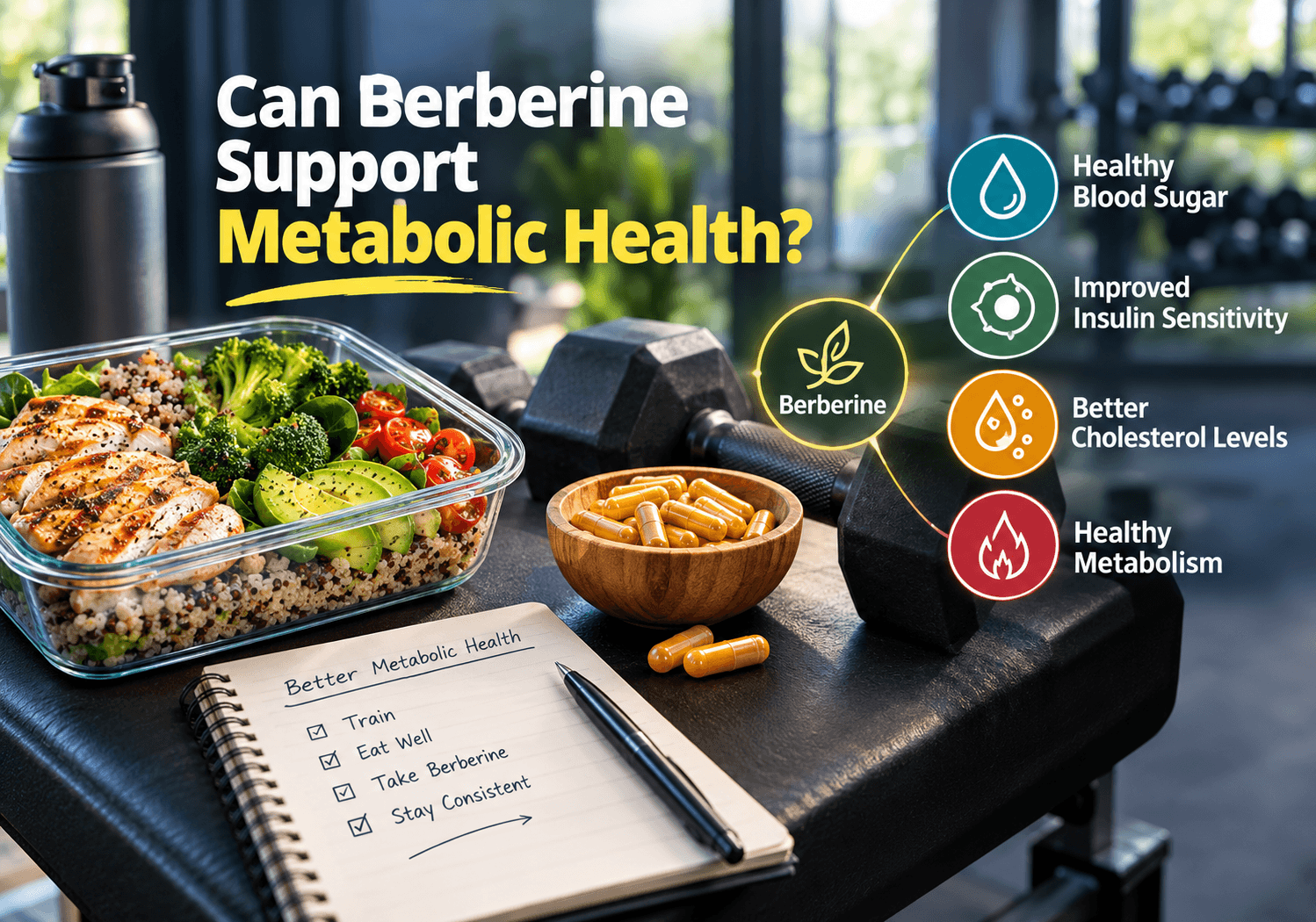
Metabolic health is the absolute foundation of sustainable energy, favorable body composition, and long-term wellness. As a certified strength and conditioning coach, I frequently field questions from clients over 40 who are doing everything right in the gym but still struggle with stubborn belly fat, afternoon energy crashes, and sluggish recovery. Often, the missing link is cellular-level glucose management. This brings us to a critical, evidence-based question: can berberine support metabolic health? The short answer is yes. Extensive clinical research suggests it is one of the most effective natural compounds for improving insulin sensitivity and glycemic control. In this comprehensive guide, we will break down the clinical evidence, practical dosing strategies, and exactly how to pair this supplement with your training for optimal, sustainable results.
Quick Answer
Yes, berberine can support metabolic health. Clinical research indicates that berberine activates AMPK, a master metabolic regulator, leading to improved insulin sensitivity, lower fasting blood glucose, and better lipid profiles. For best results, take 500 mg, two to three times daily, alongside carbohydrate-containing meals and a consistent resistance training program.
Can Berberine Support Metabolic Health? The Clinical Evidence
Berberine is a bioactive, isoquinoline alkaloid compound extracted from several plants, including goldenseal, barberry, tree turmeric, and Oregon grape. Unlike many trendy, under-researched fitness supplements, berberine has a robust, decades-long body of clinical research backing its metabolic benefits. Its primary mechanism of action involves the activation of AMP-activated protein kinase (AMPK). Often referred to by researchers as the body’s “metabolic master switch,” AMPK regulates how cells produce, store, and use energy.
When AMPK is activated, it mimics some of the profound metabolic effects of both exercise and fasting. A landmark randomized controlled trial published in the journal Metabolism demonstrated that berberine’s glucose-lowering effects were clinically comparable to metformin, a first-line pharmaceutical intervention for type 2 diabetes
pmc.ncbi.nlm.nih.gov
. In this specific study, patients taking berberine experienced a significant reduction in hemoglobin A1c (HbA1c) by approximately 2%, alongside notable, statistically significant decreases in both fasting and postprandial (after-meal) blood glucose levels.
Furthermore, a comprehensive systematic review and meta-analysis confirmed that berberine supplementation significantly improves multiple interconnected metabolic markers across diverse patient populations
pmc.ncbi.nlm.nih.gov
. The analysis showed standardized mean differences indicating reliable reductions in fasting plasma glucose, triglycerides, total cholesterol, and low-density lipoprotein (LDL), while simultaneously increasing high-density lipoprotein (HDL). The review also highlighted a significant reduction in HOMA-IR scores, which is a primary clinical marker used to quantify insulin resistance.
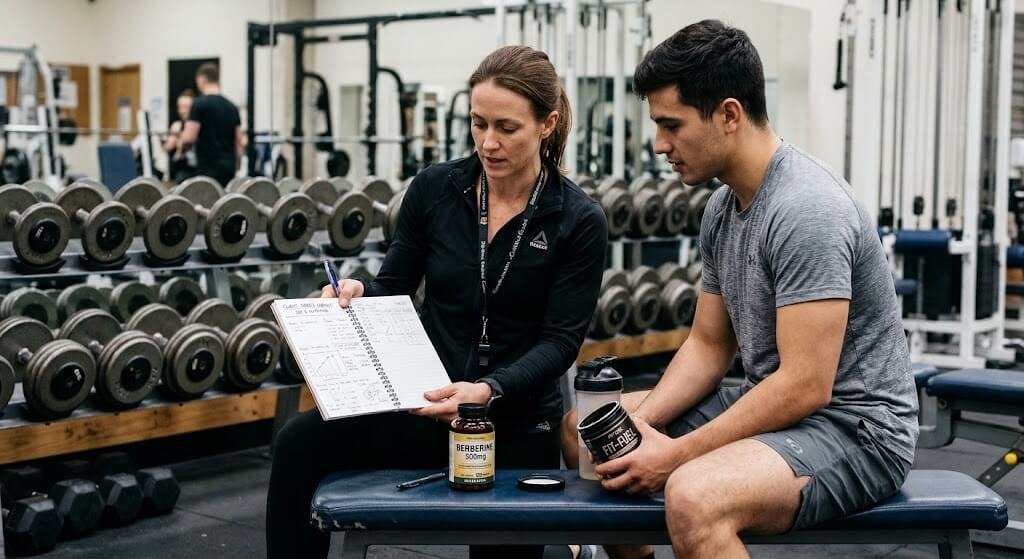
It is also fascinating to note that berberine is poorly absorbed in the upper gastrointestinal tract. While this sounds like a negative, it is actually a key part of its efficacy. Because it remains in the gut, it positively alters the gut microbiome, increasing the production of short-chain fatty acids like butyrate. These fatty acids further improve metabolic health by reducing systemic inflammation and enhancing gut barrier integrity.
However, it is crucial to understand that berberine is not a magic pill. Its efficacy is maximized only when combined with foundational lifestyle interventions, such as progressive resistance training and a nutrient-dense, whole-food diet. While it can be a powerful tool in your arsenal, it should always be viewed as an accelerator for healthy habits, never as a replacement for them.
Table: Berberine’s Impact on Key Metabolic Markers
| Metabolic Marker | Observed Effect of Berberine | Clinical Significance for Fitness & Health |
| Fasting Blood Glucose | Decreased | Reduces baseline sugar levels, lowering the risk of prediabetes progression. |
| Hemoglobin A1c (HbA1c) | Decreased (~1–2%) | Indicates improved long-term (3-month average) glycemic control. |
| HOMA-IR (Insulin Resistance) | Decreased (~45–50%) | Shows that muscle and liver cells are responding more efficiently to insulin. |
| Triglycerides | Decreased | Lowers circulating fats, reducing cardiovascular strain and visceral fat storage. |
| LDL Cholesterol | Decreased | Reduces “bad” cholesterol buildup in arterial walls. |
| HDL Cholesterol | Increased | Boosts “good” cholesterol, aiding in systemic lipid clearance and vascular health. |
Data synthesized from clinical trials and meta-analyses on berberine supplementation
pmc.ncbi.nlm.nih.gov
,
pmc.ncbi.nlm.nih.gov
.

How to Apply It: Can Berberine Support Metabolic Health in Your Daily Routine?
Knowing the underlying science is only half the battle; applying it correctly in your daily routine is what yields tangible, measurable results. If you and your healthcare provider decide berberine is appropriate for your metabolic health protocol, here is the evidence-based, coach-approved approach to using it effectively.
1. Optimal Dosage Parameters
The most extensively studied and clinically effective dosage for metabolic support is 500 mg, taken two to three times per day, totaling 1,000 to 1,500 mg daily. Because berberine has a relatively short half-life in the human body (only a few hours), splitting the total daily dose is absolutely crucial for maintaining stable, therapeutic blood levels throughout the day. Do not attempt to take 1,500 mg all at once, as this will almost certainly cause gastrointestinal distress without providing additional metabolic benefits.
2. Strategic Timing Around Meals
Take your berberine supplement 15 to 30 minutes before your largest carbohydrate-containing meals. This specific timing allows the compound to be fully active in your digestive system and bloodstream just as dietary glucose begins to enter your system. This helps to blunt the post-meal blood sugar spike, preventing the subsequent insulin surge that promotes fat storage and afternoon lethargy.
3. Cycle Duration and Protocol
Clinical trials typically run for 3 months (12 weeks) to observe significant, lasting changes in HbA1c and lipid profiles. It is generally recommended by functional medicine practitioners to take berberine for 8 to 12 weeks, followed by a 2 to 4-week break. This cycling strategy helps prevent potential downregulation of cellular AMPK receptors and gives your gut microbiome a chance to reset and maintain its natural diversity.
Coach’s Tip:
“Pair your berberine dose with your most carb-heavy meal of the day, which for most of my clients is dinner. If you train in the evening, taking it before your post-workout meal can actually help shuttle those dietary carbohydrates directly into muscle glycogen stores for recovery, rather than allowing them to be stored as adipose tissue.”
Common Mistake:
“Taking berberine on a completely empty stomach or right before a fasted cardio session. This can cause unnecessary gastrointestinal distress (cramping or nausea) and, in some sensitive individuals, lead to mild hypoglycemia (low blood sugar), making your workout feel sluggish, shaky, and dizzy.”

Synergy with Training and Diet for Maximum Results
Supplements work best when they amplify a solid, consistent foundation. As a coach, I design training programs that make compounds like berberine work exponentially harder for the client. Resistance training is one of the most potent, natural activators of AMPK and glucose transporter type 4 (GLUT4) translocation. When you contract your muscles, they demand glucose, pulling it from the bloodstream independently of insulin. Here is how to structure your week for maximum metabolic benefit.
The Metabolic Health Workout Routine
Aim for 3 to 4 full-body strength sessions per week. Focus on compound movements that recruit the largest muscle groups, as these demand the most glucose uptake.
- Goblet Squats: 3 sets of 10–12 reps. Rest 90 seconds. Hold a 35 lb (16 kg) kettlebell or dumbbell tightly at chest height. Keep your torso upright, brace your core, and sink your hips down and back. This large lower-body movement demands significant glucose uptake from the quadriceps and glutes.
- Dumbbell Romanian Deadlifts (RDLs): 3 sets of 10–12 reps. Rest 90 seconds. Use two 40 lb (18 kg) dumbbells. Hinge strictly at the hips, keeping a slight, fixed bend in the knees, and feel the deep stretch in your hamstrings. This targets the posterior chain, a major metabolic sink for glucose.
- Incline Dumbbell Press: 3 sets of 8–10 reps. Rest 90 seconds. Use 50 lb (22.5 kg) dumbbells. Control the eccentric (lowering) phase for a full 2 seconds to maximize muscle fiber recruitment and time under tension in the chest and shoulders.
- Seated Cable Rows: 3 sets of 10–12 reps. Rest 60 seconds. Focus on squeezing your shoulder blades together at the peak of the movement for a 1-second pause. This builds postural strength and engages the large muscles of the back.
Cardiovascular Support and Circulation
In addition to lifting weights, incorporate 150 minutes of moderate-intensity steady-state (MISS) cardio per week, as recommended by the CDC physical activity guidelines. This could be brisk walking for 2.5 miles (4 km) or cycling at a conversational pace. Improving your cardiovascular efficiency directly supports systemic circulation. This enhanced blood flow is vital, much like how L-citrulline helps produce nitric oxide for better vascular function and nutrient delivery to working muscles.
Nutritional Timing and Recovery
Consume 20–30 grams of high-quality protein within 2 hours post-workout. Pair this with complex carbohydrates (like 1 cup of cooked sweet potatoes or oats) to replenish muscle glycogen. The combination of resistance training, strategic carbohydrate intake, and berberine creates a powerful, synergistic environment for metabolic flexibility, teaching your body to efficiently switch between burning fat and burning glucose for fuel.
Safety Notes and Who Should Be Careful
While berberine is generally well-tolerated and has a strong safety profile in clinical trials, it is a highly potent bioactive compound and requires respect. It is not a benign herb; it acts like a pharmaceutical drug in the body.
Gastrointestinal Side Effects
The most common complaint is mild gastrointestinal distress, including cramping, diarrhea, constipation, or flatulence. This occurs in roughly 20–30% of users, especially when starting at the full 1,500 mg daily dose immediately. Starting with just 500 mg once daily and gradually increasing the dose over two weeks can almost entirely mitigate this issue.
Medication Interactions
Berberine can interact with medications metabolized by the liver, specifically via the cytochrome P450 (CYP450) enzyme system, potentially altering the blood levels of other drugs. More importantly, because it actively lowers blood sugar, combining it with prescription diabetes medications (like metformin, sulfonylureas, or insulin) can cause blood glucose to drop too low (hypoglycemia).
Who Should Avoid It Entirely:
- Pregnant or breastfeeding women: Berberine can cross the placenta and has been shown in animal studies to potentially cause kernicterus (a type of brain damage) in newborns.
- Individuals with severe liver or kidney disease: Always consult a specialist, as compromised organs may struggle to process the compound.
- Anyone currently taking immunosuppressants or cyclosporine: Berberine may interfere with the efficacy of these critical medications.
Always consult your primary care physician or a registered dietitian before adding berberine to your regimen, especially if you have a pre-existing medical condition or take daily prescriptions.
Related Tips for Comprehensive Metabolic Support
Metabolic health is a multi-system puzzle. While berberine directly addresses glucose and lipids, other foundational elements must be in place to achieve lasting transformation.
First, carefully consider your micronutrient intake. Minerals such as chromium picolinate support glucose metabolism and are often safely stacked with berberine to enhance insulin signaling pathways at the cellular receptor level. Similarly, for women dealing with Polycystic Ovary Syndrome (PCOS) or generalized insulin resistance, compounds like inositol have shown strong clinical promise in improving insulin sensitivity, particularly in specific myo-inositol to D-chiro-inositol ratios.
Second, do not ignore your vascular health. Metabolic syndrome is a primary, silent driver of endothelial dysfunction and arterial stiffness. Addressing these root metabolic causes can prevent downstream issues related to what causes poor blood circulation in men, such as cold extremities, chronic fatigue, and reduced exercise capacity. By maintaining healthy glucose and lipid levels, you directly protect your arterial lining. This, in turn, supports long-term blood vessel health and erectile function, as vascular health is deeply interconnected. Furthermore, the well-documented nitric oxide benefits for men’s health, blood flow, and more are closely tied to keeping your metabolic markers in check, as chronically high blood sugar actively degrades the body’s natural nitric oxide production.

Frequently Asked Questions (FAQ)
1. How long does it take for berberine to lower blood sugar?
Most clinical studies show measurable improvements in fasting blood glucose within 1 to 2 weeks of consistent, daily supplementation. However, significant, lasting changes in HbA1c, which reflects a 3-month average, typically require 8 to 12 weeks of uninterrupted daily use.
2. Can berberine replace metformin for blood sugar control?
While some studies show berberine’s efficacy is comparable to metformin, you should never replace a prescribed medication with a dietary supplement without explicit, direct guidance from your doctor. Berberine can be used as a complementary therapy, but abrupt changes to prescription regimens are medically dangerous.
3. What are the most common side effects of taking berberine?
The most frequently reported side effects are gastrointestinal, including mild diarrhea, constipation, flatulence, or stomach cramping. These symptoms usually subside quickly if you lower the dose or ensure you take the supplement with a larger, fiber-rich meal.
4. Does berberine help with weight loss and belly fat?
Berberine is not a direct thermogenic fat burner. However, by improving insulin sensitivity and reducing severe blood sugar spikes, it can help reduce overall fat storage, particularly visceral belly fat. Clinical studies note modest weight loss (around 2–5 lbs or 1–2.5 kg) over 3 months when combined with a caloric deficit.
5. Can I take berberine with other diabetes medications?
You must consult your doctor before combining berberine with prescription diabetes drugs. Because both substances actively lower blood glucose, using them together increases the risk of hypoglycemia (dangerously low blood sugar), requiring careful medical monitoring and potential prescription dosage adjustments.
6. Is berberine safe for long-term metabolic support?
Long-term safety data beyond 6 months is currently limited in human trials. Most functional medicine practitioners recommend cycling berberine (e.g., 3 months on, 1 month off) to prevent potential gut microbiome disruption and ensure the body remains highly responsive to its AMPK-activating effects.
Conclusion
So, can berberine support metabolic health? The clinical evidence is clear and compelling: yes, it is a highly effective, research-backed compound for improving insulin sensitivity, lowering blood glucose, and optimizing lipid profiles. However, it is not a standalone cure or a substitute for hard work. Its true, transformative power is unlocked only when it is used strategically—taken before carb-heavy meals, paired with a consistent, progressive resistance training program, and supported by a nutrient-dense, whole-food diet.
If you are struggling with energy crashes, stubborn weight gain, or poor workout recovery, optimizing your metabolic health is the critical first step. Talk to your healthcare provider about whether berberine is right for your specific physiology, and pair it with the foundational training principles outlined in this guide. Remember, supplements are merely the final 5% of the puzzle; the other 95% is built consistently in the kitchen and the gym.