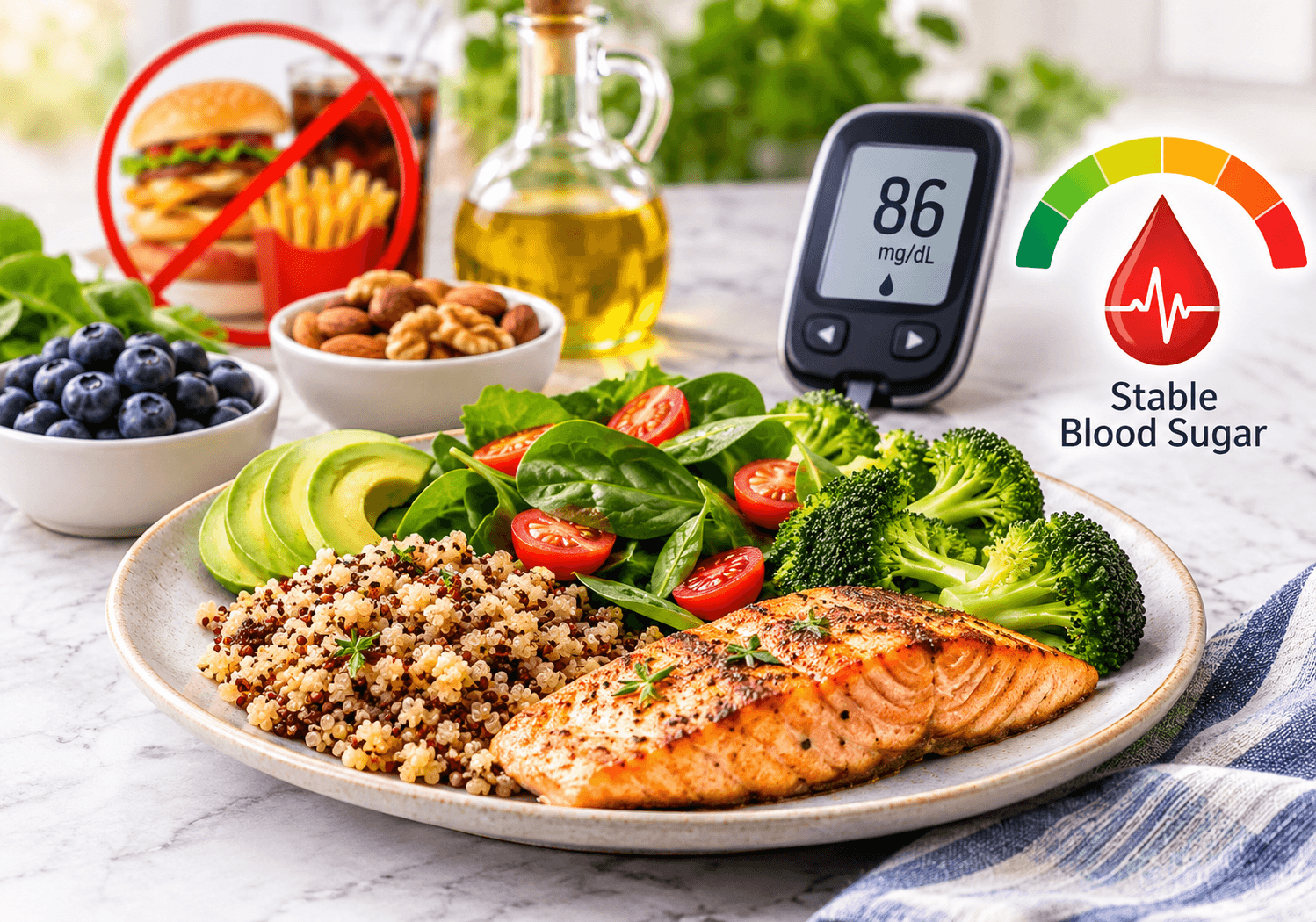
When you eat, your body breaks down carbohydrates into glucose, which enters your bloodstream. Your pancreas then releases a hormone called insulin, which acts like a key to unlock your cells so glucose can enter and be used for energy. When you have insulin resistance, your muscle, fat, and liver cells stop responding normally to insulin. They ignore the knock at the door, forcing your pancreas to pump out even more insulin to help glucose get into your cells. Over time, high blood sugar levels can lead to prediabetes, type 2 diabetes, and other metabolic challenges.
As a strength coach, I see clients everyday who feel tired, struggle with stubborn belly fat, and experience afternoon energy crashes because their bodies are fighting this metabolic friction. While structured exercise is a powerful tool to improve how your muscles handle glucose, what you put on your plate dictates your daily metabolic load. Choosing the right foods helps flatten your glucose curves, gives your pancreas a well-deserved rest, and supports sustainable energy levels.
Quick Answer
An insulin resistance diet focuses on whole, minimally processed foods that prevent sharp blood sugar spikes. Key foods include high-fiber vegetables, lean proteins, healthy fats, and low-glycemic complex carbohydrates like leafy greens, fatty fish, nuts, seeds, and legumes. These foods slow digestion and improve cellular sensitivity to insulin.
Understanding Insulin Resistance and Your Metabolic Health
Your body relies on a delicate balance of hormones to manage energy. When you consume foods packed with refined sugars and simple starches, your digestive tract rapidly breaks them down into glucose. This causes a sudden flood of sugar into your bloodstream. Your pancreas responds by dumping a massive wave of insulin to clear the sugar away.
Repeated exposure to these massive insulin spikes causes cellular receptors to become desensitized. Think of it like hearing a loud alarm every single day; eventually, you tune it out. When your cells tune out insulin, glucose lingers in the blood, and your body stores the excess energy as visceral fat around your midsection.
Research published by the National Institutes of Health (NIH) highlights that shifting away from ultra-processed foods toward nutrient-dense, high-fiber eating patterns significantly reduces systemic inflammation and improves metabolic flexibility. When you improve metabolic flexibility, your body transitions smoothly between burning dietary fats and carbohydrates without erratic energy crashes.
Top Foods to Keep Blood Sugar Stable
Building an effective plate for metabolic health does not mean eating bland, boring meals. It means prioritizing ingredients that slow down gastric emptying, blunt glucose absorption, and provide steady fuel. Here are the core food groups you should incorporate into your daily routine.
1. High-Fiber Non-Starchy Vegetables
Fiber is your best friend when managing blood sugar. Soluble fiber forms a gel-like matrix in your digestive tract, which slows down the rate at which sugars and carbohydrates are absorbed into your bloodstream.
- Leafy Greens: Spinach, kale, swiss chard, and arugula contain negligible amounts of digestible carbs and are packed with magnesium, a mineral vital for glucose metabolism.
- Cruciferous Vegetables: Broccoli, cauliflower, Brussels sprouts, and cabbage provide high amounts of fiber, antioxidants, and sulfur compounds that support liver function.
- Garden Vegetables: Zucchini, bell peppers, cucumbers, and asparagus add volume and crunch to meals without triggering glycemic excursions.

2. Lean Proteins
Protein has a minimal impact on blood glucose levels while providing a powerful satiety signal. Eating adequate protein stimulates the release of peptide YY (PYY) and glucagon-like peptide-1 (GLP-1), hormones that curb appetite and slow digestion, as outlined in research on how protein intake affects hunger and fullness hormones.
- Poultry: Skinless chicken breast and turkey provide clean, high-biological-value protein.
- Fish and Seafood: Salmon, sardines, mackerel, and trout are rich in omega-3 fatty acids, which help lower systemic inflammation linked to insulin resistance.
- Plant-Based Proteins: Tofu, tempeh, and edamame offer great protein-to-carb ratios along with beneficial plant compounds.
3. Healthy Fats
Fats do not trigger an insulin response. Incorporating healthy fats into your meals blunts the overall glycemic load of your plate by delaying stomach emptying.
- Monounsaturated Fats: Extra virgin olive oil, avocados, and olives support cardiovascular health and reduce oxidative stress.
- Nuts and Seeds: Walnuts, chia seeds, flaxseeds, and pumpkin seeds provide healthy fats, plant-based protein, and trace minerals. Chia and flax are particularly helpful because their mucilaginous fiber further stabilizes glucose absorption, similar to principles discussed regarding how soluble fiber helps control appetite for weight loss.
4. Low-Glycemic Complex Carbohydrates
You do not need to eliminate carbohydrates entirely. Instead, you need to choose unrefined, fiber-rich sources that your body has to work hard to break down.
- Legumes: Lentils, chickpeas, black beans, and kidney beans offer a unique combination of slow-digesting starches and plant protein.
- Whole Grains: Quinoa, steel-cut oats, barley, and farro maintain their fibrous outer hulls, ensuring a gradual release of glucose into the bloodstream.
Foods and Ingredients to Limit or Avoid
Just as certain foods protect your metabolic health, others actively undermine it. When designing your grocery list, minimize items that force your pancreas into overdrive.
| Item Category | What to Limit / Avoid | Why It Disrupts Blood Sugar |
| Sugary Beverages | Soda, sweet tea, commercial fruit juices, energy drinks | Liquid sugar enters the bloodstream instantly, causing massive glucose and insulin spikes. |
| Refined Grains | White bread, white rice, pastries, regular pasta | Stripped of fiber and nutrients, these digest rapidly, acting much like pure sugar in the body. |
| Added Sugars | Candy, cookies, syrups, packaged snack foods | Promotes visceral fat accumulation and increases hepatic insulin resistance. |
| Trans and Excess Refined Fats | Margarine, deep-fried foods, commercial vegetable oils high in omega-6 | Promotes cellular inflammation, which worsens how receptors respond to insulin. |

Sample 3-Day Meal Plan for Blood Sugar Balance
Practical application is where transformation happens. This sample meal plan demonstrates how to combine proteins, healthy fats, and high-fiber carbohydrates to keep your energy stable from morning to night.
Day1
- Breakfast: Scrambled eggs with spinach, diced tomatoes, and a quarter of an avocado, paired with a small handful of walnuts.
- Lunch: Grilled chicken breast over a bed of mixed greens, dressed with extra virgin olive oil and lemon juice, topped with half a cup of chickpeas.
- Dinner: Baked salmon fillet served alongside roasted Brussels sprouts and a side of quinoa.
- Snack: Celery sticks with natural almond butter.
Day2
- Breakfast: Steel-cut oatmeal cooked with water or unsweetened almond milk, stirred with a tablespoon of chia seeds, cinnamon, and topped with fresh raspberries.
- Lunch: Lentil and vegetable soup paired with a side salad of arugula, cucumber, and pumpkin seeds.
- Dinner: Lean turkey burger (wrapped in lettuce or served on a high-fiber whole grain bun) with roasted bell peppers and zucchini spears.
- Snack: Greek yogurt (plain, unsweetened) mixed with a few crushed pecans.
Day3
- Breakfast: Omelet made with mushrooms, bell peppers, and feta cheese, cooked in avocado oil.
- Lunch: Sliced roast beef or turkey breast wrap in a high-fiber, low-carb tortilla with avocado, spinach, and mustard, served with raw carrot and celery sticks.
- Dinner: Baked cod with lemon and herbs, served alongside a generous portion of steamed broccoli and roasted sweet potato wedges (kept to a moderate portion size).
- Snack: A small handful of macadamia nuts or pumpkin seeds.
Coach’s Tips for Long-Term Success
Implementing dietary changes requires strategy, not just willpower. Over years of coaching clients through metabolic transformations, I have found that a few simple behavioral tweaks dramatically improve adherence and results.
Coach’s Tip: Sequence Your Meal
Research shows that eating your food in a specific order changes your glucose response. Eat your fiber (vegetables) and protein first, save your fats for the middle, and eat your carbohydrates last. This “food sequencing” strategy creates a physical mesh in your gut that slows down carbohydrate digestion, significantly reducing the post-meal blood sugar spike.
Common Mistake: Falling for the “Health Halo” Trap
Many packaged foods marketed as “gluten-free,” “organic,” or “natural” are still loaded with cane sugar, honey, or rice flour that will spike your blood sugar. Always read the ingredient list and check the total carbohydrate and fiber content. If sugar is listed among the first three ingredients, leave it on the shelf.
Lifestyle Factors That Amplify Your Diet
Food is only one pillar of metabolic health. To maximize the benefits of an insulin-resistant eating pattern, integrate these complementary lifestyle habits:
- Prioritize Resistance Training: When you lift weights or perform bodyweight resistance exercises, you expand your muscles’ capacity to store glucose as glycogen. Muscle tissue acts like a sponge for blood sugar. For deeper insights into supporting your metabolism, review how to support metabolism naturally for weight management.
- Manage Sleep Quality: Poor sleep disrupts cortisol and growth hormone levels, which acutely worsens insulin sensitivity. Aim for 7 to 9 hours of quality rest each night.
- Stay Hydrated: Dehydration can concentrate blood glucose levels. Drinking adequate water throughout the day supports kidney function and cellular transport.
Frequently Asked Questions
Which foods lower blood sugar immediately?
No food lowers blood sugar instantly like a medication, but non-starchy vegetables, lean proteins, and healthy fats prevent blood sugar from rising. Drinking water or consuming apple cider vinegar diluted in water before a meal may also help blunt post-meal glucose spikes by slowing gastric emptying.
Can I eat fruit if I have insulin resistance?
Yes. Whole fruits contain fiber, vitamins, and antioxidants that slow down the absorption of natural fruit sugars (fructose). Focus on berries, cherries, and citrus fruits, which have lower glycemic loads compared to tropical fruits like bananas or mangoes. Avoid fruit juices entirely.
How long does it take to improve insulin sensitivity with diet?
Improvements in blood sugar stability can begin within days of eliminating ultra-processed foods and refined sugars. However, measurable changes in long-term markers like fasting insulin or HbA1c typically take anywhere from 8 to 12 weeks of consistent dietary and lifestyle changes.
Are eggs good for insulin resistance?
Yes. Eggs are an excellent source of high-quality protein and healthy fats with virtually zero carbohydrates. They do not raise blood sugar and provide essential nutrients like choline and selenium that support overall metabolic health.
Is intermittent fasting helpful for insulin resistance?
Intermittent fasting can be a helpful tool for some individuals because it reduces the window of time eating occurs, giving the pancreas periods of low insulin demand. However, the quality of the food consumed during your eating window remains the most important factor for success.
Conclusion
Managing insulin resistance is not about severe restriction or starvation; it is about crowding out low-quality, highly processed items with nutrient-dense, fiber-rich whole foods. By prioritizing vegetables, lean proteins, healthy fats, and smart carbohydrate choices, you give your cells the raw materials they need to respond properly to insulin once again. Combine these nutritional habits with consistent physical activity and adequate sleep, and you will set the stage for sustained energy and long-term metabolic health.