Whether you are hitting a plateau on your heavy squat days, gassing out mid-way through a conditioning circuit, or simply feeling worn down by 3:00 PM every afternoon, physical performance depends heavily on how your body handles stress. As a strength coach, I frequently get asked by athletes and gym-goers alike: does ashwagandha help with stamina and vitality, or is it just another over-hyped supplement trend?
Ashwagandha (Withania somnifera), an ancient herb classified as an adaptogen, has gained major traction in the modern sports nutrition world. Rather than acting as a fast-acting nervous system stimulant like caffeine, ashwagandha works by regulating your stress pathways, balancing stress hormones, and optimizing oxygen utilization during physical exertion. In this evidence-based guide, we will unpack how this botanical extract impacts cellular energy production, cardiorespiratory endurance, recovery rate, and daily energy levels.
Quick Answer
Yes, research demonstrates that ashwagandha helps with stamina and vitality. Controlled clinical studies show that daily supplementation (300 mg to 600 mg of root extract) significantly improves cardiorespiratory endurance (VO2max), delays muscular fatigue, supports healthy serum testosterone levels, and lowers systemic cortisol, leading to sustained energy and improved exercise output over 8–12 weeks.
What Is Ashwagandha and How Does It Work in the Body?
Ashwagandha is a small woody shrub native to India, North Africa, and the Middle East. Often referred to as “Indian ginseng,” its roots contain bioactive compounds known as withanolides. These naturally occurring steroidal lactones are responsible for the herb’s physiological effects.
When you undergo intense physical exertion—such as heavy back squats or prolonged running—your body activates the hypothalamic-pituitary-adrenal (HPA) axis, releasing the stress hormone cortisol. While acute cortisol spikes are a natural adaptation response, chronically elevated cortisol impairs muscle tissue repair, disturbs sleep quality, suppresses testosterone, and accelerates systemic fatigue.
As an adaptogen, ashwagandha helps modulate the HPA axis. It tones down excessive stress signaling, bringing the endocrine system back into balance. Research highlights that by mitigating excessive cortisol secretion, ashwagandha preserves systemic energy, prevents premature physical burn-out, and promotes cellular energy production (ATP synthesis) inside mitochondrial structures.
How Ashwagandha Enhances Cardiorespiratory Stamina (VO2max)
When strength coaches talk about physical stamina, we often look closely at VO2max—the maximum volume of oxygen your body can process and utilize during incremental, intense exercise. The higher your VO2max, the more efficiently your cardiovascular system delivers oxygenated blood to working skeletal muscles.
So, does ashwagandha help with stamina and vitality from a aerobic capacity perspective? The scientific evidence strongly indicates that it does:
- Increased Red Blood Cell Count: Ashwagandha exhibits hematogenic properties, meaning it supports healthy red blood cell counts and hemoglobin levels. Higher hemoglobin translates directly to greater oxygen transport capacity in the bloodstream.
- Mitochondrial Efficiency: Studies indicate that withanolides support mitochondrial function, helping muscle cells produce Adenosine Triphosphate (ATP) more efficiently during prolonged aerobic activity.
- Delayed Exhaustion: By reducing muscular oxidative stress, athletes experience longer time-to-exhaustion intervals during intense cardiovascular efforts.
A randomized, double-blind, placebo-controlled study published in the Journal of Ayurveda and Integrative Medicine evaluated healthy adults undergoing cardiorespiratory endurance testing. The group taking 300 mg of ashwagandha root extract twice daily for eight weeks demonstrated significant improvements in VO2max scores compared to the control group, along with lower self-reported physical fatigue.
Impact on Strength, Muscle Power, and Vitality
Vitality is not just about running long distances; it is also about explosive force, power production, and muscle recovery. For strength training athletes, keeping fatigue at bay allows for higher workload volume
Research shows that ashwagandha plays a positive role in strength development and hormone balance. A clinical study featured in the Journal of the International Society of Sports Nutrition tested resistance-trained men taking 300 mg of high-concentration ashwagandha root extract twice daily. After 8 weeks, participants in the ashwagandha group demonstrated:
- Significantly Greater Muscle Strength: Greater gains on the 1-Repetition Maximum (1RM) bench press and leg extension exercises.
- Increased Muscle Size: Greater arm and chest cross-sectional area expansion.
- Reduced Exercise-Induced Muscle Damage: Lower serum creatine kinase levels, indicating faster structural muscle recovery.
- Enhanced Serum Testosterone: Noticeable increases in total testosterone levels, which directly influence muscle recovery, body composition, and overall physical vitality.
When your body isn’t fighting off excessive stress markers, it retains energy to build lean tissue, repair damaged fibers, and sustain vigor throughout daily activities. If your goals involve building muscle efficiency, combining adaptogens with proper nutrition is key. For example, understanding how protein helps control hunger during weight loss can support your overall energy balance while training hard.

Ashwagandha vs. Stimulants: Understanding the Difference
Many gym-goers confuse stamina supplements with high-stimulant pre-workouts. It is essential to recognize that ashwagandha functions completely differently from compounds like synthetic caffeine, yohimbine, or bitter orange.
| Feature | Ashwagandha Extract | Stimulants (e.g., Caffeine) |
| Primary Mechanism | Modulates HPA axis; lowers cortisol | Stimulates Central Nervous System (CNS) |
| Energy Profile | Smooth, sustained energy over weeks | Fast, acute surge followed by a crash |
| Effect on Heart Rate | Helps normalize resting heart rate | Increases heart rate and blood pressure |
| Impact on Sleep | Promotes deep, restorative sleep | Can disrupt sleep architecture |
| Time to Results | Requires cumulative daily use (2–8 weeks) | Immediate onset (20–45 minutes) |
Relying solely on central nervous system stimulants to push through fatigue often leads to adrenal overload, poor sleep quality, and eventual performance drop-offs. If you find yourself crashing after high-caffeine doses, learning why caffeine pills cause energy crashes and how to prevent it can help you optimize your pre-workout strategy. Integrating adaptogens like ashwagandha into your routine offers a baseline of sustainable vigor without jittery side effects or heart-palpitation risks.
Practical Dosage, Timing, and Extract Types
To get real physical results, quality and dosage matter tremendously. You cannot expect stamina improvements from under-dosed or poorly extracted formulas.
Standard Dosage Guidance
- Standardized Root Extract (KSM-66 or Sensoril): 300mg to 600mg taken daily.
- Whole Root Powder: 3,000mg to 5,000mg daily (typically less concentrated in active withanolides).
Best Time to Take Ashwagandha
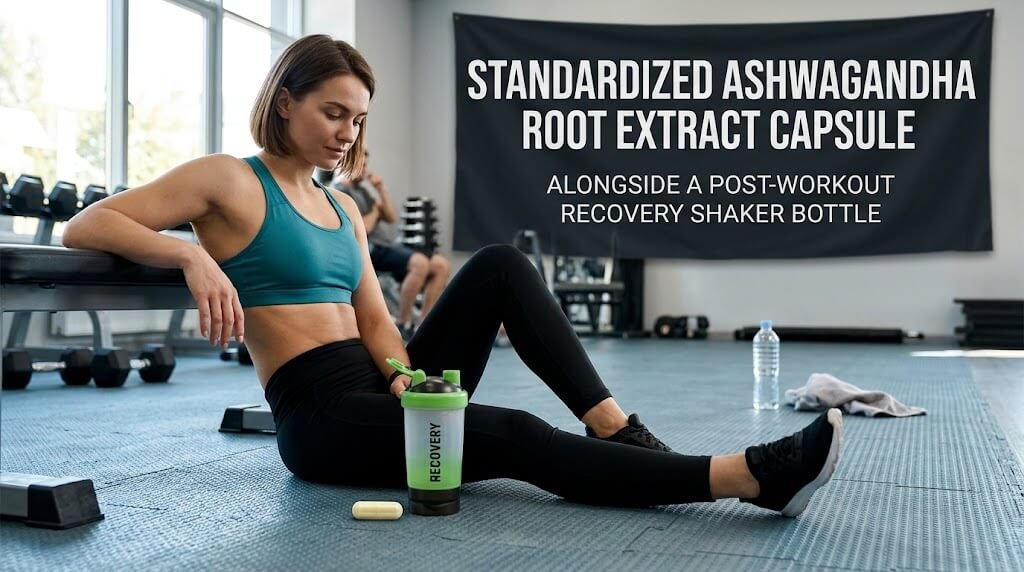
- Option A (Divided Doses): Take 300mg with breakfast and 300mg with dinner. This maintains steady blood concentration levels of active withanolides.
- Option B (Evening Single Dose): Take 600mg roughly 30 to 60 minutes before sleep. Because ashwagandha promotes calm nervous system signaling, taking it at night optimizes overnight recovery and restorative sleep cycles.
If you struggle with fatigue due to disrupted sleep, balancing stress naturally is paramount. Managing your body’s stress response can pay huge dividends for overall health; explore how adaptogens for stress eating and cortisol management help control systemic inflammation and body composition.
A Strength Coach’s 8-Week Stamina-Building Conditioning Protocol
To maximize the benefits of ashwagandha for physical performance, pair daily supplementation with a progressive, structured conditioning program. Below is a sample 4-day workout schedule designed to build aerobic power, leg endurance, and core vitality.
Weekly Program Schedule
- Monday: Upper Body Strength + Aerobic Power Intervals
- Tuesday: Lower Body Strength + Low-Intensity Steady-State (LISS) Cardio
- Wednesday: Active Recovery / Mobility Flow
- Thursday: Full Body Functional Conditioning
- Friday: Lower Body Hypertrophy + Core Stability
- Saturday & Sunday: Rest and Stress Recovery
Full-Body Stamina Workout Session
| Exercise | Sets | Reps / Duration | Rest Period | Tempo | Focus / Cue |
| Goblet Squat | 4 | 10–12 reps | 60 sec | 3-0-1-0 | Keep chest upright; drive through mid-foot |
| Dumbbell Romanian Deadlift | 3 | 12 reps | 60 sec | 2-1-1-0 | Hinge at hips; feel hamstring tension |
| Incline Push-Up | 3 | 12–15 reps | 45 sec | 2-0-1-0 | Core tight; elbows at 45-degree angle |
| Concept2 Ergometer Rower | 5 | 500 meters | 90 sec | Moderate | Explosive leg drive; controlled recovery |
| RKC Plank | 3 | 30–45 sec | 45 sec | Hold | Squeeze glutes and pull elbows toward toes |
Coach’s Tip
Do not expect ashwagandha to replace smart training progression. Track your rowing split times or workout volume week over week. You should notice that by week 4 or 5, your heart rate recovers more quickly between high-intensity intervals, allowing you to handle higher volume with less physical exhaustion.
Common Mistake
Taking ashwagandha inconsistently—such as only on workout days—is a frequent error. Adaptogens work through cumulative biochemical modulation over several weeks, not as a quick-hit pre-workout boost. Take your supplement daily for at least 6 to 8 weeks to assess its true impact on your physical stamina.

Exercise Regressions and Progressions for Conditioning Movements
To maintain progress as your stamina improves, adjust exercise difficulty to suit your strength level:
Goblet Squat
- Regression (Easier): Bodyweight Box Squat. Sit back onto a 16-inch [40 cm] box to master depth control without loaded spinal stress.
- Progression (Harder): Barbell Front Squat. Hold a barbell across your front deltoids with 135 lb [61 kg], demanding significantly greater upper back strength and core stability.
Dumbbell Romanian Deadlift
- Regression (Easier): Bodyweight Good Mornings with Band. Use a light resistance band under your feet to practice hip hinging mechanics without heavy loading.
- Progression (Harder): Single-Leg Dumbbell RDL. Hold a 35 lb [16 kg] dumbbell in the opposite hand while balancing on one leg, building hip stability and unilateral endurance.
Safety, Potential Side Effects, and Precautions
While ashwagandha is generally well-tolerated by healthy adults, it is not appropriate for everyone. Being a potent herb with bioactive hormonal and immune influences, safety guidelines must be observed.
- Mild Gastrointestinal Discomfort: Taking high doses on an empty stomach may cause nausea, stomach upset, or loose stools. Always consume your capsule with food.
- Thyroid Function Modulation: Ashwagandha may increase thyroid hormone output (T3 and T4). Individuals with hyperthyroidism or Hashimoto’s thyroiditis should avoid it unless approved by their physician.
- Autoimmune Conditions: Because it stimulates immune activity, those with rheumatoid arthritis, lupus, or multiple sclerosis should proceed with caution.
- Sedative Interactions: Combining ashwagandha with central nervous system depressants, anti-anxiety medications, or alcohol can exacerbate drowsiness.
This article is for general information and is not a substitute for advice from a doctor or physical therapist. If you take blood pressure, thyroid, or blood sugar medications, consult your primary care practitioner before introducing adaptogenic supplements.
Frequently Asked Questions
How long does it take for ashwagandha to increase stamina?
Most clinical trials evaluate ashwagandha over an 8- to 12-week period. While mild reductions in perceived daily stress may occur within 1 to 2 weeks, measurable improvements in physical stamina, VO2 max, and muscular recovery typically require 30 to 60 days of consistent daily use.
Does ashwagandha boost vitality and energy levels without jitteriness?
Yes. Unlike central nervous system stimulants, ashwagandha does not cause heart racing or blood pressure spikes. It improves vitality by lowering systemic cortisol, supporting thyroid and mitochondrial balance, and improving sleep quality, resulting in smooth, sustained daytime energy.
What is the best ashwagandha dosage for physical stamina?
For athletic endurance and vitality, clinical studies generally use 300 mg to 600 mg daily of a standardized root extract (such as KSM-66 or Sensoril) containing 5% or more of active withanolides.
Can I take ashwagandha before my workout?
Yes, you can take ashwagandha 30 to 60 minutes prior to training. However, because it works via cumulative physiological effects rather than an acute central nervous system spike, timing it right before exercise is not mandatory—daily consistency matters far more.
Does ashwagandha help reduce post-workout fatigue?
Research shows that ashwagandha helps lower post-exercise serum creatine kinase levels (a marker of muscle damage) and reduces cortisol production. This allows your muscles to repair faster, leaving you feeling less drained after heavy training sessions.
Conclusion
So, does ashwagandha help with stamina and vitality? The physiological evidence and clinical trial data deliver a clear answer: yes. By modulating your stress pathways, curbing excess cortisol release, supporting aerobic power (VO2max), and optimizing hormonal recovery, ashwagandha provides a strong baseline for sustained energy and athletic stamina.
For athletes, gym beginners, and busy adults looking to enhance physical vigor without relying on artificial energy drinks, daily adaptogen support can be a game-changer. Combine standardized ashwagandha root extract with progressive strength training, adequate protein intake, and structured sleep habits to unlock your physical potential.