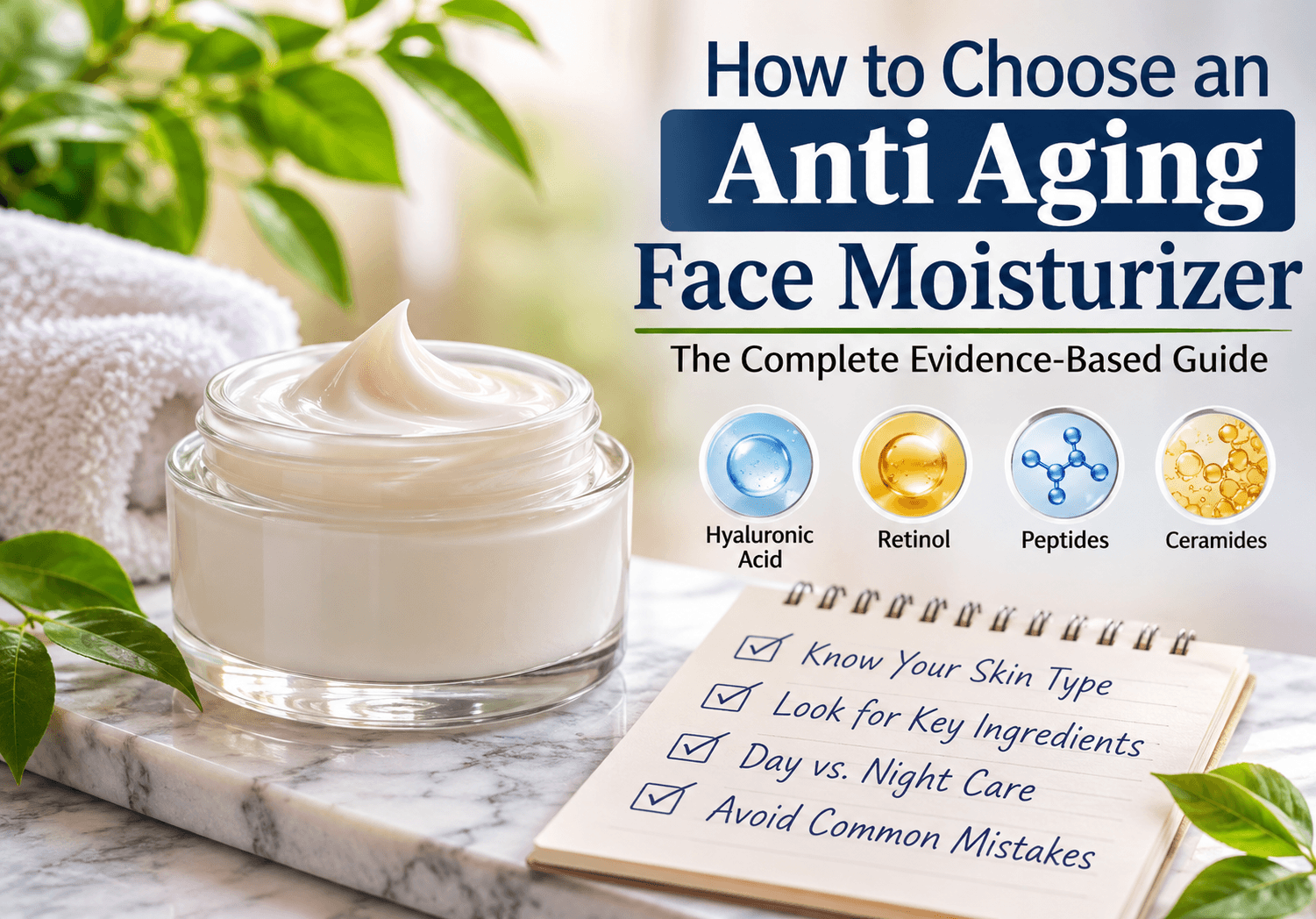
Navigating the skincare aisle can feel like deciphering a foreign language. When you want to know how to choose an anti aging face moisturizer, you are often bombarded with complex chemical names, expensive price tags, and conflicting marketing claims. Just like building a solid strength training program, finding the right skincare product requires looking past the hype and focusing on proven active ingredients that deliver measurable results.
Understanding your skin’s unique physiology is the first step toward making a smart investment in your daily routine. Skin changes over time as natural collagen production slows down, lipid barriers thin, and environmental stressors take their toll. By learning how to evaluate formulations, identify key dermatological actives, and match products to your specific skin type, you can protect your skin barrier and maintain a healthy, resilient glow.
Quick Answer
To choose an anti-aging face moisturizer, identify your skin type and target specific signs of aging like fine lines or dryness. Look for proven ingredients such as retinol for cell turnover, hyaluronic acid for moisture retention, peptides for collagen support, and ceramides to repair the skin barrier.
Understanding Skin Aging and the Role of Moisturizers
Skin aging is a natural biological process influenced by both internal (intrinsic) and external (extrinsic) factors. Intrinsic aging is dictated by genetics and time, resulting in a gradual slowdown of cellular turnover and decreased sebum production. Extrinsic aging, conversely, is driven largely by ultraviolet (UV) radiation, pollution, and lifestyle habits like smoking or poor nutrition. Together, these forces degrade the structural matrix of the skin.
The Science of Loss: Collagen, Elastin, and Moisture
Beneath the skin’s surface, dermal fibroblasts produce collagen and elastin fibers, which give skin its firmness and bounce. According to research published by the National Center for Biotechnology Information (NCBI), collagen production drops by approximately 1% every year after age 20. Concurrently, the skin’s natural moisturizing factors (NMFs) diminish, leading to drier texture, reduced elasticity, and the formation of fine lines and wrinkles.
How Moisturizers Combat Transepidermal Water Loss (TEWL)
A quality anti-aging moisturizer does more than just sit on top of the skin; it actively reinforces the outermost layer known as the stratum corneum. By sealing in hydration and reducing transepidermal water loss (TEWL), moisturizers temporarily plump up fine lines and create an optimal environment for skin repair. When your skin barrier is properly hydrated, it functions more efficiently as a protective shield against daily environmental aggressors.
The Core Anti-Aging Ingredients to Look For
When evaluating any anti-aging facial cream, your eyes should go straight to the ingredient deck. Formulations are legally required to list ingredients in descending order of concentration. Look for clinically validated compounds that address the root causes of aging rather than just offering temporary surface smoothing.
Retinoids and Retinol for Cell Turnover
Retinoids, including prescription tretinoin and over-the-counter retinol, are the gold standard in anti-aging dermatology. According to guidelines from the American Academy of Dermatology (AAD), retinoids work by accelerating cellular turnover and stimulating collagen synthesis. When starting out, look for concentrations between 0.25% and 0.5% to minimize initial irritation or flaking.
Hyaluronic Acid and Humectants for Deep Hydration
Hyaluronic acid is a powerhouse humectant capable of holding up to 1,000 times its molecular weight in water. It draws moisture from the atmosphere and deeper layers of skin up into the epidermis. For optimal performance, look for formulations combining multiple molecular weights of hyaluronic acid so hydration penetrates both surface and subsurface layers.
Ceramides and Fatty Acids for Barrier Repair
As we age, the intercellular lipids—primarily ceramides, cholesterol, and free fatty acids—deplete rapidly. Ceramides act like the mortar between your skin cells, locking in moisture and keeping irritants out. Choosing a moisturizer rich in ceramides helps restore structural integrity and calms chronic dryness in mature skin.
Peptides for Collagen Stimulation
Peptides are short chains of amino acids that act as biochemical messengers signaling skin cells to perform specific tasks. Certain signal peptides can encourage fibroblasts to produce fresh collagen and elastin fibers. They offer a gentler alternative to retinoids, making them ideal for sensitive skin types looking for firmness.
Antioxidants (Vitamin C, E, and Astaxanthin) for Free Radical Defense
Oxidative stress from UV rays and pollution generates unstable molecules called free radicals that break down collagen. Antioxidants neutralize these molecules before they can damage skin cells. Integrating ingredients like Vitamin C, Vitamin E, or specialized botanical extracts such as astaxanthin for skin health provides robust daytime protection.
Matching Your Moisturizer to Your Skin Type
Even the most expensive anti-aging cream will fail if it clashes with your skin type. Before purchasing, determine whether your skin leans dry, oily, combination, or sensitive.
Dry and Mature Skin
If your skin feels tight after cleansing or shows pronounced flaking, you need a richer, cream-based moisturizer. Look for heavy emollients and occlusives like shea butter, squalane, and petrolatum combined with humectants. These ingredients create a robust protective seal that prevents moisture evaporation in cold or dry climates (e.g., temperatures dropping below 50°F [10°C]).
Oily and Acne-Prone Mature Skin
Adult acne and aging can occur simultaneously, complicating product selection. Avoid heavy, pore-clogging butters and opt for lightweight, oil-free gel-creams. Ingredients like niacinamide (vitamin B3) help regulate sebum production while providing anti-inflammatory and anti-aging benefits.
Combination Skin
Combination skin features an oily T-zone (forehead, nose, and chin) paired with normal to dry cheeks. You may benefit from using a lightweight fluid moisturizer during the day and a slightly richer cream at night. Alternatively, apply a gel-based formula across the entire face and layer a targeted richer cream only on dry zones.
Sensitive and Reactive Skin
Sensitive skin easily turns red, stings, or breaks out when exposed to harsh active ingredients. When learning how to choose an anti aging face moisturizer for sensitive skin, prioritize fragrance-free, hypoallergenic formulas. Look for soothing additions like colloidal oatmeal, centella asiatica, and allantoin that calm inflammation while delivering anti-aging support.
Day vs. Night Anti-Aging Moisturizers: What’s the Difference?
Your skin operates on a circadian rhythm, shifting its priorities between defense during the day and repair at night. Consequently, relying on a single jar of cream for 24 hours is rarely optimal.
Daytime Formulations: Antioxidants and SPF Integration
Daytime moisturizers prioritize defense against environmental stressors like UV light and blue light. A superior day cream often contains lightweight hydration, potent antioxidants, and broad-spectrum SPF 30 or higher. Protecting your skin from UV radiation prevents the breakdown of collagen powder absorption science pathways caused by photoaging.
Nighttime Formulations: Repair and Regeneration
Night creams are typically richer and free of SPF, focusing instead on active cellular renewal. Because skin blood flow increases at night, your skin absorbs active ingredients like retinoids, peptides, and ceramides more efficiently. This makes nighttime the ideal window for deep nourishment and intensive structural repair.
Step-by-Step Framework for Choosing and Testing Your Moisturizer
Selecting the right product requires a methodical approach. Follow this four-step framework to avoid wasted money and skin irritation.
- Audit Your Current Skin Needs: Assess your primary skin concern. Are you fighting stubborn fine lines, chronic dryness, loss of firmness, or uneven pigmentation? Choose a primary active ingredient that targets that specific concern.
- Read the Ingredient Deck (INCI) Like a Pro: Scan the first five ingredients, as they make up the vast majority of the formulation. Ensure water, humectants, or beneficial oils top the list, and check that potential irritants or synthetic fragrances are minimal or absent.
- Perform a 48-Hour Patch Test: Apply a dime-sized amount of product to the inner forearm or behind your ear. Wait 48 hours to check for redness, itching, or allergic reactions before applying the product to your facial skin.
- Evaluate Texture and Cosmetic Elegance: A great moisturizer should absorb cleanly without leaving a heavy, greasy film that pills under makeup or sunscreen. Pay attention to how your skin feels 2 hours after application.
Coach’s Guide: Common Mistakes When Choosing and Applying Anti-Aging Creams
Even with the best products in hand, application errors can sabotage your results. As a coach who emphasizes proper form and technique in every discipline, I see skincare followers make the exact same execution mistakes repeatedly.
Coach’s Tip: Always apply your anti-aging moisturizer to slightly damp skin right after cleansing. This traps ambient water molecules in the epidermis, supercharging the hydrating effects of humectants like hyaluronic acid and glycerin.
Common Mistake: Layering Actives Incorrectly
Applying harsh acids (like glycolic or salicylic acid) immediately followed by high-strength retinol can destroy your skin barrier, causing severe flaking and irritation.
- The Fix: Separate your active ingredients into alternating nights, or use gentle hydrating moisturizers to buffer potent retinoids until your skin builds tolerance.
Common Mistake: Skipping the Neck and Decollete
Many people stop applying anti-aging creams strictly at the jawline, ignoring the thin skin on the neck and chest that often reveals age signs first.
- The Fix: Extend your facial cleansing, toning, and moisturizing routine downward to your collarbone using gentle upward strokes.
Frequently Asked Questions
When should I start using an anti-aging face moisturizer?
Prevention is far more effective than reversal. Dermatologists generally recommend introducing basic hydrating moisturizers and daily sunscreen in your early 20s, and incorporating targeted anti-aging ingredients like retinoids or antioxidants in your mid-to-late 20s.
Can I use retinol and vitamin C in the same routine?
Yes, but timing matters. Applying both simultaneously can overwhelm sensitive skin and alter pH levels, reducing efficacy. Use your Vitamin C serum with your daytime antioxidant moisturizer, and save your retinol cream for your nighttime routine.
Is a more expensive anti-aging moisturizer always better?
Price does not dictate performance in skincare. Many affordable pharmacy brands use clinical-grade active ingredients like niacinamide and hyaluronic acid at identical percentages to luxury department store formulations. Focus on the ingredient deck rather than the brand name.
How long does it take to see results from an anti-aging cream?
Surface hydration improves instantly, but structural changes take time. Skin cell turnover takes roughly 28 to 45 days depending on age. Expect to wait 8 to 12 weeks of consistent daily use before noticing visible reductions in fine lines and firmness.
Should I change my moisturizer seasonally?
Yes, your skin’s hydration needs shift with the weather. During humid summer months, a lightweight gel or lotion is usually sufficient. In cold winter months, when humidity plummets and indoor heating dries out the air, switch to a richer cream with heavier occlusives.
Conclusion
Choosing the right anti-aging face moisturizer does not require guessing or falling for expensive marketing claims. By understanding your skin type, examining ingredient decks for clinically proven compounds like retinoids, peptides, and ceramides, and applying products with proper technique, you can build a resilient, youthful skin barrier. Consistency and patience remain your greatest allies in achieving long-term skin health.