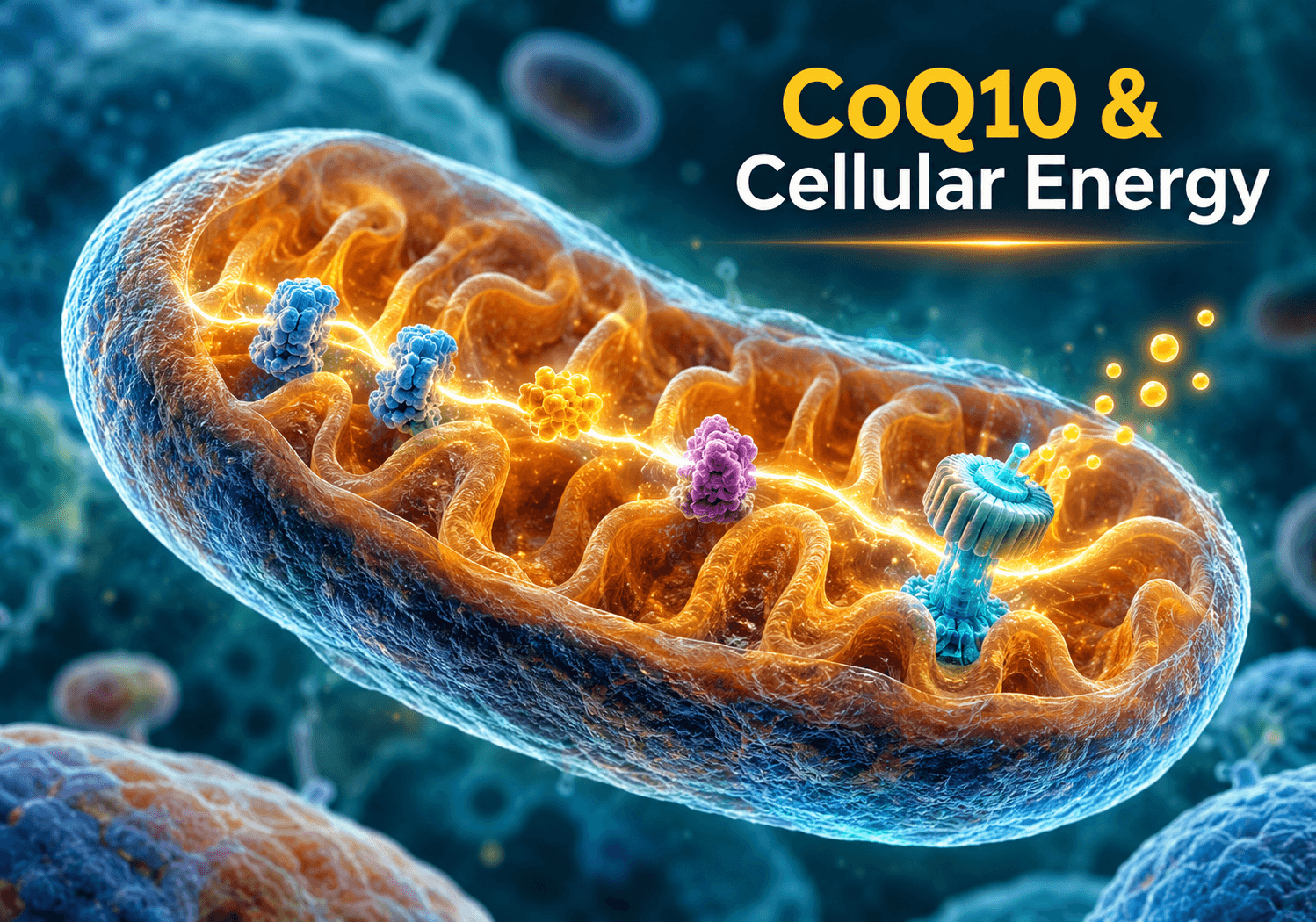
You hit a wall mid-set. Your legs feel heavy, your breathing is labored, and that familiar 3 p.m. energy slump is creeping in. If you’ve been looking for a supplement that actually works inside your cells to support how your body makes fuel, CoQ10 benefits for mitochondrial energy production deserve a closer look. CoQ10 (coenzyme Q10, or ubiquinone) is a fat-soluble compound your mitochondria use to shuttle electrons during oxidative phosphorylation—the process that turns the food you eat into ATP, the energy currency every cell runs on.
I’ve worked with clients who felt “run down” despite eating well and sleeping enough. Before reaching for a stimulant, I always ask: are your mitochondria getting the raw materials they need? CoQ10 sits at the center of that question. Below, I’ll walk you through exactly how it works, what the evidence says, how to take it, and when to talk to your doctor first.
Quick Answer: CoQ10 (ubiquinone/ubiquinol) acts as an electron carrier in the mitochondrial electron transport chain, helping produce ATP through oxidative phosphorylation. Research suggests supplementation may support cellular energy output, reduce oxidative stress in mitochondria, and aid recovery in people whose levels are depleted (e.g., by statin use). Typical studied doses range from 100–300 mg/day.
What Is CoQ10 and Why Do Your Mitochondria Need It?
CoQ10 is a lipid-soluble molecule found in nearly every cell in your body, but it’s concentrated in tissues with high energy demands: heart muscle, liver, kidneys, and skeletal muscle. Your body synthesizes it from the amino acid tyrosine, but production declines with age and can drop further if you take statin medications, which block the same mevalonate pathway used to make CoQ10.
Think of CoQ10 as a reusable shuttle bus. It picks up electrons at one stop, delivers them to the next, then loops back for another ride. Without enough of these shuttles, the line backs up, and your cells can’t make ATP as efficiently.
The two forms: ubiquinone vs. ubiquinol
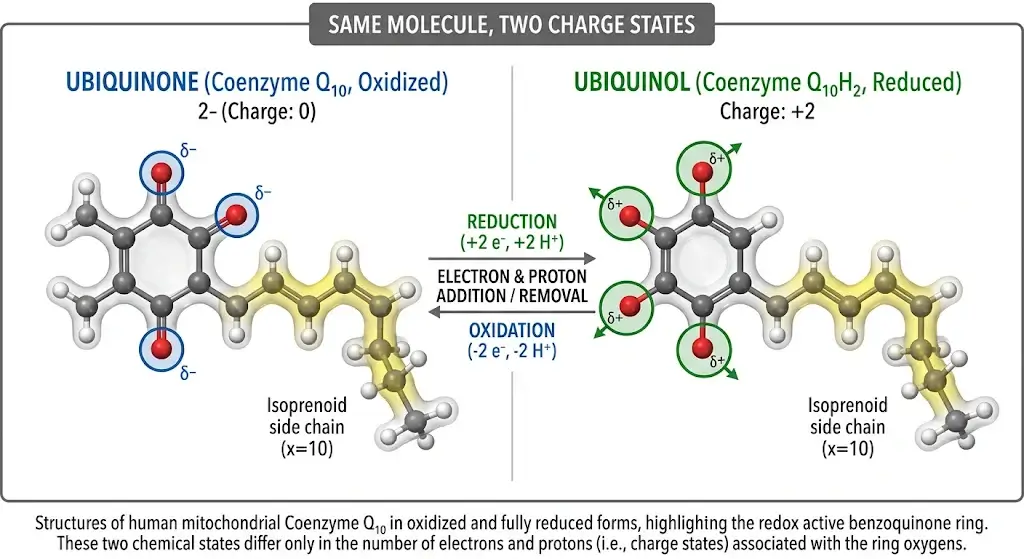
- Ubiquinone is the oxidized form. It’s what most over-the-counter supplements use because it’s more stable and less expensive.
- Ubiquinol is the reduced, “active” form your body actually uses in the electron transport chain. Some research suggests it may be absorbed slightly better, especially in older adults, though the practical difference at equivalent doses is still debated.
For most healthy adults, either form works. If you’re over 60 or have a condition that impairs the conversion from ubiquinone to ubiquinol, your doctor may recommend the reduced form.
The Electron Transport Chain: Where CoQ10 Does Its Job
To understand CoQ10 benefits for mitochondrial energy production, you need a 60-second refresher on how mitochondria make ATP.
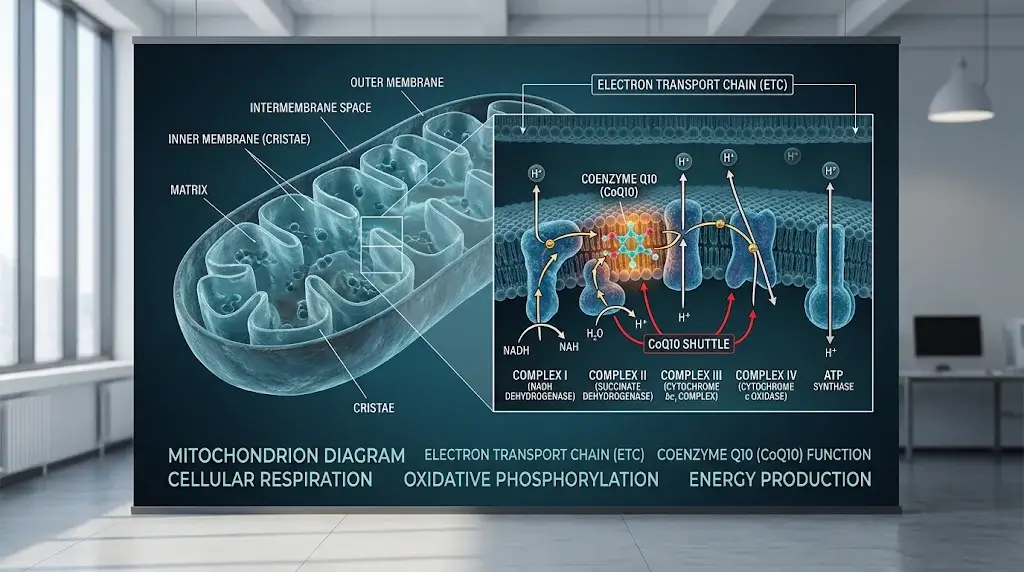
- Glycolysis and the Krebs cycle break down glucose and fatty acids, producing electron carriers: NADH and FADH2.
- Those carriers dump their electrons onto Complex I (or Complex II) on the inner mitochondrial membrane.
- CoQ10 picks up the electrons and ferries them across the membrane to Complex III.
- Complex III passes them to cytochrome c, then to Complex IV, which reduces oxygen to water.
- The energy released along this chain pumps protons (H⁺) into the intermembrane space, creating a proton gradient.
- Protons flow back through ATP synthase, which spins like a turbine and phosphorylates ADP into ATP.
CoQ10 is the only mobile electron carrier in this chain. Everything else is a fixed protein complex. That makes it a single point of failure: if CoQ10 levels drop, electron flow slows, the proton gradient weakens, and ATP output drops.
Coach’s Tip: When I explain this to a client who’s been on a statin for five years and feels “foggy and flat,” I say: “Your mitochondria are like a power plant. CoQ10 is the conveyor belt between two turbines. If the belt is missing links, the whole line runs slower. Replenishing it gives the belt back its links.”
CoQ10 Benefits for Mitochondrial Energy Production: What the Research Shows
Here’s where I separate what’s well-supported from what’s still being studied. I want you to leave this article knowing exactly what the evidence says and what it doesn’t.
1. Supporting ATP synthesis in the electron transport chain
CoQ10’s role as an electron carrier is well established in biochemistry. A 2017 review in the Journal of Clinical Medicine summarized that CoQ10 is essential for oxidative phosphorylation and that deficiency impairs mitochondrial respiration. In animal models, CoQ10 depletion reduces ATP production in cardiac and skeletal muscle mitochondria, and supplementation restores it. In healthy humans, the effect on resting ATP output is harder to measure, but the mechanism is clear.
2. Reducing mitochondrial oxidative stress
Every electron transfer in the chain has a small chance of “leaking” and forming a reactive oxygen species (ROS). CoQ10, in its reduced (ubiquinol) form, donates a hydrogen atom to neutralize those free radicals before they damage mitochondrial DNA, lipids, or proteins. The National Center for Complementary and Integrative Health (NCCIH) notes that CoQ10 functions as an antioxidant within the mitochondrial membrane, protecting the very machinery that makes energy.
3. Mitigating statin-related depletion
Statins (atorvastatin, rosuvastatin, simvastatin) inhibit HMG-CoA reductase, an enzyme upstream of both cholesterol and CoQ10 synthesis. Multiple studies indexed in PubMed show that statin users have lower plasma and muscle CoQ10 levels. Supplementation with 100–200 mg/day of CoQ10 has been studied for reducing statin-associated muscle symptoms, though results are mixed. The Cleveland Clinic recommends discussing CoQ10 with your prescriber if you’re on a statin and notice new muscle aches or unusual fatigue.
4. Supporting cardiac mitochondrial function
The heart makes roughly 70% of its ATP from fatty acid oxidation in mitochondria, making it heavily dependent on a well-functioning electron transport chain. Research in heart-failure populations (referenced by Mayo Clinic) has explored CoQ10 as an adjunct therapy. Results are promising but not yet definitive enough for a blanket recommendation. Your cardiologist should guide any cardiac-specific use.
5. Age-related mitochondrial decline
Mitochondrial copy number and function decline with age. A 2019 review in Antioxidants (MDPI) summarized that CoQ10 levels in muscle and blood decrease from the 30s onward. Whether supplementation reverses that decline in healthy older adults is still under investigation, but maintaining adequate levels is a reasonable part of a broader strategy that includes resistance training, adequate sleep, and micronutrient sufficiency.
What the research does NOT yet show
- CoQ10 does not “boost” energy beyond your body’s normal capacity. It supports the existing pathway.
- There’s no strong evidence it improves athletic performance in well-nourished, non-deficient adults.
- It is not a substitute for addressing sleep, nutrition, or training load.
CoQ10’s Role at Each Step of Mitochondrial Energy Production
| Step in the Chain | What Happens | CoQ10’s Contribution |
| Electron acceptance (Complex I / II) | NADH or FADH2 donates electrons to the first protein complex | CoQ10 accepts electrons from Complex I (and II) |
| Electron transfer | Electrons move across the inner membrane | CoQ10 shuttles them to Complex III |
| Proton pumping | Complexes I, III, IV pump H⁺ into the intermembrane space | Efficient electron flow keeps pumping going |
| Antioxidant protection | ROS form as a byproduct of electron transfer | Ubiquinol form neutralizes superoxide and other radicals |
| ATP synthesis | Protons flow through ATP synthase → ADP + Pi → ATP | Maintained gradient = sustained ATP output |
| Membrane integrity | Inner membrane lipids are vulnerable to oxidative damage | CoQ10 is embedded in the membrane, protecting lipid bilayer |
How to Apply It: A Practical CoQ10 Protocol
I don’t hand someone a supplement bottle and say “take this.” I build it into a system. Here’s how I’d structure CoQ10 use for a client whose goal is supporting daily energy and mitochondrial function.
Dosing
- General maintenance: 100 mg/day (split into 50 mg twice daily if stomach-sensitive).
- Statin users or those with documented low levels: 100–200 mg/day, taken with a prescriber’s knowledge.
- Upper studied range: 300 mg/day in short-term cardiac or metabolic studies. Go above that only under medical supervision.
Timing
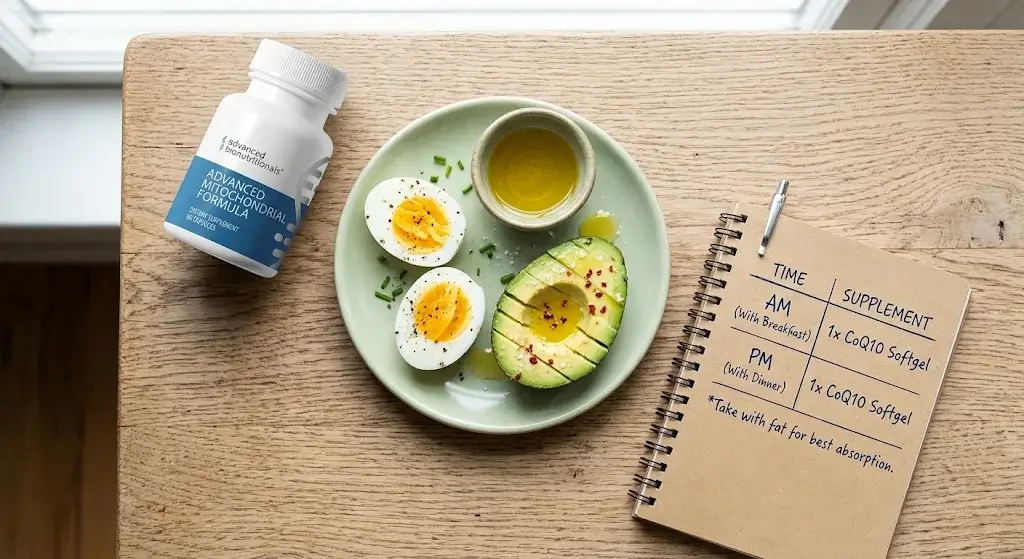
Take CoQ10 with a meal that contains fat (avocado, olive oil, eggs, nuts). It’s lipid-soluble, so absorption roughly doubles when taken with dietary fat. I usually suggest:
- Morning: 50–100 mg with breakfast (eggs + olive oil toast, for example).
- Afternoon (if dosing 200 mg+): 50–100 mg with lunch or dinner.
Avoid taking it right before bed if you find it mildly stimulating in the first few days (a small percentage of people report this).
Form choice
| Factor | Ubiquinone | Ubiquinol |
| Cost | Lower | Higher (2–3×) |
| Stability | More stable on shelf | Less stable; needs proper packaging |
| Conversion | Body converts to ubiquinol (may be less efficient after ~50) | Already in active form |
| Best for | Adults under 50, general use | Adults over 60, those on multiple meds, documented conversion issues |
Pairing with other mitochondrial nutrients
CoQ10 works alongside other cofactors. If you’re building a broader energy-support stack, consider:
- Magnesium (a cofactor for ATP synthase)
- B-vitamins (B2/riboflavin for FAD, B3/niacin for NAD⁺, B5 for CoA)
- Iron (a component of Complex I, III, IV)
I’ve written a deeper breakdown of which nutrients support normal energy metabolism if you want to see the full cofactor picture.
Common Mistake: Buying a 300 mg CoQ10 pill and taking it on an empty stomach at 11 p.m. You’ll get poor absorption, possible mild GI upset, and no real benefit. Pair it with a fat-containing meal, split the dose, and be consistent for 4–6 weeks before judging results.
Dosing, Timing, and Form: Quick Reference
| Goal | Dose | Form | Timing | Duration to assess |
| General energy support | 100 mg/day | Ubiquinone or ubiquinol | With breakfast (fat) | 4–6 weeks |
| Statin-related fatigue | 100–200 mg/day | Ubiquinol preferred | Split AM/PM with meals | 6–8 weeks (check with prescriber) |
| Older adult (60+) | 100–200 mg/day | Ubiquinol | With meals containing fat | 6–8 weeks |
| Cardiac support (adjunct) | 100–300 mg/day | Per cardiologist | As directed | Per medical plan |
[PHOTO: A flat-lay photo of a CoQ10 supplement bottle next to a plate with eggs, avocado, and olive oil, with a small notebook showing a simple AM/PM dosing schedule.]
Safety Notes and Who Should Be Cautious
CoQ10 is generally well tolerated at the doses above. The NCCIH lists mild GI upset, headache, and insomnia as the most common side effects at higher doses. Serious adverse events are rare in published literature.
Talk to your doctor before starting CoQ10 if you:
- Take blood thinners (warfarin, DOACs) – CoQ10’s structure is similar to vitamin K, and there’s a theoretical interaction.
- Are pregnant or breastfeeding – safety data in these populations is limited.
- Have liver or kidney disease – metabolism and clearance may be altered.
- Are scheduled for surgery – stop 2 weeks prior, as it may affect blood sugar and blood pressure.
- Take statins or multiple medications – your prescriber should confirm dosing and monitor.
This is not a “take it and forget it” supplement if you’re managing a chronic condition. It’s a tool, not a treatment.
Related Tips: Supporting Mitochondrial Health Beyond a Pill
CoQ10 is one gear in a larger machine. If your goal is genuinely better cellular energy, here’s what I tell clients:
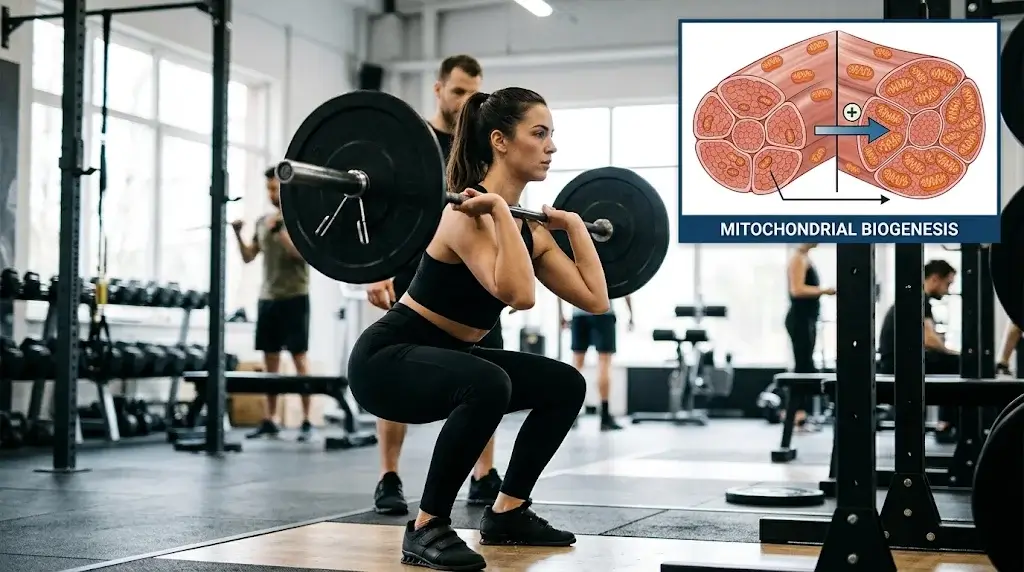
- Resistance training 2–3×/week. Muscle contractions stimulate mitochondrial biogenesis (new mitochondria are built). A simple program of squats, deadlifts, rows, and presses at 3 sets of 8–12 reps does more for mitochondrial density than any supplement. I’ve outlined a practical guide to increasing metabolism naturally after 40 that includes a sample strength block.
- Zone 2 cardio. 2–3 sessions of 30–45 minutes at a conversational pace (you can speak in short sentences) trains your mitochondria to oxidize fat efficiently.
- Sleep 7–9 hours. Mitochondrial repair and CoQ10 recycling happen during deep sleep. I’ve covered how sleep affects metabolism and weight management in detail.
- Eat enough protein and micronutrients. You need tyrosine (for CoQ10 synthesis), iron, magnesium, and B-vitamins. A complete guide to supporting metabolism naturally walks through the dietary side.
- Manage chronic stress. Elevated cortisol over weeks impairs mitochondrial function. Even 10 minutes of box breathing or a walk after work helps.
If you’re exploring non-stimulant options for daily energy, my guide on which supplements support metabolism without stimulants compares CoQ10 alongside L-carnitine, B-vitamins, and adaptogens.
FAQ
Does CoQ10 actually improve mitochondrial function in healthy adults?
Research confirms CoQ10 is essential for electron transport and ATP synthesis. In healthy, well-nourished adults with normal CoQ10 levels, supplementation hasn’t shown a dramatic “boost” beyond baseline. The clearest benefit appears in people with depleted levels (statin users, older adults, those with certain mitochondrial disorders).
How long does it take to feel CoQ10’s energy benefits?
Most clients I work with notice a subtle difference in afternoon energy or post-workout recovery after 4–6 weeks of consistent 100 mg/day dosing. It’s not a caffeine-style spike. If you feel nothing after 8 weeks, the issue may be sleep, training load, or another nutrient gap.
Can I take CoQ10 with other supplements?
Yes, generally. It pairs well with magnesium, B-vitamins, and omega-3s. Avoid taking it within 30 minutes of warfarin or other blood thinners without medical guidance. If you’re on a multi-supplement stack, stagger timing to avoid GI discomfort.
What’s the difference between CoQ10 and CoQ10 ubiquinol?
They’re the same molecule in two charge states. Ubiquinone is oxidized; ubiquinol is reduced (the active form in the electron transport chain). Your body converts ubiquinone to ubiquinol, but that conversion may be less efficient after age 50. Ubiquinol skips the conversion step.
Is CoQ10 safe to take long-term?
Published studies have used CoQ10 daily for up to 2–3 years without significant adverse effects at 100–300 mg/day. Still, periodic check-ins with your doctor (especially if you take other medications) are wise. It’s not a “forever, no-monitoring” supplement.
Will CoQ10 help with exercise performance?
In well-fueled, non-deficient athletes, the evidence for a performance “edge” is weak. It may support recovery and reduce oxidative stress during prolonged endurance events, but it won’t replace training, fueling, or sleep. Think of it as maintenance, not a turbocharger.
Conclusion: A Practical, Evidence-Based Add to Your Energy Toolkit
CoQ10 benefits for mitochondrial energy production are real, but they’re specific. CoQ10 is not a stimulant. It doesn’t override poor sleep, chronic stress, or a sedentary routine. What it does do is keep the electron transport chain running smoothly, protect mitochondrial membranes from oxidative damage, and help your cells convert food into usable ATP.
If you’re a statin user noticing new fatigue, an over-40 adult feeling the slow energy drift, or someone who simply wants to support the cellular machinery that powers every rep, every step, and every thought, a 100 mg daily dose of CoQ10 taken with a fat-containing meal is a low-risk, well-studied step. Pair it with resistance training, quality sleep, and adequate micronutrients, and you’re giving your mitochondria the full toolkit they need.
Check with your doctor before adding CoQ10 to your routine, especially if you take blood thinners, are pregnant, or manage a chronic condition. And remember: no supplement replaces the boring, effective fundamentals—move your body, eat real food, sleep enough, and manage stress.