
You don’t need a supplement stack, a 5 a.m. cold plunge, or a 600-calorie-a-day diet to fix your metabolism. What you do need is a repeatable plan built on the things that actually move the needle: building muscle, managing blood sugar, sleeping well, and moving your body in the right zones. In this guide, I’ll walk you through exactly how to improve metabolic health naturally using the same principles I lay out for every client who walks into my gym. No guesswork. No fads. Just the evidence-based steps, in the right order, with the right volume.
Quick Answer: To improve metabolic health naturally, combine 2–3 days of progressive resistance training per week with 150 minutes of moderate cardio, eat 0.6–0.8 g of protein per pound of body weight daily, get 7–9 hours of sleep, and manage chronic stress. These four pillars work together to boost insulin sensitivity, increase resting metabolic rate, and reduce the risk of metabolic syndrome.
What Metabolic Health Actually Means (and Why It Matters More Than the Scale)
Metabolic health is your body’s ability to process and use energy efficiently. It’s not one number. It’s a cluster of markers: fasting blood glucose, HbA1c, triglycerides, HDL cholesterol, blood pressure, and waist circumference. When several of these drift out of range at the same time, doctors call it metabolic syndrome, and it’s linked to a higher risk of type 2 diabetes and cardiovascular disease, according to the Mayo Clinic.
Here’s the part most people miss: you can be overweight and metabolically healthy, or lean and metabolically struggling. Muscle mass, activity level, and sleep quality often matter more than the number on the scale. That’s why the strategies below focus on function, not just weight loss.
The good news? Research consistently shows that regular physical activity, especially resistance training, improves insulin sensitivity and glucose handling within weeks, even before significant weight changes occur, as noted in reviews published in the Journal of Strength and Conditioning Research. You don’t have to be “in shape” to start. You just have to start.

The 7 Evidence-Based Strategies to Improve Metabolic Health Naturally
1. Build Muscle with Progressive Resistance Training
Muscle is your body’s biggest glucose sink. The more functional muscle you carry, the more glucose your cells can pull out of your bloodstream after a meal, which directly improves insulin sensitivity. The HHS 2018 Physical Activity Guidelines recommend muscle-strengthening activity on at least two days per week for adults. I push most clients to three.
What to do:
- Pick 4–5 compound lifts: goblet squats, Romanian deadlifts, dumbbell rows, overhead presses, and push-ups.
- Start with a weight you can do for 8–12 reps with good form. For a goblet squat, that’s often a 25–40 lb (11–18 kg) dumbbell for a beginner.
- Do 3 sets of 8–12 reps, resting 60–90 seconds between sets.
- Add a small amount of weight (2.5–5 lb / 1–2.5 kg) or one extra rep each week. That’s progressive overload, and it’s the single most important variable for building muscle.

Easier version (regression): Box squats using a chair (sit down and stand up, 3 × 12), wall push-ups, and banded rows.
Harder version (progression): Front squats, barbell deadlifts, weighted pull-ups, and adding a 3-1-3 tempo (3 seconds down, 1 second pause, 3 seconds up).
Coach’s Tip: You don’t need a full gym. A pair of adjustable dumbbells (10–70 lb / 5–32 kg range), a pull-up bar, and a set of resistance bands cover 90% of what you need. Consistency beats equipment.
2. Move More: Zone 2 Cardio and Daily Steps
Zone 2 cardio is steady-state exercise where you can hold a conversation but can’t sing. Think a brisk walk at 3–4 mph (5–6.5 km/h), easy cycling, or a light row. It trains your mitochondria to burn fat efficiently and improves cardiovascular fitness without spiking cortisol the way high-intensity intervals do.
Aim for 150–300 minutes of moderate activity per week, which aligns with the CDC’s physical activity recommendations. That’s roughly 30 minutes, five days a week, or 45 minutes, four days a week.
On top of that, try to hit 7,000–10,000 steps daily. You don’t need a fancy watch. A phone in your pocket works. The low-level movement throughout the day (NEAT – non-exercise activity thermogenesis) adds up to a meaningful calorie burn over the week and keeps your insulin response steady.

Easier version: 20-minute walks after lunch and dinner, three days a week.
Harder version: 45-minute zone 2 sessions four to five days a week, plus a weekly 60–90 minute long walk or bike ride.
3. Prioritize Protein at Every Meal
Protein has the highest thermic effect of any macronutrient – your body burns more calories digesting it – and it supports the muscle-building process from strategy #1. Research reviewed by the ACSM suggests that adequate protein intake (roughly 0.6–0.8 g per pound of body weight, or 1.2–1.8 g per kg) helps preserve lean mass during calorie deficits and supports satiety.
Practical targets:
- Breakfast: 20–30 g (eggs, Greek yogurt, cottage cheese)
- Lunch: 30–40 g (chicken, fish, tofu, legumes)
- Dinner: 30–40 g (lean beef, turkey, tempeh)
- Snack (if needed): 10–15 g (protein shake, edamame)
You don’t need to count every gram. A palm-sized portion of protein at each meal is a solid visual cue. Pair it with fiber-rich vegetables and whole grains to keep blood sugar steady.
4. Manage Blood Sugar with Food Timing and Fiber
You don’t need to go keto or eliminate carbs to improve glucose handling. What helps is how you structure meals:
- Fiber first. Start meals with vegetables or a small amount of soluble fiber (oats, beans, berries). This slows gastric emptying and blunts the glucose spike.
- Pair carbs with protein and fat. A piece of fruit is fine; a piece of fruit with a handful of almonds or a spoonful of nut butter is even better for glucose control.
- Avoid liquid sugar. Sodas, fruit juices, and sweetened coffee drinks send glucose into your bloodstream faster than whole foods.
- Move after meals. A 10-minute walk after your largest meal can reduce post-meal blood sugar by a meaningful margin, according to research summarized by Harvard Health.
If you want to dig deeper into the nutrition side, check out our guide on which nutrients support normal energy metabolism for a breakdown of the vitamins and minerals that play direct roles in glucose processing.
5. Protect Your Sleep (7–9 Hours)
Sleep is where your body resets insulin sensitivity, regulates hunger hormones (ghrelin and leptin), and clears metabolic waste. Chronic short sleep – consistently under 6 hours – is linked to higher fasting glucose and increased visceral fat, as discussed in a NIH/NCBI review on sleep and metabolic health.
Non-negotiables:
- Aim for 7–9 hours in bed, with at least 6.5 hours of actual sleep.
- Keep a consistent bedtime and wake time, even on weekends.
- Cut screens 30–60 minutes before bed.
- Keep your bedroom cool (around 65–68 °F / 18–20 °C) and dark.
Sleep is not a “nice to have.” It’s a metabolic intervention as powerful as any single workout. If you’re struggling here, our article on how sleep affects metabolism and weight management breaks down the hormonal chain in plain language.
6. Reduce Chronic Stress
Cortisol, your primary stress hormone, raises blood glucose and promotes fat storage around the midsection when it’s chronically elevated. You can’t eliminate stress, but you can lower your baseline.
What actually works:
- Breathwork: 5 minutes of box breathing (inhale 4 counts, hold 4, exhale 4, hold 4) before bed or after a stressful meeting.
- Daily movement: Even a 15-minute walk outside lowers cortisol more effectively than sitting at a desk.
- Boundaries: Protect one “no” per day. You don’t have to say yes to every invitation, meeting, or scroll session.
- Limit alcohol: More than 2 drinks (for women) or 3 drinks (for men) per day is associated with higher triglycerides and disrupted sleep, per CDC guidance.
7. Stay Consistent: The 80/20 Rule
You will miss workouts. You will eat a pizza on a Friday. You will stay up late before a big presentation. That’s normal. Metabolic health is built over months and years, not single perfect weeks.
Aim to hit your targets 80% of the time. Two missed sessions in a week don’t erase three solid ones. The WHO physical activity guidelines emphasize that any movement is better than none, and that building up gradually is more sustainable than going all-in and burning out.
Track what you can (steps, workouts completed, sleep hours) but don’t obsess over every metric. The goal is a lifestyle you can maintain for the next decade, not a 14-day challenge.
A Sample Weekly Metabolic Health Routine
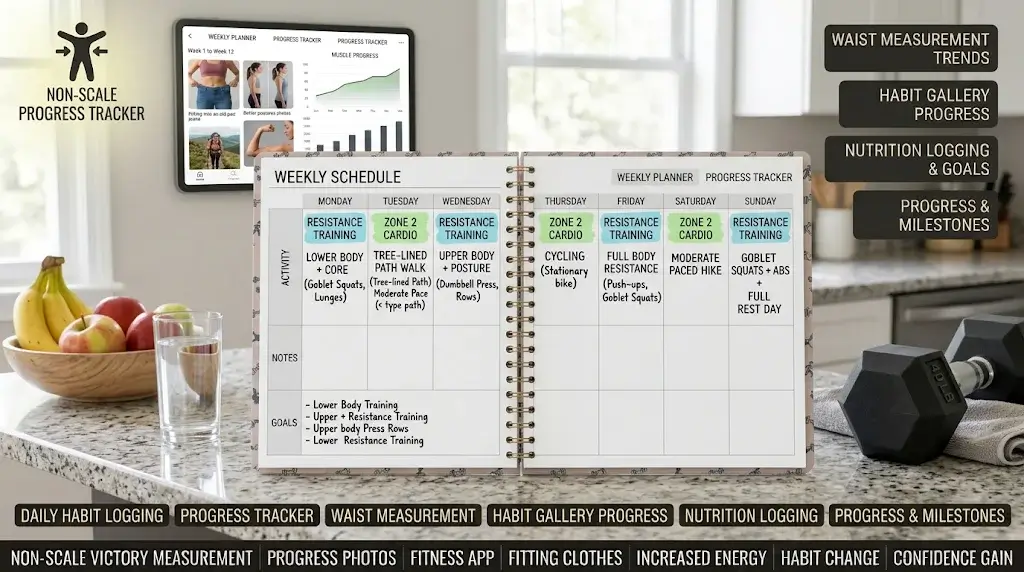
| Day | Focus | Details |
| Monday | Resistance (Upper) | Dumbbell rows 3×10, overhead press 3×10, push-ups 3×12, banded pull-aparts 2×15. Rest 60–90 s. |
| Tuesday | Zone 2 Cardio | 35-min brisk walk or easy bike. Keep heart rate at 60–70% of max. |
| Wednesday | Resistance (Lower) | Goblet squats 3×10, Romanian deadlifts 3×10, step-ups 3×8/leg, calf raises 3×15. |
| Thursday | Active Recovery | 20-min walk + 10-min stretching or yoga. Focus on hips, thoracic spine, ankles. |
| Friday | Resistance (Full Body) | Deadlifts 3×8, bench press 3×10, lat pulldown or pull-ups 3×10, farmer’s carry 3×30 s. |
| Saturday | Zone 2 Cardio + Steps | 45-min walk, hike, or swim. Hit 10,000+ steps. |
| Sunday | Rest / Light Movement | No structured workout. A casual walk, gardening, or play with kids counts. |
Progression plan:
- Weeks 1–4: Focus on form. Use lighter weights. Build the habit.
- Weeks 5–8: Add 2.5–5 lb (1–2.5 kg) to lifts. Add 5 minutes to cardio sessions.
- Weeks 9–12: Add a 4th set to key lifts. Introduce one interval session (e.g., 6 × 30 s hard / 90 s easy on a bike) to push cardiovascular capacity.
- Month 4+: Reassess. Adjust weights, swap exercises, and set new targets.
How to Improve Metabolic Health Naturally After 40 (and With Specific Concerns)
After 40, muscle loss (sarcopenia) accelerates, and insulin sensitivity tends to decline even without a change in weight. That makes the resistance training and protein strategies above more important, not less. If you’re in this age group, our guide on how to increase metabolism naturally after 40 covers the specific adjustments I make for clients in that range.
If you have a diagnosed condition – type 2 diabetes, prediabetes, hypertension, or a history of cardiovascular disease – talk to your doctor or a physical therapist before starting a new exercise program. They can clear you for specific intensities and flag any movement patterns you should avoid. This is not a reason to skip exercise; it’s a reason to start smarter.
Common Mistake: Doing only cardio and skipping resistance training. You can burn calories on a treadmill, but you won’t build the muscle that keeps your resting metabolic rate high and your glucose handling sharp. If you only have 30 minutes a day, split it: 20 minutes of lifting, 10 minutes of walking.
Related Tips That Make the Difference
- Strength train before you cardio on the same day, so you have fresh energy for the lifts.
- Don’t skip the warm-up. Five minutes of easy cycling, arm circles, and bodyweight squats reduces injury risk and primes your joints.
- Hydrate. Aim for roughly 0.6 oz (18 ml) of water per pound of body weight daily. Dehydration blunts workout performance and can worsen fatigue.
- Check in with your numbers. If you have access to a home blood glucose meter or a continuous glucose monitor, use it for 1–2 weeks to see how specific meals affect your glucose. It’s eye-opening and helps you personalize your food choices.
- Build metabolic flexibility. This means your body can efficiently switch between burning carbs and fat. Regular zone 2 cardio plus resistance training is the most natural way to develop it. Our article on how to boost metabolic flexibility without crash dieting goes deeper on this concept.
FAQ
How long does it take to improve metabolic health naturally?
You can expect to feel more energetic and notice better sleep within 2–3 weeks of consistent training and sleep habits. Measurable changes in fasting glucose, HbA1c, and lipid markers typically show up in 6–12 weeks, depending on your starting point and consistency.
What is the best single exercise for metabolic health?
There’s no single “best” exercise, but compound lifts like the goblet squat and Romanian deadlift engage the largest muscle groups, which means the biggest glucose uptake and the highest caloric demand. Pair them with zone 2 cardio for the most complete metabolic stimulus.
Can I improve metabolic health without going to a gym?
Yes. Bodyweight squats, push-ups, lunges, and plank variations build meaningful muscle, especially in the first few months. Add a pair of resistance bands and a pair of adjustable dumbbells for progression. Consistency matters far more than the location.
Do I need to cut carbs to fix my metabolism?
No. The type and context of your carbs matter more than the total amount. Whole grains, legumes, and starchy vegetables paired with protein and fiber produce a much gentler glucose response than refined sugars and white bread. Focus on quality and timing, not elimination.
What if I’m sedentary and just starting out?
Start with 10-minute walks, three times a day. Add one bodyweight exercise (like a chair squat) each week. The goal is to go from zero to something. The CDC recommends building activity gradually, and that’s exactly what you should do.
Does metabolic health mean I’ll lose weight automatically?
Not necessarily. Metabolic health and body weight are related but not identical. You can improve insulin sensitivity, lower triglycerides, and reduce cardiovascular risk without losing a single pound. That said, the combination of resistance training, protein intake, and consistent movement often leads to gradual fat loss as a byproduct.
Conclusion: Small Changes, Big Metabolic Returns
Learning how to improve metabolic health naturally isn’t about finding the perfect protocol or the magic supplement. It’s about stacking small, evidence-based habits that compound over time. Lift heavy things a few times a week. Walk more than you think you need to. Eat enough protein. Sleep like it matters (because it does). Manage your stress. Do this 80% of the time, and your body will respond.
You don’t need to overhaul your life on Monday. Pick one strategy from this list – maybe it’s adding a 15-minute walk after dinner, or maybe it’s adding goblet squats to your routine – and do that for two weeks. Then add the next one. Momentum is built one small win at a time.
If you want to go further on the nutrition and lifestyle side, our complete guide on how to support metabolism naturally for weight management covers the full picture, from thermogenesis to food choices. And if you’re curious about the factors that influence your resting metabolic rate in the first place, take a look at what affects metabolism and body weight for a plain-English breakdown.
Your metabolism isn’t broken. It’s just waiting for the right inputs. Give it those inputs, and it will do its job.