Every physical movement you make—whether lifting a heavy barbell, sprinting across a soccer pitch, or simply walking up a flight of stairs—begins deep inside your cells. At the center of this biological energy transfer is a remarkable molecule known as Nicotinamide Adenine Dinucleotide (NAD+). Understanding how NAD+ supports mitochondrial function is essential for anyone looking to optimize athletic performance, combat age-related fatigue, and improve long-term metabolic health. As a strength coach, I often see clients focus intensely on external variables like rep ranges, macro splits, and sleep tracking while ignoring the microscopic engines powering every contraction.

The Cellular Blueprint: What Is NAD+?
Nicotinamide Adenine Dinucleotide (NAD+) is not a stimulant, hormone, or novel vitamin; it is a foundational coenzyme required for fundamental life processes. Discovered over a century ago by researchers investigating yeast fermentation, NAD+ exists in two primary states within the human body: NAD+ (the oxidized form) and NADH (the reduced form). This dynamic duo acts as a molecular shuttle service, constantly accepting and donating electrons to drive metabolic pathways.
Without adequate levels of NAD+, human cells cannot metabolize carbohydrates, fats, or proteins into usable energy. Every tissue in the human body—from skeletal muscle fibers to neurons in the brain—relies on a continuous supply of this coenzyme to maintain cellular homeostasis. Research published in the National Institutes of Health (NIH) PMC database highlights that maintaining optimal NAD+ pools is critical not only for immediate energy production but also for long-term genomic stability and cellular resilience.
When evaluating how to support metabolism naturally for weight management, researchers frequently point to cellular redox balance as a primary regulator. If your cells lack sufficient NAD+, metabolic efficiency plummets, leading to sluggish energy output, impaired fat oxidation, and decreased exercise tolerance.
Inside the Powerhouse: Anatomy and Physiology of Mitochondria
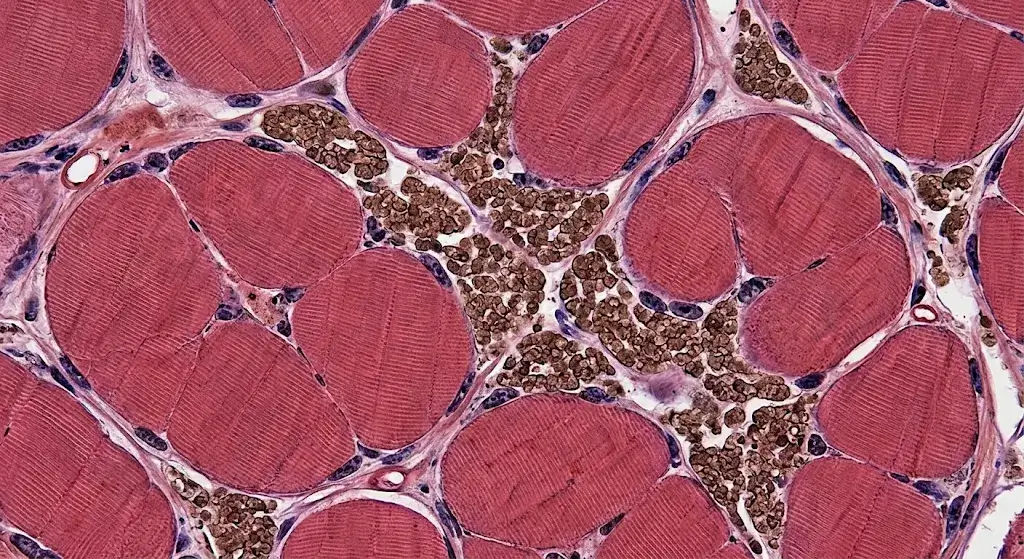
To understand how NAD+ supports mitochondrial function, we must first examine the mitochondria themselves. Often dubbed the “powerhouses of the cell,” mitochondria are double-membraned organelles dispersed throughout your cytoplasm. In skeletal muscle tissue, high-energy demands require dense clusters of mitochondria packed right next to the contractile proteins (actin and myosin).
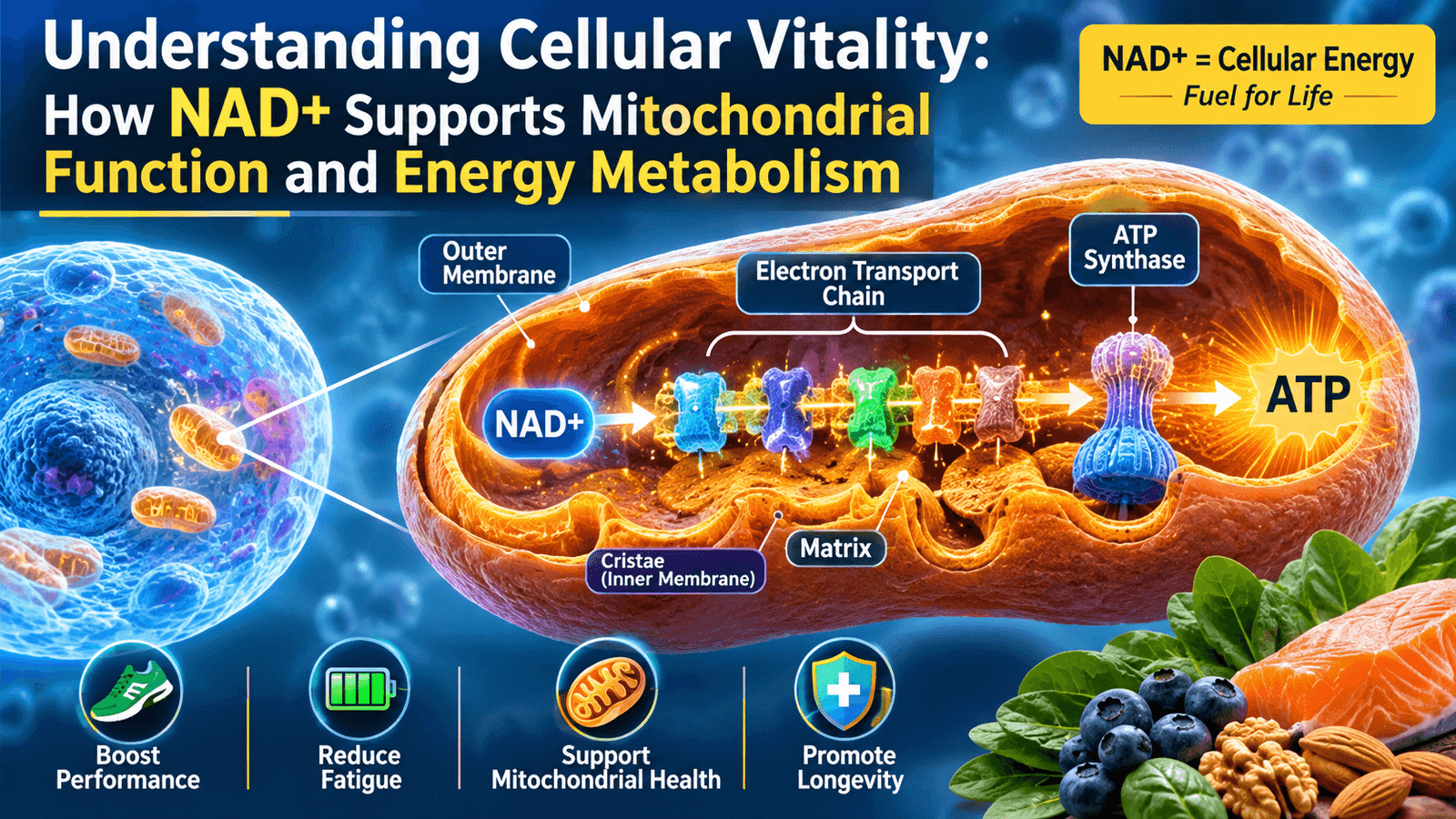
Each mitochondrion features an outer membrane, an intermembrane space, a highly folded inner membrane known as cristae, and a central matrix. These folds are not decorative; they maximize surface area, providing more room for the complex enzymatic machinery responsible for cellular respiration.
- Outer Membrane: Acts as a protective barrier and regulates transport in and out of the organelle.
- Inner Membrane (Cristae): Houses the electron transport chain complexes and ATP synthase enzymes.
- Matrix: Contains the enzymes responsible for the citric acid cycle (Krebs cycle), where carbon bonds from macronutrients are broken down.
The health and number of these organelles dictate your physical capacity. As we age or adopt sedentary habits, mitochondrial density decreases, and structural integrity degrades. Restoring cellular efficiency requires looking closely at which nutrients support normal energy metabolism and how precursors feed into the mitochondrial network.
The Biochemical Bridge: How NAD+ Drives ATP Production
Adenosine triphosphate (ATP) fuels every muscular contraction. When you perform a heavy deadlift or a high-intensity interval sprint, your muscle cells break down ATP into ADP (adenosine diphosphate) and inorganic phosphate, releasing rapid energy. To keep moving, your body must rapidly regenerate ATP. This is where NAD+ plays its starring role.
During glycolysis (the breakdown of glucose in the cytoplasm) and the citric acid cycle (occurring inside the mitochondrial matrix), enzymes strip high-energy electrons from nutrient molecules. NAD+ steps in as the primary electron acceptor, transforming into NADH.
- Glycolysis Phase: Glucose is split into pyruvate, generating a small net yield of ATP and reducing NAD+ into NADH.
- Citric Acid Cycle: Acetyl-CoA enters the mitochondrial matrix, undergoing a series of redox reactions that reduce more NAD+ and FAD into NADH and FADH2.
- Electron Transport Delivery: The newly formed NADH molecules shuttle directly to the inner mitochondrial membrane, delivering their cargo of electrons to the electron transport chain.
Without NAD+ acting as this essential intermediary, the entire chain grinds to a halt. You can consume all the macronutrients in the world, but without functioning NAD+ shuttles, cellular respiration cannot convert those calories into physical power.
Redox Reactions and Electron Transport: The Core Mechanism
The true brilliance of how NAD+ supports mitochondrial function lies in the electron transport chain (ETC). The ETC consists of four multi-protein complexes embedded in the inner mitochondrial membrane.
When NADH arrives at Complex I (NADH dehydrogenase), it surrenders its acquired electrons and hydrogen ions, reverting back to NAD+. This transaction releases energy, which Complex I uses to pump protons (H+ ions) from the mitochondrial matrix across the inner membrane into the intermembrane space.
This directional pumping creates an electrochemical gradient—essentially a biological battery. Protons rush back down their concentration gradient through an enzyme turbine called ATP synthase. As protons spin through ATP synthase, ADP is phosphorylated into ATP.
- Complex I: Accepts electrons from NADH, pumping protons and recycling NAD+.
- Complex II: Accepts electrons from FADH2.
- Complex III & IV: Transfer electrons to molecular oxygen, forming water and maintaining the proton gradient.
- ATP Synthase: Utilizes the proton motive force to synthesize ATP from ADP.
If NAD+ availability drops, Complex I stalls. The proton gradient weakens, ATP synthesis slows down, and cellular energy stress increases. This biochemical bottleneck explains why individuals with low cellular energy availability often experience chronic fatigue and reduced athletic output.
Cellular Guardians: Sirtuins, PARPs, and NAD+ Consumption
Energy production is only part of the equation. NAD+ also serves as an indispensable co-substrate for several crucial families of enzymes, most notably sirtuins (SIRT1 through SIRT7) and poly(ADP-ribose) polymerases (PARPs).
Sirtuins are often referred to as “longevity genes” or master regulators of metabolic health. They control mitochondrial biogenesis (the creation of new mitochondria), reduce oxidative stress, and regulate inflammation. However, there is a metabolic catch: sirtuins cannot function without consuming NAD+. Every time a sirtuin deacetylates a target protein to repair DNA or optimize metabolism, one molecule of NAD+ is permanently consumed in the process.
Similarly, PARPs are enzymes responsible for repairing single-strand DNA breaks. When DNA experiences stress from intense exercise, ultraviolet radiation, or metabolic byproducts, PARP consumption skyrockets. Excessive DNA damage can deplete cellular NAD+ pools entirely, crippling mitochondrial function in the process.
| Enzyme Family | Primary Function | Relationship with NAD+ |
| Sirtuins (SIRT1-7) | Regulate mitochondrial biogenesis, metabolism, and stress resistance. | Consumes one NAD+ molecule per enzymatic reaction. |
| PARPs | Detect and repair damaged cellular DNA. | Rapidly depletes cellular NAD+ during high genomic stress. |
| CD38 | Regulates immune response and inflammatory signaling. | Acts as a major enzymatic consumer of NAD+. |
Understanding this dynamic highlights why cellular energy management is a balancing act between synthesis and consumption. Exploring how to boost metabolic flexibility without crash dieting helps preserve these delicate intracellular balances.
Exercise as a Metabolic Catalyst: How Training Influences NAD+
As a strength and conditioning coach, I am often asked if physical training alters cellular NAD+ levels. The answer is a resounding yes. Exercise is one of the most potent physiological stimuli for enhancing mitochondrial health and upregulating NAD+ biosynthesis.
When you engage in cardiovascular exercise (such as Zone 2 endurance work) or high-intensity resistance training, your muscles experience a temporary surge in energy demand. The resulting drop in the ATP-to-AMP ratio signals an energetic crisis to the cell, activating an enzyme called AMPK (AMP-activated protein kinase).
AMPK triggers a cascade of adaptations designed to improve cellular efficiency:
- Upregulates NAMPT (nicotinamide phosphoribosyltransferase), the rate-limiting enzyme in the NAD+ salvage pathway.
- Stimulates PGC-1alpha, the master transcriptional coactivator that drives mitochondrial biogenesis.
- Enhances fatty acid oxidation and glucose uptake in skeletal muscle tissue.
Nutritional and Lifestyle Strategies for Cellular Optimization
Because NAD+ levels decline naturally with age and high metabolic stress, supporting your body’s biosynthetic pathways through nutrition and lifestyle is critical. Your cells manufacture NAD+ using several dietary precursors, collectively known as the vitamin B3 family.
Dietary Precursors
- Nicotinamide (NAM): Found widely in poultry, fish, mushrooms, and green vegetables.
- Nicotinic Acid (Niacin): The classic niacin form found in fortified grains, meats, and peanuts.
- Nicotinamide Riboside (NR) & Nicotinamide Mononucleotide (NMN): Advanced precursors researched extensively for their ability to elevate cellular NAD+ pools efficiently.
Maintaining adequate daily protein intake and micronutrient variety supports these enzymatic pathways. Incorporating best vitamins for energy while dieting ensures that your body has the raw enzymatic cofactors required for sustained metabolic output.
Common Misconceptions in Cellular Health and Longevity
The wellness space is rife with exaggerated claims regarding NAD+ and mitochondrial health. As a practitioner, cutting through the marketing noise is essential for realistic goal setting.
- Misconception: NAD+ IV drips instantly recharge your cellular batteries forever.
- Reality: While intravenous infusions can acutely raise circulating blood NAD+ levels, cellular uptake is complex, and long-term metabolic health still depends on consistent exercise, nutrition, and sleep habits.
- Misconception: More NAD+ always equals more muscle growth.
- Reality: NAD+ supports the cellular environment required for energy production and repair, but muscular hypertrophy ultimately requires progressive mechanical tension, adequate caloric intake, and proper recovery.
- Misconception: Cellular aging can be completely reversed overnight.
- Reality: Supporting mitochondrial function slows down age-related metabolic decline, but it is a cumulative, lifelong process rather than a quick fix.
Integrating evidence-based approaches with can supplements improve insulin sensitivity a coachs evidence based guide ensures your metabolic strategy remains grounded in solid science.
Practical Action Plan: A Sample Weekly Routine for Metabolic Energy
To put these scientific principles into practice, here is a balanced weekly training and nutrition framework designed to support natural mitochondrial function and cellular vitality.
| Day | Training Focus | Duration / Intensity | Nutritional Focus |
| Monday | Lower Body Strength | 45-60 min (RPE 8) | High protein, moderate complex carbs |
| Tuesday | Zone 2 Aerobic Base | 40 min steady-state (60-70% HR max) | Balanced macros, rich in B-vitamins |
| Wednesday | Upper Body Strength | 45-60 min (RPE 8) | Adequate hydration, antioxidant-rich foods |
| Thursday | Active Recovery | 30 min brisk walking / mobility | High fiber, healthy fats |
| Friday | Full Body Hypertrophy | 50 min resistance training | Protein pacing every 3-4 hours |
| Saturday | Interval Conditioning | 25 min HIIT / Sprint intervals | Carbohydrate refuel post-session |
| Sunday | Complete Rest | Passive recovery & stretching | Nutrient-dense whole foods |
Frequently Asked Questions
What is the primary role of NAD+ in the mitochondria?
NAD+ functions as an essential electron acceptor and coenzyme in the electron transport chain. By accepting electrons during cellular respiration, it enables the formation of a proton gradient that drives ATP synthase to produce adenosine triphosphate, powering cellular activity.
How does aging affect NAD+ levels in human tissue?
Scientific studies indicate that tissue NAD+ levels decline significantly with advancing age. This reduction is driven by decreased biosynthetic enzyme activity coupled with increased consumption by DNA-repair enzymes (PARPs) and inflammatory pathways (CD38).
Can physical exercise naturally increase NAD+ production?
Yes. Regular physical activity, particularly endurance and high-intensity interval training, activates AMPK and upregulates NAMPT expression. This biochemical signaling enhances the body’s salvage pathway, effectively increasing cellular NAD+ synthesis.
What are dietary precursors of NAD+?
The body synthesizes NAD+ from vitamin B3 derivatives, including nicotinamide, nicotinic acid, nicotinamide riboside, and nicotinamide mononucleotide. These compounds are found naturally in foods such as poultry, fish, milk, and green vegetables.
Why are sirtuins dependent on NAD+?
Sirtuins are a family of regulatory proteins involved in mitochondrial biogenesis, DNA repair, and stress resistance. They require NAD+ as a necessary co-substrate to perform deacetylation reactions, meaning their enzymatic activity directly consumes cellular NAD+ pools.
Conclusion
Understanding how NAD+ supports mitochondrial function bridges the gap between microscopic biochemistry and macroscopic physical performance. From driving electron transport chain complexes to fueling longevity-associated sirtuins, NAD+ is the linchpin of human cellular energy. By combining consistent exercise—such as Zone 2 cardio and progressive resistance training—with a nutrient-dense diet supporting metabolic pathways, you can optimize your cellular powerhouses for lifelong vitality and resilience.