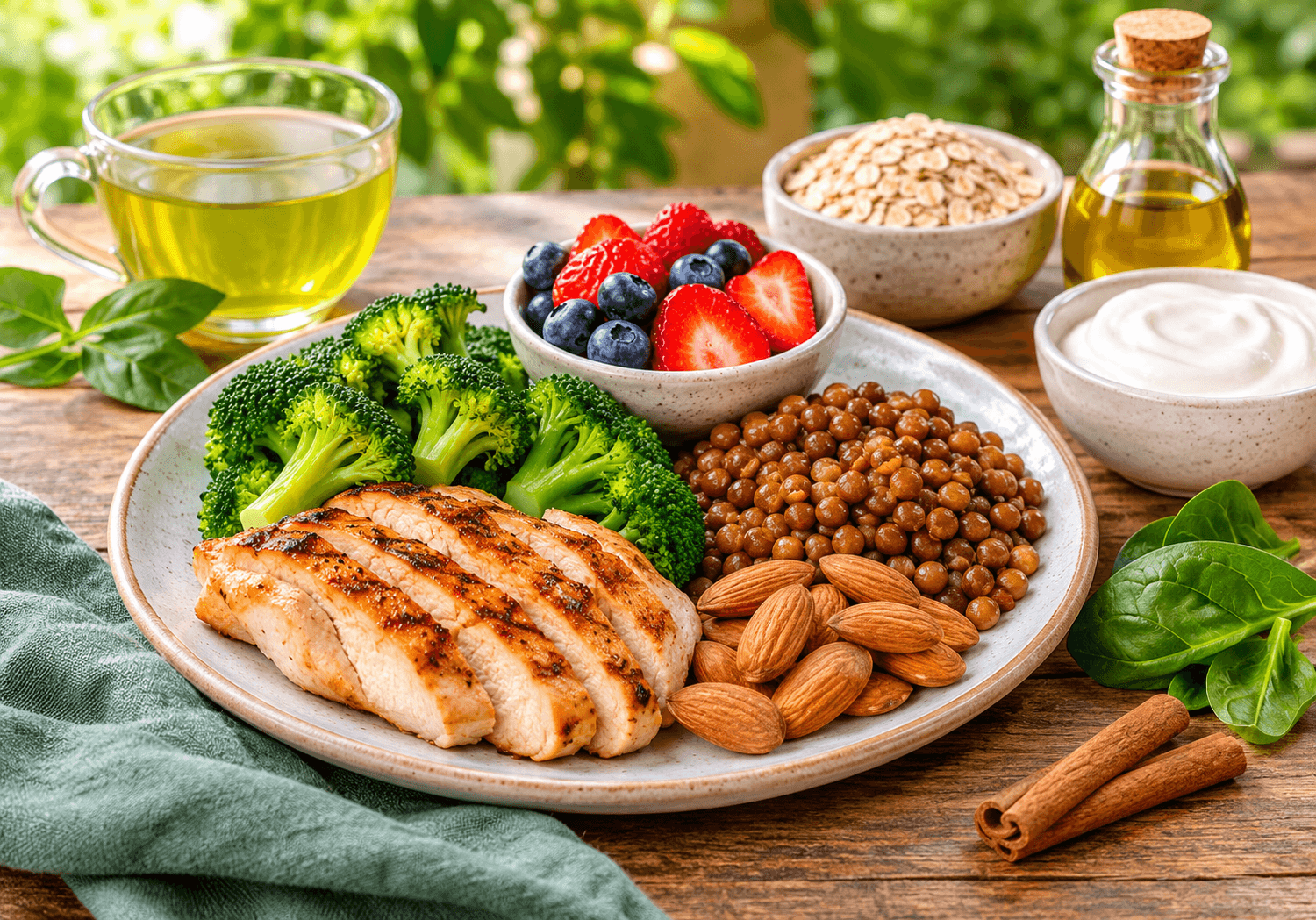
Your blood sugar just spiked after lunch, and you feel foggy, irritable, and low on energy. You reach for your phone and type “what foods lower blood sugar immediately” into the search bar. You want something you can grab right now, not a three-week meal overhaul.
Here is the honest truth: no single food acts like an insulin injection. But certain foods, eaten at the right moment, can slow glucose absorption, support your body’s own insulin response, and blunt the next spike. Research from the CDC’s diabetes nutrition guidance confirms that pairing carbohydrates with fiber, protein, and healthy fats is the most reliable way to keep post-meal blood glucose in a steadier range.
As a coach who works with clients managing energy levels, cravings, and metabolic health, I treat food the same way I treat a workout: timing, portion, and consistency matter more than any single “magic” item. Below, I break down 12 foods and drinks that have the best evidence behind them, with practical serving sizes and exactly how to use them when your glucose is running high.
⚡ Quick Answer
The fastest foods that help lower or stabilize blood sugar include non-starchy vegetables (broccoli, spinach), legumes (lentils, black beans), berries (strawberries, blueberries), nuts (almonds, walnuts), lean protein (chicken, Greek yogurt), apple cider vinegar (diluted), green tea, and soluble fiber sources (oats, chia seeds). Eating these with or before a carb-heavy meal blunts the glucose spike. No food replaces medication. If your reading is consistently above 180 mg/dL, talk to your doctor.
1. Non-Starchy Vegetables (Broccoli, Spinach, Zucchini, Peppers)
Why they work: Non-starchy vegetables are high in fiber and very low in digestible carbohydrates. A cup of raw broccoli has about 6 grams of carbs and 2.4 grams of fiber, which means they add bulk and nutrients without dumping glucose into your bloodstream. The Mayo Clinic’s type 2 diabetes diet guidance recommends filling half your plate with non-starchy vegetables at every meal.
How to use them right now:
- Steam or roast 1–2 cups (about 150–300 g) of broccoli, zucchini, or peppers.
- Toss a big handful of raw spinach into a smoothie or wrap.
- Eat them before or alongside your main carb (rice, bread, pasta) to slow gastric emptying.
Serving target: 1–2 cups per meal. Aim for at least 3 cups of non-starchy vegetables across the day.
Easier version: Grab a pre-bagged salad mix and top it with sliced cucumber and bell pepper. No cooking required.
Harder version: Roast a tray of mixed vegetables (broccoli, cauliflower, zucchini, red onion) at 425 °F (220 °C) for 20 minutes with a drizzle of olive oil.
2. Legumes (Lentils, Black Beans, Chickpeas)
Why they work: Legumes are a double threat for blood sugar management. They pack soluble fiber (which forms a gel in the gut and slows glucose absorption) and plant protein (which stimulates a steadier insulin response than carbs alone). A half-cup of cooked lentils delivers about 12 grams of fiber and 9 grams of protein. The Harvard T.H. Chan School of Public Health notes that high-fiber, high-protein plant foods are linked to lower long-term risk of type 2 diabetes.
How to use them right now:
- Open a can of rinsed black beans and stir them into a bowl of sautéed vegetables.
- Blend a small portion of cooked chickpeas into a hummus dip.
- Add a quarter-cup of cooked lentils to your soup or salad.
Serving target: ½ cup (about 100 g) cooked, 1–2 times per day.
Coach’s Tip: If you are new to legumes and get bloated, start with ¼ cup and increase by ¼ cup every few days. Pair them with a pinch of cumin or garlic to make them more palatable.
3. Berries (Strawberries, Blueberries, Raspberries)
Why they work: Berries rank low on the glycemic index (strawberries around 40, blueberries around 53) and are loaded with polyphenols and anthocyanins. Small studies published in PubMed-indexed journals have shown that blueberry and strawberry extracts may improve insulin sensitivity and reduce postprandial glucose in people with prediabetes or type 2 diabetes. The effect is modest, but it is real.
How to use them right now:
- Eat a ½-cup (about 75 g) serving of fresh or frozen berries as a snack.
- Top Greek yogurt or oatmeal with a small handful.
- Blend ½ cup of strawberries into sparkling water for a low-sugar drink.
Serving target: ½ cup fresh or ¼ cup dried (dried berries are more concentrated in sugar).
Common Mistake: Reaching for “berry-flavored” cereal or juice. Those products are loaded with added sugar and will spike glucose faster than the fruit itself. Read the label: if sugar or a sugar syrup is in the first three ingredients, put it back.
4. Nuts (Almonds, Walnuts, Pistachios)
Why they work: A small handful of nuts delivers monounsaturated fat, protein, and fiber in one bite. The fat and protein slow the rate at which carbohydrates from the rest of your meal enter the bloodstream. Research summarized by the Cleveland Clinic’s nutrition team highlights that adding a small amount of nut butter or whole nuts to a high-carb meal can reduce the post-meal glucose peak.
How to use them right now:
- Grab 1 oz (about 28 g, roughly a small handful) of raw almonds or walnuts.
- Spread 1 tablespoon of almond butter on a rice cake instead of white bread.
- Sprinkle crushed walnuts over a salad or stir-fry.
Serving target: 1 oz (28 g) per snack. Avoid salted, honey-roasted, or candy-coated varieties.
Easier version: Keep a small zip-top bag of pre-portioned almonds in your desk or gym bag.
Harder version: Make a simple trail mix: ½ cup raw walnuts, ¼ cup pumpkin seeds, ¼ cup dark chocolate chips (70% cacao or higher), and a pinch of cinnamon.
5. Lean Protein (Chicken Breast, Turkey, Salmon, Tofu)
Why they work: Protein has a minimal direct effect on blood glucose, but it is the anchor that keeps your meal from being all carbs. The American Diabetes Association recommends including a lean protein source at each meal to promote satiety and stabilize glucose curves. A 4-oz (113 g) serving of grilled chicken breast gives you about 31 grams of protein with virtually zero carbs.
How to use them right now:
- Grill or pan-sear 4–6 oz (113–170 g) of chicken, turkey, or white fish.
- Sauté ½ cup of cubed tofu with soy sauce and garlic.
- Eat a 3-oz (85 g) can of tuna in water with a side of vegetables.
Serving target: 4–6 oz (113–170 g) per main meal.
Easier version: Keep rotisserie chicken or pre-cooked shrimp in the fridge for a 5-minute meal.
Harder version: Marinate salmon in lemon, garlic, and dill, then bake at 400 °F (200 °C) for 12–14 minutes.

6. Apple Cider Vinegar (Diluted)
Why they work: A small body of research, including a meta-analysis indexed on PubMed, suggests that consuming 1–2 tablespoons (15–30 ml) of apple cider vinegar diluted in water before a high-carb meal may reduce postprandial blood glucose by roughly 20–34 mg/dL in people with type 2 diabetes. The acetic acid appears to slow stomach emptying and improve insulin sensitivity in the short term.
How to use it right now:
- Mix 1–2 tablespoons (15–30 ml) of raw apple cider vinegar into a full glass (8 oz / 240 ml) of water.
- Drink it 10–15 minutes before a carb-heavy meal.
- Rinse your mouth with plain water afterward to protect tooth enamel.
Serving target: 1–2 tablespoons, up to twice a day, always diluted.
Safety note: Do not drink it straight. The acid can erode tooth enamel and irritate the esophagus. If you take an insulin or sulfonylurea medication, check with your doctor first, because the vinegar’s glucose-lowering effect could compound the medication and push your reading too low.
7. Green Tea (Unsweetened)
Why they work: Green tea contains catechins, especially epigallocatechin gallate (EGCG), which may improve insulin sensitivity and reduce oxidative stress linked to glucose metabolism. A review in the British Journal of Sports Medicine and related NIH-funded research suggests regular green tea consumption is associated with a modestly lower risk of developing type 2 diabetes.
How to use it right now:
- Steep 1 bag or 1 teaspoon of loose-leaf green tea in 8 oz (240 ml) of hot (not boiling) water for 2–3 minutes.
- Drink it 30 minutes before a meal or as an afternoon snack replacement for soda.
- No sugar, no honey, no creamer.
Serving target: 1–3 cups (240–720 ml) per day.
Easier version: Keep a box of unsweetened green tea bags in your kitchen and swap your afternoon coffee or soda for a cup.
Harder version: Try a “sencha” or “matcha” variety for a higher catechin content.
8. Oats and Soluble Fiber (Oatmeal, Chia Seeds, Flaxseed)
Why they work: Soluble fiber forms a viscous gel in the gut that physically slows the rate at which glucose enters the bloodstream. The NIH Office of Dietary Supplements notes that increasing soluble fiber intake is one of the most consistently recommended dietary strategies for improving glucose tolerance. A ½-cup serving of dry oats (about 40 g) provides 4 grams of fiber, and 1 tablespoon of ground flaxseed adds another 2 grams.
How to use them right now:
- Cook ½ cup (40 g) of rolled oats with water or unsweetened almond milk. Top with a few berries and a sprinkle of cinnamon.
- Stir 1 tablespoon of chia seeds into a glass of water or a smoothie and let them thicken for 10 minutes.
- Sprinkle 1 tablespoon of ground flaxseed over yogurt or a salad.
Serving target: ½ cup dry oats or 1 tablespoon chia/flax per serving, 1–2 times per day.
Coach’s Tip: Choose rolled or steel-cut oats, not instant oatmeal packets that come with added sugar and flavoring. The difference in glycemic response is significant.
9. Olive Oil and Healthy Fats (Avocado, Extra-Virgin Olive Oil)
Why they work: Dietary fat does not raise blood glucose directly, but adding a small amount of fat to a carb-rich meal slows gastric emptying and flattens the glucose curve. The Mayo Clinic recommends using extra-virgin olive oil as your primary cooking fat for people managing blood sugar.
How to use them right now:
- Drizzle 1 tablespoon (15 ml) of extra-virgin olive oil over roasted vegetables or a salad.
- Slice ¼ of an avocado (about 50 g) onto a whole-grain toast.
- Cook your protein in 1 teaspoon of olive oil instead of butter.
Serving target: 1–2 tablespoons of olive oil or ¼ avocado per meal.
Easier version: Keep a small bottle of olive oil at your desk and drizzle it over a side of steamed broccoli instead of reaching for a cracker.
10. Cinnamon (Ceylon or Cassia)
Why they work: Cinnamon contains compounds that may improve insulin receptor signaling. A systematic review indexed on PubMed found that cinnamon supplementation (typically 1–6 g/day) produced a modest reduction in fasting glucose in people with type 2 diabetes. The effect is small, but it is a zero-calorie addition that can make a meal more satisfying.
How to use it right now:
- Sprinkle ½ teaspoon (about 1 g) of ground Ceylon cinnamon over oatmeal, yogurt, or a smoothie.
- Add a pinch to black coffee or green tea.
- Use it as a seasoning on roasted sweet potatoes or chicken.
Serving target: ½ to 1 teaspoon (1–2 g) per day. Ceylon cinnamon is preferred for daily use because it contains less coumarin than cassia.
Safety note: If you are on blood-thinning medication or have a liver condition, check with your doctor before adding more than 1 teaspoon of cinnamon daily.
11. Greek Yogurt (Plain, Unsweetened)
Why they work: Plain Greek yogurt is high in protein (about 15–20 g per 6-oz / 170-g serving) and low in sugar. The protein content supports a steadier glucose response, and the live cultures may support gut health, which is increasingly linked to metabolic function. The Harvard Health nutrition team lists plain Greek yogurt as a go-to high-protein, low-glycemic snack.
How to use it right now:
- Eat ½ cup (about 120 g) of plain Greek yogurt with a few berries and a drizzle of honey (1 teaspoon max).
- Use it as a base for a savory dip with cucumber and dill.
- Swap it for sour cream on baked potatoes.
Serving target: ½ to ¾ cup (120–180 g) per snack.
Common Mistake: Buying “flavored” Greek yogurt that contains 15–25 g of added sugar per serving. Always choose plain and add your own fruit or spice.
12. Water and Electrolyte-Rich Drinks (Herbal Tea, Coconut Water)
Why they work: Dehydration concentrates the glucose already in your blood, making readings look higher than they are. Drinking water helps your kidneys flush excess glucose through urine. Replacing sugary drinks (soda, fruit juice, sweetened coffee) with water or unsweetened herbal tea removes the fastest source of a glucose spike. The CDC’s diabetes self-management resources emphasize cutting liquid calories as a first step.
How to use it right now:
- Drink a full glass (16 oz / 480 ml) of cold water immediately.
- Brew a cup of chamomile, peppermint, or rooibos tea (unsweetened).
- If you have been sweating during a walk or workout, sip 8 oz (240 ml) of unsweetened coconut water for a small electrolyte boost.
Serving target: 8–16 oz (240–480 ml) of water or unsweetened tea when you notice a spike or feel “off.”
How to Build a Blood-Sugar-Friendly Meal Around These Foods
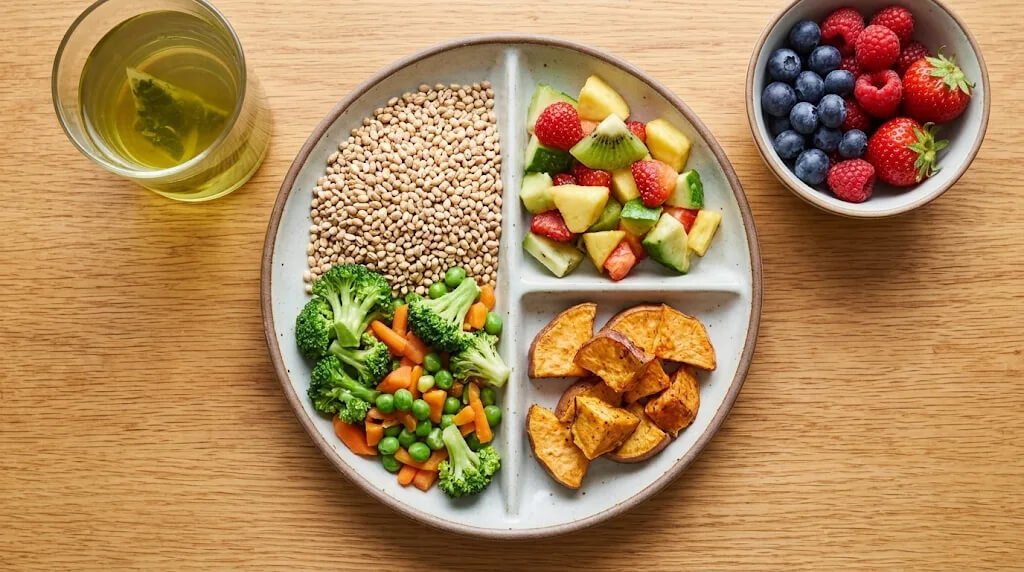
You do not need to eat all 12 items at once. The goal is to build a plate that hits three targets:
| Plate Section | Target | Example |
| ½ plate | Non-starchy vegetables | Steamed broccoli + roasted peppers |
| ¼ plate | Lean protein | 5 oz grilled chicken or ½ cup lentils |
| ¼ plate | Whole-grain or starchy carb (small portion) | ½ cup cooked quinoa or 1 small sweet potato |
| Add-on | Healthy fat + fiber | 1 tbsp olive oil, ¼ avocado, or a small handful of almonds |
Timing matters. If you know a meal is carb-heavy (pasta, rice, bread), eat a small protein or fiber snack 15–20 minutes before sitting down. A few almonds, a boiled egg, or a glass of diluted apple cider vinegar can take the edge off the spike.
If you want a deeper look at how your body processes different macronutrients, our guide on how to boost metabolic flexibility without crash dieting walks through the science in plain language.
What to Avoid When Your Blood Sugar Is High
Just as important as what to eat is what to skip:
- Sugary drinks: Soda, fruit juice, sweetened iced tea, and energy drinks can raise glucose within 15–30 minutes.
- White bread, white rice, and pastries: High-glycemic, low-fiber carbs are absorbed quickly.
- Large portions of starchy vegetables: A full cup of mashed potatoes or corn will hit harder than a small portion.
- “Diet” or “sugar-free” processed snacks: These often contain maltodextrin or other high-glycemic fillers.
If you are trying to manage cravings that pull you back toward these foods, our article on how to stop sugar cravings naturally while losing weight has practical, non-restrictive strategies.
Safety Notes: When Food Is Not Enough
Here is the line I draw with every client: food is a tool, not a treatment.
- If your fasting glucose is consistently above 130 mg/dL or your post-meal reading is above 180 mg/dL, that is a medical conversation, not a grocery-list conversation. See your doctor.
- If you take insulin or a sulfonylurea (glipizide, glyburide, glimepiride), adding vinegar, cinnamon, or high-fiber foods on top of your medication can push your glucose too low (hypoglycemia). Monitor more frequently and adjust only under medical guidance.
- If you experience symptoms of hypoglycemia (shaking, sweating, confusion, heart racing) below 70 mg/dL, consume 15 g of fast-acting carbohydrate (4 oz / 120 ml of fruit juice, 3–4 glucose tablets) and recheck in 15 minutes. This is the one time a “fast carb” is the right call.
- If you are pregnant, managing gestational diabetes, or have kidney disease, your food choices need to be tailored by a registered dietitian or your OB. Do not follow a generic list without professional input.
For a broader look at how insulin resistance develops and what interventions have evidence behind them, see our evidence-based guide on can supplements improve insulin sensitivity.
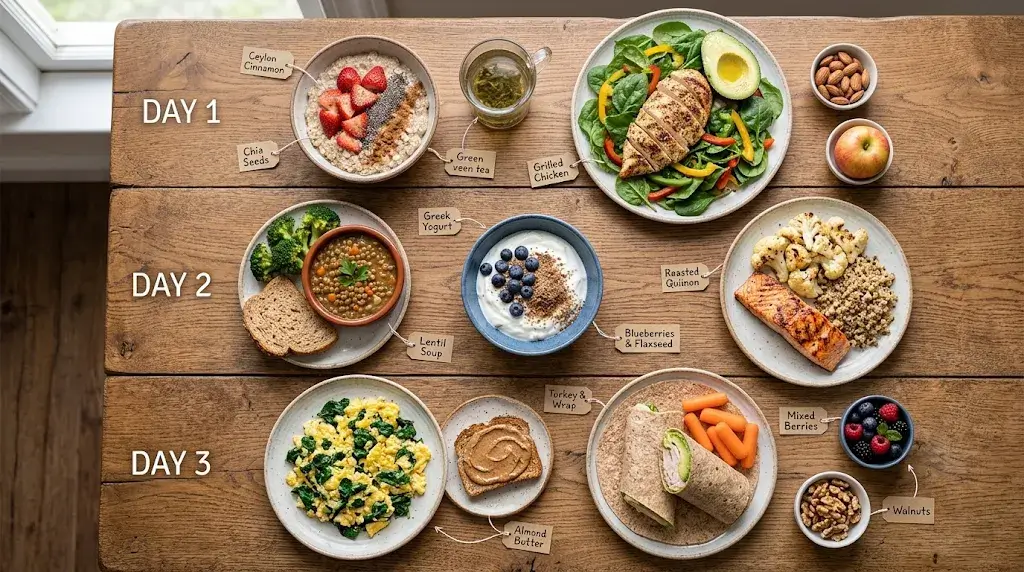
A Simple 3-Day Sample Plan
Here is a practical, no-cook-heavy plan using the foods above. Adjust portions to your own appetite and medical guidance.
- Breakfast: ½ cup cooked oats with ½ cup strawberries, 1 tbsp chia seeds, and a pinch of cinnamon. 1 cup green tea.
- Lunch: Large spinach and pepper salad with 5 oz grilled chicken, ¼ avocado, 1 tbsp olive oil vinaigrette.
- Snack: 1 oz almonds + 1 small apple.
- Dinner: ½ cup black beans with sautéed zucchini and broccoli, 1 small sweet potato, drizzle of olive oil.
- Breakfast: ¾ cup plain Greek yogurt with ½ cup blueberries and 1 tbsp ground flaxseed.
- Lunch: Lentil soup (1 cup) with a side of steamed broccoli and a wedge of whole-grain bread.
- Snack: 1 boiled egg + 1 cup cucumber slices.
- Dinner: Baked salmon (5 oz) with roasted cauliflower and ½ cup quinoa.
- Breakfast: 2 scrambled eggs with sautéed spinach and 1 small whole-grain toast with 1 tbsp almond butter.
- Lunch: Turkey and avocado wrap in a whole-wheat tortilla with mixed greens and a side of carrot sticks.
- Snack: ½ cup berries + 1 oz walnuts.
- Dinner: Stir-fried tofu (½ cup) with bell peppers, broccoli, and ½ cup brown rice.
FAQ
1. What is the fastest food to lower blood sugar?
No food works as fast as insulin. That said, drinking a glass of water, eating a small portion of lean protein, or sipping diluted apple cider vinegar 10–15 minutes before a carb-heavy meal are the quickest dietary moves to blunt a spike. A 10–15 minute walk after eating also helps muscles pull glucose from the blood.
2. Can I lower my blood sugar with food alone?
For a mild post-meal rise, yes—pairing your carb with fiber, protein, and fat will flatten the curve. For a consistently elevated fasting glucose or a reading above 180 mg/dL, food changes are a support, not a replacement for the medication or treatment plan your doctor has prescribed.
3. Do berries really lower blood sugar?
Berries have a low glycemic index and contain polyphenols that may modestly improve insulin sensitivity. They will not “crash” your glucose, but eating ½ cup of strawberries or blueberries instead of a candy bar is a smart swap that keeps your post-meal reading steadier.
4. Is apple cider vinegar safe to take daily?
For most healthy adults, 1–2 tablespoons diluted in water, up to twice a day, is well tolerated. Always dilute it to protect your enamel. If you take insulin, a sulfonylurea, or have a history of gastroparesis, talk to your doctor before making it a daily habit.
5. What should I eat if my blood sugar is too high right now?
Drink a large glass of water, eat a small portion of lean protein (a few slices of turkey, a boiled egg, or a small container of plain Greek yogurt), and go for a 10–15 minute walk. Avoid adding more carbohydrates. Recheck in 30–60 minutes. If the reading stays above 250 mg/dL or you feel unwell, contact your healthcare provider.
6. Does cinnamon actually work for blood sugar?
Research suggests a modest benefit: 1–6 g of cinnamon per day may lower fasting glucose by a few points in people with type 2 diabetes. It is a helpful addition to a balanced plate, not a standalone treatment. Use Ceylon cinnamon for daily use to limit coumarin exposure.
Final Thoughts
The question “what foods lower blood sugar immediately” usually comes from a place of urgency, and I respect that. You do not need a 40-page meal plan to start making a difference. You need a handful of foods you actually like, a simple plate formula (half vegetables, a quarter protein, a quarter smart carb, a small amount of healthy fat), and the habit of timing your fiber and protein before the carb hits.
Pick two or three items from the list above that fit your kitchen and your schedule. Add them to your next three meals. Notice how you feel 60 minutes after eating—less foggy, less irritable, more steady. That is the feedback loop that makes the habit stick.
And if your numbers are not where they should be despite consistent food choices, that is not a failure. That is information. Bring it to your doctor, your registered dietitian, or your endocrinologist. Food is one powerful lever, but it is one of several.