
Burning feet, electric zaps, and tingling that keeps you up at night are exhausting. It makes sense to look for diabetic nerve pain natural remedies instead of medication, especially if pills leave you groggy or you want to do more on your own. Some natural strategies do have real research behind them.
But there is one hard rule. Natural steps work best alongside your care plan, and you should never stop a prescribed drug on your own. This guide separates what the evidence supports from what it doesn’t. It also gives you a simple movement plan, a daily foot routine, and questions to bring to your doctor.
Quick Answer
Diabetic nerve pain natural remedies can help some people, but they work best alongside medical care, not instead of it. The strongest evidence points to steady blood sugar control, regular supervised exercise, daily foot care, and checking vitamin B12 if you take metformin. Never stop prescribed medication without your doctor’s guidance.
What Is Diabetic Nerve Pain, and Why Does It Happen?
Diabetic neuropathy is nerve damage caused by diabetes. The NIDDK explains that over time, high blood glucose and high blood fats can injure your nerves. Peripheral neuropathy is the most common type. It typically affects the feet and legs first, and sometimes the hands and arms. The same source estimates that about one-third to one-half of people with diabetes have it.
Symptoms vary. Some people feel burning, stabbing, or tingling. Others feel numb. Many feel both at different times.
Numbness matters as much as pain. When you can’t feel your feet well, a small blister can turn into a serious wound without you noticing. That’s why foot care shows up again and again in this guide.
Why “Natural” Does Not Mean “Instead Of”
Here’s the honest picture. The American Diabetes Association position statement says we lack treatments that target the underlying nerve damage itself. It calls prevention the key part of diabetes care. So the goal of any plan has two parts: protect your nerves from further harm, and manage the pain you feel today.
The same statement notes that diabetic neuropathy is a “diagnosis of exclusion.” Other, treatable causes of nerve problems can exist in people with diabetes. That’s one reason to get your symptoms checked rather than guess.
Diabetic Nerve Pain Natural Remedies Instead of Medication: What the Research Says
Think of the evidence in tiers. Some options have solid support. Others are promising but thin. A few are mostly marketing.
Tier 1: Blood Sugar Control (the Foundation)
The NIDDK says that managing blood glucose, blood pressure, cholesterol, and weight helps keep nerve damage from getting worse. In type 2 diabetes, the ADA statement stresses effective glucose control to prevent or slow the progression of this nerve damage.
This isn’t a quick pain fix. Controlling glucose protects your nerves over the long run. It’s still the base that every other remedy sits on.
Tier 2: Exercise
Exercise is the most promising “natural” tool for people already living with neuropathy. Here is what the studies show:
- A small supervised study by Kluding and colleagues looked at aerobic and resistance exercise in people with diabetic peripheral neuropathy. The authors reported improvements in neuropathic symptoms and in nerve fiber branching in the skin after the program.
- A small pilot study by Yoo and colleagues put 14 sedentary adults with painful neuropathy through 16 weeks of supervised aerobic exercise. Pain interference with daily life may have dropped, but pain intensity did not change. The authors call this preliminary and say a randomized trial is needed.
- A recent systematic review and meta-analysis concluded that exercise training appears to be an effective way to improve peripheral neuropathy outcomes.
The pattern is encouraging, but the studies are small. Exercise may help you live better with nerve pain and may support nerve health. It is not proven to erase the pain.
Tier 3: Vitamin B12 (If You Take Metformin)
Metformin is a common diabetes drug. A review by Bell reports that metformin use is linked with vitamin B12 deficiency. A B12 shortage can cause or worsen nerve problems that look like diabetic neuropathy. With B12 replacement, symptoms may or may not improve, but objective nerve findings tend to stabilize.
This is a practical, low-cost thing to ask about. A simple blood test can check your level. See our guide on vitamin B12 and energy for the basics of this nutrient. Let your doctor decide whether you need a supplement and how much.
Tier 4: Alpha-Lipoic Acid (Promising but Uncertain)
Alpha-lipoic acid (ALA) is an antioxidant sold as a supplement. A meta-analysis of IV ALA found that 300-600 mg per day given by IV for 2-4 weeks improved nerve conduction and symptoms. The authors warn the evidence may not be strong because many included studies were low quality.
Oral ALA is less certain. A systematic review of oral ALA says the evidence for benefit is limited and calls for more trials. Studies have often tested about 600 mg a day, but that is a research dose, not a recommendation for you. Ask your doctor or pharmacist first, because supplements can interact with other drugs. Our overview of which supplements may support weight management safely shows how to judge a supplement label.

Tier 5: Capsaicin Cream (Mixed Evidence)
Capsaicin, the compound that makes chili peppers hot, is used in creams and patches. The Cochrane review of low-concentration capsaicin concluded that these products showed no meaningful effect beyond placebo creams, though the authors noted the data had limits. High-strength patches are a different product and are applied in a clinic. Talk with your doctor or pharmacist before putting any cream on skin that has reduced feeling.
At-a-Glance: Remedy Evidence Table
| Remedy | What the research suggests | Evidence strength | Check with your doctor first? |
| Blood glucose control | Helps slow nerve damage | Strong | Yes, it’s your core plan |
| Supervised exercise | May improve symptoms and function | Moderate, small studies | Yes |
| Vitamin B12 check | Important if on metformin | Moderate | Yes |
| Daily foot care | Prevents ulcers and infections | Strong | Yes |
| Alpha-lipoic acid | Mixed; IV studies more positive | Limited to moderate | Yes |
| Low-strength capsaicin cream | No clear benefit over placebo | Weak | Yes |
How to Apply It: A Coach’s Movement Plan for Neuropathy
Remember that I’m giving coaching guidance, not medical orders. Get your doctor’s okay before you start, especially if you have foot sores, heart problems, or dizziness when you stand. Exercise can change your blood sugar, so ask your care team whether your medicines need adjusting.

Step 1: Start With Footwear and a Foot Check
Before every session, look at your feet. Check for red spots, blisters, cuts, or swelling. Wear clean, dry socks and well-fitting shoes with room for your toes. Never exercise barefoot, and skip workouts if you have an open sore until your care team clears you.
Step 2: The Weekly Plan
Aim for three strength-and-balance days and several easy aerobic days. If you’re new to exercise, begin with just two strength days.
| Exercise | Sets | Reps | Rest |
| Seated march (warm-up) | 1 | 30-40 steps | None |
| Sit-to-stand from chair | 2-3 | 6-10 | 60 sec |
| Supported heel raise | 2-3 | 8-12 | 60 sec |
| Resistance band row (seated) | 2-3 | 10-12 | 60 sec |
| Supported single-leg stance | 2 | 15-30 sec per leg | 45 sec |
| Easy walk or recumbent bike (aerobic) | 1 | 10-20 min | None |
How to Do Each Move
Sit-to-stand (quadriceps, glutes). Use a sturdy chair about 17-19 in (43-48 cm) high. Place your feet hip-width apart, lean slightly forward, and stand up in 2 seconds. Lower in 3 seconds. The movement should feel like work in your thighs and hips, not a jolt in your knees.
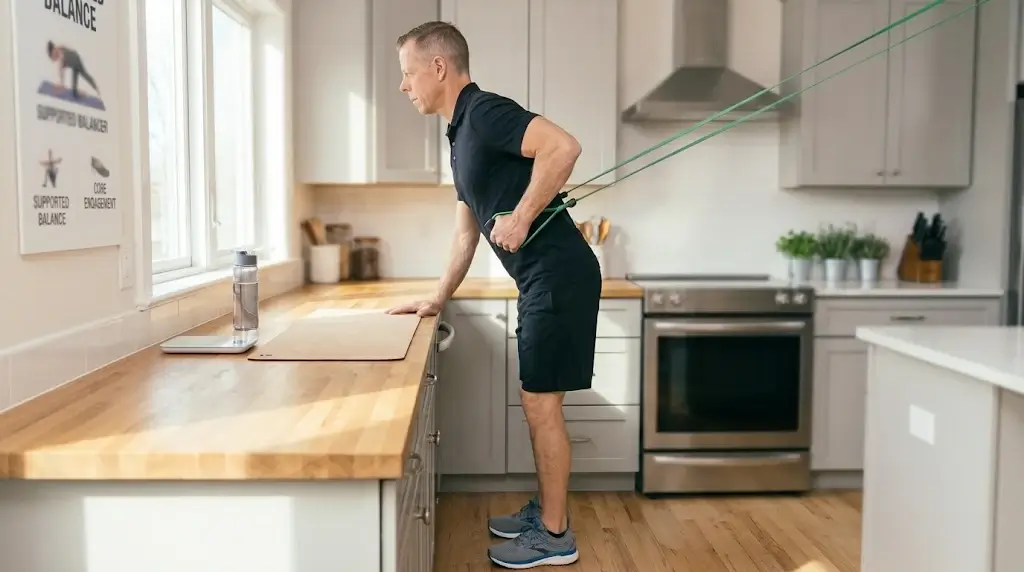
Supported heel raise (calves). Stand next to a counter with light fingertip support. Rise onto the balls of your feet for 2 seconds. Lower for 3 seconds. You should feel your calves, the gastrocnemius and soleus, doing the lifting.
Seated band row (upper back). Loop a light band around your feet or a door anchor. Pull your elbows back and squeeze your shoulder blades for 1 second. Release slowly. Keep your ribs down and your shoulders away from your ears.
Supported single-leg stance (balance). Stand beside a wall or counter. Lift one foot an inch or two off the floor. Hold lightly with one hand. Balance work matters because numb feet send weaker signals to your brain.

Coach’s Tip: Use the “talk test” for aerobic work. You should be able to speak in full sentences while you move. If you can’t, slow down. Start with a 0.25-mile (0.4 km) walk and add about 0.1 mile (0.16 km) per week, working toward 1-1.5 miles (1.6-2.4 km) if your doctor agrees.
Easier and Harder Versions
| Exercise | Easier (regression) | Harder (progression) |
| Sit-to-stand | Use a higher seat, or use your hands on your thighs | Lower seat or hold a 5-8 lb (2.3-3.6 kg) dumbbell at your chest |
| Heel raise | Hold the counter with both hands | Reduce hand support, then use one leg at a time |
| Band row | Use the lightest band | Use a medium band and add a 2-second pause |
| Single-leg stance | Keep your toes on the floor | Hold 30 seconds, then close your eyes briefly with support nearby |
| Walking | Break into 5-minute blocks | Add gentle hills, or build to 30 min |
Common Mistake: Doing too much, too soon. People with neuropathy often can’t feel early warning signs like a hot spot from a rubbing shoe. Keep sessions short at first, check your feet afterward, and add just one new thing per week.
Why Strength Work and Cardio Together?
Kluding’s study combined aerobic and resistance training, and the ADA statement references research where nerve fibers appeared to regenerate in people doing an exercise program. Strength work protects balance and joints. Aerobic work supports blood sugar control and circulation. Protein supports muscle repair, so see our guide on protein intake for practical ways to eat enough.
Daily Foot Care: The Remedy Nobody Gets Excited About
The CDC says to check your feet every day, even when they feel fine. Nerve damage raises your risk of foot ulcers, and early treatment greatly lowers your risk of amputation. Use a mirror or ask a family member to help if you can’t see the bottoms of your feet.
A simple routine takes about five minutes:
- Look. Check tops, soles, heels, and between toes for cuts, blisters, redness, or swelling.
- Wash. Use warm, not hot, water and dry completely. Test water with your elbow or hand since you may not feel heat well. The CDC advises against soaking your feet.
- Moisturize. Apply lotion to the tops and bottoms, but not between the toes.
- Protect. Wear shoes and clean socks every day. Check inside shoes for pebbles or rough seams before putting them on.
- Report. Call your doctor about any cut or blister that won’t heal.
Also get a professional foot exam at least yearly, and more often if you have nerve damage. Per CDC guidance, ask for a foot check at every health care visit and remove your shoes and socks to make it easy.
Common Mistake: Treating warm foot soaks or heating pads as a “natural remedy.” With reduced feeling, you can burn your skin without noticing. Skip them unless your doctor says otherwise.
Sleep, Stress, and Daily Habits That Support Your Plan
Nerve pain often flares when you’re tired and tense. Poor sleep and pain feed each other. Our article on how sleep affects metabolism explains why a steady sleep schedule matters for blood sugar and hunger signals, which in turn matter for nerve health.
Some practical steps that fit a diabetes plan:
- Keep a consistent bedtime. Go to bed and wake at the same time most days.
- Write down your pain patterns. Note the time, what you ate, and how you slept. This gives your doctor real data.
- Try slow breathing before bed. Five minutes of slow, relaxed breaths is a low-risk way to wind down. [VERIFY: add a PubMed or NIH source for relaxation and chronic pain before publishing this tip, or remove it.]
- Keep meals steady. Large swings in blood sugar are what you’re trying to avoid.
If afternoon fatigue pulls you toward sugary snacks, see our tips on daily energy without caffeine.
Eating for Steady Blood Sugar
You don’t need a perfect diet. You need a consistent one that your care team has helped you shape. Build meals around vegetables, lean protein, and high-fiber carbohydrates. Our overview of dietary fiber and appetite explains how fiber can keep you fuller between meals, which helps with portion control.
Supplements marketed for blood sugar deserve caution. Read our coach’s guide on supplements and insulin sensitivity before buying anything, and clear it with your doctor.
Omega-3 fats from fish are often discussed for general inflammation. Our article on omega-3 fatty acids covers what the research says, but it does not show they treat nerve pain. Don’t expect them to replace anything in your plan.
Safety Notes: Who Should Be Careful
Check with your doctor or physical therapist before starting a plan if any of these apply:
- You have an open foot sore, ulcer, or infection. Weight-bearing exercise may need to wait.
- You feel dizzy or faint when standing. Autonomic neuropathy can affect blood pressure and heart rate, and the ADA statement notes that recognizing and treating it can improve symptoms and quality of life.
- You take insulin or other medicines that can lower blood sugar. Ask how to time and fuel workouts.
- You have heart disease, kidney disease, or eye problems. Some activities may need modification.
- Your symptoms are new, sudden, or one-sided. Get evaluated promptly, since other conditions can mimic diabetic neuropathy.
- You want to reduce or stop a prescribed medication. Make this decision with your prescriber. Stopping some nerve-pain drugs suddenly can cause problems, and your pain could return.
Call your doctor right away for a wound that won’t heal, redness spreading from a sore, fever, or a hot, swollen foot.
Related Tips for Staying Consistent
Track one metric. Pick either weekly walking minutes or sit-to-stand reps. Progress feels good, and it also shows your doctor that your plan is working.
Pair habits. Do your foot check right after brushing your teeth at night. The best routine is one you actually do.
Bring a short list to appointments. Ask about your A1c target, a B12 test, a foot exam, and whether a physical therapist can supervise your first few weeks of exercise.
Set realistic expectations. The ADA statement notes that treatments to reverse the underlying nerve damage are lacking. Success often looks like fewer bad nights, better balance, and no foot injuries, rather than a complete cure.
FAQ
Can diabetic nerve pain go away naturally?
Sometimes symptoms ease when blood sugar stays steady, but established nerve damage doesn’t reliably reverse. The ADA statement says treatments that fix the underlying damage are lacking. Natural steps like exercise and glucose control may slow progression and improve how you feel, so keep your care team involved.
What is the best natural remedy for diabetic nerve pain?
No single remedy wins. Blood sugar control has the strongest support because it slows nerve damage. Supervised exercise and daily foot care come next. Supplements like alpha-lipoic acid have limited or mixed evidence. The best “remedy” is a combined plan built with your doctor.
Can exercise reverse diabetic neuropathy?
Research suggests exercise may improve symptoms and nerve function, but it hasn’t been shown to fully reverse neuropathy. Small studies, including Kluding’s supervised program, reported encouraging changes in nerve fibers. Larger trials are still needed. Start slowly, wear proper shoes, and check your feet after every workout.
Is it safe to stop neuropathy medication and use natural remedies?
Don’t stop on your own. Some nerve-pain medicines can cause problems if stopped abruptly, and untreated pain can disrupt sleep and daily life. Talk with your prescriber about a plan. You may be able to add natural strategies first, then discuss changes if your symptoms improve.
Does vitamin B12 help diabetic neuropathy?
It can help if you’re actually low. Metformin use is linked with B12 deficiency, which can cause or worsen nerve symptoms. A blood test shows your level. Replacement may stabilize nerve findings, though symptoms don’t always improve. Ask your doctor before taking a supplement.
Does capsaicin cream work for diabetic nerve pain?
The evidence is mixed. A Cochrane review found that low-concentration capsaicin creams showed no clear benefit beyond placebo, while high-strength patches are a separate clinic-applied option. Because your skin may have reduced feeling, ask your doctor or pharmacist before using any cream.
Conclusion
Diabetic nerve pain natural remedies instead of medication is a fair thing to explore, as long as “instead of” really means “alongside, and guided by your doctor.” The most reliable steps are the unglamorous ones. Keep your blood sugar steady, move your body in a safe, supervised way, check your feet daily, and ask about B12. Supplements like alpha-lipoic acid and creams like capsaicin have mixed or limited evidence, so treat them as questions for your care team rather than shortcuts.
Pick one habit this week: a five-minute foot check, a 0.25-mile (0.4 km) walk, or a B12 question for your next visit. Small, steady steps protect your nerves and your independence over time.