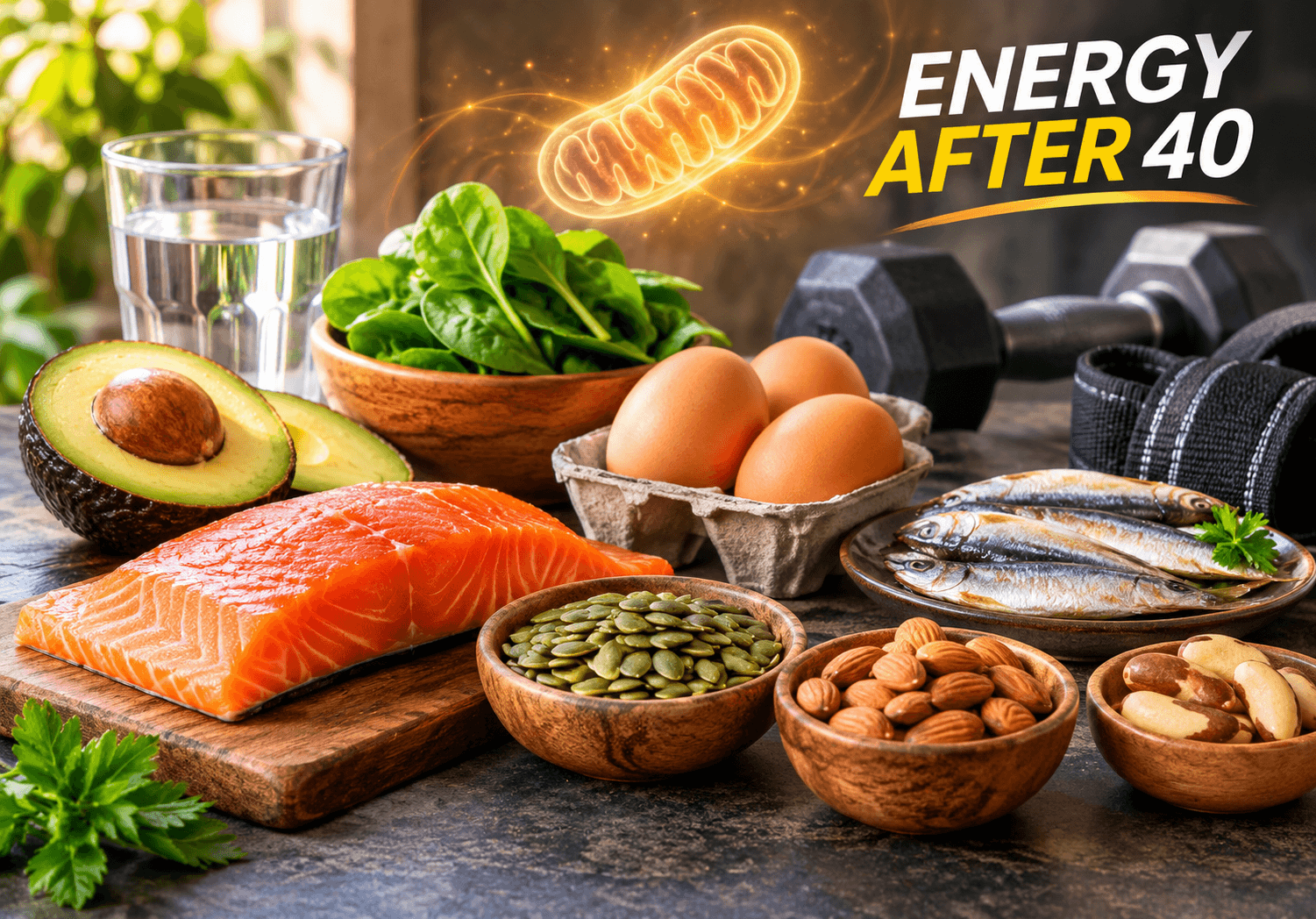
You hit 40, and something shifted. The 6 a.m. gym session that used to leave you buzzing now leaves you dragging by lunch. Your testosterone is quietly trending down, your sleep is shorter, and the old “just eat more protein and push harder” playbook isn’t cutting it. You don’t need a miracle pill. You need the right vitamins for men’s energy and vitality over 40, taken at the right doses, alongside the training and sleep habits that make them work.
As a strength and conditioning coach who has worked with hundreds of men in their 40s, 50s, and 60s, I see the same pattern: a handful of micronutrient gaps that quietly drain energy long before any single symptom shows up on a blood test. The good news is that most of these gaps are fixable with targeted supplementation, smart food choices, and a training program that supports rather than depletes your system.
This guide breaks down the specific vitamins and minerals that matter most for men past 40, the doses backed by research, how to stack them into a simple daily routine, and the safety lines you should not cross.
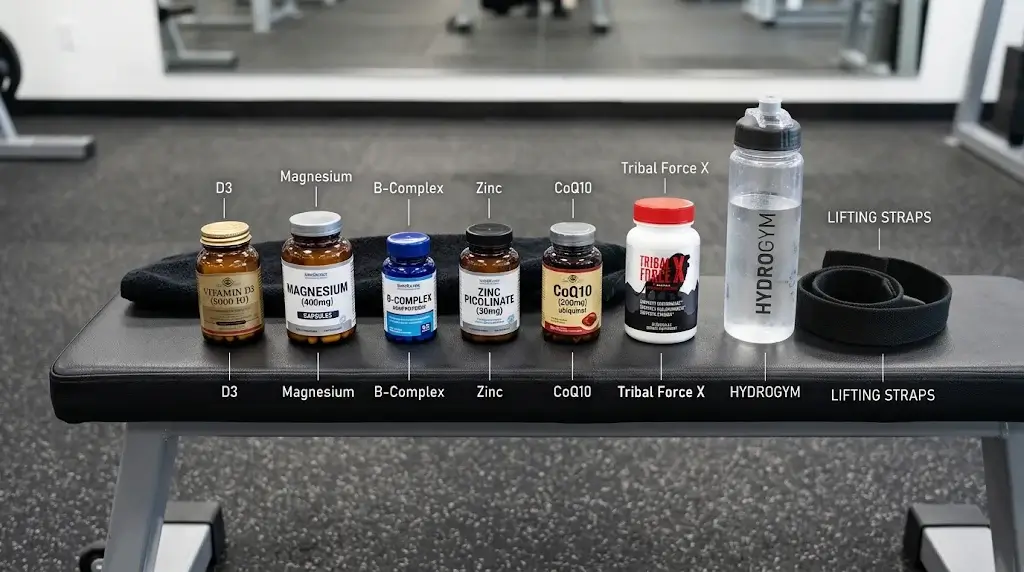
Quick Answer: The top five vitamins for men’s energy and vitality over 40 are vitamin D3 (2,000–5,000 IU), magnesium (300–400 mg), B-complex (especially B12 and folate), zinc (15–30 mg), and coenzyme Q10 (100–300 mg). Pair these with 150 minutes of weekly cardio, two days of resistance training, and 7–8 hours of sleep. Check with your doctor before starting any new supplement, especially if you take medications.
Why Your Nutrient Needs Change After 40
Your body does not handle nutrients the same way at 45 as it did at 25. Three shifts matter most:
- Absorption drops. Stomach acid production decreases with age, which reduces your ability to extract vitamin B12 from food. Research from the NIH Office of Dietary Supplements notes that up to 30% of adults over 60 have reduced B12 absorption, and the decline begins in the 40s.
- Hormonal output declines. Testosterone falls roughly 1–2% per year after 30, and the supporting nutrients (zinc, magnesium, vitamin D) become harder to get enough of from food alone. The National Institute of Diabetes and Digestive and Kidney Diseases highlights that low testosterone is linked to fatigue, reduced muscle mass, and lower mood.
- Cellular energy production slows. Mitochondrial function—the tiny power plants in your cells that make ATP—declines with age. Nutrients like CoQ10, riboflavin, and L-carnitine directly support that pathway.
You don’t need to panic. You do need to be intentional. Let’s walk through the list.
The 12 Vitamins and Minerals That Matter Most for Men Over 40
1. Vitamin D3
Why it matters after 40: Vitamin D is less a vitamin and more a pro-hormone. It supports testosterone production, immune function, bone density, and muscle contraction. Most men over 40 who work indoors or live north of 37° latitude are deficient. The Harvard T.H. Chan School of Public Health reports that deficiency is widespread and linked to fatigue, low mood, and weaker bones.
Dose: 2,000–5,000 IU per day, taken with a meal that contains fat. If your blood level is below 30 ng/mL, your doctor may recommend up to 5,000 IU.
Food sources: Fatty fish (salmon, mackerel), egg yolks, fortified milk. Sunlight helps, but you’d need 20–30 minutes of midday sun on your arms and legs daily, which most of us don’t get.
When to take it: Morning or midday with your largest meal. Vitamin D is fat-soluble, so it absorbs better with 5–10 g of dietary fat.
2. Magnesium
Why it matters after 40: Magnesium is involved in over 300 enzymatic reactions, including ATP production, muscle relaxation, and sleep regulation. Stress, caffeine, and poor sleep all deplete it. The Cleveland Clinic notes that low magnesium is linked to muscle cramps, poor sleep, and increased cortisol.
Dose: 300–400 mg of elemental magnesium per day. Magnesium glycinate or threonate are best absorbed and least likely to cause digestive issues. Avoid magnesium oxide, which is poorly absorbed.
Food sources: Pumpkin seeds, dark chocolate (85%+), spinach, almonds, black beans.
When to take it: 30–60 minutes before bed. It supports GABA activity and helps you fall asleep faster.
Coach’s Tip: If you train hard and sweat a lot, you’re losing more magnesium than you think. Bump your dose to 400 mg on training days and pair it with a banana (potassium) to support the magnesium-potassium balance in your muscles.
3. B-Complex Vitamins (B1, B2, B3, B5, B6, B7, B9, B12)
Why they matter after 40: B-vitamins are the co-factors that turn the food you eat into usable energy (ATP). Riboflavin (B2) and niacin (B3) are direct parts of the electron transport chain in your mitochondria. B12 and folate (B9) build red blood cells that carry oxygen. As absorption drops, your B12 levels can quietly fall, and the first sign is often afternoon fatigue. The NIH Office of Dietary Supplements recommends monitoring B12 in men over 50, but the decline starts earlier.
Dose: A quality B-complex with 100% DV (daily value) for each B-vitamin is sufficient. If you’re a meat-eater, you may only need to supplement B12 (500–1,000 mcg sublingual). If you’re vegetarian or vegan, B12 supplementation is essential.
Food sources: Eggs, lean meat, legumes, leafy greens, whole grains, nutritional yeast.
When to take it: Morning, with breakfast. B-vitamins support energy metabolism, and taking them at night can be stimulating for some men.
4. Zinc
Why it matters after 40: Zinc is critical for testosterone production, immune function, and wound healing. Men over 40 who are even mildly zinc-deficient may see a measurable drop in free testosterone. Our own guide on zinc and healthy testosterone levels in men breaks down the research in detail.
Dose: 15–30 mg of zinc picolinate or zinc bisglycinate per day. Do not exceed 40 mg long-term, as high zinc intake can deplete copper.
Food sources: Oysters (the king), red meat, pumpkin seeds, lentils, dark chocolate.
When to take it: With a meal that contains protein. Zinc on an empty stomach can cause nausea.
5. Coenzyme Q10 (CoQ10 / Ubiquinol)
Why it matters after 40: CoQ10 is a molecule your mitochondria use to produce ATP. Levels peak in your 20s and decline steadily. By 50, your natural CoQ10 can be 30–50% lower than at 30. This directly affects how efficiently your heart and skeletal muscles produce energy. The Cleveland Clinic notes CoQ10’s role in cardiovascular and cellular energy.
Dose: 100–300 mg of ubiquinol (the reduced, more absorbable form) per day. Ubiquinone works too but is less bioavailable.
Food sources: Organ meats, sardines, mackerel, spinach, broccoli. Food alone rarely hits 100 mg, so supplementation is practical.
When to take it: With a fat-containing meal, morning or midday.
6. Vitamin B12 (Called Out Separately)
Why it matters after 40: I listed B12 inside the B-complex above, but it deserves its own spotlight because the absorption issue is so common. If you take a proton-pump inhibitor (like omeprazole) or have any stomach acid issues, your B12 absorption can drop significantly. Low B12 causes fatigue, brain fog, and a type of anemia that shows up on a CBC.
Dose: 500–1,000 mcg sublingual (under the tongue) daily if you’re at risk. Sublingual bypasses the gut, so absorption is more reliable.
When to take it: Morning.
7. Omega-3 Fatty Acids (EPA/DHA)
Why they matter after 40: Omega-3s reduce systemic inflammation, support cardiovascular health, and may help with joint comfort as you age. Chronic low-grade inflammation (“inflammaging”) is a major driver of the energy crash many men feel in their 40s and 50s.
Dose: 1,000–2,000 mg combined EPA + DHA per day from a quality fish oil or algal oil (for vegans).
Food sources: Salmon, sardines, mackerel, anchovies. Two servings of fatty fish per week gets you close, but most men don’t hit that target.
When to take it: With a meal. Check the label for EPA/DHA amounts, not just “fish oil” total.
8. Selenium
Why it matters after 40: Selenium is a component of glutathione peroxidase, one of your body’s primary antioxidant enzymes. It also supports thyroid function, which governs your metabolic rate and energy output.
Dose: 55–200 mcg per day. Brazil nuts are so concentrated that one or two nuts can cover your daily need.
Food sources: Brazil nuts, tuna, eggs, sunflower seeds.
When to take it: With any meal.
9. L-Carnitine (Acetyl-L-Carnitine)
Why it matters after 40: L-carnitine shuttles fatty acids into your mitochondria so they can be burned for fuel. As you age, your natural carnitine levels drop, and your body becomes less efficient at switching between fat and glucose as fuel sources. Supporting metabolic flexibility becomes harder without it.
Dose: 500–2,000 mg of acetyl-L-carnitine per day.
Food sources: Red meat, dairy, avocados.
When to take it: 30 minutes before a workout or with breakfast.
10. Creatine Monohydrate
Why it matters after 40: Creatine isn’t a vitamin, but it belongs on this list. It supports ATP regeneration in your muscles and has emerging research for cognitive function. For men over 40, it helps maintain lean muscle mass, which is critical because muscle is metabolically active tissue. The American College of Sports Medicine recommends resistance training for adults, and creatine is one of the most studied supplements to support that training.
Dose: 3–5 g per day, any time. No loading phase needed for steady-state use.
Food sources: Red meat (about 2–3 g per 6 oz steak), but you’d need to eat a lot to hit 5 g.
11. Iron (With a Caveat)
Why it matters: Iron carries oxygen in your hemoglobin. Low iron causes fatigue that no amount of B-vitamins will fix. However, most men over 40 do not need iron supplementation and can actually accumulate too much, which is harmful. Get a ferritin test done. Only supplement if your doctor confirms a deficiency.
Dose (if prescribed): 18–27 mg elemental iron per day, taken with vitamin C for absorption.
12. Chromium (Optional)
Why it matters: Chromium picolinate may support insulin sensitivity, which affects how efficiently your cells use glucose for energy. The evidence is modest, but if you’re pre-diabetic or struggling with afternoon energy crashes after carb-heavy meals, it’s worth a trial.
Dose: 200–1,000 mcg per day.
When to take it: With your largest carbohydrate-containing meal.

How to Build Your Daily Routine
You don’t need to swallow 12 pills. Here’s a simple stack that covers the essentials:
| Time | What to Take | Notes |
| Morning (with breakfast) | Vitamin D3 (2,000–5,000 IU) + B-complex + CoQ10 (100–300 mg) + Omega-3 (1,000–2,000 mg EPA/DHA) | Take with a meal that has fat (eggs, avocado, nuts) |
| Pre-workout (30 min before) | L-Carnitine (500–1,000 mg) + Creatine (3–5 g) | Optional if you don’t train that day |
| Lunch or dinner | Zinc (15–30 mg) + Selenium (55–200 mcg) | With protein |
| Before bed (30–60 min) | Magnesium glycinate (300–400 mg) | Supports sleep and recovery |
Total daily pills/capsules: roughly 6–8. That’s manageable.
If you prefer a multivitamin as a base, choose one designed for men 50+ that includes D3, B12, zinc, and selenium, then add CoQ10, magnesium, and omega-3s on top. A multivitamin is a safety net, not a replacement for targeted dosing.
Common Mistake: Taking all your supplements at once on an empty stomach in the morning. Zinc on an empty stomach causes nausea. B-vitamins at night can disrupt sleep. Magnesium in the morning won’t help your rest. Spread them out as shown above, and always take fat-soluble vitamins (D3, CoQ10, omega-3s) with dietary fat.
The Training Piece You Can’t Skip
Supplements support your system. They don’t replace the stimulus that tells your body to build and maintain muscle, keep your mitochondria firing, and keep your hormones in a healthy range.
The CDC physical activity guidelines recommend at least 150 minutes of moderate aerobic activity plus two days of muscle-strengthening work per week for adults. For men over 40, I’d structure it like this:
- 3 days of resistance training (full body or upper/lower split). Focus on compound lifts: squats, deadlifts, bench press, rows, overhead press. 3 sets of 8–12 reps, 60–90 seconds rest.
- 2 days of moderate cardio (brisk walking, cycling, swimming). 30–45 minutes at a pace where you can talk but not sing.
- 1 day of active recovery or mobility work.
This is the framework that makes the vitamins above actually do their job. Muscle mass is your metabolic engine. The more functional muscle you carry, the more efficiently your body uses the nutrients you’re supplementing. If you’re already training, check out our guide on how to increase metabolism naturally after 40 for a full programming breakdown.

Safety Notes and When to Talk to Your Doctor
This article is for general information and is not a substitute for advice from a doctor or physical therapist. Before starting any new supplement, especially if you take prescription medications, have a liver or kidney condition, or are on blood thinners, talk to your primary care physician or a registered dietitian first.
Specific cautions:
- Vitamin D: Doses above 5,000 IU long-term should be guided by bloodwork (target 30–60 ng/mL).
- Zinc: Do not exceed 40 mg/day long-term. Pair with 2 mg of copper if supplementing zinc for more than 8 weeks.
- Iron: Do not supplement without a confirmed deficiency via ferritin and CBC. Excess iron is toxic.
- CoQ10: May interact with warfarin and blood pressure medications. Check with your doctor.
- Omega-3s: High doses (above 3 g/day) can thin blood. If you’re on anticoagulants, get clearance.
- B12: Generally safe at high doses, but if you’re on metformin, your B12 absorption may be compromised, so monitoring is important.
If you experience persistent fatigue, unexplained weight loss, chest pain, or shortness of breath, that is not a vitamin issue. See a doctor.
How to Know If You’re Actually Deficient
You don’t need to guess. A basic blood panel can tell you a lot. Ask your doctor for:
- 25-hydroxy vitamin D (target: 30–60 ng/mL)
- Vitamin B12 (target: 300–900 pg/mL)
- Folate
- Ferritin and CBC (iron status)
- Magnesium (serum) – note: serum magnesium only reflects a small fraction of total body magnesium, so a normal result doesn’t rule out a functional deficiency
- Zinc (serum)
- Total and free testosterone (if you have symptoms like low libido, fatigue, or loss of muscle)
- TSH, free T3, free T4 (thyroid panel)
Running these tests once a year, or when you notice a shift in energy, is far smarter than stacking supplements blindly. If you want to understand which specific nutrients support normal energy metabolism, our guide on which nutrients support normal energy metabolism breaks down the biochemistry in plain English.
What to Avoid (or Use Cautiously)
- “Testosterone booster” blends with proprietary mixtures of 20+ herbs. You have no idea what dose you’re getting. If you want to support testosterone, focus on zinc, vitamin D, magnesium, sleep, and resistance training.
- Mega-dose single nutrients (e.g., 10,000 IU D3 without bloodwork, 100 mg zinc daily). More is not better.
- Proprietary blends that hide individual ingredient doses.
- Stimulant-heavy “energy” supplements that mask the underlying issue. If you need 300 mg of caffeine to get through the afternoon, the problem isn’t a missing vitamin—it’s sleep, stress, or training volume.
For a deeper look at what actually moves the needle on daily energy without reaching for a third coffee, see our guide on how to improve daily energy without caffeine.
FAQ
What vitamins do men need most after 40?
The five with the strongest evidence for energy and vitality in men over 40 are vitamin D3 (2,000–5,000 IU), magnesium (300–400 mg), a B-complex (especially B12 and folate), zinc (15–30 mg), and CoQ10 (100–300 mg). Pair these with omega-3s and creatine for a complete stack.
Can vitamins help with low energy in men over 40?
Vitamins can correct a deficiency that is dragging your energy down, but they won’t override poor sleep, overtraining, or a sedentary routine. If your bloodwork shows you’re replete in key nutrients and you’re still fatigued, the answer is likely in your training, sleep, or stress management, not another supplement.
Do men need more vitamins after 40 than they did in their 20s?
Not necessarily more of every vitamin, but your absorption and utilization change. B12 absorption drops, vitamin D synthesis in the skin slows, and your body’s demand for antioxidant support increases. Targeted supplementation for the nutrients your body handles less efficiently is the smart move.
What is the best time to take vitamins for energy?
Take B-vitamins, vitamin D3, CoQ10, and omega-3s in the morning with a fat-containing meal. Take magnesium 30–60 minutes before bed. Zinc and selenium go with lunch or dinner. This timing aligns with your circadian rhythm and avoids sleep disruption.
Can I just take a men’s 50+ multivitamin and skip the individual supplements?
A quality multivitamin is a reasonable base, but it typically under-doses D3 (often 400–800 IU vs. the 2,000–5,000 IU many men need), doesn’t include CoQ10 or L-carnitine, and may use poorly absorbed forms of magnesium. Use a multivitamin as a safety net, then add the targeted supplements above.
How long before I notice a difference from taking these vitamins?
If you’re correcting a true deficiency (low D, low B12, low zinc), you may notice improved energy within 2–6 weeks. For nutrients like CoQ10 and magnesium that support ongoing cellular function, expect gradual benefits over 6–12 weeks. Consistency matters more than any single dose.
Final Thoughts: Keep It Simple, Keep It Consistent
You don’t need a cabinet full of 30 different bottles. You need five or six well-chosen nutrients, taken at the right times, alongside a training program that builds and maintains muscle, and a sleep schedule you actually respect. The vitamins for men’s energy and vitality over 40 that make the biggest difference are the ones that fix a real gap, not the ones that sound impressive on a label.
Start with a blood panel. Fill the gaps. Train three days a week. Sleep seven to eight hours. Walk more. And give your system 6–8 weeks before you judge whether the stack is working.
Your 40s and 50s don’t have to be a slow fade. With the right fuel and the right training, you can feel stronger, sharper, and more energized at 50 than you did at 35. The science supports it. The work is straightforward. Now go take your D3 with some eggs and hit the squat rack.