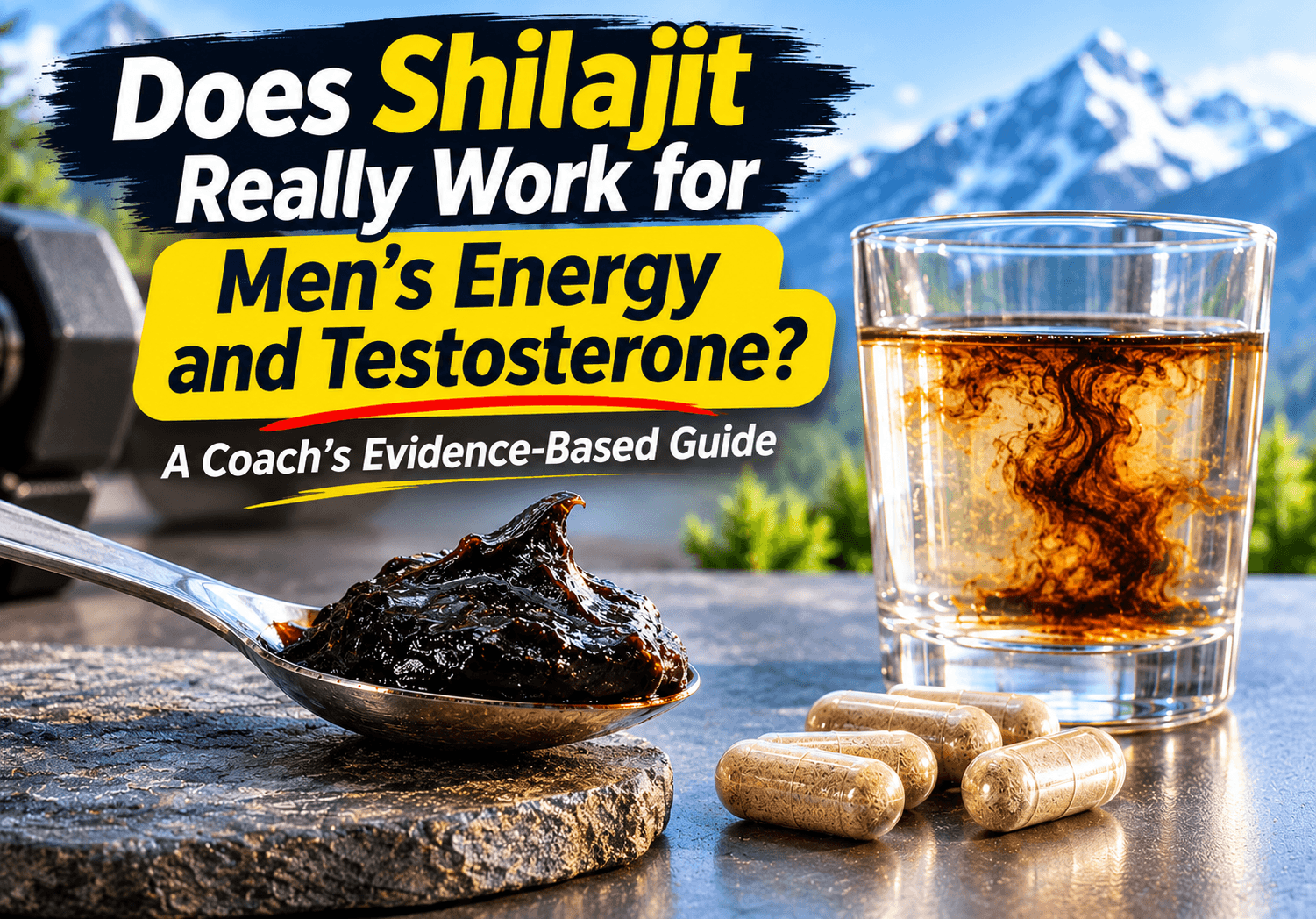
Walking into any gym or scrolling through fitness feeds, you will quickly run into bold promises about shilajit. This dark, sticky tar-like resin—harvested from high-altitude rock crevices in the Himalayas and Altai mountains—is marketed as an ancient miracle for endless gym stamina and skyrocketing hormones.
When lifters ask me, “does shilajit really work for men’s energy and testosterone,” I give them the same straight answer I give about any supplement: the science shows modest, promising results for specific men, not magic. Before you spend money on a jar of mountain resin, you need to separate peer-reviewed clinical data from aggressive social media hype.
Disclaimer: Supplements can interact with medications and underlying health conditions. Always check with your doctor or a qualified healthcare provider before adding shilajit or any hormone-related supplement to your routine.
Quick Answer: Limited human clinical trials suggest purified shilajit may modestly increase total and free testosterone in healthy middle-aged men and support cellular energy production during fatigue. However, it is not a replacement for medical hormone therapy, heavy resistance training, or quality sleep, and unpurified products carry serious heavy metal risks.
What Is Shilajit and How Does It Interact With the Male Body?
Shilajit is a blackish-brown exudate formed over centuries from the slow microbial decomposition of plant matter trapped in high-altitude rock layers. In traditional Ayurvedic practice, it has been used for centuries as a rasayana—a rejuvenator intended to combat physical weakness and aging.
From a biochemistry standpoint, shilajit is not a single vitamin or hormone. It is a complex phytomineral matrix containing over 80 trace minerals, humic acid, and two primary bioactive compounds that researchers focus on:
- Fulvic Acid: Making up roughly 60% to 80% of high-quality purified shilajit, fulvic acid acts as a potent antioxidant and nutrient transporter. It helps shuttle minerals across cell membranes and neutralizes free radicals created during intense physical exertion.
- Dibenzo-α-pyrones (DBPs): These organic compounds protect mitochondria—the microscopic power plants inside your muscle and brain cells—from oxidative damage.
Unlike synthetic anabolic steroids, which introduce external hormones into your bloodstream and shut down your body’s natural production, shilajit works upstream. Researchers believe its active compounds support the hypothalamic-pituitary-gonadal (HPG) axis, signaling the pituitary gland to release luteinizing hormone (LH) and follicle-stimulating hormone (FSH). These signals prompt the Leydig cells in the testes to produce testosterone naturally while simultaneously protecting testicular tissue from oxidative stress.
Does Shilajit Really Work for Men’s Energy and Testosterone? What the Research Says
When evaluating any supplement for my clients, I look strictly at randomized, double-blind, placebo-controlled human trials—not rodent studies or seller testimonials. While the total volume of human research on shilajit is still relatively small, the existing studies give us a clear picture of what it can and cannot do.
The Clinical Evidence on Shilajit and Testosterone
The most frequently cited human trial on shilajit and male hormones was published in the journal Andrologia. Researchers gave 75 healthy male volunteers aged 45 to 55 either a placebo or 250 mg of purified shilajit twice daily (500 mg total per day) for 90 consecutive days.
By day 90, the men taking purified shilajit experienced statistically significant increases compared to the placebo group:
- Total testosterone increased by roughly 20.45%.
- Free testosterone—the bioavailable fraction your body actually uses for muscle protein synthesis and libido—increased by about 19.14%.
- Dehydroepiandrosterone (DHEAS), a precursor hormone involved in androgen production, rose by 31.35%.
Importantly, levels of LH and FSH remained stable or slightly improved, confirming that the testosterone boost came from supporting natural endocrine function rather than suppressing it. A separate clinical study published in Andrologia examined men with oligospermia (low sperm count). After 90 days of taking 200 mg of processed shilajit daily, participants saw a 23.5% increase in serum testosterone alongside notable improvements in sperm count and motility.
The Coach’s Reality Check: A 20% bump in testosterone sounds dramatic on a supplement label, so let’s put it into real-world numbers. If a 48-year-old man has a baseline total testosterone level of 400 ng/dL, a 20% increase brings him to roughly 480 ng/dL. That moves him from the lower-middle end of the normal range comfortably into the mid-normal range—which can help alleviate mild sluggishness—but it will not turn a natural lifter into a bodybuilder overnight. Furthermore, we lack large-scale trials proving whether 22-year-old men with already peak testosterone levels see any hormonal bump at all.
The Clinical Evidence on Shilajit, Energy, and Exercise Performance
Energy in the gym comes down to adenosine triphosphate (ATP)—the chemical fuel your muscle fibers burn every time you push a barbell off your chest or sprint up a hill. When ATP runs low, muscular fatigue sets in.
Pre-clinical animal models published in the Journal of Ethnopharmacology demonstrated that shilajit helps stabilize Coenzyme Q10 (CoQ10) inside mitochondria, preventing the steep drop in ATP production typically seen during exhaustive physical stress.
To see if this translates to human athletes, researchers conducted an eight-week trial published in the Journal of the International Society of Sports Nutrition. Recreationally active men took either a placebo or 250 mg to 500 mg of purified shilajit daily before performing an exhaustive fatiguing protocol. The group taking the 500 mg dose retained significantly more maximal muscular strength following the exhausting exercise compared to the placebo group. They also showed lower blood levels of hydroxyproline, a biomarker indicating collagen and connective tissue breakdown.
If you are struggling with mid-afternoon crashes or sluggish workouts, addressing root causes like how to improve daily energy without caffeine and dial-in nutrition comes first, though shilajit may offer a modest buffer against exercise-induced fatigue.
Shilajit vs. Other Evidence-Based Men’s Supplements
Clients frequently ask whether they should buy shilajit, stick to basic vitamins and minerals, or try other herbal adaptogens. Each compound works through a completely different biological pathway.
| Supplement | Primary Mechanism | Typical Daily Dose | Human Evidence for Testosterone | Human Evidence for Energy & Performance |
| Purified Shilajit | Supports HPG axis signaling; protects mitochondrial ATP via fulvic acid & DBPs | 250–500 mg (standardized to ≥50% fulvic acid) | Moderate: ~20% increase in middle-aged men over 90 days in small trials | Moderate: Helps preserve muscular strength during extreme fatigue |
| Ashwagandha (KSM-66 / Sensoril) | Lowers serum cortisol (stress hormone) and reduces oxidative stress | 300–600 mg root extract | Moderate: ~10–17% increase, primarily in stressed or infertile men | Strong: Improves VO2 max, strength recovery, and stress resilience |
| Zinc | Essential enzymatic cofactor required for testosterone synthesis | 15–30 mg (elemental zinc) | Conditional: Restores levels only if you are currently zinc-deficient | Low/Conditional: Prevents fatigue caused by mineral deficiency |
| Creatine Monohydrate | Rapidly recycles cellular ATP via the phosphocreatine system | 3,000–5,000 mg (3–5 g) | None: Does not directly alter serum testosterone levels | Very Strong: Gold standard for strength, power, and muscle volume |
If stress and high cortisol are tanking your recovery, you might compare shilajit against research on whether ashwagandha increases testosterone and libido in men. Similarly, if your diet lacks red meat or shellfish, checking whether zinc supports healthy testosterone levels in men is a smart, inexpensive first step before buying exotic resins.
Coach’s Tip: Never rely on an herbal supplement to fix a broken lifestyle. If you sleep five hours a night, eat in a massive calorie deficit, or skip heavy leg days, shilajit will do virtually nothing for your hormone profile. Fix your sleep, protein intake, and lifting routine first; use supplements only to add that final 3% to 5% edge.
How to Choose and Use Shilajit Safely: Dosing, Forms, and Quality Checks
If you decide to test shilajit for yourself, product quality is the single biggest hurdle. Because shilajit forms in raw mountain rock, unrefined or poorly processed batches frequently absorb dangerous environmental toxins.
1. Resin vs. Capsules vs. Gummies
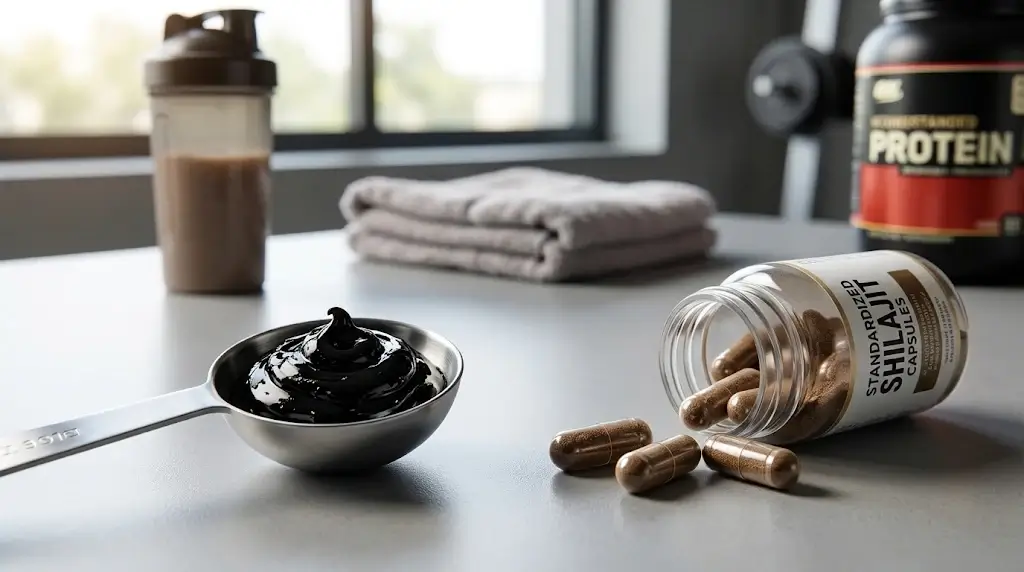
- Purified Resin: This is the traditional, minimally processed form—a thick black paste you scoop with a tiny stainless steel spoon and dissolve in warm water, tea, or milk. It typically offers the highest concentration of fulvic acid and DBPs without fillers, though it has a strong, earthy, bitter taste.
- Standardized Capsules/Tablets: A convenient, tasteless alternative ideal for lifters who travel or dislike the bitter flavor of resin. Look for patented, clinically studied extracts (such as PrimaVie) standardized to at least 50% fulvic acid and 10% DBPs.
- Shilajit Gummies: Skip these. Gummies are exposed to heat during manufacturing, contain added sugars and gelatin, and rarely hold a clinically effective 250 mg to 500 mg dose of verified purified shilajit.
2. Evidence-Based Dosage and Timing Protocol
Based on the clinical trials showing positive results for hormones and muscular endurance, follow these practical guidelines:
- Start Low to Assess Tolerance: Take 250 mg once daily with breakfast for the first 5 to 7 days to ensure it does not upset your stomach.
- Increase to the Clinical Dose: Move up to 250 mg twice daily (500 mg total per day)—one dose in the morning with food and a second dose 30 to 45 minutes before your afternoon workout or with lunch.
- Stay Consistent for 8 to 12 Weeks: Shilajit is not a central nervous system stimulant like caffeine; you will not feel a sudden jolt 20 minutes after taking it. Hormonal and mitochondrial adaptations require steady daily use for 60 to 90 days.
- Cycle Your Intake: Many sports nutritionists recommend cycling adaptogenic compounds—such as 8 to 12 weeks on, followed by 2 to 4 weeks off—to assess how your body feels without it.
3. Non-Negotiable Safety and Purity Standards
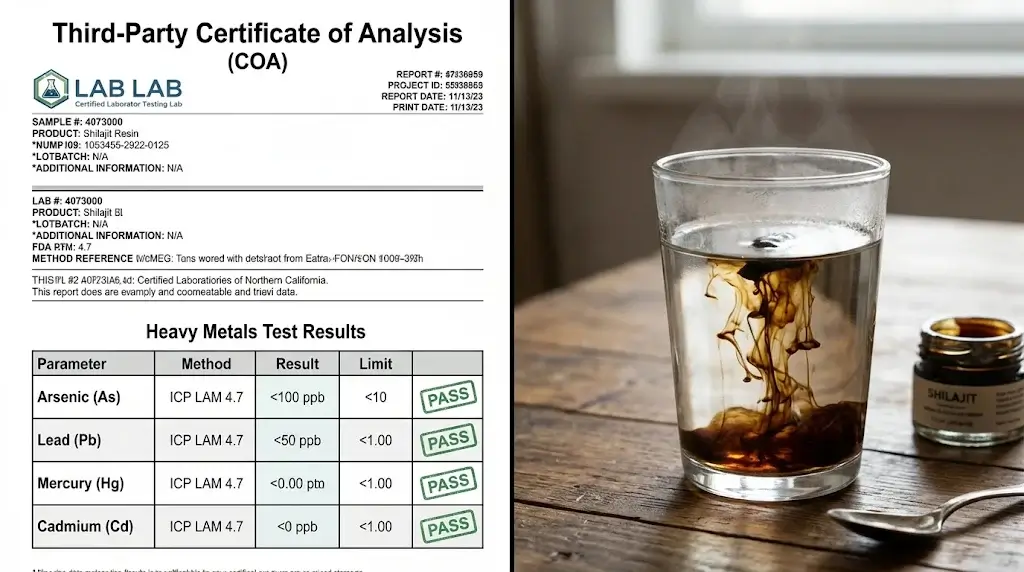
The National Institutes of Health (NIH) and independent testing organizations warn that raw or improperly purified Ayurvedic mineral preparations can contain hazardous levels of heavy metals—including lead, arsenic, and mercury—as well as mycotoxins (fungal toxins) and free radicals.
Common Mistake: Buying cheap bulk shilajit resin from unverified online marketplaces based on “home purity tests” like burning it with a lighter or dissolving it in water. Neither trick detects microscopic lead or arsenic contamination. Only independent laboratory testing proves safety.
Before buying any shilajit product, verify these three criteria:
- Third-Party Certificate of Analysis (COA): The brand must provide batch-specific lab reports from an accredited ISO 17025 lab confirming heavy metals (lead, arsenic, cadmium, mercury) are well below strict USP or California Prop 65 safety limits.
- Standardized Bioactive Content: The label should clearly state the exact percentage of fulvic acid (ideally 50% or higher) rather than hiding behind a vague “proprietary blend.”
- Purification Process: Ensure the label explicitly states “purified shilajit.” Raw, unprocessed shilajit should never be consumed.
Training and Lifestyle Habits That Boost Testosterone More Than Any Pill
Even the purest shilajit on earth plays second fiddle to mechanical tension and recovery. In my coaching practice, men who complain of low energy and sluggish hormone levels almost always see their biggest turnaround when they commit to heavy compound lifting and structured recovery.
If you want to maximize your natural testosterone production and cellular energy alongside—or instead of—supplements, anchor your week around these evidence-based habits:
- Prioritize Multi-Joint Compound Lifts: Research published in Sports Medicine shows that exercises recruiting large muscle masses—such as barbell back squats, conventional deadlifts, overhead presses, and weighted pull-ups—trigger the largest acute endocrine responses.
- Lift Heavy With Controlled Rest: Perform 3 to 5 working sets of 5 to 8 repetitions using a challenging load (roughly 75% to 85% of your one-rep max), resting 2 to 3 minutes between sets. For example, if your max squat is 225 lb [102 kg], work with 170–190 lb [77–86 kg] for crisp, controlled reps.
- Protect Your Deep Sleep: According to a study in JAMA, restricting healthy young men to just 5 hours of sleep per night for one week slashed their daytime testosterone levels by 10% to 15%—erasing nearly the entire potential gain of a 90-day supplement protocol. Understanding how stress and poor sleep lower male libido and hormone output is essential for any lifter.
- Avoid Chronic Crash Dieting: Staying in an aggressive calorie deficit for months signals your hypothalamus to downregulate reproductive hormones to conserve energy. Keep fat loss phases moderate (300 to 500 calories below maintenance) and include healthy dietary fats (monounsaturated and saturated fats from olive oil, eggs, avocados, and fatty fish) which serve as the raw building blocks for steroid hormones.
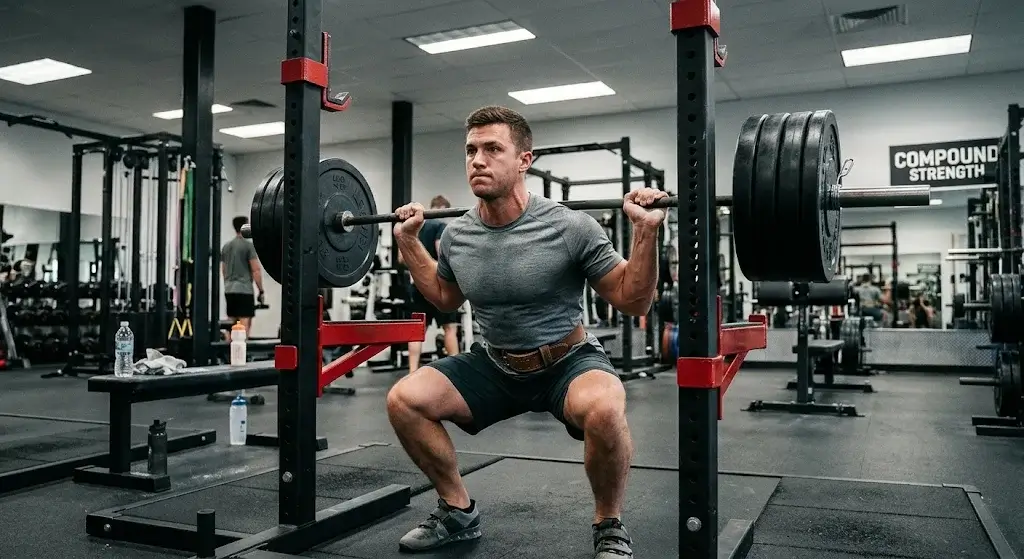
Sample 3-Day Compound Strength Routine for Natural Vitality
Pair your nutrition and recovery with this straightforward three-day full-body strength template (Monday, Wednesday, Friday) to stimulate muscle growth and metabolic vitality without overtraining:
| Day | Exercise | Sets | Reps | Rest | Coach’s Execution Cue |
| Day 1 | Barbell Back Squat | 4 | 6–8 | 2.5 min | Brace your core like you are about to take a punch; drive your knees out over your toes. |
| Day 1 | Flat Dumbbell Bench Press | 3 | 8–10 | 2 min | Keep your shoulder blades pinned back to the bench; lower dumbbells for a full 2-second count. |
| Day 1 | Chest-Supported Dumbbell Row | 3 | 10–12 | 90 sec | Pull your elbows toward your hips, pausing 1 second at the top to squeeze your mid-back. |
| Day 2 | Romanian Deadlift (Barbell or Dumbbell) | 4 | 6–8 | 2.5 min | Push your hips straight back with soft knees until you feel a deep stretch in your hamstrings. |
| Day 2 | Standing Overhead Barbell Press | 3 | 6–8 | 2 min | Squeeze your glutes and abs tight so your lower back stays neutral as you press overhead. |
| Day 2 | Weighted or Bodyweight Chin-Ups | 3 | 6–10 | 2 min | Start from a dead hang and pull your chest toward the bar without swinging your legs. |
| Day 3 | Trap Bar Deadlift (or Goblet Squat) | 4 | 5–6 | 3 min | Push the floor away through your whole foot while keeping your chest proud and lats engaged. |
| Day 3 | Incline Barbell or Dumbbell Press | 3 | 8–10 | 2 min | Set the bench at a 30-degree angle; control the weight down to your upper chest. |
| Day 3 | Farmer’s Carries | 3 | 40 yards [36 m] | 90 sec | Hold heavy dumbbells (e.g., 50–70 lb [23–32 kg] per hand), stand tall, and walk briskly. |
Regression (Beginner Option): Swap barbell squats and Romanian deadlifts for goblet squats using a 25–35 lb [11–16 kg] dumbbell and bodyweight glute bridges while learning proper hip-hinge mechanics.
Progression (Advanced Option): Add 5 lb [2.2 kg] to upper-body lifts and 10 lb [4.5 kg] to lower-body lifts once you complete the top end of the rep range for all sets with clean form.
Safety Notes: Side Effects and Who Should Avoid Shilajit
While purified shilajit was well-tolerated in 90-day clinical trials, natural does not mean side-effect-free for everyone.
- Common Mild Side Effects: Some men experience mild digestive upset, nausea, bloating, or dizziness, especially when taking shilajit on an empty stomach.
- Elevated Iron Levels: Shilajit naturally contains bioavailable iron. Men with hemochromatosis (an inherited condition causing excess iron accumulation) or naturally high ferritin levels should avoid shilajit unless cleared by a hematologist.
- Gout and Uric Acid: Preliminary reports suggest shilajit may increase uric acid levels in sensitive individuals, which could trigger flare-ups in men prone to gout.
- Blood Pressure and Blood Sugar Interactions: Because shilajit can mildly influence blood pressure and glucose metabolism, men taking prescription antihypertensive drugs, diabetes medications, or blood thinners must consult their physician before use.
- Autoimmune Conditions: Compounds that stimulate immune activity may exacerbate active autoimmune disorders.
If you are exploring other targeted options alongside medical guidance, reviewing evidence-based supplements for libido and energy in men can help you compare safer, single-ingredient alternatives.
Frequently Asked Questions (FAQ)
How much does shilajit increase testosterone in men?
In a 90-day clinical trial of healthy men aged 45 to 55 taking 500 mg of purified shilajit daily, total testosterone increased by an average of 20.45% and free testosterone rose by 19.14%. While statistically significant, this represents a modest optimization within normal physiological ranges rather than a dramatic hormone surge.
How long does it take for shilajit to work for energy?
Shilajit does not act like a fast-acting caffeine stimulant. While subtle improvements in daily stamina may appear within 2 to 3 weeks as mitochondrial efficiency improves, clinical trials show that measurable benefits for muscular endurance and hormone support require 8 to 12 weeks of consistent daily supplementation.
Is shilajit safe to take every day for men?
Purified, third-party-tested shilajit at doses of 250 mg to 500 mg daily appears safe for most healthy adult men for up to 90 days. However, raw or untested shilajit frequently contains toxic heavy metals like lead and arsenic, and men with high iron levels or gout should avoid it.
What is the best form of shilajit: resin or capsules?
Purified shilajit resin and standardized capsules are both effective if verified by independent lab testing. Resin offers minimal processing and high bioavailability, whereas standardized capsules (such as PrimaVie extracts with at least 50% fulvic acid) provide exact dosing without the strong, bitter taste. Avoid shilajit gummies due to low potency.
Does shilajit actually boost workout performance and recovery?
Research suggests taking 500 mg of purified shilajit daily for eight weeks may help active men retain more maximal muscular strength after exhaustive exercise and reduce markers of connective tissue breakdown. However, its performance impact is noticeably smaller than proven staples like creatine monohydrate, adequate protein, and sleep.
Conclusion
So, does shilajit really work for men’s energy and testosterone? The honest, evidence-based answer is that high-quality, purified shilajit offers modest, legitimate support—particularly for middle-aged men looking to nudge declining testosterone back toward mid-normal levels and active lifters wanting a slight buffer against deep muscular fatigue. It is far from an overnight miracle, and it will never out-perform heavy compound lifting, seven to eight hours of quality sleep, and dialed-in nutrition. If you decide to try it, skip the flashy social media gimmicks, demand a third-party heavy metal lab report, and treat it as a secondary tool alongside consistent training.