
You’ve probably seen the ads: a little stool-collection kit arrives at your door, you pop it in the mail, and two weeks later you get a personalized report on the trillions of bacteria living in your intestines. That’s a gut microbiome test in a nutshell. But before you spend $100 to $300 on one, you deserve to know exactly what it measures, what it can’t tell you, and whether the results will actually change how you eat, move, or take supplements.
I’ve spent years coaching people through nutrition and metabolic health changes, and gut health keeps coming up as the missing piece. You can hit your protein targets, log your workouts, and still feel bloated, sluggish, or stuck on the scale because your intestinal microbiota isn’t doing its job. A gut microbiome test can give you a snapshot of that ecosystem. The question is whether it’s worth your money and time.
Quick Answer
A gut microbiome test analyzes a stool sample to identify the types and relative amounts of bacteria, fungi, and viruses in your intestines. It shows your microbial diversity, dominant bacterial strains, and estimated short-chain fatty acid production. Results take 2–6 weeks. It is not a diagnostic tool for disease, but it can guide targeted dietary and lifestyle changes for digestive comfort and metabolic health.
What a Gut Microbiome Test Actually Measures
Your large intestine hosts roughly 38 trillion microorganisms—bacteria, archaea, viruses, and fungi—that collectively make up your gut flora. A gut microbiome test sequences the DNA in a stool sample to build a profile of who’s in there and in what proportions.
The two main testing methods are:
- 16S rRNA sequencing. This targets a specific gene region found in all bacteria. It’s cheaper and faster, giving you a broad picture of which bacterial phyla and genera are present (think of it as sorting a library by author’s last name). Brands like DayTwo and some older Viome panels use this approach.
- Shotgun metagenomic sequencing. This sequences all the DNA in the sample, not just one gene region. It identifies species-level strains, detects fungi and viruses, and can flag antibiotic-resistance genes. ZOE and newer Viome panels lean toward this method. It costs more but gives a finer-grained picture.
Neither method counts every single organism. They estimate relative abundance based on the DNA fragments they recover. That’s an important nuance to keep in mind when you read your report.
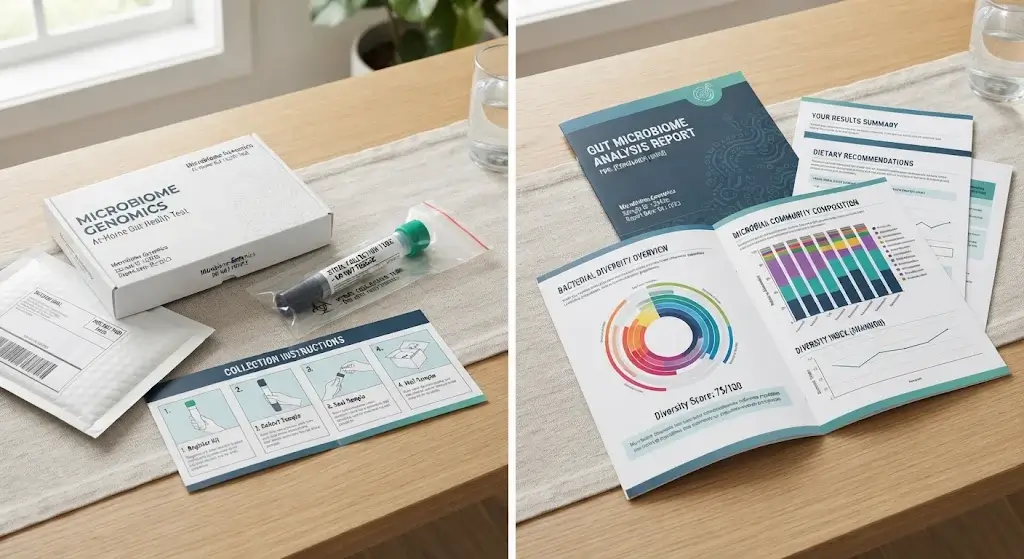
What the Report Typically Includes
| Metric | What It Tells You |
| Microbial diversity (alpha & beta) | How many different species are present and how they compare to a reference population |
| Phylum-level breakdown | Proportions of major groups like Firmicutes, Bacteroidetes, Actinobacteria, Proteobacteria |
| Top genera / species | Specific strains such as Bifidobacterium longum, Lactobacillus spp., Faecalibacterium prausnitzii |
| SCFA-producing capacity | Estimated ability of your bacteria to produce short-chain fatty acids (butyrate, propionate, acetate) from dietary fiber |
| Dysbiosis flags | Imbalances such as elevated Proteobacteria (often linked to inflammation) or low Bifidobacterium |
| Pathogen / resistance markers (metagenomic only) | Presence of common gut pathogens or antibiotic-resistance genes |
What it does not include: a diagnosis of IBD, IBS, celiac disease, SIBO, or cancer. If you have persistent symptoms—blood in stool, unexplained weight loss, severe abdominal pain—see a gastroenterologist first. A stool-based microbiome panel is a wellness tool, not a clinical diagnostic.

How Accurate Are Gut Microbiome Tests?
This is the question I get most often. The honest answer: the sequencing technology itself is well-validated in research labs. Peer-reviewed work in journals like Nature Microbiology and The ISME Journal has confirmed that 16S and metagenomic methods reliably detect and quantify bacterial communities in controlled settings.
Where accuracy gets murkier is the interpretation layer. The reference databases that map DNA sequences to species names are still incomplete. Some strains haven’t been cultured or fully characterized, so the report may label them as “unclassified.” Also, your results shift day to day based on what you ate, whether you took antibiotics, your sleep, and your stress levels. One snapshot doesn’t capture your full picture.
A 2021 review in Gut Microbes noted that while sequencing platforms are robust, the clinical utility of consumer-facing microbiome reports for guiding individualized nutrition is still being studied. In other words, the science behind the tech is solid; the science behind “here’s exactly what you should eat” is still maturing.
Coach’s Tip: Treat your gut microbiome test results like a fitness assessment, not a prescription. They show you a starting point and a direction. You don’t retest every two weeks just because you changed your squat form. Re-test in 8–12 weeks if you’ve made meaningful dietary shifts and want to see movement.
Is a Gut Microbiome Test Worth It?
Here’s where I’ll be straight with you, the way I’d be at a coaching session.
It’s worth it if:
- You’ve tried general dietary advice (more fiber, less ultra-processed food, some fermented foods) and still feel bloated, gassy, or “off” after meals.
- You want a data-driven starting point before investing in specific prebiotic or probiotic supplements.
- You’re working on metabolic health—weight management, blood sugar, or cholesterol—and want to understand your gut’s role in those pathways.
- You’re simply curious and the 100–300 cost won’t strain your budget.
It’s probably not worth it if:
- You have no digestive complaints and no specific health goal tied to your gut.
- You’re expecting it to diagnose a medical condition.
- You plan to ignore the results and keep eating the same way.
- You’re on active antibiotic therapy (wait at least 4–6 weeks after your last dose before testing).
Research linking the gut microbiome to metabolic outcomes is growing. A large cohort study published in Nature (2022) found that individuals with higher microbial diversity and greater Bifidobacterium abundance tended to have better insulin sensitivity and lower inflammatory markers. That doesn’t mean a test will hand you a cure, but it does mean your gut composition is one lever among many for metabolic health.

How to Use Your Results: A Practical 4-Week Plan
Getting the report is step one. Most people email it to their doctor, get a vague “looks fine,” and never look at it again. Here’s how I’d walk a client through acting on the data.
- Note your diversity score. Lower than the reference range? Your diet may be too narrow.
- Look at your top 10 genera. Are Bifidobacterium and Faecalibacterium present in reasonable amounts? Low levels suggest you need more prebiotic fiber.
- Check for elevated Proteobacteria. This can flag a “leaky gut” pattern (increased intestinal permeability) and often correlates with high sugar, low fiber, or recent antibiotic use.
- Aim for 30–50 g of dietary fiber per day from whole plants—legumes, oats, berries, vegetables, nuts. The CDC recommends at least 25–38 g of fiber daily for adults, and most Americans fall well short.
- Add 1–2 servings of fermented food per day: plain yogurt, kefir, sauerkraut, kimchi, or a small serving of miso. These introduce live Lactobacillus and Bifidobacterium strains.
- If your report shows low SCFA-producing capacity, prioritize resistant starch sources: cooled cooked potatoes, green bananas, or a tablespoon of raw potato starch stirred into a smoothie.
- If Bifidobacterium is notably low, a bifidobacterial probiotic (look for B. longum or B. infantis at 10–20 billion CFU) may help while your diet catches up.
- If diversity is low overall, a multi-strain probiotic plus a prebiotic fiber supplement (inulin, FOS, or acacia fiber) can feed the existing community.
- Pair this with the strategies in my guide on how to support metabolism naturally for weight management, since gut health and metabolic rate are deeply connected.
Week 4: Reassess and Plan a Re-test
- Track how you feel: bloating, regularity, energy, post-meal comfort.
- If you’ve made consistent changes for 8–12 weeks, a second gut microbiome test can show whether your diversity and SCFA markers shifted.
- Keep a simple food-and-symptom log. Patterns matter more than any single number on the report.
Common Mistake: Buying a probiotic with 50 billion CFU of 12 strains because the label looks impressive, without checking whether those strains match what your report flagged as low. A targeted, lower-quantity approach is usually more effective than a “kitchen sink” supplement. Match the strain to the gap.
Preparing for the Test: What to Do (and Avoid) Before You Ship the Sample
Your stool sample is a snapshot of the last 24–48 hours of gut activity. To get a representative picture:
- Keep your normal diet for at least 48 hours before collection. Don’t suddenly load up on probiotics or fiber the night before—that skews the result.
- Avoid alcohol for 48 hours prior.
- If you’re taking a probiotic supplement, note the brand, strain, and dose on the intake form. Some labs will flag it, but you can’t “un-take” a probiotic.
- Wait at least 4–6 weeks after finishing antibiotics before testing. Antibiotics wipe out large portions of your microbiota, and the community takes weeks to reconstitute.
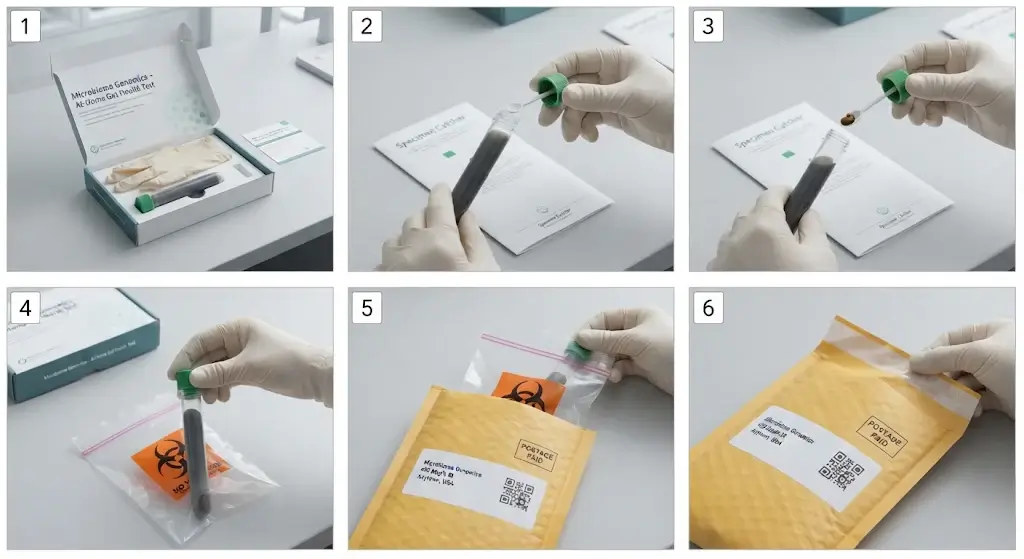
- Collect the sample per the kit’s instructions (usually a small “plug” the size of a walnut, not the whole bowel movement). Store it in the provided tube and ship it within the window the lab specifies (often 48–72 hours).
- Fill out the questionnaire honestly: medications, recent travel, digestive symptoms, dietary habits. The lab uses this context to interpret your data.
Cost, Turnaround, and Insurance
| Factor | Typical Range |
| Price (consumer direct-to-consumer) | $99 – $300+ depending on depth (16S vs. metagenomic) |
| Turnaround time | 2 – 6 weeks (lab processing + report generation) |
| Insurance coverage | Generally not covered for wellness purposes. May be covered if ordered by a gastroenterologist as part of a clinical workup |
| Re-testing | Same cost; most companies don’t offer a discount for follow-ups |
Brands in this space include ZOE, Viome, Thorne, and DayTwo. Each uses a slightly different panel and interpretation model. Read the fine print on what’s included—some base prices cover only 16S data, while metagenomic add-ons cost extra.
If cost is a barrier, talk to your primary care doctor or a registered dietitian. They can often recommend dietary changes based on your symptoms without a $200 test, and in some cases order a clinical stool panel (which looks for pathogens, inflammation markers, and calprotectin) that may be partially covered by insurance.
Safety Notes and Limitations
A gut microbiome test is non-invasive—there’s no needle, no prep, no radiation. The main “risk” is misinterpreting the data and making drastic dietary changes that don’t suit you.
- It is not a diagnostic test. It cannot confirm or rule out IBD, celiac disease, SIBO, colorectal cancer, or H. pylori infection. If you have red-flag symptoms (rectal bleeding, unexplained weight loss >5% in a month, persistent vomiting, severe pain), see a doctor. A gastroenterologist will order the appropriate clinical tests.
- Results are relative, not absolute. “Low Bifidobacterium” is relative to a reference population that shifts by age, geography, and diet. Don’t panic over one number.
- Antibiotics, PPIs (acid reducers), and certain medications alter your microbiome. Disclose all medications on the intake form.
- Pregnant or postpartum individuals, people with IBD, or anyone on immunosuppressive therapy should consult their doctor before starting any new supplement or major dietary change based on test results.
This article is for general information and is not a substitute for advice from a doctor or physical therapist.
Related Tips for Gut Health Beyond the Test
A gut microbiome test is a starting point, not the whole program. Here are habits with solid research backing that support a diverse, functional microbiota:
- Eat a wide variety of plant foods. A 2022 study in Cell found that consuming 30+ different plant-based foods per week was associated with the most diverse gut microbiome. Think beans, lentils, whole grains, vegetables, fruits, nuts, seeds, and herbs.
- Prioritize soluble fiber. Soluble fiber feeds SCFA-producing bacteria. Oats, apples, flaxseeds, and psyllium husk are easy additions. If you’re working on appetite and weight management, the research on dietary fiber and satiety is encouraging—fiber increases fullness and feeds the very bacteria that produce butyrate, which supports gut lining integrity.
- Move your body. Regular physical activity is linked to higher microbial diversity. The HHS Physical Activity Guidelines recommend at least 150 minutes of moderate aerobic activity plus two days of muscle-strengthening work per week. Even a brisk 30-minute walk after dinner can shift your gut bacteria in a positive direction.
- Manage stress and sleep. The gut-brain axis is real. Chronic stress elevates cortisol, which can alter gut permeability and reduce beneficial bacterial populations. Poor sleep has similar effects. If you’re struggling, my guide on how sleep affects metabolism and weight management breaks down the hormonal connections.
- Limit ultra-processed foods and excess added sugar. These tend to feed Proteobacteria and reduce overall diversity. You don’t have to go zero-sugar, but cutting back on hyper-palatable, low-fiber packaged foods helps.
- Use probiotics and prebiotics strategically, not habitually. If your test shows a specific gap, target it. If your diversity is already solid, you may not need a daily probiotic capsule. Your food is the primary “probiotic.”
Understanding what affects your metabolic health holistically—including your gut—can help you make smarter choices. My breakdown of what affects metabolism and body weight covers the gut as one of several key drivers.

FAQ
Is a gut microbiome test worth it for someone with no digestive issues?
If you feel fine, eat a varied diet, and have no specific metabolic goal, the test is more curiosity than necessity. It becomes more valuable when you have a concrete question—bloating after meals, sluggish energy, or a plateau in weight management—and want data to guide targeted changes rather than guesswork.
How much does a gut microbiome test cost, and is it covered by insurance?
Consumer direct-to-consumer panels typically range from $99 to $300+. Most insurance plans do not cover a wellness-oriented gut microbiome test. If a gastroenterologist orders a clinical stool panel as part of a diagnostic workup, partial coverage is possible, but that’s a different test.
What does a gut microbiome test show that a regular blood test can’t?
A blood test checks for inflammation markers (CRP), nutrient levels, and organ function. A gut microbiome test shows the composition of your intestinal bacterial community—diversity, dominant strains, SCFA-producing capacity, and dysbiosis patterns. They answer different questions and complement each other.
How long do gut microbiome test results take?
Most consumer labs report results in 2 to 6 weeks. The timeline includes shipping to the lab, DNA extraction and sequencing (1–2 weeks), bioinformatic analysis, and report generation. Some brands offer a preliminary “diversity score” within 10 days, with the full species-level report following.
Can a gut microbiome test detect disease like cancer or IBD?
No. Consumer gut microbiome tests are not validated to diagnose colorectal cancer, inflammatory bowel disease, celiac disease, or SIBO. They can flag patterns associated with inflammation or dysbiosis, but only a gastroenterologist with appropriate clinical testing (colonoscopy, biopsy, specific stool markers) can make a diagnosis.
What should I eat (or avoid) before taking a gut microbiome test?
Keep your normal eating pattern for at least 48 hours before collection. Avoid alcohol, and don’t start a new probiotic or high-fiber supplement the day before. If you finished antibiotics, wait at least 4–6 weeks. The goal is a “business-as-usual” snapshot of your current gut environment.
Conclusion
A gut microbiome test is a useful, low-risk tool that can give you a data-driven starting point for improving digestive comfort, metabolic health, and overall well-being. It won’t diagnose disease, and the “personalized nutrition plan” some companies promise is still an evolving science. But if you’ve been feeling off, stuck, or just curious about the trillions of organisms running your digestive system, the information it provides can help you make smarter choices about fiber, fermented foods, targeted probiotics, and lifestyle habits.
Pair the test with consistent, evidence-based actions: eat a wide variety of plant foods, move your body most days, protect your sleep, and manage stress. The gut is responsive. Give it 8 to 12 weeks of steady input, and you’ll likely feel the difference before you ever need to re-test.
If you’re also working on appetite management or metabolic flexibility, the gut is one of the most underappreciated levers. Start with the data, then build the habits around it.