
As a strength and conditioning coach, I often get asked by clients about recovery, joint health, and anti-aging. One of the most frequent questions I hear in the gym is: do collagen supplements really work for skin elasticity? The wellness market is flooded with powders, pills, and drinks promising a youthful glow, but it is hard to separate marketing hype from actual science.
In this guide, we will break down the clinical evidence, explain how your body actually uses these proteins, and build a practical daily routine to support your skin from the inside out. We will look at the biology of your dermis, compare different supplement sources, and even cover the specific exercises that boost blood flow to your skin cells.
Quick Answer
Yes, research suggests that taking 2.5 to 10 grams of hydrolyzed collagen daily for 8 to 12 weeks can improve skin elasticity, hydration, and reduce wrinkle depth. However, results depend on consistency, age, diet, and using a high-quality peptide supplement paired with vitamin C.
Do Collagen Supplements Really Work for Skin Elasticity? What the Science Says
To understand if these supplements work, we first need to understand what collagen actually is. Collagen is the most abundant protein in the human body, acting as the structural “glue” that holds your tissues together. In your skin, it forms a dense network of fibers in the dermis, providing firmness, structure, and that crucial bounce we associate with youth.
As we age, our natural production of this vital protein slows down significantly. Starting in your mid-twenties, you lose about one percent of your skin’s collagen each year. Environmental factors like UV radiation, smoking, and high-sugar diets accelerate this breakdown, leading to sagging and wrinkles.
When you ask if supplements can reverse this process, the clinical data is highly encouraging. According to a systematic review of collagen supplements, daily doses between 2.5 and 10 grams yield the best anti-aging results. These studies consistently show that oral collagen supplementation improves skin elasticity and hydration after 90 days of consistent use.
The key is that you are not just eating protein; you are providing specific building blocks that your body prioritizes for tissue repair. Hydrolyzed collagen peptides are highly bioavailable and directly stimulate fibroblasts in the dermis to create new structural fibers. This means the answer to whether these supplements work is a resounding yes, provided you use the right form and dosage.
How Your Body Absorbs Collagen Peptides
Many people are skeptical because they think eating a protein will just digest it into basic amino acids. If you ate a piece of tough gristle, your digestive system would break it down completely, and it would not specifically target your skin. However, high-quality supplements undergo a process called hydrolysis.
Hydrolysis uses enzymes to break down large, intact protein chains into tiny fragments called peptides. These dipeptides and tripeptides are small enough to pass through your intestinal wall and enter your bloodstream intact. Once in circulation, they act as signaling molecules.
When your body detects high levels of these specific peptide fragments in the blood, it interprets this as a sign that tissue breakdown is occurring somewhere. In response, your fibroblasts “wake up” and begin synthesizing new collagen and hyaluronic acid to repair the perceived damage. This is how oral supplements can reach the deep dermal layers that topical creams simply cannot touch.

Do Collagen Supplements Really Work for Skin Elasticity Compared to Topical Creams?
The cosmetic industry spends billions marketing collagen-infused lotions and serums. While these products can be excellent moisturizers, they fail as structural treatments. The intact collagen molecule is massive—far too large to penetrate the epidermis and reach the dermis where elasticity is actually determined.
Topical creams sit on the surface of your skin, creating a barrier that traps moisture. This can temporarily plump the skin and make fine lines look less visible, but the effect washes off as soon as you cleanse your face. They do not stimulate new fiber production or repair the extracellular matrix.
Oral supplements work systemically. Because the peptides are delivered through your bloodstream, they reach the deep reticular dermis where fibroblasts live. This is why collagen supplementation is generally safe and effective for overall skin density, whereas topical collagen is largely a marketing gimmick. For true structural changes, internal supplementation combined with topical vitamin C or retinol is the most evidence-based approach.
The Best Types of Collagen for Your Skin
Not all supplements are created equal. There are at least 28 different types of collagen in the human body, but three main types are relevant for supplementation. Choosing the right source is critical for targeting skin elasticity specifically.
| Collagen Type | Primary Source | Best For | Bioavailability |
| Type I | Marine, Bovine | Skin elasticity, wrinkle reduction, bone health | High |
| Type II | Chicken Sternum | Joint cartilage, arthritis relief | Moderate |
| Type III | Bovine, Porcine | Skin structure, blood vessels, gut lining | High |
Marine Collagen (Type I)
Marine collagen is sourced from the scales and skin of fish. It is primarily Type I, which makes up about 90 percent of your body’s total collagen supply. Marine peptides have the smallest particle size, making them the most easily absorbed by the digestive tract. If your primary goal is purely skin elasticity and reducing fine lines, marine collagen is often considered the gold standard.
Bovine Collagen (Types I and III)
Bovine collagen is sourced from cow hides. It contains a robust mix of Type I and Type III. Type III is highly concentrated in the reticular fibers of your skin and blood vessels. Bovine collagen is excellent for overall anti-aging, gut health, and supporting the structural integrity of your skin barrier. It is also generally more affordable and easier to source sustainably than marine options.
Building a Complete Skin-Boosting Routine
Taking a supplement is only one piece of the puzzle. To truly answer the question of do collagen supplements really work for skin elasticity, we have to look at your entire daily routine. Your skin needs the right co-factors to build new tissue, and it needs protection from the environmental stressors that break it down.
The Daily Supplement Protocol
Consistency is more important than timing. You need to take your peptides every single day to maintain the signal to your fibroblasts. Most clinical trials showing significant improvements in skin elasticity use doses ranging from 2.5 grams to 10 grams per day.
If you are wondering about the best time to take collagen powder, the truth is that your body will absorb it whenever you take it. Some coaches prefer taking it in the morning mixed into coffee or a smoothie, while others take it before bed to align with the body’s natural repair cycles.
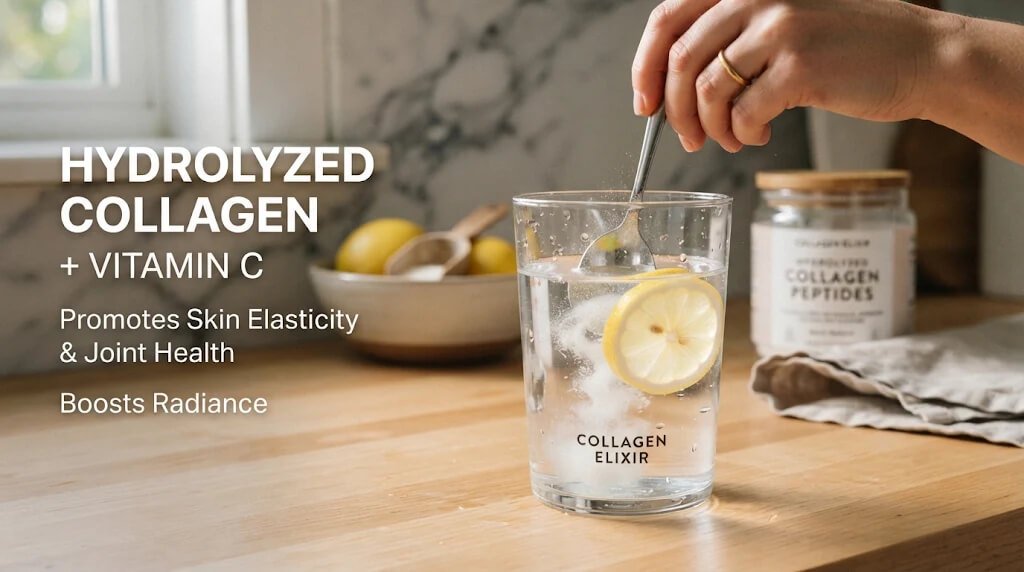
The most critical rule is to pair your supplement with Vitamin C. Vitamin C serves as an essential cofactor for collagen synthesis and protects the skin from oxidative stress. Without adequate Vitamin C, your fibroblasts cannot cross-link the amino acids into strong, stable fibers. Always ensure your supplement includes Vitamin C, or take it alongside a citrus fruit or a dedicated ascorbic acid capsule.
Cardio and Resistance Training for Skin Circulation
You might wonder what lifting weights has to do with your skin. The answer is circulation and cellular turnover. When you increase energy and stamina naturally through movement, you also upgrade your vascular system. Studies show that exercise increases cutaneous blood flow, delivering vital nutrients and oxygen directly to the dermal layer.
Below is a simple Skin-Boosting Cardio & Resistance Circuit designed to maximize blood flow without causing excessive systemic stress or cortisol spikes.
The Workout:
- Cardio Base: Brisk walk or light jog for 2 miles (3.2 km).
- Goblet Squats: 3 sets of 10 reps using a 15 lb (7 kg) to 25 lb (11 kg) dumbbell.
- Dumbbell Rows: 3 sets of 12 reps per arm using 10 lb (4.5 kg) to 20 lb (9 kg) weights.
- Step-Ups: 3 sets of 10 reps per leg onto a 12-inch (30 cm) box.
- Rest: 60 seconds between sets. Tempo: 2 seconds down, 1 second pause, 2 seconds up.

Regression (Easier Version): If you are just starting out, swap the dumbbell squats for bodyweight squats. Reduce the cardio base to a 1 mile (1.6 km) brisk walk. Use a 6-inch (15 cm) step for your step-ups to reduce knee strain while still promoting lower body circulation.
Progression (Harder Version): To challenge your fitness and further boost circulation, increase the cardio to 3 miles (4.8 km). Use a 35 lb (16 kg) dumbbell for goblet squats and upgrade to an 18-inch (45 cm) plyo box for step-ups. Research notes that skin blood flow may double following exercise, which helps flush cellular debris and deliver your collagen peptides exactly where they are needed.

Coach’s Tip: Focus on nasal breathing during your 2-mile (3.2 km) cardio session. This keeps your heart rate in Zone 2, which maximizes capillary density and blood flow to the skin without spiking cortisol, a stress hormone that actively breaks down collagen.
Common Mistake: Holding your breath during heavy lifts. This spikes blood pressure and restricts oxygen delivery to your dermal layer. Always exhale on the exertion phase of the movement to maintain steady circulation.
Diet and Lifestyle Factors That Protect Skin Elasticity
You cannot out-supplement a lifestyle that damages your skin. Even if you are taking 10 grams of high-quality peptides daily, UV exposure and poor sleep will degrade your progress. To get the most out of your routine, you need to support your internal health with targeted nutrients and habits.
Essential Co-Factors and Antioxidants
Your skin requires a steady supply of specific amino acids, primarily glycine, proline, and hydroxyproline. While your supplement provides these, getting them from whole foods like bone broth, chicken skin, and egg whites is highly beneficial. Furthermore, normal skin contains high concentrations of vitamin C, which supports its structural integrity against daily environmental stress.
Beyond basic vitamins, specific antioxidants can protect the collagen you already have. Using astaxanthin for skin glow and anti-aging is a powerful strategy. Astaxanthin is a potent carotenoid that protects the dermis from UV-induced oxidative stress, acting almost like an internal sunblock (though you still need topical SPF).
Additionally, incorporating omega-3 fatty acids for skin hydration helps maintain the lipid barrier of the epidermis, keeping moisture locked in and reducing the appearance of fine lines. Finally, utilizing green tea extract for antioxidant support provides catechins that inhibit the enzymes responsible for breaking down collagen in the skin.
Sleep and Stress Management
Your body does the vast majority of its tissue repair while you sleep. During deep sleep stages, human growth hormone (HGH) is released, which is vital for cellular turnover and fibroblast activity. Chronic sleep deprivation elevates cortisol, which directly degrades skin elasticity and leads to a dull, sallow complexion. Aim for 7 to 9 hours of quality sleep per night to allow your supplements to do their job.
Common Mistakes and Safety Notes
While the evidence is strong, many people fail to see results because they make simple errors in their routine. Understanding these pitfalls will save you time and money.
- Inconsistency: Taking collagen for two weeks and quitting will not yield results. The skin remodeling cycle takes time. If you want to know how long for collagen supplements to work, expect to wait at least 8 to 12 weeks of daily use before seeing visible changes in elasticity.
- Ignoring Sugar Intake: High blood sugar leads to a process called glycation, where sugar molecules attach to collagen fibers, making them stiff and brittle. No amount of supplementation can fix a high-sugar diet.
- Skipping Sunscreen: UV radiation is the number one cause of collagen degradation. If you do not wear SPF 30+ daily, the sun will destroy new fibers faster than your body can build them.
Safety Profile and Side Effects
For the vast majority of people, these supplements are incredibly well-tolerated. Research confirms that minor side effects like nausea or dyspepsia are rare but possible in sensitive individuals.
If you are using marine collagen, ensure you are not allergic to fish or shellfish. Some users report a mild, lingering taste in the mouth or a feeling of fullness if they take large doses on an empty stomach. Always buy from reputable brands that undergo third-party testing for heavy metals, as marine and bovine sources can accumulate environmental toxins if not properly purified.
Frequently Asked Questions
Does collagen powder actually improve skin sagging? Yes, but it requires patience. Sagging occurs when the deep structural matrix weakens. Taking 5 to 10 grams of hydrolyzed peptides daily provides the raw materials needed to rebuild this matrix. Visible tightening usually takes 12 weeks of consistent use alongside a healthy diet and sun protection.
Can collagen reverse deep wrinkles? Supplements are excellent for improving skin hydration and reducing the depth of fine lines. However, they cannot completely “erase” deep, etched wrinkles caused by decades of sun damage or repetitive facial movements. They will improve the overall texture and plumpness of the skin, making deep wrinkles look softer.
What type of collagen is best for skin elasticity? Type I and Type III are the most abundant in human skin. Marine collagen is primarily Type I and is highly bioavailable, making it excellent for fine lines. Bovine collagen contains both Type I and III, making it a great all-around choice for structural firmness and elasticity.
Does vitamin C help collagen absorption? Vitamin C does not necessarily help your gut absorb the supplement, but it is absolutely required for your body to use it. Your fibroblasts cannot synthesize or cross-link new collagen fibers without Vitamin C. Always take your supplement with a source of Vitamin C for maximum efficacy.
Are there any side effects of taking collagen daily? Collagen is a natural food protein and is generally very safe. Some people experience mild digestive upset, bloating, or a bad taste in the mouth. If you have a history of kidney stones or calcium issues, consult your doctor, as some bone-based supplements can contain trace minerals.
Conclusion: Do Collagen Supplements Really Work for Skin Elasticity?
The scientific consensus is clear: do collagen supplements really work for skin elasticity? Yes, they do. When you consume high-quality hydrolyzed peptides, you provide your body with the specific signaling molecules and amino acids required to rebuild the dermal matrix.
However, a supplement is not a magic eraser. To truly transform your skin, you must combine daily supplementation with a nutrient-dense diet, rigorous sun protection, and a solid exercise routine that promotes healthy circulation. By treating your skin health as a holistic lifestyle goal rather than a quick fix, you can maintain firm, elastic, and youthful skin for decades to come.