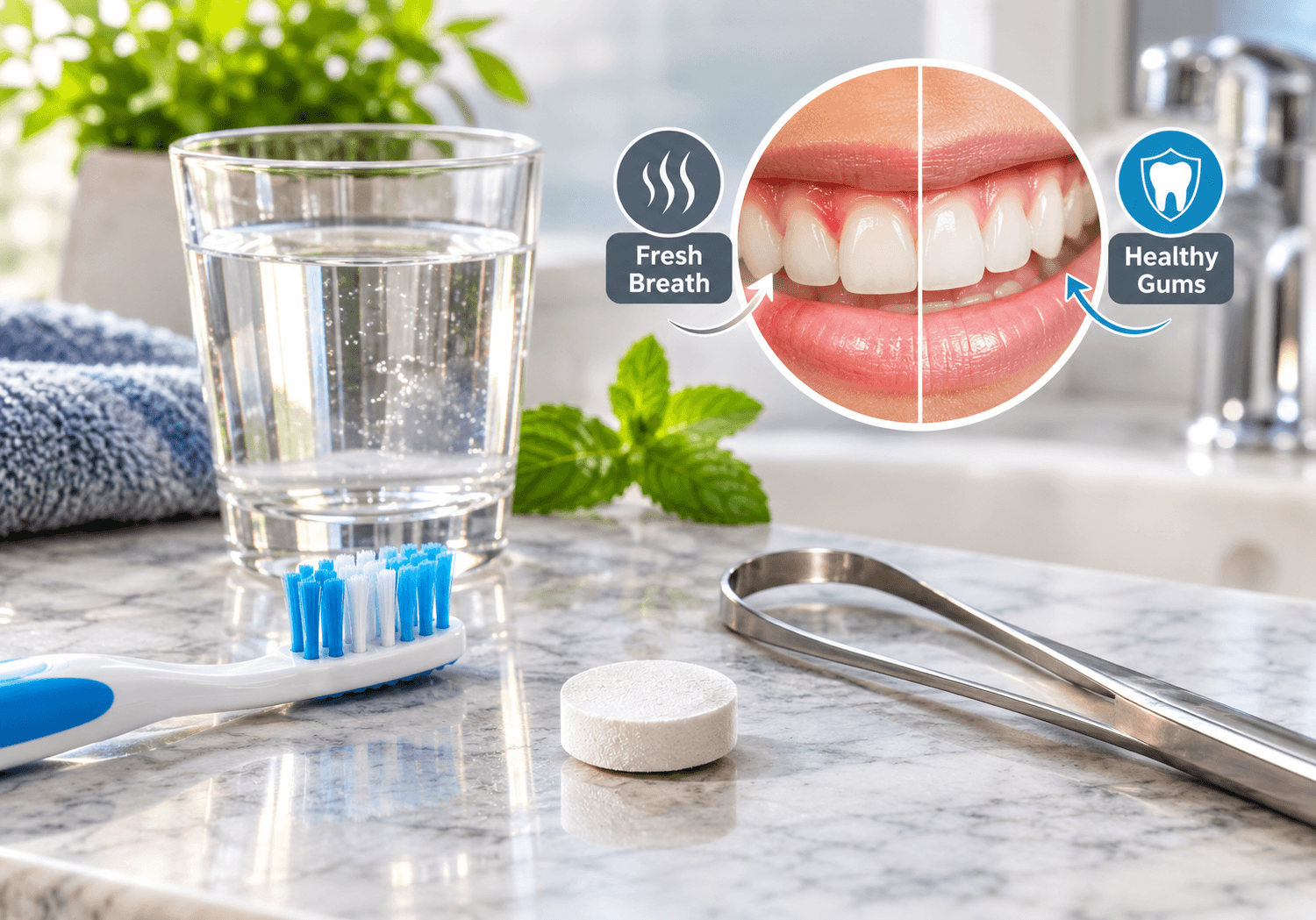
Best Oral Probiotics for Reducing Bad Breath and Gum Sensitivity: A Coach Evidence-Based Buying Guide
Walking into a gym, stepping onto a pickleball court, or leaning in to spot a training partner requires confidence, and persistent bad breath or tender, bleeding gums can undercut that focus fast. Many active adults assume that brushing harder, flossing aggressively, or rinsing with strong antiseptic mouthwash will solve the issue. In reality, harsh oral care routines often wipe out helpful bacteria alongside the odor-causing microbes, leaving the mouth vulnerable to dryness, irritation, and recurring halitosis.
Just like your gut, your mouth houses a complex ecosystem of hundreds of bacterial species that protect your teeth, soothe soft tissue, and keep odor under control. Research into the oral microbiome shows that targeted probiotic strains can crowd out odor-producing bacteria and calm localized gum irritation when delivered directly to the mouth via dissolvable lozenges or chewables. Because the supplement market is crowded with underdosed capsules and generic gut blends, finding the best oral probiotics for reducing bad breath and gum sensitivity requires looking closely at clinically studied strains, delivery formats, and third-party quality testing.
Before starting any new dietary supplement—especially if you experience persistent gum bleeding, tooth pain, or have a compromised immune system—check with your dentist or doctor first to rule out underlying periodontal disease or infection.
Quick Answer: The best oral probiotics for reducing bad breath and gum sensitivity are slow-dissolving lozenges containing clinically studied strains like Streptococcus salivarius BLIS K12 and BLIS M18 alongside Limosilactobacillus reuteri. Delivering 1 billion to 5 billion CFUs directly onto the tongue and gumline without added sugars helps neutralize odor-causing sulfur compounds and support calmer, more resilient gum tissue within two to four weeks.
Top Oral Probiotics Compared
Because supplement formulas, pricing, and strain availability change frequently, exact retail prices and specific proprietary blend ratios are marked with [VERIFY] so you can confirm current product labels before purchasing.
| Product Profile / Formula Type | Key Clinically Studied Strains | Delivery Format & Strength | Best For | Estimated Price Range |
| Dual-Action BLIS K12 & M18 Lozenge (e.g., Hyperbiotics PRO-Dental / NOW OralBiotic) | S. salivarius BLIS K12, S. salivarius BLIS M18, L. reuteri, L. paracasei | Slow-dissolving mint chewable/lozenge; ~3 Billion CFU [VERIFY] | Overall daily support for both fresh breath and gum comfort | $20 – $35 [VERIFY] |
| Targeted Gum & Periodontal Lozenge (e.g., BioGaia Prodentis) | Limosilactobacillus reuteri DSM 17938 & ATCC PTA 5289 | Dissolvable lozenge; ~200 Million – 1 Billion CFU [VERIFY] | Sensitive, tender, or easily irritated gums | $25 – $40 [VERIFY] |
| High-Potency BLIS K12 Throat & Breath Lozenge (e.g., BLIS K12 Fresh Breath / Life Extension Florassist Oral) | S. salivarius BLIS K12, Bacillus coagulans | Dissolvable lozenge; ~1 – 2.5 Billion CFU [VERIFY] | Stubborn halitosis, morning breath, and upper respiratory defense | $18 – $30 [VERIFY] |
| Synbiotic Dental Chewable with Xylitol & Zinc (e.g., Great Oral Health Advanced Oral Probiotics) | S. salivarius K12 & M18, L. reuteri, L. rhamnosus + Xylitol & Zinc | Chewable tablet; ~3 – 5 Billion CFU [VERIFY] | People prone to dry mouth during workouts or high-protein diets | $25 – $40 [VERIFY] |
| Budget Single-Strain S. salivarius K12 Option (e.g., Swanson / Vitamatic Oral Probiotic) | S. salivarius K12 + Inulin/Xylitol | Dissolvable tablet; ~1 – 2 Billion CFU [VERIFY] | First-time users testing oral probiotics on a budget | $12 – $20 [VERIFY] |
| Vitamin D3 + K2 + Oral Probiotic Combo (e.g., Burst Oral Probiotics / GuruNanda) | S. salivarius K12 & M18, L. paracasei, Vitamin D3, Vitamin K2 | Dissolvable lozenge; ~2 – 3 Billion CFU [VERIFY] | Adults over 40 focusing on tooth mineralization and gum tissue resilience | $22 – $35 [VERIFY] |
How Oral Probiotics Work for Bad Breath and Sensitive Gums
Understanding why standard mouthwash fails where targeted probiotics succeed comes down to basic microbial ecology. Inside your mouth, hundreds of species of bacteria compete for space on your tongue, cheeks, teeth, and along the gingival sulcus (the shallow pocket where your gums meet your teeth).
Bad breath—clinically known as halitosis—is primarily caused by anaerobic bacteria hiding in the deep crevices of the back of the tongue and below the gumline. As these bacteria break down leftover proteins from food, dead cells, and post-nasal drip, they release volatile sulfur compounds (VSCs) such as hydrogen sulfide and methyl mercaptan, according to research indexed by the National Library of Medicine (NCBI). High-protein diets, common among strength trainers and active individuals, can supply extra amino acids like cysteine and methionine that feed these odor-producing microbes if your oral flora is out of balance.
Gum sensitivity and mild gingival inflammation occur through a similar imbalance. When pathogenic bacteria form sticky plaque biofilms along the gumline, your immune system responds by increasing blood flow and sending inflammatory cells to the area. This localized immune reaction makes gum tissue swollen, tender to brushing or flossing, and prone to minor bleeding.
Coach’s Tip: Think of your oral microbiome like turf grass on an athletic field. Using harsh, alcohol-based antiseptic mouthwash every day is like scorching the entire field—it kills the weeds temporarily, but it leaves bare dirt where aggressive weeds grow back faster. Taking a dissolvable oral probiotic is like overseeding the turf with thick, healthy grass so weeds have no room to take root.
Beneficial oral probiotic strains work through three main mechanisms:
- Competitive exclusion: Helpful bacteria attach directly to the oral mucosa and tongue surface, physically blocking odor-causing pathogens from colonizing.
- Bacteriocin production: Specific strains like Streptococcus salivarius BLIS K12 produce natural antimicrobial peptides called bacteriocins (such as salivaricin A2 and B) that selectively inhibit sulfur-producing bacteria without harming beneficial neighbors.
- Inflammatory modulation: Strains such as Limosilactobacillus reuteri interact with immune receptors in the gum tissue, helping downregulate pro-inflammatory cytokines and calm gingival tenderness, as noted in clinical reviews on PubMed Central.
Detailed Breakdown of the Best Oral Probiotic Categories
Rather than locking you into a single brand that may change its formulation or go out of stock, the sections below evaluate the six most effective clinical profiles available today. Look for these exact strain combinations and delivery specs when comparing labels.
1. Best Overall Dual-Action Formula: BLIS K12 + BLIS M18 + L. reuteri Multi-Strain Lozenges
Who it’s for: Active adults, fitness enthusiasts, and anyone dealing with both persistent bad breath and mild gum tenderness who wants comprehensive coverage in one daily lozenge.
Key features:
- Combines Streptococcus salivarius BLIS K12 (for breath and upper throat balance) with Streptococcus salivarius BLIS M18 (which produces enzymes like dextranase and urease to help break down plaque biofilm and buffer plaque acidity).
- Includes Limosilactobacillus reuteri or Lactobacillus paracasei to soothe gum tissue along the gingival margin.
- Delivers roughly 3 billion colony-forming units (CFUs) in a slow-dissolving, sugar-free mint tablet sweetened with xylitol [VERIFY].
- Packaged in moisture-barrier blister packs or desiccant-lined amber glass bottles to keep live cultures viable at room temperature.
Pros:
- Addresses both halitosis and gum sensitivity simultaneously rather than targeting only one symptom.
- Xylitol stimulates natural saliva flow, which is especially helpful for athletes who breathe through their mouths during cardio or lifting.
- Once-daily or twice-daily dosing fits easily after evening brushing.
Cons:
- Multi-strain formulas spread total CFUs across 3 to 5 species, meaning individual strain doses may be slightly lower than single-strain clinical doses.
- Typically contains trace dairy or milk-derived fermentation ingredients (check labels if you have a severe milk allergy).
2. Best Targeted Formula for Sensitive Gums: Limosilactobacillus reuteri (DSM 17938 & ATCC PTA 5289) Lozenges
Who it’s for: People whose primary complaint is tender, puffy, or easily irritated gums when flossing or brushing, especially adults over 40 or those noticing early signs of gingival sensitivity.
Key features:
- Features the dual-strain Limosilactobacillus reuteri combination (DSM 17938 and ATCC PTA 5289), one of the most extensively studied probiotic pairings for periodontal and gingival comfort.
- Formulated as a small, slow-melting lozenge designed to rest comfortably between the cheek and gumline for 5 to 10 minutes.
- Typically standardized to 200 million to 1 billion CFUs per lozenge, matching the exact clinical trial dosages rather than inflating numbers with unstudied filler strains [VERIFY].
- Free from artificial dyes, harsh peppermint oils that can sting sensitive tissue, and fermentable sugars.
Pros:
- Backed by multiple randomized controlled trials showing reduced gingival bleeding and plaque scores when paired with regular brushing and flossing, as documented in PubMed.
- Mild, non-burning flavor profile that will not irritate inflamed gums.
- Shelf-stable blister packaging protects fragile Lactobacillus cells from bathroom humidity.
Cons:
- Less targeted toward sulfur-driven tongue odor compared to formulas containing S. salivarius BLIS K12.
- Higher cost per serving than generic multi-strain dental chewables.
3. Best for Stubborn Bad Breath & Morning Breath: High-Potency Streptococcus salivarius BLIS K12 Lozenges
Who it’s for: Individuals who brush and scrape their tongue daily yet still struggle with morning breath, post-workout dry mouth odor, or tonsil-area sulfur buildup.
Key features:
- Focuses heavily on Streptococcus salivarius BLIS K12, a strain originally isolated from the healthy oral cavity of a child with natural resistance to throat and oral pathogens.
- Provides 1 billion to 2.5 billion CFUs of active BLIS K12 per lozenge [VERIFY].
- Often paired with Bacillus coagulans or mild prebiotic fibers that support colonization along the dorsal surface of the tongue.
- Dissolves slowly over 5 to 8 minutes to maximize contact time with the back of the tongue and soft palate.
Pros:
- Clinical trials show BLIS K12 significantly reduces volatile sulfur compound levels in the mouth within 7 to 14 days of consistent use, according to research in the Journal of Applied Microbiology via PubMed.
- Helps maintain upper respiratory and throat comfort during heavy training blocks.
- Simple, focused ingredient deck with minimal excipients.
Cons:
- Does not directly target plaque acidity or gumline inflammation as thoroughly as formulas containing BLIS M18 or L. reuteri.
- Requires strict avoidance of antiseptic mouthwash, which rapidly kills S. salivarius colonies.
4. Best for Dry Mouth & High-Protein Diets: Synbiotic Oral Probiotics with Xylitol and Zinc
Who it’s for: Lifters, runners, and active individuals who eat high-protein diets, drink pre-workout or caffeinated beverages, or experience dry mouth (xerostomia) that worsens breath and gum irritation.
Key features:
- Combines oral probiotic strains (S. salivarius K12/M18 and L. reuteri) with therapeutic levels of birch-derived xylitol and chelated zinc (such as zinc gluconate or zinc citrate).
- Zinc ions bind directly to volatile sulfur gases in the mouth, offering immediate odor neutralization while the probiotic strains establish long-term microbial balance.
- Xylitol encourages salivary gland output and prevents cavity-causing Streptococcus mutans from metabolizing sugars into enamel-eroding acids, as outlined by the National Institute of Dental and Craniofacial Research (NIDCR).
Pros:
- Provides both fast-acting odor control (from zinc and xylitol) and multi-week microbiome remodeling (from live probiotics).
- Helps counteract the drying effects of mouth-breathing during intense exercise.
- Pleasant, naturally sweet taste without spiking blood glucose or feeding plaque bacteria.
Cons:
- Xylitol is highly toxic to dogs; containers must be stored securely out of reach of pets.
- Taking more than 3 to 4 lozenges per day may cause mild digestive gas in people sensitive to sugar alcohols.
5. Best Budget Option: Single-Strain S. salivarius K12 Dissolvable Tablets
Who it’s for: Beginners who want to test how their oral microbiome responds to targeted probiotic supplementation without committing to a premium multi-strain price tag.
Key features:
- Delivers a straightforward 1 billion to 2 billion CFU dose of S. salivarius K12 in a standard chewable or dissolvable tablet [VERIFY].
- Uses basic prebiotic carriers like inulin or sorbitol alongside natural peppermint or spearmint flavoring.
- Sold in 30- to 60-count bottles at roughly half the price of complex periodontal blends.
Pros:
- Accessible entry price ($12 to $20 per month) makes consistent 30-day testing affordable [VERIFY].
- Contains the core strain most responsible for reducing tongue-based bad breath.
- Widely available from established supplement manufacturers.
Cons:
- Tablets may dissolve faster than specialized lozenges, reducing contact time with oral tissues unless you consciously hold them against your tongue and gums.
- Lacks specialized gum-soothing strains like L. reuteri ATCC PTA 5289.
6. Best for Adults Over 40 & Enamel Support: Oral Probiotics Fortified with Vitamin D3 and K2
Who it’s for: Adults over 40, masters athletes, and anyone looking to pair gum sensitivity support with micronutrients involved in alveolar bone density and tooth mineralization.
Key features:
- Pairs S. salivarius K12 and M18 with fat-soluble Vitamin D3 (cholecalciferol) and Vitamin K2 (MK-7).
- Vitamin D3 supports healthy immune regulation in periodontal tissues and calcium absorption, while Vitamin K2 directs calcium into bone and dentin matrices, aligning with nutritional guidance from the NIH Office of Dietary Supplements.
- Formulated as a pleasant-tasting lozenge taken once daily after morning or evening oral hygiene.
Pros:
- Consolidates daily oral microbiome support with foundational bone and periodontal micronutrients.
- Supports gum resilience during age-related shifts in saliva production and hormone levels.
- Eliminates the need for an extra pill in your daily supplement stack.
Cons:
- Because Vitamins D3 and K2 are fat-soluble, absorption of those vitamins is lower if taken on a completely empty stomach before bed compared to after a meal containing dietary fat.
- Slightly higher cost per serving than plain probiotic lozenges.
How to Choose the Right Oral Probiotic: A Buyer’s Checklist
Shopping for oral probiotics is very different from buying a gut probiotic. If you buy a standard swallowed capsule—even one with 50 billion CFUs—the bacteria bypass your mouth entirely and dissolve in your stomach. Use this five-point checklist to verify that a product will actually work for bad breath and gum sensitivity.
1. Check for Named, Strain-Level Identification
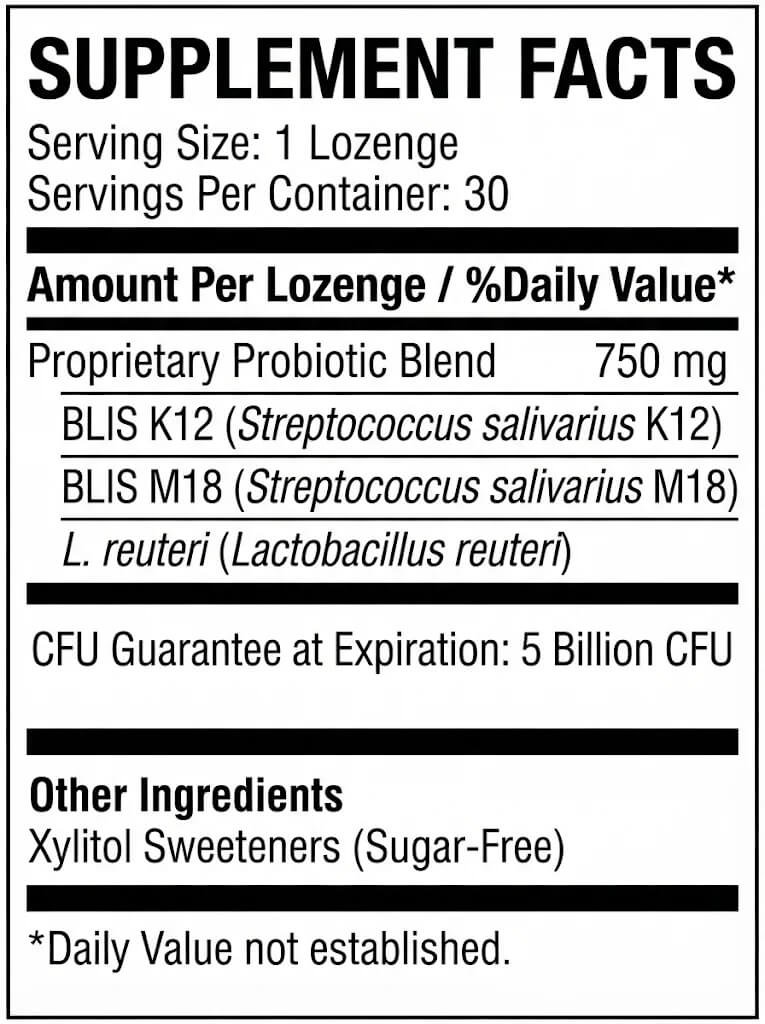
Never buy an oral probiotic that only lists the genus and species (for example, “Lactobacillus reuteri” or “Streptococcus salivarius” with no strain code). Different strains of the same species behave completely differently in the body. Look for exact alphanumeric strain designations on the Supplement Facts panel:
- For bad breath: Streptococcus salivarius BLIS K12 (or K12).
- For plaque & tooth surface balance: Streptococcus salivarius BLIS M18 (or M18).
- For gum sensitivity & bleeding: Limosilactobacillus reuteri DSM 17938 and ATCC PTA 5289, or Lactobacillus paracasei GMNL-33 / Lpc-37.
2. Choose Dissolvable Lozenges Over Swallowed Capsules
Oral probiotics work through direct topical contact with your tongue, cheeks, and gumline. Always choose slow-dissolving lozenges, melts, or chewable tablets designed to stay in your mouth for at least 3 to 5 minutes. Avoid enteric-coated capsules or powders meant to be gulped down with water.
3. Verify Realistic CFU Counts (At Time of Expiration)
More is not always better. Clinical trials on oral probiotics consistently show benefits at doses between 200 million (0.2 billion) and 5 billion CFUs per serving. Look for labels that guarantee CFU potency “through the expiration date” rather than “at time of manufacture,” since live bacteria naturally die off during shipping and storage.
4. Inspect Sweeteners and Inactive Ingredients
Because you hold an oral probiotic against your teeth for several minutes, the sweetener matters enormously.
- Look for: Xylitol, erythritol, monk fruit, or stevia. Xylitol actively helps prevent cavity-forming bacteria from sticking to tooth enamel.
- Avoid: Sucrose, glucose, fructose, maltodextrin, or citric acid in high amounts. Sugar feeds the exact bacteria causing plaque and bad breath, while strong acids can temporarily soften tooth enamel right after brushing.
5. Look for Third-Party Quality Verification and Moisture Protection
Dietary supplements are not pre-approved by the FDA for efficacy before hitting store shelves. Prioritize brands manufactured in cGMP-certified facilities that undergo independent testing through organizations like USP, NSF International, or ConsumerLab to confirm live bacterial counts and purity. Additionally, check that the packaging uses desiccant-lined bottles or individual foil blister packs, as humidity in a bathroom medicine cabinet rapidly destroys live probiotic cultures.
Common Mistake: Storing your oral probiotics on the bathroom sink counter next to a hot shower. Steam and temperature swings degrade live bacteria within weeks. Keep your bottle in a cool, dry kitchen cabinet or bedroom nightstand, and bring a single lozenge into the bathroom when you brush.
How to Use Oral Probiotics for Maximum Results: Step-by-Step Routine
Even the best oral probiotics for reducing bad breath and gum sensitivity will struggle to colonize if your daily oral hygiene routine accidentally wipes them out. Just as proper recovery habits maximize your gains after strength training—a principle we cover in our guide on how sleep affects metabolism and recovery—consistent timing makes all the difference for oral colonization.
Follow this simple, coach-approved evening protocol for 30 days:
- Floss or water-floss gently before brushing: Remove trapped food particles and plaque biofilm from between teeth and just under the gumline so beneficial bacteria can reach the gingival tissue. Use a gentle C-shape motion rather than snapping floss into sensitive gums.
- Brush with a soft-bristle brush for two minutes: Use a fluoride or nano-hydroxyapatite toothpaste and light pressure. Scrubbing hard with medium or stiff bristles physically abrades delicate gum tissue and worsens gum sensitivity.
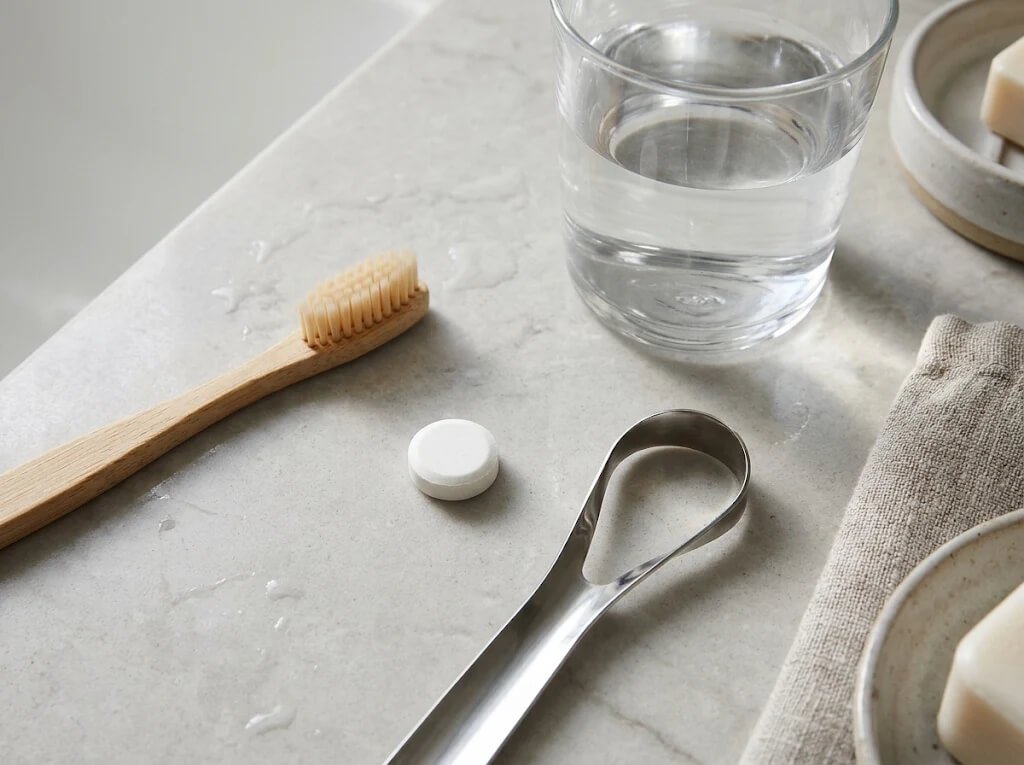
- Scrape your tongue from back to front: Use a stainless steel or copper tongue scraper for 3 to 5 gentle passes to clear away the thick coating of dead cells and sulfur-producing bacteria on the back of your tongue. Rinse your mouth thoroughly with plain water afterward.
- Skip antiseptic mouthwash: Do not rinse with alcohol-based or chlorhexidine mouthwash before or after taking your lozenge. Antiseptic rinses cannot tell good bacteria from bad bacteria and will kill your probiotic dose on contact.
- Place the lozenge on your tongue and let it melt slowly: Put one probiotic lozenge in your mouth and let it dissolve completely over 5 to 10 minutes. Avoid chewing and swallowing it right away; move it gently around your tongue and along your upper and lower gumlines with your tongue.
- Avoid eating or drinking for 30 minutes afterward: Taking your lozenge right before bed gives the newly introduced bacteria several uninterrupted hours of low saliva flow to attach and multiply overnight.
What to Expect Week by Week
| Timeline | Typical Oral Microbiome & Symptom Changes | Practical Coaching Tip |
| Days 1 – 7 | Initial competitive binding on the tongue; subtle reduction in thick morning mouth coating. | Stay consistent every night; avoid acidic drinks or mouthwash right after dosing. |
| Days 8 – 14 | Noticeable drop in volatile sulfur breath odor; cleaner feeling along tooth surfaces from BLIS M18 enzymes. | Keep scraping your tongue daily before taking the lozenge to clear old biofilm. |
| Days 15 – 30 | Calmer, firmer gum tissue; reduced tenderness and less pinpoint bleeding during gentle flossing. | Reassess your symptoms at day 30; many users transition to a 1-lozenge daily maintenance schedule. |
Nutrition and Lifestyle Habits That Support Your Oral Microbiome
Supplements work best when they reinforce smart daily habits rather than trying to outwork poor ones. In coaching active clients, three lifestyle adjustments consistently amplify the effects of oral probiotics—especially if you are also focused on natural ways to support energy and metabolic health.
Stay Hydrated and Protect Saliva Flow
Saliva is your mouth’s built-in buffering and cleansing system. It washes away food debris, delivers antimicrobial proteins, and keeps oral pH near neutral. During intense workouts, running, or pickleball matches, heavy mouth-breathing dries out your oral tissues and lets anaerobic odor bacteria thrive. Sip plain water steadily throughout training sessions, and consider chewing xylitol gum between meals to stimulate saliva production.
Balance High-Protein Meals with Fibrous Vegetables and Polyphenols
Athletes and lifters who eat 120 to 200+ grams of protein daily—a strategy discussed in our breakdown of protein intake and weight management—give oral bacteria plenty of sulfur-rich amino acids to ferment. Pairing high-protein meals with crunchy, fibrous vegetables (like celery, carrots, and leafy greens) mechanically scrubs plaque from teeth while supplying dietary nitrates that beneficial oral bacteria convert into circulation-supporting nitric oxide. Green tea polyphenols also help inhibit odor-causing bacteria without sterilizing your entire mouth, similar to how green tea compounds support metabolic pathways.
Watch Hidden Acids and Frequent Sipping
Sipping pre-workout drinks, flavored BCAAs, lemon water, or sparkling water slowly over two or three hours keeps your mouth in an acidic state. Low oral pH weakens tooth enamel, irritates sensitive gums, and favors acid-loving bacteria over beneficial Streptococcus salivarius colonies. Drink acidic beverages with meals or within a short window, then rinse your mouth with plain water.

Who Should Be Careful With Oral Probiotics?
While oral probiotics are well-tolerated by most healthy adults, they contain live microorganisms and active excipients that require caution in specific situations:
- People with severely weakened immune systems: If you are undergoing chemotherapy, taking immunosuppressive medications after an organ transplant, or living with advanced immune deficiency, consult your physician before taking any live probiotic product.
- Individuals with central venous catheters or heart valve conditions: Rarely, live bacteria introduced orally can enter the bloodstream during dental procedures or severe gum bleeding; get clearance from your cardiologist or dentist first.
- People with severe milk or soy allergies: Many probiotic strains are cultured on dairy- or soy-based media. Even when washed, trace allergens may remain—always verify allergen statements on the label.
- Anyone with severe, persistent dental symptoms: Oral probiotics are designed to support mild bad breath and everyday gum sensitivity. They do not treat tooth abscesses, deep periodontal pockets, cavities, or loose teeth. If your gums bleed heavily every time you brush, ache spontaneously, or pull away from your teeth, schedule an exam with a licensed dentist promptly, as advised by the Mayo Clinic guide on gingivitis.
Just as you would inspect any wellness formula using clear quality standards—similar to our checklist on how to evaluate supplement ingredients—always read the full Supplement Facts panel and check how your body responds during the first week.
Frequently Asked Questions
What are the best oral probiotics for reducing bad breath and gum sensitivity?
The most effective oral probiotics combine Streptococcus salivarius BLIS K12 and BLIS M18 with Limosilactobacillus reuteri (strains DSM 17938 and ATCC PTA 5289) in a slow-dissolving, sugar-free lozenge. Delivering 1 billion to 5 billion CFUs directly onto your tongue and gumline targets both sulfur-producing odor bacteria and localized gum irritation.
Can I swallow oral probiotics or should I let them dissolve?
You should always let oral probiotics dissolve slowly in your mouth rather than swallowing them whole. Oral probiotic strains work by physically attaching to your tongue, cheeks, and gumline. Letting the lozenge melt for 5 to 10 minutes maximizes contact time so the beneficial bacteria can colonize your oral tissues.
How long do dental probiotics take to work on sensitive gums?
Most people notice fresher morning breath within 7 to 14 days of consistent daily use, while improvements in gum sensitivity and minor flossing tenderness typically take 2 to 4 weeks. Pairing your lozenge with gentle brushing, daily flossing, and tongue scraping helps the new bacterial colonies establish faster.
Should I use mouthwash while taking oral probiotics?
Avoid using alcohol-based or antibacterial mouthwashes while taking oral probiotics. Antiseptic rinses kill beneficial probiotic strains alongside odor-causing bacteria, canceling out your supplement. If you like rinsing, use plain water or a mild saltwater rinse, and wait at least two hours before taking your probiotic lozenge.
Are there side effects to taking dental probiotic lozenges?
Oral probiotics are generally safe and cause few side effects in healthy adults. During the first few days, some people experience mild, temporary changes in taste, slight dry mouth, or minor digestive gas if the lozenge contains xylitol or inulin. Starting with one lozenge daily helps your body adjust smoothly.
How many CFUs should an oral probiotic have?
Look for an oral probiotic providing between 200 million and 5 billion colony-forming units (CFUs) per serving, guaranteed through the expiration date. Unlike gut probiotics that need higher doses to survive stomach acid, oral lozenges act directly in the mouth and rely more on proven clinical strains than massive CFU numbers.
Conclusion
Persistent halitosis and tender gums rarely respond to scrubbing harder or using harsher mouthwash; instead, restoring microbial balance with the best oral probiotics for reducing bad breath and gum sensitivity gives your mouth the natural defenses it needs to stay fresh and resilient. Look for slow-dissolving, xylitol-sweetened lozenges featuring clinically studied strains like Streptococcus salivarius BLIS K12, BLIS M18, and Limosilactobacillus reuteri, and take them consistently at night after gentle brushing and tongue scraping. Give the routine a full 30 days alongside steady hydration, and partner with your dentist for regular cleanings so your oral health supports every workout and conversation with confidence.