Store shelves are full of herbal ingredients that support healthy blood flow and libido, and the labels promise a lot. The research behind them is far more modest. A few herbs have small human trials with encouraging results, while others rest mostly on animal studies and marketing.
This guide ranks nine popular ingredients by the evidence I could verify. It explains what the studies measured, how people use each herb, and where the safety risks are. Think of it as a coach’s reality check before you spend money.
Blood flow and libido are related but not identical. Desire starts in the brain and hormones, while erections depend on healthy blood vessels. An ingredient can help one without touching the other, so we’ll flag which is which.
Quick Answer: Panax ginseng, maca, and ashwagandha have the most human trial data I could verify, but the evidence is small and mostly short-term. Pycnogenol and Tribulus look promising, ginkgo is unproven, and yohimbe carries safety concerns. Herbs work best alongside exercise, good sleep, and a doctor’s check-up.
Blood Flow and Libido: How the Two Connect
Erections depend on blood vessels relaxing and filling with blood. The Mayo Clinic explains that problems with the inner lining of blood vessels, called the endothelium, can reduce blood supply to both the heart and the penis. The same source notes that erection problems can be an early warning sign of vascular disease.
That matters for how you read supplement ads. If blood flow is the problem, the cause may be high blood pressure, high cholesterol, or diabetes, and a capsule won’t fix those. A check-up comes first.
Desire is a different story. Hormones, mood, medications, and life stress all play a part, as covered in our guide on low libido after 40. Many men find that stress and poor sleep quietly drive the problem. No herb replaces fixing those basics.

How We Ranked These Ingredients
I judged each herb on four points:
- Human trials: Randomized, placebo-controlled studies count most. Animal and test-tube data count least.
- Size and length: Small, short trials can be misleading, so I note when that’s the case.
- Consistency: Do reviews agree, or do trials contradict each other?
- Safety: I looked at side effects, drug interactions, and quality concerns.
I only used research from PubMed/PMC, NIH centers, Cochrane, peer-reviewed journals, and the FDA. Anything I couldn’t verify is marked [VERIFY] so the editor can check it.
Which Herbal Ingredients That Support Healthy Blood Flow and Libido Have the Best Evidence?
Here’s the short version before the details.
| Ingredient | What trials suggest | Evidence level | Main caution |
| Panax ginseng | Small, uncertain benefit for erections | Moderate-low | Insomnia, clotting, blood sugar |
| Maca | Possible help with desire in some trials | Low | Few, small trials |
| Ashwagandha | Better self-rated sexual well-being in one small trial | Low | Rare liver injury, drug interactions |
| Pycnogenol | “Promising” in one review | Low | Needs more research |
| Tribulus | “Promising” in one review | Low | Needs more research |
| L-arginine (not an herb) | “Promising” in one review | Low | Talk to a doctor if you take BP or heart drugs |
| Ginkgo | No conclusive evidence for any condition | Very low | Bleeding risk |
| Horny goat weed, tongkat ali | No solid human data I could verify [VERIFY] | Unproven | Quality varies |
| Yohimbe | Not recommended | Safety concern | Serious side effects reported |
1. Panax Ginseng (Korean Red Ginseng)
Ginseng has the biggest research base of any herb here. A Cochrane review covered nine placebo-controlled studies with 587 men who had mild to moderate erectile dysfunction. It concluded that, on validated questionnaires, ginseng may have only a trivial effect compared with placebo, and it rated most of the evidence as low certainty.
Results looked a bit better when men were simply asked whether their erections improved. A separate 2018 meta-analysis found a small improvement in IIEF-5 scores with ginseng versus placebo. Both reviews call for more and better trials.
Most trials lasted 12 weeks or less, so long-term effects are unknown. The Cochrane authors also found no trials comparing ginseng with prescription ED medicines.
Cautions: According to NCCIH, insomnia is the most common side effect, and Asian ginseng may interfere with blood clotting. If you take diabetes medicine or blood thinners, ask your pharmacist before trying it.
2. Maca Root
Maca is an Andean root often sold as a natural libido booster. A systematic review found only four small trials, with 131 people in total. It concluded the evidence for improving sexual function was limited.
Results were mixed. One trial in healthy men reported higher self-rated desire after 8 to 12 weeks, while a trial in trained cyclists found no effect. The trials used about 1.5 to 3.5 grams per day, for 2 to 12 weeks.
If you want the full breakdown, see our guide to maca root and male libido.
Coach’s Tip: Give any herb a fair trial. In the maca trial above, desire scores did not differ from placebo at 4 weeks but did at 8 and 12 weeks. Pick one product, take it as labeled, and judge it at 8 to 12 weeks, not after a few days.
3. Ashwagandha
Ashwagandha is an adaptogen, a plant people use to cope with stress. Since stress hurts desire, the idea has some logic. In one 8-week trial, 50 men with lower sexual desire took 300 mg of root extract or placebo twice daily. The authors reported better self-rated sexual well-being and higher testosterone in the ashwagandha group.
That’s one small trial, and the company-backed supplement extract used may not match what’s on your shelf. For more detail, read ashwagandha and testosterone.
Cautions: NCCIH says ashwagandha may be safe in the short term (up to 3 months), but long-term safety is unknown. Rare cases of liver injury have been linked to it. It may also interact with diabetes and blood pressure medicines, sedatives, and immune-suppressing drugs.
4. Pycnogenol (French Maritime Pine Bark Extract)
Pycnogenol is a standardized extract from French maritime pine bark (Pinus pinaster). A 2021 systematic review of herbal remedies for ED, using IIEF scores as the outcome, listed it with ginseng and Tribulus as having promising evidence. The same review named a branded combination product, Prelox, and L-arginine in that group.
“Promising” here means it deserves more research, not that it’s proven. The authors said these products warrant further clinical investigation. Exact trial doses were not available to me, so check the label and your clinician for dosing [VERIFY].
5. Tribulus Terrestris
Tribulus is a ground-hugging plant sold in many male-health formulas. The same 2021 review rated it as promising for ED based on IIEF outcomes. It also asked for more rigorous trials.
Because the supplement market is unregulated in quality, Tribulus products vary widely in strength. A brand-name product may not match the extract used in a trial. Treat it as a “maybe” and not a first choice.
6. L-Arginine (A Bonus Pick That Isn’t an Herb)
L-arginine is an amino acid the body uses to make nitric oxide, a molecule that helps blood vessels relax. The 2021 review above also listed it among nutritional supplements with promising evidence. You’ll often see it paired with herbal blends.
For a deeper look at the research, read our guide on L-arginine and blood flow. Because it may affect blood vessels, ask a doctor first if you take blood pressure or heart medicine.
7. Ginkgo Biloba
Ginkgo is often marketed for “circulation,” but the evidence doesn’t back that claim. NCCIH states there’s no conclusive evidence that ginkgo helps any health condition. It also says research suggests ginkgo doesn’t help prevent heart disease or treat high blood pressure.
Ginkgo leaf extract is generally well tolerated, with dizziness, stomach upset, and headache the most common side effects. It may increase bleeding risk in people taking anticoagulants like warfarin. If you take a blood thinner, skip it unless your doctor says otherwise.
8. Horny Goat Weed and Tongkat Ali
Both are best-sellers in the male enhancement aisle. A PMC review lists horny goat weed (Epimedium) and tongkat ali (Eurycoma longifolia) among top-selling herbal products for ED. I could not verify solid placebo-controlled human data for either in the sources I’m allowed to cite [VERIFY].
That gap is the point. Popularity isn’t proof. If you try one, keep your expectations low and choose a product with third-party testing.
9. Yohimbe (Approach With Caution)
Yohimbe is a bark extract sold for sexual performance. Researchers describe its active compound, yohimbine, as burdened with serious adverse effects. I don’t recommend it as a casual supplement.
If you see it on a label, treat that as a reason to pause and ask your doctor or pharmacist.
How to Use Herbal Ingredients That Support Healthy Blood Flow and Libido Safely
Supplements aren’t reviewed for safety and effectiveness before they hit shelves. That creates two real risks: hidden drugs and drug interactions.
Hidden drugs. The FDA keeps a running list of sexual enhancement products found to contain hidden drug ingredients, including sildenafil, the active ingredient in Viagra. These products are often labeled “all natural.” Hidden drugs can be dangerous if you take other medicines.
Interactions. As noted above, ginkgo and ginseng may affect bleeding, and ashwagandha may interact with several medication types. Show your pharmacist the full ingredient list, not just the product name.
Common Mistake: Stacking several “male vitality” products at once. You can’t tell which one helps (or harms), and overlapping herbs can add up to higher exposure. Start with one ingredient at a time.
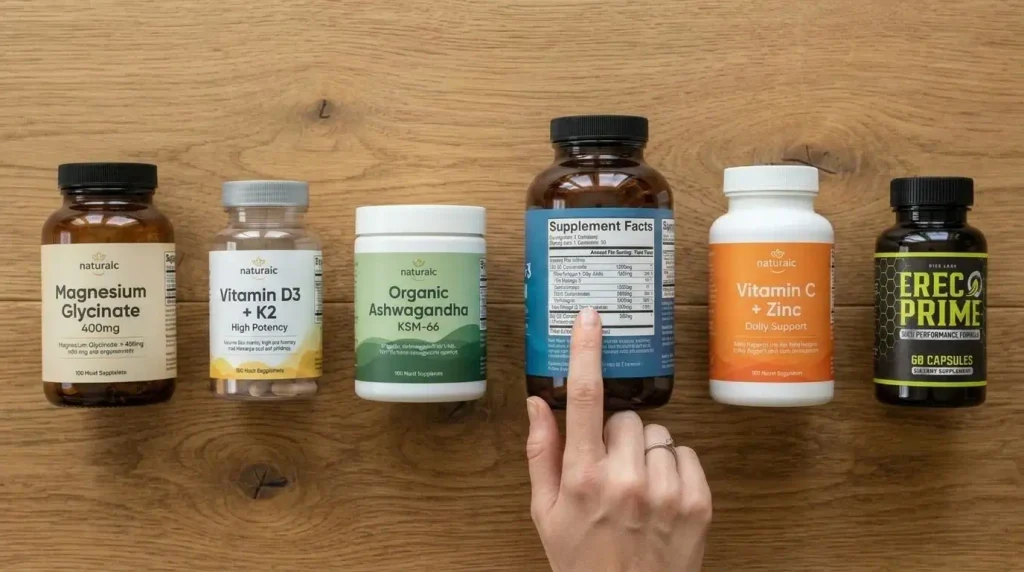
Here’s a simple safety checklist before you buy:
- Choose products that list each ingredient and amount, not a “proprietary blend.”
- Look for third-party testing seals from independent labs.
- Avoid products promising instant, dramatic results.
- Check the product name against the FDA’s tainted list.
- Tell your doctor or pharmacist what you plan to take.
For a wider look at what the evidence supports, see our overview of libido supplements for men.
Lifestyle Habits Beat Any Herb
Before you spend on capsules, put your effort here first. The Mayo Clinic cites a study in which men who raised their exercise to 120 minutes or more per week of cardio saw an effect on erectile function that was nearly as strong as an ED medicine. Regular activity, healthy weight, no smoking, and managing stress all support vascular health.
Here’s a simple walking plan with three levels:
| Level | What to do | Rough distance |
| Easier | Three 10-minute walks a day, 5 days a week | About 0.5 mile (0.8 km) each |
| Standard | 30-minute brisk walk, 4 days a week (about 120 minutes) | About 1.5-2 miles (2.4-3.2 km) each |
| Harder | Same 30 minutes, adding 1 minute fast and 2 minutes easy intervals | About 2-2.5 miles (3.2-4 km) each |
A brisk pace is one where you can talk but not sing. If you have heart disease, chest pain, or you’re new to exercise after 40, check with your doctor first.
Nutrition and sleep matter too. Our guide on how men can improve sexual wellness naturally covers food, sleep, and stamina habits. Low zinc can also play a role, so read about zinc and testosterone levels before supplementing.
A Simple 12-Week “Test One Ingredient” Plan
This plan is a practical way to avoid wasting money. It is not medical advice.
- Weeks 0 to 1: Book a check-up. Ask about blood pressure, cholesterol, blood sugar, and your medications.
- Weeks 1 to 2: Start the walking plan at the level that fits you. Fix your sleep schedule.
- Week 2: If your doctor agrees, choose one ingredient with a quality seal. Follow the label dose.
- Weeks 2 to 10: Change nothing else. Rate your desire and erections weekly on a 1 to 10 scale.
- Week 10 to 12: Compare your notes. If you see no change, stop the supplement and talk with your doctor.
Keep the notes honest. Placebo effects are real, and a written log keeps you from fooling yourself.
Who Should Be Careful
Talk with a doctor or pharmacist before using any of these herbs if you:
- Take blood thinners, blood pressure drugs, diabetes medicine, sedatives, or nitrate heart medicine
- Have liver disease, heart disease, or a bleeding disorder
- Are pregnant, nursing, or planning surgery
- Have a prostate condition or hormone-sensitive condition
- Notice new erection problems, since these may signal a heart or vascular issue
Chest pain, shortness of breath, yellow skin or eyes, dark urine, or unusual bleeding after starting a supplement needs prompt medical care.
FAQ
Which herbal ingredient has the best evidence?
Panax ginseng has one of the largest sets of trials, with nine placebo-controlled studies in a Cochrane review. Even so, the review rated the evidence mostly low certainty and the effect on standard erection scores as trivial. Maca and ashwagandha have smaller trials. No herb has proven results, so treat all as optional extras.
How long do herbal libido supplements take to work?
Trials gave people time. Maca studies ran from 2 to 12 weeks, and the ashwagandha trial lasted 8 weeks. One maca trial showed a difference from placebo at 8 weeks but not at 4. If nothing changes after 8 to 12 weeks at the label dose, stop and talk with your clinician.
Are herbal libido supplements safe with blood pressure medicine?
Some may interact. NCCIH notes ashwagandha may interact with diabetes and blood pressure drugs, sedatives, and immune-suppressing drugs, and that ginkgo may raise bleeding risk with blood thinners such as warfarin. Show your pharmacist the complete ingredient list before you start anything new.
Can herbs replace ED medicine?
No evidence shows that. The Cochrane review found no trials comparing ginseng with prescription ED medicines. ED can also be an early sign of heart or blood vessel disease, so a medical check matters more than a supplement. Herbs shouldn’t replace a doctor’s evaluation or prescribed treatment.
Do herbal supplements for libido work for women?
Most trials covered here enrolled men, so the evidence for women is thinner. Small studies exist for maca and ashwagandha in women, but they’re limited. Low desire has many causes, including stress, sleep, hormones, and medicines. A clinician can sort through those before you try a supplement.
How do I spot a tainted sexual enhancement product?
The FDA keeps a running list of sexual enhancement products found with hidden drug ingredients such as sildenafil. Red flags include promises of instant results, names like “extreme” or “XXL,” and “all natural” claims paired with dramatic effects. Check the FDA list, buy from a pharmacy, and ask your pharmacist.
Conclusion
The honest takeaway on herbal ingredients that support healthy blood flow and libido is that the science is early. Ginseng, maca, and ashwagandha have the most human data I could verify, with Pycnogenol, Tribulus, and L-arginine showing promise. Ginkgo, horny goat weed, and tongkat ali are largely unproven, and yohimbe carries real safety concerns.
Start with the basics: a check-up, regular walking, solid sleep, and stress control. If you add an herb, pick one, buy a tested product, and judge it at 8 to 12 weeks. For a broader look at the category, see our guide to libido and energy supplements.