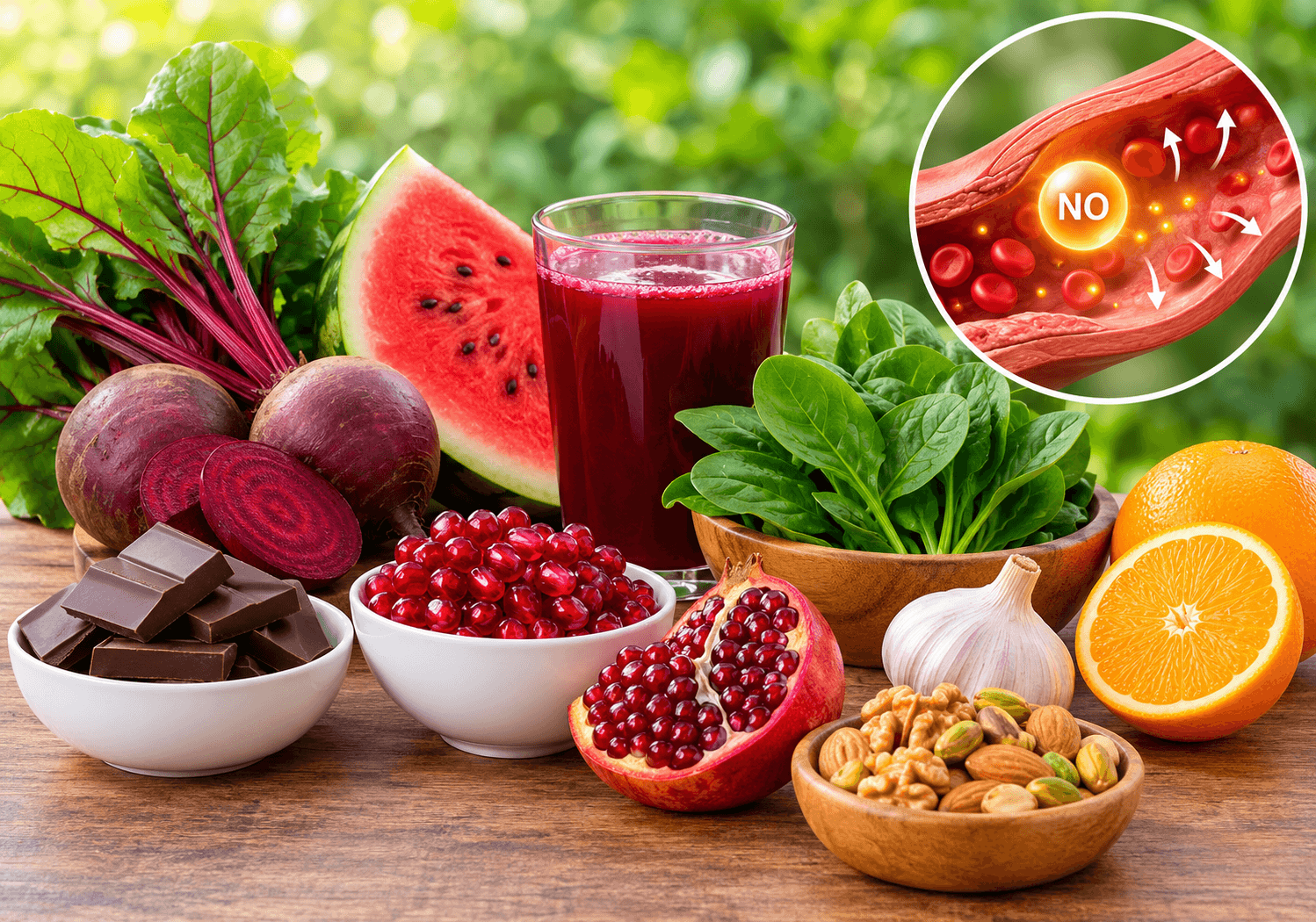
Getting a firm, reliable erection comes down to one thing: blood flow. Specifically, your penile arteries need to relax and fill with blood on command. The chemical that triggers that relaxation is nitric oxide (NO), a tiny molecule your blood vessel lining produces on demand. When NO production drops—because of age, poor diet, sedentary habits, or vascular disease—erections get softer, slower, or inconsistent.
The good news is that you can support NO production through what you eat and a few well-studied supplements. You don’t need a prescription to start. You need a plate full of nitrate-rich vegetables, a handful of the right amino acids, and a few smart supplement choices. In this guide, I’ll walk you through the specific foods and supplements with the strongest evidence behind them, how to combine them in a daily plan, and what to watch out for safety-wise.
Quick Answer: The most effective foods and supplements to increase nitric oxide for erectile health are beetroot (or beet juice), watermelon, spinach, dark chocolate, and pomegranate, paired with L-citrulline (6–8 g/day) or L-arginine (3–6 g/day) supplements. These boost the nitrate-nitrite-NO pathway and support endothelial function, which improves penile arterial blood flow.
Why Nitric Oxide Is the Key to Erections
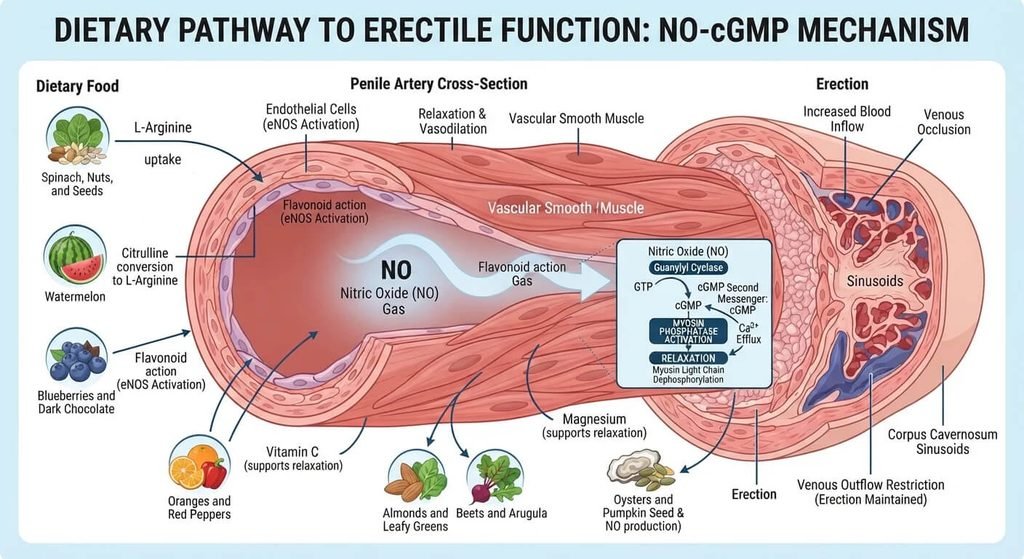
Here’s the short version of the physiology. When you’re aroused, nerve signals tell the endothelium (the inner lining of your blood vessels) to release nitric oxide. NO then activates an enzyme called guanylate cyclase, which raises levels of cGMP inside the smooth muscle cells of your penile arteries. That causes the muscle to relax, the arteries to widen, and blood to flood in. The result: an erection.
When endothelial function declines—common after age 40, with high blood pressure, diabetes, or a diet heavy in processed foods—NO production drops. The arteries don’t dilate as fully, and erections suffer. Research published in the Journal of Sexual Medicine links poor endothelial function to erectile dysfunction in a significant percentage of men over 40 [VERIFY – confirm specific study citation].
The practical takeaway: if you support NO production through diet and targeted supplements, you’re supporting the same pathway that keeps your penile arteries healthy and responsive.
The 8 Best Foods to Boost Nitric Oxide for Erectile Health
These aren’t “superfoods” in the marketing sense. They’re specific, research-backed foods that feed the nitrate-nitrite-NO pathway or directly support endothelial health.
1. Beetroot (and Beet Juice)
Beets are the highest-dietary-nitrate food you can eat. One cup of cooked beets contains roughly 175 mg of nitrate, and 8 oz (240 ml) of beet juice delivers about 400–500 mg. Your body converts dietary nitrate to nitrite (mainly in your mouth, with the help of oral bacteria), then to nitric oxide in the bloodstream.
A 2009 study in the American Journal of Physiology showed that beetroot juice improved vascular function and reduced blood pressure in middle-aged adults, which is a direct proxy for better arterial compliance [Bailey et al., 2009]. For erectile health, that same mechanism applies to the smaller penile arteries.
How to use it: Drink 4–8 oz (120–240 ml) of beet juice 2–3 hours before you want peak effect, or eat 1–2 cups of roasted beets daily for a steady baseline.
2. Watermelon
Watermelon is rich in citrulline, an amino acid your kidneys convert to arginine, which is then used by the enzyme NOS to make nitric oxide. One cup of diced watermelon contains about 100–200 mg of citrulline.
The body handles citrulline better than arginine for raising plasma arginine levels because arginine gets partially broken down in the gut and liver before it reaches your bloodstream. Citrulline bypasses that first-pass metabolism.
How to use it: Eat 1–2 cups (150–300 g) of watermelon daily, ideally as part of a midday snack.
3. Spinach and Leafy Greens
Spinach, arugula, kale, and romaine are loaded with dietary nitrate. One cup of raw spinach has about 150 mg of nitrate. These greens also provide folate, magnesium, and antioxidants that protect the endothelium from oxidative stress.
How to use it: Add 2+ cups of raw or lightly cooked leafy greens to your daily meals. Smoothies, salads, and sautéed sides all work.
4. Dark Chocolate (70%+ Cocoa)
Cocoa flavanols stimulate the endothelium to produce more NO and improve microcirculation. A 2011 study in Hypertension found that daily cocoa flavanol intake (about 500 mg) improved endothelial function in healthy adults [Kiencke et al., 2011].
How to use it: Eat 1–2 oz (30–60 g) of dark chocolate (70–85% cocoa) per day. Avoid milk chocolate; the cocoa content is too low.
5. Pomegranate
Pomegranate juice is high in polyphenols that reduce oxidative stress and protect NO from being broken down too quickly by free radicals. This extends NO’s half-life in the blood, meaning it has more time to dilate your arteries.
How to use it: Drink 8 oz (240 ml) of 100% pomegranate juice daily or eat half a fresh pomegranate.
6. Garlic
Garlic contains allicin and other sulfur compounds that have been shown to support NO production and reduce arterial stiffness. A 2007 review in Thrombosis Research noted garlic’s potential to improve endothelial function in hypertensive individuals [Mishra et al., 2007].
How to use it: Add 1–2 raw cloves (about 5–10 g) to meals daily, or take a standardized aged garlic extract (600–1,200 mg).
7. Nuts (Walnuts, Pistachios, Almonds)
Nuts provide L-arginine, healthy fats, and antioxidants. A 2013 study in BMC Complementary and Alternative Medicine found that daily pistachio consumption (about 2.4 oz / 68 g) improved erectile function scores in men with mild ED [Moghadam et al., 2013].
How to use it: Eat a small handful (1 oz / 28 g) of mixed nuts daily as a snack.
8. Citrus Fruits (Oranges, Grapefruit, Lemons)
Vitamin C and flavonoids in citrus protect NO from oxidative degradation. They also support collagen synthesis in blood vessel walls, keeping arteries flexible.
How to use it: Eat one medium orange or half a grapefruit daily. Squeeze lemon over vegetables for an extra hit.
Coach’s Tip: You don’t need to eat all eight foods every single day. Aim for 4–5 of these in your weekly rotation. Consistency over 4–6 weeks matters more than a single “perfect” meal. Think of it as building a baseline of nitrate and antioxidant intake, then adding supplements on top.
Top 5 Supplements to Increase Nitric Oxide for Erectile Health
Foods are the foundation, but supplements can fill gaps and deliver higher, more reliable doses of the key NO precursors.
1. L-Citrulline
What it does: Your kidneys convert citrulline to arginine, raising plasma arginine levels more effectively than taking arginine directly. More arginine = more substrate for NOS = more NO.
Dose: 6–8 g per day, split into two doses (3–4 g with breakfast and dinner). Some studies on ED used 3 g three times daily.
What to expect: Most men notice improved blood flow and energy within 2–3 weeks of consistent use. Peak plasma levels hit about 1–2 hours after a dose.
Safety: Generally well-tolerated. May cause mild GI upset at high doses. Avoid if you’re on PDE5 inhibitors (sildenafil, tadalafil) without medical supervision, as the combined vasodilatory effect can drop blood pressure too much.
2. L-Arginine
What it does: The direct amino acid precursor to NO. NOS uses two molecules of L-arginine to produce one molecule of NO and one of L-citrulline.
Dose: 3–6 g per day. However, oral arginine has poor bioavailability (about 10–25% reaches systemic circulation) because of first-pass metabolism in the gut and liver. This is why citrulline is often preferred.
Safety: Generally safe at recommended doses. Can interact with blood pressure medications and nitrates.
For a deeper look at the evidence, check out this breakdown of L-arginine and blood flow support.
3. Beetroot Extract (Standardized)
What it does: Delivers a concentrated dose of inorganic nitrate (typically 400–600 mg per serving) without the sugar and volume of whole beet juice.
Dose: Follow the label, usually 400–600 mg of nitrate per serving, taken 2–3 hours before you want peak effect.
Safety: Well-tolerated. May temporarily turn urine pink (harmless betalain pigment).
4. Pycnogenol (French Maritime Pine Bark Extract)
What it does: A potent antioxidant that protects NO from oxidative breakdown and supports endothelial function. Some small studies have shown modest improvements in erectile function when combined with other approaches.
Dose: 60–240 mg per day.
Safety: Generally safe. May interact with blood thinners.
5. Zinc (as a Supporting Nutrient)
What it does: Zinc is a cofactor for over 300 enzymes, including those involved in endothelial health. Deficiency is linked to lower testosterone and impaired vascular function. It won’t “boost NO” directly, but it removes a bottleneck.
Dose: 15–30 mg per day (do not exceed 40 mg long-term without monitoring).
Safety: Safe at RDA levels. High doses over months can deplete copper.
If you’re exploring the broader supplement landscape for men’s vitality, this guide on supplements for libido and energy in men covers the full picture.
How to Put It Together: A Daily Nutrition Plan
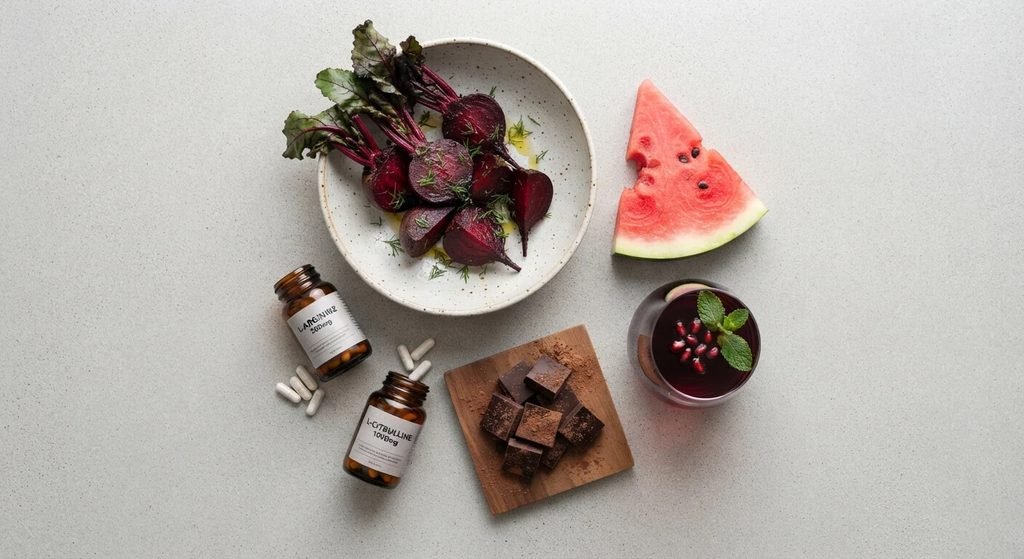
You don’t need a complicated protocol. Here’s a simple daily framework:
| Time | Food / Supplement | NO Benefit |
| Breakfast | Smoothie with 1 cup spinach + ½ cup watermelon + 1 tbsp flaxseed | Nitrate + citrulline |
| Mid-morning | 1 oz dark chocolate (70%+) | Flavanols → eNOS activation |
| Lunch | 1 cup roasted beets or 4 oz beet juice + garlic in sauce | High nitrate + allicin |
| Afternoon | 1 oz mixed nuts (pistachios, walnuts) | Arginine + healthy fats |
| Dinner | 1 cup leafy greens + ½ pomegranate or 8 oz pomegranate juice | Nitrate + polyphenols |
| With meals | L-citrulline 3 g (AM) + 3 g (PM) | Sustained arginine → NO |
This gives you roughly 300–500 mg of dietary nitrate, 200–400 mg of citrulline from food, plus 6 g of supplemental citrulline. Over 4–6 weeks, you should notice your baseline vascular tone improving.
Common Mistake: Loading up on supplements while ignoring your diet. A man taking 8 g of L-citrulline but eating a diet of processed meats, white bread, and sugary drinks is fighting against oxidative stress and arterial inflammation. The supplements can only go so far. Fix the plate first, then add the supplements.
Lifestyle Factors That Affect Nitric Oxide Production
Diet and supplements are powerful, but they work within a system. A few lifestyle levers matter just as much:
- Cardiovascular exercise: 150 minutes per week of moderate aerobic activity (brisk walking, cycling, swimming) improves endothelial function and upregulates eNOS expression, according to the ACSM’s guidelines on physical activity. Even 20 minutes of brisk walking a day helps.
- Resistance training: Two to three sessions per week of compound lifts (squats, deadlifts, rows) improve arterial compliance and support hormonal health.
- Sleep: Poor sleep increases oxidative stress and lowers NO availability. Aim for 7–8 hours. If stress and poor sleep are dragging down your overall vitality, this article on how stress and poor sleep affect male libido is worth a read.
- Avoid smoking and excess alcohol: Both directly damage the endothelium and reduce NO bioavailability.
- Manage stress: Chronic cortisol elevates oxidative stress and impairs vascular function.
For men over 40, understanding what causes low libido after 40 can help you address the full picture, not just one variable.
Safety Notes and Who Should Be Cautious
Before you start adding supplements to your routine, keep these points in mind:
- Blood pressure medications and nitrates (nitroglycerin): NO-boosting supplements can compound the vasodilatory effect, causing dangerous drops in blood pressure. If you take antihypertensives or nitrate medications, talk to your doctor first.
- PDE5 inhibitors (Viagra, Cialis, Levitra): Combining these with high-dose L-arginine or L-citrulline can also lower blood pressure excessively. Do not combine without medical guidance.
- Kidney or liver conditions: High-dose amino acid supplements place extra load on these organs. Get clearance from your physician.
- Pregnancy, surgery, or active cardiovascular disease: Consult your doctor before starting any new supplement regimen.
If you’re managing a chronic condition or taking daily medications, run your plan past your primary care provider or a urologist before adding new supplements.
FAQ
What is the single best food to increase nitric oxide for erections?
Beetroot (or beet juice) tops the list due to its very high dietary nitrate content (roughly 175–500 mg per serving). Combined with L-citrulline from watermelon, it covers both the nitrate and amino-acid pathways to NO production.
How long does L-citrulline take to improve erectile function?
Most men report noticeable changes in blood flow and firmness within 2–3 weeks of taking 6–8 g daily. Peak plasma arginine levels occur about 1–2 hours after a dose, but the cumulative endothelial benefits build over several weeks.
Can I get enough nitric oxide from food alone without supplements?
For many men, a diet rich in beets, leafy greens, watermelon, and dark chocolate can meaningfully support NO levels. Supplements like L-citrulline add a concentrated dose that’s harder to get from food alone, especially if you’re in your 50s or 60s and your baseline NO production has declined.
Is it safe to take L-arginine and L-citrulline together?
They work on the same pathway, so stacking them isn’t necessary and may increase GI side effects. Most coaches recommend choosing one—citrulline is generally preferred for its better bioavailability. If you do combine them, keep total arginine-pathway intake under 8 g/day.
Do nitric oxide supplements interact with blood pressure medication?
Yes. Both L-arginine and L-citrulline enhance vasodilation, which can compound the effect of antihypertensive drugs and cause dizziness or hypotension. Always check with your doctor before combining them.
Can diet and supplements fully reverse erectile dysfunction?
They can improve mild to moderate ED related to vascular stiffness or low NO production. However, ED can also stem from hormonal, neurological, or psychological causes. If changes don’t appear after 6–8 weeks of consistent dietary and supplement changes, see a urologist to rule out other factors.
The Bottom Line
You don’t need a magic pill to support the blood flow behind a strong erection. You need nitrate-rich vegetables, a few smart fruits, a daily dose of citrulline, and a few basic habits: move your body, sleep well, and cut back on the processed food that clogs your arteries.
Start with the foods. Add L-citrulline (6–8 g/day) if your diet isn’t giving you enough citrulline. Give it four to six weeks of consistency before you judge results. Track how you feel—not just in the bedroom, but in your energy, recovery, and overall vascular comfort.
If you’re also working on broader male wellness goals, pairing this NO-focused nutrition with a natural approach to stamina and sexual wellness can round out your routine. And if you’re curious whether the supplement world lives up to the hype in general, this evidence-based look at whether libido supplements actually work will save you from a lot of wasted money.
Your arteries are the same arteries that supply your heart, brain, and legs. Taking care of them for erectile health is really taking care of your entire cardiovascular system. That’s a win that goes well beyond the bedroom.