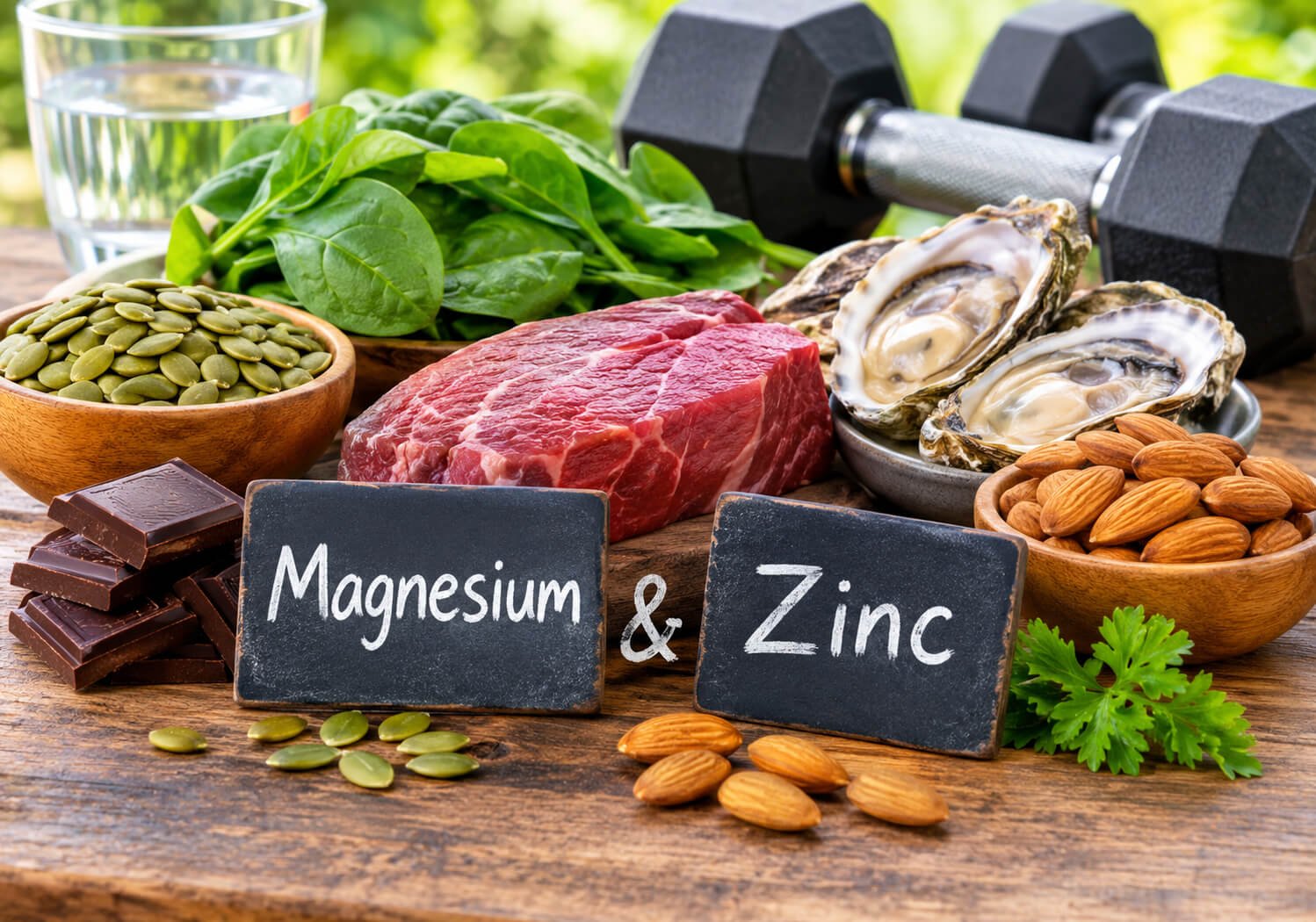
When men hit a wall with low energy, lagging gym recovery, or a sudden drop in sex drive, they usually look for complicated fixes. As a strength and conditioning coach, I see guys reach for exotic herbal blends or extreme training splits before checking their basic nutritional foundation. Yet two everyday minerals—magnesium and zinc—quietly run the biochemical machinery behind hormone production, blood flow, and physical stamina.
Understanding the role of magnesium and zinc in male libido and performance helps separate real physiology from supplement hype. Neither mineral acts like an instant pharmaceutical stimulant. Instead, both serve as essential enzymatic cofactors that keep your testosterone levels steady, your blood vessels relaxed, and your nervous system recovered after hard physical stress.
Quick Answer: The role of magnesium and zinc in male libido and performance centers on hormone synthesis, blood flow, and recovery. Zinc supports healthy testosterone production and prostate function, while magnesium relaxes blood vessels, lowers stress-induced cortisol, and improves deep sleep. Correcting a deficiency in either mineral restores baseline energy, stamina, and sexual desire.
If you are considering adding concentrated mineral supplements to your daily routine, check with your doctor or a registered dietitian first, especially if you take prescription medications or have underlying kidney or cardiovascular conditions.
What Research Says About Magnesium, Zinc, and Male Sexual Health
Human physiology relies on trace minerals to trigger hundreds of enzymatic reactions every second. When dietary intake falls short, your body prioritizes immediate survival functions—like heart rhythm and immune defense—over reproductive drive and peak athletic output.
How Zinc Supports Testosterone, Sperm Health, and Arousal
Zinc is concentrated heavily in the male reproductive tract, particularly within the prostate gland and testes. Inside the testes, Leydig cells rely on zinc-dependent enzymes to convert cholesterol into testosterone.
Clinical research highlights a clear link between zinc status and androgen levels. A classic study published in Nutrition via PubMed demonstrated that restricting dietary zinc in healthy young men caused serum testosterone concentrations to drop significantly within 20 weeks, while supplementing zinc in marginally deficient older men nearly doubled their testosterone levels.
Beyond hormone synthesis, zinc directly impacts male fertility and physical arousal:
- Sperm Quality and Motility: Zinc protects sperm DNA from oxidative damage and provides structural stability to the sperm tail, which drives forward movement.
- Prostate Function: High zinc concentrations in prostatic fluid help maintain normal gland health and seminal volume.
- Aromatase Regulation: Adequate zinc helps prevent the excessive conversion of testosterone into estrogen via the aromatase enzyme.
For men looking specifically at androgen optimization, exploring how zinc supports testosterone provides a closer look at clinical dosing and serum thresholds.
How Magnesium Drives Blood Flow, Free Testosterone, and Stamina
While zinc builds the hormonal foundation, magnesium governs energy metabolism, vascular relaxation, and nervous system recovery. Magnesium acts as a cofactor in more than 300 enzymatic systems, including the production of adenosine triphosphate (ATP), your body’s primary cellular fuel.
Magnesium influences the role of magnesium and zinc in male libido and performance through three distinct pathways:
- Bioavailable Testosterone: Most circulating testosterone binds tightly to a protein called sex hormone-binding globulin (SHBG), making it inactive. Research indexed in Biological Trace Element Research via PubMed found that magnesium supplementation increased both free and total testosterone values in sedentary men and athletes, partly by inhibiting testosterone from binding to SHBG.
- Nitric Oxide and Circulation: Healthy erectile function depends on smooth muscle relaxation inside blood vessel walls. Magnesium supports endothelial nitric oxide synthase, helping blood vessels dilate efficiently during physical exertion and arousal.
- Cortisol and Sleep Architecture: High psychological stress or overtraining spikes cortisol, a catabolic hormone that directly suppresses libido. Magnesium regulates GABA receptors in the brain, promoting deeper slow-wave sleep and blunting nighttime cortisol surges.
Chronic fatigue and elevated stress hormones quickly derail bedroom performance. Addressing how stress and poor sleep lower libido alongside targeted mineral intake addresses both sides of the recovery equation.
Why Active Men and Lifters Lose More Minerals
Men who lift weights, run sprints, or work physically demanding jobs burn through magnesium and zinc faster than sedentary adults. Every heavy training session triggers an acute inflammatory response and increases mineral excretion through sweat and urine.
If you train four to five days a week using heavy compound movements—like squatting 225 lb (102 kg) or deadlifting 315 lb (143 kg)—your intracellular demand for magnesium rises to fuel muscle contraction and relaxation. Simultaneously, heavy sweating depletes extracellular zinc. Over months of hard training without adequate dietary replenishment, subclinical deficiencies develop, showing up first as poor sleep, stalled lifts, and fading sexual interest.
Coach’s Tip: Track your morning resting heart rate and sleep quality during heavy training blocks. If your resting pulse creeps up by 5–7 beats per minute and your morning energy crashes despite eating enough calories, low magnesium intake or poor recovery is often the culprit.
Magnesium vs. Zinc: Key Roles, Daily Targets, and Food Sources
Comparing these two minerals side by side clarifies why they work best as a team rather than isolated fixes. According to the NIH Office of Dietary Supplements Zinc Fact Sheet and the NIH Office of Dietary Supplements Magnesium Fact Sheet, adult men have specific daily targets and upper safety limits.
| Feature | Magnesium | Zinc |
| Primary Role in Libido | Relaxes blood vessels, lowers cortisol, boosts free testosterone | Drives testosterone synthesis, supports prostate & sperm health |
| Primary Role in Performance | Fuels ATP energy production, prevents muscle cramps, aids sleep | Supports protein synthesis, immune defense, tissue repair |
| Adult Male RDA (19–30 yrs) | 400 mg per day | 11 mg per day |
| Adult Male RDA (31+ yrs) | 420 mg per day | 11 mg per day |
| Tolerable Upper Limit (UL) | 350 mg per day (from supplements only) | 40 mg per day (food + supplements combined) |
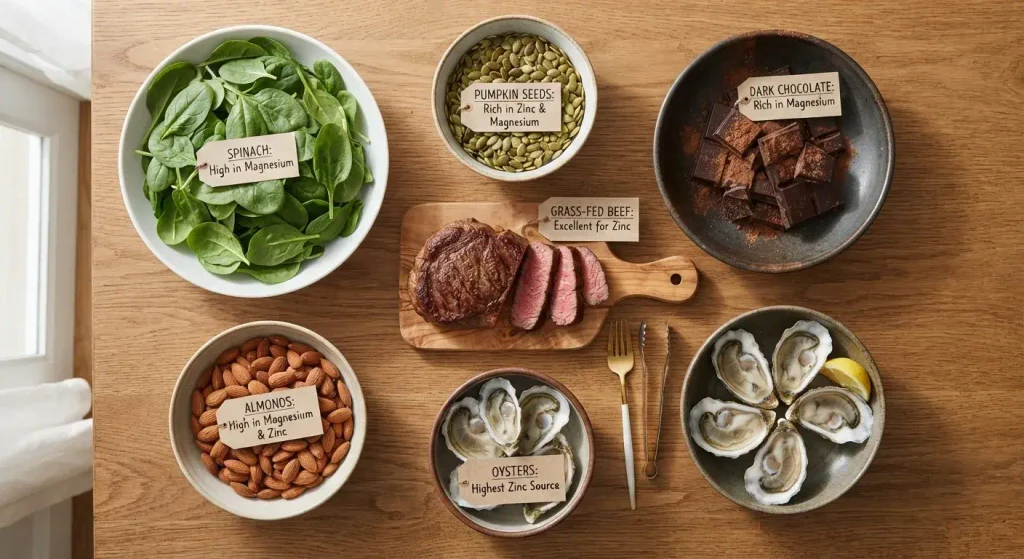
| Top Whole Food Sources | Pumpkin seeds, spinach, black beans, almonds, dark chocolate | Oysters, beef chuck, crab, pumpkin seeds, chickpeas |
| Best Absorbed Supplement Forms | Magnesium glycinate, magnesium citrate, magnesium malate | Zinc picolinate, zinc glycinate (chelate), zinc citrate |
| Forms to Avoid | Magnesium oxide (low absorption, causes loose stools) | Zinc oxide (poor bioavailability) |
Note: The Tolerable Upper Intake Level (UL) for magnesium applies strictly to supplemental forms and medications, as healthy kidneys efficiently clear excess magnesium obtained from whole foods.

Practical Guide: How to Apply Magnesium and Zinc for Peak Performance
Maximizing the role of magnesium and zinc in male libido and performance requires a structured approach. Jumping straight into mega-dose pills often causes digestive distress or blocks other vital minerals. Follow this four-step protocol to optimize your levels safely.
Step 1: Audit Your Baseline Diet First
Supplements fill gaps; they do not replace real food. Before buying capsules, track your food intake for three typical days to see where you stand.
- Hit your zinc baseline: One 3-ounce (85 g) serving of cooked lean beef provides roughly 5.3 mg of highly bioavailable zinc—nearly half your daily requirement. Adding a handful (1 ounce / 28 g) of roasted pumpkin seeds contributes another 2.2 mg.
- Build magnesium into every meal: Plant foods rich in chlorophyll and fiber pack the highest magnesium density. Combine 1 cup of cooked spinach (157 mg), 1/2 cup of black beans (60 mg), and 1 ounce (28 g) of dry-roasted almonds (80 mg) to cover over 70% of your daily target through food alone.
Step 2: Choose Bioavailable Supplement Forms
If dietary tracking reveals a shortfall—or if heavy sweat losses keep your levels low—targeted supplementation makes sense. Look on the supplement facts panel for chelated forms bound to amino acids, which pass through the intestinal wall smoothly without upsetting your stomach.
- For Magnesium: Choose magnesium glycinate (bound to the calming amino acid glycine) for evening relaxation and sleep, or magnesium malate for daytime energy. Look for products verified by independent organizations like USP or NSF Certified for Sport to confirm label accuracy.
- For Zinc: Choose zinc picolinate or zinc bisglycinate. Typical maintenance doses range from 15 mg to 25 mg per day, which stays safely below the 40 mg daily upper limit when accounting for food intake.
Many men combine these minerals with broader lifestyle strategies. Reviewing practical ways to improve stamina and sexual wellness naturally helps integrate nutrition with cardiovascular conditioning.
Step 3: Time Your Doses for Maximum Absorption
Timing matters because minerals compete for transport channels in your gut and interact differently with food.
- Take Zinc with a Protein-Rich Meal: Taking zinc on an empty stomach frequently triggers nausea and stomach cramping. Pair your zinc capsule with breakfast or lunch alongside animal protein, which naturally enhances zinc uptake.
- Take Magnesium 45–60 Minutes Before Bed: Evening dosing capitalizes on magnesium’s muscle-relaxing and nervous-system-calming effects. Taking 200 mg to 350 mg of magnesium glycinate before sleep improves sleep efficiency and overnight muscle recovery.
- Separate High Doses: While standard ZMA formulas combine zinc and magnesium, massive single doses of zinc (above 50 mg) can interfere with magnesium and copper absorption. Splitting zinc to daytime meals and magnesium to bedtime avoids competition.

Common Mistake: Taking high-dose zinc (40–50 mg or more) every day for months without monitoring copper. Excess zinc stimulates a gut protein called metallothionein, which traps dietary copper and prevents it from entering your bloodstream. Chronic copper deficiency causes fatigue, nerve tingling, and weakened immunity—the exact opposite of peak performance.
Step 4: Pair Mineral Optimization with Strategic Training
Minerals unlock your physiological potential, but mechanical tension and cardiovascular training provide the stimulus that drives hormone adaptation and blood flow.
To support natural testosterone signaling and vascular health, structure your weekly exercise around compound resistance training and aerobic conditioning:
- Strength Training (3–4 days/week): Focus on multi-joint barbell or dumbbell exercises like back squats, deadlifts, overhead presses, and weighted rows. Use moderate-to-heavy loads—roughly 75% to 85% of your one-rep max, such as lifting 185 lb (84 kg) for 3–4 sets of 6–8 reps—with 2–3 minutes of rest between sets.
- Cardiovascular Conditioning (2–3 days/week): Perform 20–30 minutes of zone 2 aerobic work (brisk incline walking, cycling, or rowing at a conversational pace) or short interval sprints (e.g., 6 rounds of 30-second hard efforts followed by 90 seconds of easy pedaling). Aerobic training improves endothelial nitric oxide production, amplifying magnesium’s vascular benefits.
- Pelvic Floor Conditioning: Incorporate pelvic floor contractions (Kegels) 3 days per week—3 sets of 10 slow 5-second holds with 5 seconds of relaxation between reps—to strengthen the muscles supporting erectile rigidity and ejaculatory control.
If you are over 40 and noticing gradual shifts in recovery or drive, understanding what causes low libido after 40 helps contextualize how training volume, sleep, and micronutrient status interact with age-related hormonal shifts.
Sample Daily Meal and Supplement Schedule for Active Men
Putting nutrition and supplementation into practice becomes much easier with a concrete template. The sample schedule below delivers roughly 430 mg of magnesium and 18 mg of zinc from whole foods, supported by conservative, well-timed supplementation.
| Time of Day | Meal / Activity | Magnesium Content | Zinc Content | Coaching Notes |
| 7:30 AM (Breakfast) | 3 whole eggs scrambled with 1 cup spinach, 2 slices sprouted grain toast, 1/2 avocado | ~145 mg | ~2.4 mg | Pair with 15 mg Zinc Picolinate if dietary intake is low; food prevents nausea. |
| 12:30 PM (Lunch) | 6 oz (170 g) grilled lean beef or bison, 1 cup cooked quinoa, 1 cup steamed broccoli | ~140 mg | ~9.5 mg | High-bioavailability heme zinc supports afternoon energy and protein synthesis. |
| 4:30 PM (Pre-Workout) | 1 medium banana + 1 oz (28 g) roasted pumpkin seeds | ~105 mg | ~2.3 mg | Provides potassium, complex carbs, and natural minerals before lifting. |
| 5:30 PM (Training) | 45–60 min compound strength session + 10 min brisk cool-down walk | — | — | Sip 20–32 oz (600–950 ml) water during session to offset sweat losses. |
| 7:30 PM (Dinner) | 6 oz (170 g) baked salmon, 1 medium baked sweet potato, mixed greens with olive oil | ~95 mg | ~1.5 mg | Omega-3 fatty acids support vascular elasticity and lower training inflammation. |
| 9:30 PM (Before Bed) | 200 mg Magnesium Glycinate with a small glass of water | 200 mg (supp) | — | Calms central nervous system, supports slow-wave sleep, and aids muscle relaxation. |
Safety Notes, Side Effects, and Drug Interactions
Even essential nutrients carry risks when taken indiscriminately. Following established clinical guardrails keeps your supplementation safe and effective.
Recognizing Toxicity and Side Effects
- Magnesium Side Effects: Supplemental doses exceeding 350 mg at once frequently draw water into the intestines, causing loose stools, abdominal cramping, and diarrhea. Magnesium oxide and magnesium citrate trigger this osmotic effect far more often than magnesium glycinate. Severe hypermagnesemia (dangerously high blood magnesium) is rare in healthy adults but poses serious cardiac risks for men with impaired kidney function.
- Zinc Side Effects: Intakes above 40 mg daily from food and supplements combined can cause acute nausea, metallic taste, stomach pain, and headaches. Long-term excessive intake suppresses copper absorption, lowers HDL (“good”) cholesterol, and paradoxically weakens immune cell function.
Medication Interactions to Watch For
Both minerals bind to certain prescription drugs in the digestive tract, reducing medication absorption:
- Antibiotics: Magnesium and zinc bind to tetracycline and fluoroquinolone antibiotics (such as doxycycline and ciprofloxacin). Separate mineral supplements from these antibiotics by at least 2 to 4 hours.
- Blood Pressure Medications: Because magnesium naturally relaxes blood vessels, combining high-dose supplements with calcium channel blockers or antihypertensive drugs may drop blood pressure lower than intended.
- Diuretics: Loop and thiazide diuretics increase urinary magnesium loss, while potassium-sparing diuretics can cause magnesium retention.
Men dealing with persistent erectile difficulties or sudden drops in libido should also rule out underlying cardiovascular issues, thyroid imbalances, or clinical hypogonadism. Reviewing which libido supplements actually work alongside a comprehensive blood panel (checking total testosterone, free testosterone, SHBG, estradiol, and complete blood count) gives you objective data rather than guesswork.
Related Tips to Maximize Your Results
Optimizing the role of magnesium and zinc in male libido and performance works best when paired with habits that protect hormone balance and vascular function:
- Prioritize Vitamin D3 Alongside Magnesium: Magnesium is required to convert inactive vitamin D into its active hormonal form in the liver and kidneys. Maintaining healthy serum vitamin D levels further supports testosterone production and neuromuscular strength.
- Limit Heavy Alcohol Intake: Alcohol acts as a diuretic that flushes both magnesium and zinc out through the kidneys while acutely suppressing Leydig cell testosterone synthesis and impairing nitric oxide signaling.
- Support Blood Flow with Dietary Nitrates: Foods rich in natural nitrates—such as beets, arugula, and pomegranate—convert into nitric oxide in the body, working alongside magnesium to improve circulation during workouts and intimacy. You can also explore how L-arginine supports blood flow for additional vascular support.
- Keep Dietary Phytates in Check: Whole grains, legumes, and raw nuts contain phytic acid, which binds to zinc in the digestive tract and reduces absorption. Soaking, sprouting, or fermenting grains and beans breaks down phytates and unlocks more mineral bioavailability.
- Avoid Crash Dieting: Prolonged, aggressive calorie deficits signal energy scarcity to the hypothalamus, downregulating reproductive hormones regardless of how much zinc or magnesium you take. Keep fat-loss deficits moderate (300–500 calories below maintenance) to preserve libido and gym performance.
Frequently Asked Questions (FAQ)
Does magnesium increase testosterone and libido in men?
Research suggests magnesium supports healthy free testosterone levels by preventing testosterone from binding to sex hormone-binding globulin (SHBG). It also lowers stress-induced cortisol, improves deep sleep, and relaxes blood vessels to enhance circulation. While magnesium will not push hormones above natural genetic limits, correcting a deficiency noticeably restores energy and sex drive.
How much zinc and magnesium should a man take daily?
Adult men need 400–420 mg of total magnesium and 11 mg of total zinc daily from food and supplements combined. If supplementing, keep magnesium below the 350 mg supplemental upper limit to avoid digestive upset, and keep zinc around 15–25 mg daily so total intake stays safely under the 40 mg upper limit.
Can low zinc cause erectile dysfunction?
Low zinc does not directly cause structural erectile dysfunction on its own, but chronic zinc deficiency lowers serum testosterone, increases oxidative stress in blood vessels, and reduces sexual desire. Restoring normal zinc levels supports healthy hormone signaling and endothelial function, which are essential components of firm, reliable erections.
Should I take magnesium and zinc together or separately?
You can take moderate doses of magnesium and zinc together, as found in standard ZMA supplements, without major issues. However, taking zinc with a protein-rich daytime meal prevents stomach nausea, while taking magnesium glycinate 45–60 minutes before bed maximizes muscle relaxation and sleep quality while preventing high-dose mineral competition.
What are the signs of zinc and magnesium deficiency in men?
Common signs of low magnesium include muscle twitches, nighttime calf cramps, poor sleep quality, irritability, and daytime fatigue. Low zinc typically shows up as lowered libido, sluggish post-workout recovery, frequent colds, thinning hair, white spots on fingernails, or a dulled sense of taste and smell.
How long does it take for zinc and magnesium to work for libido?
If you have a genuine nutritional deficiency, improvements in sleep quality and nervous system relaxation from magnesium often appear within 1 to 2 weeks. Measurable shifts in serum testosterone, physical stamina, and sexual desire from consistent zinc and magnesium replenishment typically take 4 to 8 weeks of daily intake.
Conclusion
Understanding the role of magnesium and zinc in male libido and performance brings your focus back to the fundamentals that actually move the needle. Zinc fuels testosterone synthesis, protects sperm quality, and supports prostate health, while magnesium drives cellular energy, relaxes blood vessels for healthy circulation, and keeps stress hormones in check. Neither mineral acts as an overnight magic pill, yet ensuring steady daily intake through whole foods—and smart, third-party-tested supplements when needed—builds the physiological foundation required for strong workouts, deep recovery, and consistent sexual vitality.