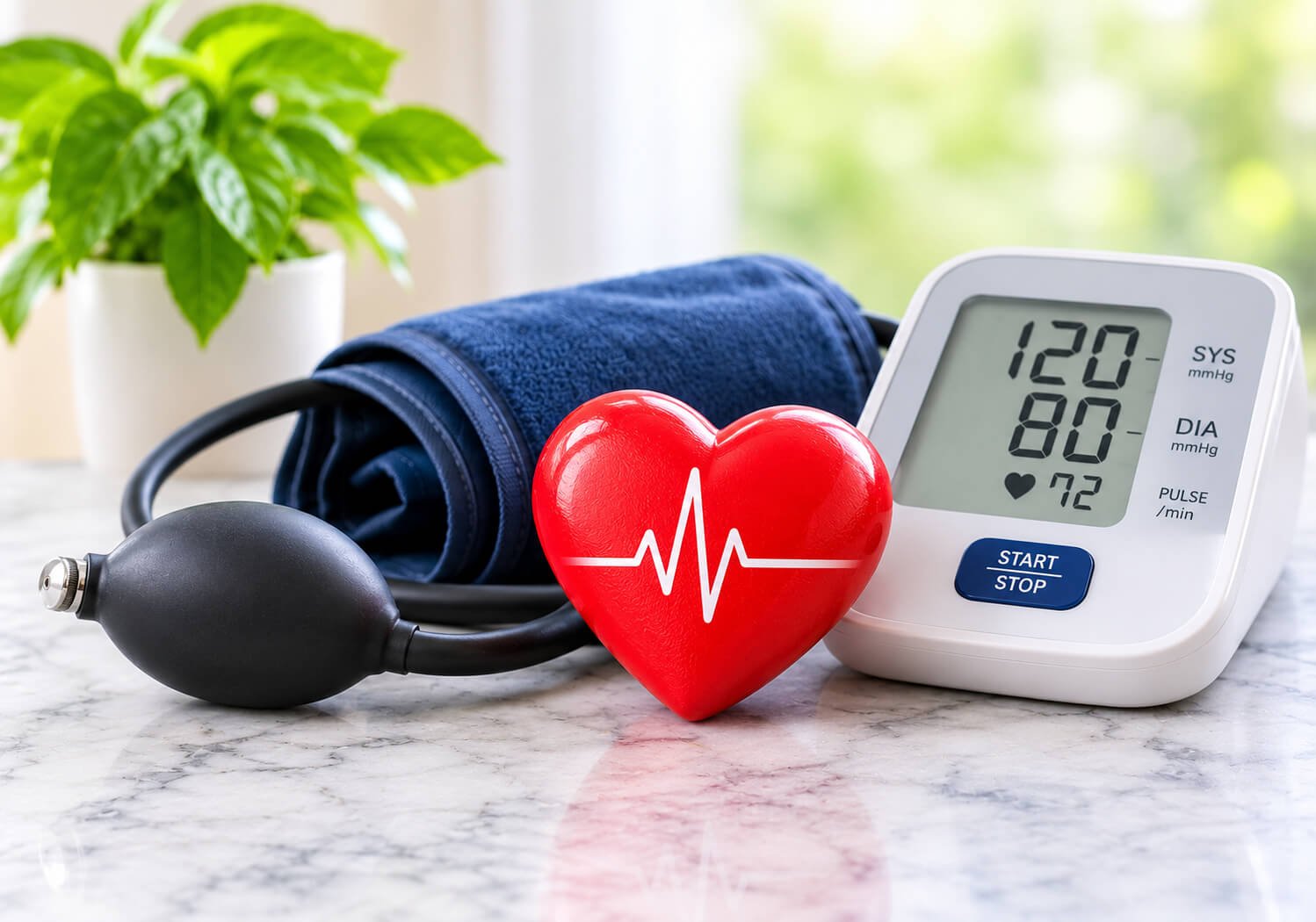
You’re 45, your energy has dipped, and you’ve been reading about supplements that “restore your drive.” Before you pop the first capsule, you need to know one thing: the side effects of libido supplements on cardiovascular health are not one-size-fits-all. Some ingredients carry a well-documented risk of raising heart rate and blood pressure. Others may lower pressure enough to cause dizziness. And a few interact dangerously with prescription heart medications.
I’ve coached men in their 40s, 50s, and 60s who walked into my gym on beta-blockers, ACE inhibitors, or nitrates and asked, “Can I take this yohimbine blend?” The honest answer is almost always “not without talking to your cardiologist first.” This article breaks down what the peer-reviewed literature says about the most common libido supplement ingredients, how they interact with your cardiovascular system, and what to do if you want to support your drive without putting your heart at risk.
QUICK ANSWER
The side effects of libido supplements on cardiovascular health range from mild (slight blood pressure shifts) to serious (dangerous drops in pressure when combined with nitrates). Yohimbine, icariin (horny goat weed), and high-dose L-arginine carry the highest cardiovascular risk. Maca, ashwagandha, and zinc are generally well-tolerated. If you take heart medication, check with your doctor before adding any libido supplement.
Why Cardiovascular Safety Matters More Than You Think
The male sexual response is, at its core, a vascular event. An erection requires the smooth muscle in the corpus cavernosum to relax, which depends on nitric oxide (NO) signaling and adequate arterial inflow. Many libido supplements work by manipulating this same pathway—boosting NO, inhibiting phosphodiesterase-5 (PDE5), or stimulating the sympathetic nervous system.
That’s exactly why cardiovascular side effects are the primary safety concern. The same mechanisms that increase blood flow to the pelvic region can also shift systemic blood pressure, alter heart rate, or interact with the drugs your cardiologist prescribed. The Mayo Clinic notes that dietary supplements are not regulated by the FDA the way pharmaceuticals are, meaning batch-to-batch potency can vary and undeclared ingredients are a documented risk.
If you have hypertension, coronary artery disease, a history of arrhythmia, or you take any prescription cardiovascular medication, the risk calculus changes significantly. What’s a minor, transient blood pressure dip in a healthy 25-year-old can be a syncopal episode in a 55-year-old on a beta-blocker.
The Research: Ingredient-by-Ingredient Cardiovascular Profile
Let’s go through the most common ingredients you’ll see on a libido supplement label and what the evidence says about their cardiovascular effects.
Yohimbine (Yohimbe)
Yohimbine is an alpha-2 adrenergic antagonist. It blocks the “brake” on sympathetic nerve signaling, which increases norepinephrine release. The practical result: your heart rate goes up, your blood pressure goes up, and your peripheral blood vessels constrict.
A review in the British Journal of Clinical Pharmacology documents that yohimbine at doses of 5–15 mg produces a dose-dependent increase in systolic blood pressure (5–15 mmHg) and heart rate (5–15 bpm) in healthy adults (1). In men with pre-existing hypertension, the effect is amplified. The Cleveland Clinic lists yohimbine as contraindicated in patients with uncontrolled hypertension, coronary artery disease, or those taking monoamine oxidase inhibitors (MAOIs).
Cardiovascular risk level: HIGH. If you have any diagnosed heart condition or take antihypertensives, yohimbine is not a supplement to take without explicit medical clearance.
L-Arginine and L-Citrulline
These amino acids are precursors to nitric oxide. L-Citrulline is converted to L-arginine in the kidneys, then to NO in the endothelium, causing vasodilation. A meta-analysis in Hypertension found that L-arginine supplementation (3–6 g/day) produced a modest reduction in systolic blood pressure (approximately 2–4 mmHg) in adults with mild hypertension (2).
The cardiovascular effect here is vasodilation—blood vessels relax, pressure drops slightly. In a healthy person, this is benign. In someone already on an ACE inhibitor (like lisinopril) or a calcium channel blocker (like amlodipine), the additive vasodilatory effect can push blood pressure below a safe range, causing dizziness, lightheadedness, or fainting.
Cardiovascular risk level: MODERATE. Generally safe in healthy adults at 2–5 g (L-arginine) or 3–6 g (L-citrulline) daily. Caution is warranted if you take blood pressure medication. Our guide on L-arginine and blood flow covers dosing and form selection in more detail.
Icarin / Horny Goat Weed (Epimedium)
Icarin is a natural PDE5 inhibitor, the same enzyme target as sildenafil (Viagra) and tadalafil (Cialis). The mechanism: it prevents the breakdown of cGMP, keeping smooth muscle relaxed and blood flow elevated.
The cardiovascular concern is straightforward. PDE5 inhibitors are contraindicated with oral or injectable nitrates (nitroglycerin, isosorbide mononitrate) because the combination can cause a catastrophic, life-threatening drop in blood pressure. The FDA Drug Safety Communication explicitly warns against this combination. While icarin is weaker than sildenafil, the mechanism is identical, and the safety margin is unclear because human pharmacokinetic data on icarin is limited.
Cardiovascular risk level: HIGH (especially with nitrates). Avoid entirely if you take any nitrate medication. Use extreme caution with other antihypertensives.
Maca Root (Lepidium meyenii)
Maca is an adaptogenic root native to the Peruvian Andes. The cardiovascular literature on maca is sparse but reassuring. A 12-week randomized controlled trial published in Phytotherapy Research found no significant changes in blood pressure, heart rate, or lipid profiles in healthy adults taking 1.5–3 g of maca extract daily (3).
Maca does not appear to act on the adrenergic system or the NO pathway in a way that meaningfully shifts hemodynamics. The most common side effects reported in trials are mild gastrointestinal discomfort.
Cardiovascular risk level: LOW. Generally well-tolerated. No known interactions with common cardiovascular medications in the published literature. For more on maca’s evidence base, see our maca root guide.
Ashwagandha (Withania somnifera)
Ashwagandha is an adaptogen that modulates the hypothalamic-pituitary-adrenal (HPA) axis, reducing cortisol. Several small RCTs have noted a mild reduction in resting blood pressure (3–5 mmHg systolic) and heart rate (2–4 bpm) in stressed or hypertensive adults, likely mediated by parasympathetic activation (4).
This is a mild effect. In healthy individuals, it’s negligible. In someone on a beta-blocker (which already lowers heart rate) or a vasodilator, the additive effect could theoretically push resting heart rate or pressure slightly lower. Not dangerous in most cases, but worth monitoring.
Cardiovascular risk level: LOW to MODERATE. Generally safe. Monitor if you’re on rate-controlling medications. Our article on ashwagandha and testosterone covers the hormonal data.
DHEA (Dehydroepiandrosterone)
DHEA is a precursor hormone produced by the adrenal glands. Supplemental DHEA (25–50 mg) is marketed for libido and energy. The cardiovascular data is mixed. Some studies show no significant effect on blood pressure or heart rate in healthy adults. However, DHEA is metabolized into androgens and estrogens, and in men with prostate concerns, the hormonal shift is the bigger issue than the cardiovascular one.
The NIH Office of Dietary Supplements notes that DHEA’s long-term cardiovascular safety profile is not well established, particularly in men over 50.
Cardiovascular risk level: MODERATE (uncertain long-term data). Short-term use at 25–50 mg appears safe in healthy adults. Avoid if you have a history of hormone-sensitive conditions.
Ginseng (Panax ginseng / Korean Red Ginseng)
Ginsenosides in ginseng have mild PDE5-inhibitory and NO-enhancing properties. Doses of 200–400 mg of standardized extract show a small, transient increase in heart rate and a slight decrease in diastolic pressure. The effect is mild and self-limiting.
The main interaction concern is with anticoagulants (warfarin, apixaban) because ginseng may have mild antiplatelet effects. This is a bleeding risk, not a direct cardiovascular hemodynamic risk, but it’s relevant if you’re on blood thinners for a cardiac condition.
Cardiovascular risk level: LOW to MODERATE. Generally safe at standard doses. Caution with anticoagulants.
Tribulus Terrestris
Despite its popularity on “testosterone booster” labels, the clinical evidence for tribulus raising testosterone in humans is essentially absent. A small RCT in Journal of the International Society of Sports Nutrition found no significant change in testosterone, LH, or FSH with 250 mg × 3/day over 4 weeks (5).
Cardiovascularly, tribulus appears inert. No meaningful effects on blood pressure, heart rate, or lipid profiles have been reported in human trials.
Cardiovascular risk level: LOW. The bigger issue is that it likely doesn’t do what the label claims.
Comparison Table: Cardiovascular Risk at a Glance
| Ingredient | BP Effect | HR Effect | Drug Interactions | Risk Level |
| Yohimbine | ↑ 5–15 mmHg | ↑ 5–15 bpm | MAOIs, antihypertensives | High |
| Icarin (Horny Goat Weed) | ↓ (PDE5 mechanism) | Variable | Nitrates (contraindicated), antihypertensives | High |
| L-Arginine / L-Citrulline | ↓ 2–4 mmHg | Slight ↓ | ACE inhibitors, CCBs, nitrates | Moderate |
| DHEA | Minimal (short-term) | Minimal | Hormone-sensitive conditions | Moderate |
| Ginseng | Slight ↓ diastolic | Slight ↑ | Anticoagulants | Low–Mod |
| Ashwagandha | ↓ 3–5 mmHg | ↓ 2–4 bpm | Beta-blockers (additive) | Low–Mod |
| Maca | No significant effect | No significant effect | None documented | Low |
| Tribulus Terrestris | No significant effect | No significant effect | None documented | Low |
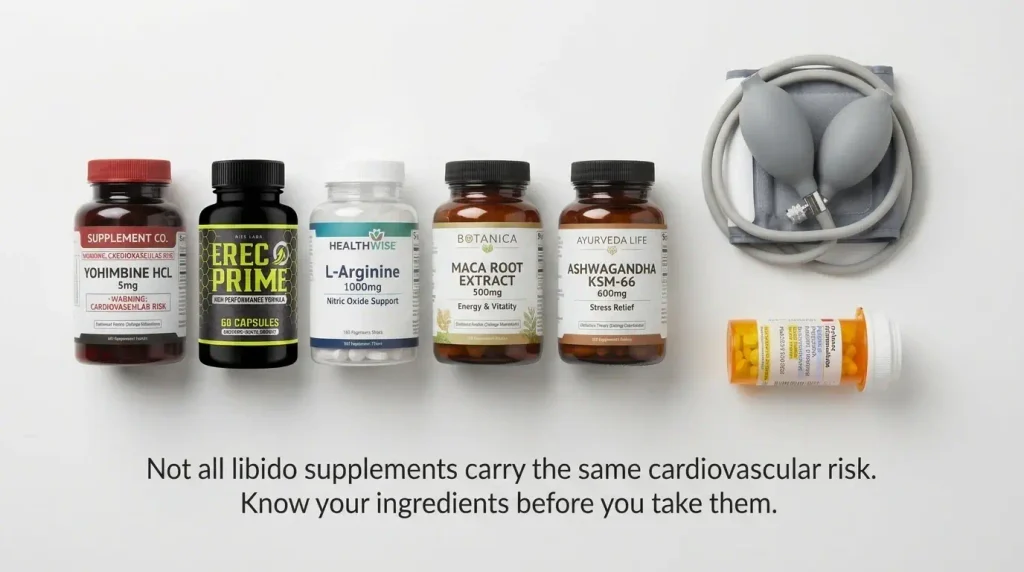
How to Apply This: A Practical Decision Framework
You don’t need to become a pharmacologist. You need a simple process to run through before you buy or take any libido supplement. Here’s the checklist I give every client who asks me about these products:
Step 1: List Your Current Medications
Write down every prescription and over-the-counter drug you take. Pay special attention to:
- Nitrates (nitroglycerin, isosorbide mononitrate/dinitrate, nitroprusside) → Do NOT take icarin, horny goat weed, or any PDE5-inhibiting herb.
- Beta-blockers (metoprolol, atenolol, carvedilol) → Caution with ashwagandha, ginseng (additive HR reduction).
- ACE inhibitors / ARBs (lisinopril, losartan) → Caution with L-arginine, L-citrulline (additive vasodilation).
- Calcium channel blockers (amlodipine, nifedipine) → Same caution as ACE inhibitors.
- Anticoagulants / antiplatelets (warfarin, apixaban, clopidogrel) → Caution with ginseng, high-dose fish oil.
- MAOIs (phenelzine, tranylcypromine) → Do NOT take yohimbine.
Step 2: Check for Diagnosed Conditions
If you have any of the following, the threshold for medical clearance should be lower:
- Uncontrolled hypertension (resting BP consistently above 140/90)
- Coronary artery disease or prior MI
- History of arrhythmia (atrial fibrillation, ventricular tachycardia)
- Heart failure (any NYHA class)
- Peripheral arterial disease
- Aortic aneurysm
Step 3: Start Low, Monitor
If your doctor clears you to try a supplement:
- Start at the lowest effective dose (e.g., 2 g L-arginine, 1.5 g maca, 300 mg ashwagandha).
- Take it at the same time each day for 7–10 days before increasing.
- Monitor your resting heart rate and blood pressure at home (a basic upper-arm cuff is 30–60).
- Note any dizziness, palpitations, chest tightness, or unusual fatigue.
- If you feel “off,” stop the supplement and call your doctor.
Step 4: Don’t Stack
Taking three or four “natural” libido supplements simultaneously multiplies the unknown. If you’re going to add one ingredient, add one. Give it 2–3 weeks before considering a second. This way, if something feels wrong, you know what caused it.
COACH’S TIP
If you’re a guy in his 50s who’s been sedentary for a few years and wants to improve his drive, the highest-ROI “supplement” is 30 minutes of brisk walking or cycling, 5 days a week. The CDC physical activity guidelines recommend at least 150 minutes of moderate aerobic activity per week. That single change improves endothelial function, lowers resting blood pressure by 5–8 mmHg, and supports the NO pathway more reliably than any capsule.
COMMON MISTAKE
Buying a “proprietary blend” that lists 12 ingredients at a total of 2,000 mg per serving. You have no idea how much yohimbine, icarin, or L-arginine is actually in there. The FDA does not require third-party testing of dietary supplements. If you’re going to supplement, buy single-ingredient products from brands that publish third-party Certificate of Analysis (COA) results. You should be able to see the exact milligram dose of every active compound.
Safety Notes: When to Stop and Call a Doctor
Stop taking any libido supplement and seek medical attention if you experience:
- Chest pain, pressure, or tightness
- Shortness of breath at rest or with minimal exertion
- Heart rate persistently above 110 bpm at rest
- Blood pressure reading below 90/60 or above 180/110
- Fainting or near-fainting (syncope or presyncope)
- Sudden swelling of the face, lips, or throat (allergic reaction)
- Prolonged erection lasting more than 4 hours (priapism—this is a medical emergency)
If you’re already on a PDE5 inhibitor prescription (sildenafil, tadalafil, vardenafil), do NOT add any herbal PDE5-inhibiting compound (icarin, horny goat weed, ginseng at high doses) without your prescribing doctor’s explicit approval. The additive effect is unpredictable and can be dangerous.
Related Tips: Supporting Cardiovascular Health and Libido Simultaneously
The good news is that the things that protect your heart are the same things that support healthy sexual function. You don’t need a supplement to get most of the benefit.
Exercise: Resistance training 2–3×/week (squats, deadlifts, rows) plus 150 minutes of moderate cardio per week. This improves endothelial NO production, lowers resting BP, and supports healthy testosterone levels. Our guide on how men improve stamina and sexual wellness naturally covers a full training protocol.
Sleep: 7–9 hours per night. Poor sleep raises cortisol, lowers testosterone, and impairs vascular function. The Harvard T.H. Chan School of Public Health links chronic sleep restriction to increased cardiovascular risk.
Nutrition: A Mediterranean-style eating pattern—olive oil, fatty fish, vegetables, legumes, whole grains—supports endothelial health and reduces systemic inflammation. Adequate zinc (11 mg RDA for men) supports normal testosterone synthesis. See our article on zinc and testosterone for food sources.
Stress management: Chronic psychological stress elevates cortisol, which suppresses the HPA axis and impairs vascular reactivity. Daily 10-minute breathing practice, regular time in nature, and setting boundaries around work are not “soft” interventions—they’re cardiovascular interventions. If stress is a major factor in your low drive, our piece on how stress and poor sleep lower male libido is a good starting point.
Limit alcohol: More than 2 drinks on most days is linked to elevated blood pressure, reduced testosterone, and impaired erectile function. The NIH National Institute on Alcohol Abuse and Alcoholism defines moderate drinking as up to 2 drinks/day for men.

What the Research Does NOT Support
It’s worth being direct about what the evidence does not back up:
- No over-the-counter “testosterone booster” blend has been shown in a large, well-controlled RCT to produce a clinically meaningful increase in serum testosterone in men with normal baseline levels. A 2019 systematic review in Sports Medicine concluded that the evidence for most commercial testosterone booster formulations is insufficient (6).
- Tribulus terrestris does not raise testosterone in humans. The popular claim is based on rodent studies and in-vitro data that do not translate to human physiology.
- “Proprietary blends” cannot be evaluated for safety or efficacy because the exact composition and dose of each ingredient is not disclosed.
- No supplement replaces a prescription PDE5 inhibitor if you have a diagnosed erectile dysfunction with a vascular or hormonal etiology. If a urologist has prescribed sildenafil or tadalafil, that’s the evidence-based treatment.
For a broader look at what the research says about whether these products deliver on their marketing claims, see our article on do libido supplements actually work.
A Sample “Safe Stack” Protocol (For Healthy Adults, With Doctor Clearance)
If your doctor has cleared you and you want to try a conservative, evidence-informed approach:
| Week | Supplement | Dose | Timing | Purpose |
| 1–2 | L-Citrulline | 3 g | 30 min before training or on an empty stomach | NO precursor, mild vasodilation |
| 3–4 | Add Maca root extract | 1.5 g | Morning with food | Adaptogenic, libido support |
| 5–6 | Add Ashwagandha (KSM-66) | 300 mg | Evening with dinner | Cortisol reduction, sleep quality |
| 7+ | Reassess | — | — | Check BP/HR logs, decide if continuing |
Rules:
- Do NOT add yohimbine, icarin, or DHEA to this stack without explicit medical supervision.
- Check your resting BP and HR every 3–4 days for the first 2 weeks of each new addition.
- If you take any prescription cardiovascular medication, your doctor should review this entire protocol before you start.
- Stop any supplement immediately if you notice palpitations, dizziness, or chest discomfort.
For men over 40 who are noticing a gradual decline in energy and drive, understanding the root cause matters more than the supplement. Our guide on what causes low libido in men after 40 walks through the hormonal, vascular, and psychological factors to rule out before reaching for a bottle.
Can libido supplements raise blood pressure?
Yes. Yohimbine is the most well-documented offender, raising systolic BP by 5–15 mmHg and heart rate by 5–15 bpm at doses of 5–15 mg. Icarin (horny goat weed) can cause the opposite—dangerous drops in pressure, especially with nitrates. Most other ingredients (maca, ashwagandha, zinc) have minimal or no effect on blood pressure.
Are male enhancement supplements safe for people with high blood pressure?
It depends on the ingredient and the severity of the hypertension. Yohimbine and icarin are generally contraindicated. L-arginine may lower pressure further if you’re already on antihypertensives. Maca and ashwagandha appear safe at standard doses. Always get your cardiologist’s sign-off before starting any new supplement if your resting BP is above 140/90.
Can I take L-arginine with a blood pressure medication?
Potentially, but with caution. L-arginine causes mild vasodilation. Combined with an ACE inhibitor or calcium channel blocker, the additive effect could push your pressure below a comfortable range. If you want to try it, start at 2 g, monitor your BP at home for a week, and let your prescribing doctor know.
What is the most dangerous interaction between a libido supplement and a heart medication?
The combination of any PDE5-inhibiting compound (icarin/horny goat weed, high-dose ginseng) with oral or injectable nitrates (nitroglycerin, isosorbide) can cause a severe, potentially fatal drop in blood pressure. This is the same interaction that makes sildenafil contraindicated with nitrates. Do not combine them.
Do maca or ashwagandha affect heart rate or blood pressure?
In the published human trials, maca showed no significant cardiovascular effects at 1.5–3 g/day. Ashwagandha produced a small, consistent reduction in resting BP (3–5 mmHg) and HR (2–4 bpm), likely through parasympathetic activation. These are mild effects and generally not clinically significant in healthy adults.
Should I get blood work before starting a libido supplement?
If you’re over 40, have any cardiovascular risk factors, or take prescription medications, yes. A basic panel (fasting lipid profile, HbA1c, basic metabolic panel, morning total testosterone) gives your doctor a baseline. It also helps rule out a hormonal or metabolic cause for low libido that a supplement won’t fix.
Conclusion: Know the Risk Before You Take the Capsule
The side effects of libido supplements on cardiovascular health span a wide range. At one end, maca and zinc are as safe as a multivitamin. At the other, yohimbine and icarin can shift your hemodynamics in ways that are genuinely dangerous, particularly if you have pre-existing heart disease or take prescription cardiovascular medication.
The practical takeaway is simple: read the label, identify every active ingredient, cross-reference it against your medication list and your diagnosed conditions, and get your doctor’s input before you start. Start with the lowest dose. Monitor your blood pressure and heart rate. Don’t stack multiple unknowns at once.
And remember: the most powerful “libido supplement” you can take is a consistent training program, 7+ hours of sleep, a diet rich in vegetables and healthy fats, and a manageable stress load. Those interventions support your cardiovascular system and your hormonal health simultaneously, with no interaction risk.
If you’re building a broader strategy for energy, drive, and long-term health, our guide on supplements for libido and energy in men covers the full landscape, and our article on how to increase energy and stamina naturally focuses on the training and lifestyle side.