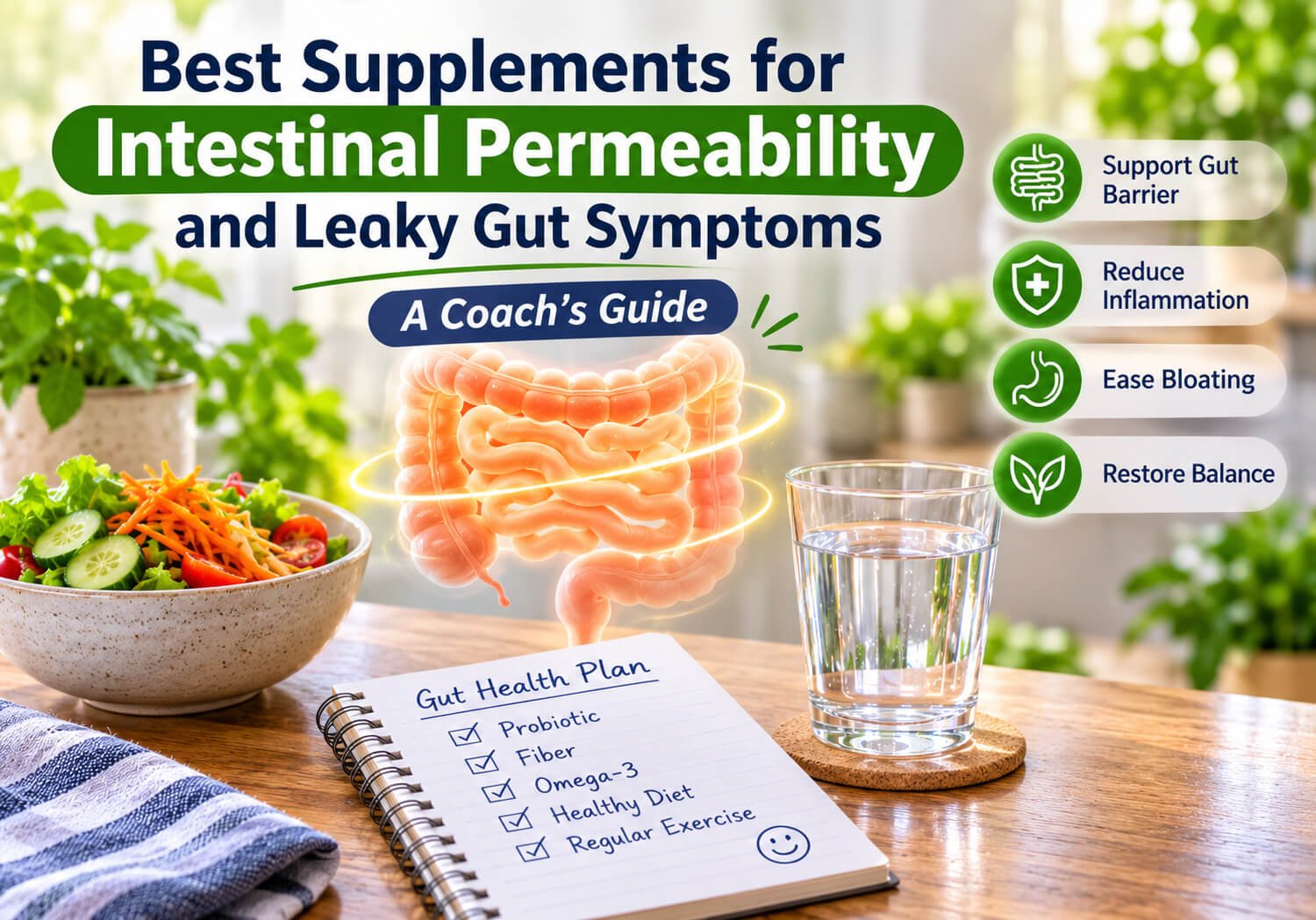
Best Supplements for Intestinal Permeability and Leaky Gut Symptoms: A Coach’s Guide
If you’ve been dealing with bloating, unexplained fatigue, joint aches, or food sensitivities that seem to come and go, you may have heard the term “leaky gut.” In clinical language, that’s increased intestinal permeability—a state where the tight junctions between your gut lining cells loosen and allow partially digested food particles and bacterial byproducts into the bloodstream. The good news? Research suggests that targeted nutrition and specific supplements for intestinal permeability and leaky gut symptoms may help support the mucosal barrier over time.
As a strength and conditioning coach, I see athletes and everyday clients whose performance tanks because their digestion is off. You can’t build strength, recover from a hard session, or manage body composition if your gut isn’t handling nutrients properly. Below, I break down the supplements with the most evidence behind them, how to stack them, and what to skip.
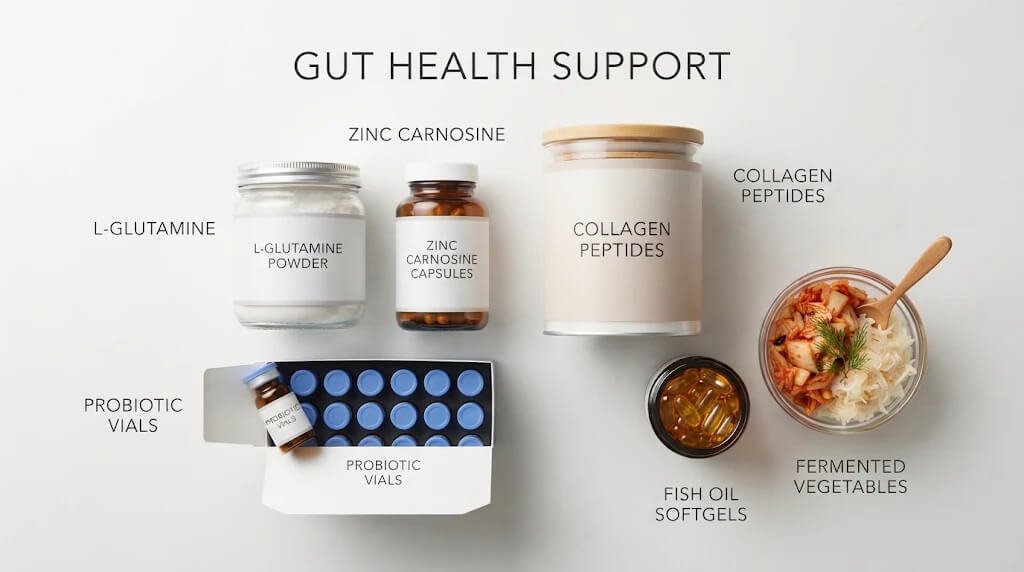
Quick Answer: The most studied supplements for intestinal permeability and leaky gut symptoms include L-glutamine (5–10 g/day), zinc carnosine (75–150 mg/day), targeted probiotics (L. rhamnosus, B. lactis), collagen peptides (10–15 g/day), and omega-3 fatty acids (1–2 g EPA+DHA). No single pill “cures” the gut barrier; a multi-ingredient protocol combined with dietary changes tends to produce the best results.
What “Leaky Gut” Actually Means (and What It Doesn’t)
The intestinal epithelium is a single layer of cells called enterocytes, sealed together by protein complexes known as tight junctions. When those junctions widen, the barrier becomes more permeable. A 2017 review in the Journal of Clinical Gastroenterology describes this as a mechanism through which bacterial lipopolysaccharides (LPS) and undigested proteins can cross into the portal circulation, triggering low-grade systemic inflammation Biesiekierski, 2017.
“Leaky gut” isn’t a standalone diagnosis in most Western medical systems. It’s a physiological state—increased permeability—that can accompany conditions like irritable bowel syndrome (IBS), celiac disease, inflammatory bowel disease (IBD), and even post-antibiotic dysbiosis. A 2016 study in Nature Medicine showed that antibiotic-induced microbial disruption impaired the intestinal barrier and altered host metabolism for weeks after treatment ended Suez et al., 2016.
Important: If you have persistent diarrhea, rectal bleeding, unexplained weight loss, or symptoms lasting more than two weeks, see a gastroenterologist before starting any supplement protocol. This article is for general information and is not a substitute for medical advice.
Comparison Table: Top Supplements at a Glance
| Supplement | Typical Dose | Primary Mechanism | Evidence Level | Best For |
| L-Glutamine | 5–10 g/day | Fuels enterocytes; supports tight-junction protein synthesis | Moderate (animal + human) | Post-illness, high-stress athletes |
| Zinc Carnosine | 75–150 mg/day | Mucosal protection; reduces oxidative stress in gut lining | Moderate (human trials) | Erosive gastritis, permeability markers |
| Probiotics (multi-strain) | 10–50 billion CFU/day | Restores microbial balance; SCFA production | Strong (meta-analyses) | Post-antibiotic, IBS-related permeability |
| Collagen Peptides | 10–15 g/day | Provides glycine, proline for mucosal repair | Emerging (animal + small human) | General gut lining support |
| Omega-3 (EPA/DHA) | 1–2 g/day | Anti-inflammatory; modulates gut mucosal immunity | Moderate | Low-grade gut inflammation |
| Curcumin (with piperine) | 500–1,000 mg/day | Downregulates NF-κB; supports tight-junction integrity | Moderate (in vitro + animal) | Inflammatory gut conditions |
| Quercetin | 500–1,000 mg/day | Stabilizes mast cells; antioxidant in epithelium | Early (in vitro + animal) | Histamine-related gut reactivity |
| PHGG (Prebiotic Fiber) | 5–10 g/day | Fermented to butyrate by colonic bacteria | Strong (human RCTs) | SCFA production, barrier support |
1. L-Glutamine: The Gut’s Preferred Fuel
Who It’s For
L-glutamine is the most commonly recommended amino acid for gut barrier support. Enterocytes rely on glutamine as a primary energy substrate, especially during periods of stress, intense training, or recovery from illness. If you’re an athlete doing 5+ hard sessions per week or you’ve just finished a course of antibiotics, glutamine may be a logical first addition.
Key Features and Dosing
- Form: Powder is preferred over capsules for dose flexibility.
- Dose: 5 g (one level scoop) on an empty stomach in the morning; up to 10 g/day split into two doses if under high physical stress.
- Timing: 30 minutes before breakfast or before a training session.
- Duration: 4–8 weeks is a reasonable trial period.
Pros
- Well-studied in athletes and critically ill patients.
- Inexpensive and widely available.
- No significant drug interactions at dietary doses.
Cons
- Evidence for measurable reduction in permeability markers in healthy adults is still limited.
- Powder can be gritty; mix with water or a smoothie.
Coach’s Tip: If you’re already taking a pre-workout, check the label. Many contain 2–5 g of L-glutamine. You may not need a separate scoop. Just make sure the total daily amount stays under 15 g unless a clinician directs otherwise.
2. Zinc Carnosine: Mucosal Shield
Who It’s For
Zinc carnosine is a chelated form of zinc bound to the amino acid L-carnosine. It’s been studied in Japan for decades in the context of erosive gastritis and Helicobacter pylori–associated mucosal damage. For gut permeability, its value lies in protecting the mucosal surface and supporting the structural integrity of tight-junction proteins.
Key Features and Dosing
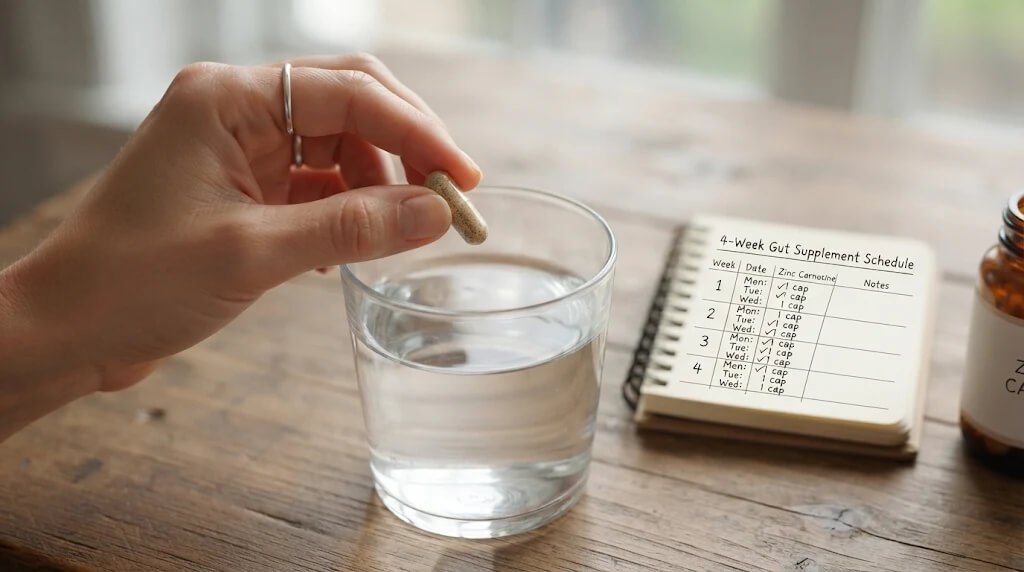
- Dose: 75–150 mg of zinc carnosine (this is the chelate weight, not elemental zinc) taken 30 minutes before meals.
- Duration: 4–12 weeks.
- Form: Capsules are standard; look for a product that lists “zinc carnosine” specifically, not just “zinc picolinate” or “zinc gluconate.”
Pros
- Human trials show reduced permeability markers (lactulose/mannitol ratio) after 4–8 weeks.
- Supports wound healing in the GI tract.
- Gentle on the stomach at recommended doses.
Cons
- More expensive than plain zinc supplements.
- Don’t exceed 40 mg elemental zinc/day from all sources to avoid copper depletion.
3. Probiotics: Restoring the Microbial Engine
Who It’s For
A diverse, balanced microbiome produces short-chain fatty acids (SCFAs)—especially butyrate—that directly feed colonocytes and reinforce the mucosal barrier. If you’ve taken antibiotics, eat a low-fiber diet, or have IBS-type symptoms, a targeted probiotic is one of the highest-impact additions you can make.
Key Features and Dosing
- Strains to look for: Lactobacillus rhamnosus GG, Bifidobacterium lactis HN019, Lactobacillus plantarum 299v.
- Dose: 10–50 billion CFU/day, taken with a meal containing some fat (improves survival through stomach acid).
- Duration: Minimum 8–12 weeks to assess effect.
- Storage: Refrigerated or shelf-stable (check the label). Avoid products with “proprietary blends” that hide strain and CFU counts.
Pros
- Strongest evidence base of any gut supplement category.
- Addresses the root cause (dysbiosis) rather than just the barrier.
- May reduce bloating and irregularity within 2–3 weeks.
Cons
- Quality varies wildly between brands.
- Not all strains have permeability-specific data; strain matters more than “billion count.”
The Mayo Clinic’s overview of probiotics notes that most people tolerate probiotics well, but immunocompromised individuals should consult a doctor first.
4. Collagen Peptides: Building Blocks for the Lining
Who It’s For
The intestinal mucosa is rich in collagen and the amino acids glycine and proline. Collagen peptides (hydrolyzed type I and III) provide a concentrated source of these building blocks. Think of it as giving your gut the raw materials it needs to maintain its structural matrix.
Key Features and Dosing
- Dose: 10–15 g (roughly 2–3 tablespoons) daily.
- Form: Unflavored powder mixes easily into coffee, smoothies, or broth.
- Timing: Any time; some prefer it in the evening to align with overnight repair cycles.
- Duration: 6–12 weeks.
Pros
- Inexpensive, tasteless, and easy to add to existing routines.
- Supports joint and skin health as a bonus.
- No known adverse effects at dietary doses.
Cons
- Direct human RCTs measuring permeability markers are still limited.
- Quality depends on source (bovine, marine, or porcine); look for third-party testing.
5. Omega-3 Fatty Acids: Calming the Inflammatory Signal
Who It’s For
Chronic low-grade inflammation is a hallmark of increased gut permeability. EPA and DHA from fish oil (or algal oil for vegans) modulate inflammatory pathways in the gut mucosa. If your diet is low in fatty fish (salmon, mackerel, sardines) and you notice persistent gut discomfort, omega-3s are worth adding.
Key Features and Dosing
- Dose: 1–2 g combined EPA + DHA per day.
- Form: Triglyceride-form fish oil is absorbed better than ethyl ester.
- Timing: With a meal containing fat.
- Duration: Ongoing; 8–12 weeks to notice changes in gut comfort.
Pros
- Broad anti-inflammatory and cardiovascular benefits.
- Well-studied in GI conditions including IBD.
- Algal oil options available for plant-based eaters.
Cons
- Can cause “fish burps” if taken on an empty stomach.
- Quality varies; look for IFOS or USP third-party testing for heavy metals and oxidation.
The Harvard Health article on omega-3s confirms their role in reducing systemic inflammation, which is relevant to the gut’s immune environment.
6. Curcumin (Turmeric Extract): The Anti-Inflammatory Adjunct
Who It’s For
Curcumin, the active polyphenol in turmeric, downregulates NF-κB signaling—a key driver of mucosal inflammation. It also appears to support the expression of tight-junction proteins in intestinal epithelial cells. If your gut symptoms are accompanied by joint stiffness or general inflammatory markers, curcumin can be a useful addition.
Key Features and Dosing
- Dose: 500–1,000 mg curcumin per day.
- Form: Look for a bioavailability-enhanced version (with piperine/black pepper extract, or a phospholipid complex like Meriva®).
- Timing: With a meal containing fat.
- Duration: 6–8 weeks.
Pros
- Decades of safety data at dietary doses.
- Synergistic with omega-3s for anti-inflammatory effect.
- Inexpensive.
Cons
- Poor absorption without a delivery enhancer.
- May interact with blood-thinning medications; check with your doctor.
7. Quercetin: Stabilizing the Mast Cell Response
Who It’s For
Quercetin is a flavonoid found in onions, apples, and berries. In the gut, it acts as a natural mast-cell stabilizer and antioxidant. If your symptoms include histamine-related reactions (flushing, headaches after certain foods, bloating with fermented foods), quercetin may help calm the local immune overreaction that contributes to barrier stress.
Key Features and Dosing
- Dose: 500–1,000 mg/day, split into two doses.
- Form: Capsules or tablets.
- Timing: With meals.
- Duration: 4–8 weeks.
Pros
- Broad antioxidant and anti-histamine properties.
- Generally well-tolerated.
- Inexpensive.
Cons
- Evidence for direct permeability reduction is still early-stage (mostly in vitro and animal).
- Can cause mild GI upset in some people at higher doses.
8. PHGG (Partially Hydrolyzed Guar Gum): Feeding the Barrier from Below
Who It’s For
PHGG is a prebiotic fiber that resists digestion in the small intestine and is fermented by colonic bacteria into butyrate and other SCFAs. Butyrate is the primary fuel for colonocytes and a direct signal for tight-junction protein expression. If your fiber intake is under 25 g/day, PHGG is a practical way to close the gap without adding bulk that might worsen bloating.
Key Features and Dosing
- Dose: 5–10 g/day, mixed into water or a smoothie.
- Form: Fine powder; virtually tasteless.
- Timing: With or just before a meal.
- Duration: 4–12 weeks.
Pros
- Strong human RCT data for SCFA production and gut comfort.
- Low FODMAP; well-tolerated by IBS patients.
- Supports microbiome diversity over time.
Cons
- You need adequate water intake (at least 8 oz with each serving).
- May cause mild initial gas as the microbiome adjusts.
How to Choose: Buyer’s Checklist
Before you buy, run through this list:
- Third-party testing: Look for NSF, USP, IFOS, or Informed Sport seals. This confirms the product contains what the label says and is free from heavy metals.
- Strain specificity (probiotics): The label must name the species and strain (e.g., L. rhamnosus GG). “Proprietary blend” is a red flag.
- Dosage transparency: The label should state the exact amount of the active compound, not just the proprietary blend weight.
- Allergens and fillers: Check for unnecessary binders, artificial colors, or common allergens (dairy, soy, shellfish for collagen).
- Storage requirements: Probiotics and some omega-3s degrade with heat and light. Confirm whether refrigeration is needed.
- Budget and duration: A 4–8 week protocol with 3–4 supplements can cost 40–80/month. Set a realistic budget before starting.
- Warranty / return policy: Some brands offer a 30-day money-back guarantee if the product causes GI upset.
How We Picked: Selection Criteria
This list was built using the following filters:
- Peer-reviewed evidence: At least one human or well-controlled animal study demonstrating an effect on intestinal permeability markers, mucosal structure, or gut microbiome composition.
- Safety profile: No serious adverse effects reported at the recommended dose in clinical trials.
- Practical usability: Available in standard retail or online channels, stable at room temperature (or clearly labeled for refrigeration), and easy to incorporate into a daily routine.
- Synergy: Supplements that work together (e.g., glutamine + probiotics + fiber) were prioritized over redundant single-ingredient products.
- Independence: No brand sponsorship or affiliate relationship influenced the selection.
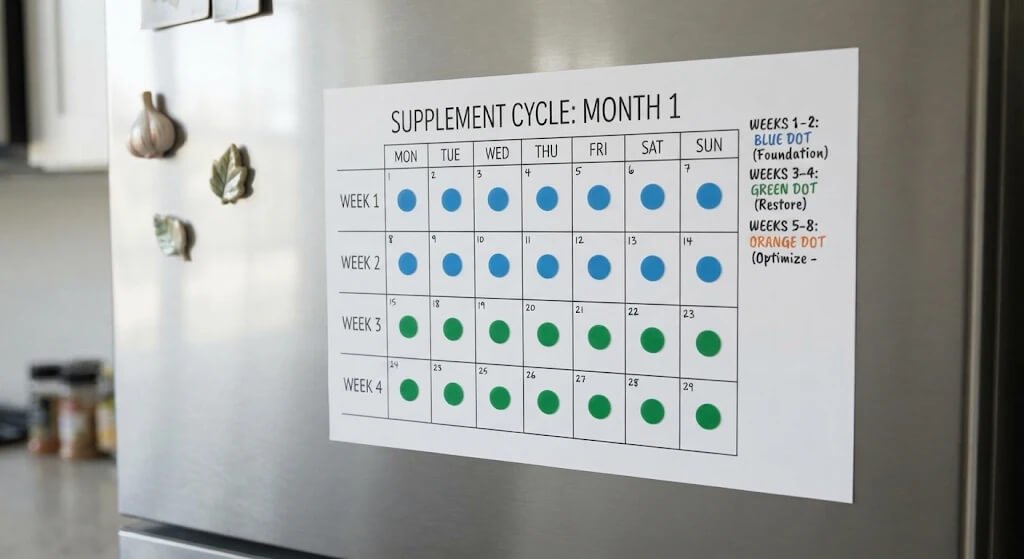
Building Your Protocol: A 4-Week Stacking Plan
You don’t need to start all eight supplements on day one. Here’s a practical, phased approach:
- Probiotic (multi-strain, 10–20 billion CFU) with breakfast
- PHGG (5 g) with dinner
- Omega-3 (1 g EPA+DHA) with lunch
- Add L-glutamine (5 g) in the morning on an empty stomach
- Add collagen peptides (10 g) in your evening coffee or smoothie
- Add zinc carnosine (75 mg) before dinner if you have a history of gastritis or erosive symptoms
- Add curcumin (500 mg with piperine) with lunch if inflammatory symptoms persist
- Add quercetin (500 mg) if histamine-related reactions are present
Common Mistake: Starting all eight supplements on the same day. This makes it impossible to identify which one (if any) causes mild GI adjustment, and it overwhelms your budget. Add one new supplement every 5–7 days so you can track how you feel.
Easier Version (Minimal Protocol)
If you want the simplest start: probiotic + PHGG + omega-3. Three products, three daily habits, and you cover microbial balance, SCFA production, and inflammation.
Harder / More Comprehensive Version
Add glutamine, collagen, zinc carnosine, curcumin, and quercetin as outlined above. This is better suited for someone with a confirmed permeability issue (via lactulose/mannitol test or zonulin blood test) working under a practitioner’s guidance.
Lifestyle Factors That Matter as Much as the Pills
Supplements work best when the rest of your gut-supportive habits are in place:
- Fiber diversity: Aim for 30+ different plant sources per week. Soluble fiber feeds beneficial bacteria; insoluble fiber adds bulk. Our guide on how dietary fiber supports gut and appetite health covers the research in detail.
- Fermented foods: Sauerkraut, kimchi, kefir, and miso provide live cultures alongside your probiotic supplement.
- Stress management: Chronic cortisol elevates zonulin, a protein that loosens tight junctions. Even 10 minutes of daily diaphragmatic breathing or a walk can help.
- Sleep: Poor sleep disrupts the circadian rhythm of gut motility and microbiome composition. Our article on how sleep affects metabolism and weight touches on the gut-hormone connection.
- Limit alcohol and NSAIDs: Both are well-documented contributors to mucosal damage and increased permeability.
- Movement: Regular moderate exercise (brisk walking, cycling, swimming) has been linked to favorable shifts in gut microbiome diversity. The HHS Physical Activity Guidelines recommend at least 150 minutes of moderate aerobic activity per week.
If you’re already working with a supplement for metabolic support, check our guide on how to evaluate supplement ingredients for tips on reading labels and spotting fillers.
Safety Notes and Who Should Be Cautious
- Pregnant or breastfeeding women: Consult your OB-GYN before starting any new supplement, including probiotics and collagen.
- Immunocompromised individuals: Probiotics carry a small risk of bacteremia in severely immunosuppressed patients. Get medical clearance first.
- Blood-thinning medications: Curcumin and high-dose omega-3s may have mild anticoagulant effects. Talk to your prescribing doctor.
- Zinc and copper balance: Long-term zinc supplementation (>40 mg elemental zinc/day) can deplete copper. If you’re on zinc carnosine for more than 8 weeks, consider a 1–2 mg copper supplement.
- Autoimmune conditions: Some research suggests probiotics may modulate immune responses. If you have lupus, rheumatoid arthritis, or another autoimmune condition, discuss timing and strain selection with your rheumatologist.
For a broader look at which supplements are generally considered safe for long-term use, see our article on which supplements may support weight management safely.
FAQ
What supplements actually repair a leaky gut?
The best-studied options are L-glutamine (5–10 g/day), zinc carnosine (75–150 mg/day), multi-strain probiotics (10–50 billion CFU), and prebiotic fiber like PHGG (5–10 g/day). No single supplement “repairs” the barrier overnight; a 4–12 week protocol combined with dietary changes produces the most consistent results.
How long does it take to see improvement with gut supplements?
Most people notice reduced bloating or improved regularity within 2–3 weeks of starting a probiotic and fiber protocol. Measurable changes in permeability markers (like the lactulose/mannitol ratio) typically require 8–12 weeks of consistent supplementation, based on published clinical trial timelines.
Can I take L-glutamine and probiotics together?
Yes. They work through different mechanisms—glutamine fuels the enterocytes directly, while probiotics restore the microbial environment that produces SCFAs. Many gut-health protocols include both. Take the probiotic with a meal and the glutamine on an empty stomach 30 minutes before breakfast.
Do I need a leaky gut test before starting supplements?
A lactulose/mannitol urine test or a serum zonulin test can confirm increased permeability, but they aren’t available at every clinic. If your symptoms are mild and you have no red-flag signs (bleeding, weight loss), a 4–6 week trial of a basic protocol (probiotic + fiber + omega-3) is reasonable. See a gastroenterologist if symptoms persist.
Are probiotics safe to take long-term?
For most healthy adults, yes. Published safety data supports continuous use for at least 6–12 months. However, if you’re on immunosuppressive therapy or have a central venous catheter, check with your doctor first, as rare cases of probiotic-associated bacteremia have been reported in severely immunocompromised patients.
What’s the difference between a probiotic and a prebiotic?
A probiotic is a live microorganism (bacteria or yeast) you consume to add beneficial strains to your gut. A prebiotic is a non-digestible fiber (like inulin, PHGG, or resistant starch) that feeds the bacteria already living in your colon. They work best together: prebiotics provide the fuel, probiotics provide the workers.
Conclusion: Start Simple, Stay Consistent
Finding the best supplements for intestinal permeability and leaky gut symptoms doesn’t require a cabinet full of bottles. A focused protocol—probiotic, prebiotic fiber, omega-3, and L-glutamine—covers the major pathways: microbial balance, SCFA production, inflammation control, and enterocyte fueling. Add zinc carnosine, collagen, curcumin, or quercetin in later weeks if your specific symptoms call for them.
Pair any supplement routine with the non-negotiables: a varied, fiber-rich diet, regular movement, quality sleep, and stress management. The gut barrier is a living, dynamic structure. It responds to what you feed it, how you move, and how well you rest. Give it 8–12 weeks of consistent support, track your symptoms in a simple journal, and adjust one variable at a time.
If your symptoms are severe, worsening, or accompanied by weight loss or bleeding, please see a gastroenterologist before relying on supplements alone. The information here is educational and does not replace individualized medical care.
This article is for general information and is not a substitute for advice from a doctor or physical therapist.