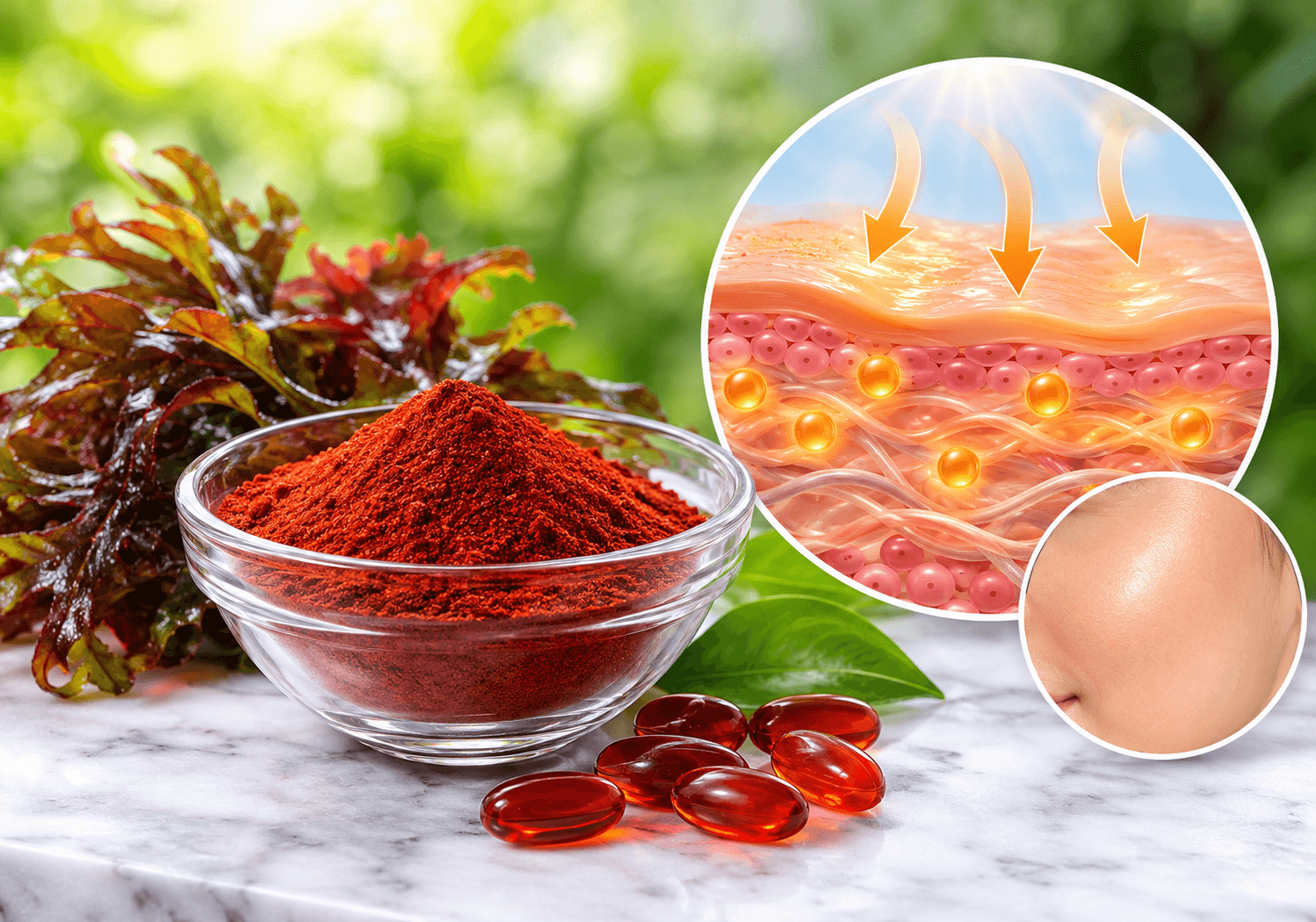
Hard workouts, outdoor miles, and daily stress build a strong body, but they also generate free radicals that wear down your skin. Adding an astaxanthin supplement for skin glow and anti aging is one of the most researched nutrition strategies to defend your skin barrier from the inside out. While topical creams only treat the outer surface, oral carotenoids travel through your bloodstream to nourish deeper dermal layers where collagen and elastin live. Because dietary supplements can interact with medications or health conditions, always check with your doctor or physical therapist before starting a new regimen.
Quick Answer: Taking a natural astaxanthin supplement for skin glow and anti aging at a daily dose of 4 mg to 12 mg may help improve skin elasticity, reduce fine wrinkles, and lock in moisture within 4 to 12 weeks. Because astaxanthin is fat-soluble, take it with a meal containing healthy fats and pair it with regular resistance training for optimal dermal circulation.
How an Astaxanthin Supplement for Skin Glow and Anti Aging Works in the Body
When you train outdoors or push through tough gym sessions, your body consumes more oxygen and produces reactive oxygen species (ROS). At the same time, ultraviolet (UV) rays from sunlight penetrate your skin and trigger enzymes that break down collagen fibers. Over time, this oxidative stress leads to dryness, rough texture, sagging, and premature fine lines.
Astaxanthin is a deep red-orange xanthophyll carotenoid produced primarily by the freshwater microalgae Haematococcus pluvialis. When these algae face harsh sunlight or nutrient shortages, they create astaxanthin as a protective shield to survive oxidative damage. When humans consume this pigment in concentrated softgel form or through marine foods like wild sockeye salmon, it accumulates in both the epidermis and dermis to provide similar cellular defense.
The Unique Cell Membrane Span of Xanthophyll Carotenoids
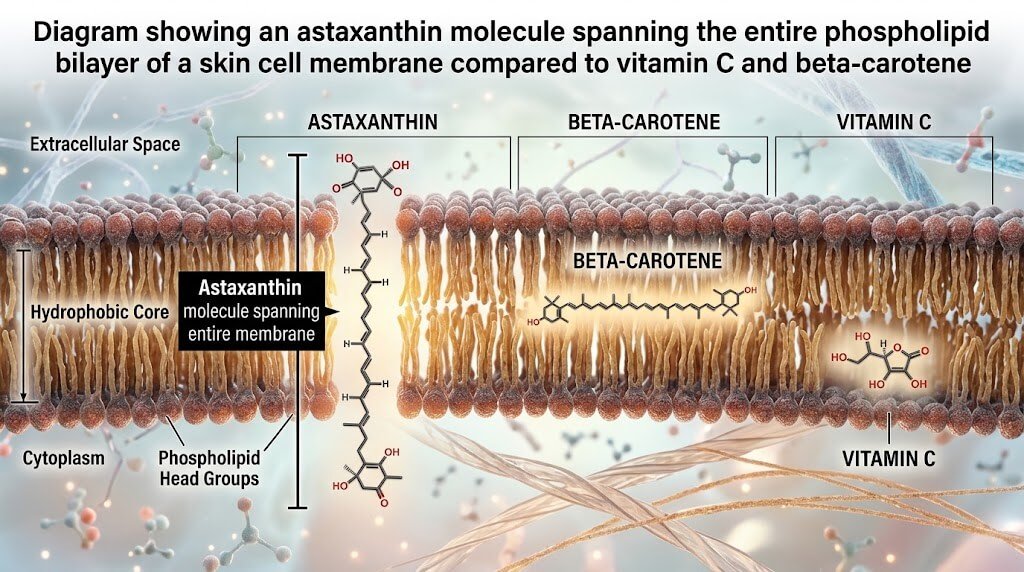
Most antioxidants work in only one part of a cell. Water-soluble antioxidants like vitamin C float in the fluid outside or inside the cell, while fat-soluble antioxidants like beta-carotene stay trapped inside the lipid core of the cell membrane.
Astaxanthin has a unique molecular structure with polar ends and a non-polar middle section. According to a comprehensive review in the journal Nutrients on astaxanthin in skin health and repair, this structure allows astaxanthin to span the entire lipid bilayer of your cell membranes from the inside to the outside. It anchors itself across the membrane like a structural beam, intercepting free radicals in both the water-loving outer layer and the fat-loving inner core without becoming a pro-oxidant itself.
Protecting Collagen and Elastin from UV and Exercise-Induced Free Radicals
Every time UV radiation hits unprotected skin, it creates singlet oxygen—an aggressive type of free radical. Singlet oxygen switches on inflammatory signals and increases the production of matrix metalloproteinases (MMPs). These MMP enzymes act like molecular scissors that chop up healthy collagen and elastin fibers in your dermis.
Research indicates that astaxanthin suppresses the activation of these collagen-degrading enzymes after UV exposure. In a randomized, double-blind, placebo-controlled trial published in Nutrients examining UV-induced skin deterioration, healthy adults who took 4 mg of astaxanthin daily for nine weeks experienced a higher minimal erythema dose (meaning their skin took longer to redden under UV light) and kept more moisture in irradiated areas compared to the placebo group. By calming the inflammatory cascade after sun exposure, the compound helps dermal fibroblasts keep producing fresh structural proteins.
Supporting Skin Moisture Retention, Elasticity, and Microcirculation
A healthy “glow” comes down to three physical factors: smooth surface texture that reflects light, deep hydration in the stratum corneum, and strong capillary blood flow delivering oxygen and nutrients. When lipid membranes in your outer skin barrier oxidize, tiny gaps form between cells, allowing water to evaporate in a process called transepidermal water loss (TEWL).
By stabilizing those cell membranes against lipid peroxidation, astaxanthin helps your skin hold onto water molecules, keeping the outer layer plump and supple. Furthermore, carotenoids contribute a subtle, warm undertone to the skin while supporting healthy red blood cell flexibility, which helps tiny capillaries carry nutrients to facial and body tissue during and after exercise.
What Clinical Research Says About Astaxanthin Dosage and Results
Supplement labels often make bold promises, which is why I teach my clients to evaluate supplement ingredients carefully by looking at human clinical trials rather than test-tube data. Over the last two decades, multiple randomized controlled trials have tested oral astaxanthin on human skin aging markers.
A 2021 systematic review and meta-analysis published in Nutrients on human skin aging analyzed data from 11 clinical trials involving oral and topical astaxanthin supplementation. The researchers concluded that oral astaxanthin supplementation significantly restored moisture content and improved skin elasticity compared to placebo groups, while showing a clear trend toward reducing wrinkle depth and skin sebum oxidation.
Key Human Trials on Wrinkle Depth, Elasticity, and Hydration
Across peer-reviewed studies, researchers consistently observe measurable changes when participants take between 4 mg and 12 mg per day over 6 to 12 weeks:
- Moisture and Texture (4 mg to 6 mg/day): Within 4 to 6 weeks, participants frequently show reduced transepidermal water loss and less flakiness on the cheeks, particularly in dry environments.
- Elasticity and Crow’s Feet (6 mg to 8 mg/day): By week 8, instrumental measurements using cutometers often show improved skin recoil and reduced fine wrinkle depth around the eyes.
- Dermal Inflammatory Protection (12 mg/day): Higher clinical doses up to 12 mg daily have been shown to inhibit age-related increases in inflammatory cytokines like interleukin-1 alpha (IL-1α) in the stratum corneum over 12 to 16 weeks.
Natural Microalgae (Haematococcus pluvialis) vs. Synthetic Astaxanthin
When shopping for a product, reading the back supplement facts panel is essential. Astaxanthin exists in two primary commercial forms: natural astaxanthin extracted from Haematococcus pluvialis microalgae, and synthetic astaxanthin produced from petrochemicals (primarily used in commercial fish feed to color farmed salmon).
According to a detailed biochemical review in Marine Drugs on astaxanthin sources and biological activities, natural astaxanthin from microalgae is predominantly esterified (attached to fatty acids), which makes it more stable and bioavailable in the human digestive tract than unesterified synthetic versions. Always verify that your bottle explicitly lists Haematococcus pluvialis extract on the ingredient label.
Bioavailability: Why Lipid-Based Softgels and Dietary Fats Matter
Because astaxanthin is a fat-soluble carotenoid, your small intestine cannot absorb it efficiently on an empty stomach with just a glass of water. It requires bile salts and pancreatic enzymes triggered by dietary fat to form micelles that pass through your intestinal wall into the lymphatic system.
Taking a dry capsule without food can cut absorption by more than half. Choose softgels suspended in a carrier oil—such as extra-virgin olive oil, MCT oil, safflower oil, or phospholipid-rich krill oil—and take your dose alongside a meal containing at least 10 to 15 grams of healthy fat, such as whole eggs, avocado, nuts, or olive oil.
Complete Astaxanthin Dosage, Timing, and Food Source Comparison Table
To help you compare daily supplemental options against whole-food marine sources, use this reference chart. Notice how eating wild seafood provides great protein and omega-3 fatty acids alongside natural astaxanthin, while concentrated softgels make it easier to hit clinical skin-health dosages every day.
| Source / Supplement Tier | Typical Serving Size | Astaxanthin Content | Best Goal / Application | Absorption & Timing Notes |
| Maintenance Softgel (H. pluvialis extract) | 1 softgel daily | 4 mg | Daily baseline antioxidant support, moisture retention, and mild UV defense for indoor workers | Take with breakfast or lunch containing 10+ g of dietary fat |
| Clinical Skin Glow Dose (H. pluvialis extract) | 1 to 2 softgels daily | 6 mg to 8 mg | Improving skin elasticity, smoothing fine lines, and supporting skin barrier recovery | Ideal for adults over 40; take with a fat-containing meal |
| High-Output Athlete Dose (H. pluvialis extract) | 1 high-potency softgel or two 6 mg softgels | 12 mg | Heavy outdoor endurance training (running, cycling, pickleball) and high UV exposure | Can split into 6 mg with breakfast and 6 mg with dinner for steady blood levels |
| Wild Sockeye Salmon (Oncorhynchus nerka) | 6 oz / 0.375 lb (170 g) cooked fillet | ~4.5 mg to 6.5 mg | Whole-food nutrition combining complete protein, omega-3s, and natural astaxanthin | Naturally occurring marine fats in the fish aid immediate absorption |
| Wild Coho or King Salmon | 6 oz / 0.375 lb (170 g) cooked fillet | ~1.5 mg to 2.5 mg | Supporting general meal quality and muscle recovery | Lower pigment density than sockeye, so pair with a 4 mg supplement if targeting skin |
| Antarctic Krill Oil Softgels | 1,000 mg to 2,000 mg krill oil | ~0.2 mg to 1.5 mg | Joint health and omega-3 phospholipid intake with a minor astaxanthin bonus | Great carrier oil, though usually requires a standalone astaxanthin softgel to hit 6 mg |
How to Apply It: Daily Protocol and Skin-Rejuvenating Strength Routine
Popping a softgel while sitting on the couch all week will only get you halfway to healthier skin. In my coaching practice, the most dramatic improvements in skin tone, firmness, and vitality happen when we combine targeted internal nutrition with structured resistance training.
Most people know lifting weights builds muscle and bone density, especially when trying to increase metabolism naturally after 40. However, landmark clinical research shows lifting weights directly remodels aging skin. In a 2023 study published in Scientific Reports on resistance training and skin aging, researchers compared aerobic training and resistance training in middle-aged women over 16 weeks. While both exercise types improved skin elasticity and upper dermal structure, only resistance training increased dermal thickness by reducing circulating inflammatory factors and stimulating dermal extracellular matrix genes like biglycan.
When you pair a daily astaxanthin supplement for skin glow and anti aging with progressive strength training, you attack skin aging from two angles: astaxanthin shields existing collagen from free radical breakdown, while heavy compound movements stimulate your dermis to grow thicker and firmer.
Step 1: Daily Supplement Timing, Meal Pairing, and Hydration Protocol
Consistency is the foundation of any nutrition habit. Because carotenoids build up gradually in your subcutaneous tissue and dermis over 4 to 8 weeks, missing three days a week will stall your results.
- Pick Your Anchor Meal: Tie your astaxanthin softgel to the meal where you consistently eat healthy fats—usually a breakfast with whole eggs and avocado, or a dinner with olive oil and salmon or steak.
- Match Dose to Your Activity Level: Start with 6 mg daily for general skin elasticity and glow. If you run, cycle, or play outdoor sports for more than 10 miles (16.1 km) a week in direct sun, step up to 8 mg to 12 mg daily.
- Hydrate for the Stratum Corneum: Astaxanthin helps seal your outer skin barrier to prevent water loss, but you still need to supply the water. Aim for at least 64 to 96 oz (1.9 to 2.8 liters) of water daily, adding electrolytes if you sweat heavily.
Coach’s Tip: Keep your astaxanthin bottle in a cool, dark cabinet away from your hot stove or sunny windowsill. Even inside a dark softgel, natural carotenoids can degrade if exposed to high heat and direct sunlight over several months. Store it right next to your coffee mugs or dinner plates in an upper cupboard so you never forget a dose.
Step 2: The 30-Minute Dermal-Vitality and Circulation Strength Routine
According to the CDC physical activity guidelines for adults, adults should perform muscle-strengthening activities targeting all major muscle groups at least two days per week, alongside 150 minutes of moderate-intensity aerobic activity. This 30-minute full-body strength routine is designed to be performed 2 to 3 times per week (for example, Monday, Wednesday, and Friday) to stimulate dermal circulation, lower systemic inflammation, and build lean muscle tone.
Workout Overview Table
| Exercise | Sets | Reps / Distance | Tempo (Down-Hold-Up) | Rest Between Sets | Suggested Starting Load |
| 1. Dumbbell Goblet Squat | 3 | 10–12 reps | 3-1-1 | 60–75 seconds | 15–35 lb (6.8–15.9 kg) |
| 2. Dumbbell Romanian Deadlift (RDL) | 3 | 10–12 reps | 3-1-1 | 60–75 seconds | 15–30 lb (6.8–13.6 kg) per hand |
| 3. Elevated Incline Push-Up (or Dumbbell Press) | 3 | 8–12 reps | 2-1-1 | 60 seconds | Bodyweight on 18 in (45.7 cm) bench, or 12–25 lb (5.4–11.3 kg) dumbbells |
| 4. Chest-Supported Dumbbell Row | 3 | 10–12 reps | 2-2-1 | 60 seconds | 12–25 lb (5.4–11.3 kg) per hand |
| 5. Heavy Farmer’s Carry | 3 | 0.05 miles / 264 ft (0.08 km / 80 m) | Steady brisk walk | 75–90 seconds | 20–40 lb (9.1–18.1 kg) per hand |
| 6. Post-Lift Zone 2 Cooldown Walk | 1 | 1.0 mile (1.6 km) | Brisk conversational pace | N/A | Bodyweight |
Step-by-Step Exercise Form Cues, Weights, and Coaching Adjustments
Follow these exact coaching cues for each movement. Notice the tempo numbers in the table above: a 3-1-1 tempo means taking 3 full seconds to lower the weight, pausing for 1 second at the bottom stretch, and taking 1 second to drive back to the top. Controlling the eccentric (lowering) phase maximizes the mechanical tension that signals tissue remodeling.
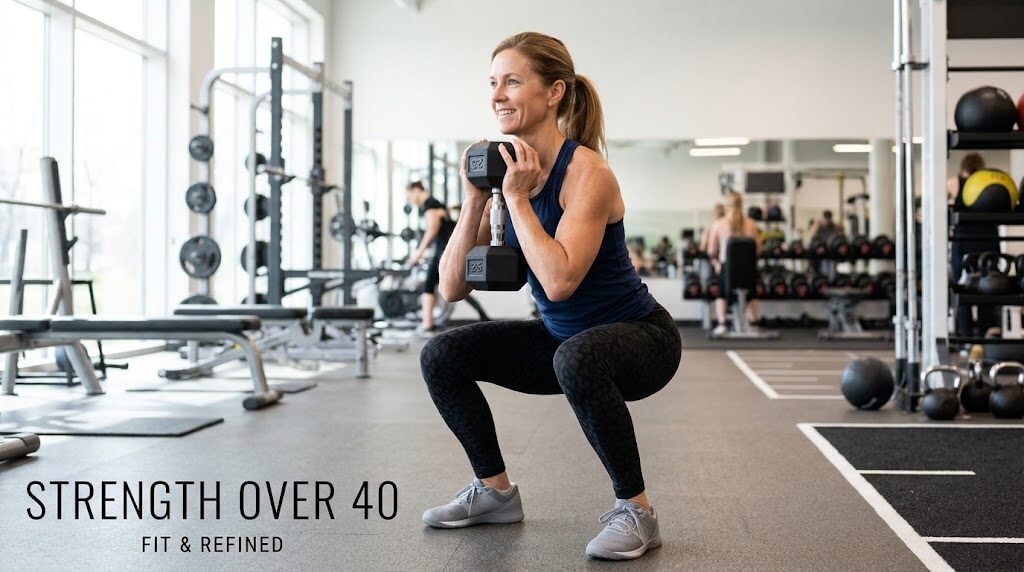
1. Dumbbell Goblet Squat
- Setup: Stand with your feet slightly wider than hip-width apart, toes turned out about 15 to 30 degrees. Hold one dumbbell vertically against your collarbone with both palms cupped under the top end of the weight, keeping it 1 inch (2.5 cm) from your chest.
- Execution: Take a breath into your belly, brace your core, and sit your hips down between your heels over a 3-second count. Keep your chest tall and knees tracking in line with your middle toes. Pause for 1 second when your thighs are parallel to the floor, then press evenly through your whole foot to stand tall.
- What It Should Feel Like: Strong engagement across the front of your thighs (quadriceps), glutes, and upper back—never sharp pinching in the front of your kneecaps or rounding in your lower spine.
2. Dumbbell Romanian Deadlift (RDL)
- Setup: Stand tall with feet hip-width apart (about 6 to 8 inches / 15.2 to 20.3 cm between your heels), holding a pair of dumbbells in front of your thighs with an overhand grip. Unlock your knees slightly to a soft 15-degree bend and freeze that knee angle.
- Execution: Push your hips straight back toward the wall behind you over a 3-second count, letting the dumbbells glide down the front of your thighs and shins (keep them within 1 inch / 2.5 cm of your legs). Stop when your torso is roughly parallel to the floor and you feel a deep stretch in your hamstrings, pause for 1 second, and drive your hips forward to stand tall.
- What It Should Feel Like: A deep, loaded stretch down the backs of your thighs and glutes, with your lats keeping your spine flat and neutral.
3. Elevated Incline Push-Up
- Setup: Place your hands slightly wider than shoulder-width apart on the edge of a sturdy flat workout bench or plyo box measuring 16 to 20 inches (40.6 to 50.8 cm) high. Step your feet back so your body forms a straight line from your head to your ankles.
- Execution: Lower your chest toward the edge of the bench over 2 seconds, keeping your elbows tucked at a 45-degree angle to your ribs (like an arrow, not a “T”). Pause 1 inch (2.5 cm) above the pad for 1 second, then press firmly back to full arm extension.
- What It Should Feel Like: Firm tension across your chest, front shoulders, triceps, and anterior core without your hips sagging toward the floor.
4. Chest-Supported Dumbbell Row
- Setup: Set an adjustable incline bench to a 30-to-45-degree angle (roughly 22 to 26 inches / 55.9 to 66 cm off the floor at the top). Straddle the bench and lie face down with your chest supported against the pad, holding a dumbbell in each hand with arms hanging straight down.
- Execution: Drive your elbows back toward your hips over 1 second, squeezing your shoulder blades together at the top for a full 2-second hold. Lower the weights slowly over 2 seconds until your shoulder blades protract slightly at the bottom.
- What It Should Feel Like: Strong muscular squeezing between your shoulder blades (rhomboids and mid-traps) and lats, promoting upright posture that enhances neck and facial aesthetics.
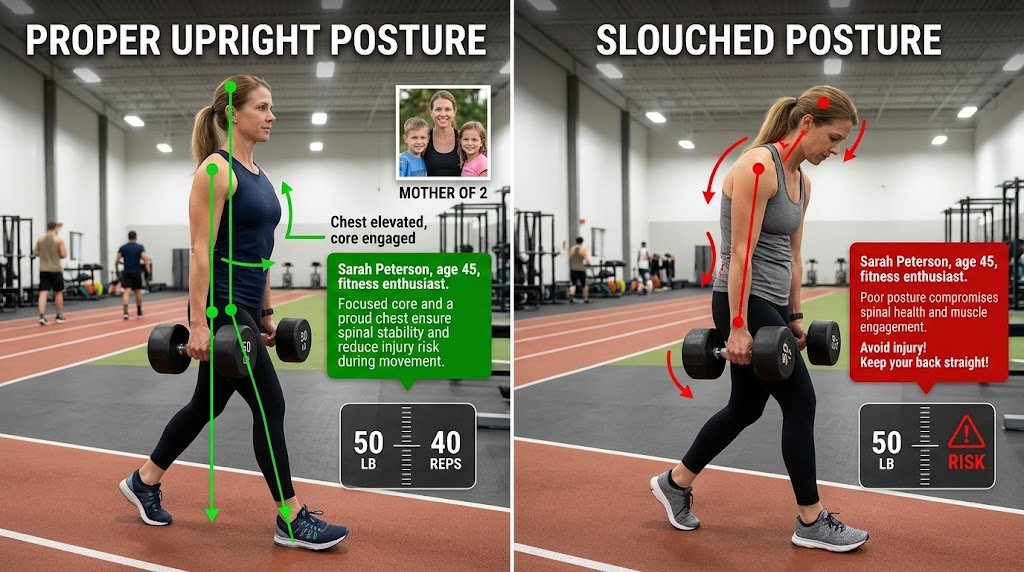
5. Heavy Farmer’s Carry
- Setup: Pick up a moderately heavy dumbbell or kettlebell in each hand—roughly 20 to 40 lb (9.1 to 18.1 kg) per hand—using a clean deadlift motion. Stand tall, pull your shoulders down away from your ears, and keep the weights about 2 inches (5.1 cm) away from the sides of your thighs so they do not bump your legs.
- Execution: Walk forward with controlled, heel-to-toe steps for a total distance of 0.05 miles / 264 feet (0.08 km / 80 meters). Breathe rhythmically through your nose or pursed lips while keeping your ribcage stacked over your pelvis.
- What It Should Feel Like: A full-body metabolic challenge that fires up your grip, forearms, upper traps, deep core stabilizers, and heart rate, driving a strong flush of oxygenated blood to your skin.
Every person starts at a different fitness level. Use these coaching modifications to match the workout to your current recovery and joint health:
- Easier Version (Regression):
- Goblet Squat: Squat down to a 16-to-18-inch (40.6-to-45.7 cm) box or chair using only bodyweight or a light 10 lb (4.5 kg) dumbbell to build confidence and depth control.
- Romanian Deadlift: Perform a Bodyweight Hip Hinge with a light PVC pipe held along your spine, or use a single 15 lb (6.8 kg) dumbbell held with both hands between your legs.
- Incline Push-Up: Raise the hand surface to a higher 30-to-36-inch (76.2-to-91.4 cm) countertop or Smith machine bar to reduce the percentage of bodyweight on your shoulders.
- Farmer’s Carry: Use 10 to 15 lb (4.5 to 6.8 kg) dumbbells and shorten the walking distance to 0.025 miles / 132 feet (0.04 km / 40 meters) per set.
- Harder Version (Progression):
- Goblet Squat: Progress to a Heavy Front-Racked Double Kettlebell Squat with two 25 to 35 lb (11.3 to 15.9 kg) kettlebells, or add a 3-second pause at the bottom of every rep with a 45 to 60 lb (20.4 to 27.2 kg) dumbbell.
- Romanian Deadlift: Perform a Single-Leg Kickstand Dumbbell RDL with 25 to 40 lb (11.3 to 18.1 kg) per hand, placing 85% of your weight on the front working leg.
- Incline Push-Up: Lower your hands to the floor for strict full push-ups, or perform Flat Dumbbell Chest Presses with 30 to 45 lb (13.6 to 20.4 kg) dumbbells.
- Farmer’s Carry: Increase the load to 45 to 60 lb (20.4 to 27.2 kg) per hand and walk 0.075 miles / 396 feet (0.12 km / 120 meters) without setting the weights down.
Common Mistake: Taking giant doses of antioxidants immediately before or after your lifting session. While moderate daily astaxanthin (4 mg to 12 mg) supports recovery, megadosing isolated antioxidants right around your workout window can sometimes blunt the natural cellular signaling that tells your muscles and skin to adapt. Take your astaxanthin softgel with a meal at least 2 to 3 hours away from your strength workout for the best of both worlds.
Safety Notes, Side Effects, and Who Should Be Careful
Natural astaxanthin derived from Haematococcus pluvialis has an excellent safety record in human clinical trials, with the U.S. Food and Drug Administration (FDA) granting it Generally Recognized as Safe (GRAS) status at typical supplemental intakes up to 12 mg per day. Furthermore, extensive reviews from the National Center for Complementary and Integrative Health (NIH) on antioxidants emphasize that while dietary antioxidants are generally safe in standard amounts, high-dose supplements can interact with certain medications and should be used mindfully.
Potential Side Effects and Interactions
Even natural marine compounds can cause mild side effects or interactions in certain individuals:
- Harmless Pigmentation Changes: At higher doses (12 mg or more daily), astaxanthin can temporarily turn your stool a slight reddish-orange color. Unlike excessive beta-carotene—which frequently turns palms and soles bright orange (carotenodermia)—astaxanthin rarely causes unpleasant orange tinting at standard 4 mg to 8 mg doses.
- Increased Bowel Motility: Taking lipid-based softgels on an empty stomach can occasionally cause mild stomach cramping or more frequent bowel movements. Taking your dose mid-meal resolves this for most people.
- Blood Pressure and Blood Sugar Medications: Preliminary research suggests astaxanthin may modestly support vascular relaxation and glucose metabolism. If you take prescription antihypertensives or blood-sugar-lowering medications, monitor your readings closely with your physician.
- Hormone-Sensitive Conditions and Blood Thinners: Some laboratory studies suggest high concentrations of astaxanthin may weakly influence 5-alpha-reductase enzymes or platelet aggregation. Anyone taking anticoagulant drugs, individuals with hormone-sensitive conditions, and women who are pregnant or breastfeeding should consult a physician before supplementing.
- Seafood or Algae Allergies: If your astaxanthin softgel uses krill oil or fish gelatin as a carrier or capsule shell, avoid it if you have a shellfish or fish allergy. Choose a vegan softgel made with tapioca starch or plant cellulose suspended in olive or safflower oil instead.
How to Check Supplement Quality and Third-Party Testing
Because the FDA does not pre-approve dietary supplements for potency before they hit store shelves, oxidation and under-dosing are real risks with carotenoid supplements. If air leaks into a poorly manufactured capsule, the astaxanthin oxidizes and loses its antioxidant punch before you ever swallow it.
Look for products that carry independent verification seals from organizations like USP (United States Pharmacopeia), NSF International, or ConsumerLab, or ask the manufacturer for a Certificate of Analysis (COA) verifying heavy metal testing and exact milligram potency. Additionally, prefer opaque blister packs or dark amber glass bottles over clear plastic jars that let light degrade the softgels.
Related Coaching Tips to Maximize Your Astaxanthin Supplement for Skin Glow and Anti Aging
Taking an astaxanthin supplement for skin glow and anti aging works best when it is part of a broader recovery lifestyle. Think of astaxanthin as the defensive line protecting your skin cells from damage; you still need raw building blocks and healthy hormonal rhythms to rebuild fresh tissue every night.
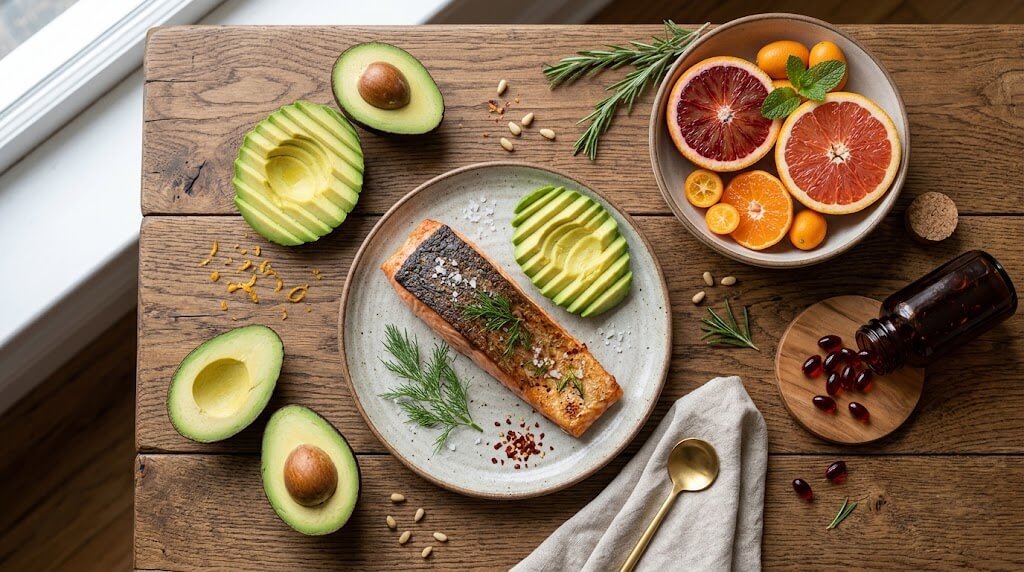
Pairing Astaxanthin with Collagen-Building Protein and Vitamin C
Astaxanthin shields existing collagen fibers from destructive MMP enzymes, but it does not contain amino acids. To synthesize new dermal collagen and elastin, your fibroblasts need a steady supply of glycine, proline, hydroxyproline, and vitamin C.
Make sure you hit your daily protein intake for metabolism and tissue repair—typically 0.7 to 1.0 grams of protein per pound (1.6 to 2.2 g/kg) of body weight for active adults. Pair your protein sources with vitamin C-rich foods like bell peppers, kiwi, strawberries, or broccoli, as vitamin C is a mandatory cofactor for cross-linking collagen fibers into a strong dermal mesh. You can also stack oral astaxanthin with 10 to 15 grams of hydrolyzed collagen peptides and nutrients that support energy metabolism, such as B-vitamins and coenzyme Q10.
Managing Cortisol, Sleep Quality, and Glycation from Excess Sugar
Two internal lifestyle factors age skin just as fast as sunlight: chronic sleep deprivation and high blood sugar. When you skimp on deep sleep, your evening cortisol stays elevated and your夜间 growth hormone pulse drops, starving your skin of its primary overnight repair window. Understanding how sleep affects hormonal recovery and focusing on managing cortisol and oxidative stress will noticeably reduce under-eye puffiness and dullness within weeks.
At the same time, frequent blood sugar spikes from refined carbohydrates trigger a process called glycation. Excess glucose molecules bind directly to collagen and elastin fibers, forming Advanced Glycation End-products (AGEs) that make skin stiff, brittle, and yellow-toned. Learning how to stop sugar cravings naturally and incorporating dietary polyphenols—such as antioxidants like green tea extract—helps protect your dermal proteins from both glycation and oxidative cross-linking.
Outdoor Training Sun Protection Habits
A common misconception in outdoor fitness circles is thinking an oral carotenoid acts as a complete replacement for topical sunscreen. While clinical trials confirm that astaxanthin increases your skin’s baseline resistance to UV redness from the inside, it does not block 100% of UVA and UVB photons hitting your epidermis.
According to the National Institute of Environmental Health Sciences (NIH) on UV radiation, prolonged exposure to solar UV radiation remains the primary environmental driver of premature skin aging and skin damage. When you head out for a 3-to-5-mile (4.8-to-8.0 km) run, bike ride, or outdoor pickleball match, use your daily astaxanthin softgel as your internal cellular backup alongside broad-spectrum SPF 30+ sunscreen, UV-blocking sunglasses, and a breathable moisture-wicking hat.
Frequently Asked Questions (FAQ)
How long does it take for astaxanthin to improve skin glow?
Most clinical trials show measurable improvements in skin moisture retention and surface smoothness within 4 to 6 weeks of daily supplementation. Deeper structural changes, such as improved skin elasticity and reduced fine wrinkle depth around the eyes, typically take 8 to 12 weeks as the carotenoid accumulates in dermal tissue.
What is the best daily dosage of astaxanthin for anti-aging?
Human studies indicate that 4 mg to 12 mg per day of natural astaxanthin from Haematococcus pluvialis is the effective range for skin health. A daily dose of 6 mg to 8 mg is ideal for general elasticity and hydration, while 12 mg suits outdoor athletes with high UV exposure.
Does astaxanthin protect skin from sun damage during outdoor workouts?
Yes, research suggests oral astaxanthin helps increase your skin’s minimal erythema dose, meaning it takes slightly more UV exposure to trigger sunburn redness. However, it works as an internal antioxidant buffer against free radicals rather than a physical sunblock, so you should still wear topical broad-spectrum SPF outdoors.
Should you take astaxanthin with food or on an empty stomach?
Always take astaxanthin with a meal that contains healthy dietary fats, such as eggs, avocado, olive oil, nuts, or fatty fish. Because astaxanthin is a lipid-soluble carotenoid, taking it with dietary fat stimulates bile secretion and improves intestinal absorption by more than twofold compared to taking it fasting.
Can astaxanthin change your skin tone or give you a natural glow?
At clinical doses of 4 mg to 8 mg daily, astaxanthin provides a subtle, healthy warmth and radiance by improving microcirculation, moisture retention, and light reflection without turning your skin bright orange. Unlike high-dose beta-carotene, it rarely causes unnatural yellowing on the palms of your hands or soles of your feet.
Can you combine astaxanthin with collagen and vitamin C?
Yes, combining astaxanthin with hydrolyzed collagen peptides and vitamin C is one of the most effective stacks for skin aging. One clinical study found that pairing astaxanthin with collagen hydrolysate improved skin elasticity and barrier integrity while reducing collagen-degrading MMP enzymes more effectively than placebo.
Conclusion: Building a Sustainable Routine with an Astaxanthin Supplement for Skin Glow and Anti Aging
Choosing to use an astaxanthin supplement for skin glow and anti aging is a smart, evidence-based way to support your skin against the daily wear and tear of UV rays and exercise-induced oxidative stress. Unlike fleeting cosmetic trends, natural astaxanthin from Haematococcus pluvialis is backed by multiple randomized human trials demonstrating measurable support for skin hydration, elasticity, and wrinkle defense.
To get the best return on your investment, keep your approach simple and consistent. Take 6 mg to 12 mg of a third-party tested, oil-suspended astaxanthin softgel every day alongside a fat-containing meal, drink plenty of water, and commit to 2 to 3 days a week of progressive strength training to stimulate dermal thickness and circulation from beneath the surface. Give your body 8 to 12 weeks of steady habits, and your skin and muscles will reflect the work you put in.