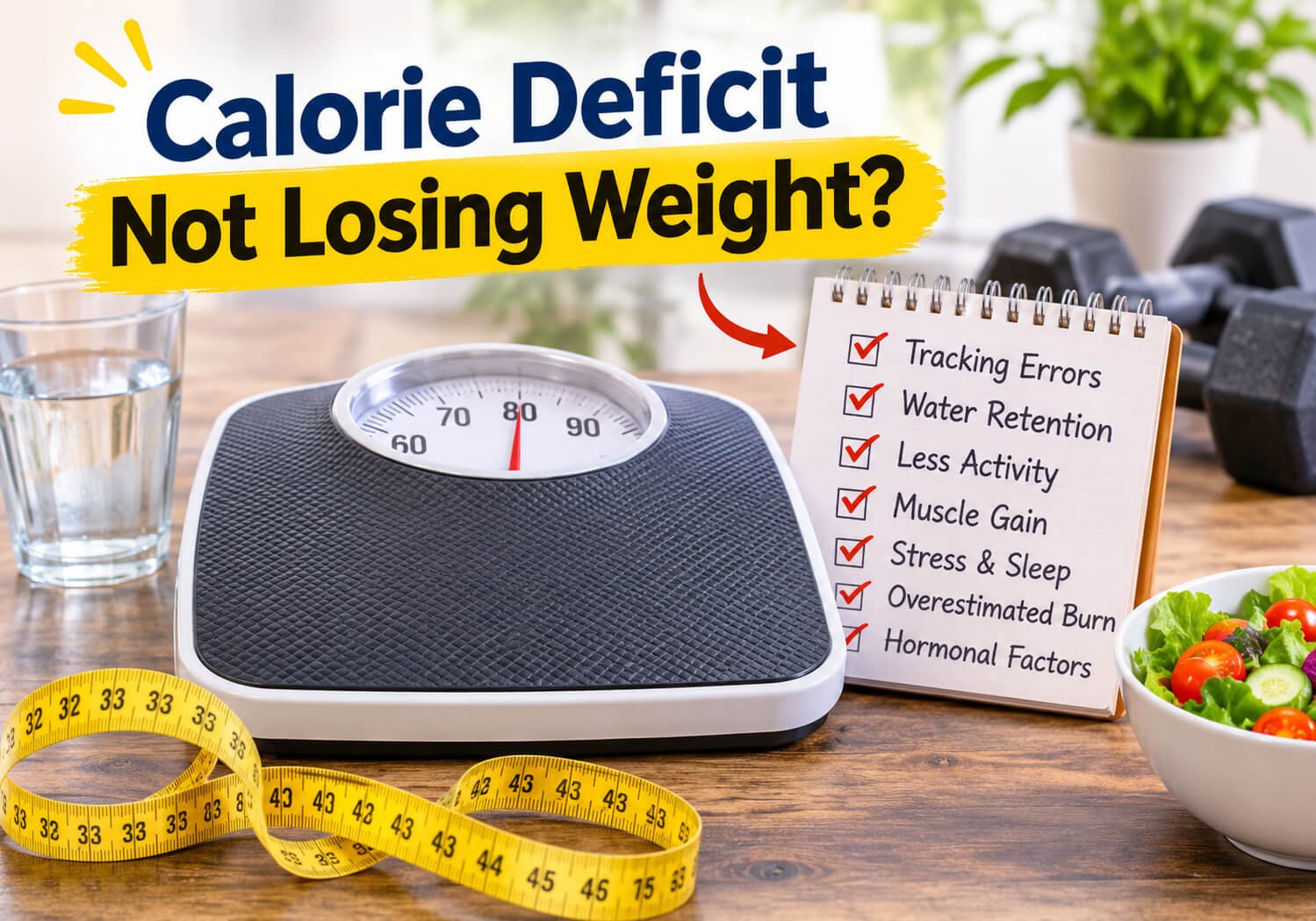
If you are stuck in a calorie deficit not losing weight, you are not alone. It is one of the most frustrating hurdles in any body transformation journey. You calculate your targets, track your meals, skip the treats, and step on the scale every morning expecting progress, only to watch the numbers stay completely flat.
Before assuming your metabolism is permanently damaged, understand that energy balance is dynamic. Human physiology continuously adjusts to energy intake, physical movement, stress, and sleep. When the scale refuses to move despite your effort, specific underlying variables are almost always interrupting your progress.
Quick Answer
If you are in a calorie deficit not losing weight, the most common causes are invisible tracking errors, temporary water retention masking fat loss, or a drop in daily non-exercise activity (NEAT). True fat loss requires a sustained net energy deficit over several weeks. Adjusting food measurement, managing stress, prioritizing sleep, and tracking weekly averages rather than daily scale shifts typically breaks the plateau.
1. Tracking Accuracy: Invisible Energy Intake
The primary reason for a calorie deficit not losing weight comes down to measurement accuracy. Energy balance follows the laws of thermodynamics: energy cannot be created or destroyed. However, calculating incoming energy accurately is far harder than most people realize.
Unmeasured Oils, Sauces, and Condiments
Cooking oils, salad dressings, and savory sauces carry high energy density. A single unmeasured tablespoon of olive oil adds roughly 120 calories to a meal. If you cook two meals a day using unmeasured splashes of cooking spray or butter, you can easily introduce 200 to 400 unaccounted calories. Over a week, this added energy can completely offset a standard daily deficit of 300 to 500 calories.
Estimating Volume vs. Weighing Mass
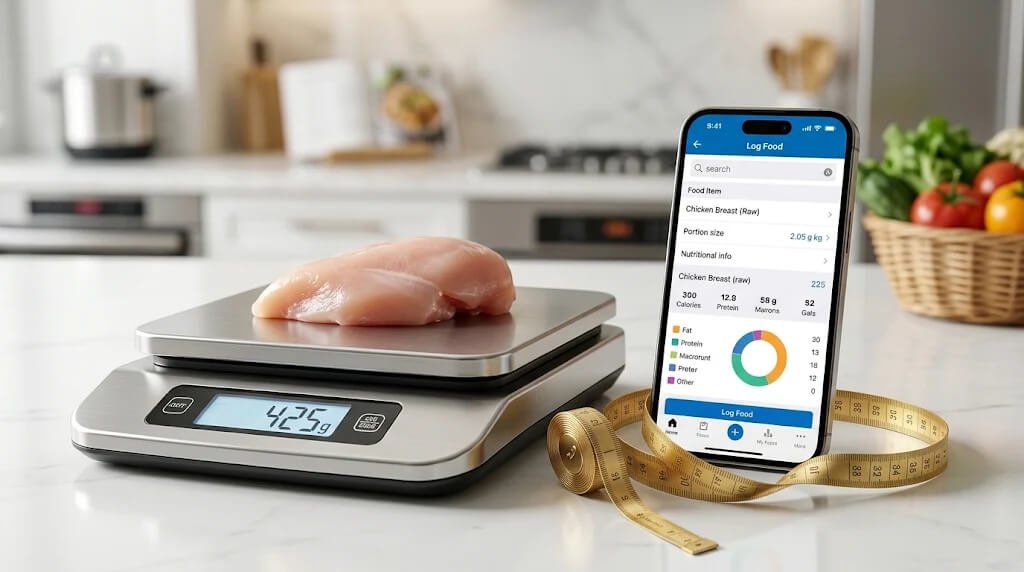
Measuring foods using volumetric tools like cups and spoons introduces significant error margins. A cup of raw oats or peanut butter measured by volume can vary in weight by up to 20% depending on how tightly packed the food is.
Using a digital kitchen scale measuring in grams ensures absolute precision. Weighing raw meat, cooked grains, nuts, and baking ingredients eliminates guessing and brings true intake back into line with your target calculations. Research published in the International Journal of Obesity shows that individuals frequently underreport energy intake by 30% to 50%, even when actively attempting to track meals.
Weekend Blurs and Nibbling
Strictly adhering to a target intake from Monday through Thursday while remaining unmeasured from Friday evening through Sunday often cancels out the weekday energy shortfall. A single high-energy weekend meal paired with caloric beverages can erase a 2,000-calorie cumulative deficit built across four days.
2. Water Retention Masking Fat Loss
Fat loss and scale weight loss do not occur in a synchronized, linear line. It is entirely possible to lose body fat while your scale weight stays unchanged or even increases temporarily due to fluid dynamics.
High Cortisol and Fluid Balance
A prolonged energy shortage, intense training, and low sleep elevate systemic cortisol levels. Elevated cortisol acts on the kidneys to increase sodium and fluid retention. The physiological fat has been metabolized, but the weight of the retained fluid fills the void inside adipocytes (fat cells), maintaining net tissue volume on the scale.
When stress decreases—often after a dedicated rest day, a higher-carbohydrate refeed, or a solid night of sleep—cortisol drops, triggering a rapid release of retained fluid. This phenomenon, often called a “whoosh effect,” results in a sudden drop on the scale overnight.
Sodium Spikes and Glycogen Replenishment
Consuming a meal with higher sodium content causes temporary fluid accumulation. For every gram of stored glycogen in liver and muscle tissue, the body retains roughly 3 to 4 grams of water. If you eat a meal higher in carbohydrates after several days of lower-carbohydrate eating, your glycogen reserves store that energy along with accompanying fluid. This raises scale weight without adding any body fat.
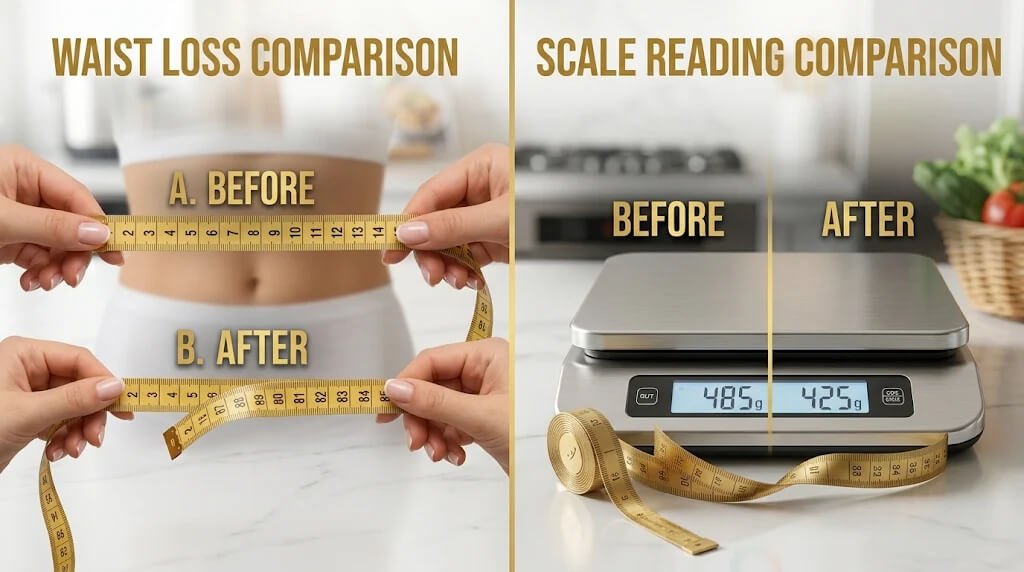
Coach’s Tip: Stop relying solely on the bathroom scale to evaluate progress. Take high-lighting progress photos every two weeks, track waist circumference with a flexible tape measure, and evaluate how your clothes fit over your hips and midsection. If your waist measurement shrinks while the scale stays flat, you are actively losing fat and holding fluid.
3. Metabolic Adaptation and NEAT Drops
As you drop body mass, your energy expenditure shifts. The body operates to protect energy reserves and prevent starvational weight loss.
Reductions in Basal Metabolic Rate (BMR)
A smaller body requires less energy to sustain daily organ function, cellular repair, and basic circulation. If you drop from 200 lb (90.7 kg) to 180 lb (81.6 kg), your baseline energy requirement drops automatically because you have less total mass to maintain. Continuing to consume the exact calorie target calculated for your starting weight will shrink your net deficit over time.
The Unconscious Drop in NEAT
Non-Exercise Activity Thermogenesis (NEAT) includes all movement performed outside of deliberate sport or workouts: fidgeting, standing, walking, posturing, and general daily chores. When operating in an energy deficit, your central nervous system sub-consciously reduces NEAT to preserve energy.
- You sit down instead of standing while talking on the phone.
- You take elevators instead of stairs.
- Your general fidgeting and daily foot tapping slow down significantly.
According to research from the American Journal of Clinical Nutrition, changes in NEAT vary widely between individuals and can account for variations of up to 500 to 800 calories in daily energy expenditure during weight management phases. This sharp drop in movement can eliminate your calculated deficit entirely.
4. Muscle Gain and Body Recomposition
When combining a structured resistance training program with adequate protein intake, you can experience body recomposition: simultaneous muscle tissue synthesis and fat tissue oxidation.
The Density Difference
Muscle tissue is significantly denser than adipose (fat) tissue. One pound of muscle occupies roughly 18% less volume than one pound of fat. If you gain 3 lb (1.36 kg) of lean muscle mass while losing 3 lb (1.36 kg) of body fat, your net scale weight remains unchanged, yet your physical physique transforms completely.
To optimize muscle retention while optimizing your metabolic baseline, prioritizing high-quality daily protein is essential. Learning how protein intake affects metabolism and weight loss can help you maintain lean mass while staying in an energy shortfall.
5. Chronic Stress and Sleep Deprivation
Weight loss management is governed by hormonal signaling, not just physical activity. Chronic psychological stress and inadequate sleep alter key physiological pathways that control appetite and fluid storage
Hormonal Impairment
Short sleep durations (under 7 hours per night) alter the hunger-regulating hormones leptin and ghrelin. Leptin (which signals fullness) drops, while ghrelin (which triggers hunger) rises. This hormonal shift dramatically increases cravings for hyper-palatable, calorie-dense foods, making strict intake tracking much more difficult.
Furthermore, sleep deprivation alters glucose tolerance and insulin sensitivity, promoting fatigue that drives your NEAT levels down even further.
To explore this hormonal balance in detail, review our guide on how sleep affects metabolism and weight management.
6. Overestimating Exercise Energy Burn
Fitness trackers, smartwatch algorithms, and cardio machine consoles frequently overestimate calories burned during workouts by 20% to 40%.
Burn Overestimation Errors
If your smartwatch claims your 45-minute weightlifting session burned 500 calories, and you add those 500 calories back into your daily food intake, you will likely overshoot your real maintenance intake.
- Weightlifting primarily burns energy in short work bursts, consuming far less total energy than continuous cardio.
- Trackers often count your baseline metabolic rate during the exercise hour on top of the exercise expenditure, counting those baseline calories twice.
Compensation Eating
Hard workouts often trigger increased hunger. Athletes frequently reward intense training sessions with larger meal portions or high-energy snacks under the assumption that they burned a massive amount of fuel. If this compensation exceeds your real expenditure, your calorie deficit not losing weight issue will persist.
7. Medical and Hormonal Factors
If measurement accuracy, activity levels, sleep, and stress are controlled, specific physiological conditions may affect metabolic expenditure.
Thyroid and Hormonal Considerations
- Hypothyroidism: Suboptimal production of thyroid hormones (T3 and T4) lowers overall basal metabolic rate, reducing total daily energy needs.
- Polycystic Ovary Syndrome (PCOS): Can impair insulin sensitivity, altering how body tissues store and utilize metabolic substrates.
- Perimenopause and Menopause: Shifts in estrogen levels influence body fat distribution and can lower lean tissue mass, reducing baseline daily burn.
If you suspect underlying medical factors are affecting your progress, consult a physician or endocrinologist for comprehensive blood testing.

Diagnostic Checklist: Finding Your Weight Loss Bottleneck
Before altering your intake or adding hours of cardio, run through this diagnostic decision matrix to isolate the issue precisely.
Common Mistakes to Avoid
Common Mistake: Dropping Calories Too Low Immediately
When faced with a plateau, many people react by slashing intake down to 1,000 calories or performing excessive daily cardio. This drastic reduction triggers severe fatigue, spikes cortisol, causes lean muscle loss, and causes NEAT to drop sharply. Always make conservative, measured adjustments of 100 to 200 calories per day, or add 1,500 to 2,000 daily steps before implementing extreme diet cuts.
Step-by-Step Fixes to Break Your Weight Loss Plateau
Follow this progressive protocol to re-establish a true energy shortfall and get your scale moving again.
Step 1: Perform a 7-Day Food Audit
Weigh everything you consume on a digital scale for seven full days, including condiments, oils, beverages, and bite-sized snacks. Log everything in grams in a reliable nutrition tracker. Do not eat out at restaurants during this 7-day audit window, as commercial kitchens use high amounts of unmeasured cooking oils and butter.
Step 2: Establish a NEAT Step Floor
Prevent your unconscious movement from dropping by setting a mandatory daily step target using a simple pedometer or pedometer app.
- Baseline Target: 8,000 to 10,000 steps per day.
- If your average step count currently sits at 4,000, increase your baseline goal by 1,500 steps daily until progress resumes.
Step 3: Train for Muscle Retention
Maintain a structured strength routine 3 to 4 days per week using major compound movements (squats, deadlifts, presses, rows). Lifting weights signals your body to retain muscle mass while deriving needed energy from body fat stores.
Step 4: Normalize Sleep Schedules
Establish a dark, quiet sleep environment set to approximately 65°F to 68°F (18°C to 20°C). Aim for 7 to 9 hours of quality sleep per night to lower systemic stress hormones and stabilize appetite signals.
Step 5: Implement Small Energy Adjustments
If scale averages and physical circumference measurements remain flat after three consecutive weeks of verified tracking, reduce your daily target intake by 100 to 200 calories, or increase daily expenditure slightly through low-impact movement.
For additional evidence-based strategies on boosting baseline metabolism without extreme restriction, check our coach’s guide on how to increase metabolism naturally for weight loss.
Workout Routine: Metabolic Preservation Program
This 3-day full-body workout routine maximizes muscle retention and elevates post-exercise energy consumption without generating excessive cortisol stress.

Weekly Schedule
- Monday: Workout A
- Wednesday: Workout B
- Friday: Workout C
- Tuesday/Thursday/Saturday: Light active recovery (stretching, 30-minute walk)
- Sunday: Complete rest
Program Table
| Exercise | Target Muscle Groups | Sets | Reps | Rest Time | Guidance |
| Dumbbell Goblet Squat | Quadriceps, Glutes, Core | 3 | 8-10 | 90 sec | Keep chest upright, sit hips back |
| Dumbbell Romanian Deadlift | Hamstrings, Glutes, Lower Back | 3 | 10-12 | 90 sec | Hinge at hips, maintain flat spine |
| Push-Ups (or Incline Push-Ups) | Chest, Shoulders, Triceps | 3 | 8-12 | 60 sec | Core tight, elbows angled at 45 degrees |
| Single-Arm Dumbbell Row | Latissimus Dorsi, Upper Back | 3 | 10-12 | 60 sec | Pull dumbbell toward hip, squeeze upper back |
| Plank Hold | Rectus Abdominis, Core | 3 | 30-45 sec | 45 sec | Squeeze glutes, maintain straight body line |
Exercise Regressions & Progressions
- Dumbbell Goblet Squat:
- Regression: Bodyweight Box Squat to a 16-inch (40-cm) seat.
- Progression: Barbell Back Squat carrying 70% body weight.
- Push-Ups:
- Regression: Hands-Elevated Push-Ups against a sturdy bench or wall.
- Progression: Feet-Elevated Push-Ups or Weighted Vest Push-Ups.
Frequently Asked Questions
Why am I in a calorie deficit and not losing weight?
You are likely experiencing unmeasured energy intake (untracked oils, portions, or snacks), temporary water retention from elevated cortisol or sodium, or a drop in non-exercise movement (NEAT). True fat loss cannot occur without a real net energy shortfall over time.
How long can a weight loss plateau last?
A true weight loss plateau is defined as four consecutive weeks without any movement in scale weight, body measurements, or physical progress photos. Short fluctuations lasting 7 to 14 days are typically caused by fluid shifts, digestive contents, or hormonal variations rather than stalled fat loss.
Am I underestimating my calorie intake?
Statistically, most people undercount daily intake by 30% to 50%. Common errors include estimating volume instead of weighing foods in grams, omitting cooking oils, salad dressings, and coffee creamer, and leaving weekend meals unlogged. Using a digital kitchen scale fixes this issue quickly.
Can high stress stop weight loss in a deficit?
Yes. Chronic stress elevates cortisol levels, causing your body to retain fluid that masks fat loss on the scale. High stress also disrupts sleep and increases cravings for hyper-palatable foods, making strict intake tracking much more difficult to sustain.
Why is the scale not moving if my clothes fit better?
If your clothes are fitting looser around your waist and hips while your scale weight stays constant, you are experiencing body recomposition. You are losing body fat while gaining or preserving lean muscle tissue, which is an ideal physical result.
How do I fix a weight loss plateau naturally?
Start by weighing all your food on a digital scale for seven days to verify your true intake. Establish a consistent daily step count (e.g., 8,000+ steps) to prevent NEAT from dropping, prioritize 7 to 9 hours of sleep, and reduce daily intake by 100 to 150 calories if progress remains stalled after three weeks.
Conclusion
Avoid dropping your calories to extreme lows or punishing yourself with hours of extra cardio. Instead, conduct an honest food-tracking audit with a digital kitchen scale, lock in your daily step baseline, protect your sleep, and track multi-week trends rather than daily scale shifts. Consistent, accurate tracking paired with smart lifestyle management will break the plateau and get your fat loss journey back on track.
Finding yourself stuck in a calorie deficit not losing weight can be frustrating, but it is a solvable balance puzzle. Human physiology always complies with energy constraints over time. When progress stalls, the issue is almost always hidden intake, masking water retention, or an unconscious drop in daily movement.