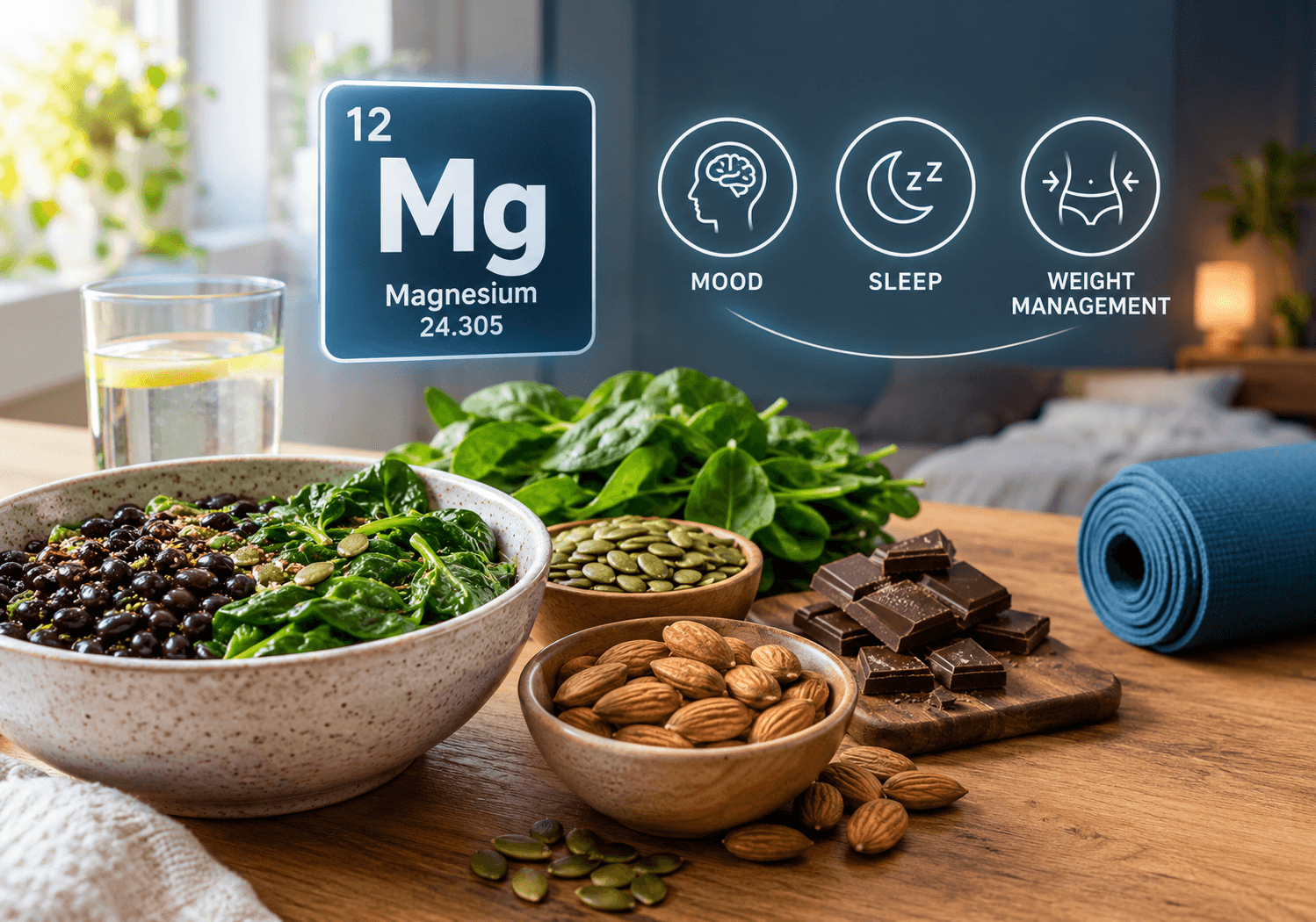
If you have been struggling with unexplained fatigue, late-night cravings, or persistent irritability, you might be asking: can magnesium deficiency affect mood, sleep and weight management? The short answer is yes. Magnesium is a critical mineral involved in over 300 biochemical reactions in your body. When your levels drop, the ripple effects can directly sabotage your fitness goals, disrupt your rest, and negatively alter your emotional baseline.
As a strength and conditioning coach, I frequently see clients who are doing everything right in the gym and the kitchen, yet they still feel sluggish and hold onto stubborn weight. Often, the missing piece is not more cardio or fewer calories, but a foundational nutrient deficit. Understanding how this mineral works gives you a powerful, evidence-based tool to optimize your health. This guide breaks down the science and provides a practical, actionable plan to help you thrive.
Quick Answer
Yes, magnesium deficiency can negatively impact mood, sleep, and weight management. Low magnesium disrupts GABA receptors (increasing anxiety), reduces melatonin production (hurting sleep), and impairs insulin sensitivity (promoting fat storage). Correcting this through diet, targeted supplementation, and stress-reducing exercise can restore balance and support your health goals.
The Science: Can Magnesium Deficiency Affect Mood, Sleep and Weight Management?
To understand the impact of this mineral, we must look at how it functions at a cellular level. Magnesium acts as a cofactor for enzymes that regulate neurotransmitter function, muscle contraction, and glucose metabolism. When you do not get enough, your body struggles to perform these basic tasks efficiently.
According to the National Institutes of Health (NIH), a significant portion of the population does not meet the recommended daily allowance for magnesium. This shortfall is often linked to modern diets high in processed foods and low in whole, nutrient-dense plants.
Impact on Mood and the Nervous System
Magnesium plays a vital role in regulating the hypothalamic-pituitary-adrenal (HPA) axis, which is your body’s central stress response system. It helps bind to gamma-aminobutyric acid (GABA) receptors in the brain. GABA is a neurotransmitter that calms nerve activity.
When magnesium levels are low, GABA activity decreases. This can lead to a heightened state of nervous system arousal. Research published in the Journal of the American College of Nutrition suggests that low magnesium intake is correlated with higher levels of anxiety and depressive symptoms. You may feel easily irritated, mentally fatigued, or unable to unwind after a stressful day.
Impact on Sleep Quality
Sleep is when your body repairs muscle tissue and regulates metabolic hormones. Magnesium is directly involved in the production of melatonin, the hormone that controls your sleep-wake cycle. It also helps relax skeletal muscles and quiet the nervous system, preparing the body for deep, restorative rest.
A study highlighted by Harvard Health notes that magnesium supplementation can improve subjective measures of insomnia, such as sleep efficiency and early morning awakening. Without adequate magnesium, you may experience restless legs, frequent nighttime awakenings, or a feeling of being unrefreshed despite spending eight hours in bed. Poor sleep directly ties into how sleep affects metabolism and weight management, creating a vicious cycle of fatigue and weight gain.
Impact on Weight Management
The connection between magnesium and body composition is rooted in metabolic function. Magnesium is essential for proper insulin signaling. Insulin is the hormone responsible for shuttling glucose from your bloodstream into your cells for energy.
When you are deficient, your cells become less responsive to insulin, a condition known as insulin resistance. The NIH PMC database indicates that low magnesium status is strongly associated with metabolic syndrome and increased visceral fat storage. Furthermore, poor sleep and high stress (both exacerbated by low magnesium) elevate cortisol. High cortisol drives cravings for high-sugar, high-fat foods, making weight management exceptionally difficult. Understanding what affects metabolism and body weight requires looking at micronutrients like magnesium, not just macronutrients.
Magnesium Deficiency: Signs and Optimal Levels
Recognizing the signs of a shortfall is the first step toward correction. The table below outlines common symptoms alongside the physiological reasons they occur.
| Symptom Category | Common Signs | Physiological Reason |
| Mood & Neurological | Irritability, anxiety, brain fog, mild depression. | Reduced GABA activity and HPA axis dysregulation. |
| Sleep & Recovery | Difficulty falling asleep, restless legs, waking up tired. | Impaired melatonin production and poor muscle relaxation. |
| Physical & Metabolic | Muscle cramps, eye twitches, sugar cravings, stubborn belly fat. | Poor electrolyte balance, insulin resistance, and elevated cortisol. |
| Optimal Intake | Adult men: 400–420 mg/day. Adult women: 310–320 mg/day. | Required to support over 300 enzymatic reactions daily. |
Note: Blood tests for magnesium (serum magnesium) are not always accurate, as only 1% of the body’s magnesium is in the blood. The rest is in bones and cells. Doctors often rely on symptom presentation and dietary history.
How to Apply It: A Coach’s Practical Action Plan
Knowing the science is only half the battle. As a coach, I believe in actionable steps. Below is a comprehensive, practical routine designed to naturally boost your magnesium levels, improve sleep, and support healthy weight management. This plan combines targeted movement, nutritional strategies, and evening wind-down habits.
1. The “Metabolic Reset” Evening Workout Routine
Intense late-night workouts can spike cortisol and ruin sleep. Instead, this routine focuses on gentle resistance training and mobility to improve insulin sensitivity and promote relaxation. Perform this 2 to 3 times per week, ideally 2 to 3 hours before bed.
| Exercise | Sets | Reps | Rest | Tempo | Primary Focus |
| Goblet Squat | 3 | 10–12 | 60 sec | 3-1-2 | Lower body strength, controlled breathing |
| Incline Dumbbell Row | 3 | 10 per side | 60 sec | 2-1-2 | Upper back posture, spinal alignment |
| Glute Bridge | 3 | 15 | 45 sec | 2-1-2 | Posterior chain activation, pelvic stability |
| Supine Figure-Four Stretch | 2 | 30 sec/side | 30 sec | N/A | Hip mobility, parasympathetic nervous system activation |

Exercise Form Cues and Progressions
Goblet Squat
Hold a 15 lb (6.8 kg) dumbbell vertically against your chest with both hands. Stand with feet shoulder-width apart. Push your hips back and bend your knees, keeping your chest up. Lower until your thighs are parallel to the floor, then drive through your heels to stand.
Regression: Sit-to-stand from a sturdy chair (18 inches / 45 cm high) without weight.
Progression: Increase weight to a 25 lb (11.3 kg) kettlebell or dumbbell, adding a 1-second pause at the bottom.
Incline Dumbbell Row
Place one knee and one hand on a flat bench (approx. 18 inches / 45 cm high). Hold a 10 lb (4.5 kg) dumbbell in the free hand. Keep your back flat and core braced. Pull the dumbbell up toward your hip, squeezing your shoulder blade. Lower with control.
Regression: Perform the movement standing, bracing your free hand against a wall.
Progression: Use a 20 lb (9 kg) dumbbell and focus on a 3-second lowering phase to maximize muscle control.
Glute Bridge
Lie on your back with knees bent and feet flat on the floor, hip-width apart. Squeeze your glutes and push your hips toward the ceiling until your body forms a straight line from knees to shoulders. Hold for 1 second, then lower.
Regression: Perform without weight, focusing solely on the mind-muscle connection.
Progression: Place a 10 lb (4.5 kg) weight plate across your hips for added resistance.
Coach’s Tip: Pay attention to your breathing. Inhale deeply through your nose during the lowering (eccentric) phase, and exhale forcefully through your mouth during the lifting (concentric) phase. This breathing pattern actively signals your vagus nerve to lower your heart rate and reduce stress.
Common Mistake: Rushing through the movements. When the goal is stress reduction and metabolic support, tempo is everything. Do not use momentum. If you cannot control the weight for the full 3-second lowering phase, the weight is too heavy.

2. Nutritional Strategies for Magnesium Optimization
Supplements can help, but food should always be your foundation. Dietary magnesium is highly bioavailable and comes packaged with fiber and other essential micronutrients.
Prioritize Magnesium-Rich Foods
Aim to include at least two magnesium-dense foods in your daily meals. Excellent sources include:
- Spinach (cooked): 1 cup (180 g) provides ~157 mg.
- Pumpkin seeds: 1 oz (28 g) provides ~156 mg.
- Black beans: 1 cup (172 g) provides ~120 mg.
- Almonds: 1 oz (28 g) provides ~80 mg.
- Dark chocolate (70%+ cacao): 1 oz (28 g) provides ~64 mg.
Pair with Fiber for Satiety
Many magnesium-rich foods are also high in fiber. Fiber slows digestion, stabilizes blood sugar, and prevents the insulin spikes that lead to fat storage. Research confirms that dietary choices rich in fiber significantly help with appetite regulation. If you struggle with evening cravings, learning how soluble fiber helps control appetite can be a game-changer for your weight management efforts.
3. The Evening Wind-Down Protocol
To maximize the sleep and mood benefits of magnesium, you must pair it with good sleep hygiene.
- Dim the Lights: 60 minutes before bed, reduce overhead lighting. Use lamps with warm-toned bulbs.
- Temperature Control: Keep your bedroom cool, ideally around 65°F (18°C), to support natural melatonin release.
- Magnesium Timing: If you use a supplement, take it 30 to 60 minutes before bed.
- Digital Sunset: Turn off screens 30 minutes before sleep. The blue light emitted by phones suppresses melatonin production, counteracting the relaxing effects of magnesium.

Safety Notes and Precautions
While magnesium is generally safe and highly beneficial, it is important to approach supplementation and lifestyle changes with awareness.
Kidney Function Warning
Your kidneys are responsible for filtering excess magnesium from your blood. If you have chronic kidney disease or impaired renal function, your body may not be able to clear excess magnesium, leading to a dangerous buildup called hypermagnesemia. Always consult a physician before starting magnesium if you have kidney issues.
Digestive Side Effects
Not all magnesium is created equal. Magnesium oxide is cheap and common, but it has a very low absorption rate and frequently causes a laxative effect, leading to diarrhea. For mood and sleep support, magnesium glycinate or magnesium bisglycinate is highly recommended because it is gentle on the stomach and crosses the blood-brain barrier effectively. For general metabolic support, magnesium citrate is a well-absorbed alternative, though it may have a mild laxative effect at higher doses.
Medication Interactions
Magnesium can interact with certain medications, including some antibiotics, diuretics, and proton pump inhibitors (PPIs) used for acid reflux. PPIs, in particular, can reduce stomach acid, which is necessary for the proper absorption of dietary magnesium.
Pregnancy and Postpartum
Magnesium needs increase during pregnancy. However, any supplementation should be explicitly approved by your obstetrician to ensure it is safe for both you and your developing baby.
This article is for general information and is not a substitute for advice from a doctor or physical therapist.
Related Tips for Long-Term Success
Understand the Broader Metabolic Picture
Magnesium does not work in isolation. It is part of a complex network of nutrients that drive cellular energy. If you are exploring ways to optimize your metabolic health, it is valuable to understand which nutrients support normal energy metabolism alongside magnesium, such as B-vitamins and zinc.
Consider Non-Stimulant Support
If you are looking to support your metabolism but are sensitive to caffeine or have trouble sleeping, avoid stimulant-heavy fat burners. Instead, focus on foundational habits. Learning about which supplements support metabolism without stimulants can guide you toward safer, more sustainable choices that complement your magnesium intake.
Special Considerations for Women Over 40
As women transition through perimenopause and menopause, hormonal shifts can exacerbate sleep disturbances and mood swings. Estrogen decline can also impact how the body utilizes minerals. If you are in this demographic, focusing on how to increase metabolism naturally after 40 through consistent strength training, adequate protein, and targeted mineral support like magnesium is highly recommended.
Build a Sustainable Routine
Do not try to change your entire life overnight. Start by adding one magnesium-rich food to your breakfast, such as a tablespoon of pumpkin seeds on your oatmeal. Next, implement the 10-minute evening mobility routine twice a week. Small, consistent actions compound into significant results over time. This holistic approach is the most effective way to support metabolism naturally for weight management.

Frequently Asked Questions (FAQ)
Does low magnesium cause weight gain?
Low magnesium does not directly create fat, but it promotes conditions that lead to weight gain. It contributes to insulin resistance and elevated cortisol, which drive sugar cravings and encourage the body to store visceral fat, particularly around the abdomen.
How does magnesium affect sleep and mood?
Magnesium binds to GABA receptors in the brain, which calms nervous system activity and reduces anxiety. It also supports the production of melatonin, helping you fall asleep faster and achieve deeper, more restorative sleep cycles.
What are the signs of magnesium deficiency in women?
Common signs include persistent fatigue, muscle cramps or twitches (especially in the calves or eyelids), difficulty sleeping, increased anxiety, PMS severity, and unexplained sugar cravings.
Can magnesium supplements help with belly fat?
Magnesium is not a magic fat-loss pill. However, by improving insulin sensitivity and reducing stress-related cortisol spikes, adequate magnesium levels create a metabolic environment where losing stubborn belly fat becomes significantly more achievable.
What is the best magnesium for sleep and anxiety?
Magnesium glycinate (or bisglycinate) is widely considered the best form for sleep and mood. It is highly bioavailable, gentle on the digestive system, and effectively crosses the blood-brain barrier to promote relaxation.
How long does it take to correct a magnesium deficiency?
It varies based on the severity of the deficit and your dietary habits. Some people notice improved sleep and reduced muscle cramps within a few days to a week of consistent supplementation or dietary changes. Full cellular replenishment can take several weeks to months.
Conclusion
So, can magnesium deficiency affect mood, sleep and weight management? The evidence is clear: yes, it absolutely can. This essential mineral is a cornerstone of nervous system regulation, restful sleep, and efficient metabolic function. When your levels are low, you may find yourself fighting an uphill battle against fatigue, irritability, and stubborn weight gain.
The solution does not require drastic measures. By prioritizing magnesium-rich whole foods, choosing the right supplemental form if needed, and pairing these with a gentle, consistent exercise routine, you can restore your body’s natural balance. Take control of your foundation, and your fitness goals will become much easier to reach.