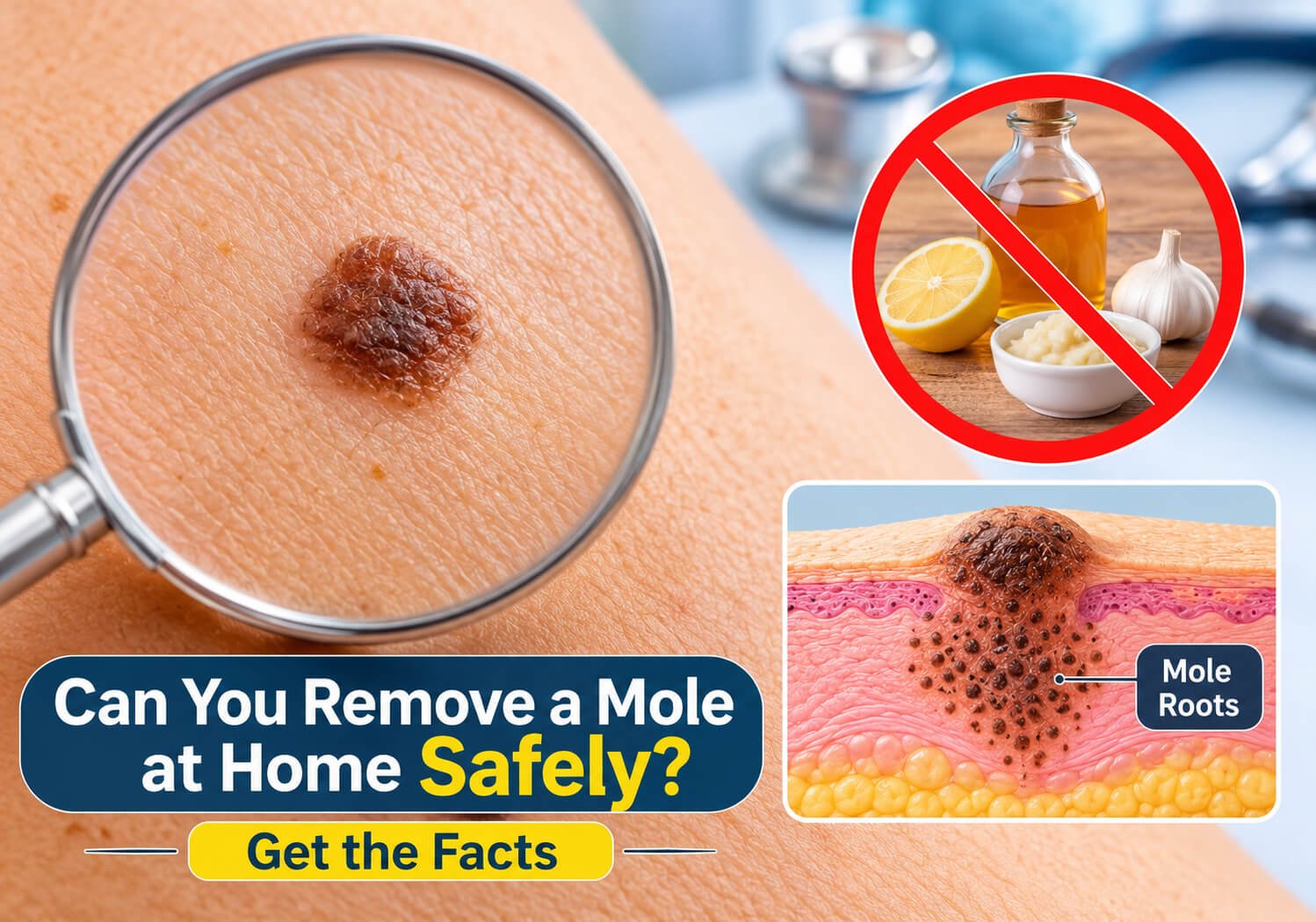
When you notice a raised bump or dark spot on your skin, wanting to handle it quickly in your own bathroom is a completely natural impulse. Many online tutorials and over-the-counter products promise fast, painless results without a trip to the clinic. However, before you reach for household acids, sharp tools, or unverified creams, you need to understand the biological reality of what a mole actually is and how skin tissue responds to trauma.
Quick Answer: No, you cannot remove a mole at home safely. Medical authorities, including the American Academy of Dermatology and the U.S. Food and Drug Administration (FDA), strongly advise against at-home mole removal. DIY methods—such as cutting, burning, or applying acidic creams—frequently cause severe chemical burns, permanent scarring, deep infections, and can mask underlying skin cancers like melanoma.
Medical Disclaimer: Evaluating and removing skin growths involves significant medical risks, including permanent disfigurement and missed cancer diagnoses. Always consult a board-certified dermatologist or primary care physician before attempting to treat any spot on your skin.
What Exactly Is a Mole? (And Why Surface Treatments Fail)
To understand why at-home remedies fail, it helps to look at the anatomy of your skin. A common mole—medically known as a melanocytic nevus—is not just a surface stain sitting on top of your skin like a callus or a dirt smudge. According to the National Cancer Institute, a mole forms when pigment-producing cells called melanocytes grow in dense clusters rather than spreading evenly throughout the skin.
These clusters extend downward from the outer layer of your skin (the epidermis) into the deeper structural layer (the dermis). Because the roots of a mole sit beneath the surface, wiping, scraping, or burning the top layer only removes the visible cap. The deeper melanocytes remain intact, meaning the mole will almost certainly grow back—often looking distorted, irregular, or scarred.
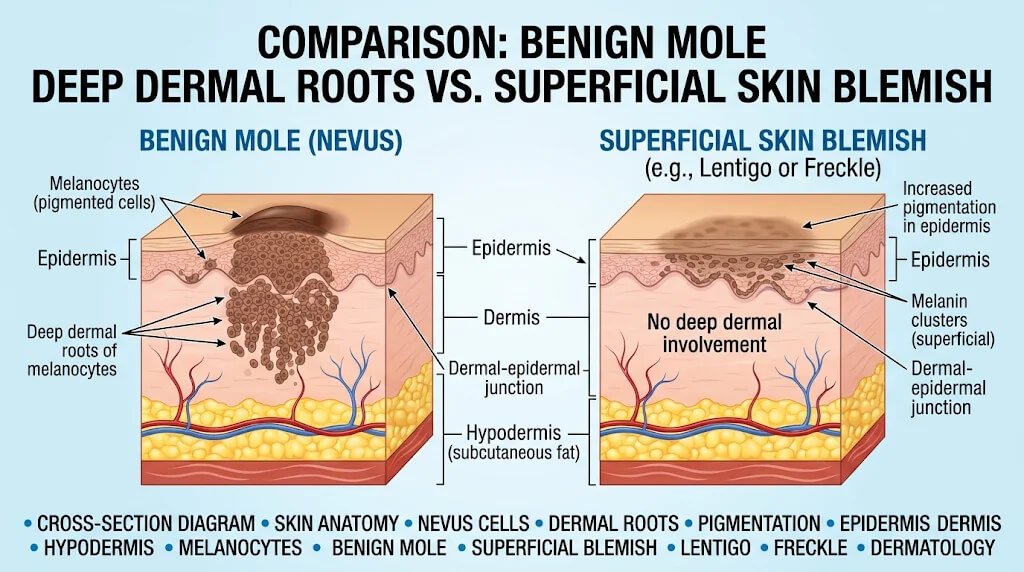
Furthermore, many spots people assume are harmless moles are actually different types of skin growths altogether. A dark, raised bump might be:
- Seborrheic keratosis: A harmless, wart-like growth common in adults over 40.
- Dermatofibroma: A firm, small bump often triggered by a minor skin injury like a bug bite.
- Skin tag (acrochordon): A soft, flesh-colored flap of tissue that hangs from a thin stalk.
- Skin cancer: Basal cell carcinoma, squamous cell carcinoma, or malignant melanoma.
Without a specialized magnifying tool called a dermatoscope and a laboratory tissue exam, even a trained physician cannot confirm a spot is 100% harmless just by glancing at it. Trying to remove an unidentified growth at home is essentially flying blind.
Why Asking “Can You Remove a Mole at Home Safely?” Always Leads to Risk
Every popular DIY mole removal method relies on destroying skin tissue indiscriminately. Unlike a surgical instrument that precisely targets a specific boundary, home remedies cannot tell the difference between mole cells and your healthy surrounding skin.
1. Severe Chemical Burns and Tissue Necrosis
Over-the-counter mole removal creams and pastes often contain high concentrations of salicylic acid, sanguinarine (bloodroot), or caustic plant extracts. The FDA warns consumers that these unapproved products can eat straight through healthy skin, causing deep chemical burns and tissue death (necrosis). Instead of a small, neat dot, you can end up with a crater-like open wound that takes months to close.
2. Permanent Hypertrophic and Keloid Scarring
When you burn or slice your skin at home, your body rushes to repair the damage by producing disorganized collagen fibers. This uncontrolled healing response frequently leaves behind thick, raised scars (hypertrophic scars) or keloids that grow larger than the original mole. In many cases, the resulting scar is far more noticeable and permanent than the mole ever was.
3. Deep Bacterial Infections
Your skin acts as a protective barrier against bacteria like Staphylococcus aureus and Streptococcus. Breaking that barrier with unsterile nail clippers, razor blades, or caustic liquids creates an open gateway for pathogens. A localized skin infection can quickly progress into cellulitis, requiring prescription antibiotics or emergency medical care.
4. Masking Underlying Melanoma
This is the single most dangerous risk of at-home removal. If a mole is actually an early-stage melanoma, burning off the surface layer destroys the visual warning signs that a dermatologist needs to spot it. Meanwhile, any cancerous cells left behind in the deeper layers of the dermis can continue to multiply and spread silently to other parts of your body.
Common Mistake: Many people assume that if a mole falls off after applying an herbal paste or apple cider vinegar, the problem is solved. In reality, sloughing off the top crust only removes dead surface skin while leaving deep pigment cells—and potential cancer cells—untouched beneath the scar tissue.
Popular DIY Mole Removal Methods: Myths vs. Medical Reality
If you search online for home remedies, you will find dozens of viral hacks. Here is what actually happens to your skin when you try these methods.
| DIY Method | How People Use It | What Actually Happens to Your Skin | Medical Risk Level |
| Apple Cider Vinegar (ACV) | Soaking a cotton ball in ACV and taping it over the mole overnight. | Acetic acid causes a localized chemical burn, blistering and destroying the top layer of skin while leaving deep mole cells intact. | High (Chemical burns, scarring, hyperpigmentation) |
| Garlic, Onion, or Pineapple Juice | Crushing raw garlic or acidic fruit and holding it against the mole with a bandage. | Sulfur compounds and natural enzymes (like bromelain) trigger severe contact dermatitis and ulceration without reaching the dermis. | Moderate to High (Skin ulceration, allergic reaction, infection) |
| Over-the-Counter Removal Creams | Applying unregulated acid or bloodroot pastes sold online. | Causes deep, uncontrolled tissue necrosis; frequently leaves pitted scars and dark post-inflammatory marks. | Very High (FDA-warned hazard, severe scarring) |
| Cutting or Shaving with Blades | Using nail clippers, scissors, or a razor blade to slice off a raised mole. | Causes heavy bleeding (moles have rich blood supplies), introduces bacteria, and leaves the root of the mole behind. | Critical (Hemorrhage, severe infection, missed cancer) |
| String or Dental Floss Tying | Tying thread tightly around a raised mole to cut off blood flow. | Works only on thin-stalked skin tags under medical guidance; on a true mole, it causes painful tissue death and infection. | High (Tissue necrosis, bacterial infection) |
| At-Home Plasma Pens / Burners | Using cheap handheld cautery pens bought online to burn off spots. | Delivers unregulated thermal burns that destroy healthy tissue and cause permanent hypopigmentation (white scars). | Very High (Third-degree burns, permanent scarring) |
How to Check Your Moles Before Doing Anything (The ABCDE Rule)
Before considering cosmetic removal of any spot, your first priority is verifying that the growth is healthy. Dermatologists recommend performing a monthly skin self-exam using a full-length mirror and a hand mirror in a well-lit room.
Follow the ABCDE criteria established by the Mayo Clinic to spot warning signs of melanoma:
- A — Asymmetry: One half of the mole does not match the other half in shape or thickness.
- B — Border: The edges are irregular, ragged, notched, or blurred rather than smooth and distinct.
- C — Color: The color is not uniform throughout and may include different shades of brown or black, or patches of pink, red, white, or blue.
- D — Diameter: The spot is larger than 6 millimeters (about 0.24 inches, or the size of a pencil eraser), though melanomas can sometimes be smaller.
- E — Evolving: The mole is changing in size, shape, color, or elevation over weeks or months, or it develops new symptoms like bleeding, itching, or crusting.
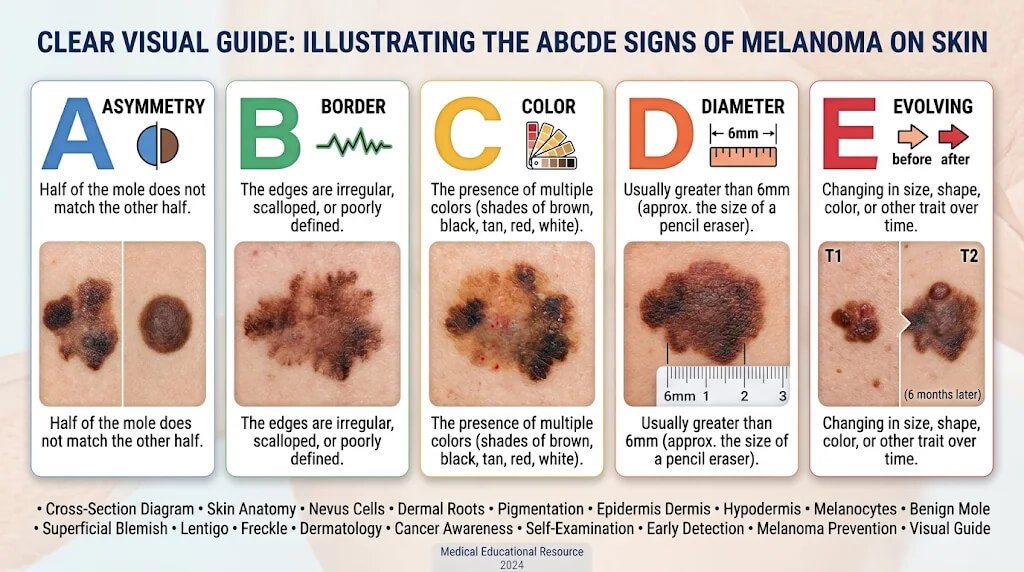
If a mole displays any of these traits—or if you notice an “ugly duckling” spot that looks noticeably different from all the other moles on your body—schedule an appointment with a dermatologist immediately. Never attempt to treat an evolving or irregular spot on your own.
How Dermatologists Remove Moles Safely in a Clinical Setting
When you visit a board-certified dermatologist, mole removal is a quick, sterile, and predictable outpatient procedure. Depending on the size, depth, and location of the mole, your doctor will use one of two primary medical techniques.
1. Surgical Shave Excision
For moles that protrude above the skin’s surface and appear benign, a dermatologist often performs a shave excision:
- Preparation: The doctor cleans the area with medical antiseptic and injects a local anesthetic (like lidocaine) so you feel zero pain—just mild pressure.
- Removal: Using a specialized, flexible surgical blade, the doctor carefully shaves the mole flush with the surrounding skin. No stitches are required.
- Lab Testing: Even if the mole looks completely normal, the removed tissue is sent to a pathology lab to confirm there are no abnormal cells.
2. Full-Thickness Surgical Excision
For flat moles, deep moles, or any spot suspected of being atypical or cancerous, a full-thickness excision is the gold standard:
- Preparation: After numbing the area with local anesthesia, the dermatologist maps out a small, oval-shaped margin around the mole.
- Removal: Using a sterile scalpel, the doctor removes the entire mole along with its deeper dermal roots and a thin border of healthy tissue.
- Closure: The doctor closes the incision with small sutures (stitches), which are typically removed 5 to 14 days later depending on the body location.
Coach’s Tip: When scheduling a cosmetic mole removal, ask your dermatologist specifically about their tissue biopsy policy. A reputable medical practice will send every removed mole to a lab for microscopic analysis—giving you complete peace of mind that the spot was harmless.
Comparing Professional Removal vs. At-Home Attempts
| Factor | Board-Certified Dermatologist | At-Home DIY Methods |
| Pain Management | Local anesthesia numbs the area completely in seconds. | No anesthesia; burning, cutting, or acid application is painful. |
| Cancer Screening | Removed tissue is examined under a microscope (histopathology). | Zero diagnostic testing; cancerous cells can be left behind. |
| Scarring Outcome | Minimal, controlled healing with precise closure techniques. | High risk of pitted craters, dark spots, or raised keloid scars. |
| Infection Risk | Performed in a sterile environment with medical-grade tools. | High risk of bacterial infection from unsterile tools and open burns. |
| Recurrence Rate | Very low, as deeper dermal roots are properly addressed. | Very high, as surface treatments leave deeper melanocytes intact. |
| Recovery Time | Clean healing within 1 to 3 weeks with clear aftercare steps. | Unpredictable; chemical burns can take months to heal. |
Safe Ways to Manage Moles at Home (Without Removing Them)
While you cannot safely remove a mole in your bathroom, there are smart, practical steps you can take at home to protect your skin, monitor changes, and minimize the appearance of harmless spots.
1. Protect Moles from UV Radiation
Ultraviolet (UV) rays from the sun and tanning beds stimulate melanocytes, causing existing moles to darken, enlarge, or undergo cellular mutations. According to the Centers for Disease Control and Prevention (CDC), consistent sun protection is the most effective way to lower skin cancer risk:
- Apply a broad-spectrum sunscreen with SPF 30 or higher every morning, even on cloudy days.
- Reapply sunscreen every 2 hours when outdoors, or immediately after swimming or sweating.
- Wear UPF-rated clothing, wide-brimmed hats, and UV-blocking sunglasses during peak sunlight hours (10:00 AM to 4:00 PM).
2. Support Healthy Skin Barrier Function
Keeping your skin hydrated and resilient supports overall cellular health and makes routine skin checks easier. Nutrients that support collagen structure and skin hydration—such as collagen peptides, omega-3 fatty acids, and antioxidant compounds like astaxanthin—help maintain healthy skin elasticity and protect against oxidative stress from environmental exposure.
3. Use Cosmetic Concealers for Visual Coverage
If a flat, benign mole on your face or neck bothers you cosmetically while you wait for a dermatology appointment, use a high-pigment, waterproof cosmetic concealer. Choose non-comedogenic formulas that match your skin tone, and always apply them over your daily sunscreen.
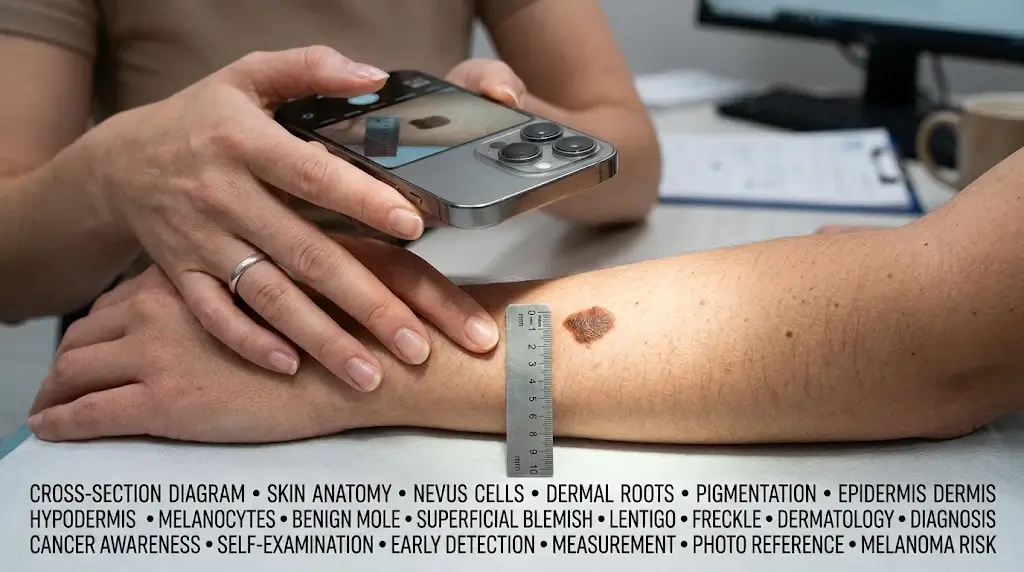
4. Track Your Moles with Monthly Photos
Create a private photo folder on your phone to track any spots you want to watch. Place a small ruler (measured in inches and millimeters) next to the mole and take a clear, well-lit photo every 3 to 6 months. Comparing photos side-by-side makes it much easier to notice subtle shifts in diameter or border symmetry.
Step-by-Step Aftercare Following Professional Mole Removal
If you decide to have a dermatologist remove a mole, proper wound care at home plays a major role in minimizing scarring. Always follow your doctor’s exact instructions, which typically include these steps:
- Keep the Bandage Dry Initially: Leave the initial sterile dressing clean and dry for the first 24 hours after your procedure.
- Clean Gently Daily: After 24 hours, wash the area gently once or twice a day with mild, fragrance-free soap and clean water. Avoid hydrogen peroxide or rubbing alcohol, which can damage fragile healing cells.
- Keep the Wound Moist: Apply a thin layer of plain petroleum jelly (like Vaseline) or an ointment recommended by your doctor using a clean cotton swab. Keeping a wound moist prevents scabbing and speeds up epidermal healing.
- Cover with a Fresh Bandage: Place a clean adhesive bandage over the ointment daily until the surface skin has completely closed.
- Protect New Skin from the Sun: Once the wound heals, apply SPF 30+ sunscreen to the pink healing skin every day for at least 6 to 12 months. UV exposure on fresh scar tissue causes permanent brown hyperpigmentation.
Frequently Asked Questions (FAQ)
Is it safe to remove a mole at home with apple cider vinegar?
No, applying apple cider vinegar to a mole is not safe. The acetic acid causes a localized chemical burn that destroys the top layer of healthy skin while leaving the deeper mole cells intact. This often leads to painful blistering, bacterial infections, and permanent scarring without actually removing the mole.
Do over-the-counter mole removal creams work?
Over-the-counter mole removal creams are ineffective for true moles and carry serious safety warnings from the FDA. These products typically contain caustic acids or herbal extracts like bloodroot that eat away healthy tissue indiscriminately, frequently resulting in deep crater-like scars, severe skin irritation, and missed skin cancer diagnoses.
What happens if you cut off a mole at home?
Cutting off a mole at home with razors, scissors, or nail clippers causes heavy bleeding because moles have a rich blood supply. It also introduces bacteria directly into the bloodstream and leaves the deeper root of the mole behind in the dermis, ensuring the growth returns distorted and scarred.
How do dermatologists remove moles safely?
Dermatologists remove moles safely in a sterile clinic using local anesthesia to numb the skin. Depending on the mole’s depth, they either perform a surgical shave excision flush with the skin or a full-thickness surgical excision closed with fine stitches, sending the tissue to a lab for cancer screening.
Can removing a mole at home cause skin cancer?
Removing a mole at home does not directly turn healthy cells into cancer, but it creates a life-threatening risk by masking existing melanoma. Burning or slicing off the top of a cancerous mole destroys surface warning signs while allowing deeper malignant cells to continue growing and spreading undetected beneath scar tissue.
How much does professional mole removal cost?
Professional mole removal typically costs between $150 and $500 per mole if done purely for cosmetic reasons, depending on the clinic location and removal technique. However, if a dermatologist determines the mole is atypical, irritated, or suspicious for skin cancer, health insurance usually covers most or all of the procedure.
Conclusion
When asking can you remove a mole at home safely, the medical evidence gives an unmistakable answer: no. Because moles extend beneath the surface of your skin and can resemble early-stage skin cancers, DIY treatments using acids, creams, or sharp tools put you at high risk for permanent scarring, severe infection, and missed melanoma diagnoses.
Instead of risking your skin with unverified home remedies, stick to daily broad-spectrum sunscreen, monitor your spots monthly using the ABCDE guidelines, and let a board-certified dermatologist handle any removal safely. A quick 15-minute clinical visit gives you clean cosmetic results and complete diagnostic certainty.