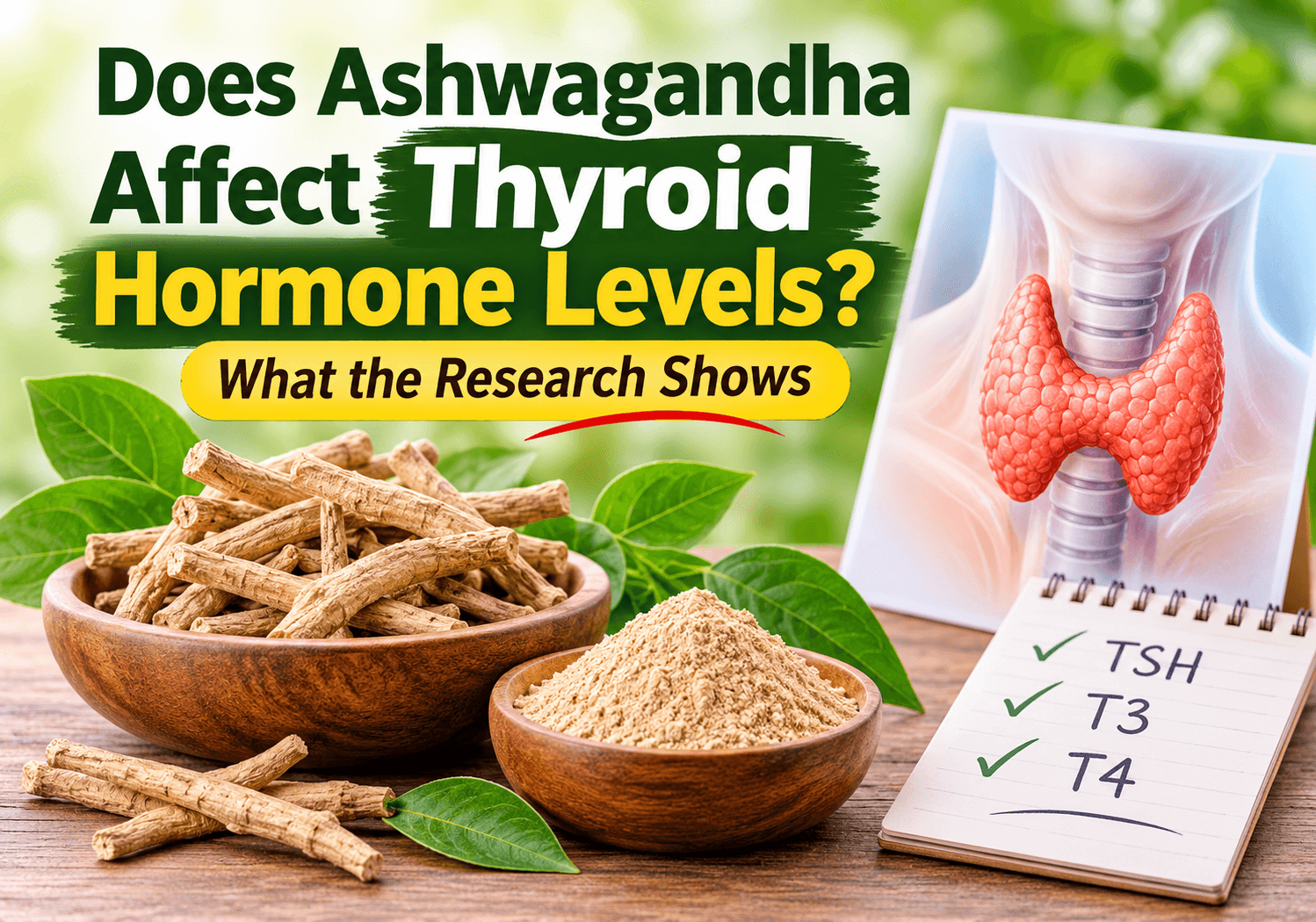
You’re scrolling through supplement labels, you spot ashwagandha, and a thought hits: Will this mess with my thyroid? If you manage an underactive or overactive thyroid, or you’re simply curious about how this adaptogenic herb interacts with your endocrine system, the question is fair. You deserve a straight answer, not a vague “it depends” buried under marketing fluff.
Here’s the short version: research suggests ashwagandha may nudge thyroid hormone levels, particularly in people whose thyroid is already underperforming. It is not a thyroid treatment, and it is not a replacement for levothyroxine or antithyroid medication. But it does appear to have a measurable, modest effect on T3, T4, and TSH in certain populations. The details matter, and they depend on your starting point.
Quick Answer
Yes, research indicates ashwagandha may modestly increase T3 and T4 while lowering TSH, especially in hypothyroid individuals. The effect is small, not a substitute for thyroid medication, and not well-studied in hyperthyroid patients. If you take levothyroxine or antithyroid drugs, talk to your endocrinologist before adding ashwagandha.
What the Research Says About Ashwagandha and Thyroid Function
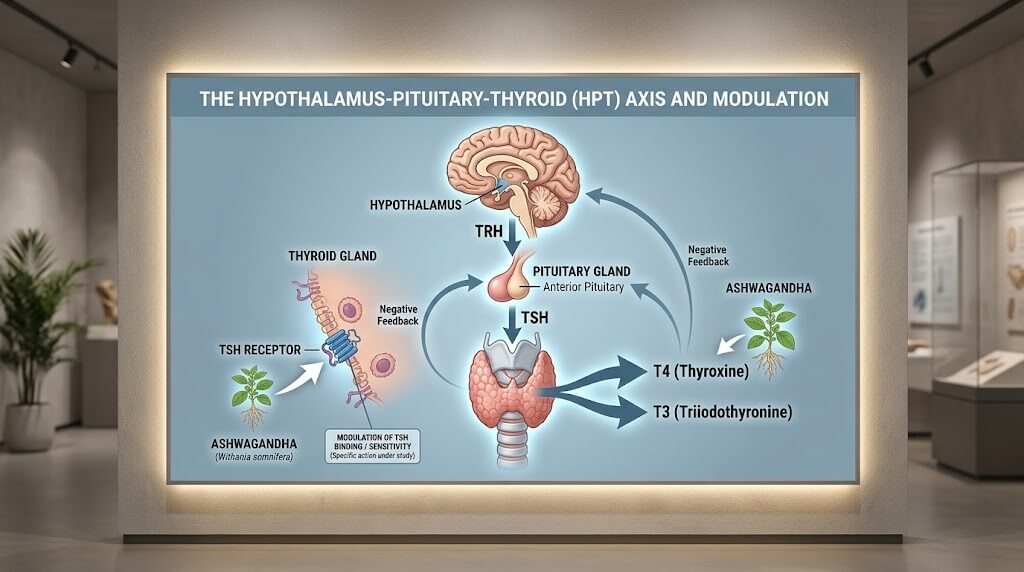
Ashwagandha (Withania somnifera) is an adaptogenic herb used in Ayurvedic medicine for centuries. The active compounds most studied are withanolides, found in the root extract. When researchers look at the thyroid axis, they track three main hormones:
- TSH (thyroid-stimulating hormone): Released by the pituitary gland. It tells your thyroid to produce T3 and T4.
- T4 (thyroxine): The “storage” form. Your body converts it to T3 as needed.
- T3 (triiodothyronine): The active form that drives your metabolic rate, energy production, and body temperature.
Animal Studies
Early work in laboratory animals laid the groundwork. A study published in the Journal of Ethnopharmacology by Srivastava and colleagues found that ashwagandha root extract increased serum T3 and T4 levels in hypothyroid rats and brought TSH closer to normal range [VERIFY – confirm exact volume, page numbers, and year before publishing]. The researchers attributed the effect to withanolides acting on TSH receptors in the thyroid gland, essentially giving the gland a gentle “nudge” to produce more hormone.
A follow-up line of research in the same journal examined whether the effect persisted over a multi-week dosing protocol. The short answer: the effect was present but modest, and it did not fully normalize hormone levels in severely hypothyroid animals.
Human Studies
Human data is thinner but moving in the same direction. A small clinical trial published in the Indian Journal of Endocrinology and Metabolism examined a group of hypothyroid adults who took a standardized ashwagandha root extract (600 mg per day) alongside their prescribed levothyroxine for eight weeks [VERIFY – confirm author names, exact journal, and year]. Participants showed a statistically significant reduction in TSH and a small increase in free T4 compared with a placebo group. The change was not large enough to replace medication, but it was measurable on a thyroid panel.
A 2017 review in the Journal of Ayurveda and Integrative Medicine summarized the available human and preclinical data and concluded that ashwagandha “may support thyroid function in subclinical hypothyroidism” but flagged the need for larger, longer, and better-controlled trials [VERIFY – confirm exact citation].
The Proposed Mechanism
Researchers believe the thyroid effect comes from a few overlapping pathways:
- TSH receptor stimulation. Withanolides may bind to TSH receptors on thyroid follicular cells, increasing T3 and T4 output.
- Cortisol and HPA axis modulation. Ashwagandha is well-documented for lowering cortisol, a stress hormone that, when chronically elevated, can suppress TSH release and slow thyroid conversion of T4 to T3. By dampening the stress response, ashwagandha may indirectly support a more balanced thyroid axis.
- Antioxidant and anti-inflammatory action. Chronic low-grade inflammation (common in Hashimoto’s thyroiditis) can impair thyroid cell function. Ashwagandha’s antioxidant properties may reduce that inflammatory load.
None of these mechanisms are fully mapped in humans yet. The animal data is promising, but human trials remain small and short.
Coach’s Tip: If you’re already on a thyroid medication like levothyroxine (Synthroid, Synthroid, or a generic), do not adjust your dose because you added ashwagandha. The herb’s effect is modest. Your endocrinologist sets your dose based on a full thyroid panel (TSH, free T4, free T3, and sometimes reverse T3). Let them re-check your labs 6–8 weeks after you start any new supplement so the picture stays clear.
How Ashwagandha Interacts With Thyroid Hormones: At a Glance
The table below summarizes what the available research suggests. These are potential effects, not guarantees. Individual responses vary based on your baseline thyroid status, dose, duration, and whether you take other medications.
| Hormone / Marker | Normal Role | Potential Ashwagandha Effect (per research) | Study Context |
| TSH | Pituitary signal to thyroid | May decrease (if TSH is elevated) | Hypothyroid rat models; small human trial |
| Free T4 (thyroxine) | Primary thyroid hormone, “storage” form | May increase modestly | Hypothyroid rat models; small human trial |
| Free T3 (triiodothyronine) | Active hormone driving metabolism | May increase modestly | Hypothyroid rat models |
| Cortisol | Stress hormone; high levels can suppress TSH | May decrease (well-documented) | Multiple human RCTs (not thyroid-specific) |
| Thyroid peroxidase (TPO) antibodies | Marker of autoimmune thyroiditis | Insufficient data | Not yet studied directly with ashwagandha |
What This Means If You Have a Thyroid Condition
The answer to “Does ashwagandha affect thyroid hormone levels?” shifts depending on which thyroid condition you’re managing.
Hypothyroidism (Underactive Thyroid)
If your thyroid is underproducing T3 and T4 (and your TSH is elevated), the research leans in a mildly supportive direction. The small human trial mentioned above showed a modest TSH reduction and T4 bump when ashwagandha was added to standard levothyroxine therapy. Think of it as a small assist, not a fix. You still need your prescribed medication.
If you are in subclinical hypothyroidism (mildly elevated TSH, normal T4), the theoretical benefit is slightly more interesting, but there is not enough human data to recommend ashwagandha as a standalone strategy. Your endocrinologist should still be the one guiding your management plan.
Hyperthyroidism (Overactive Thyroid)
This is where caution is essential. If your thyroid is already overproducing hormone (low TSH, high T3/T4), adding a substance that may further stimulate T3 and T4 production is not something to do on your own. There is essentially no human research on ashwagandha in hyperthyroid patients. The theoretical risk is that it could worsen an already overactive state. If you take methimazole or propylthiouracil (PTU), talk to your doctor before considering ashwagandha.
Hashimoto’s Thyroiditis (Autoimmune Hypothyroidism)
Hashimoto’s is the most common cause of hypothyroidism in the U.S. The autoimmune component (your immune system attacking thyroid tissue) is not something ashwagandha has been shown to reverse. Its antioxidant and anti-inflammatory properties may help reduce low-grade inflammation, but no peer-reviewed human trial has specifically measured TPO antibody changes with ashwagandha. Treat it as a “maybe helpful for general inflammation” supplement, not a targeted autoimmune intervention.
Graves’ Disease (Autoimmune Hyperthyroidism)
Same caution as general hyperthyroidism. Avoid adding a potential thyroid stimulant without explicit medical guidance.
Common Mistake: Taking ashwagandha at a high dose (600 mg or more) and then skipping or reducing your levothyroxine because you “feel better.” The herb’s effect is too small and too variable to replace a prescribed dose. If you feel a difference, it may be the cortisol-lowering effect making you sleep better and feel less foggy, not a meaningful shift in your T4 level. Keep taking your medication as prescribed and let your doctor adjust the dose based on labs, not on how you feel after a new supplement.
Ashwagandha and Thyroid Medication: What to Know
If you take a thyroid drug, the interaction question is the most practical one. Here is what to keep in mind:
- Levothyroxine (Synthroid, Tirosint, generic): No well-documented direct pharmacokinetic interaction with ashwagandha in the published literature. However, if ashwagandha does modestly raise your T4, your TSH could drop, and your doctor may lower your levothyroxine dose at the next check-up. That’s a good thing, but it should be a planned change based on bloodwork, not a guess.
- Methimazole / PTU (antithyroid drugs): No published interaction data. The theoretical concern is additive thyroid stimulation. Do not combine without medical supervision.
- Timing: If your doctor does approve ashwagandha, take it at a different time of day from your levothyroxine (levothyroxine is best absorbed on an empty stomach, 30–60 minutes before food). Separating the two by at least 4 hours reduces any chance of absorption interference, though this is a precautionary measure, not a documented interaction.
Bottom line: “No known interaction” is not the same as “proven safe.” The responsible step is a quick call to your endocrinologist or pharmacist.

Practical Steps: How to Approach Ashwagandha Safely
If you’ve read the research, talked to your doctor, and you want to try ashwagandha for stress, sleep, or general well-being (with the thyroid question in the back of your mind), here is a practical, step-by-step approach:
- Get a baseline thyroid panel. Ask your doctor for TSH, free T4, free T3, and (if relevant) TPO antibodies. This gives you a “before” snapshot.
- Choose a standardized root extract. Look for a product that specifies Withania somnifera root extract with a percentage of withanolides (commonly 5% or 10%). Avoid leaf extracts, which have a different compound profile. A typical research dose is 300–600 mg of standardized root extract per day.
- Start low. Begin with 300 mg once daily for the first two weeks. Watch how you feel. If tolerated, your doctor may be comfortable with 600 mg (split into two 300 mg doses, morning and evening).
- Give it 6–8 weeks. The small human trial used an 8-week protocol. You will not feel a thyroid-level change in three days. Consistency matters.
- Re-test at 8 weeks. Ask your endocrinologist to repeat your thyroid panel. Compare TSH, free T4, and free T3 to your baseline. This is the only way to know if the herb moved the needle for you.
- Track non-thyroid symptoms too. Ashwagandha’s best-documented effects are on cortisol, sleep quality, and perceived stress. Keep a simple journal: sleep hours, energy level (1–10), stress level (1–10), any GI upset.
- Stop and call your doctor if: you develop heat intolerance, rapid heartbeat, tremor, unexplained weight loss, or other symptoms that could signal a thyroid shift. These are not typical ashwagandha side effects, but in the context of thyroid medication, they warrant a check.

Safety Notes and Who Should Talk to a Doctor First
Ashwagandha is generally well-tolerated at standard doses, but “generally well-tolerated” does not mean “risk-free for everyone.”
Talk to your doctor or endocrinologist before taking ashwagandha if you:
- Take levothyroxine, methimazole, PTU, or any other thyroid medication
- Have a diagnosed thyroid condition (Hypothyroidism, hyperthyroidism, Hashimoto’s, Graves’ disease, goiter)
- Are pregnant or breastfeeding (insufficient safety data)
- Take immunosuppressants (ashwagandha may stimulate immune function)
- Have an autoimmune condition beyond the thyroid (the immune-stimulating effect is a theoretical concern)
- Are scheduled for surgery (stop 2 weeks prior, as with most herbal supplements)
Common, mild side effects reported in clinical trials include mild stomach upset, loose stools, and occasional drowsiness. These are usually dose-related and resolve by reducing the amount or taking it with food.
What the research does NOT show: Ashwagandha has not been shown to cure hypothyroidism, reverse a goiter, eliminate TPO antibodies, or replace levothyroxine. Be wary of any supplement marketing that implies otherwise.
Related Tips for Supporting Thyroid and Metabolic Health
While you sort out the ashwagandha question, a few evidence-based habits support a healthy thyroid axis and overall metabolic function:
- Consistent sleep. Poor sleep disrupts the HPA axis and can nudge TSH out of range. Aim for 7–9 hours. If you want a deeper look at the sleep-metabolism link, see our guide on how sleep affects metabolism and weight management.
- Adequate iodine and selenium. These are the raw materials your thyroid needs to make T3 and T4. Most people in the U.S. get enough iodine from iodized salt, but selenium (found in Brazil nuts, eggs, and seafood) is often under-consumed. Our article on which nutrients support normal energy metabolism breaks down the key micronutrients.
- Manage chronic stress. Elevated cortisol over months can blunt TSH release and slow T4-to-T3 conversion. Regular movement, breathwork, and time outdoors all help. If you’re exploring adaptogens beyond ashwagandha, our piece on adaptogens for stress and cortisol management covers the evidence landscape.
- Stay active but don’t overtrain. The CDC physical activity guidelines recommend at least 150 minutes of moderate aerobic activity and two days of muscle-strengthening work per week. Both support metabolic rate and thyroid-adjacent hormonal balance.
- Review your full supplement stack. If you’re taking multiple supplements for “metabolism support,” make sure none of them contain hidden thyroid-affecting ingredients. Our guide on which supplements support metabolism without stimulants can help you audit your routine.
If you’re over 40 and noticing your metabolism slowing, thyroid function is one of the first things to rule out with a simple blood panel before blaming “age.” Our practical guide on how to increase metabolism naturally after 40 walks through the non-supplement levers first.

FAQ
Can ashwagandha raise TSH levels?
The research points the other way. In hypothyroid subjects, ashwagandha appeared to lower an elevated TSH toward normal by modestly increasing T3 and T4 output. There is no published evidence that it raises TSH in a healthy or hypothyroid person. If your TSH is already low (hyperthyroid range), the theoretical concern is that it could push it lower, but no human study has tested that scenario.
Does ashwagandha help with hypothyroidism?
It may offer a small supportive effect on T3 and T4 levels in people with subclinical or mild hypothyroidism, based on one small human trial and several animal studies. It is not a treatment. You still need your prescribed levothyroxine. Think of it as a complementary option, not a replacement, and only under your endocrinologist’s guidance.
Is ashwagandha safe with levothyroxine?
No direct pharmacokinetic interaction has been documented. However, because ashwagandha may modestly raise T4, your TSH could shift, and your doctor may adjust your levothyroxine dose at the next lab check. Take the two at different times of day (at least 4 hours apart) and re-test your thyroid panel after 6–8 weeks.
How long does ashwagandha take to affect thyroid hormones?
The human trial that measured thyroid changes used an 8-week protocol. You should not expect a meaningful shift in TSH or T4 in under four weeks. Give it a full 6–8 weeks of consistent daily dosing before re-testing.
Can ashwagandha cause hyperthyroidism?
There is no human evidence that ashwagandha causes hyperthyroidism in a person with a normal thyroid. The theoretical risk is in someone who is already hyperthyroid or on antithyroid medication, where an additional thyroid-stimulating effect could be harmful. If you have Graves’ disease or are on methimazole/PTU, do not add ashwagandha without explicit medical clearance.
What dose of ashwagandha is used in thyroid research?
The studies that measured thyroid hormones used 300–600 mg of a standardized Withania somnifera root extract per day, typically taken for 8 weeks. Start at 300 mg, and only go to 600 mg if your doctor is comfortable with it.
Conclusion
So, does ashwagandha affect thyroid hormone levels? The honest, evidence-based answer is: probably a little, in the right direction, for the right person, but not enough to change your treatment plan on its own. The animal data is consistent. The human data is small but points the same way. The mechanism (withanolides nudging TSH receptors, plus cortisol modulation) makes physiological sense.
What the data does not support is the idea that ashwagandha cures hypothyroidism, shrinks a goiter, or replaces levothyroxine. It also does not support adding it to a hyperthyroid or Graves’ disease regimen without a doctor’s explicit go-ahead.
If you want to try ashwagandha for stress, sleep, or general well-being, and you manage a thyroid condition, the smart path is simple: get a baseline thyroid panel, start at 300 mg of a standardized root extract, give it 8 weeks, re-test, and keep your endocrinologist in the loop. That’s how you turn a “does it affect my thyroid?” question into a data-driven answer for your own body.