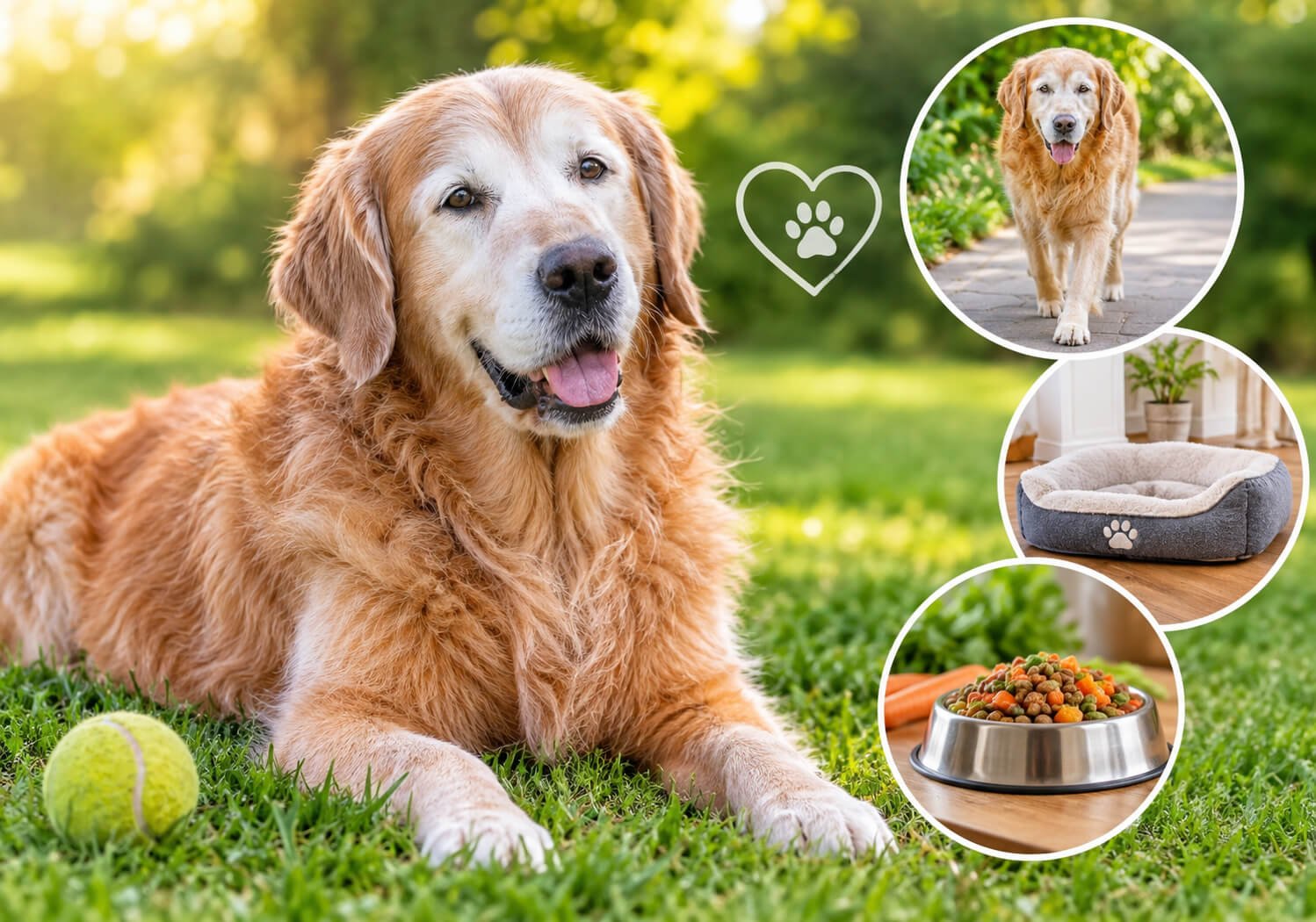
As a strength and conditioning coach, I spend my days helping humans move better, feel stronger, and age gracefully. However, the principles of mobility, joint health, and proactive care do not stop at our own species. If you have noticed the early signs of aging in dogs and how to help them maintain their quality of life, you are asking the right questions. Aging is not a disease, but it does require a strategic shift in how we manage exercise, nutrition, and environment. This guide provides practical, evidence-based strategies to support your senior dog’s mobility, cognitive health, and overall vitality.
Quick Answer
The early signs of aging in dogs include stiff joints, reduced stamina, cloudy eyes, muscle loss, and changes in sleep or behavior. To help, implement low-impact exercises like short, frequent walks, provide orthopedic bedding, adjust their diet with joint-supporting nutrients like omega-3s, and schedule biannual veterinary checkups to catch issues early.
Identifying Early Signs of Aging in Dogs and How to Help: The 7 Key Indicators
Recognizing the subtle shifts in your dog’s behavior and physiology is the first step toward effective intervention. Aging affects every mammal differently, but certain hallmarks are universally observed in canine patients.
1. Decreased Mobility and Stiff Joints
One of the most common early indicators is hesitation before jumping into the car or climbing stairs. This stiffness often stems from the gradual degradation of articular cartilage and a reduction in synovial fluid production. Research indicates that osteoarthritis affects a significant percentage of older dogs, leading to visible discomfort after periods of rest. You may notice your dog taking longer to rise from a lying position or exhibiting a shortened stride during walks. Addressing this early prevents compensatory movement patterns that can strain other muscle groups.
2. Changes in Sleep Patterns and Restlessness
Senior dogs often sleep more during the day but may experience fragmented sleep at night. This disruption can be linked to discomfort, cognitive changes, or altered circadian rhythms. Understanding how does sleep affect metabolism and recovery in mammals can help you adjust your dog’s evening routine. Providing a calm, dark, and temperature-controlled sleeping environment can significantly improve their restorative rest cycles.
3. Muscle Atrophy and Weight Fluctuations
As dogs age, their basal metabolic rate shifts, and they may lose lean muscle mass, a condition known as sarcopenia. You might notice their hindquarters appearing less muscular or their spine becoming more prominent. Conversely, reduced activity levels can lead to unwanted weight gain, which places additional mechanical stress on aging joints. Regular body condition scoring and tailored nutritional adjustments are critical to maintaining an ideal weight.
4. Cloudy Eyes and Vision Changes
A bluish-gray haze in your dog’s pupils is often lenticular sclerosis, a normal, age-related hardening of the lens. While it differs from cataracts and does not typically cause blindness, it can reduce visual acuity, especially in low light. This change may make your dog more cautious in unfamiliar environments or hesitant to navigate stairs. Keeping furniture in consistent locations helps them build reliable spatial memory.
5. Dental Issues and Bad Breath
Periodontal disease is highly prevalent in older dogs and can lead to systemic inflammation, affecting the heart, liver, and kidneys. Tartar buildup, receding gums, or reluctance to chew hard kibble are clear warning signs. Chronic oral pain can also contribute to a decreased appetite, making regular veterinary dental cleanings and at-home brushing non-negotiable aspects of senior care.
6. Cognitive Decline and Confusion
Canine Cognitive Dysfunction Syndrome (CCDS) is a progressive neurodegenerative disorder similar to dementia in humans. The AVMA notes that CCDS is characterized by diffuse signs of forebrain dysfunction, including disorientation, altered interactions with family members, and changes in house-training. You might observe your dog staring blankly at walls, getting stuck in corners, or waking up confused. Early veterinary intervention can help manage these symptoms and improve quality of life.
7. Reduced Stamina and Exercise Intolerance
A dog that once eagerly ran for miles may now pant heavily after a short walk. This decreased cardiovascular and muscular endurance is a natural part of aging but should be monitored closely. Sudden or severe drops in stamina can indicate underlying cardiac or respiratory issues, necessitating a prompt veterinary evaluation to rule out serious conditions.

Actionable Care: Early Signs of Aging in Dogs and How to Help Through Mobility
As a coach, I always emphasize that “motion is lotion.” Gentle, consistent movement stimulates synovial fluid production, which lubricates the joints and delivers nutrients to cartilage. However, the intensity and volume of exercise must be carefully calibrated for a senior dog.
Low-Impact Warm-Up Protocol
Before any dedicated mobility work, a proper warm-up is essential to increase tissue temperature and blood flow.
- Activity: Slow, leashed walking on a flat, soft surface.
- Duration: 3 to 5 minutes.
- Distance: 0.1 to 0.25 miles (0.16 to 0.4 km).
- Cue: Keep the leash loose. Allow your dog to sniff and set a comfortable, deliberate pace.
Core Mobility Exercises for Senior Dogs
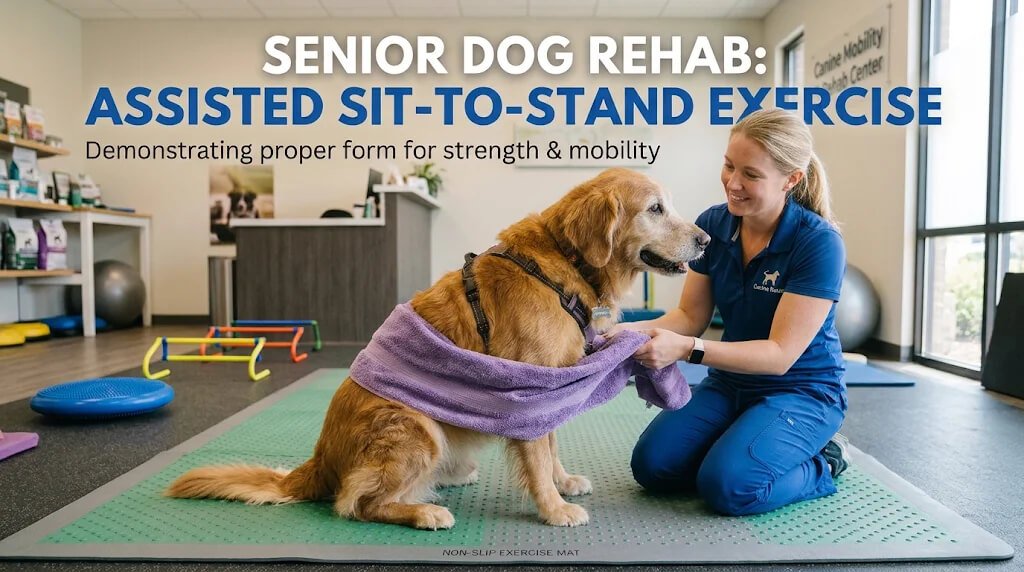
Exercise 1: Assisted Sit-to-Stand
This exercise strengthens the quadriceps, glutes, and core without high-impact joint loading.
- Sets: 2 to 3
- Reps: 5 to 8
- Rest: 30 to 45 seconds between sets
- Form Cue: “Keep the chest up, push evenly through the hind legs.” Place your hand lightly under their belly or chest to provide upward support if needed.
- Regression: Use a supportive sling or towel under the abdomen to bear 20–30% of their body weight.
- Progression: Add a 2-second isometric pause at the top of the standing position to increase muscular endurance.
Exercise 2: Controlled Weight Shifting
This improves proprioception (body awareness) and stabilizes the small muscles around the joints.
- Sets: 2
- Reps: 5 shifts per side
- Rest: 20 seconds
- Form Cue: Stand beside your dog. Gently apply light pressure to their shoulder, encouraging them to shift their weight onto the opposite hind leg. Hold for 3 seconds, then release.
- Regression: Perform the exercise while the dog is standing on a soft, non-slip mat to reduce anxiety.
- Progression: Perform the shifts on a slightly unstable but safe surface, like a thick foam pad, to challenge balance.
Exercise 3: Figure-Eight Walking
This promotes spinal flexibility and coordinated limb movement.
- Sets: 2
- Reps: 3 to 4 figure-eights
- Distance: Each loop should be about 6 feet (1.8 meters) in diameter.
- Form Cue: Walk slowly around two cones (or water bottles) placed 6 feet (1.8 meters) apart. Keep the dog on the inside of the turn to encourage a gentle stretch along their outer body.
- Regression: Widen the distance between cones to 10 feet (3 meters) for a larger, less tight turning radius.
- Progression: Narrow the distance to 4 feet (1.2 meters) to increase the range of motion required.
Nutrition and Supplementation for Senior Canines
Dietary adjustments are just as critical as physical therapy when managing the aging process. Older dogs have different metabolic demands and often struggle with nutrient absorption.
The Role of Omega-3s and Collagen
Inflammation is a primary driver of joint degradation. Just as research shows how omega-3 fatty acids support skin hydration and inflammation in humans, these same essential fats (specifically EPA and DHA) are vital for modulating joint inflammation and supporting cognitive health in senior dogs. Furthermore, supporting connective tissue is crucial. The principles behind optimal dosing and how to pair it with vitamin C for collagen absorption in humans translate to the importance of bioavailable collagen peptides in senior dog diets, which have been shown to improve mobility in dogs with osteoarthritis.
Managing Appetite and Nutrient Absorption
If your senior dog is experiencing a drop in appetite, exploring what helps control hunger during weight loss can offer insights into palatability and nutrient density adjustments. Warming their food slightly, adding low-sodium bone broth, or switching to a highly digestible, moisture-rich diet can encourage eating. Additionally, ensuring they receive which vitamins support metabolism when you’re deficient, such as B-complex vitamins, can help maintain energy levels and cellular function as their digestive efficiency declines.
Environmental Modifications for Aging Dogs
Your home environment can either exacerbate or alleviate the physical challenges of aging. Simple, low-cost modifications can dramatically improve your dog’s confidence and safety.
- Ramps and Steps: Replace jumping with inclined walking. A ramp should have an incline no steeper than 18 to 20 degrees. The walking surface must be at least 12 inches (30 cm) wide to accommodate their stance comfortably. Ensure the ramp’s weight capacity exceeds your dog’s weight by at least 50 lb (22 kg) for a safety margin.
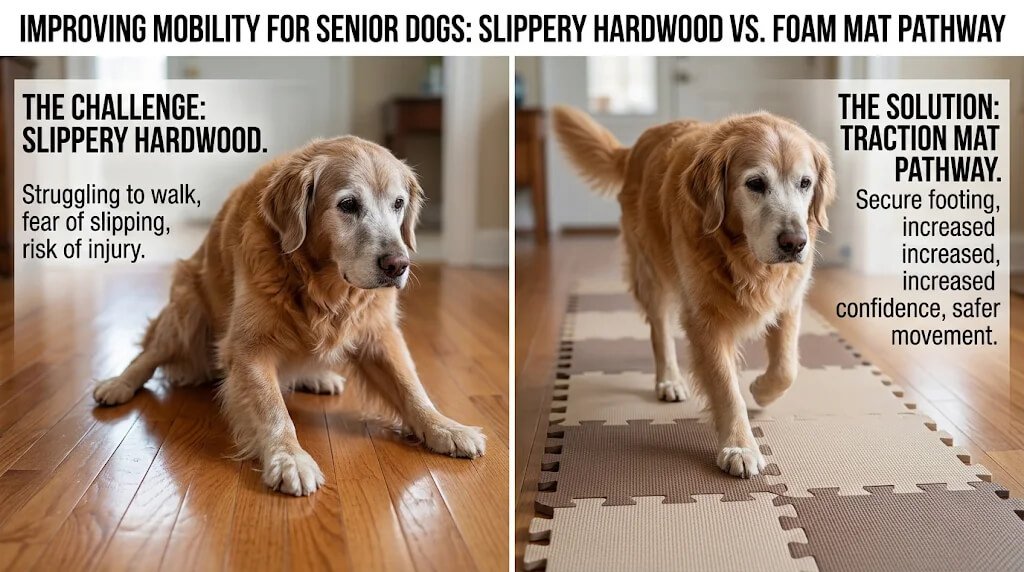
- Flooring Traction: Hardwood and tile floors are hazardous for aging joints. Lay down interlocking foam tiles (at least 0.5 inches or 1.2 cm thick) or yoga mats along your dog’s most frequently traveled pathways to prevent slipping and splaying.
- Orthopedic Bedding: Provide a bed with a minimum of 4 inches (10 cm) of high-density, orthopedic memory foam. This thickness is necessary to properly distribute weight and prevent pressure sores on prominent bones like the elbows and hips.
- Elevated Bowls: Raise food and water bowls to chest height to reduce the need for your dog to bend their neck and spine downward, which can strain the cervical vertebrae.
Common Mistakes and Fixes
Many owners keep their senior dogs sedentary during the week and then take them on a strenuous 2-mile (3.2 km) hike on the weekend. This sudden spike in activity is a primary cause of soft tissue injuries and severe arthritis flare-ups in older dogs.
The Fix: Prioritize consistency over intensity. Five short, 0.25-mile (0.4 km) walks spread throughout the week are vastly superior for joint health and cardiovascular maintenance than one long, exhausting trek.
Coach’s Tip: Building a Senior Dog Wellness Routine
💡 Coach’s Tip: Track your dog’s baseline. Take a short video of your dog walking, sitting, and standing once a month. Aging is gradual, and it is easy to miss slow declines in your daily routine. Having a visual record allows you and your veterinarian to objectively assess changes in gait, posture, and mobility, ensuring interventions are applied at the optimal time. Learning how to increase energy and stamina naturally through consistent, low-impact movement applies perfectly to maintaining your dog’s vitality.
Sample Weekly Mobility Routine for Aging Dogs
This table provides a balanced, low-impact weekly schedule. Always adjust based on your dog’s specific health status and veterinary advice.
| Day | Activity | Duration / Distance | Intensity |
| Monday | Leashed warm-up walk + Assisted Sit-to-Stands | 0.25 miles (0.4 km) + 2 sets of 5 reps | Low |
| Tuesday | Rest and gentle stretching / massage | 10 minutes | Very Low |
| Wednesday | Figure-Eight Walking + Controlled Weight Shifting | 4 loops + 2 sets of 5 shifts | Low-Moderate |
| Thursday | Leashed warm-up walk on grass | 0.3 miles (0.48 km) | Low |
| Friday | Rest and gentle stretching / massage | 10 minutes | Very Low |
| Saturday | Hydrotherapy (if available) or slow park walk | 15 minutes in water or 0.5 miles (0.8 km) | Moderate |
| Sunday | Active rest: sniffari walk (let dog lead pace) | 0.25 miles (0.4 km) | Very Low |
Who Should Be Careful: When to See a Veterinarian
While proactive home care is invaluable, certain symptoms require immediate professional evaluation. Consult your veterinarian if you observe:
- Sudden inability to bear weight on a limb.
- Visible swelling, heat, or redness around a joint.
- Acute vocalization (whining or yelping) when touched or moving.
- Complete loss of appetite lasting more than 24 hours.
- Rapid onset of confusion, pacing, or getting stuck in corners.
Biannual veterinary wellness exams are strongly recommended for dogs over the age of seven. These visits should include comprehensive blood work, urinalysis, and a thorough orthopedic evaluation to catch subclinical issues before they impact your dog’s quality of life.
Frequently Asked Questions
What are the first signs of aging in dogs?
The first signs typically include stiffness after resting, reluctance to jump or climb stairs, a graying muzzle, cloudy eyes, and subtle changes in sleep patterns or daily energy levels. Catching these early allows for timely intervention.
How can I help my senior dog with joint pain?
Help manage joint pain by maintaining a lean body weight, providing orthopedic bedding, using non-slip flooring, and engaging in daily, low-impact mobility exercises. Veterinary-prescribed joint supplements or pain management protocols may also be necessary.
What is the best exercise for an aging dog?
The best exercises are low-impact and consistent. Short, frequent leashed walks on soft surfaces, swimming or hydrotherapy, and controlled mobility drills like assisted sit-to-stands are ideal for preserving muscle without stressing the joints.
When should I take my older dog to the vet for mobility issues?
Schedule a vet visit if you notice sudden lameness, visible joint swelling, persistent whimpering during movement, or a rapid decline in their ability to perform normal daily activities like standing or walking.
How does diet affect an aging dog’s health?
Diet directly impacts inflammation, muscle maintenance, and cognitive function. Senior-specific diets rich in high-quality protein, omega-3 fatty acids, and antioxidants help combat oxidative stress and support overall metabolic health as digestion becomes less efficient.
Can supplements help older dogs with stiffness?
Yes. Evidence suggests that supplements containing glucosamine, chondroitin, green-lipped mussel, and bioavailable collagen peptides can help support cartilage health and reduce stiffness in older dogs with mild to moderate osteoarthritis.
Conclusion
Aging is a natural process, but it does not mean your dog’s best days are behind them. By recognizing the early signs of aging in dogs and how to help them adapt, you can significantly extend their healthspan and comfort. Implementing consistent, low-impact mobility routines, optimizing their nutrition with targeted joint support, and modifying your home environment are powerful, evidence-based steps you can take today. Remember, proactive care is always more effective than reactive treatment. Partner with your veterinarian, stay consistent with gentle movement, and enjoy the rewarding bond of caring for your senior companion.