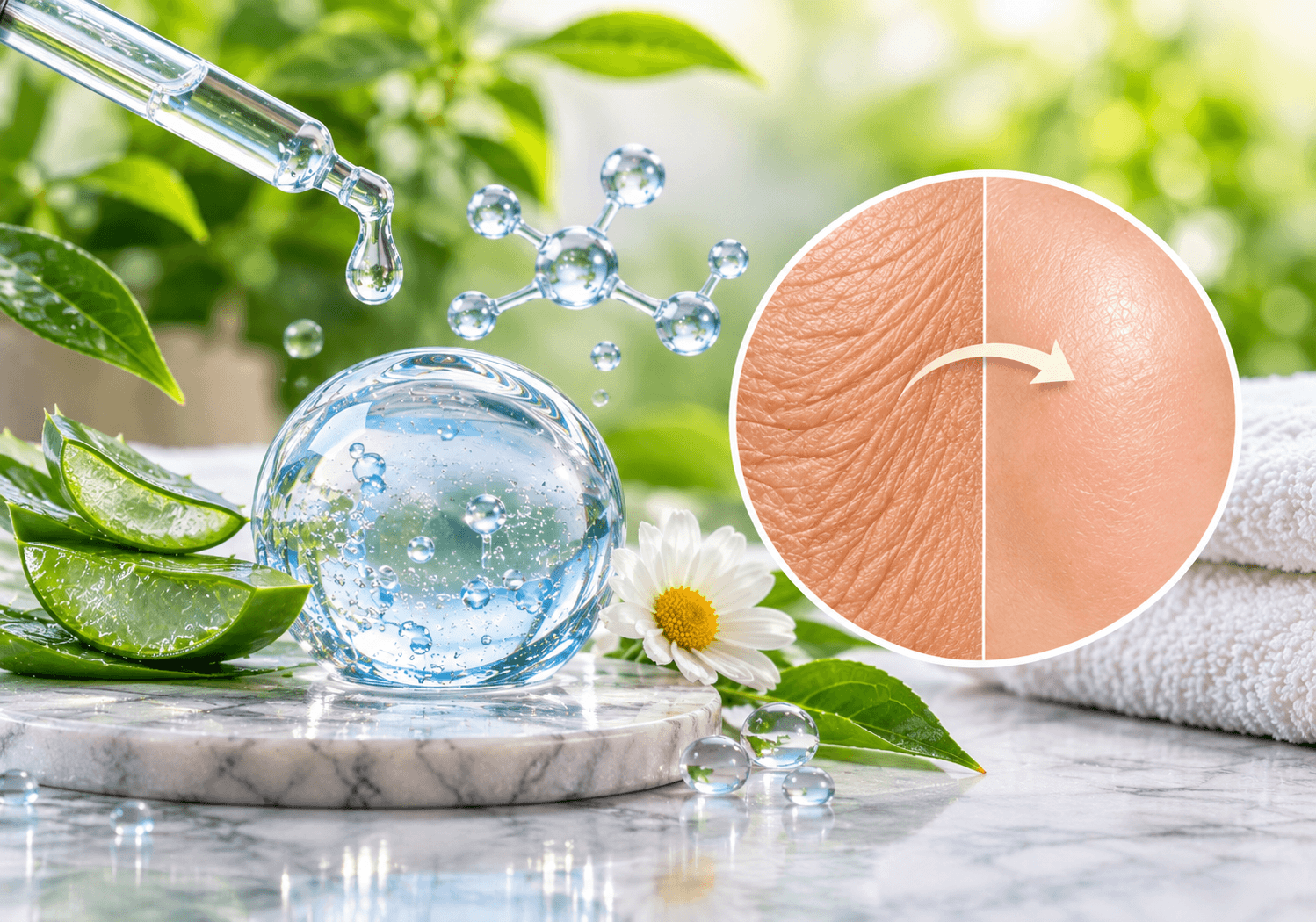
As we age, our skin goes through structural shifts that change how it holds onto water. Fine lines deepen, skin loses its youthful bounce, and the outer barrier feels less resilient against dry air and environmental stressors. If you have spent any time looking into modern anti-aging skincare, you have likely seen one ingredient mentioned everywhere: hyaluronic acid.
Understanding how topical formulations affect skin hydration requires looking past marketing claims. As a conditioning coach and wellness researcher who evaluates physiological adaptations and tissue hydration, I look closely at the biochemical mechanisms of skin care ingredients. This guide breaks down the science of hyaluronic acid moisturizer benefits for aging skin, how to use these formulas properly, and what clinical research actually demonstrates about topical hydration.
Quick Answer Box
What are the primary benefits of hyaluronic acid moisturizers for aging skin?
Hyaluronic acid is a powerful humectant that draws moisture into the skin, temporarily plumping fine lines and improving surface elasticity. While it does not permanently stop internal aging, clinical studies show it significantly boosts stratum corneum hydration and reinforces the skin barrier when applied correctly.
The Biology of Aging Skin and Moisture Loss
To understand why topical humectants matter, we must examine what happens beneath the surface as the years progress. Skin aging is driven by two main forces: intrinsic aging (natural genetic countdown and declining cellular turnover) and extrinsic aging (primarily ultraviolet radiation, pollution, and lifestyle factors).
In young skin, high concentrations of natural glycosaminoglycans—specifically hyaluronic acid—reside within the extracellular matrix of the dermis and epidermis. These molecules act like microscopic sponges, capable of holding up to 1,000 times their molecular weight in water. This high water-binding capacity gives young skin its signature firmness, smooth texture, and resilience.
[Young Skin Structure] -> High Hyaluronic Acid Content -> Maximum Water Retention -> Plump, Smooth Surface
[Aging Skin Structure] -> Depleted Glycosaminoglycans -> Reduced Water Binding -> Dehydration Lines, Sagging
As we enter our 40s and beyond, endogenous synthesis of hyaluronic acid drops significantly, and degradation by enzymes speeds up. According to research published in the National Institutes of Health PubMed Central database on dermal aging, this loss of tissue water content correlates directly with the structural collapse of collagen networks and the formation of deep wrinkles.
Key Benefits of Hyaluronic Acid Moisturizers
Applying a quality topical formula provides several measurable physiological benefits for mature skin types.
1. Rapid Stratum Corneum Hydration
Because hyaluronic acid is a potent humectant, it rapidly draws ambient moisture into the outermost layer of the skin (the stratum corneum). Clinical dermatology trials indexed by the National Center for Biotechnology Information on topical anti-aging compounds show that consistent use of low- and high-molecular-weight formulations measurably increases skin hydration within hours of application, reducing the appearance of temporary dryness lines.
2. Improvement in Skin Elasticity and Firmness
Dehydrated skin often feels stiff and accentuates micro-creasing. When tissue water content is restored through regular application of a hyaluronic acid moisturizer, cellular turgor pressure improves. This creates a firmer, more supple tactile feel across the face and neck.
3. Support for the Skin Barrier
A compromised lipid barrier lets irritants in and moisture out, accelerating cellular damage. Modern cosmetic formulations often combine hyaluronic acid with supportive lipids. Research from the American Academy of Dermatology highlights that maintaining optimal moisture balance helps normalize natural enzymatic functions required for healthy barrier repair.
Molecular Weight Matters: How Formulas Penetrate
Not all hyaluronic acid products are formulated the same way. The physical size of the molecule—measured in Daltons (kDa)—determines how deep it penetrates into the skin layers.
- High Molecular Weight (>1,000 kDa): These large molecules sit primarily on the skin surface. They form a breathable, protective film that prevents transepidermal water loss and gives an immediate smoothing effect.
- Low Molecular Weight (50–500 kDa): These smaller chains can slip between superficial corneocytes to reach deeper layers of the epidermis, delivering hydration where structural aging begins.
- Oligo-Hyaluronic Acid (<10 kDa): Extremely small fragments designed for deep dermal interaction, though formulation stability and potential irritation require careful balancing by cosmetic chemists.
When shopping for an anti-aging skincare routine, look for multi-molecular weight products that combine different sizes to provide both immediate surface plumping and deeper moisture retention.
How to Apply Hyaluronic Acid for Maximum Effectiveness
Even the best formulation will fail if applied incorrectly. Because hyaluronic acid is a humectant that pulls water from its surroundings, improper application in dry environments can actually pull moisture out of deeper skin layers, worsening dehydration.
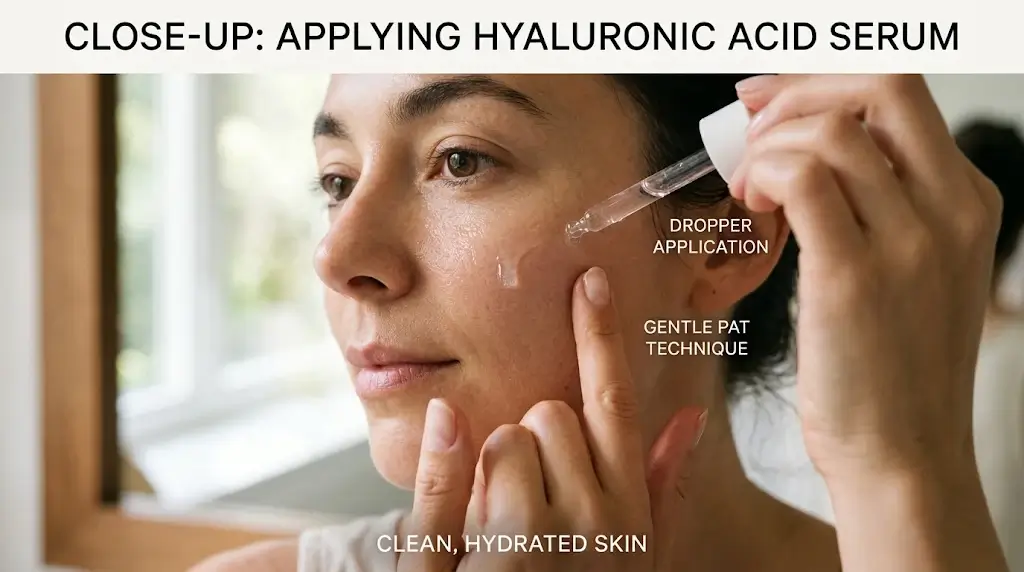
- Cleanse Gently: Wash your face with a mild, non-stripping cleanser that preserves natural skin lipids.
- Leave Skin Damp: Do not dry your face completely with a towel. Leave it slightly damp before applying your hydrating serums or moisturizers.
- Apply the Product: Dispense a pea-sized amount of your hyaluronic acid moisturizer and press it gently into the face, neck, and chest.
- Seal It In: Follow immediately with an occlusive cream or facial oil containing ceramides or squalane to lock the water molecules into the skin barrier.
Coach’s Tip: Always apply your hyaluronic acid product onto wet or damp skin. If you apply it to a completely dry face in a low-humidity room, the molecule will pull moisture from your viable epidermis instead of the air, leading to tightness.
Common Mistakes When Using Hyaluronic Acid
Avoid these frequent pitfalls to get the best clinical results from your topical routine:
- Skipping the Occlusive Step: Relying solely on a lightweight hyaluronic acid serum without sealing it with a cream can cause rapid evaporation, leaving skin drier than before.
- Over-Applying in Dry Climates: In arid environments without proper barrier creams, humectants can backfire. Balance your routine with lipid-rich emollients when humidity drops.
- Ignoring Layering Order: Always apply water-based serums before heavier oil-based creams. Reversing this order blocks active ingredient penetration.
Comparing Hyaluronic Acid to Other Anti-Aging Actives
| Active Ingredient | Primary Function | Best Used For |
| Hyaluronic Acid | Moisture retention & surface plumping | Immediate hydration & smoothing fine lines |
| Retinoids (Retinol) | Cell turnover & collagen synthesis | Reversing deep wrinkles & photoaging |
| Vitamin C | Antioxidant defense & brightening | Reducing hyperpigmentation & free radical damage |
| Ceramides | Lipid barrier reinforcement | Repairing dry, irritated, or compromised skin |
To explore how lifestyle factors, dietary habits, and systemic health influence skin vitality and recovery, you can review our guides on how to support metabolism naturally for weight management and how does sleep affect metabolism and weight management. Rest and cellular recovery play a massive role in overall tissue health.
Frequently Asked Questions
How does a hyaluronic acid moisturizer help aging skin?
It works by binding water molecules within the epidermis, which temporarily fills out dehydration lines, improves surface elasticity, and supports the skin barrier. While it does not stop biological aging, it optimizes skin hydration for a smoother, healthier appearance.
Does topical hyaluronic acid actually reduce fine lines?
Yes, it reduces the appearance of fine lines by swelling the superficial skin layers with moisture. This plumping effect temporarily fills micro-creases, though the result is cosmetic and requires consistent daily application to maintain.
Can hyaluronic acid dry out your skin?
It can in very low-humidity environments if applied to dry skin without an occlusive moisturizer over it. Because it is a humectant, it seeks moisture wherever it can find it—sometimes pulling water upward from deeper dermal layers if the air is bone-dry.
What is the best molecular weight for anti-aging?
The ideal formula contains a blend of molecular weights. High molecular weight forms protect the surface barrier, while low molecular weight variants penetrate deeper into the epidermis to support long-term hydration and suppleness.
Can I layer hyaluronic acid with retinol?
Yes, they complement each other well. Retinol accelerates cellular turnover, which can sometimes cause dryness and flaking. Applying a hydrating hyaluronic acid moisturizer alongside your retinoid helps buffer irritation and keeps the skin barrier comfortable.
Conclusion
Hyaluronic acid remains a staple in evidence-based dermatology for good reason. By understanding how to select multi-molecular weight formulas, applying them to damp skin, and sealing them with appropriate emollients, you can dramatically improve skin hydration, comfort, and elasticity. Consistency is key to maintaining these improvements over time.