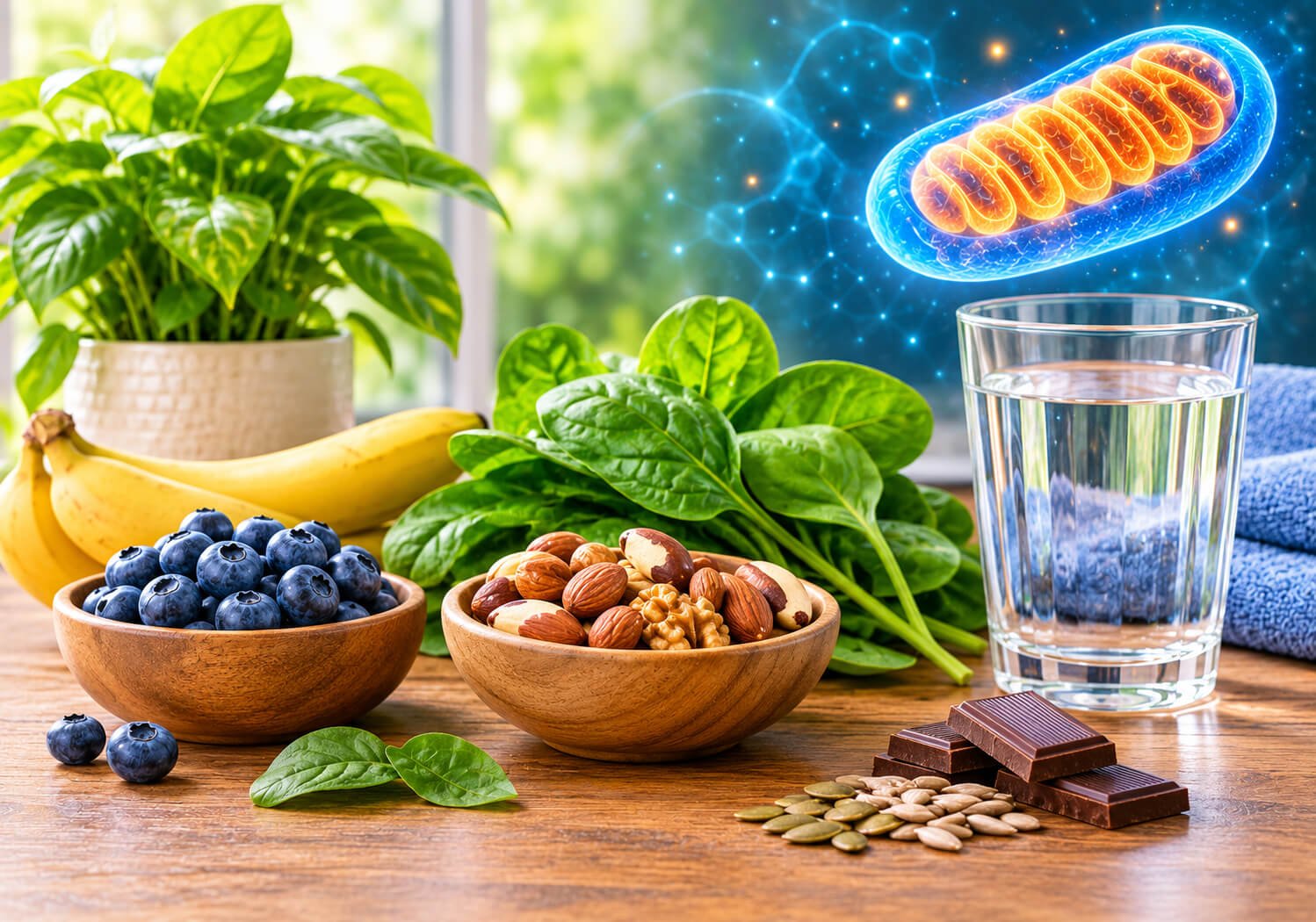
Your mitochondria are the tiny power plants inside nearly every cell. They turn the food you eat into ATP, the energy currency your muscles, brain, and organs run on. When mitochondrial function slips, you feel it: afternoon fatigue, slower recovery after a workout, and a general sense that your body is running on fumes.
The good news? Research points to a handful of supplements that support mitochondrial health by feeding the electron transport chain, reducing oxidative stress, or nudging your cells to build new mitochondria. As a strength and conditioning coach, I see athletes and everyday gym-goers ask me the same question: “What actually works for cellular energy?” Below, I break down the ten supplements with the strongest evidence, the doses to look for, and how to fit them into a daily routine without overcomplicating your stack.
Quick Answer: The top supplements that support mitochondrial health are CoQ10 (200–300 mg), PQQ (10–20 mg), NAD+ precursors like NMN (250–500 mg), alpha-lipoic acid (300–600 mg), acetyl-L-carnitine (500–2,000 mg), creatine (3–5 g), magnesium (200–400 mg), B-vitamin complex, iron (if deficient), and selenium (55–200 µg). Pair them with regular resistance and aerobic training for the best results.
1. Coenzyme Q10 (CoQ10)
Why it works: CoQ10 is a fat-soluble compound that sits inside the inner mitochondrial membrane. It shuttles electrons between Complex III and Complex IV of the electron transport chain, a step that is essential for oxidative phosphorylation and ATP production. Without adequate CoQ10, that electron flow slows, and your cells make less energy.
Dose and form: Most research uses 100–300 mg per day. The ubiquinol form (the reduced, active shape) tends to be absorbed better than ubiquinone, especially in adults over 40. Take it with a meal that contains fat, since CoQ10 is fat-soluble.
Who benefits most: People on statin medications (statins can lower CoQ10 levels), adults over 50 whose natural CoQ10 production declines, and anyone doing high-volume aerobic training.
What the research says: The NIH Office of Dietary Supplements CoQ10 fact sheet notes that CoQ10 is a component of the electron transport chain and that supplementation has been studied in heart failure, migraine, and statin-related muscle symptoms. While large-scale trials on healthy athletes are still limited, the biochemical role is well established.
Coach’s Tip: If you already take a B-vitamin complex, check whether it includes CoQ10. Many “energy” multivitamins carry 30–50 mg, which is a good baseline. You only need to add a separate 200 mg CoQ10 pill if your multivitamin skips it or you’re on a statin.
2. Pyrroloquinoline Quinone (PQQ)
Why it works: PQQ is a small antioxidant molecule found in blueberries, kiwi, and green tea. In lab and animal studies, PQQ activates the PGC-1α pathway, a master switch that tells your cells to build new mitochondria (mitochondrial biogenesis). It also scavenges reactive oxygen species (ROS) generated during electron transport, reducing oxidative stress on the mitochondrial membrane.
Dose and form: Clinical trials have used 10–20 mg per day. PQQ is water-soluble, so you can take it with or without food. Look for a product that lists PQQ as the primary ingredient, not buried in a 20-ingredient blend.
Who benefits most: Adults 40 and older who want to support mitochondrial density, and anyone whose training load is high enough to generate significant ROS.
What the research says: A PubMed-indexed review on PQQ and mitochondrial biogenesis summarizes multiple animal and in-vitro studies showing PQQ upregulates PGC-1α and increases mitochondrial DNA copy number in skeletal muscle and liver tissue. Human data is still emerging but points in the same direction.
3. NAD+ Precursors (NMN or NR)
Why it works: NAD+ (nicotinamide adenine dinucleotide) is a coenzyme that every mitochondrion uses in the Krebs cycle and the electron transport chain. NAD+ levels drop noticeably as you age, which is linked to reduced mitochondrial function and slower metabolic rate. NMN (nicotinamide mononucleotide) and NR (nicotinamide riboside) are dietary precursors that your body converts into NAD+.
Dose and form: Human trials have used 250–500 mg of NMN or 300–1,000 mg of NR per day. Take in the morning on an empty stomach or with a light meal.
Who benefits most: Adults 40+ noticing that their recovery and daily energy are not what they were a decade ago.
What the research says: The National Institute on Aging (NIA) at NIH highlights NAD+ as a key molecule in cellular aging research. A PubMed review on NAD+ metabolism and mitochondrial function confirms that restoring NAD+ levels in aged tissue improves mitochondrial respiration in animal models. Human trials are ongoing, and results so far are promising but not yet definitive for all outcomes.
Common Mistake: Buying a “NAD+ booster” that is really just a high-dose B3 (niacin) tablet. Niacin does feed the NAD+ pathway, but the niacin flush and the dose required to meaningfully raise NAD+ make it impractical for most people. Look for NMN or NR specifically labeled on the supplement facts panel.
4. Alpha-Lipoic Acid (ALA)
Why it works: ALA is a thiol antioxidant that works both inside and outside the mitochondrion. Inside, it helps recycle other antioxidants (vitamin C, vitamin E, glutathione) and participates in the pyruvate dehydrogenase complex, the gateway that feeds the Krebs cycle. By reducing oxidative stress on the mitochondrial membrane, ALA helps preserve the membrane potential that drives ATP synthesis.
Dose and form: 300–600 mg per day, taken with a meal. The reduced form (R-ALA) is the active shape, but the racemic (mixed) form is more widely available and still effective.
Who benefits most: Adults managing blood sugar, since ALA has been studied for insulin sensitivity, and anyone looking for an antioxidant that works directly in the mitochondrion.
What the research says: The NIH ODS Alpha-Lipoic Acid fact sheet summarizes clinical trials showing ALA’s role as an antioxidant and its potential to improve insulin sensitivity. The mitochondrial mechanism is well described in peer-reviewed biochemistry literature.
5. Acetyl-L-Carnitine (ALCAR)
Why it works: Carnitine shuttles long-chain fatty acids across the inner mitochondrial membrane so they can be oxidized for energy. ALCAR is the acetylated form, which crosses the blood-brain barrier more readily. If your diet is low in red meat and you do a lot of fat-burning aerobic work, your carnitine stores may not be fully topped off.
Dose and form: 500–2,000 mg per day. Split into two doses (morning and early afternoon) if you take 1,500 mg or more. Take with a meal.
Who benefits most: Endurance athletes, people following a low-meat or plant-based diet, and adults 50+ whose natural carnitine synthesis slows.
What the research says: Carnitine’s role in fatty acid transport into mitochondria is a well-established biochemical pathway covered in standard biochemistry texts and referenced in PubMed literature on mitochondrial fatty acid oxidation. Human supplementation trials show modest improvements in endurance performance and recovery markers.
6. Creatine Monohydrate
Why it works: Creatine is not a traditional “mitochondrial supplement,” but it directly supports the ATP-creatine phosphate system, the rapid-recharge mechanism that keeps ATP levels stable during short, intense efforts. By maintaining cellular ATP, creatine reduces the stress on the electron transport chain during high-intensity intervals, which in turn lowers the burst of ROS that can damage mitochondrial membranes.
Dose and form: 3–5 g per day of creatine monohydrate. No loading phase is needed; steady daily dosing builds muscle creatine stores over 3–4 weeks. Take it with a meal or post-workout shake.
Who benefits most: Anyone doing resistance training, sprint work, or high-intensity interval training. It is one of the most studied supplements in sports nutrition.
What the research says: The International Society of Sports Nutrition (ISSN) position stand on creatine confirms that 3–5 g/day is safe, effective, and the most researched ergogenic aid in sport. Creatine’s role in mitochondrial energy buffering is described in peer-reviewed exercise physiology journals.
7. Magnesium
Why it works: Magnesium is a cofactor in more than 300 enzymatic reactions, including every step that produces and uses ATP. Magnesium binds to ATP to form Mg-ATP, the form your mitochondria actually use. Low magnesium impairs oxidative phosphorylation and increases oxidative stress.
Dose and form: 200–400 mg of elemental magnesium per day. Forms like magnesium glycinate or magnesium threonate are well absorbed and gentle on the stomach. Take in the evening to also support sleep quality.
Who benefits most: Adults who don’t eat much leafy greens, nuts, or legumes; people who sweat heavily during training; and anyone who reports muscle cramps or poor sleep.
What the research says: The NIH ODS Magnesium fact sheet notes that magnesium is essential for energy metabolism and that a significant portion of U.S. adults consume less than the recommended daily amount.
8. B-Vitamin Complex (B2, B3, B5, B6, B12)
Why it works: B vitamins are the coenzymes that make mitochondrial metabolism run. Riboflavin (B2) is part of FAD, a cofactor in Complex I and II of the electron transport chain. Niacin (B3) feeds the NAD+/NADH cycle. Pantothenic acid (B5) is in CoA, which carries acetyl groups into the Krebs cycle. B6 and B12 support one-carbon metabolism and red blood cell formation, which keeps oxygen delivery to your mitochondria efficient.
Dose and form: A quality B-complex supplement providing 100% of the Daily Value for each B vitamin is usually enough. If you eat a varied diet with eggs, meat, dairy, whole grains, and vegetables, you may not need an extra B-complex at all.
Who benefits most: Adults with dietary restrictions (strict vegan diets without B12), those under chronic stress, and anyone whose bloodwork shows low B12 or folate.
What the research says: The NIH ODS B Vitamins fact sheet outlines each B vitamin’s role in energy metabolism and notes that deficiencies, while uncommon in developed countries, can impair mitochondrial function.
9. Iron (Only If Deficient)
Why it works: Iron is a critical component of heme and iron-sulfur clusters in Complexes I, II, and IV of the electron transport chain. Without adequate iron, electron transport slows and ATP production drops. Iron also supports myoglobin in muscle, which helps oxygen delivery to working mitochondria.
Dose and form: Do not supplement iron unless a blood test (ferritin, serum iron, transferrin saturation) confirms a deficiency. If deficient, a doctor will typically recommend 18–65 mg of elemental iron per day for a set period. Excess iron can generate ROS through the Fenton reaction, which damages mitochondrial membranes.
Who benefits most: Women of reproductive age with low ferritin, endurance athletes with iron loss through sweat and foot-strike hemolysis, and anyone with diagnosed anemia.
What the research says: The CDC and NIH emphasize that iron supplementation should be guided by bloodwork, not guesswork, because iron overload is harmful.
10. Selenium
Why it works: Selenium is a component of glutathione peroxidase, an enzyme that neutralizes hydrogen peroxide and lipid peroxides inside the mitochondrion. By keeping ROS in check, selenium helps protect the mitochondrial membrane and the electron transport chain proteins from oxidative damage.
Dose and form: 55–200 µg of selenium per day (the RDA is 55 µg for adults). Selenium is found in Brazil nuts (one or two nuts a day can cover your needs), seafood, and eggs. A selenium-containing multivitamin is usually sufficient.
Who benefits most: Adults whose diets are low in seafood and nuts, and anyone in regions where soil selenium levels are low.
What the research says: Selenium’s role in antioxidant defense is well documented in NIH and PubMed literature on mitochondrial oxidative stress. The key point: more is not better. Stay within the 55–200 µg range.

How to Build a Daily Mitochondrial Support Routine
You do not need to take all ten supplements. That would be expensive and, frankly, unnecessary for most people. Here is a practical way to layer them:
- A quality multivitamin with B vitamins, magnesium, selenium, and zinc
- 3–5 g creatine monohydrate daily (with your post-workout meal or shake)
- 200–400 mg magnesium glycinate in the evening
- CoQ10 (ubiquinol form), 200 mg with breakfast
- PQQ, 10–20 mg with breakfast
- Alpha-lipoic acid, 300 mg with lunch
- NMN or NR, 250–500 mg in the morning, if you are 40+ and want to support NAD+ levels
- ALCAR, 500–1,000 mg, if you do a lot of aerobic work or follow a low-meat diet
- Iron, only if a doctor confirms a deficiency via bloodwork
Timing tip: Fat-soluble supplements (CoQ10, ALA) go with your largest meal that contains fat. Water-soluble ones (PQQ, B vitamins, creatine) can go with any meal or on an empty stomach. Magnesium and NMN work well in the evening.
Pair with training. No supplement stack replaces the mitochondrial stimulus that comes from movement. The CDC physical activity guidelines recommend at least 150 minutes of moderate aerobic activity plus two days of muscle-strengthening work per week. Zone 2 cardio (you can hold a conversation but not sing) and heavy resistance training are the two training modes most directly linked to mitochondrial biogenesis. If you want a structured approach, check out our guide on how to support metabolism naturally for a full weekly plan.

Safety Tips and Things to Watch
- Talk to your doctor first. If you take blood thinners, statins, thyroid medication, or diabetes drugs, check with your physician before adding CoQ10, ALA, NMN, or iron. Interactions are possible.
- Start with one or two new supplements at a time. Add one every two weeks so you can identify any digestive upset or sensitivity.
- Iron is the exception. Never take iron “just in case.” Get a ferritin and serum iron test first.
- Selenium has a narrow therapeutic window. Stay under 200 µg/day.
- Quality matters. Look for third-party testing (NSF, Informed Sport, or USP verification) to confirm the label matches the bottle.
- Hydrate. Creatine pulls water into muscle cells. Drink an extra 16–20 oz (about 500–600 ml) of water on days you take it.
If you are managing a chronic condition, are pregnant or postpartum, or are over 65, run your supplement plan by your doctor or a registered dietitian before starting. This article is for general information and is not a substitute for advice from a doctor or physical therapist.
For more on how everyday habits interact with your cellular energy system, our article on what affects metabolism and body weight covers sleep, stress, and training load in detail.
FAQ
What supplements help mitochondrial function the most?
CoQ10, PQQ, NAD+ precursors (NMN/NR), and alpha-lipoic acid have the most direct biochemical roles inside the mitochondrion. Creatine, magnesium, and B vitamins support the energy pathways that mitochondria depend on. The “most” depends on your age, diet, and training level, so start with the Foundation layer above.
Do mitochondrial supplements actually work, or is it marketing?
The biochemical roles of CoQ10, B vitamins, magnesium, and creatine in mitochondrial metabolism are well established in peer-reviewed literature. PQQ and NMN show strong preclinical and early human data, but large-scale long-term trials are still in progress. The honest answer: they may help, especially if you have a dietary gap or are over 40, but they will not replace training and sleep.
How long do mitochondrial supplements take to work?
Creatine builds muscle stores over 3–4 weeks. CoQ10 and ALA reach steady-state tissue levels in about 4–6 weeks. NMN and PQQ effects on mitochondrial markers in animal studies appear within 2–8 weeks. You will not feel a “buzz” the next morning. Expect subtle improvements in afternoon energy and recovery over one to two months of consistent use.
Can I take all of these together?
You can, but you do not need to. The layers above are designed so you add supplements only when a specific need exists. Taking iron, for example, without a confirmed deficiency can be harmful. A good rule: fill dietary gaps first, add the Foundation layer, then add targeted supplements based on your age, training, and bloodwork.
What foods support mitochondrial health besides supplements?
Fatty fish (omega-3s), eggs (choline and B12), leafy greens (magnesium, folate), nuts and seeds (selenium, CoQ10), berries (PQQ, polyphenols), and whole grains (B vitamins) all feed mitochondrial pathways. If your diet is varied and you train regularly, you may need fewer supplements. Our guide on which nutrients support normal energy metabolism breaks down the food sources in detail.
Are mitochondrial supplements safe to take daily long-term?
CoQ10, creatine, magnesium, B vitamins, and ALA have been used daily for years in clinical trials with no major safety signals at the doses listed above. NMN and PQQ have shorter human safety histories but no serious adverse effects reported in trials to date. Iron and selenium have narrower safety margins and should be dosed carefully. Always check with a doctor if you have kidney or liver conditions.
Conclusion
Mitochondrial health is not a single switch you flip with one pill. It is the product of what you eat, how you train, how well you sleep, and whether your cells have the raw materials to run the electron transport chain efficiently. The supplements that support mitochondrial health—CoQ10, PQQ, NAD+ precursors, ALA, ALCAR, creatine, magnesium, B vitamins, iron (if deficient), and selenium—fill specific gaps in that equation.
Start with the Foundation layer. Train consistently: two to three resistance sessions and 150+ minutes of aerobic work per week, as the CDC recommends. Sleep seven to nine hours. Then add the mitochondrial-specific supplements if your age, diet, or training demands call for them. You do not need a 15-bottle stack. You need a few well-chosen tools, a solid training habit, and patience.
If you are over 40 and want a broader look at how to keep your metabolic engine running, our practical guide to increasing metabolism naturally after 40 pairs well with this article. And if you are curious about which non-stimulant supplements support overall metabolic function, see our roundup of supplements that support metabolism without stimulants.
Your mitochondria are not going to rebuild themselves overnight. But give them the right fuel, the right training stimulus, and the right micronutrients, and they will keep powering you for years to come.