
Fatigue is rarely just about getting to bed late or having a hectic work week. When your body feels heavy, sluggish, and resistant to workouts, the root cause often traces back to microscopic power plants inside your cells: your mitochondria. Learning how to increase cellular energy production is not about chasing temporary artificial buzzes from high-dose caffeine or sugar. It is about systematically upgrading mitochondrial density, enhancing oxidative phosphorylation, and optimizing the cellular machinery responsible for generating adenosine triphosphate (ATP).
As a strength and conditioning coach, I see clients every week who rely on stimulants to push through a 4:00 PM crash, mistaking exhaustion for a lack of willpower. In reality, their cellular machinery is inefficient, bogged down by poor metabolic flexibility, lack of targeted physical stimulus, and inadequate recovery protocols. True vitality stems from structural adaptations at the cellular level. By combining precise cardiovascular training, progressive resistance exercise, targeted micronutrient intake, and circadian alignment, you can stimulate mitochondrial biogenesis and transform how your body generates physical and mental power.
Quick Answer Box
How to Increase Cellular Energy Production: You can increase cellular energy production by stimulating mitochondrial biogenesis through a combination of Zone 2 steady-state cardio, progressive resistance training, and proper nutrition. Consuming adequate B-vitamins, CoQ10, and magnesium, alongside prioritizing 7 to 9 hours of restorative sleep, directly enhances ATP output and metabolic efficiency without relying on stimulants.
The Science of Cellular Energy: Understanding ATP and Mitochondria
To understand how to increase cellular energy production, you must first examine the fundamental currency of human biology: adenosine triphosphate (ATP). Every muscular contraction, every neurological firing, and every metabolic repair process in your body relies on ATP. When ATP loses a phosphate group, it releases energy, converting into adenosine diphosphate (ADP). Your daily physical vitality depends entirely on how rapidly and efficiently your cells can reconvert ADP back into ATP.
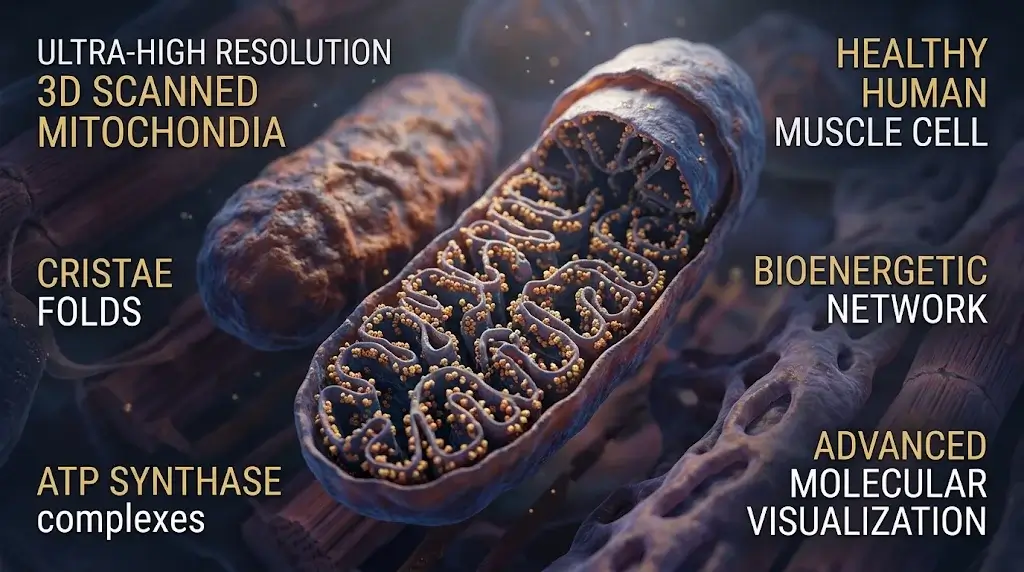
This entire conversion process takes place primarily inside the mitochondria, specialized organelles found within nearly every cell of your body. Mitochondria utilize oxygen, glucose, and fatty acids to drive the electron transport chain and oxidative phosphorylation. When you are sedentary, your mitochondrial network shrinks in both size and number—a process known as mitochondrial degradation. Conversely, specific physical and metabolic stressors signal your cells to create brand-new mitochondria, a vital physiological adaptation called mitochondrial biogenesis.
Research highlighted by the National Institutes of Health (NIH) demonstrates that mitochondrial dysfunction is directly tied to chronic fatigue, metabolic inflexibility, and reduced exercise capacity. When your cells cannot efficiently oxidize fats and carbohydrates, metabolic intermediates accumulate, oxidative stress rises, and systemic fatigue sets in. Therefore, increasing cellular energy is fundamentally an exercise in signaling your genetic pathways—specifically through regulators like AMP-activated protein kinase (AMPK) and peroxisome proliferator-activated receptor gamma coactivator 1-alpha (PGC-1)—to build more resilient, high-output cellular power plants.
Exercise Strategies for Mitochondrial Biogenesis
Physical exercise is the most potent and reliable trigger for mitochondrial biogenesis. However, not all exercise stimulates cellular energy production in the same way. If your goal is to enhance mitochondrial density and improve metabolic efficiency, your training program must incorporate both low-intensity steady-state endurance work and high-tension resistance training.
Zone 2 cardio—aerobic exercise performed at an intensity where you can maintain a conversational pace (typically 60% to 70% of your maximum heart rate)—is the gold standard for mitochondrial expansion in slow-twitch muscle fibers. During Zone 2 sessions lasting 45 to 90 minutes, your muscle cells rely almost exclusively on fat oxidation, forcing mitochondria to adapt and multiply to meet the sustained energy demand. Studies published by the American College of Sports Medicine (ACSM) confirm that consistent aerobic conditioning significantly increases oxidative enzyme concentrations within skeletal muscle.
Simultaneously, progressive resistance training is essential for building mitochondrial volume in fast-twitch fibers. Lifting weights creates high mechanical tension and transient cellular hypoxia, which activates signaling cascades that stimulate muscle protein synthesis and mitochondrial remodeling. To learn more about how physical activity influences overall energy expenditure, read this comprehensive guide on how to increase metabolism naturally for weight_loss.
| Exercise Modality | Target Intensity | Primary Cellular Adaptation | Recommended Frequency |
| Zone 2 Steady-State Cardio | 60–70% Max Heart Rate | Increases mitochondrial density & fat oxidation | 3–4 times per week (45–60 mins) |
| Progressive Resistance Training | RPE 7–9 (High Tension) | Enhances myofibrillar hypertrophy & ATP recycling | 3–4 times per week (45–75 mins) |
| High-Intensity Intervals (HIIT) | 85–95% Max Heart Rate | Boosts maximal oxygen uptake (VO2 max) & glycolytic flux | 1–2 times per week (20–30 mins) |
Step-by-Step Exercise Implementation: The Goblet Squat
To put mechanical tension and metabolic conditioning into practice, let’s examine a foundational movement that engages large lower-body muscle groups, demanding immense cellular energy production: the Dumbbell Goblet Squat.
Executing this movement with strict form recruits your quadriceps, glutes, core, and upper back, forcing millions of muscle fibers to rapidly churn through ATP. Below is the exact coaching protocol I use with my gym clients to maximize both strength and metabolic efficiency.
- Primary Muscles Worked: Quadriceps, glutes, adductors, rectus abdominis, erector spinae.
- Secondary Muscles Worked: Calves, upper back, rhomboids, core stabilizers.
Step-by-Step Form Guide
- Stance & Setup: Stand with your feet slightly wider than shoulder-width apart, toes pointed outward at roughly a 15 to 30-degree angle. Hold a single dumbbell vertically against your chest, cupping the upper head of the weight with both palms just beneath your chin.
- Bracing: Take a deep breath into your diaphragm, expanding your 360-degree core as if bracing for a light punch to the stomach. Keep your ribcage stacked directly over your pelvis.
- The Descent: Initiate the movement by simultaneously pushing your hips back and bending your knees. Descend in a controlled 3-second negative tempo, ensuring your knees track directly in line with your second and third toes.
- Bottom Position: Lower your hips until your hip crease drops slightly below the top of your knees (parallel or slightly below), keeping your torso as upright as possible and your heels firmly planted on the floor.
- The Ascent: Drive powerfully through your mid-foot and heels, extending your knees and hips simultaneously while exhaling steadily. Squeeze your glutes at the top lockout position for 1 second before beginning the next repetition.
- Sets and Reps: Perform 3 to 4 working sets of 8 to 12 repetitions, resting 90 seconds between sets.
- Weight Guidance: Choose a dumbbell weighing 35 lb [15.8 kg] to 50 lb [22.7 kg] that allows you to complete all reps with crisp, flawless form, with your last 2 reps feeling challenging.
Coach’s Tip: Never let your elbows drop toward the floor during the descent. Keeping your elbows pointed down and slightly forward locks your upper back into position, preventing the weight from pulling your torso forward and wasting valuable energy.
Common Mistake: A frequent error is allowing the knees to cave inward (valgus collapse) as you rise out of the bottom position. This places excessive shear stress on the patellar tendon and indicates a lack of glute medius activation. Fix this by actively driving your knees outward against an imaginary resistance band throughout the entire lift.
- Easier Version (Regression): Perform a Box Squat to Bench using a box or bench set to 18 inches [45.7 cm] in height, reducing the range of motion and providing stable sitting support at the bottom.
- Harder Version (Progression): Perform a Pause Goblet Squat, holding a 3-second isometric pause at the absolute bottom of the squat before exploding upward.

Nutritional Foundations: Fueling the Electron Transport Chain
Cellular energy production requires raw biochemical ingredients. Without specific micronutrients acting as enzymatic cofactors, the electron transport chain cannot shuttle electrons effectively, resulting in metabolic bottlenecks and sluggish energy output.
The B-vitamin complex plays an indispensable role in cellular respiration. Specifically, Vitamin B1 (thiamin), B2 (riboflavin), B3 (niacin), and B5 (pantothenic acid) serve as direct precursors for coenzymes like NAD+ and FAD, which transport high-energy electrons into the mitochondria. Ensuring adequate daily intake of these nutrients supports normal energy metabolism. For a deeper dive into this biochemical process, review this analysis on which nutrients support normal energy metabolism.
Additionally, Coenzyme Q10 (CoQ10) is a vital lipid-soluble antioxidant located directly within the inner mitochondrial membrane. It acts as an electron shuttle between complex I/II and complex III of the electron transport chain. As we age, endogenous CoQ10 synthesis declines, which can impair ATP production. Supplementing with ubiquinol or consuming rich dietary sources like grass-fed beef, oily fish, and organ meats can help maintain optimal mitochondrial electron flow.
Macronutrient distribution also dictates cellular energy efficiency. Adequate protein intake provides essential amino acids required for repairing mitochondrial enzymes and contractile proteins. To understand how dietary protein interacts with energy pathways, explore the research on protein intake metabolism and weight loss.
Sleep, Circadian Biology, and Cellular Recovery
You cannot out-train or out-supplement poor sleep hygiene. During deep, slow-wave sleep, the brain initiates the glymphatic clearance of metabolic waste products, while skeletal muscle cells undergo intense mitochondrial repair and protein synthesis. Chronic sleep deprivation suppresses mitochondrial gene expression, lowers ATP output, and increases systemic inflammation.
Circadian biology heavily dictates mitochondrial efficiency. Your mitochondria possess their own internal molecular clocks that synchronize with light-dark cycles. Exposure to natural sunlight early in the morning anchors your circadian rhythm, optimizing cortisol and melatonin production, which in turn supports restorative nighttime sleep.
When sleep is disrupted, metabolic flexibility plummets. To understand the hormonal mechanisms connecting nighttime rest to daytime vitality, read this guide on how sleep affects metabolism and weight management. Maintaining a strict sleep-wake schedule—retiring and waking at the exact same time daily—is one of the most effective, zero-cost cellular energy boosters available.

Hormetic Stressors: Cold, Heat, and Intermittent Fasting
Controlled, acute stressors—known scientifically as hormesis—send powerful cellular signals that force your body to adapt by strengthening its energy-producing architecture. When applied correctly, short bursts of physical stress stimulate cellular cleanup and renewal.
Cold exposure, such as cold water immersion or cold showers lasting 2 to 3 minutes at temperatures around 50°F [10°C], triggers an immediate surge in norepinephrine and activates brown adipose tissue (BAT), which is densely packed with iron-rich mitochondria designed to generate heat. This acute cold shock stimulates mitochondrial biogenesis in both brown fat and skeletal muscle tissue.
Similarly, heat therapy via infrared saunas or traditional Finnish saunas (170°F to 200°F [76°C to 93°C] for 15 to 20 minutes) elevates heat shock proteins (HSPs). These specialized proteins chaperone damaged cellular components to lysosomes for recycling, clearing out dysfunctional mitochondria (mitophagy) and making room for newly synthesized, high-efficiency power plants.
Intermittent fasting and caloric restriction also activate AMPK, the master cellular energy sensor. When nutrient availability dips temporarily, AMPK senses low cellular ATP and initiates autophagy and mitochondrial remodeling, clearing away sluggish cellular debris and optimizing metabolic flexibility.
Common Mistakes and Troubleshooting Plateaus
When individuals attempt to ramp up their cellular energy production, they frequently fall into traps that yield the exact opposite result: burnout, adrenal fatigue, and plummeting ATP output. Avoid these common pitfalls to ensure steady, sustainable progress.
- Over-Relying on High-Dose Stimulants: Masking mitochondrial fatigue with 400mg of caffeine daily forces your central nervous system to overdrive while ignoring the underlying cellular deficit. Caffeinated energy surges borrow energy from tomorrow, leading to deep afternoon crashes.
- Neglecting Zone 2 Cardio: Many gym-goers believe that only grueling, high-intensity CrossFit workouts or sprinting build fitness. Skipping steady-state aerobic work leaves your slow-twitch mitochondrial network underdeveloped.
- Inadequate Recovery and Under-Eating: Chronic caloric restriction combined with high training volume plummets thyroid hormone output (T3) and downregulates mitochondrial activity to conserve energy. You must feed your mitochondria adequate micronutrients and calories to produce high energy.
- Ignoring Circadian Alignment: Scrolling on blue-lit screens until midnight disrupts melatonin secretion, destroying deep sleep quality and preventing overnight mitochondrial repair.
Comprehensive Sample Weekly Routine
Below is a balanced, coach-designed 7-day weekly schedule integrating progressive resistance training, Zone 2 endurance, hormetic stress, and recovery. This layout stimulates both slow-twitch and fast-twitch mitochondrial biogenesis while ensuring adequate rest.
| Day | Training Focus | Modality & Duration | Cellular Objective |
| Monday | Lower Body Strength | Barbell/Dumbbell Squats, Romanian Deadlifts (45 mins) | High mechanical tension for fast-twitch ATP remodeling |
| Tuesday | Aerobic Base (Zone 2) | Incline Treadmill Walk or Cycling (60 mins at 60–70% HR max) | Stimulate mitochondrial density in slow-twitch fibers |
| Wednesday | Upper Body Strength | Overhead Press, Barbell Rows, Dips (45 mins) | Upper body myofibrillar adaptation & metabolic stress |
| Thursday | Active Recovery & Cold | Light Mobility Work + 3-minute Cold Shower | Autophagy stimulation & nervous system regulation |
| Friday | Lower Body Hypertrophy | Goblet Squats, Bulgarian Split Squats (50 mins) | Glycolytic flux & muscular endurance |
| Saturday | Long Endurance (Zone 2) | Outdoor Rucking or Cycling (75–90 mins) | Maximal lipid oxidation & capillary expansion |
| Sunday | Complete Rest | Passive stretching, sunlight exposure, meal prep | Glycogen replenishment & deep circadian recovery |
Frequently Asked Questions
What are the main signs of poor mitochondrial energy production?
Common signs include chronic daytime fatigue despite sleeping 8 hours, brain fog, poor exercise recovery, muscle weakness, and cold intolerance. When your mitochondria struggle to produce adequate ATP, high-energy organs like the brain and skeletal muscles experience noticeable performance drops.
Can you improve mitochondrial function through cardio alone?
No, while Zone 2 cardiovascular training is unmatched for expanding slow-twitch mitochondrial density, resistance training is required to stimulate mitochondrial biogenesis in fast-twitch muscle fibers. Combining both modalities yields optimal metabolic flexibility and whole-body cellular energy production.
What vitamins and supplements support cellular energy production?
Essential cofactors include Vitamin B complex (especially B1, B2, and B3), Coenzyme Q10 (CoQ10), magnesium glycinate, and alpha-lipoic acid. These compounds act as vital enzymatic cofactors inside the electron transport chain, facilitating smooth electron transport and ATP synthesis.
How long does it take to increase mitochondrial density?
Noticeable improvements in mitochondrial enzyme activity and oxidative capacity can occur within 2 to 4 weeks of consistent Zone 2 training. However, measurable structural increases in mitochondrial volume and capillary beds typically require 8 to 12 weeks of progressive overload and recovery.
Does aging inevitably reduce cellular energy production?
Aging is naturally accompanied by a decline in mitochondrial function and density, a process exacerbated by sedentary lifestyles and poor nutrition. However, consistent exercise, proper protein intake, and aerobic conditioning can dramatically slow or partially reverse age-related mitochondrial decline. For older adults looking to maintain vitality, implementing strategies to increase metabolism naturally after 40 is exceptionally effective.
Conclusion
Mastering how to increase cellular energy production requires shifting your focus away from temporary fixes and toward deep physiological adaptation. By embracing a structured routine that pairs progressive resistance training with Zone 2 aerobic conditioning, fueling your body with targeted micronutrients like B-vitamins and CoQ10, and respecting circadian biology through rigorous sleep hygiene, you can fundamentally upgrade your cellular machinery. True energy is not manufactured with stimulants—it is built from the ground up, cell by cell, through consistent, intelligent lifestyle habits.